Nocturnal Animals
Embark on a nighttime adventure with Learning Mole’s “High Five Facts About Nocturnal Animals”! This video is a dive into the mysterious world of creatures that come to life after the sun sets, exploring their adaptations, behaviors, and unique features. From owls to bats, we’re about to uncover the essential facts that make nocturnal animals fascinating members of the animal kingdom. So, raise your hand for a high-five and join us as we explore the high-fiving facts about nocturnal animals. It’s a celebration of the moonlit mysteries, keen senses, and the creatures that thrive in the dark! 🌙🦉🌟✋
Transcription for Nocturnal Animals
Please note this transcript is generated automatically and may contain errors.
Today we are going to learn five neat facts about nocturnal animals. number one nocturnal animals have a fascinating way of seeing in the dark due to their unique. I adoptions the larger eyes and pupils allow more light to enter. Well a special layer of tissue called the taper, tum, lucidium reflects and amplifies Light Within the eye this combination helps nocturnal animals see much better than humans can in low light conditions some examples of nocturnal animals with these abductions include owls with their distinctively large eyes cats whose eyes seem to glow in the dark and raccoons with the characteristics Bandit masks.
Number two, nocturnal animals often possess a heightened sense of hearing to locate prey and navigate in the dark. The ears are either larger or specially adapted to capture even the faintest sounds. For example owls have asymmetrical ear openings that help them pinpoint the exact location of a sound while bats use echolocation emitting high-pitched sounds and listening for The Echoes this enable them to avoid obstacles and catch insects with Incredible Precision even in complete darkness. fact number three some nocturnal animals like to slow loris rely heavily on their sense of smell to find food and avoid predators.
These animals possess a highly developed olofactory system that allows them to detect chemical cues in the environment the slow loris in particular has a specialized gland in this elbow called a brachial Grand that produces a toxin one threatened. It can mix this socks in with saliva and deliver a venomous bite. number four fireflies used by illuminescent, which is the ability to produce light through our chemical reaction to create intricate light flashes that signal to potential mates these flashes follow specific patterns, depending on the species helping the insects recognize each other and avoid into species mating.
Similar the Nightingale and bird known first beautiful and complex song sings primarily during the night this melodic communication allows Nightingales to establish territories and attract mates in a Darkness. number five by being active during night. Nocturnal animals can stay hidden from many daytime predators and exploit food sources that may not be available during the day for instance many insects are more active at night providing a plentiful food supply for nocturnal insectivores, like bats and geckos additionally nocturnal animals like the eye eye and Lemur species from Madagascar have developed specialized feeding strategies such as tapping on tree trunks to locate insect larvae, which saves then extract using their long thin middle finger. I hope you enjoyed my five neat facts about nocturnal animals. See you next time.
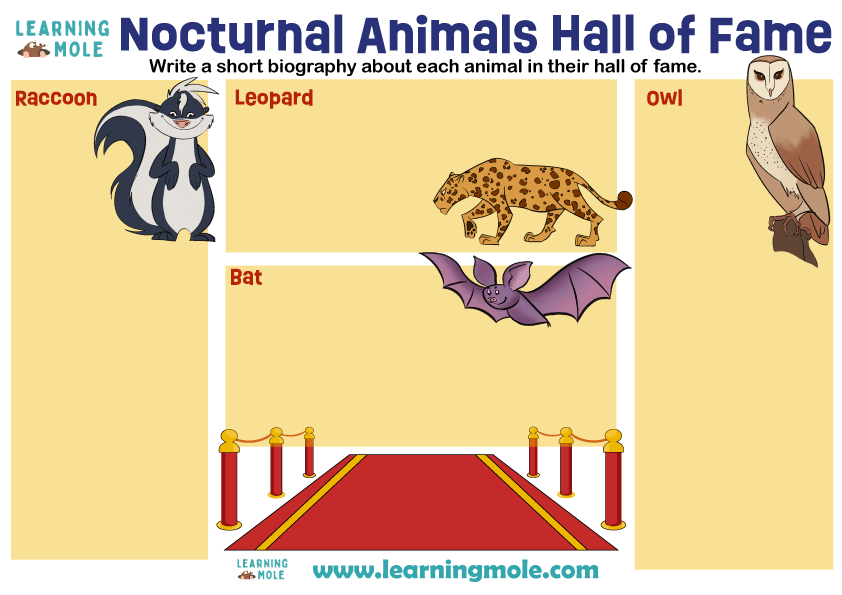
Nocturnal Animals Hall of Fame Activity