Food Web
Embark on an ecological journey with Learning Mole’s “High Five Facts About Food Webs”! This video is a dive into the interconnected relationships between organisms in ecosystems, where energy flows and nutrients cycle through complex webs. From producers to consumers and decomposers, we’re about to uncover the fascinating and essential facts that make food webs a dynamic and integral aspect of ecological systems. So, raise your hand for a high-five and join us as we explore the high-fiving facts about food webs. It’s a celebration of biodiversity, trophic levels, and the delicate balance that sustains life in nature’s intricate tapestry! 🌿🦐🌍✋
Transcription for Food Web
Please note this transcript is generated automatically and may contain errors.
Today we are going to learn five fabulous facts about the food web. fact number one a food web consists of all the food chains into connected in an ecosystem. Each living thing in an ecosystem is part of many different food chains. Each food chain is one possible path that energy and nutrients may take as they move through the ecosystem. Food chains can be long or short but whatever length they are. They are always a series of steps. There is no overlapping fact number two organisms and food webs are groups into categories called trophic levels.
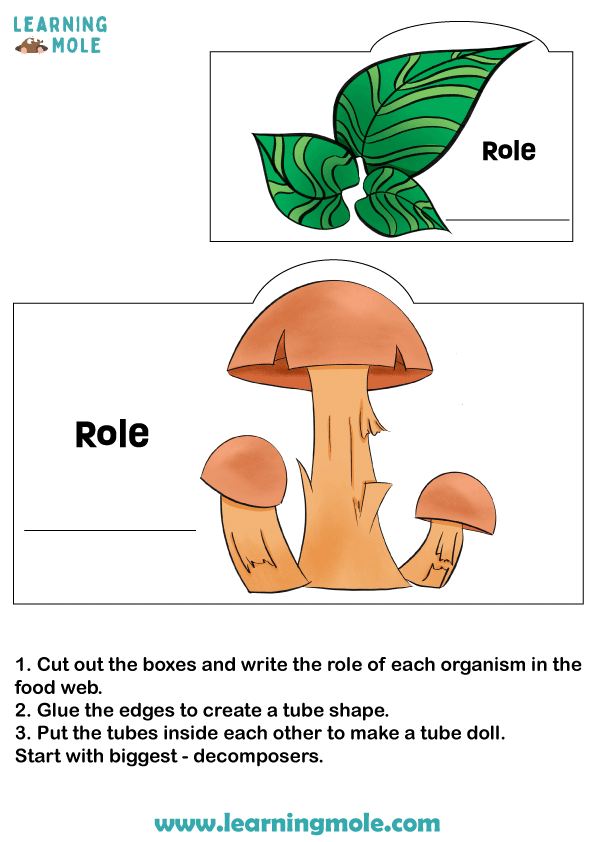
There are three trophic levels producers consumers and decomposers. Producers make up the first trophic level producers also known as autotrophs make their own food and do not depend on any other organism for nutrition. Most autotrophs use a process called photosynthesis to make their food examples of products or plants bacteria and fungi consumers are the second trophic level. They cannot make their own food organisms in this level eat plant or other animals and some eat both decomposers make up the last trophic level decomposes are organisms that eat non-living plants and animal remains.
fact number three consumers are split into four types omnivores herbivores scavengers and carnivores and omnivore is an animal that eats both plants and animals most humans are omnivores besides vegetarians and vegans. People eat plants such as fruit and vegetables and not sweet animals and animal products such as meat and milk. Some animals are also omnivores for example bears eat both berries and fish such as salmon a herbivore is an animal that only eats plants algae and other producers herbivores do not eat meat for example, dear sheep and goats.
Scavenger is an animal that eat dead animals, for example vultures and coyotes a carnival is an animal that only eats other animals and is not eat plant for example, lions and sharks. Fact number four as omnivores. We are a part of the food web because we eat both plants and animals. We are primary secondary consumers eating fruits and French makes it a primary consumer and eating chicken and bacon makes us a secondary consumer humans are said to be at the top of the food chain. This doesn’t mean that nothing will eat us, but it means that we are less threat of being eaten the most other organisms.
fact number five there are four types of decomposers decomposers. Turn organic waste such as the cane plants into inorganic materials such as nutrient-rich soil. They complete the life cycle by returning nutrients to the soil for the use of producers. The four types of decomposers are fungi insects, earthworms and bacteria. I hope you enjoy my five fabulous facts about the food web. See you soon.