Eye
👀 Open your eyes to the captivating world of “Eyes” as we embark on an enlightening exploration! In this mesmerizing video, join us as we delve into the intricate workings of one of our most extraordinary organs. Have you ever wondered how our eyes allow us to see the world around us with such clarity and precision? 🌟 Discover the fascinating processes and incredible biological complexity that make our eyes invaluable for vision. Presented by Learning Mole, we explore the anatomy of the eye, unveil the wonders of light perception, and delve into the intricacies of visual processing in the brain. So, prepare to widen your gaze and join us as we unravel the marvels of the eye. It’s a celebration of the beauty of sight and the remarkable mechanisms that enable us to perceive the world. Stay tuned for an enlightening exploration! 👁️🔍🌐
Transcription for Eye
Please note this transcript is generated automatically and may contain errors.
Meet Emily, a young engineer on a quest to uncover secrets hidden in plain sight. Today she turns her inquisitive gaze to a natural phenomenon as complex as any machine she’s ever encountered the human eye. Together we’ll uncover how this organ captures the world around us. Imagine the eye as a camera. The clear front layer called the cornea starts the process bending light to help provide a clear picture. Next, the lens sitting just behind the colored part of the eye. The iris works like a camera’s zoom, adjusting itself to make sure the picture stays sharp, whether the object is near or far.
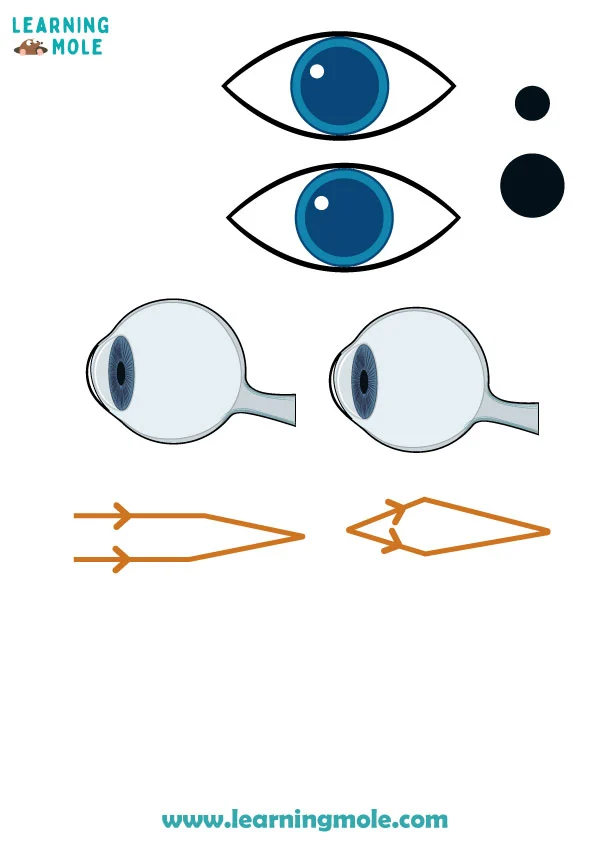
Emily is intrigued by how the eye bends light, a process known as refraction. It’s how the eye focuses. Light rays onto the back wall, inside the eye, an area called the retina. This bending is critical because it ensures that the images we see are in focus, not too blurry or distorted. The retina is like a screen at the back of the eye. It’s layered with millions of special cells that react to light. Some of these cells called rods, let us see when it’s dark. Others known as cones help us see sharp colors and bright light.
Think of these cells as tiny dots on a TV screen that work together to create the entire picture. Once the retina captures the image, it needs to get to the brain. The optic nerve is the highway that carries this image. It’s made up of loads of nerve fibers, like tiny wires that transmit visual information to the brain where the image is processed. When it comes to making sense of what we see, the brain is the boss. It takes the information from the optic nerve and translates it into the images we see.
The brain is so good at this that it can take the upside down image projected by the retina and flip it right side up without us even noticing. Emily Marvels at how sight isn’t just about seeing. It’s about interacting with the world. Our eyes send constant updates to the brain, which uses this info to help us understand the size, distance, and speed of things around us. It’s a complex feedback loop that allows us to respond to our environment. Our journey with Emily has shown us the eyes remarkable capabilities.
It’s not just an organ, but a sophisticated device that captures, focuses and transmits light to create the vivid panorama of our daily lives. For an engineer like Emily, the eye isn’t just a wonder of biology. It’s the gold standard for design and deficiency. As knight envelopes the day and the stars come into view, remember the incredible organ that allows you to take in the universe’s beauty, the human eye, a natural masterpiece of function and form.