Helicopter
🚁 “How Does it Work?” takes flight to uncover the secrets of helicopters. Explore the engineering marvels of rotor blades, controls, and the unique principles that keep these versatile aircraft hovering and soaring through the skies. 🌍✈️ Brought to you by Learning Mole.
Transcription for Helicopter
Please note this transcript is generated automatically and may contain errors.
Meet Mia. She’s thrilled and a bit mystified as she watches a helicopter hover and then zoom across the sky. Have you ever wondered how helicopters managed to fly, hover, and even move sideways? Let’s lift off into the science behind it. As MIA watches, she realizes that helicopters don’t need a runway. Like airplanes. They can lift off and land vertically, but how do they do it? It’s all about rotor blades and the control of airflow. The first thing to know is that a helicopter’s rotor blades act like wings.
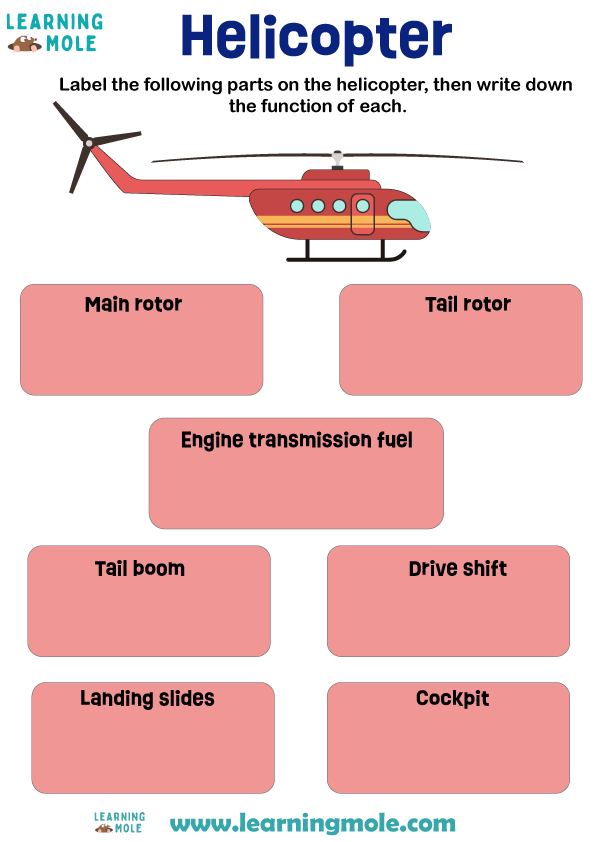
When the rotor spins, it generates lift by pushing air downward. This is thanks to the shape of the blades which are curved on top and flatter on the bottom, the rotor blades are powered by an engine. When the engine turns the rotor, the blades cut through the air generating lift. The faster they spin, the more lift is produced, allowing the helicopter to rise. Mia learns that pilots can change the angle of the rotor blades, known as the pitch to control the helicopter’s direction. By adjusting the pitch, the pilot can make the helicopter move forward, backward, or even sideways.
You might wonder why helicopters have a smaller rotor on the tail. This tail rotor counteracts the spinning force of the main rotor, helping the helicopter stay balanced and allowing it to turn left or right. One of the most amazing things about helicopters is their ability to hover. To do this, the pilot adjusts the rotor’s pitch so that the lift equals the force of gravity. It’s a delicate balance that requires skill and precise control. Helicopters are equipped with various safety features, including redundant systems and specialized training.
For pilots, this ensures they can handle a range of conditions from rescues to tricky landings. So the next time you see a helicopter in the sky, remember it’s not just an odd looking airplane, it’s a marvel of engineering and aerodynamics capable of feats. No other flying machine can perform.