Maths Resources: 3 Approaches for the Journey from Numbers to Fractions
Table of Contents
Maths Resources: Many children who sail through counting and basic arithmetic hit an unexpected wall once fractions appear. The numbers look different, the rules seem to change, and the confidence built up in KS1 can wobble quickly.
At LearningMole, a UK educational platform founded by former primary school teacher Michelle Connolly, this transition from whole-number thinking to fractional understanding is one of the most frequently discussed challenges among the teachers and parents who use our resources.
The jump is genuinely difficult, but it is predictable. Research into how children learn mathematics consistently shows that whole-number bias, the tendency to apply counting rules to fractions, is the root cause of most early fraction errors. Children who learn that bigger numbers always mean bigger values then encounter one-half and one-quarter, and struggle to accept that the latter is smaller.
The problem is not a lack of effort; it is a gap in the teaching sequence between whole numbers and fractions of amounts, which the UK National Curriculum addresses across Years 1 to 4 in increasingly structured ways.
This guide sets out three distinct resource categories that map to the Concrete-Pictorial-Abstract (CPA) approach used in primary mastery teaching: physical manipulatives, visual bar models, and interactive reasoning tools.
Rather than listing every maths website available, the aim here is to explain what each type of resource does, why it works for this specific transition, and how teachers and parents can use it alongside the National Curriculum progression. LearningMole’s video resources, which cover fractions from early KS1 concepts through to KS2 reasoning, sit alongside each stage of this framework.
Why the Transition from Whole Numbers to Fractions Is Hard
Whole-number bias is the single biggest obstacle in early fraction teaching. Children spend the first two years of primary school learning that numbers increase as you count up, that 7 is always more than 4, and that adding always makes things bigger. Fractions break every one of those rules, and without careful teaching, children try to apply counting logic to fraction notation with predictably confusing results.
The UK National Curriculum moves children from simple halves and quarters of shapes in Year 1 to fractions of amounts in Year 3 and equivalent fractions, addition, and comparison in Year 4. Each of these steps requires a different conceptual move, not just a new procedure. A child who can shade half of a rectangle may not understand that one-half of 12 is the same operation. A child who can add whole numbers may not grasp why one-half plus one-quarter does not equal two-sixths.
The NCETM Primary Mastery Professional Development materials identify unitising, understanding that a fraction describes equal parts of a whole, as the foundation that must be in place before any procedural fraction work begins. Physical resources build that understanding directly; visual models then bridge it to number; abstract notation only comes last. Skipping any stage is the main cause of the maths anxiety that teachers see in upper KS2 when fraction gaps surface during SATs preparation.
Whole-Number Thinking vs Fraction Thinking: Key Shifts
| Concept | Whole-Number Rule | The Fraction Shift |
|---|---|---|
| Size and value | Bigger digit = bigger number (7 > 4) | Bigger denominator = smaller fraction (1/7 < 1/4) |
| Counting | Numbers increase by equal steps | Fractions sit between whole numbers on the number line |
| Addition | Adding always gives a bigger result | Adding fractions requires a common unit (denominator) |
| Equal sharing | Sharing is repeated subtraction | Sharing produces equal parts, each described by a fraction |
| Visual size | A longer bar or tower = bigger number | Equal parts of different wholes are not always equal in size |
Resource One: Concrete Manipulatives (The Foundation Stage)
Physical resources build the conceptual understanding that makes all later fraction work possible. Before children can work with fraction notation, they need repeated experience of splitting whole objects into equal parts and naming those parts accurately. This is not a reception-year activity; the NCETM materials recommend concrete resources through Year 3 and into Year 4 for children who have not yet secured the underlying concept.
What to Use and Why
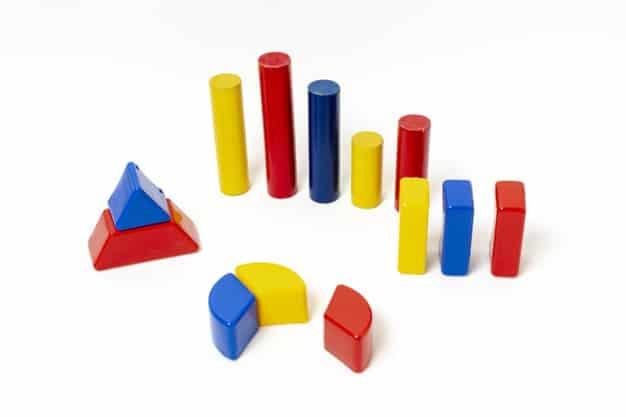
Fraction tiles and Cuisenaire rods are the most effective physical tools for this stage. Fraction tiles show visually that four-quarters make one whole in the same way that a whole tile is assembled from its parts. Cuisenaire rods allow children to express the same relationship using colour-coded lengths: if the orange rod (10) is the whole, the yellow rod (5) is one-half, and the red rod (2) is one-fifth. Children can physically lay rods alongside each other to check equivalence without any abstract notation.
Folded paper is a low-cost classroom alternative. Folding a strip of paper into halves, then quarters, then eighths gives children a direct experience of why the denominator increases as the fraction gets smaller — each fold creates more, smaller parts. This single activity addresses whole-number bias more effectively than any worksheet explanation.
Classroom Activity: The Equal Sharing Problem
Give pairs of children 12 counters and ask them to share equally between two people. Ask: how many does each person get? (6) Now ask: what fraction of the total does each person receive? (one-half) Repeat with three, four, and six people.
This bridges the division understanding children already have to fraction notation, making clear that one-half of 12 is the same as 12 divided by 2. It also sets up the fraction-of-an-amount work required in Year 3.
Year group fit: Year 2 (halves and quarters of amounts); Year 3 (fractions of sets of objects)
Supporting Learning at Home
Parents can replicate this approach using kitchen items. Cutting an apple into equal quarters, sharing a pack of stickers among siblings, or dividing pasta portions all give children the concrete fraction experience that underpins classroom learning. LearningMole’s fraction videos for early KS2 use exactly these real-world examples, which parents can then discuss at home after watching together.
Resource Two: Visual Bar Models (The Pictorial Bridge)

Bar models are the single most effective tool for bridging concrete fraction experience to abstract notation. They appear throughout the UK mastery curriculum and are central to the White Rose Maths scheme, the NCETM materials, and most KS2 SATs reasoning questions. A child who can draw and interpret a bar model for fractions has the pictorial understanding needed to move to symbolic notation with confidence.
How Bar Models Explain Fractions of Amounts
A bar divided into five equal sections, with two sections shaded, makes two-fifths visible without any counting logic. The child can see that the whole has five equal parts and that two of them are shaded. This directly counters the ‘bigger denominator = bigger value’ error because the visual shows clearly that five small parts make the same whole as two larger parts.
For fractions of amounts, the same bar model is used with a total written above. A bar labelled 20 divided into four equal sections shows immediately that each section is worth 5, so one-quarter of 20 is 5, and three-quarters of 20 is 15. The link between division and fractions is visible rather than procedural.
The Number-Line Gap Competitors Miss
Most fraction teaching focuses on circles (pizza slices) and rectangles. There is a significant gap in using the number line to show that fractions are numbers, not just parts of shapes. Placing one-half between 0 and 1 on a number line directly addresses whole-number bias by showing that fractions inhabit the same number system as whole numbers, just in the spaces between them.
This is a key strand in the NCETM Primary Mastery materials for Year 3, where children are expected to place fractions on a number line and compare their positions. A printed number line from 0 to 2, marked in quarters, gives children a reference tool for both ordering fractions and understanding that one whole is the same as two halves or four quarters.
Bar Model Progression: Year Group Fit
| Year Group | Fraction Focus | Bar Model Application |
|---|---|---|
| Year 1 | Halves and quarters of shapes | Bar divided into 2 or 4 equal parts; shade one section |
| Year 2 | Halves, quarters, thirds of amounts | Bar labelled with total; divide equally and count shaded parts |
| Year 3 | Fractions of sets; tenths; number line | Bar model linked to division; number line 0–1 marked in tenths |
| Year 4 | Equivalent fractions; add/subtract | Two bars of equal length showing equivalent fractions side by side |
| Year 5–6 | Mixed numbers; fraction of amounts | Double bar model comparing fraction and whole-number amounts |
Home Activity: The Ruler Hunt
Give your child a standard metric ruler. Ask them to find the halfway point between 0 cm and 10 cm. Then ask: what is that measurement as a fraction of 10 cm? (five-tenths, or one-half.) Now find one-quarter of 10 cm. Find three-quarters.
The ruler makes fractions visible as numbers on a line rather than parts of a shape, directly addressing the number-line gap. It also connects to measurement work in the Year 3 and Year 4 curriculum, giving the activity a dual purpose.
What to discuss: Ask your child why the halfway mark is called five-tenths AND one-half. This introduces equivalent fractions in a concrete, real-world context.
Resource Three: Interactive Reasoning Tools (Abstract Mastery)

Abstract fraction work, calculation, comparison, and equivalence using notation alone should come only after a concrete and pictorial understanding is secure. For most children, this means Year 3 onwards for simple fractions and Year 4 and 5 for more complex work. Rushing to abstract notation too early is the leading cause of fraction anxiety in upper primary and the errors that appear in Year 6 SATs reasoning papers.
What Makes a Good Digital Fraction Tool
Effective digital resources for this stage require children to reason, not just follow steps. A good interactive fraction tool presents a problem, asks the child to explain their thinking or select from multiple representations, and provides visual feedback that connects the abstract answer to a concrete or pictorial model. Tools that simply drill fraction calculations without that representational link may improve speed, but do not build the conceptual understanding that transfers to new problems.
The NCETM’s free Calculation Guidance documents and interactive resources at ncetm.org.uk provide curriculum-aligned problems specifically designed to develop this reasoning. These align directly to the statutory curriculum requirements for each year group and include teacher guidance on how to use them within a mastery sequence.
Interactive Number Lines for Fraction Ordering
Number-line tools that allow children to place fractions, including improper fractions and mixed numbers, at the correct position bridge the pictorial and abstract stages effectively. Children who can place three-quarters between one-half and one on a number line have a far stronger conceptual foundation than those who can only follow the procedure of finding a common denominator.
LearningMole’s maths video resources include fraction sequences that walk through this progression, from concrete sharing to bar model representations to number-line placement. Teachers using these videos as a classroom resource report that the multi-representational approach reduces the reteaching time usually needed when children reach equivalent fractions in Year 4.
“The moment children understand that a fraction is a number, not just a piece of a pizza, something shifts. Using number lines alongside physical resources and bar models gives them three different ways to check their own thinking, and that self-checking habit is what carries them through the harder fraction work in Year 5 and 6.”
Michelle Connolly, Founder of LearningMole and former teacher with over 15 years of classroom experience
Using These Three Resources Within the UK National Curriculum

The CPA sequence is not a one-time progression. Children may return to concrete resources when new fraction concepts are introduced, even if they are already confident with earlier material in abstract form. A Year 4 child who is secure with halves and quarters of amounts may need Cuisenaire rods again when equivalent fractions are introduced, because the concept is new, even if the notation is familiar.
Year 1 and Year 2 (KS1): Concrete resources are the primary tool. Halves and quarters of shapes and amounts are introduced through physical sharing and folded paper. Number lines appear in pictorial form but with whole numbers; fractions sit at the boundary between KS1 and KS2 in terms of conceptual demand.
Year 3 (early KS2): The curriculum introduces fractions of amounts, tenths, and the number line. Bar models become central here. Children should be using physical resources for new concepts and bar models for practising and checking. Abstract notation is introduced alongside, not instead of, pictorial support.
Year 4: Equivalent fractions, addition and subtraction of fractions with the same denominator. Bar models showing two equivalent fractions side by side are the key pictorial tool. Interactive reasoning tasks can now take a larger role as conceptual foundations are more secure.
Year 5 and Year 6: Mixed numbers, improper fractions, fractions of amounts with larger numbers, and fractions in reasoning problems. All three resource types remain relevant; abstract work is dominant, but should always have a representational fallback for children who are not yet fully secure.
SEND Adaptations and Differentiation

Children with dyscalculia or wider maths difficulties benefit most from extended concrete phases. Removing the time pressure to reach abstract notation and allowing more varied physical experience of equal parts builds the foundational understanding that targeted intervention can then build upon. Fraction tiles in different sizes, colour-coded Cuisenaire rods, and large-format printed bar models all support children who process information more effectively through physical and visual channels.
For children with reading or processing difficulties, number-line tasks in which fractions are physically placed rather than written reduce the language demand while still developing the mathematical concept. LearningMole’s video resources, which explain fraction concepts using clear visual demonstrations and accessible language, are well-suited to children who find text-heavy maths resources difficult to engage with independently.
Gifted and able mathematicians benefit from the reasoning challenge of explaining why the rules for fractions differ from whole-number rules. Ask: Can you prove that one-third is smaller than one-half using the number line? Can you find a fraction that sits exactly between two-thirds and three-quarters? These open-ended questions extend understanding without simply increasing the size of the numbers involved.
Teaching Resources and Support from LearningMole

LearningMole provides curriculum-aligned maths video resources covering the full KS1 and KS2 fraction progression, from early halves and quarters through to Year 6 reasoning with fractions of amounts. Teachers can use these videos to introduce new concepts, to consolidate after concrete and pictorial work, or to support children who need a clear re-explanation at home. Parents will find the primary maths resources section a useful starting point for finding videos that match their child’s current year group and topic.
For home learners and parents supporting fraction homework, LearningMole’s videos follow the same CPA sequence described in this guide: concrete demonstrations come first, then visual representations, then abstract problems. This mirrors what children experience in school and makes it easier to reinforce classroom teaching rather than confuse children with a different approach. Subscribe to LearningMole for full access to the maths video library, including fraction sequences for each year group from Year 1 through Year 6.
Video Team Note: Search the LearningMole YouTube channel for a video covering fractions using physical manipulatives or bar models (e.g. ‘fraction of an amount’ or ‘fractions on a number line’). Embed the most topically relevant result in this section. If no specific number-line fraction video exists, flag to the video team as a content gap.
Frequently Asked Questions
What are the three best types of resources for teaching fractions?
The three types that follow the evidence-based CPA sequence are physical manipulatives (fraction tiles, Cuisenaire rods, folded paper), visual bar models and number lines, and interactive reasoning tools that ask children to explain and compare. These three categories match the concrete, pictorial, and abstract stages of mastery teaching and are specifically designed to address the transition from whole-number thinking to fractional understanding. Using all three, in sequence rather than in isolation, produces the most durable conceptual foundation.
How do you introduce fractions to a child who only understands whole numbers?
Start with equal sharing using physical objects before any fraction notation is introduced. Give a child 8 counters and ask them to share equally between two people. Once they can do this confidently, introduce the language: each person has one-half of the total. Repeat with four people (one-quarter each) and three people (one-third each). The concept of a fraction as a description of equal sharing, rather than a strange new type of number, removes the initial conceptual barrier and connects to the division understanding children already have from KS1.
What resources does a Year 3 teacher need for the fraction unit?
Year 3 is the most demanding point in the fraction curriculum because it introduces fractions of amounts, tenths, and the number line, all in the same year. A well-equipped Year 3 fraction teaching set includes: printed or drawn bar models for fractions of amounts (linking to division), fraction tiles or Cuisenaire rods for equivalent fraction exploration, large-format number lines from 0 to 2 marked in tenths, and a clear sequence of problems that moves from sharing with physical objects to bar model recording to symbolic notation. LearningMole’s Year 3 maths videos provide the visual explanation layer that supports each of these stages.
At what age should children start learning about fractions?
Fractions appear in the UK National Curriculum from Year 1, beginning with halves and quarters of shapes and objects in concrete form. This is earlier than many parents expect. By Year 2, children are expected to find halves, quarters, and thirds of small amounts. The key point is that early fraction work should be entirely concrete and based on physical sharing before any notation is introduced. Formal fraction notation (the numerator over denominator format) is introduced in Year 2 and developed through KS2 with increasing complexity.
Are there free resources for teaching the transition to fractions?
The NCETM (National Centre for Excellence in the Teaching of Mathematics) provides free Primary Mastery Professional Development materials at ncetm.org.uk, which include detailed guidance on the fraction sequence and free classroom resources. LearningMole also provides free fraction video content on the LearningMole YouTube channel, with subscription access to the full library of curriculum-aligned resources available for teachers and parents who need complete coverage of the KS1 and KS2 fraction progression.
What is a fraction of an amount, and how do I teach it?
A fraction of an amount uses the relationship between fractions and division: one-third of 15 is the same as 15 divided by 3, which is 5. The bar model is the most effective teaching tool here. Draw a bar representing 15, divide it into three equal sections, and ask: What is each section worth? Once children can answer that (5), they can find one-third, two-thirds, or three-thirds of the amount. This approach connects to the sharing and grouping work children do in Year 2 division, making the concept an extension of existing knowledge rather than an entirely new idea.
How can I help my child with fractions at home?
Real-world fraction activities are more effective than worksheets at home, particularly for children who are already anxious about fractions. The Ruler Hunt described in this guide is a good starting point: asking your child to find fractions of a centimetre makes fractions visible on a number line in a familiar, non-threatening context. Cooking is another strong context: measuring one-half or one-quarter of a cup, or cutting pastry into equal pieces, gives children concrete fraction experience that reinforces classroom learning. Watching LearningMole’s fraction videos together before a homework session gives children a second explanation that mirrors the school approach.
How does the CPA approach help children who are struggling with fractions?
The Concrete-Pictorial-Abstract approach is particularly effective for children who are struggling because it identifies exactly where the understanding has broken down. A child who cannot compare fractions abstractly (which is larger: three-fifths or two-thirds?) can almost always succeed with a bar model, which makes the comparison visible without calculation. Once the pictorial understanding is secure, the abstract comparison becomes an extension rather than a leap. CPA is not a remedial approach; it is the recommended sequence for all children in mastery teaching. For struggling learners, it simply means spending more time at the concrete and pictorial stages before moving to abstract work.
Conclusion

The journey from whole numbers to fractions does not have to be the stumbling block it becomes for many primary children. When teaching follows the CPA sequence, concrete first, pictorial second, abstract last, and uses resources that explicitly address whole-number bias at each stage, the conceptual gaps that cause anxiety later rarely develop in the first place. Physical manipulatives, bar models, and interactive reasoning tools are not three competing approaches but three stages of the same learning progression, each building on the last.
For UK teachers working within the National Curriculum, aligning resource choice to year group expectations matters as much as the resources themselves. A Year 3 class that has not yet secured equal sharing through physical resources will struggle with the symbolic fraction work the curriculum demands in Year 4. Taking time to check and fill those foundational gaps early, using the concrete and pictorial tools described here, pays dividends across the entire KS2 fraction curriculum.
LearningMole’s fraction video resources are designed to support every stage of this progression, from early KS1 sharing activities to Year 6 reasoning with mixed numbers and fractions of amounts. Whether you are a teacher looking for a clear visual explanation to anchor a lesson or a parent trying to make sense of your child’s fraction homework, the LearningMole maths library offers curriculum-aligned support at every step of the journey.
Explore Maths Resources from LearningMole
LearningMole provides free and subscription-based maths video resources aligned with the UK National Curriculum, covering the full KS1 and KS2 fraction progression and every primary maths topic from number and place value through to statistics and geometry.


Leave a Reply