Fun Math Game with Treat Incentive
Table of Contents
Fun Maths Games: Children who claim they hate maths often change their tune the moment a bowl of Cheerios or a handful of blueberries appears on the table. Treat incentives have been used in primary classrooms and family kitchens for decades because they work: they lower the emotional stakes of getting something wrong, make practice feel like play, and give children a tangible, immediate reward for mathematical thinking.

At LearningMole, a UK educational platform founded by former primary teacher Michelle Connolly, we believe the best maths activities are ones that children ask to do again.
The key is making sure the treat is a tool for learning, not a distraction from it. A Cheerio subtracted from the mat really is one less, and eating it proves the point in a way no worksheet can. Whether you’re a parent working through addition at the kitchen table or a teacher looking for a Friday afternoon activity that still delivers against the UK National Curriculum, this guide gives you practical, curriculum-mapped maths games you can run with everyday ingredients and simple classroom staples.
We’ve also addressed what most other guides overlook: dietary inclusivity. Schools have strict allergy policies, and not every child can eat sweets or nuts. This guide includes a full swap table with healthy and non-food alternatives for every game, so no pupil is left out of the learning.
Why Treat Incentives Work in Maths

Using a small reward to motivate mathematical effort is grounded in the same principle teachers use when they give house points or stickers: extrinsic motivation provides a bridge until intrinsic motivation develops. For children who experience maths anxiety, particularly common in Key Stage 1 and early Key Stage 2, lowering the emotional cost of being wrong makes it easier to try again.
The critical distinction is between rewarding effort and rewarding performance. A treat given only for correct answers can increase anxiety. A treat given for attempting a problem, showing working, or self-correcting builds the habits that matter most for long-term mathematical confidence. The games in this guide are designed around that principle: the reward comes from participation, not just from getting it right.
Research context: The Education Endowment Foundation notes that metacognitive strategies, teaching children to plan, monitor and evaluate their own learning, have a significant positive impact on attainment. Incentive-based maths games naturally encourage this when children are asked to check their own answers before taking a treat, creating a self-correction loop that mirrors metacognitive practice.
Top Maths Games with Treat Incentives

1. The Cheerios Counting Game (EYFS and Year 1)
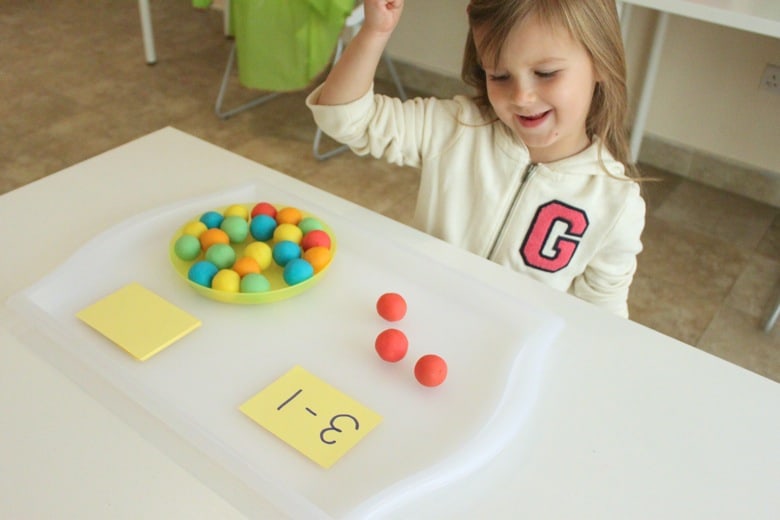
This is the original treat-incentive maths activity, and it remains one of the most effective for the youngest learners. Place a mat in front of your child or pupil and a bowl of Cheerios nearby. Ask them to count out a specific number of Cheerios onto the mat, then ask them to add more or take some away. Each correctly answered question earns one Cheerio to eat.
The physical action of moving Cheerios onto and off the mat gives children a concrete representation of addition and subtraction before they encounter abstract number sentences. This follows the concrete-pictorial-abstract (CPA) approach endorsed by the UK National Curriculum for maths teaching in primary schools.
Curriculum link: EYFS and Year 1
Number: addition and subtraction: “read, write and interpret mathematical statements involving addition (+), subtraction (−) and equals (=) signs”
Also supports: counting to and across 100, one more/one less, understanding the relationship between addition and subtraction
Extension: Once basic addition and subtraction are secure, introduce the language of comparison, “more than”, “less than”, “the same as”, using Cheerios to prove each answer. Ask your child to lay out two groups and tell you which has more without counting, then count to verify. This builds number sense alongside calculation fluency.
2. The Skittles Statistics Challenge (Year 4 to Year 6)
Empty a small bag of Skittles onto a mat. Before anyone eats anything, ask pupils to sort them by colour, record the frequency in a tally chart, and then create a bar chart. Then, which colour appeared most? What fraction of the total was red? If you picked one at random, what’s the chance it would be yellow? Correct answers earn the right to eat that colour.
Curriculum link: Year 4–6 Statistics and Probability
Statistics — “interpret and present discrete and continuous data using appropriate graphical methods, including bar charts and time graphs”
Year 6 Probability — “use the language of probability to describe and compare events”
Fractions — calculating fractions of quantities (Year 4/5)
Allergy-friendly swap: Use coloured counters, cubes, or pom-poms for sorting and graphing. Reward correct answers with a sticker or a token towards a class reward.
3. Marshmallow Geometry: Building 3D Shapes (Year 3 and Year 4)
Using marshmallows as vertices and cocktail sticks or dried spaghetti as edges, ask children to build 3D shapes: a cube, a triangular prism, a square-based pyramid. After each shape, ask them to count vertices, edges, and faces, recording results in a table. Correct counts earn a marshmallow.
Curriculum link: Year 3 and Year 4 Geometry
Properties of shapes — statutory content from Year 3
Year 4: “compare and classify geometric shapes, including quadrilaterals and triangles, based on their properties and sizes”
Vertices, edges, and faces — statutory content from Year 3
Classroom management note: Build shapes before eating any marshmallows. A clear rule at the start (“we record before we reward”) models the scientific habit of observation and recording that runs through the KS2 science curriculum, too.
4. The Fraction Feast with Pizza (Year 3 to Year 5)
Print or draw a simple pizza outline divided into equal slices. Ask children to shade fractions, half, a quarter, three-quarters, two-thirds, and to solve equivalence problems (“if this pizza is cut into 8 slices, how many slices make a half?”). Correct answers earn a slice of the real (or imagined) pizza, or a biscuit cut to represent the fraction.
Curriculum link: Year 3–5 Fractions
Year 3 — “recognise, find and write fractions of a discrete set of objects”
Year 4 — “recognise and show, using diagrams, families of common equivalent fractions”
Year 5 — “read and write decimal numbers as fractions”
This activity is also suitable for SATs reasoning paper preparation at Year 6. The visual fraction model is one of the most common formats used in KS2 assessments, and children who’ve handled it physically are typically more confident when they see it on paper.
Inclusive Incentives: Healthy and Allergy-Friendly Alternatives

Many primary schools operate strict no-nuts or no-sweets policies. Some children have allergies to gelatine (in many sweets), dairy, or specific fruits. Planning incentives that work for every child in the class, or every child at home, is straightforward once you have a swap map.
| Original Treat | Healthy Alternative | Non-Food Alternative |
|---|---|---|
| Cheerios | Blueberries or grapes (halved) | Counting cubes or pom-poms |
| Skittles | Coloured raisins or dried mango pieces | Coloured counters or stickers |
| Marshmallows | Melon cubes (use skewer safely) | Modelling clay balls |
| Chocolate buttons | Banana chips | Smiley stamps or star tokens |
| Sweets (general) | Popcorn (unsalted) | Extra 5 minutes of free choice activity |
Non-food alternatives are particularly valuable for children who are managing dietary restrictions or whose families prefer no food rewards. Token systems, where children collect stamps or cubes and exchange them for a class reward, teach the concept of saving and delayed gratification alongside maths, which has its own educational value.
National Curriculum Mapping by Year Group

Every game in this guide connects to specific statutory requirements in the UK National Curriculum for Mathematics. Use this table when planning lessons or explaining to parents why treat-incentive activities are more than just fun.
| Game | Primary Skill | Year Group | NC Objective |
|---|---|---|---|
| Cheerios Counting | Addition and subtraction | EYFS – Year 1 | Number: addition and subtraction |
| Skittles Statistics | Tally charts, bar charts, fractions, probability | Year 4–6 | Statistics; Probability (Y6) |
| Marshmallow Geometry | Vertices, edges, faces | Year 3–4 | Geometry: properties of shapes |
| Fraction Feast | Fractions, equivalence, decimals | Year 3–5 | Number: fractions |
| What Number Am I? | Number vocabulary, reasoning | Year 1–3 | Number fluency and place value |
Classroom Management: Avoiding the Sugar Rush

The biggest practical concern for teachers using food incentives is classroom management. A room full of children who’ve just eaten sweets is not the environment for focused number work. Three rules help:
- Set the sequence clearly: thinking happens before eating. No treat is eaten mid-problem.
- Use small amounts. One cheerio per correct answer is motivating. Ten Cheerios in the bowl before the lesson starts becomes a distraction.
- Introduce the exit strategy from the start. Tell children that as they get better at the maths, they’ll need the treat less — because the satisfaction of getting it right will be enough. This frames the treat as a scaffold, not a permanent fixture.
For home learners, the “What Number Am I?” game requires no treats at all. One child stands with their back to a number written on paper; classmates or siblings give clues (“it’s bigger than 10”, “it’s even”, “it’s less than 20”) until the number is guessed. This game builds number vocabulary and reasoning without any food involved, and works across a wide age range.
Expert insight
“Children who feel anxious about maths need a reason to try that’s separate from the fear of getting it wrong. A small treat lowers the stakes in a way that’s hard to replicate with praise alone — and once children discover they can actually do the maths, the treat becomes less important. That’s the goal: use it as a bridge, not a destination.”
Michelle Connolly, Founder of LearningMole and former teacher with over 15 years of classroom experience
Teaching Resources and Support

LearningMole, the UK educational platform founded by Michelle Connolly, provides curriculum-aligned video resources and teaching materials that support the maths skills practised in these games. Whether you’re a teacher building a lesson sequence around the CPA approach or a parent reinforcing classroom learning at home, LearningMole’s [primary maths resources] cover addition, subtraction, fractions, geometry, and statistics across all year groups from EYFS to KS2.
For teachers: the games in this guide work well as warm-up activities, Friday afternoon sessions, or intervention support for children who need a more hands-on entry point into abstract concepts. LearningMole’s [KS1 maths activities] and [teaching addition and subtraction] materials provide the follow-on structured practice that consolidates what the games introduce.
For parents: if your child responds well to treat-incentive activities at home, LearningMole’s [educational videos on addition and subtraction], fractions, and geometry give you a clear visual explanation of what’s being taught in school, so the language you use at home matches the language their teacher uses in the classroom. Watch free maths videos on the LearningMole YouTube channel or explore the full resource library for curriculum-aligned materials.
Frequently Asked Questions

Is it ethical to use food as a reward for maths?
Used thoughtfully, food incentives are a well-established motivational tool in primary education. The key is purpose: a treat that rewards effort and participation (rather than only correct answers) reduces anxiety and encourages children to try. Problems arise when food becomes the only motivator, or when it’s given in quantities that disrupt focus. Used sparingly as a short-term scaffold and replaced progressively with intrinsic satisfaction, food incentives are a legitimate classroom and home learning tool.
What are the best healthy treats for maths games?
Blueberries and halved grapes work well for counting games. Popcorn (unsalted) is a good substitute for sweets in sorting or probability activities. Banana chips work as discrete, countable objects. For children with multiple allergies, plain rice cakes broken into pieces or sunflower seeds are safe alternatives. Always check individual allergies before using any food in a classroom setting.
How do I adapt these games for a nut-free school?
Swap any nut-containing snacks for the alternatives in the Incentive Swap Map above. The most universally safe options are popcorn (plain), blueberries, and grapes (halved for safety with younger children). If in doubt, use non-food tokens, cubes, stamps, or stickers, which remove the allergy risk entirely while maintaining the motivational effect.
Are these activities suitable for Year 6 SATs preparation?
Yes, with the right framing. The Fraction Feast activity addresses equivalence and fraction reasoning that appear regularly in KS2 SATs paper 2 and paper 3. The Skittles Statistics Challenge practises tally charts, bar charts, and fractions of quantities, all statutory content for Year 5 and Year 6. Use these activities as accessible entry points early in a revision sequence, then move to more formal practice once the underlying concepts are secure.
What if my child just wants to eat the treats without doing the maths?
Establish the rule clearly before the game starts: the treat follows the answer, not the other way around. A simple “contract”, “we answer first, then we eat”, works well for most children. If a child consistently tries to eat without engaging, switch to a token system in which they collect 5 tokens before earning a treat. This introduces the concept of delayed gratification, making the reward feel more earned.
At what age should children stop needing treat incentives for maths?
There’s no fixed age. Most children begin to develop intrinsic motivation for maths, the satisfaction of solving a problem, between Years 3 and 5, especially when they experience consistent success. The goal of treat incentives is to create enough early positive experiences that children build a habit of attempting problems. Once that habit is established, the treat becomes redundant. If a child still needs external incentives by Year 5 or 6, it may be worth exploring whether there’s underlying maths anxiety that needs more structured support.
How do these games support children with SEND?
The concrete, physical nature of treat-incentive games makes them particularly well-suited to children who learn best through kinaesthetic and sensory experiences. Moving Cheerios, building marshmallow shapes, and sorting Skittles by colour all provide multi-sensory input that supports children with dyslexia, dyscalculia, or attention difficulties. For children with sensory sensitivities or specific food aversions, the non-food alternatives maintain the motivational structure without sensory discomfort.
Where can I find more maths resources for primary children?
LearningMole provides free and subscription-based curriculum-aligned maths resources covering every major topic in the UK National Curriculum from EYFS to KS2. This includes video explanations of addition and subtraction, fractions, geometry, statistics, and more, all designed for primary-aged children and accessible for home learning as well as classroom use. Visit LearningMole to browse the full maths resource library.
Conclusion

Treat-incentive maths games work because they change the emotional context of learning. A child who believes they’re bad at maths will often try a Cheerios counting game because it doesn’t feel like maths, it feels like a game with snacks. The maths is the same, the effort is real, and the reward is immediate. That combination is harder to engineer with a worksheet and a gold star.
The games in this guide are aligned with the UK National Curriculum, so every activity you run at home or in the classroom has a clear educational purpose. The Cheerios Counting Game isn’t just fun: it’s building the concrete foundation that the UK’s primary maths curriculum requires before children move to abstract number work. The Fraction Feast isn’t just a biscuit exercise: it’s the visual fraction model that appears in KS2 assessments. Keep the curriculum link visible; it makes it easier to justify these activities to parents, subject leads, and Ofsted.
Start with one game that matches your child’s or class’s current topic, keep treat quantities small, and introduce non-food alternatives from the swap table early, before a child with an allergy is left out. Once children have experienced the satisfaction of getting a problem right and being rewarded for it, you’ll find they start reaching for the problems without waiting to be asked.
Explore Maths Resources from LearningMole
LearningMole provides free and subscription-based curriculum-aligned maths videos and teaching materials for primary schools. Whether you’re planning a lesson, supporting homework, or home educating, our resources cover every major maths topic from EYFS to KS2.
Explore our maths teaching resources | Watch free educational videos on YouTube


Leave a Reply