Addition and Counting on for Kids: Mental Math Strategies
Table of Contents
Mental maths confidence starts earlier than most people think. Long before children can recall number bonds automatically or work through column addition, they need a reliable strategy for adding on from a known number.
Counting on is that strategy, and it’s the first real bridge between “I counted all the objects one by one” and “I worked that out in my head.” For UK children in Year 1 and Year 2, it’s one of the most important skills the National Curriculum asks teachers to build, and one of the most frequently mishandled when adults jump to abstract number work too soon.
At LearningMole, we’ve seen the same pattern play out repeatedly: children who struggle with addition in KS2 often skipped the counting-on stage properly. They either never moved beyond counting all from one, or they were pushed into written methods before the mental scaffolding was solid. This article walks through five mental maths strategies that support the counting-on approach, including how to sequence them correctly for Year 1 and Year 2, what to do when children hit the most common stumbling block (counting the starting number by mistake), and how parents can reinforce the same strategies at home without needing to become maths teachers.
The strategies here are practical, curriculum-aligned, and built around the Concrete-Pictorial-Abstract (CPA) framework used in primary classrooms across the UK. Whether you’re planning a Year 1 lesson on addition or helping a six-year-old with homework at the kitchen table, the same principles apply: start with something the child can touch, move to something they can see, and only then ask them to hold it all in their head.
What Is the Counting On Strategy?
Counting on means starting from one number and counting upward by the value of the second, rather than counting every object from zero. It sounds simple, but it’s a significant cognitive shift.
When children first learn to add, they typically count all: they gather five objects, gather three more, then count the whole set from one to reach eight. Counting on asks them to hold the five in their head, say “five,” and then count three more steps: “six, seven, eight.” That leap from counting all to counting on is where most children need explicit teaching support.
The counting-on strategy directly targets two early learning objectives from the Year 1 National Curriculum: adding within 20, and representing and using number bonds. It also feeds directly into the Year 2 objective of adding numbers mentally, including a two-digit number and ones. Getting this right in Year 1 makes the Year 2 content substantially easier.
| Approach | What the child does | Speed | Accuracy risk |
|---|---|---|---|
| Counting all | Counts every object from 1 | Slow | Low (if careful) |
| Counting on from first number | Starts at first number, counts up | Medium | Medium |
| Counting on from larger number | Identifies bigger number first, counts up | Fast | Low |
| Mental recall (target stage) | Retrieves answer from memory | Instant | Depends on fluency |
LearningMole’s early years maths resources are designed to move children through this sequence step by step, using visual demonstrations that classroom teachers can play directly and parents can watch alongside their children at home.
Why Start with the Larger Number?
The single most effective habit to build alongside counting on is always starting with the bigger number. A child who counts on 2 from 17 makes two jumps. A child who counts on 17 from 2 makes seventeen. The answer is identical; the effort is not.
This property, that addition can be done in any order and still give the same result, is called commutativity, though children don’t need to know the term. What they need is the habit. The equation 4 + 13 should be treated as 13 + 4 in their heads. Teach this early and it pays dividends across every mental maths strategy that follows.
A useful classroom anchor is the “bigger box” visual: draw a box around the larger number in any written calculation and tell children to lock that number in their head before they start counting. At home, parents can use fingers: make a fist, say the bigger number out loud, then use fingers to count on the smaller one.
“One of the quickest wins in KS1 maths teaching is making the commutativity rule a habit rather than a lesson. Children who automatically flip additions to start from the bigger number are faster, more accurate, and much less likely to lose track mid-count.” Michelle Connolly, Founder of LearningMole and former teacher with over 15 years of classroom experience
The CPA Approach: Teaching Counting On Step by Step
The Concrete-Pictorial-Abstract framework is the most research-supported sequence for teaching number concepts in primary school. For counting on, it looks like this:
Stage 1: Concrete (Physical Objects)
Give children two groups of objects, counters, cubes, coins, or buttons. Ask them to count one group, then push it aside and count on from that number using the second group. The key is that they don’t recount the first group. They say the number (“seven”) and then count the additional objects one by one: “eight, nine, ten.”
Activities that work at the concrete stage include putting a known number of counters into a cup (so they’re hidden but the child knows how many are there), then placing more counters beside it and asking the child to count on without tipping the cup out. This makes the strategy feel like a real skill rather than a trick.
For Year 1 children, keep totals within 20. For Year 2, move towards totals within 100, though counting on physically becomes impractical beyond small additions, which is exactly why it needs to become a mental strategy.
Stage 2: Pictorial (Number Lines and 100 Squares)
Once children can count on reliably with objects, move to visual representations. Number lines are the most direct tool: the child identifies the bigger number on the line, puts their finger on it, then makes jumps for each unit being added. The number they land on is the answer.
A 0–20 number line is sufficient for Year 1. Year 2 children should work with 0–100 number lines and begin using 100 squares to see how counting on moves across rows. The visual of counting on from 37 to reach 40, then landing on 42 after two more jumps, is far clearer on a number line than it is as an abstract calculation.
LearningMole’s maths videos demonstrate number line counting on with clear visual annotations, showing each jump as a distinct movement rather than a single arrow. This supports children in following the steps without the video needing to pause.
Stage 3: Abstract (Mental Calculation)
The abstract stage is where counting on becomes a genuine mental maths strategy. The child holds the bigger number in their head, counts on by the smaller number silently or in a whisper, and states the answer. No objects, no pictures, just the mental operation.
Most children reach this stage reliably for additions within 20 by the end of Year 1, and for two-digit additions by mid-Year 2. The transition should never be rushed: children who move to abstract calculation before the pictorial stage is solid tend to resort to counting all on their fingers, which is slower and more error-prone.
The Partitioning Strategy: Counting On with Bigger Numbers
Counting on one unit at a time works well for small additions, but for larger ones, such as 43 + 21, a different approach is needed. This is where partitioning comes in.
Partitioning means splitting the smaller number into its tens and units, then adding each chunk separately. For 43 + 21, the child identifies 43 as the bigger number, splits 21 into 20 and 1, then adds in two stages: 43 + 20 = 63, then 63 + 1 = 64.
This approach reduces the number of individual counting steps dramatically and is the standard mental method taught in Year 2 for two-digit addition. It also maps directly onto place value understanding, which children build from EYFS through KS1: knowing that 21 is “two tens and one unit” is both a place value fact and the key to partitioning it correctly.
The sequence looks like this in practice:
- Identify the bigger number (43) and hold it in mind
- Partition the smaller number (21 becomes 20 and 1)
- Add the tens chunk first: 43 + 20 = 63
- Add the units chunk: 63 + 1 = 64
- State the answer: 43 + 21 = 64
For Year 2 children who are confident with counting on to 20, this is a natural extension that builds on what they already know without introducing entirely new concepts.
The Fencepost Error: The Most Common Counting On Mistake
One specific error appears consistently when children first learn to count on: they include the starting number in their count.
A child adding 5 + 3 might say “five, six, seven” and give the answer 7 instead of 8. They’ve counted three numbers (five, six, seven), but the first of those was the starting number rather than the first addition step. This is sometimes called the fencepost error, because it’s the same logical mistake as counting fence posts when you meant to count the gaps between them.
The fix is straightforward once you know what to look for:
- Teach children to tap their head or make a fist when they say the first number, then use fingers only for the numbers they’re adding
- Draw a clear distinction between “the number we’re starting at” and “the numbers we’re counting on”
- Use a number line and ask the child to put their finger on the starting number, then count the jumps (not the numbers they land on, but the acts of jumping)
The fencepost error usually resolves with a week or two of consistent correction. If a child keeps reverting to it, more time at the concrete stage, with physical objects they can move, will typically consolidate the concept more quickly than continued abstract practice.
Place Value: The Foundation Underneath It All

Counting on and partitioning both depend on solid place value understanding. A child who doesn’t know that 43 means “four tens and three ones” cannot reliably partition 43 or understand why adding 20 to it gives 63.
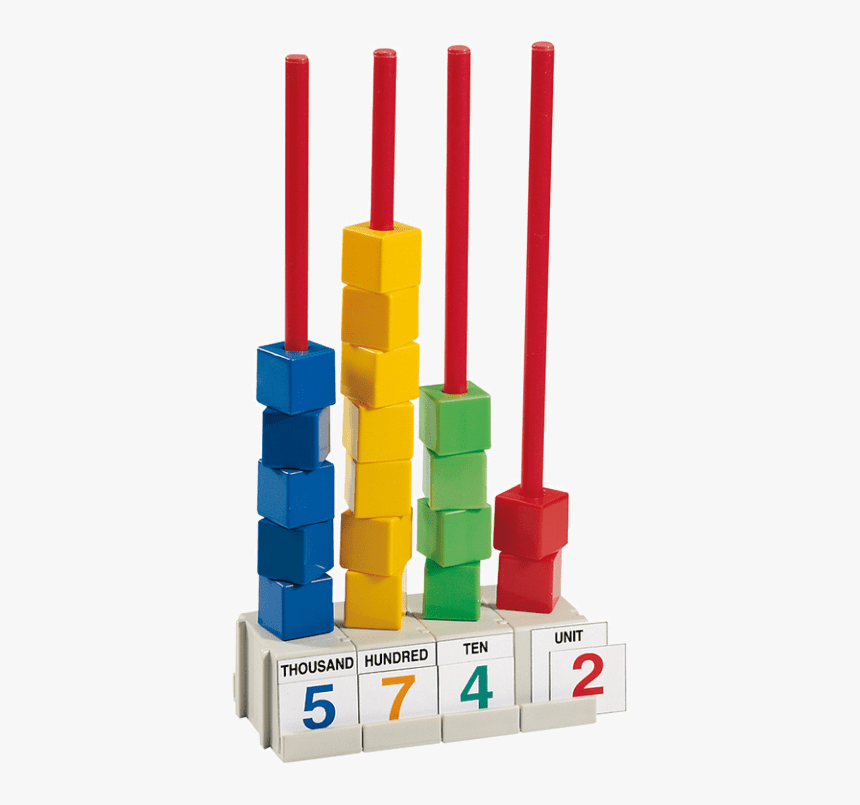
Place value is introduced in EYFS through counting and grouping activities, and it deepens through Year 1 and Year 2. The three levels, ones, tens, hundreds, should be taught in order, with plenty of time at the concrete and pictorial stages before children are expected to hold them abstractly.
| Place value position | What it represents | Example digit | Value in 347 |
|---|---|---|---|
| Ones (units) | Smallest natural number grouping | 7 | 7 |
| Tens | Second digit from the right | 4 | 40 |
| Hundreds | Third digit from the right | 3 | 300 |
A strong test of place value understanding: ask a child to write 347 in expanded form. The correct answer (300 + 40 + 7) confirms they can decompose a number, which is exactly what partitioning requires. LearningMole’s place value videos work through this decomposition visually, showing each digit’s contribution clearly before asking children to apply it in calculation.
Three Activities for Practising Counting On at Home

Parents don’t need worksheets or special equipment to practise counting on. These three activities use everyday objects and take under ten minutes each:
The Mystery Bag. Put a number of small objects (pasta shapes, coins, buttons) into a paper bag and tell your child how many are inside. Drop three or four more into the bag and ask them to count on from the number you stated. The hidden objects mean they cannot count all, they have to count on.
The Dice Addition Game. Roll two dice. Ask your child to identify the bigger number, say it out loud, then count on the smaller number using fingers. For a challenge, replace one die with a ten-sided die or write numbers on sticky notes to extend the range.
Counting On Along the Street. On a walk, pick a number (a door number, a number on a sign) and ask your child to count by 3, 4, or 5 from that number. Simple, no preparation required, and it connects maths to the real world in a way that children find genuinely engaging.
Teaching Resources and Support

For teachers planning counting-on and mental maths lessons, LearningMole provides curriculum-aligned video resources covering early addition, place value, and the CPA approach for KS1 classrooms. The videos are designed for direct classroom use, with clear visual demonstrations and pacing suitable for Year 1 and Year 2 children.
Parents supporting home learning can find LearningMole’s maths content on the LearningMole YouTube channel, where videos covering counting on, place value, and early addition are freely accessible. For full access to teaching materials, activity ideas, and the complete maths resource library, visit LearningMole’s primary maths resources.
LearningMole is a UK educational platform founded by Michelle Connolly, a former primary school teacher with over 15 years of classroom experience. The platform’s resources are designed specifically for UK National Curriculum objectives, covering EYFS through KS2 across maths, English, science, and more.
Watch: How to Teach Kids Addition and Counting On
Frequently Asked Questions

What is the counting on strategy in maths?
Counting on is a mental addition strategy where a child starts at one number and counts upward by the value of the second number, rather than counting every object from zero. For example, to solve 7 + 3, a child using counting on says “seven” and then counts three more steps: “eight, nine, ten.” It’s a core Year 1 mental maths strategy in the UK National Curriculum and the foundation for more efficient addition methods in Year 2 and beyond.
At what age should children learn counting on?
Most children are introduced to counting on in Year 1 (ages 5-6) once they have reliable one-to-one counting skills and some early number sense. The UK National Curriculum expects children to add numbers within 20 using mental strategies, including counting on, by the end of Year 1. Some children are ready earlier, particularly those who have had lots of concrete counting experience in EYFS Reception. Most children are introduced to counting on in Year 1 (ages 5-6) once they have reliable one-to-one counting skills and some early number sense. The UK National Curriculum expects children to add numbers within 20 using mental strategies, including counting on, by the end of Year 1. Some children are ready earlier, particularly those who have had lots of concrete counting experience in EYFS Reception.
Why should children always start with the larger number?
Starting with the larger number reduces the number of counting steps, making the strategy faster and less likely to result in errors. The equations 3 + 14 and 14 + 3 give the same answer, but counting on 3 from 14 (three steps) is much easier than counting on 14 from 3 (fourteen steps). This property, that addition works in any order, is called commutativity, and building it as an early habit saves children significant effort across all mental addition.
How do I stop my child from counting the starting number?
This is the most common counting-on error, sometimes called the fencepost error. The fix is to make the starting number physically distinct: teach your child to tap their head or make a closed fist as they say the first number, then use fingers only for the counts they’re adding. On a number line, they place a finger on the starting number and count the jumps (the actions of moving), not the numbers they pass through.
What is partitioning, and how does it relate to counting on?
Partitioning means splitting a number into its tens and units to make addition easier. For 43 + 21, partitioning turns the calculation into 43 + 20 = 63, then 63 + 1 = 64. It builds directly on counting-on skills because the child is still adding on from a known number, just in chunks rather than one unit at a time. Partitioning is the primary mental addition strategy for two-digit numbers in Year 2 and depends on secure place value knowledge.
How can parents support counting on at home without worksheets?
Everyday activities work well. Put a known number of objects into a bag, then drop in a few more and ask your child to count on without looking inside. Roll two dice, identify the bigger number, and count on the smaller with fingers. Use door numbers or prices on walks as starting points. The goal is frequent, short practice rather than long sessions, five minutes of real-world counting on builds fluency faster than twenty minutes of reluctant worksheet work.
When should a child stop using fingers for counting on?
Fingers are a legitimate and useful tool at the concrete and early pictorial stages. Most children naturally move away from them once their number bonds to 10 and 20 are secure, typically in Year 2. Pushing children to stop using fingers before this point often leads to errors and anxiety. The better goal is to build number bond knowledge alongside counting-on practice so that fingers become unnecessary naturally, rather than forcing their removal.
What LearningMole resources support counting on and early addition?
LearningMole’s maths video library includes videos on counting on, place value, partitioning, and the CPA approach for early addition. These are curriculum-aligned to Year 1 and Year 2 objectives and suitable for both classroom and home use. The YouTube channel provides free access to early maths videos, and the full resource library is available through LearningMole’s subscription for teachers and parents who want structured access across all primary subjects.
Conclusion

Mental maths fluency doesn’t arrive all at once. It builds through a sequence of small, well-taught strategies, and counting on is the first one that really matters. Children who learn it properly, starting with the bigger number, using the CPA sequence, and practising the correction for the fencepost error, arrive at Year 2 partitioning and mental addition with a solid foundation rather than gaps they’re quietly working around.
For teachers, that means investing time at the concrete and pictorial stages even when it feels slow, because the abstract stage is only reliable when the earlier ones are secure. For parents, it means understanding that counting on fingers isn’t a failure, it’s a stage. The job is to give children the confidence to count on at all, and then to make the strategy feel so natural that the fingers eventually become optional.
LearningMole’s early maths resources are designed with this progression in mind. Whether you’re a Year 1 teacher building a lesson sequence, a parent watching videos alongside a five-year-old at home, or a teaching assistant supporting a small group, the same principle applies: meet children where they are, use what they can see and touch, and move towards the abstract only when the foundations are genuinely solid.


Leave a Reply