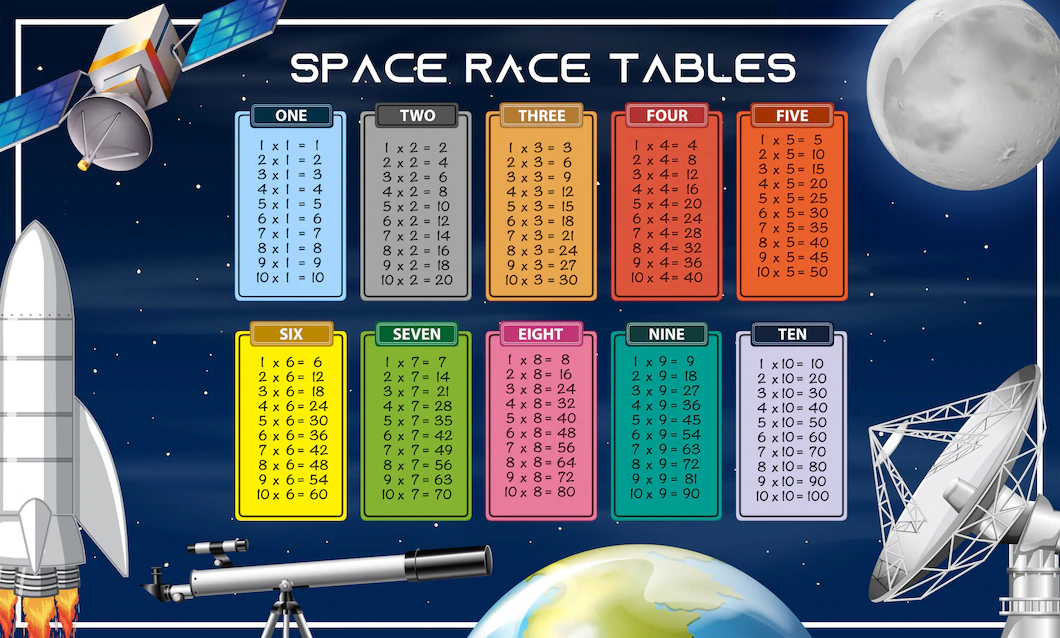
Multiplication Times Tables: x6 Magic Tables

Avatar of Michelle Connolly
Updated on: Educator Review By: Michelle Connolly

Multiplications: The 6 times table sits at the heart of Year 4 maths in UK primary schools, and it tends to be where children’s confidence either takes root or starts to wobble. Unlike the 2s, 5s, and 10s that children master in Year 2, the 6s demand a new level of thinking.

Multiplication Times Tables: The x6 Magic Tables Mastery Guide

They push pupils from skip-counting by comfortable numbers into territory where patterns are less obvious and recall speed matters. For parents watching homework sessions, and teachers preparing children for the Year 4 Multiplication Tables Check (MTC), the 6s represent a real milestone.

The good news is that the 6 times table is genuinely packed with patterns. Once children see them, the facts start to feel less like a list to memorise and more like a system they can navigate. LearningMole’s approach to teaching multiplication draws on the Concrete-Pictorial-Abstract (CPA) method used in UK primary classrooms: start with something a child can see or touch, build a picture in their mind, then move to the numbers. The strategies in this guide follow exactly that sequence.

This guide walks through every major pattern in the 6 times table, explains the finger trick for higher multiples that most resources skip over, and connects all of it directly to the speed and fluency the UK National Curriculum expects by the end of Year 4. Whether you’re a teacher planning a sequence of lessons or a parent sitting at the kitchen table on a Tuesday evening, you’ll find practical strategies here that actually work.

Why the 6 Times Table Is the Gateway to Year 4 Mastery

The 6 times table marks a turning point in the UK National Curriculum’s multiplication journey. Children are expected to know all tables up to 12 × 12 by the end of Year 4, and the Year 4 MTC tests that knowledge under timed conditions (6 seconds per question). The 6s are significant because they sit at the intersection of several key number relationships: they’re double the 3s, they’re closely linked to the 12s, and they share the even-number ending rule with the 2s, 4s, and 8s.

Children who secure the 6 times table early tend to find the 7s, 8s, and 12s considerably more manageable. Conversely, those who skip past the 6s without solid recall often find their confidence eroding as each new table builds on the last. This makes the 6s worth spending real time on, not just rushing through.

The MTC expects children to retrieve multiplication facts within 6 seconds per question. That timescale is achievable through genuine automaticity, not by working out answers during the test. Understanding patterns helps children build confidence; repeated, low-stakes practice converts that confidence into speed.

The “Even Number Match” Magic Trick

multiplications

One of the most satisfying patterns in the 6 times table is the even number rule: when you multiply 6 by any even number, the answer ends in that same digit.

CalculationAnswerLast Digit Matches?
6 × 212Yes — ends in 2
6 × 424Yes — ends in 4
6 × 636Yes — ends in 6
6 × 848Yes — ends in 8
6 × 1060Yes — ends in 0

This isn’t a trick in the traditional sense — it’s a genuine mathematical property of even multiples of 6. Teachers can use it as a self-checking strategy: if a child multiplies 6 × 4 and gets 26, they should immediately notice that 26 doesn’t end in 4, which flags an error worth revisiting.

For classroom use, write out the even multiples on the board and highlight the final digit in a bright colour. Ask children to predict the last digit before they work out the full answer. This builds pattern recognition as well as multiplication fluency.

The Double 3s Strategy: A Visual Comparison

multiplications

The most reliable long-term strategy for the 6 times table is understanding that 6 × n is always double 3 × n. This isn’t a shortcut to memorise — it’s a genuine relationship that makes sense when children can see it visually.

3 Times Table6 Times Table
3 × 1 = 3×2 →6 × 1 = 6
3 × 2 = 6×2 →6 × 2 = 12
3 × 3 = 9×2 →6 × 3 = 18
3 × 4 = 12×2 →6 × 4 = 24
3 × 5 = 15×2 →6 × 5 = 30
3 × 6 = 18×2 →6 × 6 = 36
3 × 7 = 21×2 →6 × 7 = 42
3 × 8 = 24×2 →6 × 8 = 48
3 × 9 = 27×2 →6 × 9 = 54
3 × 10 = 30×2 →6 × 10 = 60
3 × 11 = 33×2 →6 × 11 = 66
3 × 12 = 36×2 →6 × 12 = 72

The CPA approach makes this concrete before it becomes abstract. In the classroom, draw two 3 × 4 arrays side by side on squared paper. Ask children to count: each array has 12 squares. Now shade them as one 6 × 4 rectangle. The answer, 24, is visible. The abstract fact 6 × 4 = 24 is now grounded in something children have seen and counted.

At home, this works with objects. Line up 3 groups of counters, count them, then double the groups. The connection between 3s and 6s becomes something a child has done, not just something they’ve heard.

“The doubling strategy works so well for the 6s because it builds on knowledge children already have. Most Year 4 pupils are confident with their 3 times table. Showing them that the 6s are simply double the 3s is a genuine insight, not a shortcut — it’s the kind of mathematical thinking we want children to develop.” — Michelle Connolly, Founder of LearningMole and former teacher with over 15 years of classroom experience

This strategy builds directly on the x3 Magic Tables — ensure children are confident with the 3s before introducing the 6s.

The “Hidden” Finger Trick for 6 × 6 to 10 × 10

multiplications

Most children know the 9s finger trick, but the method for multiplying numbers from 6 to 10 using both hands is far less commonly taught — despite being genuinely useful for the harder facts in the 6 times table.

How the method works

Hold both hands in front of you, palms facing away. Number your fingers from 6 to 10, starting with the little finger on each hand (little finger = 6, ring finger = 7, middle finger = 8, index finger = 9, thumb = 10).

Worked example: 6 × 7 = 42

  1. Touch the “6” finger on one hand (little finger) to the “7” finger on the other hand (ring finger).
  2. Count the touching fingers and all fingers below them — these give you the tens. (3 fingers = 30.)
  3. Count the fingers above the touch point on each hand separately: 4 fingers on one side, 3 on the other.
  4. Multiply those two numbers: 4 × 3 = 12 (units).
  5. 30 + 12 = 42. ✓

This method takes 5 to 10 minutes to learn and works consistently for all combinations from 6 × 6 to 10 × 10. For children who find rote memorisation difficult, having a concrete, body-based strategy is genuinely valuable. Note: this is a scaffold. The goal remains automatic recall without finger counting.

LearningMole has educational videos demonstrating multiplication strategies step by step. Visit the LearningMole YouTube channel to find visual demonstrations that support classroom and home practice.

The 5+1 Distribution Strategy

Primary School Resources

This is the strategy most resources miss entirely, and it’s arguably the most reliable for children who know their 5s confidently, which most Year 3 and 4 children do.

The logic: 6 × n = (5 × n) + n

Tricky FactSplit ItAnswer
6 × 7(5 × 7) + 7 = 35 + 742
6 × 8(5 × 8) + 8 = 40 + 848
6 × 9(5 × 9) + 9 = 45 + 954
6 × 12(5 × 12) + 12 = 60 + 1272

The beauty of this method is its reliability. Children don’t need to remember a pattern — they just need to know that any number times 6 is the same number times 5, plus one more group of that number. This approach also reinforces the distributive property of multiplication, which has direct curriculum value beyond the 6s.

Patterns in the Multiples: The 6–2–8–4–0 Sequence

Grid Method Multiplication

Every set of 10 multiples of 6 follows the same one-digit cycle: 6, 2, 8, 4, 0 — then it repeats.

  • 6 × 1 = 6 (ends in 6)
  • 6 × 2 = 12 (ends in 2)
  • 6 × 3 = 18 (ends in 8)
  • 6 × 4 = 24 (ends in 4)
  • 6 × 5 = 30 (ends in 0)
  • 6 × 6 = 36 (ends in 6 — pattern repeats)
  • 6 × 7 = 42 (ends in 2)
  • 6 × 8 = 48 (ends in 8)
  • 6 × 9 = 54 (ends in 4)
  • 6 × 10 = 60 (ends in 0)

This is particularly useful as a self-checking tool. If a child calculates 6 × 7 and gets 43, they can check: the ones digit should be 2, and 43 ends in 3, so something’s gone wrong.

The Clock Face 6s activity

A clock face moves in minutes, and those minutes count in 6s: 6 minutes takes you to the “1” on a clock, 12 minutes to the “2”, and so on up to 60. Drawing this connection helps children see the 6 times table as something real. It also reinforces minutes-past-the-hour for time-telling, making it particularly useful for Year 3 and 4 pupils working on both strands simultaneously.

Preparing for the Year 4 MTC: From Tricks to Speed

Grid Method Multiplication

The DfE’s Multiplication Tables Check tests all tables from 2 to 12, presenting 25 questions with 6 seconds allowed per question and 3 seconds between questions. The strategies in this guide are psychological scaffolds. They give children a route to a correct answer when memory fails. But the MTC doesn’t leave room for a child to work through 6 × 8 = (5 × 8) + 8 under timed conditions. The end goal is genuine automaticity.

“The MTC comes as a real shock to children who’ve relied on working things out rather than knowing their tables. The strategies in this kind of guide are absolutely the right starting point — they build confidence and understanding. But from about February of Year 4 onwards, practice should shift firmly towards speed drills, flashcard recall, and low-stakes timed games. The goal isn’t ‘can you get there’; it’s ‘can you get there in under 6 seconds’.” — Michelle Connolly, Founder of LearningMole and former teacher with over 15 years of classroom experience

From strategies to recall: a practical sequence

  • Autumn Term, Year 4: Learn the patterns and strategies. Build understanding using the doubling rule, even-ending trick, and 5+1 method.
  • Spring Term: Begin timed practice. Flashcards, short bursts (2 minutes), mix of all tables. Track which facts still need working out.
  • Summer Term (pre-MTC): Rapid-fire recall. Target 6 × 7, 6 × 8, and 6 × 9 specifically — these are consistently the hardest.

Once the 6s are secure, progress to the x7 Magic Tables and x8 Magic Tables — both build directly on 6s knowledge.

Teaching Resources and Support

Multiplication

LearningMole provides curriculum-aligned multiplication resources for UK primary teachers and parents supporting home learning. The 6 times table content connects directly to Year 4 MTC preparation and the broader multiplication strand of the UK National Curriculum.

For teachers: the doubling strategy, 5+1 distribution method, and ones-digit pattern work well as whole-class teaching sequences. Visual arrays and comparison tables (as shown in the Double 3s section above) are ready-made for use on a whiteboard or as printed handouts.

For parents: the Clock Face 6s activity requires nothing but a clock and a few minutes. The 5+1 strategy is easy to practise aloud during car journeys or at mealtimes: “What’s 6 × 7? Think of your 5s — 5 × 7 is 35, then add 7 more.” Real-world practice of this kind, repeated in short bursts, builds the retrieval speed the MTC demands.

LearningMole’s full multiplication resources, including video tutorials and printable support materials, are available at learningmole.com. Explore the full series: x5 Magic Tables, x4 Magic Tables, x9 Magic Tables, x10 Magic Tables. Subscribe for access to over 1,400 educational videos covering the full UK primary curriculum.

Browse multiplication resources | Watch free videos on YouTube

Frequently Asked Questions

2 Times Tables

What is the easiest trick for the 6 times table?

The easiest entry point for most children is the even number ending rule: when you multiply 6 by any even number, the answer ends in that same digit. So 6 × 4 ends in 4 (giving 24), 6 × 6 ends in 6 (giving 36), and 6 × 8 ends in 8 (giving 48). This won’t give children the full answer, but it works as a quick self-check. For a complete calculation method, the 5+1 strategy — 6 × n = (5 × n) + n — is the most reliable, because it uses the 5 times table as a foundation most children already know well.

Is there a finger trick for the 6 times table?

Yes, though it takes a few minutes to learn. The method works for any multiplication from 6 × 6 up to 10 × 10. Number your fingers from 6 (little finger) to 10 (thumb) on each hand. Touch the relevant fingers together to find the fact you need. Count touching fingers and below for tens, multiply the remaining fingers on each hand for units, then add the two together. This method is best taught in a short, focused session with a teacher or parent working through several examples before children try it independently.

How does the 6 times table relate to the 3 times table?

Every 6 times table fact is exactly double the corresponding 3 times table fact. If a child knows that 3 × 7 = 21, they also know that 6 × 7 = 42, because 21 doubled is 42. This doubling relationship is a genuine mathematical property rather than a memory trick, and it connects naturally to the Concrete-Pictorial-Abstract teaching approach used in UK primary classrooms. Showing children two identical 3-column arrays side by side and asking them to count the total makes this relationship visible before abstract number facts are expected.

When should my child learn the 6 times table?

The UK National Curriculum expects children to know all multiplication tables up to 12 × 12 by the end of Year 4 (typically age 8–9). The Year 4 Multiplication Tables Check takes place in the summer term and tests all tables in this range. In practice, the 6 times table is usually introduced in Year 3 alongside the 4s and 8s, building on the 2s and 3s from Year 2. Children who are secure with their 3 times table and comfortable with doubling are well prepared to begin the 6s.

What are the “magic numbers” in the 6 times table?

The ones digits in the 6 times table follow a repeating cycle of five numbers: 6, 2, 8, 4, 0. So 6 × 1 ends in 6, 6 × 2 ends in 2, 6 × 3 ends in 8, 6 × 4 ends in 4, and 6 × 5 ends in 0. Then the pattern repeats: 6 × 6 ends in 6, 6 × 7 ends in 2, and so on. Children who spot this pattern can use it to self-check their answers during the MTC.

How can I help my child answer 6s in under 6 seconds?

Speed comes from retrieval practice, not from knowing the strategies. Once children understand the patterns and have used them to build their knowledge, the shift to speed requires short, frequent practice sessions focused on instant recall. Flashcard drills (10 cards, timed, aiming to beat the previous session), rhythmic chanting to a beat, and simple games like “say the answer before I count to 3” all build retrieval speed. Target 6 × 7, 6 × 8, and 6 × 9 specifically in the final weeks before the MTC. Little and often from Spring Term in Year 4 is more effective than intensive cramming.

Are there 6 times table songs for KS2?

Rhythmic skip-counting to a beat is effective and straightforward to set up at home or in the classroom: count up in 6s (6, 12, 18, 24…) to a consistent rhythm, clapping or tapping to mark each number. This builds familiarity with the sequence of multiples before the linked multiplication facts are practised separately. Search LearningMole on YouTube for multiplication videos designed for primary-aged children with visual and rhythmic elements suited to KS2 learners.

Conclusion

Multiplication

The 6 times table repays the time spent on it. Children who understand why the patterns work — the doubling relationship with the 3s, the even-number ending rule, the 5+1 distribution — carry that mathematical thinking forward into the 7s, 8s, 12s, and beyond. The facts become anchors in a connected system rather than isolated items on a list.

For teachers, the key is sequencing: concrete and visual first, then pattern recognition, then timed retrieval practice as the MTC approaches. For parents, the key is regularity over intensity: five minutes of flashcard practice three times a week does more than an hour on a Sunday evening. The patterns in this guide give children something to hold onto when memory fails; consistent practice turns those patterns into instant recall.

LearningMole’s times tables resources cover the full x1 to x12 range, with video support aligned to the UK National Curriculum. Explore the complete series at learningmole.com and support your child or class on the journey from understanding to automaticity.

Leave a Reply

Your email address will not be published. Required fields are marked *