Tables for Kids: Mathematics education stands at a curious crossroads in contemporary pedagogy, caught between traditional approaches that emphasise memorisation and computational fluency and modern methodologies that prioritise conceptual understanding and problem-solving strategies. Nowhere does this tension manifest more clearly than in the teaching of multiplication tables—those foundational arithmetic facts that generations of pupils have committed to memory through rote repetition, yet which modern curricula approach with considerably more nuance and pedagogical sophistication.
The Common Core State Standards, developed in the United States but influencing mathematics education globally, represent a comprehensive attempt to reimagine what mathematical proficiency means and how it should be cultivated.
Whilst the Common Core applies specifically to American schools, its principles resonate with similar curriculum reforms across the English-speaking world, including initiatives in Britain, Australia, and elsewhere that emphasise mathematical reasoning alongside computational skills. The standards insist that children should not merely memorise multiplication facts but understand what multiplication means, recognise patterns within multiplication tables, and apply multiplicative thinking flexibly across diverse contexts.
This article explores how multiplication tables can be taught in ways that align with Common Core principles whilst remaining engaging and effective for young learners. The goal is not to abandon the goal of fluency—children undeniably benefit from knowing their tables automatically—but to ensure that fluency develops alongside genuine understanding.
When multiplication becomes mesmerising rather than merely mechanical, when patterns reveal themselves as beautiful rather than arbitrary, children develop not just computational ability but mathematical thinking that serves them throughout their educational journey and beyond.
Understanding Multiplication Before Memorising
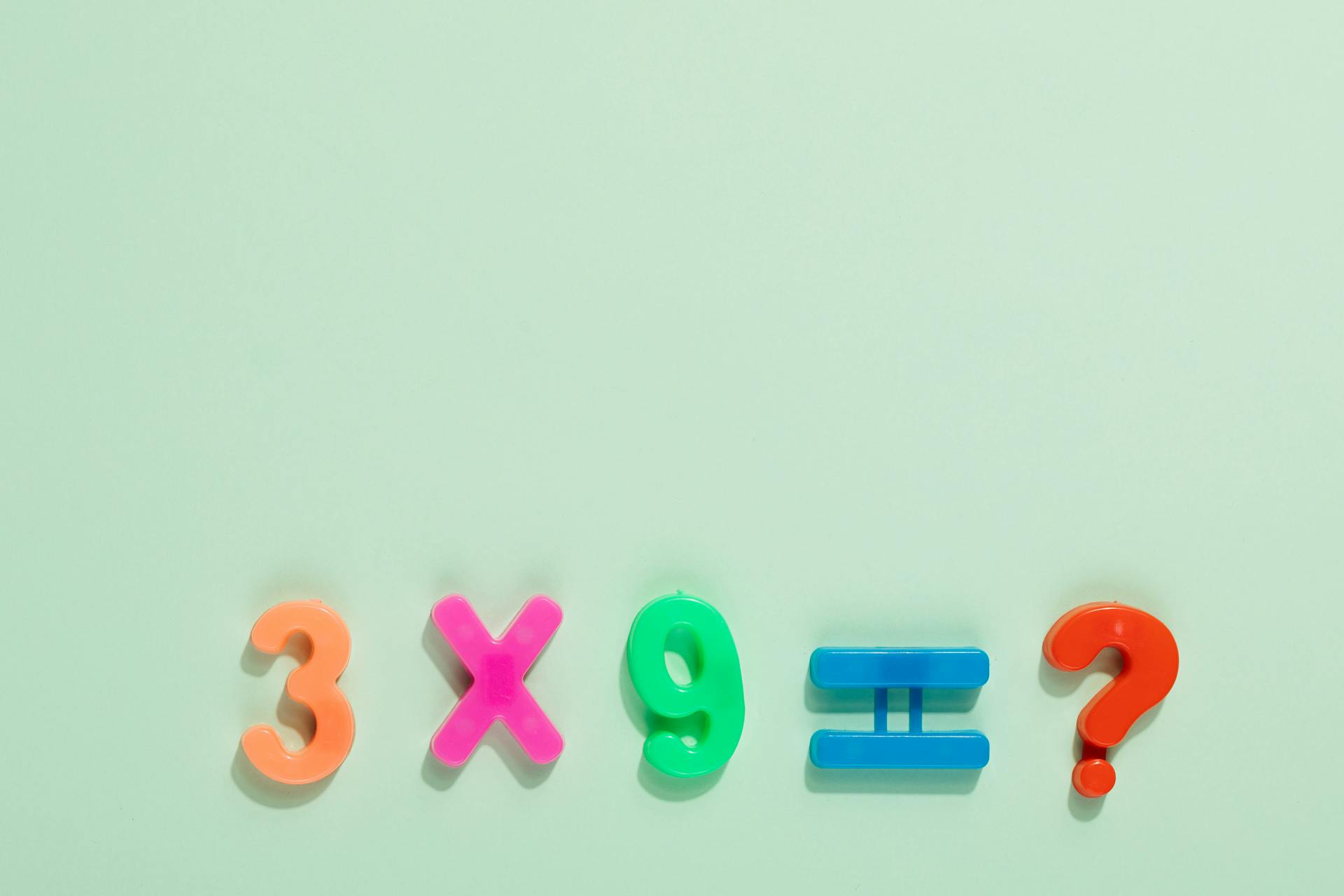
The Common Core approach insists that children grasp what multiplication actually represents before drilling facts. Multiplication emerges from repeated addition: 3 × 4 means adding 3 four times (3 + 3 + 3 + 3) or, equivalently, adding 4 three times (4 + 4 + 4). This seemingly simple insight proves foundational, as children who understand multiplication as repeated addition can reason about unfamiliar facts rather than being helpless when memory fails.
Visual representations make this concrete. Arrays—rectangular arrangements of objects in rows and columns—provide perhaps the clearest multiplication model. An array with 3 rows and 4 columns contains 12 objects total, visually demonstrating that 3 × 4 = 12. Crucially, the same array can be rotated to show 4 rows and 3 columns, revealing the commutative property: 3 × 4 equals 4 × 3. This isn’t arbitrary memorisation but observable reality.
Area models extend this understanding, showing multiplication as measuring rectangles’ areas. A rectangle 3 units high and 4 units wide has an area of 12 square units, connecting multiplication to geometry and measurement—applications children will encounter throughout mathematics. Skip counting on number lines provides another representation: jumping by 3s four times (3, 6, 9, 12) or by 4s three times (4, 8, 12), both reach 12, demonstrating multiplication through sequential movement.
These varied representations ensure children understand multiplication deeply before memorisation begins. A child who grasps the multiplication conceptually can reconstruct forgotten facts through reasoning rather than facing complete bewilderment when memory proves inadequate. This foundation transforms memorisation from arbitrary to meaningful, as children recognise they’re learning efficient shortcuts for operations they already understand.
The Architecture of Multiplication Tables
Multiplication tables possess an internal structure that, once revealed, transforms them from random collections of facts into coherent systems governed by discoverable patterns. Teaching children to recognise these patterns makes memorisation easier, whilst developing pattern-recognition skills valuable throughout mathematics.
The commutative property—that 3 × 4 equals 4 × 3—immediately halves the memorisation burden. Rather than learning both facts separately, children recognise them as equivalent, reducing the number of unique facts that need to be memorised. This isn’t mere convenience but a fundamental insight into multiplication’s nature, revealing mathematical structure rather than arbitrary rules.
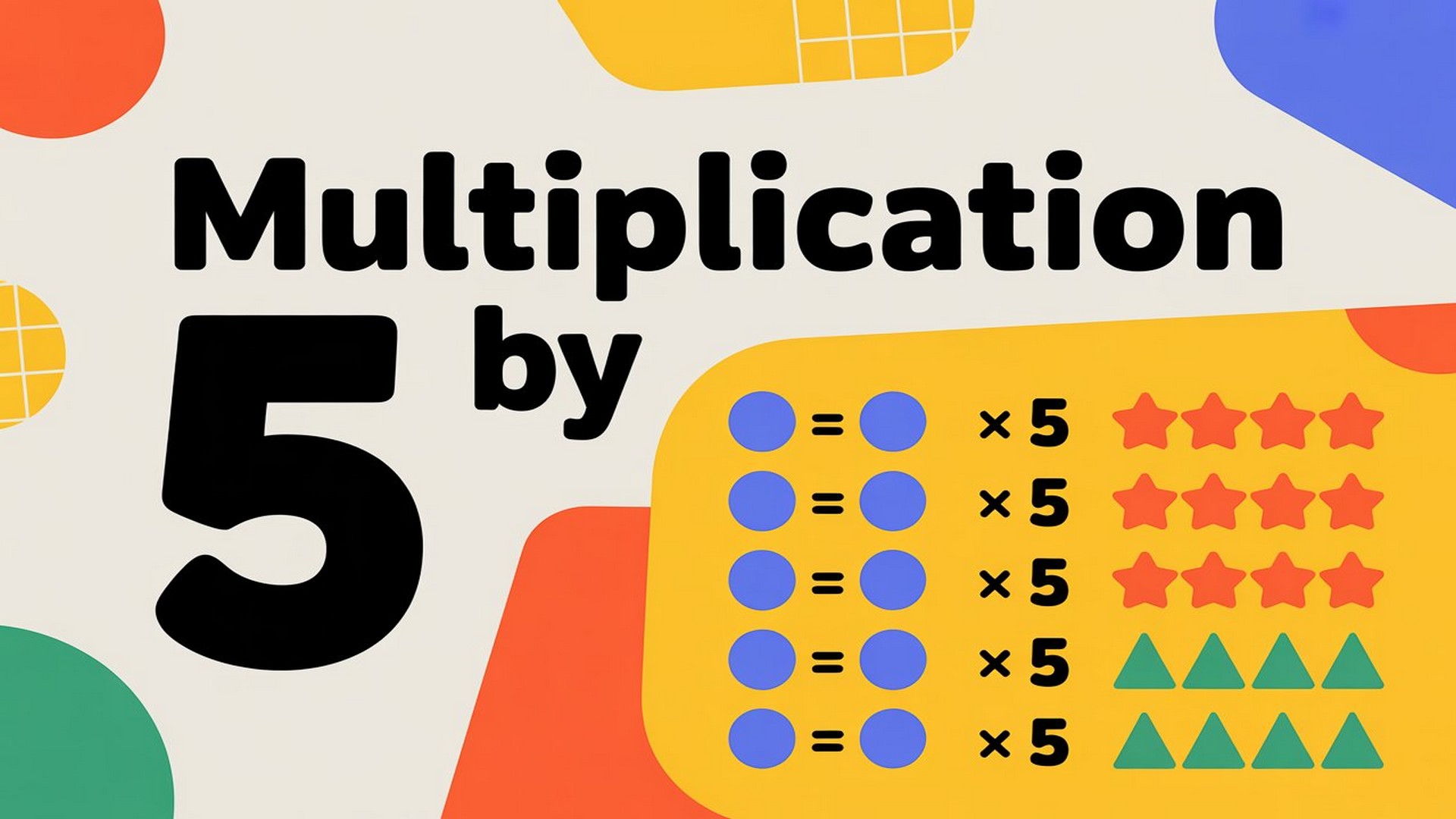
Certain tables follow particularly obvious patterns. The ones table (1 × n = n) simply reproduces numbers unchanged. The tens table adds a zero to numbers (10 × n produces n followed by zero). The fives table alternates between numbers ending in 5 and 0 (5, 10, 15, 20…), creating a rhythm children readily recognise. The twos table represents doubling, connecting to children’s existing understanding of pairs.
The nines table displays mesmerising patterns. The digits in nine’s products always sum to nine: 9, 18 (1+8=9), 27 (2+7=9), 36 (3+6=9), continuing throughout. Additionally, the first digit increases by one whilst the second decreases by one as you progress (09, 18, 27, 36…). Children can verify nine facts using their fingers through a clever trick: holding up ten fingers, fold down the finger corresponding to the multiplier (for 9 × 4, fold the fourth finger), and the fingers before and after the folded one show the answer’s digits (3 fingers before, 6 after = 36).
Square numbers (n × n) form another pattern: 1, 4, 9, 16, 25, 36, 49, 64, 81, 100. These appear along the multiplication table’s diagonal and follow their own patterns—the differences between consecutive squares increase by two each time (1 to 4 is +3, 4 to 9 is +5, 9 to 16 is +7…). Recognising these patterns reduces memorisation whilst revealing mathematical beauty.
Strategic Sequencing of Table Learning
Common Core principles suggest teaching tables strategically rather than simply proceeding sequentially from ones through tens. Beginning with the easiest tables builds confidence whilst establishing patterns that make subsequent tables more accessible.
Starting with ones, twos, fives, and tens makes sense as these follow obvious patterns children readily grasp. The one table proves trivial. Twos connect to doubling, which children understand from everyday experience. Fives’ predictable pattern and connection to money (counting by fives like nickels or five-pence pieces) make them accessible. Tens simply append zeros.
Once these foundation tables are secure, the commutative property dramatically reduces the remaining work. With 1, 2, 5, and 10 mastered, many products already appear in other tables. For instance, 3 × 2 is already known as 2 × 3, so that fact need not be learned in the three’s table.
The nines table, despite appearing difficult, actually proves easier than middle tables like sixes, sevens, and eights due to its patterns. Teaching nines before these more challenging tables provides additional known facts (through commutativity) that reduce subsequent memorisation burden.
Threes and fours follow naturally, connecting to skip counting and building on twos (doubling twice reaches fours, for instance: 2 × 4 = 8, so 4 × 4 = 2 × 4 + 2 × 4 = 8 + 8 = 16). The most challenging tables—sixes, sevens, and eights—come last, but by this point, many facts within these tables are already known through commutativity or can be derived from known facts through strategies like doubling or adding on.
Making Multiplication Mesmerising Through Games
Games transform multiplication practice from tedious drill into an engaging challenge, maintaining motivation whilst building fluency. Well-designed games provide spaced repetition—encountering facts repeatedly over time—which research demonstrates produces stronger, longer-lasting memorisation than massed practice.
Multiplication war, adapted from the card game, has two players simultaneously flip two cards each, then multiply them. The player with the larger product wins all four cards. This game provides rapid repeated practice whilst introducing a competitive element that maintains engagement. Variations can target specific tables by removing certain cards or requiring players to call out the product before claiming the cards.
Multiplication bingo gives each player a card with products written in squares. The caller announces multiplication problems, and players mark the products if they appear on their cards. First to complete a row wins. This game practices recognising products from problems whilst adding elements of chance and anticipation that make practice enjoyable.
Online games and apps offer adaptive practice that adjusts difficulty based on performance, ensuring children work at appropriate challenge levels. Quality digital resources provide immediate feedback, track progress over time, and often incorporate game elements such as points, levels, or rewards to maintain motivation during extended practice sessions.
Board games incorporating multiplication—where movement depends on solving multiplication problems or landing on spaces that require mathematical challenges—embed practice within broader gaming experiences. Creating such games can itself be a learning activity, as children designing games must consider which facts to include and how to balance challenge with playability.
Visual and Kinesthetic Learning Approaches
Children possess diverse learning preferences, with some responding better to visual representations, whilst others benefit from physical, kinesthetic engagement. Effective multiplication instruction incorporates multiple modalities, ensuring all learners find accessible entry points.
Multiplication charts displayed prominently in classrooms provide a constant visual reference, allowing children to verify answers and notice patterns through repeated exposure. Colour-coding charts to highlight patterns—marking all even products one colour, multiples of five another, square numbers distinctly—draws attention to structure within the tables.
Manipulatives—physical objects children can handle—make multiplication concrete. Grouping objects into equal sets demonstrates multiplication through direct action: making 4 groups of 3 objects clearly shows 4 × 3. Base-ten blocks, commonly used in primary mathematics, can represent larger multiplications by grouping unit cubes into rods (representing 10) and flats (representing 100), allowing children to physically construct products.
Skip counting with movement reinforces multiplication through rhythm and physical engagement. Children might jump, clap, or step whilst counting by threes or fours, embodying the mathematical progression. Combining movement with recitation engages multiple neural pathways, strengthening memory formation.
Drawing and creating visual representations helps children internalise multiplication facts. Having children draw arrays, area models, or number lines for various products requires them to engage actively with multiplication’s meaning rather than passively receiving information. The act of creation deepens understanding whilst producing reference materials that children can consult later.
Connecting Multiplication to Real-World Contexts
Mathematics gains meaning when children recognise its utility beyond classroom exercises. Connecting multiplication to situations children encounter in daily life demonstrates its practical value while providing memorable contexts that aid retention.
Cooking and baking naturally involve multiplication: doubling recipes requires multiplying all ingredients by two, whilst halving recipes divides by two (introducing division as inverse multiplication). Children helping with meal preparation can calculate quantities needed, connecting multiplication to tangible, meaningful outcomes—delicious food.
Money calculations frequently require multiplication: determining the cost of multiple items, calculating change, or understanding bulk purchasing discounts. British children might calculate how many five-pence pieces equal a pound (20), how much five chocolate bars cost if one costs 60 pence (£3), or compare per-item costs when items sell individually versus in multipacks.
Measurement conversions depend on multiplication: centimetres to metres (dividing by 100), metres to kilometres (dividing by 1000), or customary measurements like feet to yards. Understanding that 3 feet equal one yard makes converting between these units a multiplication problem, connecting tables to practical measurement tasks.
Time calculations involve multiplication: minutes in hours (60), hours in days (24), days in weeks (7). Children can calculate how many hours they attend school weekly, how many minutes constitute their favourite television programme, or how many days remain until holidays—all requiring multiplication.
Sports statistics abound with multiplication: calculating total points scored when each goal equals specific points, determining team totals from individual performances, or understanding batting averages. Children interested in sports can engage with multiplication through contexts they find inherently motivating.
Building Fluency Through Distributed Practice
Research consistently demonstrates that distributed practice—shorter sessions spread over time—produces better long-term retention than massed practice of equal total duration. Rather than marathon memorisation sessions, brief daily practice proves more effective for achieving lasting fluency.
Five to ten minutes of focused multiplication practice daily yields better results than hour-long weekend sessions. This spacing allows consolidation between practice sessions, with sleep playing a crucial role in memory formation. The brain processes and strengthens memories during sleep, making daily practice with overnight gaps particularly effective.
Practice should include a mixture of known and unknown facts, ensuring children maintain previously learned tables whilst adding new ones. Reviewing earlier tables prevents forgetting whilst building confidence before tackling new challenges. Mixed practice also develops fluency in fact retrieval, as children must discriminate which operation and which specific fact applies rather than simply progressing sequentially through one table.
Varying practice formats maintains engagement whilst ensuring flexible knowledge. Some sessions might emphasise speed and automatic recall, whilst others focus on applying multiplication in word problems or creating story contexts for given facts. This variation develops both computational fluency and conceptual flexibility.
Testing, particularly self-testing, constitutes highly effective practice. Children checking their own answers against solutions develops metacognition—awareness of what they know and don’t know—whilst providing immediate feedback. Practice testing proves more effective for long-term retention than simply reviewing material, as retrieval itself strengthens memories.
Addressing Anxiety and Building Confidence
Mathematics anxiety, particularly around timed tests and performance pressure, can impede learning and create negative associations that persist into adulthood. Teaching multiplication in ways that build confidence whilst minimising anxiety represents a crucial pedagogical consideration.
Emphasising a growth mindset—the belief that mathematical ability develops through effort rather than being fixed—helps children approach challenges positively. Praising effort, strategies, and improvement rather than innate ability encourages persistence when difficulties arise. Framing mistakes as learning opportunities rather than failures reduces anxiety whilst promoting resilience.
Avoiding premature timed testing allows fluency to develop without anxiety-inducing pressure. Children need time to build understanding and initial fluency before speed becomes emphasised. When timed practice does occur, framing it as a personal challenge—beating one’s own previous performance—rather than comparison with others, reduces competitive pressure whilst maintaining motivation.
Providing multiple pathways to answers accommodates different thinking styles whilst building problem-solving abilities. Some children calculate 7 × 8 by recognising it as 7 × 7 + 7 (49 + 7 = 56), others might use 8 × 8 – 8 (64 – 8 = 56), whilst others simply recall the fact directly. Validating these varied approaches respects different mathematical thinking styles whilst ensuring all children can reach answers.
Celebrating progress rather than demanding perfection maintains motivation through the extended process of achieving full fluency. Recognising when children master new tables, improve their speed, or successfully apply multiplication in problems provides positive reinforcement that encourages continued effort.
Technology Tools for Multiplication Practice
Digital resources offer advantages for multiplication practice, providing adaptive difficulty, immediate feedback, progress tracking, and engaging formats that maintain motivation through extended practice. However, technology should complement rather than replace conceptual instruction and varied practice formats.
Quality apps and websites provide structured progression through multiplication facts, often incorporating game elements that maintain engagement. Adaptive algorithms adjust difficulty based on performance, ensuring children work at appropriate challenge levels—not so easy as to bore, not so difficult as to frustrate.
Online multiplication games range from simple drill programmes to complex strategy games incorporating multiplication challenges. The best combine engaging gameplay with meaningful mathematical practice, requiring genuine thought rather than mere rapid clicking.
Video resources explain multiplication concepts, demonstrate strategies, and model problem-solving approaches. High-quality mathematical videos can supplement classroom instruction, providing alternative explanations that may resonate with children who struggled with initial presentations.
Interactive simulations allow children to manipulate virtual arrays, area models, or other multiplication representations, exploring how changing factors affect products. This dynamic manipulation deepens conceptual understanding in ways static representations cannot achieve.
However, technology use requires discernment. Screen time should be balanced with non-digital activities, social interaction, and physical play. Not all apps claiming educational value deliver genuine learning, with some providing superficial entertainment rather than meaningful practice. Educators and parents must evaluate digital resources critically, selecting those that truly support learning rather than simply occupying children’s time.
Assessment That Informs Instruction
Assessment should primarily serve learning rather than merely measuring it. Formative assessment—ongoing evaluation during instruction—provides information that guides teaching whilst helping children understand their own learning.
Observing children as they work reveals their strategies and misconceptions. A child who consistently produces incorrect answers for a particular table may have memorised incorrectly, whilst one who takes considerable time but reaches correct answers may lack fluency despite having understanding. These observations inform targeted instruction addressing specific needs.
Exit tickets—brief problems completed at lessons’ end—provide quick snapshots of understanding. Teachers can review these to identify which concepts require reteaching and which children need additional support. The information guides subsequent lesson planning whilst remaining low-stakes for children.
Self-assessment helps children develop metacognition and ownership of their learning. Regular opportunities to identify which tables they’ve mastered and which require more work encourage reflection whilst providing information for targeted practice.
Summative assessments—evaluating learning after instruction concludes—should test both computational fluency and conceptual understanding. Including varied problem types—straightforward computation, word problems, pattern recognition, strategy explanation—ensures assessment captures the full range of multiplicative competence that Common Core principles value.
Conclusion
Multiplication tables represent foundational arithmetic knowledge that children must master, yet how they achieve this mastery matters enormously. The Common Core approach—emphasising understanding alongside fluency, patterns alongside memorisation, application alongside computation—reflects contemporary understanding of effective mathematics education.
Making multiplication mesmerising requires revealing its inherent patterns, connecting it to meaningful contexts, and providing engaging practice that builds fluency without inducing anxiety. When children understand what multiplication means, recognise structure within multiplication tables, and see mathematics’ utility beyond classroom exercises, they develop not merely computational skill but mathematical thinking that serves them throughout education and life.
The goal is not choosing between conceptual understanding and computational fluency but recognising these as complementary aspects of mathematical competence. Children need both: understanding enables reasoning when memory fails, whilst fluency allows cognitive resources to focus on complex problem-solving rather than basic computation.
Effective instruction develops both simultaneously, ensuring children emerge as confident, capable mathematical thinkers who view mathematics not as arbitrary rules to memorise but as coherent systems to understand and apply.
Maths Circus, an innovative platform we've crafted, presents a captivating realm where children learn mathematics through the exciting theme of a circus. The joy of juggling numbers and solving circus...
Wolfgang Amadeus Mozart (1756 to 1791) was an Austrian Classical-period composer who wrote more than 600 works, including operas, symphonies, and piano concertos, in a life of only 35 years....
Cooks prepare, cook and present food for other people, working in restaurants, schools, hospitals, hotels, care homes and cafés. Their day covers washing and chopping ingredients, cooking dishes at the...
Actors use their voice, their body and their imagination to turn the words of a script into a believable person that an audience can follow, whether that audience is sitting...







Leave a Reply