The Brilliant Benefits of Homeschooling
Table of Contents
More UK families are choosing home education than at any point in the last decade. According to figures from local authorities, the number of children registered for elective home education in England has roughly doubled since 2019, driven by a mix of post-pandemic reassessment, growing awareness of neurodivergent needs, and a desire for a more flexible, personalised approach to learning. For many families, the decision is not made against school, but in favour of something that fits their child better.

Home education in the UK is legal, straightforward to begin, and far more accessible than many parents initially assume. Under the Education Act 1996, parents in England and Wales have a duty to ensure their child receives an efficient, full-time education suitable to their age, ability, aptitude, and any special educational needs, but that education does not have to happen in a school.
You do not need to be a qualified teacher, you do not need to replicate the school day, and you are not required to follow the National Curriculum. What you do need is a clear sense of your child’s learning needs and the resources to meet them.
LearningMole, the UK educational platform founded by former primary school teacher Michelle Connolly, produces curriculum-aligned video resources and teaching materials used by home educators across the country precisely because they bridge that gap, giving parents professional-grade tools without the professional-grade training.
This guide covers the core benefits of homeschooling from a UK perspective: the educational flexibility, the mental health and wellbeing gains, the provision for neurodivergent learners, the legal landscape, and the practical resources that make the whole thing work. If you are weighing up whether home education is right for your child, this is where to start.
Why More UK Families Are Choosing Home Education
The shift towards home education in the UK reflects a wider reassessment of what ‘good’ schooling looks like. Department for Education data shows that elective home education registrations in England exceeded 100,000 in the 2023-24 academic year, a figure that does not include families who deregister mid-year or who have never enrolled. Scotland and Wales operate under similar legal frameworks with comparable growth trends.
The reasons families give are varied. Some cite anxiety and school refusal as the primary driver. Others describe children who were bored, under-challenged, or falling behind in classroom environments that could not accommodate their pace. A growing number of families with neurodivergent children (ADHD, autism, dyslexia, and sensory processing differences) find that a one-to-one environment changes everything. And some families simply want to lead their child’s education rather than hand it over entirely.
What unites most home educators is not ideology but pragmatism: the school setting was not serving their child well, and they decided to do something about it.
Traditional Classroom vs. Home Learning Environment
| Factor | Traditional Classroom | Home Learning |
|---|---|---|
| Pupil ratio | Typically 28-32 pupils per teacher | One-to-one or small group |
| Pace | Set by curriculum and timetable | Set by the child’s readiness |
| Curriculum | National Curriculum (statutory) | Parent-chosen; NC optional but common reference |
| Assessment | SATs, teacher assessments, and Ofsted | Ongoing, informal; external exams possible |
| Socialisation | Same-age peer grouping | Mixed-age; home-ed groups, clubs, activities |
| Environment | Fixed classroom, 30 children | Adaptable; home, library, outdoors, real-world |
1. Tailored Learning: Education That Fits Your Child

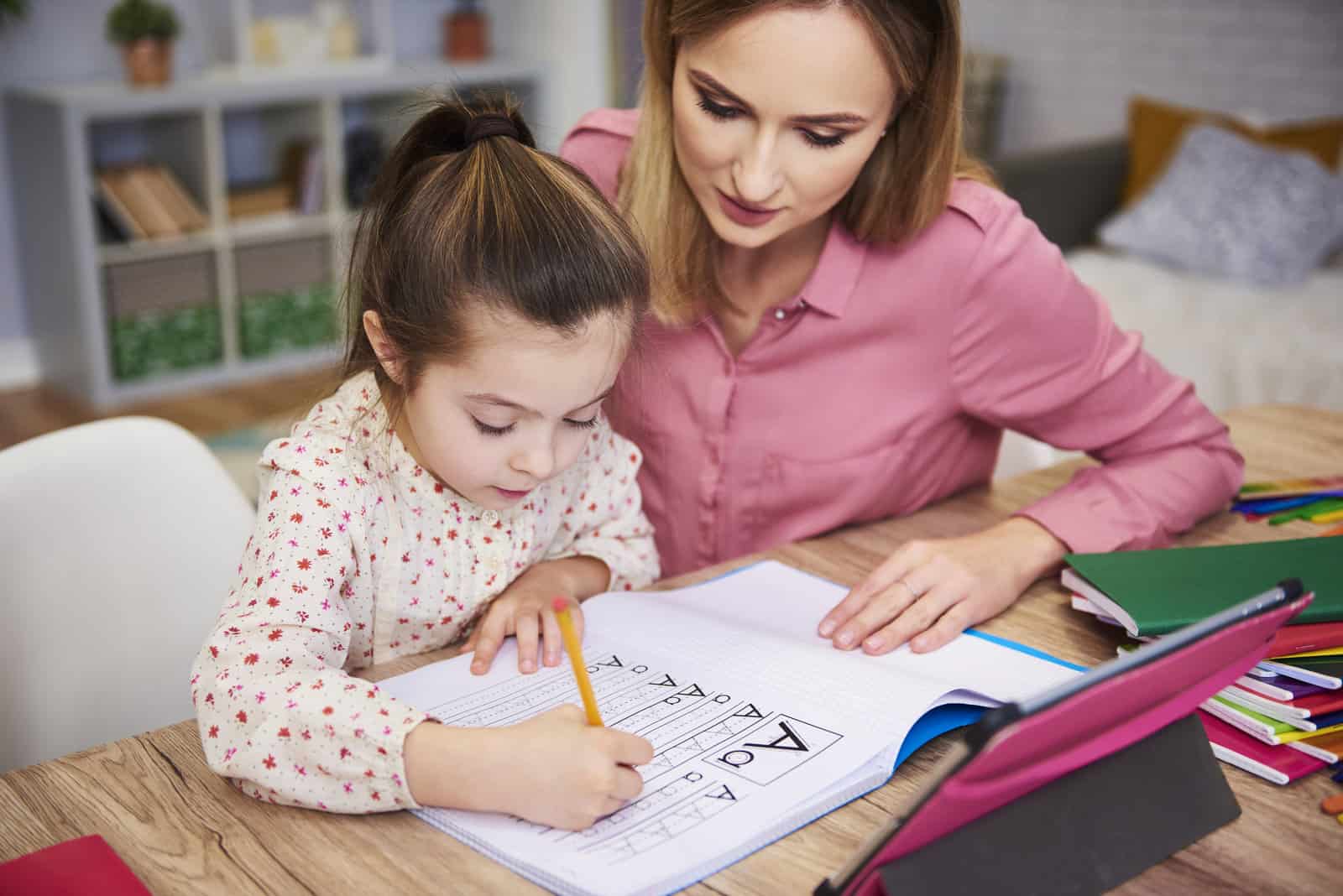
The single most cited benefit of homeschooling is the ability to tailor education to an individual child. In a classroom of 30, a teacher plans for the middle of the group. Children working above or below that middle often spend significant portions of their school day either waiting or struggling. Home education removes that structural constraint.
This does not mean abandoning all structure. Most UK home educators use the National Curriculum as a reference framework, particularly for core subjects in maths, English, and science, but they control the depth, pace, and sequence. A Year 4 child who has grasped multiplication can move straight to fractions without waiting for the rest of the class. A child still consolidating phonics at age 8 can take the time they need without the social pressure of falling behind a cohort.
Interest-led learning takes this further. When a child is absorbed by, say, the Romans or the water cycle, a home educator can spend a week going deep on that topic across multiple subjects: history, geography, literacy, art, and even maths. LearningMole’s curriculum-aligned video library supports exactly this kind of cross-subject exploration, with resources that bring topics to life visually and connect to National Curriculum objectives without requiring a teacher-trained adult to lead every lesson.
Classroom Activity: The Interest-Led Week: Choose a topic your child is currently curious about. Spend five days exploring it across different subjects: a reading task, a writing task, a maths or science connection, a creative project, and a real-world visit or video resource. Document what they learn. This approach builds depth, retention, and genuine motivation far more effectively than topic-switching each day.
2. Emotional Wellbeing and School Anxiety
School anxiety, or ‘school refusal’ in clinical terms, affects a significant minority of UK children and is among the fastest-growing reasons families give for starting home education. For some children, the sensory environment of a busy school (noise levels, crowding, transitions between lessons, lunchtime unpredictability) creates chronic low-level stress that accumulates over time. Academic progress suffers not because the child lacks ability, but because the environment makes learning feel unsafe.
Home education addresses this directly. The child learns in an environment they can control: quieter, smaller, and more predictable. Breaks happen when needed. Learning stops when concentration goes. There is no social performance required at lunchtime, no sensory overload in a corridor between classes. For children who have experienced bullying, the removal from that environment can in itself produce a marked improvement in mental health within weeks.
This does not mean home education is a therapeutic fix for everything. Families supporting children with significant mental health needs should work alongside their GP, CAMHS, or educational psychologist. What home education provides is an environment in which the child’s nervous system can settle enough for learning to happen.
Supporting Transition: The De-Schooling Period: Many educators recommend allowing one month of de-schooling for every year a child has been in school before beginning structured home education. During this period, focus on rebuilding a positive relationship with learning through interest-led activities, low-pressure reading, and real-world experiences. Children who have experienced school anxiety particularly benefit from this recovery phase before formal lessons begin.
3. Flexibility: Learning in the Real World

One of the practical benefits of homeschooling is control over the schedule. Home educating families are not bound by school terms, which means they can travel during off-peak periods at a fraction of the cost, visit attractions when they are quiet, and align learning with real-world experiences that no classroom can replicate.
Life skills also get more space. Cooking a meal becomes a lesson in fractions, measurement, and science. A trip to a supermarket practises mental maths. Growing vegetables covers biology and seasonal change. These are not substitutes for structured learning; they sit alongside it. But they give children a sense that knowledge has direct application outside the classroom, which builds motivation in a way that abstract textbook exercises often do not.
The schedule flexibility also accommodates children whose energy and concentration peaks at unusual times. Some children focus best in the late morning; others work well in short bursts across the day. A home educator can observe these patterns and work with them rather than against them.
4. Strengthening Family Relationships
Parents who home educate often describe an unexpected deepening of their relationship with their children. Spending sustained time learning together, navigating challenges, celebrating progress, and exploring topics that genuinely interest both of you builds a kind of connection that the standard school-and-evening routine does not easily create.
This is not about controlling your child’s social life. UK home-educated children typically have access to home-ed groups, sports clubs, community activities, music lessons, and mixed-age social environments that arguably provide a broader socialisation experience than a school year group. What changes is the primary mentor relationship: the parent becomes the child’s learning guide rather than simply their carer outside school hours.
The social question is one of the most common objections to home education, and the evidence is clear: when managed intentionally, home-educated children develop strong social skills, often across a wider age range than their schooled peers. UK home-ed communities are active and well-organised, particularly in urban areas.
5. Supporting Neurodivergent Learners

Home education is disproportionately chosen by families with neurodivergent children, and the reasons are structural rather than ideological. In a primary classroom of 30, a teacher has perhaps three minutes of individual interaction with each child during a lesson. For a child with ADHD who needs frequent check-ins and external structure, or an autistic child who needs to approach a topic from a different angle, or a child with dyslexia who needs extra processing time, three minutes is not enough.
At home, the ratio disappears. A concept can be explained in three different ways until one lands. A child who needs to move can learn while walking. Sensory sensitivities can be accommodated without disrupting the other 30 learners. Children with EHCPs (Education, Health and Care Plans) retain their plan when entering home education; the local authority’s obligations change, but the document does not disappear, and home educators can use it as a framework for provision.
“Every child learns differently, and good teaching resources should support that diversity rather than demanding one-size-fits-all. Visual, auditory, and interactive elements give different learners different entry points.” — Michelle Connolly, Founder of LearningMole and former teacher with over 15 years of classroom experience.
SEND Adaptations for Home Learning
- ADHD: Break sessions into 15-20 minute blocks with movement breaks. Use visual timers. Build in choice over task order to reduce resistance.
- Autism: Provide a clear visual timetable for the day. Give processing time after questions. Explore topics in depth rather than switching rapidly between subjects.
- Dyslexia: Use audio and video resources alongside written text. Separate reading from content learning where possible. LearningMole’s video resources reduce reading demand whilst maintaining curriculum content.
- Sensory processing: Control lighting, noise, and seating. Allow fidget tools. Learn outdoors when possible.
Navigating UK Home Education Law

Home education is legal in England, Scotland, and Wales. The legal basis differs slightly between nations, but the principle is consistent: parents have the right and responsibility to provide an efficient, full-time education suitable to their child’s age, ability, and any special needs. ‘Full-time’ in this context is not defined in hours; it is a quality judgement.
| Factor | England | Scotland | Wales |
|---|---|---|---|
| Legal basis | Education Act 1996 | Education (Scotland) Act 1980 | Education Act 1996 (Wales) |
| Deregistration | Written notice to the school; the school informs LA | Written withdrawal from school | Written notice to the school; school informs LA |
| LA monitoring | LA may request evidence of suitable education; no inspection right | Annual contact with LA; consent to visits not required | LA may make enquiries; no right of entry |
| NC required? | No | No | No |
| Registration required? | No (unless leaving school) | No | No (unless leaving school) |
If your child has been attending school, deregistering is straightforward: write to the headteacher stating your intention to home educate. The school informs the local authority. There is no requirement to seek permission. If your child has never been registered at a school, you have no statutory obligation to notify anyone, though it is good practice to inform your local authority.
Families considering home education under an EHCP should contact their local authority’s SEND team, as the process for amending the plan differs from standard deregistration. The local authority retains responsibilities under the EHCP even when a child is educated at home.
Secondary Education, GCSEs, and Long-Term Pathways

One of the least-discussed benefits of homeschooling is the flexibility it offers at the secondary level. Home-educated young people can sit GCSEs and A-Levels as private candidates through registered exam centres. They are not limited to the subject combinations their local school offers, and they can stagger exams across years rather than sitting everything at once.
Many home educators begin GCSE study at 13 or 14 rather than 15, allowing more time per subject and reducing the pressure of a single exam series. Others take a small number of subjects at GCSE and pursue others through vocational qualifications, BTECs, or portfolio-based routes, depending on the young person’s interests and direction of travel.
University pathways remain fully accessible. UCAS processes applications from home-educated students, and many universities actively welcome applicants with non-standard academic profiles, particularly if they can demonstrate independent learning and genuine subject interest.
The Financial Reality of Home Education
The costs and savings of home education are often misunderstood. The visible cost (buying curriculum materials, subscribing to educational platforms, paying for exam centre fees) is real. The hidden savings are just as real but less discussed.
| Typical School Costs Removed | Typical Home Education Costs Added |
|---|---|
| School uniform (multiple sets) | Curriculum materials and workbooks |
| School meals (daily) | Educational platform subscriptions |
| Wraparound childcare (before/after school) | Exam centre fees (when taken) |
| School trips and fundraising requests | Home-ed group fees and activities |
| Peak holiday premiums | Printer ink and resources |
| Stationery and equipment requests | Parent’s time (primary cost) |
The most honest assessment is that home education is less expensive in cash terms than most families expect, but more expensive in parental time than many initially plan for. Families where one parent is already at home or working flexibly find the time cost more manageable. The decision to home educate on a single income is a real financial sacrifice in many households, and it’s worth modelling the numbers honestly before starting.
Teaching Resources and Support for Home Educators

The quality of resources available to UK home educators has improved markedly over the past decade. Online video platforms, structured curriculum packs, and community support networks mean that a parent does not need a teaching qualification to provide a rigorous and engaging education at home.
LearningMole provides curriculum-aligned video resources and teaching materials designed specifically for primary-aged learners. The platform covers maths, English, science, history, geography, and languages, all aligned with National Curriculum objectives and produced by experienced educators. For home educators, this means access to professionally presented explanations, visual demonstrations, and follow-up activities without needing to plan lessons from scratch. Michelle Connolly built LearningMole with both classroom teachers and parents in mind, and the resources reflect that dual purpose.
Beyond digital platforms, UK home educators benefit from a growing network of local and national support. Home-ed groups offer peer learning, shared teaching, and social opportunities for children. The Home Education Advisory Service (HEAS) and Education Otherwise provide guidance on legal requirements and practical approaches. For SEND, the EHCP Advice service and local SEND charities provide specialist support.
- LearningMole’s video library: curriculum-aligned resources across core and foundation subjects for ages 4-11
- YouTube channel: free educational videos covering science, history, maths, languages, and more
- Home-ed community groups: local Facebook groups, national organisations, and regional co-ops
- Exam support: AQA, Edexcel, and OCR all accept private candidates for GCSEs; contact directly for approved centre lists
- Legal guidance: the Education Act 1996 (England and Wales) and local authority guidance documents are freely available
Frequently Asked Questions
Is homeschooling legal in the UK?
Yes. Under the Education Act 1996, parents in England and Wales have a legal right to educate their children at home provided the education is efficient, full-time, and suitable to the child’s age, ability, aptitude, and any special educational needs. Scotland operates under the Education (Scotland) Act 1980 with a similar framework. You do not need to follow the National Curriculum, register with any authority before you begin (if your child has never attended school), or seek permission. If your child has been attending school, you simply write to the headteacher to deregister.
Do I need to be a qualified teacher to homeschool?
No. There is no legal requirement for a home-educating parent to hold any teaching qualification. What matters is that you can provide a suitable education, which most parents achieve through a combination of structured resources, online learning tools, and their own knowledge. Platforms like LearningMole are specifically designed to support parents who want curriculum-aligned, professionally produced materials without requiring teacher training to use them. Many home educators also draw on subject tutors, community classes, and online courses for specific areas.
How do homeschooled children socialise?
This is the question most frequently raised by people unfamiliar with home education, and the evidence consistently challenges the assumption that homeschooled children are isolated. UK home-educated children typically participate in home-ed groups and co-ops, sports and music activities, community volunteering, and wider family and neighbourhood life. Unlike school, which groups children exclusively with their same-age peers, home education tends to create mixed-age social experiences that many educators argue are closer to real-world social environments. The socialisation concern is legitimate if home education happens in genuine isolation; it is not an inherent feature of the approach.
What about GCSEs and further education?
Home-educated young people sit GCSEs as private candidates through registered exam centres. Most awarding bodies (AQA, Edexcel, OCR) accept private candidate registrations directly. A-Levels, BTECs, and other qualifications are available through the same route. University applications are made through UCAS in the same way as school applicants; many universities provide specific guidance for home-educated applicants and look favourably on the independent learning demonstrated by the route. Early GCSE sitting is an option that many home educators use to reduce exam pressure and allow deeper study per subject.
Can I homeschool a child with SEND?
Yes, and many families with SEND children find that home education significantly better meets their child’s needs than a mainstream school setting. If your child has an Education, Health and Care Plan (EHCP), the plan remains in force when you deregister from school. The local authority’s obligation to maintain the EHCP continues, though the nature of provision changes. Contact your local authority’s SEND team before deregistering to understand the process. For children without an EHCP but with identified needs, home education allows you to build entirely around those needs without competing with a classroom of 30.
Where can I find a structured curriculum for home education?
The most accessible starting point is the UK National Curriculum, which is published in full on the Department for Education website and provides year-by-year objectives for every core subject. From there, home educators typically build using a mix of textbooks, workbooks, and online resources. LearningMole provides curriculum-aligned video resources and teaching materials covering EYFS through KS2, designed to support both structured lesson planning and self-directed learning. For older learners preparing for GCSEs, published revision guides and past papers from awarding bodies are freely available.
How much does home education cost?
Costs vary considerably depending on the chosen approach and resources. A family using free resources, library books, and a single educational platform subscription can educate a child for under £500 per year in direct costs. Families purchasing full curriculum packages with specialist tutors and multiple platform subscriptions will spend more. The significant offset is the elimination of school-related costs: uniform, school meals, wraparound childcare, and peak-period holiday pricing. The primary cost is parental time rather than money, and this is the most significant factor to model honestly before starting.
What is de-schooling, and should I do it?
De-schooling refers to a transition period after leaving school during which a child and family decompress before beginning structured home education. It was originally described by educator John Holt and has become a widely accepted practice in UK home-ed communities. The conventional recommendation is one month of de-schooling for every year spent in formal school, spent on interest-led, low-pressure activities rather than structured lessons. For children who have experienced school anxiety, bullying, or significant stress, this recovery period can be genuinely important before academic work resumes. It is not obligatory, but it is worth understanding before you start.
Getting Started with Home Education

The benefits of homeschooling, taken together, amount to a genuinely different educational experience: one that puts the child’s needs, pace, and learning style at the centre rather than the edges of the system. That is not a criticism of schools, most of which are doing their best within real structural constraints. It is simply a recognition that a one-to-one or small-group learning environment, led by an adult who knows the child deeply, provides something that a classroom of 30 structurally cannot.
Starting home education in the UK is simpler than most parents expect. If your child is already in school, a letter to the headteacher is all that is needed to begin the process. The legal framework is permissive, resources are better than ever, and the community of UK home educators is large enough to provide support, shared learning, and genuine social opportunities for both children and parents.
LearningMole’s video resources and curriculum-aligned teaching materials are used by home educators across the country as a practical backbone for lesson planning, and the platform’s YouTube channel provides free access to hundreds of educational videos covering every core subject.
The decision to home educate is significant, and it is worth taking time to research thoroughly, speak to families already doing it, and model the practical and financial implications honestly. But for the families for whom it is right, the benefits are not marginal. They are transformative.


Leave a Reply