Do you think that the Viking houses were cozy?! Let’s discover five valuable Viking houses facts for kids.
Viking Houses Facts for Kids Fact Number 1: Vikings Houses Were Known as Longhouses
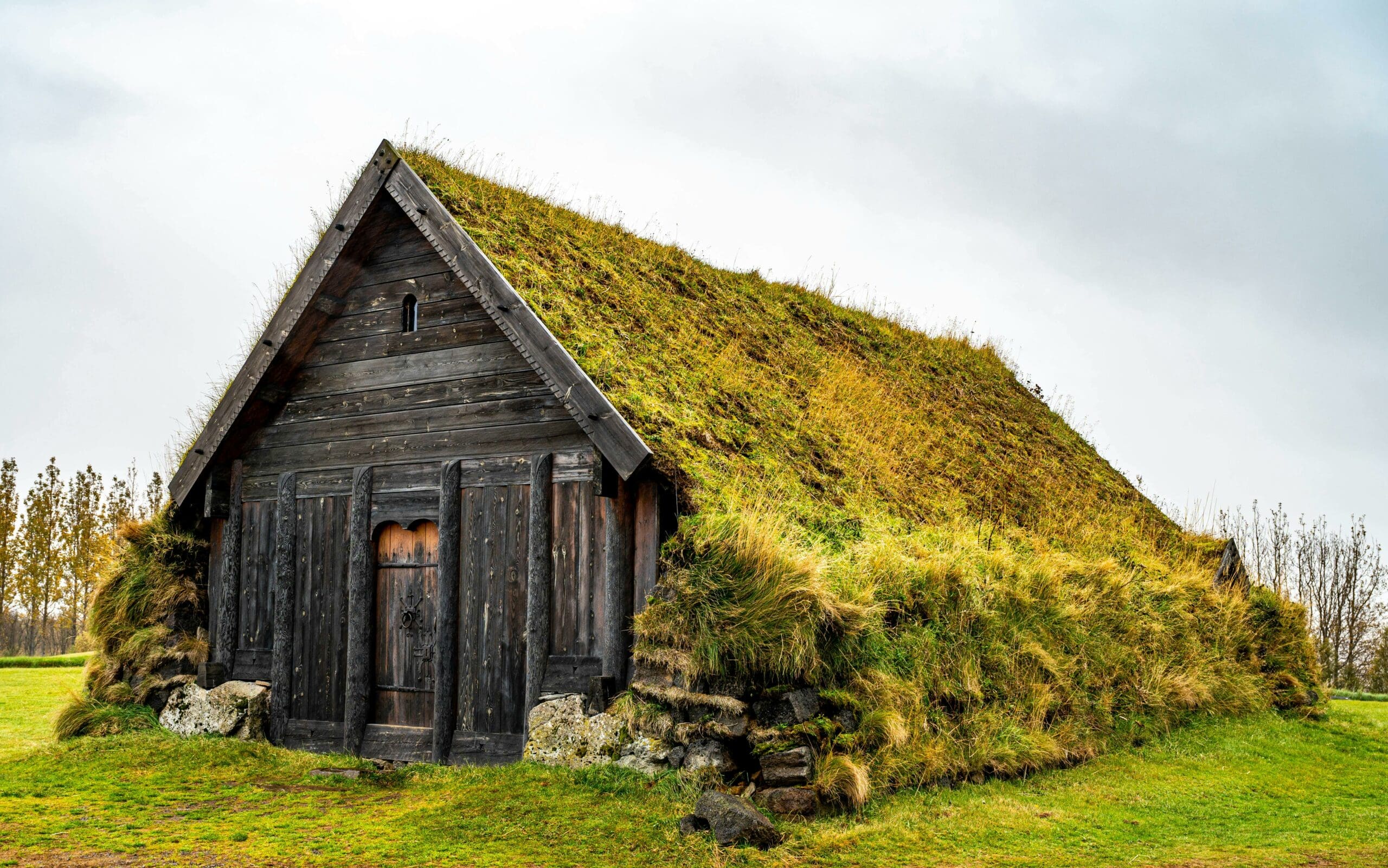
A longhouse was a long rectangular building which was made from wood, clay, stone, turf and mud. They were roughly 6 metres wide and could be up to 75 metres long. A longhouse had enough space for 30 to 50 people, this could be one big family with various generations or many smaller sized families all living under the one roof. Longhouses were also known as turf houses, named after the material they were built with. Typically, the richer the family the larger the Viking longhouse would be.
Moss covered Viking building in Skal holt historical site of Iceland
Viking Houses Facts for Kids Fact Number 2: Animal Skin and Straw Were Used to Furnish The House
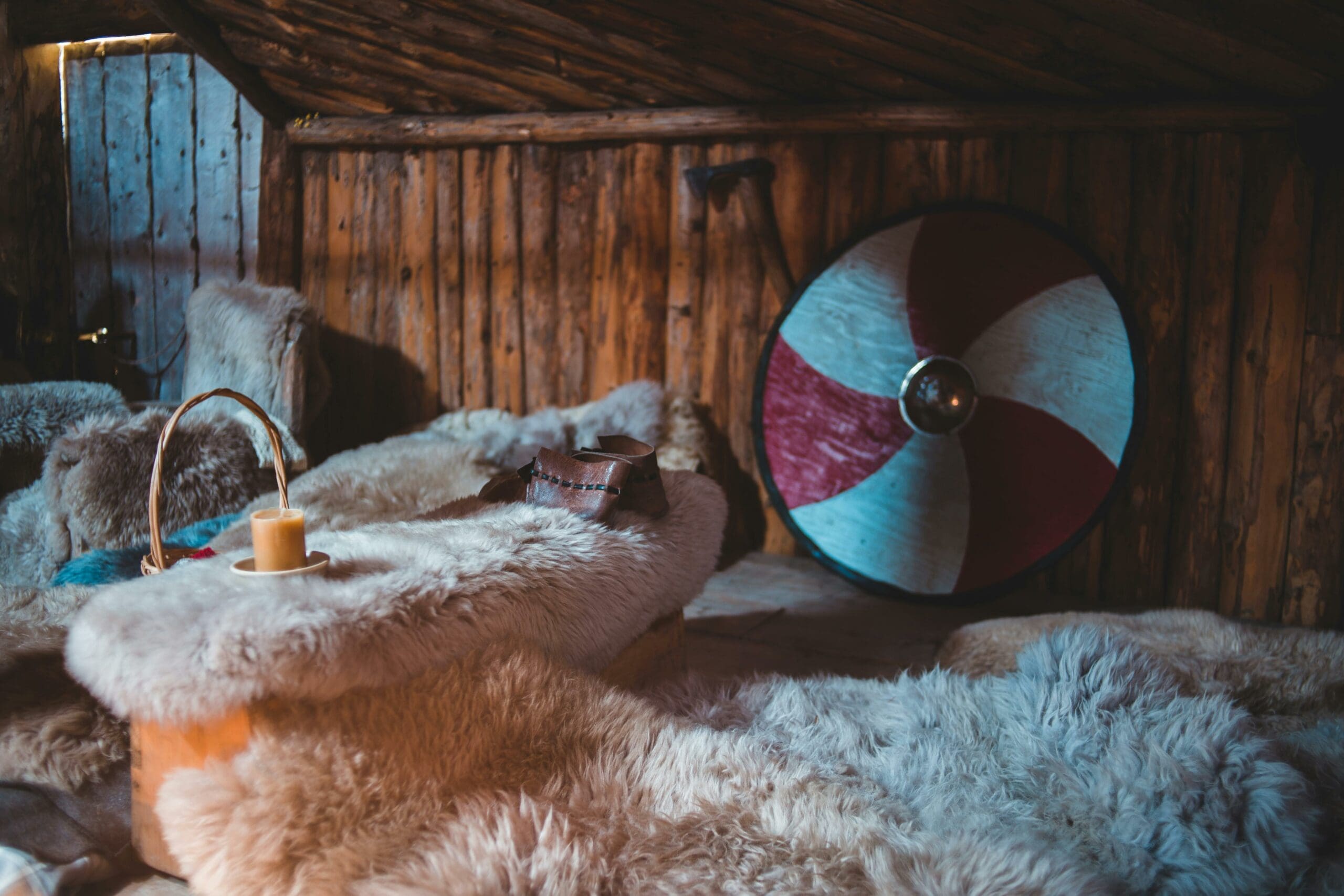
The Vikings built their beds and benches near the walls of the longhouse and used them for sitting and sleeping. The beds and benches were lined with animal skin and straw for warmth and comfort and the pillows were usually stuffed with feathers from birds. The Viking longhouse was usually divided into several different rooms. The richer families decorated the longhouse with tapestries and rugs.
Wooden house is decorated with animal fur
Viking Houses Facts for Kids Fact Number 3: The Fire Was in The Middle of The House
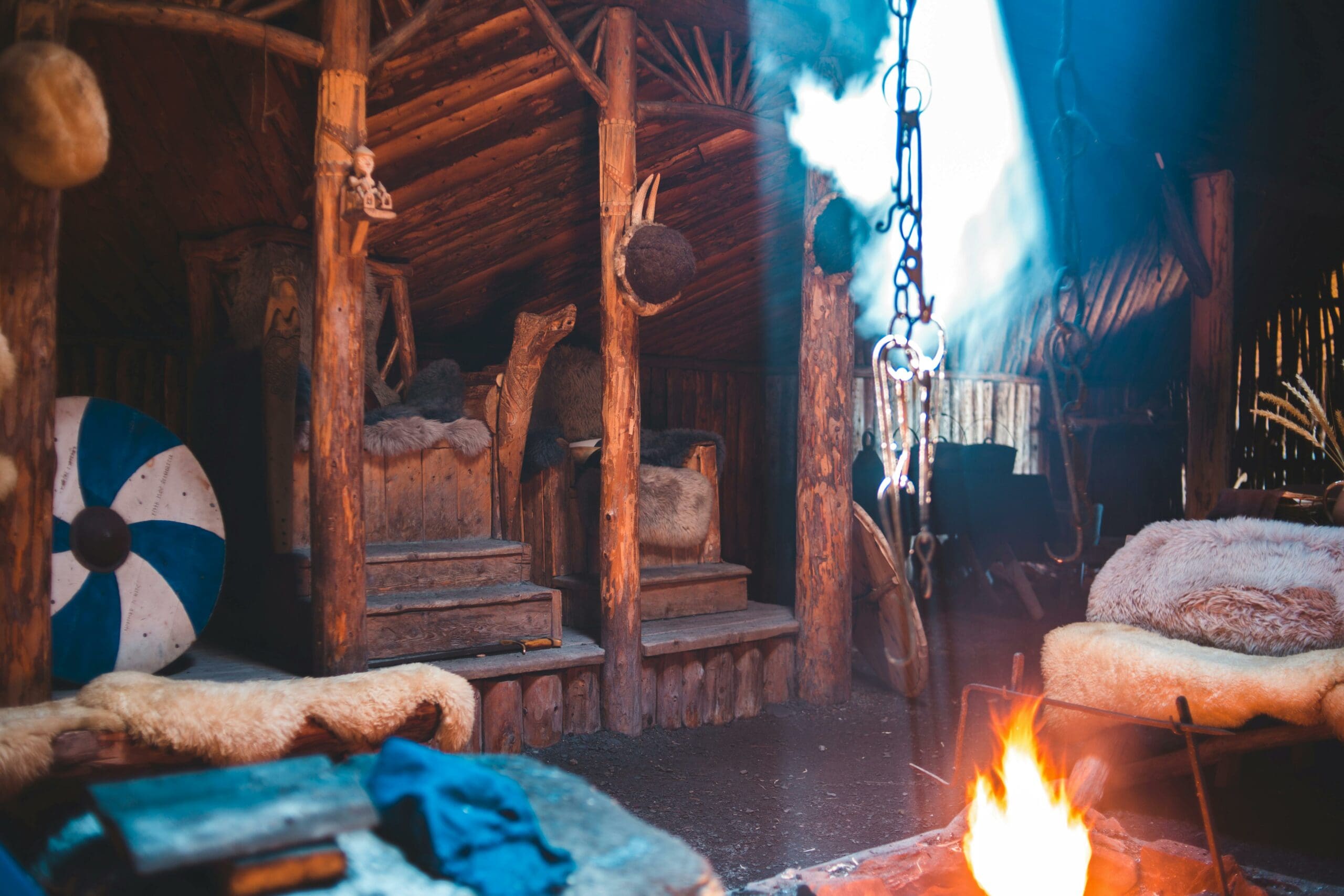
The fire was lit in the centre of the corridor in the longhouse, to provide light and heat. The fire would have also been used to cook food. The ashes from the burned fireplace were spread out on the floor of the longhouse, in order to absorb all the moisture and odour. The roof had small holes in it to allow the smoke from the fire to escape.. The fire would have been kept burning constantly, especially in areas that would have had colder climates. Several families lived in the same house, and the more important families lived closer to the fire.
Viking Houses Facts for Kids: Fire is in the middle of an old Viking house
Viking Houses Facts for Kids Fact Number 4: Animals Slept Inside The Same House as The Vikings
Vikings didn’t keep their animals in the shed like we do today, instead there were separate rooms for animals inside the longhouse. Storing the animals inside the longhouse with the families meant that the animals stayed dry and warm during wet and cold conditions.
Viking Houses Facts for Kids Fact Number 5: There Were no Windows in Longhouses
Most longhouses would’ve had no windows and all light would’ve come from smoke holes and doors. Although having no windows meant the warmth of the fire was kept inside, it also meant that the longhouse could be very dull and dark. Stone lamps using fish liver oil, whale oil or seal oil were sometimes used in longhouses for extra light.
We hope you enjoyed learning more things about Vikings houses as much as we loved teaching you about them. Now that you know how majestic The Vikings are, you can move on to learn more about them: Vikings, Viking Warriors, Viking Routines, Viking Children and Viking Clothes.
Why not subscribe to our LearningMole Library for as little as £1.99 per month to access over 2800 fun educational videos.
Technology in Teacher Professional Development Teacher Professional Development Technology has transcended its role as a mere classroom tool and emerged as a powerful driver in transforming teacher professional development. This...
Geometry challenges, often referred to as the "Shape Olympics," represent the pinnacle of intellectual sport in the world of mathematics. By entering these contests, participants get the chance to apply...
Geometry and animation share a profound connection that brings the magic of motion to the screen. We observe this every day in the way shapes morph and move, creating the...





Leave a Reply