
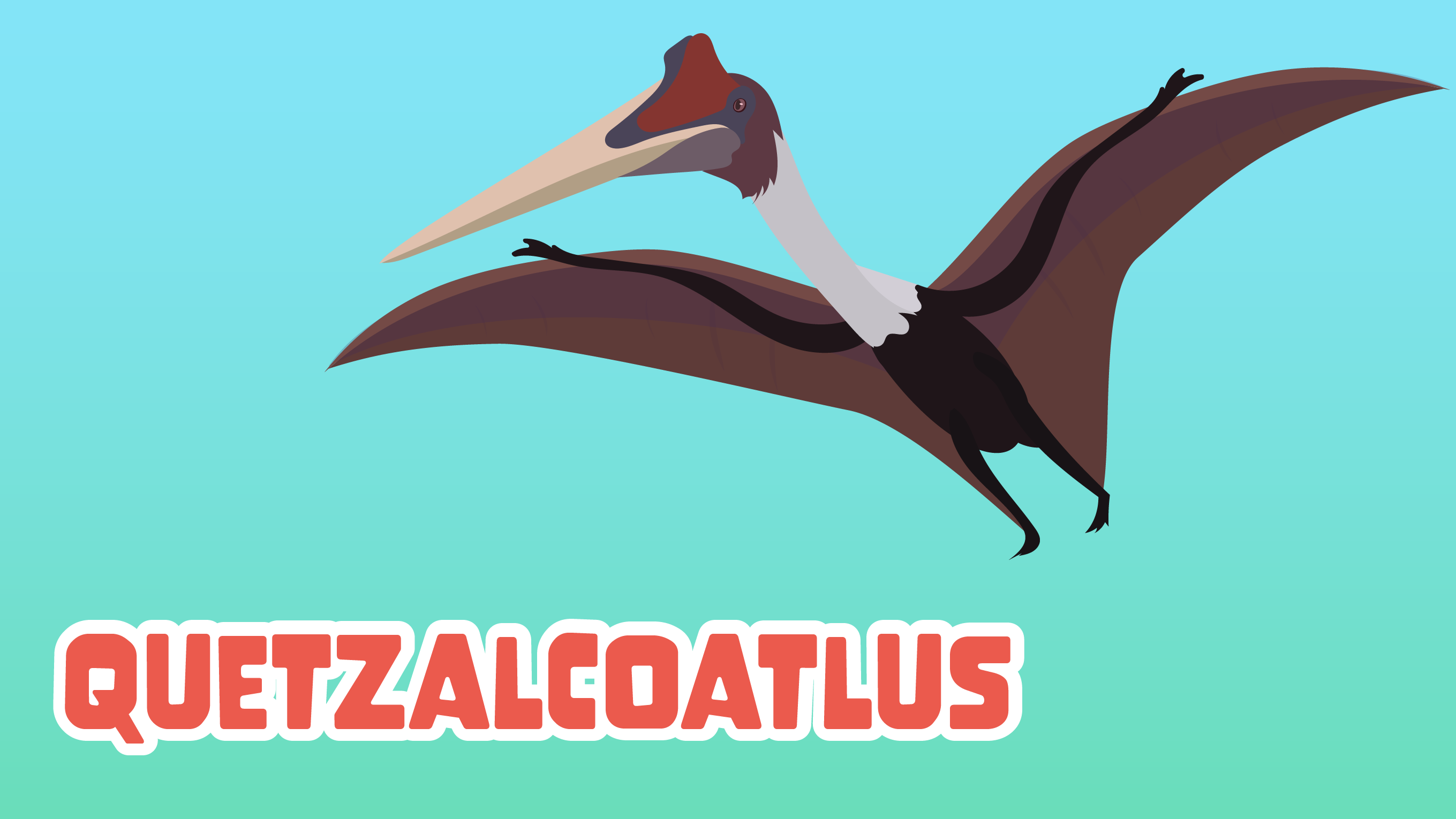
Quetzalcoatlus
Embark on a majestic flight through ancient skies with Learning Mole’s “Quetzalcoatlus”! This video is a thrilling journey into the world of one of the largest flying creatures to ever exist, the Quetzalcoatlus. From its immense wingspan to its formidable beak, we’re about to uncover the awe-inspiring facts that make Quetzalcoatlus a legendary giant of the prehistoric skies. Join us as we delve into the mysteries of this incredible pterosaur, exploring its adaptations, behaviors, and role in the ecosystems of the Mesozoic era. Get ready to witness the splendor and grandeur of Quetzalcoatlus as it soars through a world long gone, captivating our imagination with its sheer size and grace. It’s a celebration of paleontological marvels, ancient aviators, and the mesmerizing wonders of Earth’s distant past that will leave you in awe of this magnificent giant of the skies! π¦ πΏπ
Transcription for Quetzalcoatlus
Please note this transcript is generated automatically and may contain errors.
Today we are going to learn five quirky facts about the Kettl Klas Fact number one, the Kettl KLAS was one of the largest flying animals that ever lived existing during the late Cretaceous period around 68 million years ago in what is now North America. This enormous Terra saw had an astounding wingspan of over 30 feet when fully grown wider than a school bus lengthwise. When on the ground, Keal Cutlass stood as tall as a full grown giraffe, thanks to its incredibly long neck and specialized airfoil bones needed to generate enough lift for flight.
Fact number two, KET Alco Atlas likely migrated vast distances across the interior seaway of North America during specific seasons in order to mate and lay eggs, much like many current tropical bird species do today. Kal Co Atlas likely nested in large congregations on open ground laying eggs in crude nests of mud and vegetation. Newly hatched keal Co atlas may have taken flight within one year, but took many seasons to achieve their peak massive size and wingspan as adults. Fact number three, this flying behemoth was named after the feathered serpent deity known as Kettl Cottle.
From Aztec mythology. The bones of Kettl co atlas were minimalist and air-filled, composed of thin struts to maximize strength while minimizing weight, which allowed these giants to achieve flight. Some recent analyses indicate that Kettal TLAs may have been capable of reaching estimated speeds of 80 miles per hour or more when tucking its wings and diving through the Cretaceous skies thanks to its aerodynamic head and neck. In fact, number four, Unlike many Terrace or Jane Kesco Atlas, and its close as ducked relatives lacked any bony crest protrusions on their skulls, they belonged to a group of larger terra saws defined by elongated necks, stiffened vertebrae, and long spear like jaws.
The elongated toothless skull of Alco Atlas alone was over five feet long, and the slender jaws formed a sharp pointed beak well suited for spearing, fish and small animals, which were its primary food sources. It was an expert sawer scanning for food from a loft. Fact number five, the fossil remains of Kesel co Atlas have been discovered in deposits located in Texas where it in inhabited a tropical coastal habitat flanked by deltas and lagoons around 100 million years ago. Despite its sheer gigantic size, quetzal carless weighed only an estimated 550 pounds due to its light hollow bone wings and streamlined frame from tip to tip.
No other known flying animal exceeded the colossal size of ke cell co atlas. I hope you enjoyed my five quirky facts about the ke cell curla. See you soon.
