Castle Architecture
Embark on a majestic journey with Learning Mole’s “Castle Architecture”! This video is a captivating exploration into the history and design of majestic castles, delving into the intricate world of fortress construction and medieval engineering. From towering turrets to formidable walls, we’re about to uncover the fascinating and awe-inspiring facts that make castle architecture an enduring symbol of power and grandeur. Join us as we unravel the secrets of castle design, understanding the strategic layouts, defensive features, and artistic elements that define these magnificent structures. Get ready to explore the stories of knights, nobility, and siege warfare as we step back in time to an era of chivalry and intrigue. It’s a celebration of the artistry and ingenuity of castle builders, showcasing the enduring legacy and cultural significance of these architectural wonders. Join us on this enlightening journey into the realm of castle architecture, where each stone tells a tale of history, strength, and the architectural marvels of the past! 🏰🛡️🔒
Transcription for Castle Architecture
Please note this transcript is generated automatically and may contain errors.
Today we are going to learn five facts about castle architecture. Fact number one, in the early middle ages, Mott and Bailey castles were common. These castles had a wooden keep, a fortified tower on a Mott, a raised earth mound, surrounded by a Bailey, an enclosed courtyard with a protective fence and ditch later stone. Keep castles were built with massive stone walls and towers. These were stronger and lasted longer than wooden ones. Concentric castles came next with two or more surrounding walls, making them super tough to attack.
Fact number two, the walls of medieval stone castles were incredibly thick and strong, often made from layers of hard stone. These walls could be up to 15 feet thick or more. They were designed to withstand sieges and attacks from battering rams and catapults inside the walls. There were often walkways for guards to patrol and lookout points to watch for enemies. The narrow slits called arrow loops or abrasions allowed arches to shoot at attackers while being protected by the wall. Fact number three, castles had tall towers for several reasons.
The main tower often called the Keep or Don John, was the stronghold of the castle. It provided a high vantage point to spot approaching enemies and was usually the safest place if the castle was attacked. Towers also housed living quarters for the Lord and his family. Some towers known as gate houses guarded the entrance to the castle and were equipped with heavy doors, port Cs and murder holes for extra defense. Fact number four, the Great Hall was the heart of the castle. It was a large, impressive room where the castle’s, residents and guests gathered for meals, celebrations, and important meetings.
The hall was often grandly decorated with tapestries depicting battles or legends, large fireplaces for warmth and high ceilings with wooden beams. It was a place for feasting, entertainment and displaying the wealth and power of the Lord of the castle. Fact number five, secret passages and trap doors in castles added an element of mystery and strategic advantage. These hidden routes could be used for surprise attacks, escapes or moving discreetly around the castle. Some passages led to secret exits outside the castle walls or to hidden rooms. Trap doors might lead to dungeons or storage cellars.
These secretive features were cleverly concealed behind tapestries in the walls or the floors, and were known only to the castle inhabitants. I hope you enjoyed my five facts about Castle architecture. See you soon.
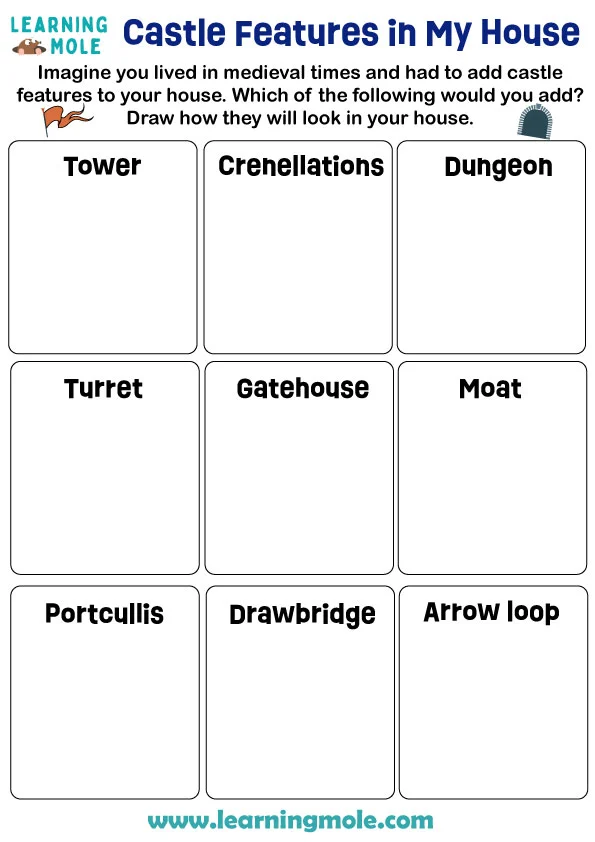
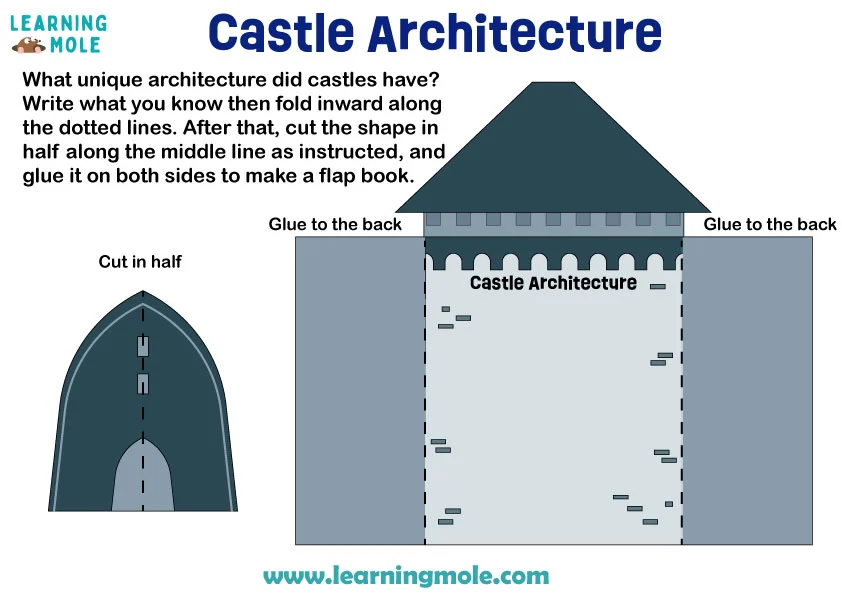
Castle Features in My House Activity Castle Architecture Activity