
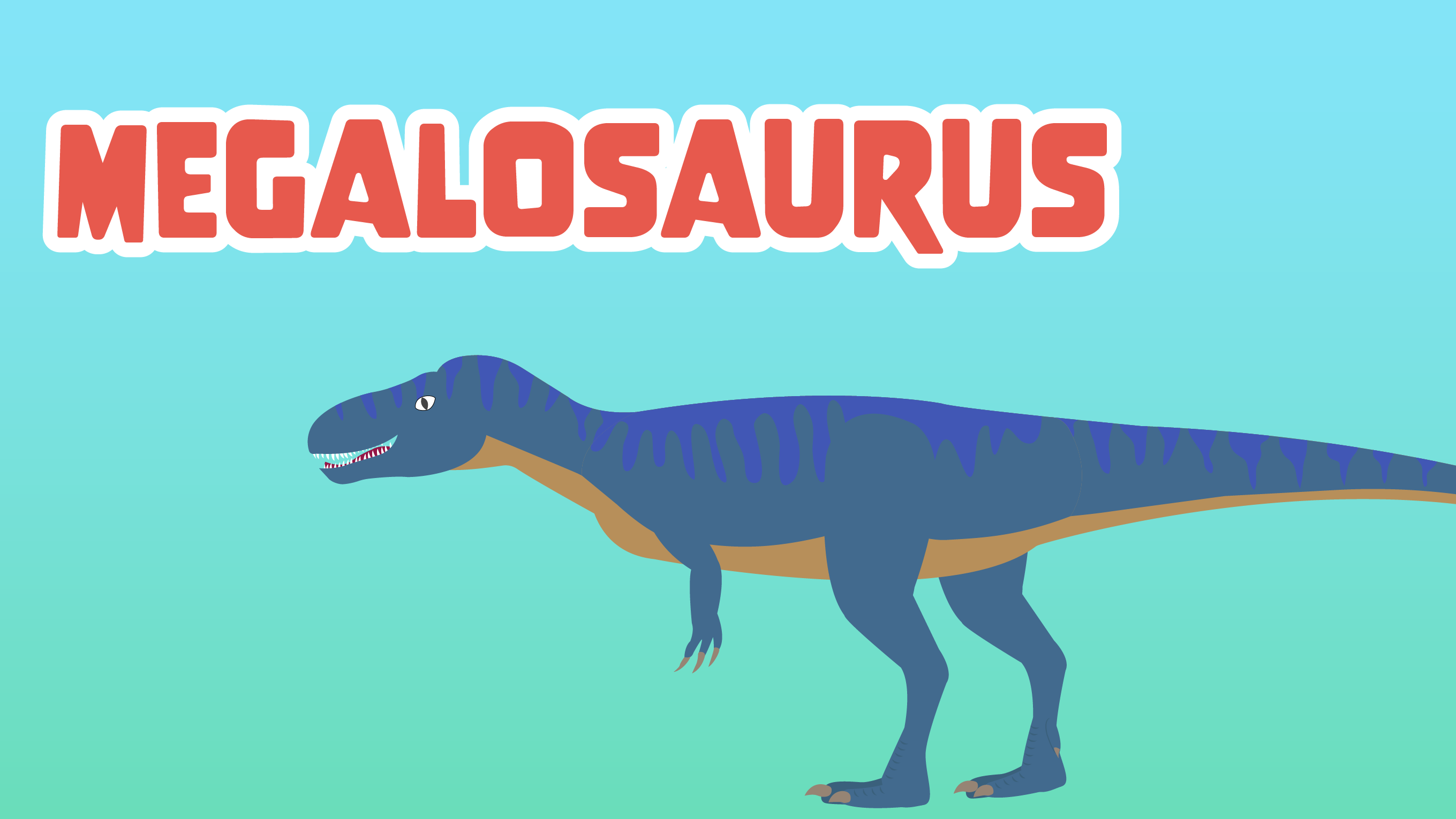
Megalosaurus
Prepare for a prehistoric adventure with Learning Mole’s “Megalosaurus”! This video is a captivating journey into the ancient world of dinosaurs, focusing on the fearsome and majestic Megalosaurus. From its massive jaws to its powerful claws, we’re about to uncover the awe-inspiring facts that make Megalosaurus a legendary predator of the past. Join us as we delve into the mysteries of this iconic dinosaur, exploring its place in the Mesozoic era and its significance in paleontological research. Get ready to step back in time and witness the reign of the Megalosaurus, a creature that once roamed the Earth with awe-inspiring might. It’s a celebration of paleontological marvels, ancient creatures, and the enduring fascination with dinosaurs that will transport you to a lost world filled with wonder and discovery! π¦πΏπ
Transcription for Megalosaurus
Please note this transcript is generated automatically and may contain errors.
Today we are going to learn five facts about the Megalosaurus fact. Number one, the Megalosaurus has a unique claim to fame in the dinosaur kingdom. It was the first ever to be given a scientific name. This groundbreaking event happened in 1824 when William Buckland, an English geologist and paleontologist formally described and named the dinosaur. The discovery was monumental as it marked the beginning of what we now call paleontology, the study of ancient life. Through fossils, the name Megalosaurus translates to great lizard reflecting the enormous size that Buckland inferred from the fossil bones.
He studied fact number two. The Magus was an awe inspiring predator, estimated to be about nine meters 30 feet in length, roughly the length of a school bus, and weighing as much as an African elephant. It walked on two powerful hind legs, suggesting it was likely a swift runner. Its formidable jaw packed with sharp teeth, indicates it was a carnivore feeding on other dinosaurs and possibly scavenging this giant predator’s. Physical attributes suggest it was one of the dominant hunters of its ecosystem during the Jurassic period.
Fact number three, the AU lived in the middle Jurassic period about 166 million years ago, a time when dinosaurs were flourishing. During this era, the Earth’s continents were still in the process of splitting apart, creating new oceans and environments. The climate was warm, leading to lush vegetation and a wide variety of life forms. The middle Jurassic is less well known than other periods like the late Jurassic or Cretaceous, making the Megalosaurus an important key to understanding dinosaur evolution during this time. Fact number four, despite being one of the first dinosaurs, discovered much about the Magus remains a mystery.
Early paleontologists only had fragmented bones to study, including parts of a jawbone, vertebrae, and limb bones. These pieces have helped scientists form a basic understanding of its structure and size, but the lack of a complete skeleton leaves many questions unanswered. For instance, scientists continue to debate its exact appearance, posture, and how it might have behaved. This ongoing investigation into the Megalosaurus keeps it at the forefront of exciting paleontological research. Fact number five, the Megalosaurus played a critical role in its prehistoric ecosystem, acting not just as a top predator, but also as an influential force in the ecological dynamics of the middle Jurassic period.
Its presence in the food chain would’ve had a significant impact on the population and behavior of other species, including herbivorous, dinosaurs, and smaller carnivores. As a dominant predator, the megalosaurus likely influence the evolutionary paths of these species, possibly driving changes in their defensive mechanisms, feeding habits, and social behaviors. Additionally, its role as a scavenger might have been equally important, helping to maintain the ecological balance by disposing of carcasses. I hope you enjoyed my five facts about the megalosaurus. See you soon.
Megalosaurus Discovery Activity
