
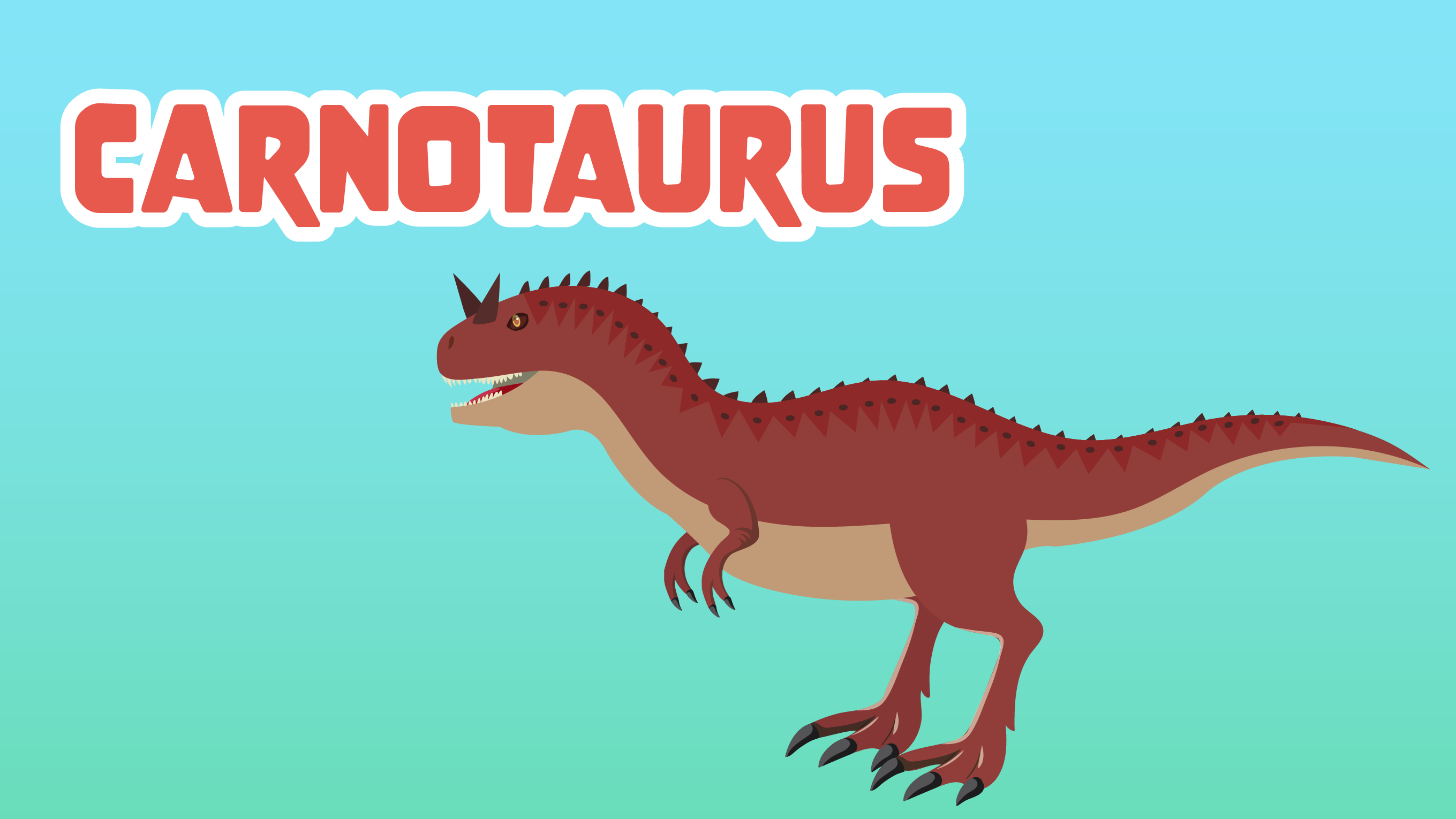
Carnotaurus
Prepare for a prehistoric adventure with Learning Mole’s “Carnotaurus”! This video is a thrilling journey into the world of dinosaurs, focusing on the fierce and fascinating Carnotaurus. From its distinctive horns to its powerful jaws, we’re about to uncover the captivating and awe-inspiring facts that make Carnotaurus a legendary creature of the past. Join us as we delve into the science behind this fearsome predator, understanding its unique characteristics and role in the ancient ecosystem. Get ready to explore the mysteries of the Mesozoic era and the remarkable adaptations that allowed Carnotaurus to dominate its environment. It’s a celebration of paleontology and the wonders of Earth’s history, showcasing the diversity and majesty of the dinosaurs that once roamed the planet. Join us on this exciting journey into the realm of Carnotaurus, where each roar echoes a story of survival, evolution, and the enduring legacy of these magnificent creatures! 🦖🔍🌿
Transcription for Carnotaurus
Please note this transcript is generated automatically and may contain errors.
Today we are going to learn five cool facts about the Carna Taurus Fact. Number one, the Carna Taurus was a medium sized bull sized meat-eating dinosaur that lived in prehistoric Argentina. During the late Cretaceous geological period, approximately 72 to 69.5 million years ago, adults grew to seven to nine meters in length and weighed between one to two tons making Carno TAUs significantly smaller than colossal tyrannosaurs like Tyrannosaurus Rex. However, despite its smaller size compared to giant carnivores, CARNA Tous possessed many bizarre anatomical adaptations and unique structures that differentiated it from other Thera pods.
Fact number two, the most eye-catching characteristic of Carni Tous was the pair of thick bony horns that protruded nearly two feet above its eyes. These horns were conical blunt structures made of keratin that arose from the skull roof over the orbits. No other known producty dinosaur evolved such prominent facial horns. In addition to the spectacular horns, CARNA Taurus had a proportionately short skull compared to its body length and a very wide muscular neck. The name Carna Taurus itself means meat eating bull in Latin derived from its bull like horns and carnivorous teeth and jaws adapted for grabbing and eating prey.
Fact number three, potentially the most bizarre attribute of Carna Tous was its pair of extremely short, severely atrophied fall limbs. The arms were so diminutive and tiny in proportion to the rest of its body that they likely served no functional purpose whatsoever. Each stubby arm was only about 25 inches long, ending in just two extremely reduced fingers. The arms could not reach the mouth or grasp prey. They simply hung in front of its chest. The tiny arms of Kana Taurus represent the smallest for limbs relative to body size of any large therapod.
On record. Fact number four, paleontologists speculate that Carna Taurus was likely capable of rapid running speeds based on biomechanical analysis of its hind limb musculature and fossilized trackways. It may have reached estimated speeds of 15 to 20 miles per hour using strong leg muscles and its pivoting bird-like feet to swiftly chase down smaller herbivorous dinosaurs. This agility made Carna tous an effective predator able to hunt fleet footed prey across the ancient Argentinian landscape. Fact number five, the superbly preserved fossils of Carna Taurus, including nearly complete adult skeletons and well articulated skulls have been unearthed in the fossil rich Badlands of Patagonia, Argentina.
This region was semi arid with seasonal rainfall during the late Cretaceous Carna Taurus inhabited forests and floodplains using its superb hunting abilities to target the many species of Sora pods or Niho pods, early mammals, and other dinosaurs that lived alongside it. I hope you enjoyed my five cool facts about the Carna Taurus. See you soon.
