Great Literacy Skills: A Comprehensive Guide to Learning English
Table of Contents
Literacy skills in English are the single most important set of tools a child will develop throughout their entire time in school. Without a firm grounding in reading, writing, speaking, and listening, the four pillars that underpin the UK National Curriculum’s approach to English, pupils cannot access history, science, or any other subject with confidence.
Whether you are a teacher planning lessons for a mixed KS1 and KS2 class or a parent supporting your child at home, understanding what great literacy skills actually look like is the first step towards nurturing them.
The challenge is that “literacy” is a much broader concept than simply being able to read words on a page. Good literacy skills mean that a child can decode unfamiliar vocabulary, infer meaning from context, express ideas precisely in writing, and contribute confidently to discussion. These abilities do not develop independently of one another, they build on each other in a continuous cycle, where talking leads to reading, reading feeds vocabulary, and vocabulary enables writing. Recognising that interconnection changes how you teach, and how you help.
At LearningMole, we have designed our English learning resources specifically to reflect this integrated approach. This guide draws on the structure of the UK National Curriculum to walk you through each component of literacy in English, from phonics and phonemic awareness in the early years through to comprehension and SPaG (Spelling, Punctuation and Grammar) at upper Key Stage 2, with practical strategies you can use straight away. You will also find advice tailored to EAL learners, guidance on functional and digital literacy, and direct links to the teaching resources and videos that support every stage.
What Does It Mean to Have Great Literacy Skills?

Great literacy skills go far beyond the ability to read words accurately. A child with strong literacy skills in English can make meaning, they can interrogate a text, identify an author’s purpose, construct an argument in writing, and adapt their spoken language to suit different audiences. This is sometimes called “meaning-making literacy,” and it is the standard that the UK National Curriculum holds pupils to by the end of Key Stage 2.
The difference between basic language skills and great literacy skills is worth being clear about. Language skills refer to the tools themselves: vocabulary, grammar, and pronunciation. Literacy skills are the application of those tools, the ability to read a persuasive letter and recognise its techniques, or to write a set of instructions and understand why sequencing and precision matter.
A child can have a wide vocabulary but still struggle with literacy if they have never been taught how to structure an argument or how to read for inference. Both dimensions need to be developed together.
The 4 Pillars of English Literacy: A Holistic Approach
Literacy skills in English rest on four interconnected pillars: oracy (speaking and listening), reading, writing, and vocabulary development. No single pillar stands alone. Weakness in one area will eventually surface as difficulty in another, which is why the UK National Curriculum treats all four as equally important throughout primary school.
“Literacy is not a destination but a set of tools that allow a child to unlock the rest of the curriculum,” explains Michelle Connolly, Founder of LearningMole and former teacher with over 15 years of classroom experience. “When we invest in building all four pillars, not just reading and writing, we give children the confidence to think independently and communicate precisely, and that changes everything.”
Oracy: Why Speaking and Listening Are the Foundation
In many classrooms, reading and writing receive the most planning time. But a growing body of UK pedagogy, including the work championed by Voice 21 and embedded in the National Curriculum’s spoken language strand, places oracy at the very heart of literacy development. The principle is straightforward: children cannot write what they cannot say.
The talk-for-writing approach used widely in UK primary schools demonstrates this in practice. Before pupils write a narrative, they speak it aloud, rehearse it through drama or storytelling, and internalise its patterns of language. The result is writing that has genuine sentence variety and vocabulary range, because the child has already experienced the language orally.
Practical oracy strategies you can use at home or in the classroom include:
- Think-pair-share: Give pupils a question, allow thinking time, then ask them to discuss with a partner before feeding back to the class. This builds confidence and vocabulary before writing begins.
- Sentence stems: Provide structured phrases (“I think… because…” or “On the other hand…”) to scaffold spoken contributions and model the language of argument.
- Story circles: Each child in a group contributes one sentence to a collaborative story, developing listening skills and narrative structure simultaneously.
Reading: Moving from Decoding to Deep Comprehension
Reading in the UK National Curriculum is split across two distinct but related processes: word reading and comprehension. In KS1, the emphasis falls on phonics, the systematic teaching of letter-sound correspondences that allows children to decode unfamiliar words. The Phonics Screening Check at the end of Year 1 assesses whether pupils have secured this foundational skill.
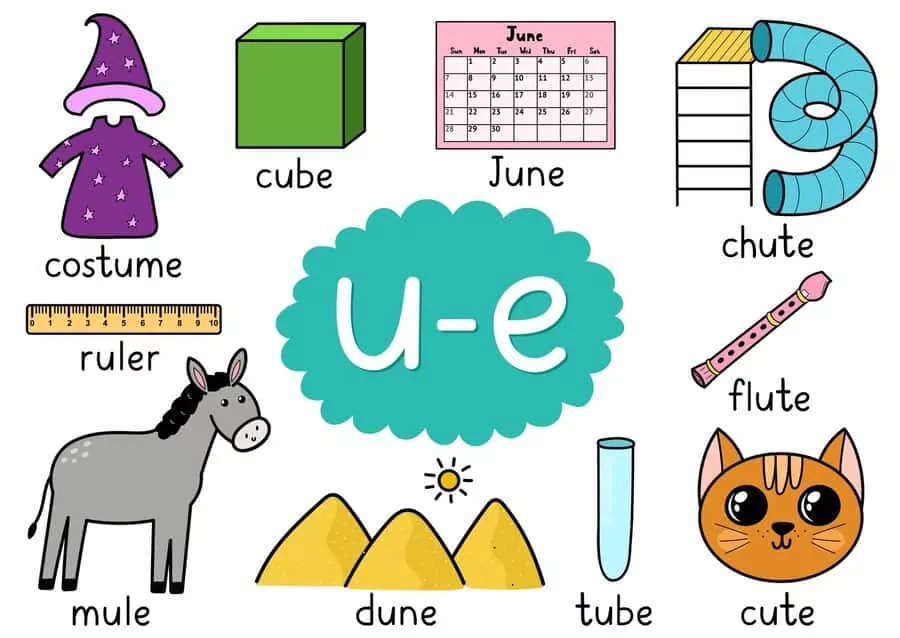
Phonics works through two core processes: decoding (recognising individual letter sounds) and blending (combining those sounds to form a complete word). These are literacy skills activities that LearningMole supports with a range of phonics videos and reading resources designed for early learners. Once decoding is secure, the focus shifts to comprehension, the ability to understand, analyse, and evaluate texts at a deeper level.
By KS2, pupils are expected to read for inference, identifying what a text implies rather than just what it states. Effective reading comprehension strategies include:
- Reciprocal reading: Pupils take turns leading a discussion about a shared text, using the roles of predictor, clarifier, questioner, and summariser. This develops metacognitive reading habits.
- Visualisation: Asking children to draw or describe what they picture as they read strengthens engagement with descriptive language.
- Reading aloud together: Regular paired reading at home, where a parent reads a page and a child reads the next, builds both fluency and comprehension in a low-pressure setting.
Writing: Communicating with Precision and Purpose
Strong writing depends on three foundations: something to say (ideas), a way to say it (vocabulary and sentence structure), and the technical accuracy to be understood (SPaG). The National Curriculum’s SPaG strand covers spelling, punctuation, grammar, and vocabulary from Year 1 through Year 6, with assessed expectations at KS2 SATs.
Teaching writing effectively means treating it as a process, not a single event. The most successful approaches in UK classrooms involve a clear cycle of modelled writing (the teacher writes in front of the class), shared writing (teacher and pupils compose together), guided writing (pupils attempt with support), and independent writing (pupils write alone). Moving through this cycle prevents pupils from treating writing as an isolated test and instead builds the habits of drafting and revision.
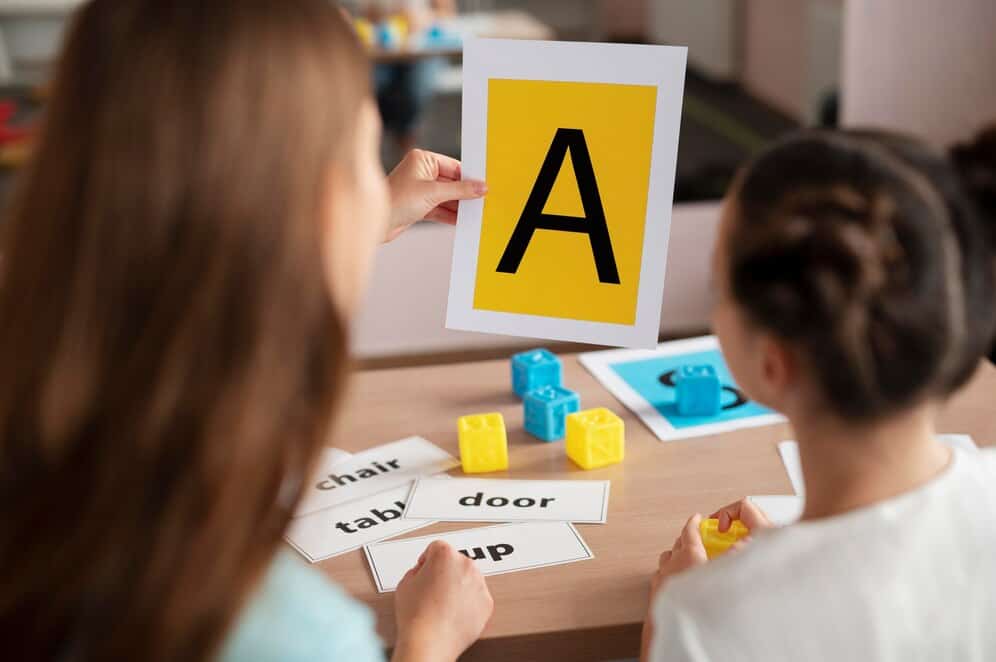
One high-value strategy for reinforcing challenging words is the “read it, make it, write it” technique. Place the letters needed to spell a target word on a whiteboard or use magnetic letters. Ask the child to read the word, build it with the letters, then write it independently. If they are ready, extend the challenge by asking them to use the word in a sentence.
This technique is particularly effective for irregular plural nouns and high-frequency words that do not follow standard phonics rules, words like “kisses,” “boxes,” and “children,” where simply adding an ‘s’ does not produce the correct spelling.
Literacy for EAL Learners: Bridging the Language Gap

Children learning English as an Additional Language face a specific challenge: they must develop literacy skills in a language they are still acquiring at a conversational level, while simultaneously meeting the same curriculum expectations as their peers. Understanding how to support EAL learners in developing strong literacy skills is essential for any teacher working in a diverse UK classroom.
The first thing to recognise is the “Silent Period”, a natural phase in language acquisition during which EAL learners observe and absorb the language around them before speaking. This is not disengagement or inability; it is the brain processing a new linguistic system. Pushing children to produce language before they are ready can undermine confidence. Instead, prioritise comprehensible input: visual supports, contextualised vocabulary, and paired activities where the EAL learner can observe language being used in context.
Once conversational fluency begins to develop, the transition to academic English is the key literacy challenge. “BICS” (Basic Interpersonal Communication Skills), the language used on the playground and in casual conversation, develops relatively quickly, often within two years. “CALP” (Cognitive Academic Language Proficiency), the language required to write a persuasive essay or analyse a poem, can take five to seven years to develop fully. Teachers who recognise this distinction can build appropriate scaffolding into their literacy planning.
Practical strategies for supporting EAL learners’ literacy skills:
- Pre-teaching tier-2 vocabulary: Before a reading lesson, introduce the six to eight words pupils are likely to find challenging in the text. Use images, examples, and context sentences rather than dictionary definitions.
- Visual word walls: A display of key vocabulary with images alongside each word supports reading comprehension and writing without requiring constant adult intervention.
- Dual-language texts and glossaries: For newly-arrived EAL learners, providing a version of a key text in their home language alongside the English version supports comprehension while reading skills develop.
- Sentence frames for writing: Providing structured sentence starters reduces the cognitive load of writing so pupils can focus on the content of what they want to say.
Functional and Digital Literacy: Learning English in the 21st Century

Examples of literacy skills in everyday adult life extend well beyond books and classrooms, and the UK National Curriculum recognises this. Functional literacy means being able to read and write well enough to operate confidently in daily life: filling in a form, reading a medicine label, writing a clear email, or evaluating the reliability of an online source.
Digital literacy is the modern extension of this. Children learning English today need to develop the ability to navigate English-language websites, assess the credibility of online information, write appropriately in digital contexts (including email etiquette and formal versus informal register), and understand the basics of online safety. These are literacy skills that schools increasingly embed across the curriculum rather than treating as standalone computing lessons.
For parents supporting children at home, one of the most evidence-backed strategies for developing reading speed and word recognition is surprisingly simple: turn on the subtitles. Watching English-language television with English subtitles active creates a low-pressure environment where children encounter written English in real time, connected to speech and meaning. Studies of same-language subtitling have found benefits for word recognition and vocabulary, and it costs nothing to try, which makes it a low-risk addition to a home reading routine.
Literacy Skills for the UK Curriculum (KS1 and KS2)

Understanding the specific expectations of the UK National Curriculum helps teachers and parents set appropriate targets and recognise what progress looks like at each stage.
Key Stage 1 (Years 1–2): The primary focus is on phonics and word reading. Pupils are expected to apply their knowledge of the alphabetic code to read age-appropriate books aloud with increasing accuracy and fluency. They begin to write simple sentences with correct punctuation, develop early spelling patterns, and engage with phonemic awareness activities. The Year 1 Phonics Screening Check assesses whether pupils have met the expected standard in phonics.
Key Stage 2 (Years 3–6): The emphasis shifts to comprehension, composition, and technical accuracy. By the end of Year 6, pupils are expected to read with fluency and stamina, retrieving and interpreting information from a range of text types, and writing in a variety of forms, including narrative, persuasive, descriptive, and informational, with accurate SPaG. The KS2 SATs in English assess reading comprehension and SPaG separately.
What to look for at each stage:
| Stage | Reading Milestone | Writing Milestone |
|---|---|---|
| End of Year 1 | Pass Phonics Screening Check | Write simple sentences with full stops |
| End of KS1 | Read age-appropriate books with fluency | Use varied sentence types with basic punctuation |
| End of KS2 | Read for inference and evaluate texts | Write for different purposes with accurate SPaG |
For parents of EAL children, it is worth knowing that Year 6 SATs are sat by all pupils regardless of how long they have been learning English. Teachers can apply for access arrangements, but understanding the “Expected Standard”, the benchmark for average attainment in English at the end of primary school, helps you know what your child is working towards.
Top 5 Strategies to Improve English Literacy Skills at Home

Literacy development does not stop at the school gate. The Education Endowment Foundation puts the average impact of parental engagement at around four months’ additional progress, with effects strongest for literacy and greatest where a parent works directly with their child one to one.
The EEF’s guidance is specific about what works: shared book reading should be the central component for younger children, and gifting books alone is unlikely to help unless it comes with advice and support that prompts longer, more frequent conversations while reading. Here are five strategies that are practical, evidence-based, and free.
1. Read aloud every day, even when children can read independently. Children’s listening comprehension develops faster than their reading ability, meaning they can understand and enjoy books that are two or three years above their reading level when read aloud. This is one of the most powerful ways to build vocabulary and a love of stories simultaneously.
2. Have conversations about books. After reading, ask open questions rather than comprehension-check questions. “What would you have done if you were that character?” develops inference and empathy; “What happened next?” simply tests recall.
3. Encourage writing for a real purpose. Shopping lists, birthday cards, emails to relatives, instructions for a game. Any writing that has a genuine audience and purpose is more motivating than a worksheet.
4. Use audiobooks alongside physical books. Following along in a book while listening to an audiobook read by a skilled narrator builds fluency, prosody (the rhythm and expression of reading aloud), and vocabulary in a way that silent reading alone does not.
5. Make phonemic awareness playful. Rhyming games, tongue twisters, and word-sorting activities (grouping words by their vowel sounds, for example) build phonological awareness in children who are still developing their phonics knowledge, without the pressure of formal assessment.
Teaching Resources and Support

LearningMole’s English literacy resources have been developed to support every stage of the journey described in this guide. Whether you are a teacher preparing a phonics lesson for Year 1, a parent helping a KS2 child revise SPaG ahead of SATs, or supporting an EAL learner who is new to English, you will find targeted resources across our platform, from vocabulary-building videos to grammar worksheets aligned with the National Curriculum.
Our video library includes dedicated content on phonics and the alphabet, nouns and parts of speech, reading comprehension strategies, and writing skills, all delivered in a warm, accessible style designed to engage primary-age learners. You can explore the full range at LearningMole’s English resources hub, where resources are organised by key stage, skill, and topic to make lesson planning as straightforward as possible.
For families, LearningMole’s video library covers literacy from early phonics through to KS2 SPaG, available at home, on demand, on any device.
Frequently Asked Questions
What are the 4 main literacy skills in English?
The four main literacy skills are reading, writing, speaking, and listening. Reading involves decoding and comprehension; writing encompasses composition and technical accuracy; speaking and listening (oracy) form the foundation from which the other two skills grow.
How can I improve my English literacy skills as an adult?
Focus on functional literacy first: read news articles and longer non-fiction regularly, practise writing in different formats (emails, summaries, short reports), and consider “shadowing”, listening to a native speaker and repeating what they say to improve fluency and pronunciation. Community literacy programmes and online resources can provide structured support.
What is the difference between language skills and literacy skills?
Language skills refer to knowing the words and grammar of a language, the raw tools of communication. Literacy skills are the ability to use those tools to create meaning: to read a text and understand its argument, or to write a piece that achieves its intended purpose. You need language skills to develop literacy, but having vocabulary alone does not make someone literate.
How do you teach literacy to EAL learners?
Effective approaches include scaffolding with visual supports and sentence frames, pre-teaching key vocabulary before reading tasks, allowing for a natural silent period, and using dual-language resources where appropriate. The goal is to reduce cognitive load so EAL pupils can engage with literacy tasks without being blocked by vocabulary gaps.
What are examples of good literacy skills for a CV?
Strong literacy skills relevant to a CV include high-level comprehension (the ability to read and summarise complex documents), persuasive writing (structuring an argument clearly), editing and proofreading for technical accuracy, and digital communication, writing clear, professional emails and understanding appropriate register for different audiences.
At what age should a child have secure basic English literacy?
In the UK, basic phonics should be secure by the end of Year 1 (age 5–6), as assessed by the Phonics Screening Check. By the end of KS2 (age 10–11), pupils are expected to read with fluency and write independently across a range of text types. These are the “Expected Standards” set by the National Curriculum, though individual children develop at different rates.
What is phonemic awareness and why does it matter?
Phonemic awareness is the ability to hear, identify, and manipulate the individual sounds (phonemes) in spoken words. It is distinct from phonics, which involves connecting sounds to letters. Strong phonemic awareness before formal reading instruction significantly predicts later reading success, which is why nursery rhymes, clapping syllables, and sound-sorting games are valuable literacy activities even before a child begins school.
How do nouns support literacy development?
Understanding nouns, and the distinctions between proper nouns, common nouns, irregular plural nouns, and pronouns, is a key component of SPaG in the UK National Curriculum. Children who understand that nouns can be singular or plural, can be possessed (using apostrophes), and can describe other nouns (as in “sea kayak”) have a firmer grammatical foundation for both reading comprehension and accurate writing.
Why Oracy Comes First
Literacy skills in English are not a single subject to be taught and ticked off, they are a set of interlocking capabilities that grow, deepen, and become more sophisticated throughout a child’s entire education and beyond. The four pillars of reading, writing, speaking, and listening each require sustained, deliberate practice, and each becomes stronger when the others are developed alongside it. For EAL learners, the journey is longer and the scaffolding more specific, but the destination is the same: the confidence and competence to use English as a full tool for thinking, communicating, and learning.
The most important insight that modern UK literacy education offers is the primacy of oracy. Children who are given regular, structured opportunities to talk, to rehearse ideas aloud, to argue a position with a partner, to tell a story before they write it, consistently produce stronger reading comprehension and writing outcomes. If you take one thing from this guide, make it this: before you ask a child to write, give them the chance to speak.
Explore LearningMole’s English Resources
LearningMole provides curriculum-aligned videos and teaching materials for children aged 4 to 11, covering phonics, comprehension, grammar and writing across the KS1 and KS2 English curriculum. Whether you are planning a phonics lesson or supporting SATs revision at home, the library has the material ready.


Leave a Reply