Phonics Games and Activities for Early Years

Avatar of Michelle Connolly
Updated on: Educator Review By: Michelle Connolly

Children learn to read by learning sounds, not letters, and that distinction matters more than most people realise. Phonics is the UK National Curriculum’s recommended approach to early reading, used across EYFS and Key Stage 1 because it builds a reliable, transferable system: children learn the sounds that letters and letter combinations make, then blend those sounds to decode words. But for children in the Early Years Foundation Stage, the path to reading begins well before they ever pick up a pencil. It starts with listening.

Phase 1 phonics, often underestimated and frequently rushed past in a hurry to get to letters, develops the oral discrimination skills that underpin everything else. Can a child tell the difference between the sound a cat makes and the sound rain makes on a window? Can they clap the rhythm of their name? Can they hear that ‘fish’ and ‘dish’ end the same way?

These skills, environmental sounds, rhythm and rhyme, alliteration, and oral blending are the foundation on which all formal phonics teaching rests. LearningMole’s curriculum-aligned resources for early years teachers and parents are designed with this progression in mind, connecting practical activities to the phases children move through as they grow into confident readers.

This guide brings together phonics games and phonics activities suitable for nursery, Reception, and the early stages of Year 1, with ideas that work both in the classroom and at home. Activities are grouped by phase and focus, with notes on how to adapt them for different learners, including children with speech, language, and communication needs.

Whether you’re an EYFS Lead looking for fresh ideas or a parent wanting to support your child’s early reading journey, you’ll find practical, no-preparation-needed activities alongside more involved games that work beautifully as a learning station or small-group session.

What is Phonics in the Early Years?

Phonics Games and Activities for Early Years

Phonics in the Early Years is the systematic teaching of the relationship between sounds (phonemes) and the letters that represent them (graphemes). In the UK, the Department for Education mandates a systematic, synthetic phonics approach from Reception, with children expected to begin Phase 2, the stage where they start matching letters to sounds, by the end of their first term in school. Before that, Phase 1 builds the listening and oral language skills that make Phase 2 achievable.

The EYFS framework sets out Communication and Language as a prime area of learning, and early phonics sits squarely within it. Activities that develop phonological awareness, the ability to hear and manipulate sounds in spoken words, prepare children to become confident readers and writers. ‘Pure sounds’ matter here: teaching a child that the letter ‘m’ makes the sound /m/ rather than ‘muh’ prevents blending errors later on.

PhaseTypical AgeKey SkillsExample Activity
Phase 12–4 years (Nursery)Environmental sounds, rhythm, rhyme, alliteration, oral blendingListening Walk, Silly Soup, Robot Talk
Phase 24–5 years (Reception)Letter–sound correspondences (s, a, t, p, i, n first)Sound Jump, Magnet Letters in Snow
Phase 34–5 years (Reception)Digraphs (ch, sh, th), vowel digraphs (ai, ee, oo)Football Phonics, Wanted Poster alliteration
Phase 45 years (late Reception)Adjacent consonants (bl, st, cr), CCVC and CVCC wordsShake It! blending teams game
Phase 55–6 years (Year 1)Alternative graphemes, phoneme–grapheme choicesWord sort games, grapheme treasure hunts

Note: Phases align with Letters and Sounds (DfE) and closely map to DfE-validated schemes, including Little Wandle Letters and Sounds Revised and Read Write Inc.

Phase 1 Phonics: The Foundation Before the Letters

Phonics Games and Activities for Early Years

Most competing resources jump straight to letter–sound correspondence. Phase 1 is where genuine early years phonics expertise shows. Children cannot blend sounds they haven’t learned to hear. The seven aspects of Phase 1, environmental sounds, instrumental sounds, body percussion, rhythm and rhyme, alliteration, voice sounds, and oral blending and segmenting, build the auditory discrimination skills that make everything else possible.

“Phonics is about the ears before it is about the eyes. Children who struggle to blend in Reception almost always need more Phase 1 time, more listening games, more rhyme, more play with sounds. Rushing to letters before oral discrimination is secure is one of the most common mistakes in early phonics teaching.”

Michelle Connolly, Founder of LearningMole and former teacher with over 15 years of classroom experience

Aspects 1–3: Listening Walks and Environmental Sound Games

Environmental sound discrimination is the starting point. Take children on a Listening Walk: stop every few metres and ask them to close their eyes and name every sound they can hear. Back in the classroom, discuss the difference between near and distant sounds, loud and quiet, continuous and sudden. This feeds directly into Aspect 1 (environmental sounds) and Aspect 2 (instrumental sounds).

For a simpler version suitable for very young children or home learning, record sounds on a phone, a running tap, a dog barking, a car engine, a kettle boiling, and play them back one at a time, asking children to say or point to what made each sound. Keep the total count low at first (three or four sounds) and build gradually as confidence grows.

Aspects 5–6: Rhythm, Rhyme, and Alliteration

Rhythm and rhyme activities feed Aspect 5 of Phase 1 and are among the most powerful predictors of early reading success. Clapping games, nursery rhymes, and songs all help children hear the structure of language before they read a single word. For alliteration, Aspect 6, tongue twisters and name games work well: ask children to think of a describing word that starts with the same letter as their name (‘Bouncy Bilal’, ‘Silly Sophie’).

🟦 Classroom Activity: Silly Soup

What you need: a large pot or bowl, a collection of small objects or pictures.

How to play: choose a target sound, for example /s/. Children take turns finding objects or pictures from a tray that start with that sound and ‘add them to the soup’. Each time, they say the word aloud before dropping it in. Encourage the group to join in: ‘In goes the snake!’ ‘In goes the sun!’

Extension: mix in one or two objects that don’t match the target sound. See if children can spot the ‘wrong’ ingredient before it goes in.

Curriculum link: EYFS Communication and Language; Phase 1 Aspect 6 (alliteration).

Aspect 7: Robot Talk — Oral Blending and Segmenting

Robot Talk is the most direct route to oral blending. Tell children that a robot speaks in separate sounds and they need to guess the word. Say /c/ /a/ /t/ in a robotic voice and ask children to push the sounds together to make the word. Once they’re confident in guessing, children can take turns being the robot, segmenting simple three-letter words for their classmates to blend.

This activity transfers directly to reading: the physical act of pushing imaginary sounds together prepares children for the left-to-right blending process they’ll use with decodable books. LearningMole’s phonics videos for early years include pure sounds pronunciation guides that help parents and teachers model each sound correctly at home and in class.

Phase 2 and Beyond: Fun with Graphemes

phonics games, activities, phonics LearningMole

Once children can hear and manipulate sounds in spoken words, they’re ready to match those sounds to letters. Phase 2 introduces the most common letter–sound correspondences first: s, a, t, p, i, n, chosen because they combine to make dozens of simple words immediately. The games below work for Phase 2 and Phase 3 learners, and most can be adapted as children progress.

Active Games for High-Energy Learners

Children who learn best through movement need phonics activities that get them out of their seats. Active games also make sound–letter correspondence stickier because they connect new learning to physical memory.

Noisy Letter Jump: Use chalk to write letters on the ground, or laminate individual grapheme cards and space them across the floor. Children run around freely, and when you call a sound (not a letter name), they jump on the matching grapheme and say it aloud. Vary the pace, slow and deliberate for consolidation, quick-fire for children who are more confident. To ramp it up, ask children to jump on two graphemes in sequence and blend them into a CVC word.

Sound Jump can also be used diagnostically: watch which sounds children hesitate over and note these for follow-up. It’s a low-stakes way to assess phoneme–grapheme correspondence without sitting children down for a formal check.

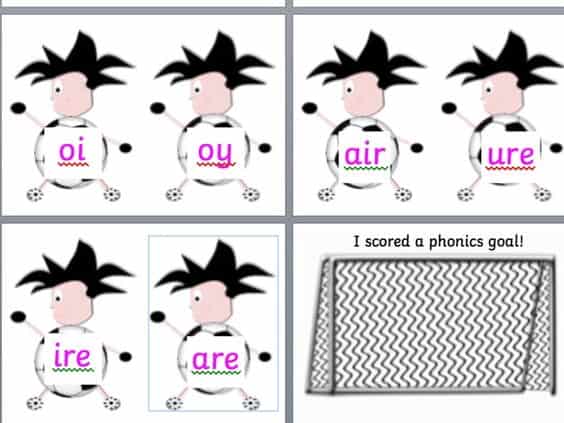
🟩 Classroom Activity: Football Phonics

What you need: a chalk goal on a wall (or a real goal post), laminated cards with word endings (ate, op, at, an), laminated cards with consonant clusters (ch, sh, wh, pr, th), a lightweight ball, sticky-backed velcro, blue tack.

How to play: stick word ending cards around the goal mouth. Attach a consonant cluster card to the ball with velcro. Children must make a real word by combining the card on the ball with a card in the goal before they can shoot. Change the ball card after each successful goal.

Adaptation for Phase 2: use single letter cards on the ball and simple CVC word endings at the goal.

Curriculum link: Phase 3 phonics; consonant digraphs and onset–rime.

Sensory Phonics: Tracing, Sand, and Shaving Foam

Multisensory activities reinforce grapheme formation alongside sound–letter correspondence. Set up trays of sand, wet mud, or shaving foam and ask children to trace letters with their fingers as they say the sound aloud. The combination of visual, auditory, and tactile input is particularly effective for children who find pure visual learning difficult.

Water Balloon Letter Match is a perennial favourite for outdoor sessions. Write large letters on index cards and tape them to a fence. Write word endings on balloons. Children hold a balloon against a letter card to see whether they combine to make a real word, say the word aloud, then throw the balloon. It’s memorable, physically engaging, and genuinely reinforces onset–rime. Perfect for warmer months or an end-of-term outdoor session.

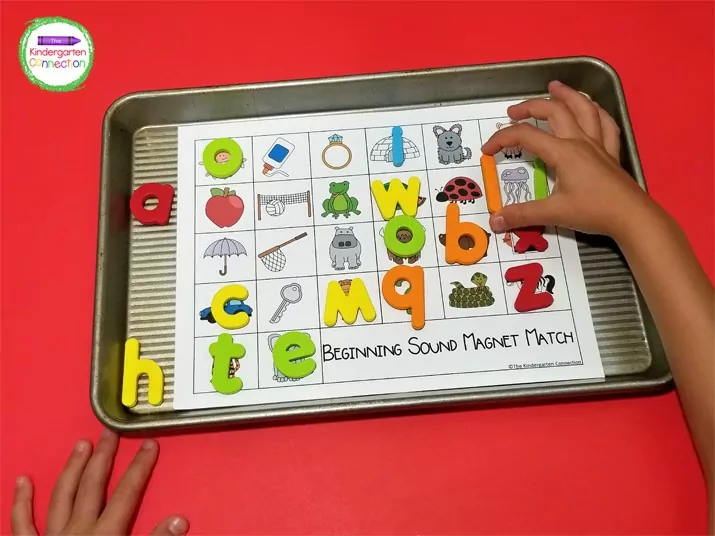
Magnets in the Snow works beautifully as a winter-themed sensory phonics activity. Hide magnetic letters in polystyrene packing or fake snow inside a large container. Children use a magnet to attract a letter, say its sound, and keep it if they can name a word that contains that sound. Ask children what word they would make. This extends the activity from simple recognition into basic word-building.

No-Prep Phonics Games for Busy Teachers and Parents

Not every phonics activity needs materials, preparation, or even a quiet classroom. The games below use nothing more than voices, hands, and imagination, which makes them ideal for transitions, car journeys, waiting times, and any moment when you want to extend phonics learning without getting anything out.

ActivityHow It WorksPhase / Age
I Spy (sounds version)Say ‘I spy with my little eye, something beginning with /s/’ using the sound, not the letter name. Children take turns guessing and setting.Phase 2 and 3 / Ages 4–6
Robot TalkAdult segments a word into phonemes in a robotic voice. Child blends the sounds and says the word. Reverse: child segments, adult blends.Phase 1 Aspect 7 / Ages 3–5
Rhyme TennisAdults segment a word into phonemes in a robotic voice. Child blends the sounds and says the word. Reverse: child segments, adult blends.Phase 1 Aspect 5 / Ages 3–5
Sound of the DayTake turns saying words that rhyme with a starter word (‘cat… hat… mat… fat…’). The first person who can’t think of a rhyme loses the rally.Phase 2 / Ages 4–5
Odd One OutAdults segment a word into phonemes in a robotic voice. The child blends the sounds and says the word. Reverse: child segments, adult blends.Phase 1 Aspect 6 / Ages 3–5

These activities are particularly useful for parents who want to support their child’s phonics learning at home without replicating formal schoolwork. LearningMole’s home learning phonics resources provide step-by-step guidance for parents on how to use activities like these effectively, including video demonstrations of oral blending and pure sound pronunciation.

Supporting Neurodivergent Learners in Phonics

Phonics Games and Activities

Phonics games work best when they’re accessible to every child in the room. Children with speech, language, and communication needs (SLCN), dyslexia, sensory processing differences, or ADHD often find standard phonics approaches challenging, not because they can’t learn phonics, but because the format doesn’t suit how they process information.

Movement-based activities like Sound Jump and Football Phonics are intrinsically more accessible for children who need to move to learn. Sensory trays, sand, shaving foam, and clay offer a tactile entry point for children who struggle with pencil control or visual tracking. For children with SLCN, reducing the auditory load is key: fewer sounds at once, longer pauses between prompts, and consistent use of the same vocabulary each session all reduce cognitive pressure.

For children who are finding blending particularly difficult, return to oral blending before reintroducing graphemes. Robot Talk works well here because it separates the visual and auditory demands entirely. Work on blending spoken sounds until it’s automatic, then reintroduce letters one at a time. Many children who appear to be struggling with phonics are actually struggling with a specific part of the process, identifying which part points to the right intervention.

🟦 Adaptations Checklist

  • Use sound rather than letter name throughout (say /m/ not ’em’)
  • Reduce the number of graphemes in circulation during games, start with 4–6
  • Allow children to respond by pointing, touching, or moving rather than speaking if speech output is a barrier
  • Use consistent visual cues: the same hand gesture or Makaton sign alongside each sound
  • For children with sensory sensitivities, offer an alternative to messy trays (letter stamps on paper, magnetic letters on a board)
  • Give extra processing time: wait at least 5 seconds after asking a question before prompting
  • Keep game rounds short, 10 to 15 minutes maximum for children who find sustained attention difficult

Choosing the Right Phonics Approach: A Guide for UK Parents

Most UK primary schools follow a DfE-validated systematic synthetic phonics programme. Since 2023, schools in England have been expected to use one of the programmes on the DfE’s approved list. The two most widely used are Little Wandle Letters and Sounds Revised and Read Write Inc. Both follow a similar phase progression, though they differ in the order letters are introduced and in their decodable book schemes.

For parents, the key thing is consistency: use the same terminology your child’s school uses (phoneme, grapheme, digraph, blend), and if possible, find out which phase your child is currently working in. Activities at home are most effective when they reinforce the specific sounds being taught at school rather than jumping ahead or going back to already-secured phases.

If your child’s school doesn’t communicate clearly about which scheme they use or where your child is in it, it’s entirely reasonable to ask. Reception teachers and EYFS Leads are usually happy to share this information and will often suggest specific activities to support at home. LearningMole’s phonics resources are designed to complement any validated scheme, giving parents and teachers a library of activities that can be matched to whatever phase a child is working on.

FeatureLittle Wandle Letters and Sounds RevisedRead Write Inc. (RWI)
First letters taughtm, a, s, d, t (then i, n, p, g, o)m, a, s, d, t, i, n, p, g, o, c, k
Grapheme terminologyGrapheme–phoneme correspondences (GPCs)Set 1 Sounds, Set 2 Sounds, Set 3 Sounds
Tricky words calledCommon Exception WordsRed Words
Decodable booksMatched to GPCs; tightly controlled vocabularyMatched to Set sounds; includes rhyme and story structure
Home learning supportParent guides and home reading books providedParent videos available; school-led sessions recommended

The Wanted Poster Game: Alliteration in Action

One of the most creative phonics activities for older nursery and Reception children is the Wanted Poster game. It keeps children engaged for a surprisingly long time and produces a piece of work they’re proud to take home.

Tell the children a story about an outlaw that everyone needs to catch. Choose a target sound, for example, /l/, and work together to build a description of the character using only words that start with that sound. ‘Louis, the lazy lab assistant, steals lobster from the larder and limes. He lives in a log cabin with a lizard.’ Children say each word aloud before drawing the character on their wanted poster. The alliteration forces them to listen carefully to initial sounds and to generate words with a specific onset.

Extend the activity by switching from same-initial-sound (alliteration) to rhyming sounds. Instead of all words starting with /l/, all descriptive words rhyme with a chosen target. This moves the phonological focus from onset to rime and introduces a different kind of sound manipulation. Both versions of the game build phoneme–grapheme correspondence while keeping children in a genuinely playful, creative frame.

Shake It! Team Blending and Segmenting

Phonics Games and Activities

Blending and segmenting are two sides of the same phonics coin. Blending means pushing separate sounds together to read a word; segmenting means breaking a spoken word into its individual sounds to spell it. Children who can do both have the core phonics engine in place.

Shake It! is a team game that practises both skills through repetition and a bit of friendly competition. Split the group into two teams. One team acts as the caller, shouting out individual phonemes of a word one at a time. The other team must blend the phonemes they hear and shout back the complete word. Reverse roles so each team practises both skills. Pom-poms or shakers add energy and give children something to do with their hands, helping the quieter members of the group feel part of the activity.

The game scales well: start with simple CVC words for Phase 2 learners, move to CCVC or CVCC words for Phase 4, and introduce words with digraphs or vowel phonemes for Phase 3 or 5 consolidation. Keep rounds short, five or six words per turn, so concentration stays high.

LearningMole Phonics Video Resource

LearningMole’s phonics video library includes curriculum-aligned content covering sounds, blending, segmenting, and early reading activities. The video below covers phonics games and sounds suitable for early years learners, with clear pronunciation of each phoneme to support teachers and parents in modelling sounds correctly at home and in class.

Teaching Resources and Support

Phonics Games and Activities

LearningMole provides a curriculum-aligned library of phonics resources for teachers, parents, and home educators, covering Phases 1-5. Resources include printable phonics activity sheets, video-based learning tools, and structured guides for each phase of the UK phonics journey.

For teachers, LearningMole’s phonics resources are designed to complement any DfE-validated scheme, providing supplementary activities that reinforce phase-specific learning without duplicating school work. Ready-made activity packs save planning time and include differentiation suggestions for mixed-ability groups.

For parents, LearningMole offers step-by-step video guides explaining each phase in plain language, alongside home learning activity packs that match the terminology and approach used in school. All resources are aligned with the UK National Curriculum and EYFS framework.

Explore LearningMole’s Phonics Resources

LearningMole provides free and subscription-based phonics resources for EYFS and KS1, including videos, activity sheets, and parent guides aligned with the UK National Curriculum. Visit learningmole.com to browse phonics teaching resources, watch free videos on YouTube, or subscribe for full access to the complete resource library.

Frequently Asked Questions

Phonics Games and Activities 1

When should I start teaching phonics?

Phase 1 phonics begins from birth through nursery rhymes, listening games, and sound play; there is no too-early for this stage. Formal Phase 2, where children begin matching letters to sounds, typically starts in the first half-term of Reception (around age 4 to 5). Children who have had rich Phase 1 experiences tend to move through Phase 2 more quickly because their auditory discrimination is already strong.

What are pure sounds, and why do they matter?

Pure sounds mean pronouncing each phoneme without adding an extra vowel sound. The letter ‘m’ makes /m/ not ‘muh’; ‘s’ makes /s/ not ‘suh’. When children learn impure sounds, they struggle to blend because they end up with extra syllables: /k/-/uh/-/a/-/uh/-/t/-/uh/ instead of /k/-/a/-/t/. This is one of the most common sources of early reading difficulty and one of the easiest to prevent by modelling sounds correctly from the start.

My child is struggling to blend. What should I do?

Return to oral blending before reintroducing letters. Robot Talk, which says individual phonemes in a robotic voice and asks your child to push them together, works well because it removes the visual element entirely. Start with simple two-phoneme words (/i/-/t/ → ‘it’; /a/-/t/ → ‘at’), then build to CVC words once oral blending is secure. If difficulty persists after consistent practice over several weeks, speak to your child’s teacher or SENCO. Some children benefit from a structured phonics intervention programme.

What are the 7 aspects of Phase 1 phonics?

The seven aspects of Phase 1, as set out in the original Letters and Sounds guidance, are: (1) environmental sounds, (2) instrumental sounds, (3) body percussion, (4) rhythm and rhyme, (5) alliteration, (6) voice sounds, and (7) oral blending and segmenting. Most early years settings address these through everyday activities, singing, outdoor play, and movement games, rather than formal lessons. The key is that children experience all seven aspects regularly before moving to Phase 2.

How can I teach phonics to a 3-year-old?

Focus entirely on Phase 1. Nursery rhymes, sound walks, clapping games, silly songs, and oral blending through Robot Talk are all appropriate for this age group. Avoid introducing letters at this stage unless your child shows strong interest and has already developed good auditory discrimination. The most valuable thing you can do for a 3-year-old’s phonics development is read to them daily, sing with them, and play games that draw attention to sounds in the world around them.

How can parents support phonics learning at home without confusing their child?

Use the same terminology your child’s school uses. Ask the teacher which phase your child is working in and which sounds are currently being taught. At home, focus on those specific sounds rather than working through the alphabet independently. No-prep activities like I Spy (sounds version), Robot Talk, and Rhyme Tennis are safe choices because they reinforce oral skills that transfer to any scheme. LearningMole’s parent phonics guides explain each phase in accessible language and suggest home activities that complement rather than conflict with school teaching.

Are there phonics games that work for mixed-age or mixed-ability groups?

Yes, most of the activities in this guide scale well. Sound Jump progresses from Phase 1 (oral sound discrimination) through Phase 3 (grapheme recognition) by changing the text on the cards. Football Phonics can be simplified to single letters for Phase 2 learners or made more complex with consonant clusters for Phase 3. The Wanted Poster game works across a wide age range because the creative element keeps older or more confident children engaged while the sound focus is accessible to beginners. The key is to use differentiated prompt cards rather than the same task for every child.

What does ‘phoneme–grapheme correspondence’ mean?

A phoneme is the smallest unit of sound in a word: the word ‘ship’ contains three phonemes /sh/, /i/, /p/. A grapheme is the letter or letters that represent that sound in writing. Phoneme–grapheme correspondence (PGC) is the link between the two: knowing that the /sh/ sound is written as ‘sh’, or that the /ee/ sound can be written as ‘ee’, ‘ea’, or ‘e_e’. Phonics teaching builds this knowledge systematically so children can decode new words independently rather than memorising each one by sight.

Building Confident Early Readers, One Sound at a Time

Phonics Games and Activities 1

The most important thing phonics games do is make sound play a normal, enjoyable part of childhood. Children who grow up hearing nursery rhymes, playing Robot Talk in the car, collecting words for Silly Soup, and jumping on sounds in the playground arrive at formal phonics teaching with strong auditory discrimination, flexible oral blending skills, and, crucially, a positive association with language learning. None of the activities in this guide requires expensive materials or elaborate preparation. They require time, attention, and a willingness to make noise.

For teachers, the Phase 1 section of this guide is worth returning to whenever a child in Phase 2 or 3 is struggling to make progress. More often than not, the answer is a step back rather than a push forward: more oral blending, more rhyme, more sound play before the letters come back.

LearningMole’s curriculum-aligned phonics resources for EYFS and KS1 are designed to support this kind of responsive, phase-led teaching, whether you’re reinforcing Phase 1 skills with a child who needs more time, or extending a confident Phase 3 learner who’s ready for more complex grapheme work.

For parents, the message is simpler still: talk, sing, listen, and play. The phonics journey your child is on at school is strengthened every time you read aloud together, every time you clap the syllables of a new word, every time you ask, ‘What sound does that start with?’ on the way to the supermarket. Early reading is built slowly, sound by sound, and every small moment of sound play counts.

Leave a Reply

Your email address will not be published. Required fields are marked *