3 Amazing Recycling for Kids – Why is Recycling Important?
Table of Contents
Recycling one aluminium can saves enough energy to power a television for three hours. That single fact tends to stop primary-aged children in their tracks, because it makes something abstract — energy conservation — suddenly feel real and immediate. It is exactly the kind of concrete, curriculum-linked hook that turns a geography lesson into a genuine conversation about the choices we make every day, and the consequences those choices have for the planet we share.
At LearningMole, we work with teachers and parents who want to bring environmental topics to life in ways that are accurate, age-appropriate, and tied to the UK National Curriculum. This article does that by exploring three genuinely surprising recycling facts alongside the work of Bryson Recycling, a Northern Ireland social enterprise whose kerbside sort model is one of the most educationally rich examples of real-world waste management available to UK schools.
Understanding how Bryson operates helps children move beyond the idea that recycling is simply “putting things in a bin” and towards the bigger picture of circular economies, local employment, and environmental stewardship.
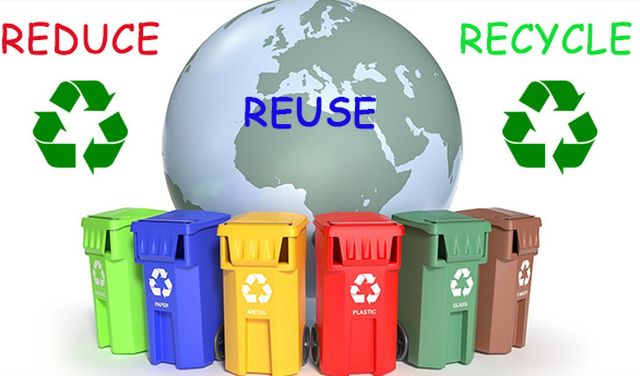
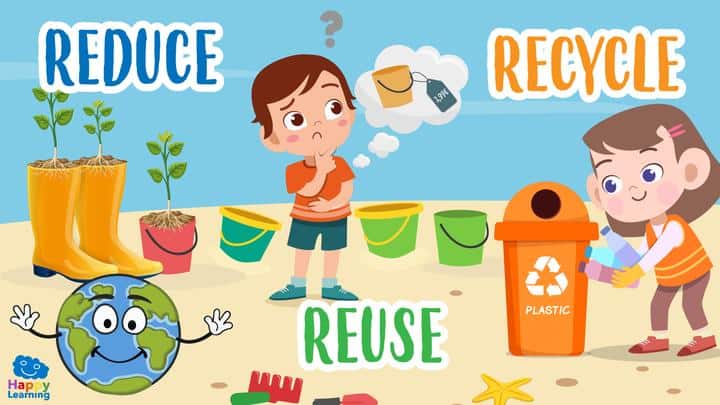
The Reduce, Reuse, Recycle hierarchy matters here. Recycling is the third option, not the first, and any honest environmental education should reflect that. Reduce consumption first. Reuse items for as long as possible. Then recycle what genuinely cannot be used again. When recycling is done well, as Bryson’s model demonstrates, it keeps high-quality materials in the UK, supports local jobs, and significantly cuts greenhouse gas emissions. That is worth teaching clearly and with proper depth.
Who Is Bryson Recycling?
Bryson Recycling is a UK social enterprise and the leading enterprise recycler in Northern Ireland. It is owned by the Bryson Charitable Group and operates 11 recycling centres across Northern Ireland, Donegal, and Wales, employing more than 320 staff.
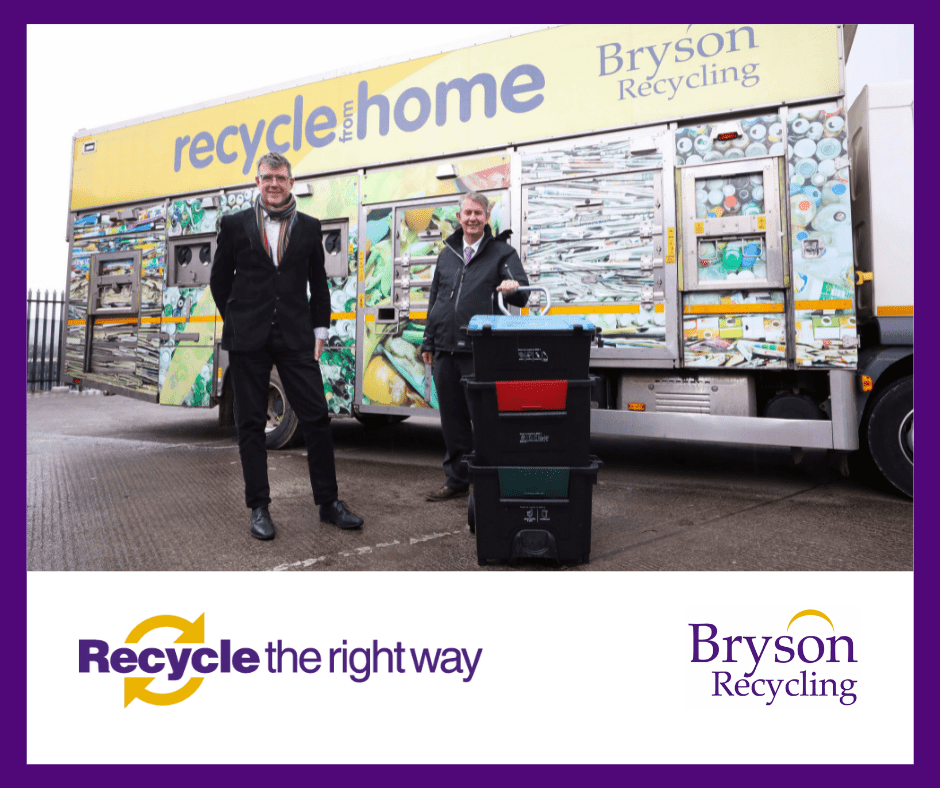
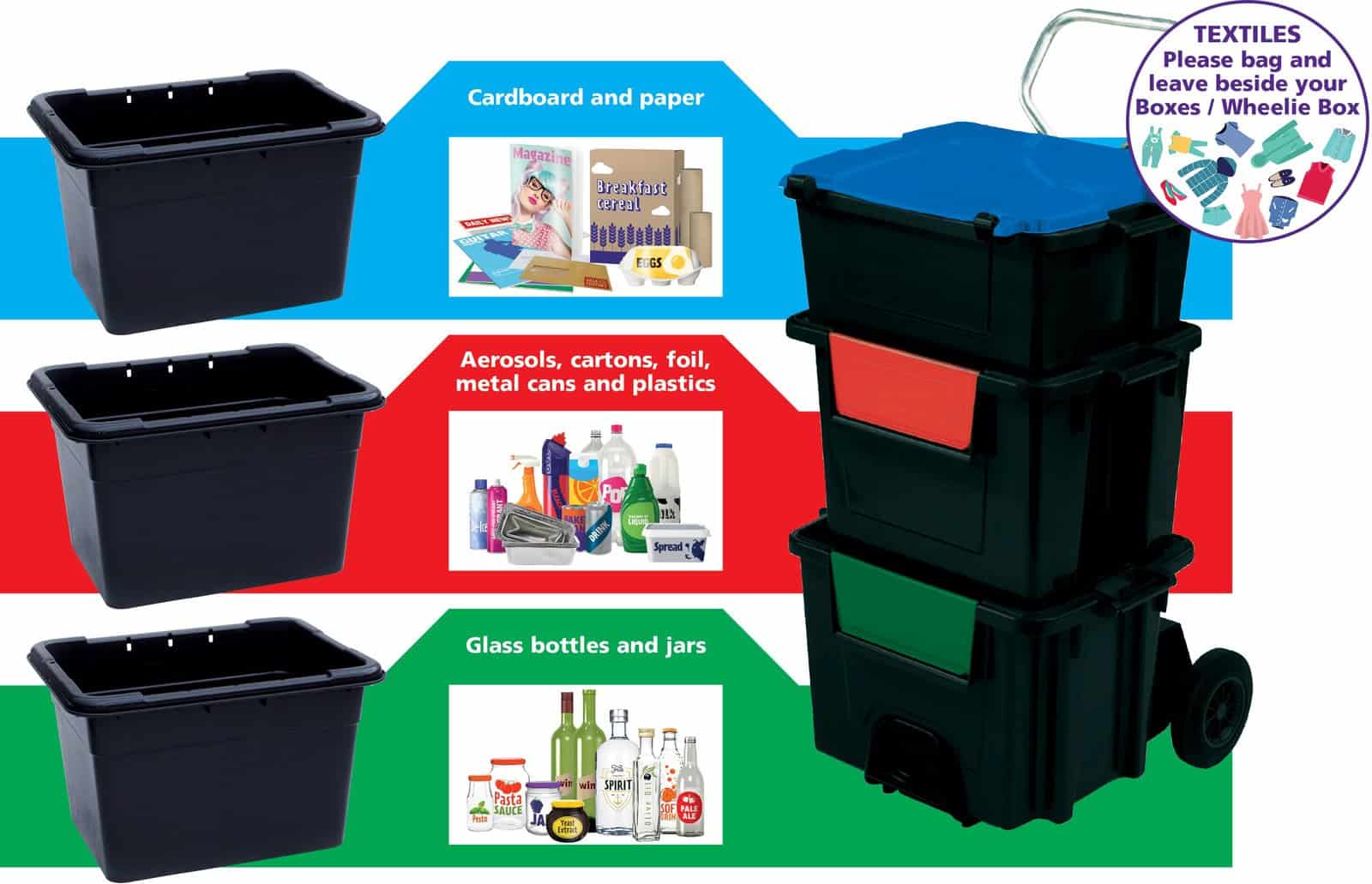
What makes Bryson particularly useful as a teaching example is its kerbside sort model. Rather than collecting all recyclables in a single mixed bin, Bryson vehicles collect different materials in separate compartments simultaneously. This keeps materials clean, uncontaminated, and suitable for processing by local reprocessing plants, meaning the materials collected in Northern Ireland are turned into new products by companies in Northern Ireland, supporting an estimated 700 jobs and contributing around £100 million a year to the local economy.
For KS2 Geography, this is a direct illustration of human and physical geography at the local scale: how communities manage resources, how economic activity connects to environmental decisions, and how local actions link to global consequences. It also introduces the concept of a circular economy in a concrete, real-world context that children can investigate further.
| Bryson Recycling at a Glance | |
|---|---|
| Type | Social enterprise (Bryson Charitable Group) |
| Recycling centres | 11 (Northern Ireland, Donegal, Wales) |
| Staff | 320+ |
| Model | Kerbside sort (separate compartments) |
| Economic contribution | £100 million+ to NI economy annually |
| Jobs supported | £100 million+ to the NI economy annually |
3 Amazing Facts About Recycling for Kids

Fact 1: Aluminium Cans Have an Infinite Life
Aluminium is one of the few materials that can be recycled indefinitely without losing quality. A drink collected from your kerbside today could be back on a supermarket shelf as a new can within 60 days. Unlike plastic, which degrades in quality with each recycling cycle and eventually becomes unusable, aluminium keeps its properties through the process.
The energy saving is equally striking. Recycling aluminium uses approximately 95% less energy than producing it from raw bauxite ore. That is where the “three hours of television” figure comes from: one recycled can saves enough energy to run a television for three hours. Scale that up, and the numbers become substantial: recycling 1 kilogram of aluminium saves around 14 kilowatt-hours of electricity, enough to run a laptop for approximately two days.
Classroom application (KS2 Science — properties of materials): Ask children to sort a collection of objects by whether they could theoretically be recycled forever, recycled with some quality loss, or not recycled at all. Aluminium sits clearly in the first category, making it an ideal anchor for understanding material properties.
Fact 2: Recycling Saves “Ghost Power”
The energy already embedded in a material before it reaches the recycling bin is sometimes called “ghost power” or “embodied energy.” It represents the fuel used to mine raw materials, transport them, and manufacture them into a usable form. When we recycle rather than produce from scratch, we recover a significant portion of that embedded energy.
Paper is a useful example for primary children. Recycling one tonne of paper saves around 17 trees and uses roughly 60% less energy than making paper from virgin wood pulp. Glass recycling saves about 30% energy compared to new production, and steel recycling saves around 60%. These are not small differences — they represent genuinely significant reductions in the carbon footprint of the things we use every day.
The connection to climate change is direct and curriculum-relevant. Reducing the energy needed to produce everyday materials means fewer greenhouse gases are released into the atmosphere. For KS2 Science (Earth and space) and Geography (climate and weather), this provides a concrete mechanism through which individual actions connect to global environmental outcomes.
Fact 3: Your Blue Bin Creates Local Jobs
This is the recycling fact most often missing from children’s content, and it is one of the most powerful for building civic awareness. When materials are collected, sorted, and processed locally, they support local employment. Bryson Recycling’s model is designed specifically to maximise this effect: by collecting materials cleanly at the kerbside, they ensure the materials are of good enough quality to be processed by Northern Irish companies rather than exported overseas or sent to landfill.
Every household that correctly separates recyclables is contributing to a chain of economic activity. The cleaner the materials, the more valuable they are to local reprocessors, which supports more local jobs and more local investment. “Contaminated” recycling, where non-recyclable items are placed in the wrong bin, reduces material quality and pushes more materials into export or landfill, undermining the economic and environmental case for recycling.
For PSHE and Citizenship at KS2, this provides a clear example of how individual behaviour connects to community wellbeing, an accessible entry point into concepts of social enterprise, community benefit, and responsible citizenship.
Why Is Recycling Important? The Bigger Picture
Recycling sits within a much broader environmental challenge. UK households produce approximately 26 million tonnes of waste per year. Landfill sites release methane, a greenhouse gas more potent than carbon dioxide, as organic materials decompose. Plastic waste that enters waterways can reach the ocean within days, affecting marine ecosystems that children often care deeply about. Closer to home, poorly managed waste affects hedgerow habitats, river ecosystems, and the green spaces that UK communities depend on.
The KS2 Geography curriculum explicitly includes “waste management” within the study of human and physical geography, making this more than a standalone environmental topic; it is curriculum content with a clear home in the timetable. The climate change connections extend further into KS2 Science, where children study how human activity affects the environment, and into PSHE, where responsible citizenship is a core theme.
Bryson Recycling’s proposal for a consistent kerbside sort system across Northern Ireland illustrates how systemic change at the local authority level could save councils an estimated £12 million per year whilst improving environmental outcomes. That scale of potential impact, connecting a child’s household bin to a council budget and a climate target, is exactly the kind of joined-up thinking that geography and citizenship education aim to develop.
| Material | Energy Saved vs. New Production | Equivalent |
|---|---|---|
| Aluminium can | ~95% less energy | TV powered for 3 hours |
| Steel | ~60% less energy | Kettle boiled 40 times |
| Paper (1 tonne) | ~60% less energy + 17 trees saved | 3 months of newspaper production |
| Glass | ~30% less energy | The kettle boiled 40 times |
| Plastic (PET bottle) | ~75% less energy | Laptop charged twice |
The Bryson Way: What Is a Kerbside Sort?
Most children (and many adults) assume that all recycling bins work the same way, that materials go in together and are sorted later at a central facility. Bryson Recycling’s kerbside sort model works differently, and that difference matters educationally and environmentally.
In a kerbside sort system, Bryson vehicles have separate compartments for different materials: plastics, glass, paper, cans, and textiles are kept apart from the moment they are collected. This is the equivalent of sorting your Lego bricks by colour and size before putting them away, rather than tipping everything into one box and sorting later. The second approach sounds easier at the time, but it creates far more work and more waste further down the line.
When materials are mixed in a single bin, they contaminate each other. Broken glass can render paper unusable. Food residue on plastics reduces their recycling value. Wet cardboard cannot be processed into quality recycled paper. By keeping materials separate from the kerbside, Bryson ensures that what arrives at local reprocessors is clean, high-quality, and suitable for turning into new products within the UK. That quality difference is what keeps those 700 local jobs in place.
“Wish-cycling”, putting items in the recycling bin and hoping for the best, is one of the biggest practical challenges in household recycling. Teaching children the specific rules for their local collection system and explaining why those rules exist is more effective than a general message about recycling being good.
Teaching Recycling Across the Curriculum

Classroom Ideas and Activities
The Bin Auditor Challenge (KS2 Geography, PSHE)
Provide children with a checklist of items accepted by their local kerbside collection. Ask them to audit an example bin contents list and identify which items belong, which should go in general waste, and which could be reused instead of recycled. Discuss the difference between recycling correctly and “wish-cycling.”
The Energy Saver Investigation (KS2 Science — materials, forces)
Using the energy saving data in the table above, ask children to calculate how many hours of television their household could “save” in a week by correctly recycling their aluminium cans. This introduces proportional reasoning in a real-world context and connects materials science to energy education.
The Journey of a Can (KS1/KS2 Geography — place and connection)
Map the journey of an aluminium can from a bauxite mine to a recycling centre to a new product. Children can trace this on a world map and discuss the difference in journey length when materials are processed locally (as in the Bryson model) versus exported overseas.
The Social Enterprise Investigation (KS2 PSHE, Citizenship)
Introduce children to the concept of a social enterprise using Bryson Recycling as the example. Compare it to a standard business and discuss how the profit motive differs when an organisation exists to benefit a community. Ask children to design their own social enterprise solving a local environmental problem.
SEND Adaptations
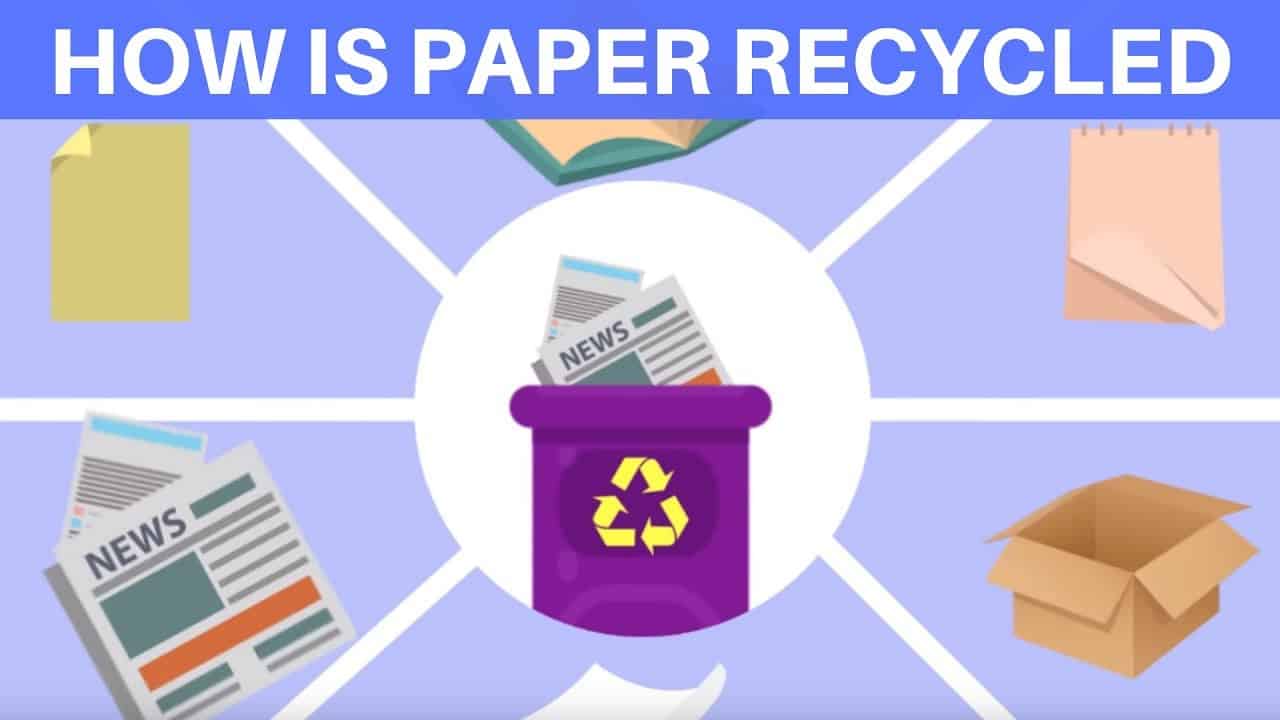
For children who benefit from concrete, hands-on learning, sorting real (clean, safe) recyclables into categories is a direct and accessible way to build understanding of material types. Visual sorting charts showing which materials go where provide scaffolding for children who find abstract categorisation difficult. For children with EAL needs, visual flow diagrams of the recycling process provide comprehensible input that does not rely on dense text.
UK Curriculum Links
- KS2 Geography: Human and physical geography, waste management, economic activity, local to global connections
- KS2 Science: Properties of materials, changes to materials, Earth and space (climate), working scientifically
- KS2 PSHE: Citizenship, community responsibility, environmental stewardship
- KS1 Science: Everyday materials and their uses
- Maths (KS2): Percentages, data handling, proportional reasoning using energy saving data
“Environmental topics work best when children can see the direct line between their own actions and a real outcome. The Bryson model does that beautifully. A child can genuinely understand that the way their household sorts its recycling affects whether someone in their community has a job.” Michelle Connolly, Founder of LearningMole and former teacher with over 15 years of classroom experience
LearningMole’s curriculum-aligned video resources support environmental and geography topics across KS1 and KS2, helping teachers bring complex topics to life through visual explanation. Explore LearningMole’s science and geography resources for classroom-ready materials aligned with the UK National Curriculum.
Frequently Asked Questions
What is recycling, and how do you explain it to a child?
Recycling is the process of turning waste materials into new products, reducing the need to extract and process raw materials. For primary-aged children, the most accessible explanation is the journey of a single item: a drink can goes into the recycling bin, is collected by a vehicle, sorted at a facility, melted down, and made into a new can, all within around 60 days. This circular journey is easier to grasp than abstract definitions, and it directly connects to KS2 Geography content on human and physical geography and resource management.
Why is recycling important for kids to understand?
Recycling sits within the KS2 Geography curriculum under human and physical geography, making it formally relevant to school learning rather than just general awareness. Beyond curriculum requirements, understanding recycling helps children develop environmental literacy, the ability to connect individual actions to community and global consequences. The social enterprise dimension of organisations like Bryson Recycling adds a citizenship angle, showing how responsible environmental behaviour supports local employment and community wellbeing.
What are three benefits of recycling for kids to remember?
Three clear benefits suitable for primary children are: saving energy (recycled aluminium uses 95% less energy than new production), protecting habitats (reducing landfill waste preserves UK hedgerow and river ecosystems), and creating local jobs (Bryson Recycling’s kerbside sort model supports 700+ jobs in Northern Ireland). These three angles cover the environmental, ecological, and social dimensions of recycling in ways that connect to KS2 curriculum areas across Geography, Science, and PSHE.
What is the difference between reduce, reuse, and recycle?
The waste hierarchy places reduce first, reuse second, and recycle third. Reducing means buying and consuming less in the first place. Reusing means finding new purposes for items rather than discarding them: an empty glass jar becomes kitchen storage, and old cotton shirts become cleaning cloths. Recycling is the process of breaking materials down to be made into something new. Teaching children this hierarchy helps them understand that recycling, while valuable, works best alongside efforts to reduce consumption and extend the life of products.
Can we recycle everything?
No, and this is important for children to understand clearly. Not all plastics are recyclable in all areas, and recycling rules vary by local authority. “Wish-cycling”, putting items in the recycling bin in the hope they can be recycled, is a significant practical problem because it contaminates clean recyclable materials and reduces their value or usability. Teaching children to check what their local collection accepts, rather than assuming all materials are recyclable, is a practical and curriculum-relevant skill.
What is a kerbside sort, and why does it matter?
A kerbside sort system, as used by Bryson Recycling, collects different materials in separate compartments on the same vehicle rather than mixing them in a single bin. This keeps materials clean and uncontaminated, which means they can be processed by local reprocessors rather than exported or sent to landfill. The quality difference between sorted and mixed collection is significant: clean, well-sorted materials support local recycling industries and the jobs that depend on them. It is a useful teaching example of how systems design affects environmental and economic outcomes.
How does recycling help UK wildlife?
Reducing landfill waste protects hedgerows and green space habitats that would otherwise be affected by site expansion. Keeping plastic out of the waste stream reduces the risk of it entering waterways and reaching coastal and marine environments. For UK children, connecting recycling to familiar local wildlife, hedgehogs, river birds, and coastal species, makes the environmental case more immediate and emotionally resonant than abstract global figures. KS2 Geography and Science both provide curriculum space for this kind of local-to-global environmental reasoning.
Is this topic suitable for Year 4 or Year 5 classes?
Recycling and waste management is most commonly taught in Years 4 and 5 as part of KS2 Geography (human and physical geography), and KS2 Science (properties of materials, Earth and space). The Bryson Recycling model adds a social enterprise and citizenship angle that suits Year 5 and Year 6 children tackling PSHE content on community and responsibility. The energy saving data works well as a maths application for Years 4 to 6, using percentages and proportional reasoning in a real-world context.
Conclusion

The recycling story told through Bryson Recycling’s kerbside sort model is more than an environmental lesson, it is a geography lesson, a citizenship lesson, and a lesson in how systems work. Children who understand that clean sorting at the kerbside directly supports local jobs, that aluminium can be recycled indefinitely whilst glass and paper have limits.
The hierarchy of reduce, reuse, recycle reflects genuine environmental logic are far better equipped to engage with environmental topics throughout secondary school and beyond. These are not peripheral facts; they are exactly the kind of curriculum-connected, information-rich content that primary teachers need.
LearningMole produces curriculum-aligned video resources and teaching materials to make complex topics such as recycling and environmental geography accessible and engaging for primary-aged children. Our resources support both classroom teaching and home learning, and are built by educators who understand what the UK National Curriculum actually asks of teachers and pupils.
For teachers planning geography or science units on recycling, or parents looking to extend classroom learning at home, exploring the full range of resources on LearningMole gives you a library of curriculum-aligned materials that save planning time and support genuine understanding. Start with the videos, use the activities to bring the content to life, and let the questions children ask guide where you go next.
Explore LearningMole’s teaching resources | Watch free educational videos on YouTube


Leave a Reply