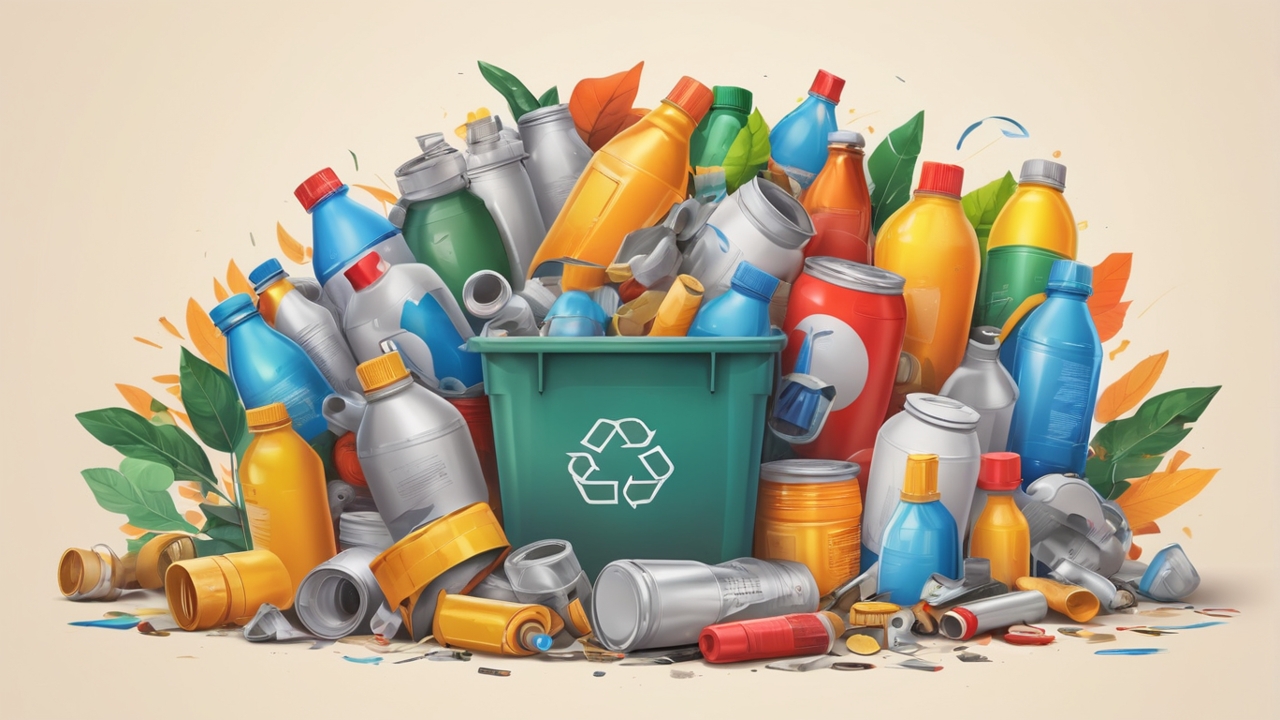
Recycling for Kids: Recycling is one of those things children hear about constantly at school, at home, and on television, but often without understanding why it actually matters. More than 60 per cent of the waste that ends up in our bins could be sorted, collected, and reused. That single fact changes everything about how we look at rubbish.
At LearningMole, the UK educational platform founded by former primary teacher Michelle Connolly, we’ve found that children who understand what recycling achieves become far more motivated to do it, and to encourage the adults around them too.
The UK National Curriculum asks KS1 and KS2 children to think carefully about how humans affect the environment and what they can do about it. Recycling sits right at the heart of that, linking science, geography, and personal responsibility in one practical topic.
Whether you’re a teacher planning an assembly, a parent looking for a way to spark a conversation at home, or a curious young learner wondering what actually happens to your empty drinks can, this guide gives you the full picture, including two facts so surprising they stop children mid-sentence.
This article covers the definition of recycling for children, the science behind those two attention-grabbing facts, why recycling matters for our planet, how to decode UK recycling symbols, and how families and classrooms can turn knowledge into action. By the end, you’ll have everything you need to make recycling genuinely meaningful rather than just another chore.
What is Recycling? A Simple Definition for Kids
Recycling means taking something you’ve finished using and turning it into a new material or product rather than throwing it away. A crushed aluminium can becomes part of a brand-new can. A stack of old newspapers becomes fresh paper. A glass bottle becomes another glass bottle, ready to be filled again.
The process connects to the three Rs that appear in primary science lessons across the UK: Reduce (use less in the first place), Reuse (use things again before throwing them away), and Recycle (turn waste into new materials when you’ve finished with it). Recycling is the third option because it uses more energy than reducing or reusing, but it’s far better than sending materials to a landfill.
Waste is sorted into categories after collection: paper and card, glass, plastic, aluminium and other metals, food waste, and general rubbish. Each material travels through a different process at a recycling facility, and each produces different savings in energy and raw materials. The important thing for children to understand is that recycling is not magic; it takes effort, sorting, and infrastructure, but the results are genuinely worth it.
The 2 Genius Facts: Why Recycling is Mind-Blowing
These are the two facts that tend to stop children in their tracks. They’re not just interesting; they make the scale of the opportunity visible in a way that stats about landfill sites simply don’t.
Genius Fact 1: Glass Can Be Recycled Forever Without Losing Quality
Glass is one of the most remarkable recyclable materials on earth. Unlike plastic, which degrades a little each time it is processed, glass can be melted down and remade into new bottles and jars an unlimited number of times without any loss of quality or purity. A glass bottle made today could theoretically still be in use centuries from now, just in different forms.
Why does this matter? Because glass is heavy, it requires significant energy to manufacture from raw materials (sand, soda ash, and limestone heated to over 1,400°C). Recycling glass uses around 40 per cent less energy than making it from scratch, and it reduces the need for quarrying raw materials. In the UK, around 50 per cent of glass packaging is currently recycled, which is encouraging, but also means roughly half still goes to landfill. A glass bottle that ends up in a landfill takes around one million years to break down naturally.
For classroom use, this is a brilliant hook: ask children to find something made of glass at home and consider how many times it might have already been melted and remade. The answer could genuinely be dozens.
Genius Fact 2: An Aluminium Can Can Be Back on the Shelf in Just 60 Days
An aluminium can thrown into the recycling bin today can be collected, processed, melted, rolled into new sheets, formed into a new can, filled, sealed, and back on a supermarket shelf in as little as 60 days. That’s under two months from your recycling bin to someone else’s hands.
Energy saving is the part that always gets children’s attention. Recycling one aluminium can saves enough energy to power a television for three hours. That’s not a rounding, it’s a real figure based on the energy required to extract aluminium from bauxite ore, one of the most energy-intensive mining processes in manufacturing. Making aluminium from raw materials requires roughly 14,000 kilowatt-hours of electricity per tonne. Recycling takes around 5 per cent of that amount.
“Aluminium is one of those materials that makes the case for recycling completely obvious,” says Michelle Connolly, Founder of LearningMole and former teacher with over 15 years of classroom experience. “When children realise that throwing away a single can wastes the same energy as leaving the television on for three hours, it becomes personal. That’s when habits actually change.”
The UK currently recycles around 80 per cent of its aluminium cans, one of the best rates of any material. But around 20 per cent still end up in general waste, meaning millions of cans are sent to landfill every week rather than back into the cycle.
Why is Recycling Important for Our Planet?
Recycling matters because the planet’s natural resources are not infinite, and the way humans currently produce and discard materials is creating serious long-term problems. Three of the most significant areas are worth explaining clearly to children.
Protecting Wildlife and Habitats
Plastic waste is the most visible environmental problem connected to poor recycling habits. When plastic that could have been recycled ends up in general waste, it can reach rivers, coastlines, and oceans. An estimated eight million tonnes of plastic enter the ocean every year globally, where it breaks into microplastics that marine animals ingest. Seabirds, turtles, seals, and fish are all affected. For KS2 children studying living things and their habitats, the connection between recycling at home and ocean wildlife is direct and real.
Recycling paper and card matters for habitats, too. Paper production requires trees, and unsustainable logging destroys the habitats of thousands of species. Recycling one tonne of paper saves around 17 trees from being felled. That’s a figure primary school children can picture clearly.
Saving Natural Resources
Many of the materials we use daily come from finite resources, things that took millions of years to form and cannot simply be replaced. Aluminium comes from bauxite ore. Glass comes from silica sand. Plastic comes from crude oil. When we recycle these materials, we reduce the amount of new raw material that needs to be extracted, transported, and processed, all of which has an environmental cost.
This connects naturally to KS2 science topics on materials and their properties, as well as geography discussions about human impact on the physical world. Children who understand where materials come from find the concept of sustainability far more concrete.
Lowering Our Carbon Footprint
Manufacturing new materials from raw resources produces significant carbon dioxide emissions at every stage: extraction, transport, processing, and production. Recycling reduces the total amount of manufacturing required and therefore reduces emissions across the chain. In the UK, recycling and composting activities are estimated to save around 18 million tonnes of carbon dioxide equivalent per year, roughly the same as taking seven million cars off the road.
For children learning about climate change and human geography, this is a tangible connection between a household habit and a global outcome. The scale of impact makes individual action feel meaningful rather than pointless.
Understanding UK Recycling Symbols: What Do They Mean?
One reason many people in the UK are uncertain about what to recycle is that the symbols on packaging can be confusing. There are several different labelling systems used in Britain, and not all of them mean the same thing.
The most useful system for households is the On-Pack Recycling Label (OPRL), which uses straightforward language rather than symbols alone. Packaging marked “Recycle” can go in your household recycling bin. Packaging marked “Don’t Recycle” should go in your general waste bin. Some packaging says “Check Local Recycling” because provision varies between council areas.
Symbol / Label
What It Means
What to Do
Recycle (OPRL green label)
Widely collected by most UK councils
Bin it with your recycling
Don’t Recycle (OPRL black label)
Not currently collected
General waste bin
Check Local Recycling (OPRL)
Some councils collect, some don’t
Check your council website
Möbius Loop (three arrows)
Material can be recycled
Check if your council collects it
Möbius Loop with %
Contains that % of recycled material
Informational only
Green Dot (circle of two arrows)
Producer has paid into a recycling scheme
Not a recycling instruction
A useful classroom activity is to bring in a selection of empty packaging (rinsed and safe) and ask children to sort them using the OPRL labels. It quickly reveals how inconsistent packaging design can be, and encourages children to look properly rather than guess.
Recycling rules vary by council area in the UK. What can go in the blue bin in one town may need to go in a different bin or bag elsewhere. The Recycle Now website (maintained by WRAP, the Waste and Resources Action Programme) has a postcode search tool that shows exactly what your local council collects.
How to Be a Recycling Detective at Home
The best way for children to build recycling habits is to turn the process into an active investigation rather than passive compliance. Here are practical activities that work at home or in a classroom setting.
A recycling audit involves collecting a week’s worth of packaging from one household and sorting it by material type: paper, card, glass, aluminium, plastic, and non-recyclable. Weigh each category if possible. Children are often surprised by how much of the total weight is recyclable material. Compare this to how much actually went into the recycling bin and calculate a household recycling rate.
A label hunt asks children to go through the cupboards and fridge with a parent or carer and find the OPRL label on five different items. They write down what the label says and whether that item should go in the recycling. This takes about ten minutes but builds a genuinely useful habit of checking before binning.
A can trail is particularly effective for older KS2 children. Starting from the question “What happens to this can when I put it in the recycling?”, they research and draw the full journey: kerbside collection, sorting facility, smelting, rolling into sheets, pressing into new cans, filling, distribution, and back to the shop. The 60-day timeline makes the loop feel real and fast rather than abstract.
Teaching Recycling in the Classroom and at Home
LearningMole provides curriculum-aligned resources for UK primary teachers covering sustainability and environmental topics, including videos designed to bring abstract concepts like material cycles and resource scarcity to life for children aged 4 to 11.
For teachers planning lessons on recycling and sustainability, LearningMole’s educational videos on environmental science provide clear, child-friendly explanations that work well as lesson starters or home learning support. The videos are aligned to UK National Curriculum objectives for KS1 and KS2 science and geography, with age-appropriate language and visual demonstrations of concepts like material properties and the recycling process.
Parents can use LearningMole’s resources to extend classroom learning at home. If a child has been learning about recycling in school, watching a related video together and then doing one of the detective activities above, it connects the school learning to real household behaviour, which is where habits actually form.
LearningMole also offers resources linked to the Eco-Schools Green Flag framework, which recognises schools that demonstrate environmental action across topics including waste, energy, and global citizenship. Recycling sits within the Waste topic area and connects naturally to the Global Citizenship theme when children begin to understand how individual habits connect to international environmental outcomes.
Recycling habits formed in childhood tend to persist into adult life. Beyond the personal habit, understanding recycling gives children a concrete way to act on environmental concerns rather than feeling overwhelmed by the scale of global problems. It connects directly to the KS1 and KS2 science and geography curriculum in England, where pupils are expected to understand the impact of human activity on environments and what can be done to reduce harm.
How do you explain recycling to a 5-year-old?
The clearest explanation for young children is the “old to new” idea: when something is finished with, it can sometimes be melted or mashed and turned into a brand-new thing. A glass bottle can become a new glass bottle. An aluminium can can become a new can. Old paper can become new paper. Connecting this to a familiar object, like a drinks can or a cereal box, makes the concept immediate. Avoid abstract language about “the environment”; focus on things children can see and touch.
What are three interesting facts about recycling for kids?
Glass can be recycled endlessly without losing quality, unlike most materials, which never degrade. One recycled aluminium can saves enough energy to power a television for three hours. Recycling paper saves trees: one tonne of recycled paper saves around 17 trees from being felled. These three facts cover different materials and different types of impact, making them useful for classroom discussions or assembly presentations.
What happens if we don’t recycle?
Materials that could be recycled end up in landfill sites, where they take an extraordinarily long time to break down a glass bottle takes around one million years, and many plastics take hundreds of years. Landfill sites produce methane, a greenhouse gas, as organic material decomposes. They also occupy land, can contaminate groundwater, and attract pests. Beyond landfills, poorly managed waste can reach rivers and oceans, threatening wildlife. The cumulative effect of not recycling is depletion of natural resources, increased carbon emissions, and lasting damage to habitats.
Are all plastics recyclable in the UK?
No. Plastic recycling in the UK is more limited than many people assume. Most councils collect plastic bottles (types PET and HDPE), but rigid trays, films, black plastic, and many flexible packaging formats are not collected kerbside by most authorities. The OPRL (On-Pack Recycling Label) system is the most reliable guide: look for the “Recycle” label rather than assuming all plastic can go in the bin. The government has committed to extended producer responsibility legislation that will shift more of the cost of packaging collection onto manufacturers, which should improve recycling rates and consistency across the UK over time.
How can parents help children understand recycling at home?
The most effective approach is making recycling a visible, explained activity rather than a background habit. Show children which bin is which and explain what happens after collection. Do a label hunt together using OPRL symbols. Try the can trail activity, where children trace the journey of one recycled can from the bin back to the shelf. Ask questions rather than giving answers: “Where do you think this goes?” and “What could it become?” Build the habit of thinking before binning. LearningMole’s educational resources on materials and sustainability provide additional explanations that work well alongside these practical activities.
At what age is it appropriate to learn about recycling?
Recycling can be introduced from Reception age (age 4-5) in simple terms: these things go in this bin, those things go in that bin. KS1 children (ages 5-7) can begin to understand why, connecting materials to where they come from and what happens to them. KS2 children (ages 7-11) can engage with the full material cycle, energy savings, and the broader environmental context. The National Curriculum explicitly includes materials, sustainability, and human impact on environments at both key stages, so recycling education is a natural fit throughout primary school.
Where can I find recycling teaching resources for my classroom?
LearningMole provides free and subscription-based teaching resources aligned to the UK National Curriculum, including educational videos covering environmental science, materials, and sustainability topics suitable for KS1 and KS2. For curriculum planning, resources can be searched by topic area. LearningMole’s YouTube channel also has free videos that work well as lesson starters or home learning companions. For recycling-specific activities, the sorting and labelling tasks described in this article are straightforward to set up in class with rinsed packaging collected by children or provided by the teacher.
Conclusion
Recycling works best when it stops being abstract and becomes personal. The two genius facts in this article, that glass can be recycled endlessly and that one aluminium can saves three hours of television energy, give children something specific to hold onto. Facts with a scale children can picture tend to stick, and when facts stick, habits change. That’s the whole point of environmental education at the primary level: not to overwhelm children with the scale of global problems, but to give them the understanding to act at their own scale, in their own kitchen, in their own school.
LearningMole, the UK educational platform founded by Michelle Connolly, supports teachers and parents in making environmental topics like recycling genuinely engaging for primary-aged children. The curriculum-aligned videos and resources available through LearningMole.com connect topics like material cycles, sustainability, and human impact to the National Curriculum in ways that feel relevant rather than abstract. A child who understands why they’re rinsing that can before putting it in the bin is more likely to do it for life.
The bigger picture matters too. The UK has made significant progress on recycling rates compared to two decades ago, but there is still a substantial gap between what we could recycle and what we actually do. Schools and families are not going to close that gap alone; policy, infrastructure, and producer responsibility all play a role. But the children who leave primary school understanding the value of materials, the cost of waste, and the remarkable speed of the aluminium cycle are the adults who will make better choices, support better policies, and raise the next generation of children who think before they bin.
Maths Circus, an innovative platform we've crafted, presents a captivating realm where children learn mathematics through the exciting theme of a circus. The joy of juggling numbers and solving circus...
Article Summary What this article covers: How UK teachers and parents can choose educational blogs that are worth following, with a simple vetting checklist and what to look for in...
Every continent has its own shape and its own record-breaking features. That is why explaining continents to kids is such a good way into world geography. In UK primary schools,...
Article Summary What this article covers: Facts about Mars for kids, including why it is red, its mountains, canyons, atmosphere, seasons and two moons, the rover missions exploring it today...




Leave a Reply