Essential Fast Fashion Facts for Kids
Table of Contents
Do you like shopping for new clothes? Many children today are fascinated by the latest trends and colourful garments filling shop windows. However, behind every piece of clothing lies a story that affects our planet. Teaching children about fast fashion creates awareness about environmental responsibility, whilst encouraging critical thinking about consumption habits.
This comprehensive guide provides educators and parents with practical fast fashion facts for kids, complete with classroom activities, educational resources, and age-appropriate explanations. From understanding the fashion industry’s environmental impact to learning creative ways to extend clothing lifecycles, these insights help children become conscious consumers whilst supporting curriculum objectives across science, geography, and citizenship studies.
The fashion industry affects every aspect of our daily lives, yet many children remain unaware of clothing production’s environmental consequences. Through engaging storytelling, interactive activities, and visual learning resources, we can help young learners understand their role in creating positive change.
“Teaching children about sustainable fashion empowers them to make informed choices that benefit both their communities and our planet. At LearningMole, we’ve found that combining factual information with hands-on activities creates lasting understanding about environmental responsibility,” says Michelle Connolly, founder of LearningMole and former classroom teacher.
Fashion Industry Impact
The fashion industry represents one of the most significant environmental challenges of our time, making it essential for children to understand its impact. As the world’s second-largest polluter after the oil industry, fashion production affects our planet more than cars and aeroplanes combined.
Understanding Fast Fashion for Kids
Fast fashion refers to the rapid production of inexpensive clothing designed to quickly capture current fashion trends. Unlike traditional clothing manufacturing, which operated on seasonal cycles, fast fashion brands now release new collections weekly, encouraging constant consumption.
This system creates several environmental problems that children can understand through simple comparisons:
- Cheap clothes often contain plastic materials that never biodegrade when thrown away
- Chemical dyes used in clothing production can contaminate waterways and damage ecosystems
- The rapid production cycle wastes natural resources, particularly water used in growing natural fibres
Classroom Activity: Fashion Timeline
Create a visual timeline showing how fashion production has changed over the past 50 years. Students can research and compare:
- How often new collections were released in the 1970s versus today
- The average cost of clothing then and now
- Environmental awareness campaigns that have emerged
This activity supports history and geography curriculum objectives whilst developing research skills through digital literacy.
Teaching Resources for Fashion Industry Impact
Educational videos can effectively demonstrate the fashion industry’s environmental impact through age-appropriate storytelling. When selecting video content for classroom use, look for resources that:
- Present complex information through simple analogies
- Include visual representations of environmental damage
- Offer positive solutions alongside problem identification
- Connect to children’s everyday experiences
Creating content that educates children about environmental issues requires a careful balance between awareness and empowerment. Digital platforms increasingly serve as primary educational resources, making video production and content strategy essential tools for modern educators.
Fast Fashion Facts That Will Amaze Kids

Understanding fast fashion becomes more engaging when children learn surprising statistics and eye-opening truths about the clothing industry. These fascinating fast fashion facts help young learners grasp the scale and impact of modern clothing production whilst encouraging critical thinking about consumption habits.
Mind-Blowing Fast Fashion Statistics
The speed of modern fashion production defies imagination. Fast fashion brands can design, manufacture, and deliver new clothing styles to shops within just two weeks. This represents a dramatic shift from traditional fashion cycles, where new collections appeared only twice yearly.
Consider these astounding fast fashion facts:
- The average person buys 60% more clothing today than 15 years ago
- Each garment is worn 36% fewer times before disposal
- Fashion trends now change every 2-3 weeks instead of seasonally
- A typical fast fashion item travels over 10,000 miles before reaching shops
- The fashion industry produces more carbon emissions than international flights and maritime shipping combined
Fast Fashion Facts About Clothing Waste
The disposal statistics surrounding fast fashion create powerful learning opportunities for children studying environmental science and mathematics:
Weekly Waste: In the UK alone, over 11 million items of clothing are sent to landfills every single week. If stacked together, this weekly waste would create a tower taller than Mount Everest.
Decomposition Timeline: Synthetic fabrics like polyester can take up to 200 years to decompose in landfills. This means clothing bought today could still exist when today’s children become great-great-grandparents.
Global Scale: Worldwide, one rubbish truck full of textiles reaches landfills or incinerators every second. This continuous waste stream represents both an environmental crisis and a massive waste of resources.
Surprising Fast Fashion Facts About Production Speed
The manufacturing pace of fast fashion creates numerous educational opportunities for discussing global economics, geography, and environmental science:
Design to Delivery: Major fast fashion retailers can spot a trend on social media and have copycat versions in shops within 10-14 days. This incredible speed requires complex global supply chains and intensive resource consumption.
Factory Conditions: To maintain such rapid production schedules, garment workers often work 14-16 hour shifts, particularly during peak seasons. Many factories operate 24 hours daily to meet demand from fast fashion brands.
Quality Compromise: The emphasis on speed and low costs means fast fashion garments undergo minimal quality testing. Items are designed to last just 5-10 wears before showing significant wear or damage.
Educational Fast Fashion Facts for Classroom Discussion
These conversation-starting facts encourage deeper thinking about consumer culture and environmental responsibility:
Shopping Frequency: The average shopper visits clothing shops 5 times more frequently than their parents did, yet reports feeling they have “nothing to wear” more often.
Trend Acceleration: Fashion influencers on social media rarely wear the same outfit twice in photos, creating pressure for constant wardrobe updates amongst young followers.
Hidden Costs: A £10 fast fashion dress requires approximately £30 worth of environmental and social costs to produce, including water usage, pollution cleanup, and fair worker compensation.
Psychological Impact: Studies show that 73% of fast fashion purchases are impulse buys, often made to improve mood rather than fill genuine clothing needs.
Fast Fashion Facts About Global Impact
Understanding fast fashion’s worldwide effects helps children develop global citizenship awareness:
Water Consumption: The fashion industry uses 1.5 trillion litres of water annually – enough to meet the drinking water needs of 5 million people for an entire year.
Chemical Usage: Over 8,000 different chemicals are used in textile production, with many ending up in waterways near manufacturing facilities.
Transportation Emissions: The average garment travels through 5-7 different countries during production, creating significant carbon emissions before reaching consumers.
Economic Inequality: Garment workers in developing countries earn less than £2 per day, whilst fast fashion companies generate billions in profits annually.
Interactive Learning with Fast Fashion Facts
Transform these statistics into engaging classroom activities:
Fact Investigation Projects: Students research and verify surprising fast fashion statistics, developing critical thinking and research skills.
Mathematical Modelling: Calculate local environmental impact by multiplying consumption statistics by classroom or school population numbers.
Timeline Creation: Develop visual timelines showing how clothing production has accelerated over recent decades.
Global Mapping: Trace typical garment journeys from raw materials through manufacturing to final disposal.
Digital Resources for Fast Fashion Education
Creating engaging educational content about fast fashion statistics requires a sophisticated understanding of data visualisation and audience psychology. Educational video production must balance shocking statistics with empowering solutions, ensuring children feel motivated rather than overwhelmed.
Effective fast fashion education content includes:
- Visual data presentations making large numbers comprehensible
- Interactive elements encouraging active participation
- Solution-focused messaging empowering positive action
- Age-appropriate complexity matching developmental understanding
Modern educational technology enables innovative approaches to presenting fast fashion facts through virtual reality experiences, interactive infographics, and gamified learning platforms. These digital tools require expertise in content strategy, user experience design, and educational technology integration.
Cotton Water Crisis

Cotton production represents one of the most water-intensive agricultural processes on Earth, creating an excellent opportunity to teach children about resource management and environmental responsibility.
Fun Facts About Cotton for Kids
A single cotton t-shirt requires over 2,500 litres of water to produce – enough to fill 16 bathtubs! This staggering statistic helps children visualise the hidden environmental cost of their clothing choices.
The Aral Sea disaster provides a powerful case study for understanding cotton production’s environmental impact. In Uzbekistan, authorities redirected water from the Aral Sea to irrigate cotton fields. The massive water diversion caused the sea to shrink dramatically, leaving former fishing villages with docks leading into desert landscapes.
Interactive Learning: Water Usage Calculator
Create a classroom activity where students calculate water usage for their wardrobes:
- Count the number of cotton items they own
- Multiply by 2,500 litres per item
- Convert the total into familiar measurements (bathtubs, swimming pools, or drinking water for weeks)
This mathematical exercise reinforces numeracy skills whilst developing environmental awareness.
Cross-Curricular Connections
Cotton production connects to multiple curriculum areas:
- Geography: Understanding climate requirements for cotton growing, global trade routes, and environmental consequences
- Mathematics: Calculating water usage, comparing statistics, and creating data visualisations
- Science: Learning about plant biology, water cycles, and ecosystem interactions
- History: Exploring cotton’s role in global trade and industrial development
Digital Learning Opportunities
Modern educational technology offers innovative ways to explore cotton production’s environmental impact. Interactive maps can show students where their clothes are made, whilst virtual reality experiences can transport them to cotton fields and textile factories.
Video production techniques can transform complex agricultural processes into engaging educational content. When creating or selecting digital resources about cotton farming, consider:
- Age-appropriate explanations of water scarcity issues
- Visual comparisons that make large numbers comprehensible
- Positive examples of sustainable cotton farming practices
- Interactive elements that encourage student participation
Global Clothing Production
The scale of global clothing production astounds even adults – approximately 80 billion pieces of clothing are manufactured worldwide every year. This staggering figure provides numerous opportunities for mathematical learning whilst developing environmental awareness.
Understanding 80 Billion Pieces of Clothing
To help children comprehend this enormous number, create visual comparisons:
- If every person on Earth received equal shares, each would get about 10 new items annually
- Stacked together, 80 billion pieces would reach beyond Earth’s atmosphere
- The production line would stretch around Earth’s circumference multiple times
Why Do People Buy New Clothes?
Children can identify with various motivations for purchasing clothing:
- Special events requiring specific outfits
- Following fashion trends promoted through social media
- Peer pressure to wear the latest styles
- Clothes becoming too small as children grow
- Replacing worn or damaged items
Understanding these motivations helps children make conscious decisions about their consumption habits.
The Lifecycle of Fast Fashion
Most people discard newly purchased clothes within less than a year of buying them. Over 80% of these discarded garments end up in landfills, where they contribute to environmental degradation for decades or centuries.
Teaching Resources: Global Production Statistics
Creating engaging content about global statistics requires a sophisticated understanding of data visualisation and audience psychology. Educational video content must balance factual accuracy with age-appropriate presentation, skills that align with modern digital marketing strategy and content creation.
When developing educational materials about global production, consider:
- Infographics that make large numbers visually comprehensible
- Interactive elements that engage students actively
- Real-world connections to students’ daily experiences
- Positive action steps that empower rather than overwhelm
AI-Enhanced Learning Experiences
Artificial intelligence can transform how children learn about global production patterns. AI-powered tools can:
- Generate personalised learning experiences based on individual comprehension levels
- Create interactive simulations of global supply chains
- Provide real-time updates on environmental impact statistics
- Offer multilingual support for diverse classrooms
Integrating AI technology into educational content requires expertise in both pedagogy and digital innovation – skills increasingly essential for modern educational providers.
Creative Fabric Reuse

Teaching children to repurpose clothing creates practical life skills while reducing environmental waste. These hands-on activities support design technology curriculum objectives whilst fostering creativity and environmental responsibility.
Practical Fabric Reuse Ideas for Kids
Transform old clothing into useful household items through simple, child-friendly projects:
T-Shirt Cleaning Cloths: Cut worn t-shirts into squares for household cleaning. The soft cotton material effectively cleans surfaces whilst extending the garment’s useful life.
Memory Quilts: Preserve favourite t-shirts that no longer fit by cutting them into squares for quilting projects. This activity combines needlework skills with emotional memory preservation.
Fabric Yarn Projects: Transform old fabric into yarn for weaving, knitting, or crochet projects. Children learn new crafts whilst reducing textile waste.
Upcycled Fashion: Modify ill-fitting clothes into new garments through simple alterations, decorative additions, or creative redesigning.
Educational Benefits of Fabric Reuse Projects
Hands-on reuse activities develop multiple skills simultaneously:
- Fine motor skills through cutting, sewing, and crafting
- Problem-solving abilities when adapting materials for new purposes
- Mathematical concepts through measuring, calculating fabric requirements, and geometric pattern creation
- Environmental awareness by understanding waste reduction principles
- Creative expression through colour coordination and design choices
Classroom Implementation Strategies
Successful fabric reuse projects require careful planning and resource management:
- Safety Considerations: Ensure age-appropriate tools and supervision levels
- Material Collection: Establish systems for gathering suitable fabric donations
- Skill Development: Teach basic techniques before attempting complex projects
- Assessment Opportunities: Document learning outcomes across multiple curriculum areas
Digital Documentation and Sharing
Modern classrooms can enhance fabric reuse projects through digital technology:
- Video tutorials demonstrating techniques step-by-step
- Photo documentation tracking project progress
- Online galleries showcasing finished creations
- Virtual sharing connecting classrooms globally
Creating high-quality educational video content requires an understanding of both technical production skills and pedagogical principles. Professional video production techniques can transform simple craft activities into engaging digital learning resources.
Building Digital Learning Communities
Social media strategies can connect classrooms worldwide, sharing fabric reuse projects and environmental initiatives. However, creating educational content for digital platforms requires expertise in:
- Content strategy for educational audiences
- Platform-specific formatting optimising engagement
- SEO optimisation ensuring content reaches target audiences
- Community management fostering positive online learning environments
Sustainable Shopping Solutions

Empowering children to make environmentally conscious shopping decisions creates lifelong habits that benefit both individuals and communities. These practical strategies can be implemented by families and incorporated into citizenship education programmes.
Charity Shop Adventures
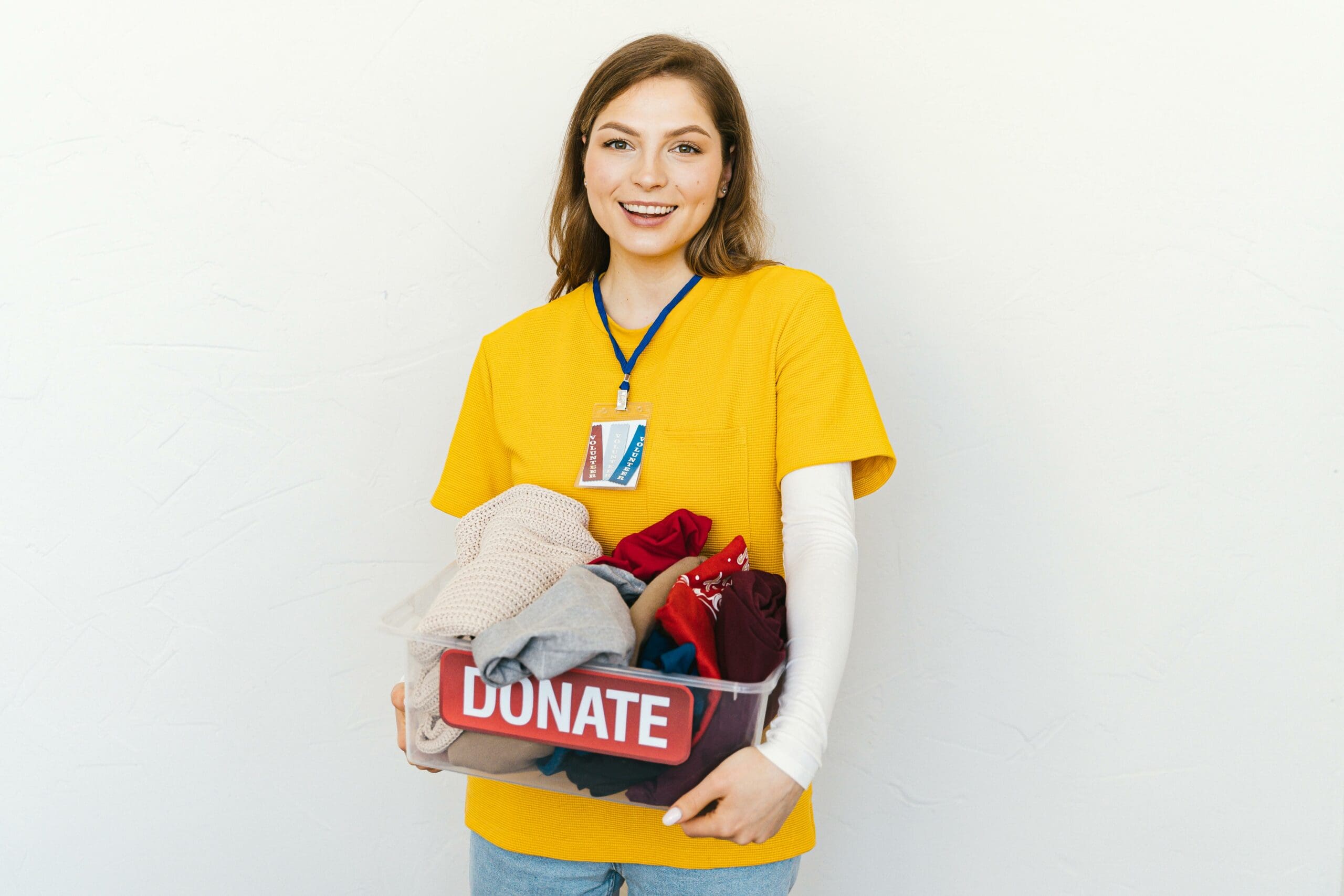
Donating unwanted clothes to charity shops prevents textiles from reaching landfills whilst supporting community organisations. Children can learn about:
- Local community support through charitable giving
- Circular economy principles where items continue serving useful purposes
- Treasure hunting skills finding unique items in second-hand shops
- Financial literacy comparing costs between new and pre-loved items
Pre-Loved Shopping Strategies
Shopping for second-hand clothes can become an exciting treasure hunt rather than a compromise. Teach children to:
- Inspect items for quality and durability
- Consider versatility when selecting pieces
- Appreciate unique items unavailable in mainstream shops
- Calculate environmental savings through reuse choices
Quality Over Quantity Decision-Making
Help children develop decision-making frameworks for clothing purchases:
- Need Assessment: Is this item genuinely necessary?
- Longevity Evaluation: Will this item last through multiple wears?
- Versatility Consideration: Can this item be worn in multiple ways?
- Environmental Impact: What resources were used in production?
Digital Tools for Sustainable Shopping
Modern technology offers innovative solutions for sustainable fashion choices:
- Apps calculating environmental impact of clothing choices
- Online platforms connecting buyers with local second-hand sellers
- Virtual wardrobe organisers helping maximise existing clothing
- Sustainability tracking tools monitoring consumption habits
Educational Technology Integration
Teaching sustainable shopping requires understanding how young people interact with digital platforms. Creating educational content about conscious consumption involves:
- Social media strategy reaching young audiences effectively
- Content marketing promoting sustainable choices without preaching
- SEO techniques ensuring information reaches searching families
- Video content creation demonstrating sustainable shopping techniques
Building Sustainable Communities
Educational institutions can foster sustainable shopping communities through:
- School uniform exchanges reducing costs for families
- Seasonal clothing swaps encouraging sharing between families
- Fundraising activities combining environmental awareness with community support
- Digital platforms connecting families within school communities
Creating and managing these initiatives requires expertise in community building, digital marketing, and educational programme development – skills that translate directly to professional digital strategy and community management.
Creating Educational Impact Through Digital Innovation

Modern education increasingly relies on digital platforms to reach and engage young learners. Teaching complex topics like fast fashion requires a sophisticated understanding of how to translate information into age-appropriate, engaging content that drives real behavioural change.
The Role of Educational Technology
Effective environmental education combines traditional teaching methods with innovative digital approaches:
- Interactive content keeps students engaged while delivering important messages
- Visual storytelling makes abstract concepts concrete and memorable
- Gamification elements encourage participation and knowledge retention
- Multi-platform delivery reaches students through their preferred digital channels
Content Strategy for Educational Impact
Creating educational content that genuinely influences behaviour requires expertise in:
- Audience psychology understanding how children process environmental information
- Pedagogical principles ensuring content supports learning objectives
- Digital marketing techniques maximising content reach and engagement
- SEO strategy helping educators find high-quality resources
Building Educational Communities Online
Digital platforms enable unprecedented collaboration between educators, students, and families around environmental issues. Successful educational community building requires:
- Platform expertise understanding how different social media channels serve educational purposes
- Content creation skills producing shareable, engaging educational materials
- Community management fostering positive, productive online learning environments
- Data analysis capabilities measuring impact and improving content effectiveness
Professional Development Through Educational Innovation
Educators seeking to enhance their environmental education capabilities can benefit from professional development in:
- Video production techniques for creating engaging educational content
- Digital marketing strategy for maximising educational impact
- AI integration for personalising learning experiences
- SEO optimisation for educational content discovery
These skills directly transfer to broader professional development opportunities in digital strategy, content creation, and educational technology integration.
Taking Action: Next Steps for Educators and Families

Understanding fast fashion’s environmental impact represents just the beginning of creating positive change. Effective education translates knowledge into sustainable action through systematic implementation strategies.
Classroom Implementation Framework
Teachers can integrate fast fashion education across curriculum areas through structured approaches:
- Baseline Assessment: Evaluate students’ current understanding of clothing production and environmental impact
- Skill Development: Build research, critical thinking, and practical skills through hands-on activities
- Community Connection: Link classroom learning to real-world action through local initiatives
- Impact Measurement: Document learning outcomes and behavioural changes over time
Family Engagement Strategies
Parents can reinforce classroom learning through consistent home practices:
- Involve children in clothing purchase decisions
- Practice mending and upcycling as family activities
- Visit charity shops together regularly
- Discuss the environmental impact during shopping trips
Digital Resources for Continued Learning
High-quality educational video content can support ongoing learning about sustainable fashion choices. Look for resources that:
- Present information through engaging storytelling
- Include practical action steps children can implement
- Connect environmental concepts to curriculum objectives
- Provide teacher guides for classroom implementation
Professional Development Opportunities
Educators seeking to enhance their environmental education capabilities can explore:
- Digital content creation training for producing educational videos
- SEO strategy workshops for improving educational resource discoverability
- Social media marketing courses for building educational communities
- AI integration seminars for personalising learning experiences
These professional development areas directly support career advancement in educational technology, digital marketing, and content strategy.
These fast fashion facts demonstrate how simple choices create a significant environmental impact. Teaching children about sustainable fashion empowers them to make conscious decisions that protect our planet’s future. Understanding fast fashion facts helps young learners become responsible consumers who value quality over quantity.


Leave a Reply