Lakes
Embark on a liquid adventure with Learning Mole’s “High Five Facts About Lakes”! This video is a journey into the serene and diverse world of freshwater lakes, where unique ecosystems and geological wonders create picturesque landscapes. From the mighty Great Lakes to the ancient Lake Baikal, we’re about to uncover the fascinating and essential facts that make lakes an integral part of our planet’s geography. So, raise your hand for a high-five and join us as we explore the high-fiving facts about lakes. It’s a celebration of freshwater beauty, ecological diversity, and the tranquility found in these inland bodies of water! 🏞️🌊🌍✋
Transcription for Lakes
Please note this transcript is generated automatically and may contain errors.
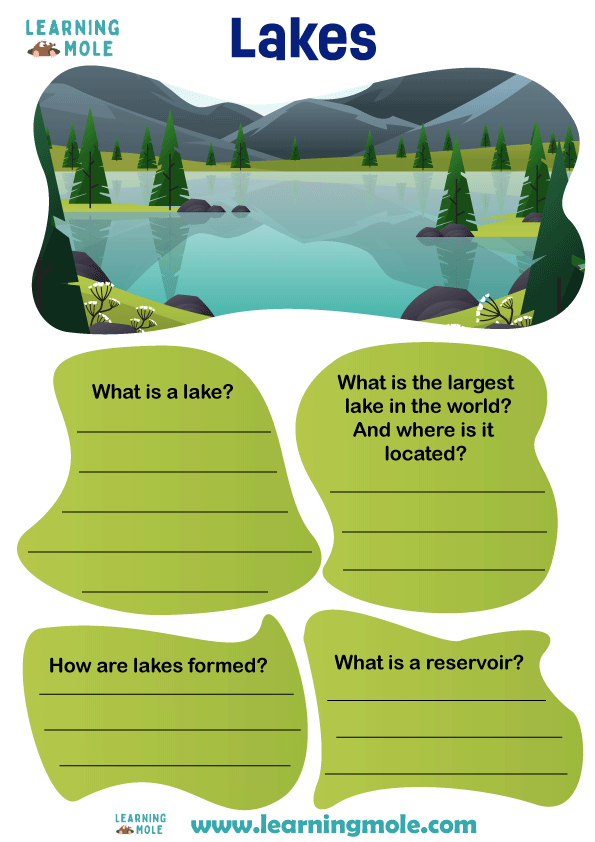
Today we’re going to learn five great facts about Lakes fact. Number one the largest lake in the world borders five different countries. The Caspian Sea is the largest lake in the world. Yes, the largest lake in the world has sea in its name. It is so large that it’s sometimes classified as a sea. Although it doesn’t connect to an ocean. The Caspian Sea is located between Europe and Asia. There are five different countries that have coasts lines on the Caspian Sea. These are Russia Iran Kazakhstan Azure by Jan and Turkmenistan over 113 rivers flow into the Caspian Sea the largest river that flows into the Caspian Sea is the vulgar River.
Fact number two. The Great Lakes are located in North America on the border between Canada and the United States. You will find the Great Lakes. The Great Lakes are made up of five lakes. These are Michigan Huron Erie Ontario and Superior together. They make up the largest freshwater system on Earth covering 94,600 square miles. That’s about three times as big as the island of Ireland 21% of the world’s surface freshwater. Not including oceans is held by the Great Lakes. The great waterfall Niagara Falls is located at the Great Lakes fact Number Three Lakes are not part of the ocean.
There are millions of lakes in the world. But what exactly is a lake a lake is a large body of water that is surrounded by land and is not part of an Ocean Lakes are still bodies of water compared to a river which has a continuous water flow. They can contain either salt or freshwater and a much larger than ponds Lakes are surrounded by land and they form inside basins, which are bowl-shaped holes in the ground Rivers can flow into a lake and these Lakes are usually freshwater.
Saltwater Lakes are often enclosed Lakes where water evaporates leaving Salt behind fact number four. Some Lakes are formed by glaciers. Some Lakes were formed by glaciers that scraped along the ground and left huge basins behind as they moved along when the glaciers melted the basins that they formed filled with water. These basins filled with water became known as Lakes. Some Lakes were formed by the movements of the earth’s tectonic plates. This movement would have broken the Earth’s crust and caused big cracks that form basins in order for a lake to last.
It needs to have a constant flow of new water. Otherwise, it will completely evaporate and dry up fact number five. Man-made legs are known as reservoirs. Some Lakes are man-made and are created by either digging basins or by blocking the flow of rivers or streams. These man-made Lakes are called reservoirs reservoirs are often made to be used as renewable sources of hydroelectric power which can provide electricity to homes and businesses reservoirs can help control flooding by controlling how much water flows in and out of the lake most reservoirs are formed by building dams the dam controls the amount of water that flows out of the reservoir reservoirs are great to help regulate the flow of water in and out of the lake lake Walter in Ghana is the largest artificial Reservoir in their world.