5 Unusual Facts About the Celts: The Iron Age Guide

Avatar of Shaimaa Olwan
Updated on: Educator Review By: Michelle Connolly

Facts about the Celts: Long before the Romans arrived in Britain, a group of Iron Age peoples had already transformed the islands beyond recognition. They shaped Britain’s hillforts, gave rivers and towns their names, and left traces so deep in everyday language that children across the UK are still speaking their words today. These are the Celts, and the story the textbooks usually tell doesn’t come close to capturing how inventive, sophisticated, and surprising they really were.

celts

The challenge is that almost everything we know about the Celts was written down by their enemies. Roman historians described them as wild warriors dressed in bright colours and strange spiked hair, and while those descriptions contain truth, they also reveal the bias of people who had every reason to make their opponents look frightening.

At LearningMole, “when we look at the Celts through the lens of archaeology rather than Roman propaganda, a completely different picture emerges,” says Michelle Connolly, Founder of LearningMole and former teacher with over 15 years of classroom experience. The Celts were engineers, craftspeople, and storytellers.

This guide is written for UK KS2 classrooms, covering the Iron Age Celts from roughly 800 BC to 43 AD, when the Roman invasion began. Whether you’re a teacher planning a history unit, a parent supporting your child’s learning at home, or a curious Year 4 pupil who wants to know the really unusual stuff, the five facts below go well beyond the basics and directly support the KS2 History curriculum’s focus on ancient and early British civilisations.

Fact 1: The Celts Did Not Call Themselves ‘Celts’

The word ‘Celt’ came from other people, not from the Celts themselves. The Greeks used the term ‘Keltoi’, and the Romans wrote ‘Celtae’, but we have no evidence that the Iron Age peoples who lived across Britain and Europe ever used this label to describe themselves.

This matters for a reason that goes right to the heart of good historical thinking. The Celts did not leave written records. Their knowledge, history, and culture were kept alive through storytelling, poetry, and song, passed down by specialist oral historians called bards. Some historians believe they avoided writing deliberately, partly to protect military knowledge from enemies who might intercept written messages. Whatever the reason, the result is that almost every written account of the Celts was produced by outsiders, particularly by the Romans, whom they frequently fought.

That creates a source bias that children in KS2 can genuinely engage with. When Julius Caesar described the Celts as fierce and chaotic, he was also writing to make his own military victories look more impressive. Asking children to question who wrote a source, when, and why is one of the key historical skills in the KS2 National Curriculum, and the Celts provide one of the clearest examples of why it matters.

Teaching Tip: Set up a short role-play called ‘The Roman Reporter’. Ask children to write a short, deliberately biased news report about meeting a Celtic warrior, then discuss how a Celtic bard might have described the same encounter. This directly addresses the curriculum requirement to consider different interpretations of the past.

Fact 2: They Wore the First Trousers in History

Archaeologists have confirmed that the Celts wore trousers, and the surviving examples are the oldest known trousers in the world. This is not a minor fashion footnote. It tells us that the Celts were sophisticated textile makers who understood warmth, practicality, and style in ways that the Romans, famously trouser-resistant in their togas, never quite managed.

Celtic cloth was often made from wool or linen. Linen came from flax plants they cultivated themselves; wool was shorn, spun, and woven into fabric on upright looms. They used plant-based dyes to produce bright colours, including reds from madder root and yellows from weld, creating the distinctive tartan-like patterns we associate with Celtic culture. Those patterns were not random; specific designs may have carried regional or tribal significance, though the idea of a formal ‘clan tartan’ system belongs to much later Scottish history.

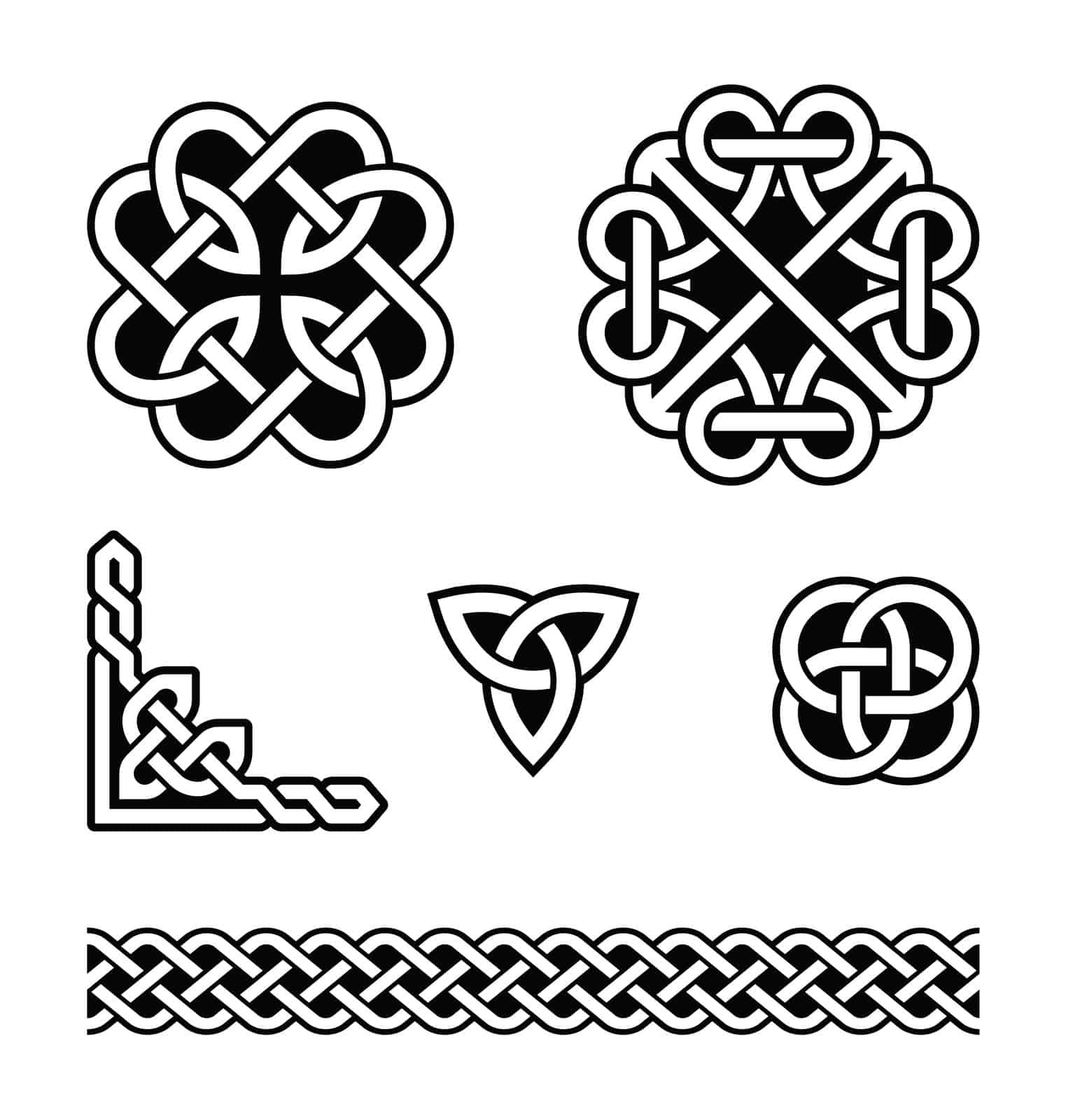
Instead of buttons or zips, the Celts used brooches and pins to fasten their garments. These were far from purely functional. Celtic metalworkers produced some of the most beautifully decorated brooches of the ancient world, featuring intricate knotwork, spiral patterns, and stylised animal forms. The Celtic knot, which appears on belts, brooches, torcs, and jewellery, was not just decorative but may have carried symbolic meaning relating to continuity, connection, and the cycles of nature.

Classroom Activity: Provide children with Celtic knotwork templates and ask them to extend the patterns using the rules of interlace design. This works well as a cross-curricular art and history task and makes an excellent display.

Roman vs Celt: A Comparison

FeatureThe RomansThe Celts
HomesStone buildings, heated floorsRoundhouses with thatched roofs and a central fire
WritingExtensive written records in LatinOral tradition — history passed through storytelling and song
ClothingTogas and tunics, mostly undyedBrightly coloured tartan, trousers, and decorated brooches
HairShort, neat, and cleanSpiked with lime solution for a dramatic effect
HygienePublic baths common in townsBar soap made from animal fat and plant ash
MilitaryHighly organised professional armyTribal warriors, feared for chariot warfare and battle cries

Fact 3: The Celts Invented Bar Soap

celts

The Celts were meticulous about personal hygiene, and the evidence from their burial sites is striking. Alongside weapons and food, archaeologists regularly find combs, scissors, mirrors, and tweezers, objects that tell us Celtic people took real care of their appearance. More importantly, the Celts developed the earliest known form of bar soap.

Celtic soap was made by combining animal fat with the ash left over from burning plants. The chemical reaction between fat and alkali from the ash produces a substance that dissolves dirt and grease, which is exactly what modern soap does, albeit with very different ingredients. The Celts shaped this mixture into balls or bars, making it easy to transport and use. Our word ‘soap’ itself may derive from the Celtic ‘saipo’, preserved through contact between Celtic peoples and later Latin-speaking communities.

This single fact is enormously useful for challenging the ‘dirty barbarian’ myth that Roman sources helped create. A people who invented soap, owned combs, and buried their dead with grooming tools were not the unkempt warriors Roman historians described. Pointing this out in class creates a productive discussion about how stereotypes get attached to historical groups and how archaeology can correct the written record.

“The Celts are often portrayed as rough and warlike, but their burial sites tell a very different story. Combs, tweezers, soap, and beautifully crafted jewellery. These are the possessions of people who cared deeply about how they looked and how they lived.” — Michelle Connolly, Founder of LearningMole and former teacher with over 15 years of classroom experience

Fact 4: The First Queen to Rule England Was a Celt

celts

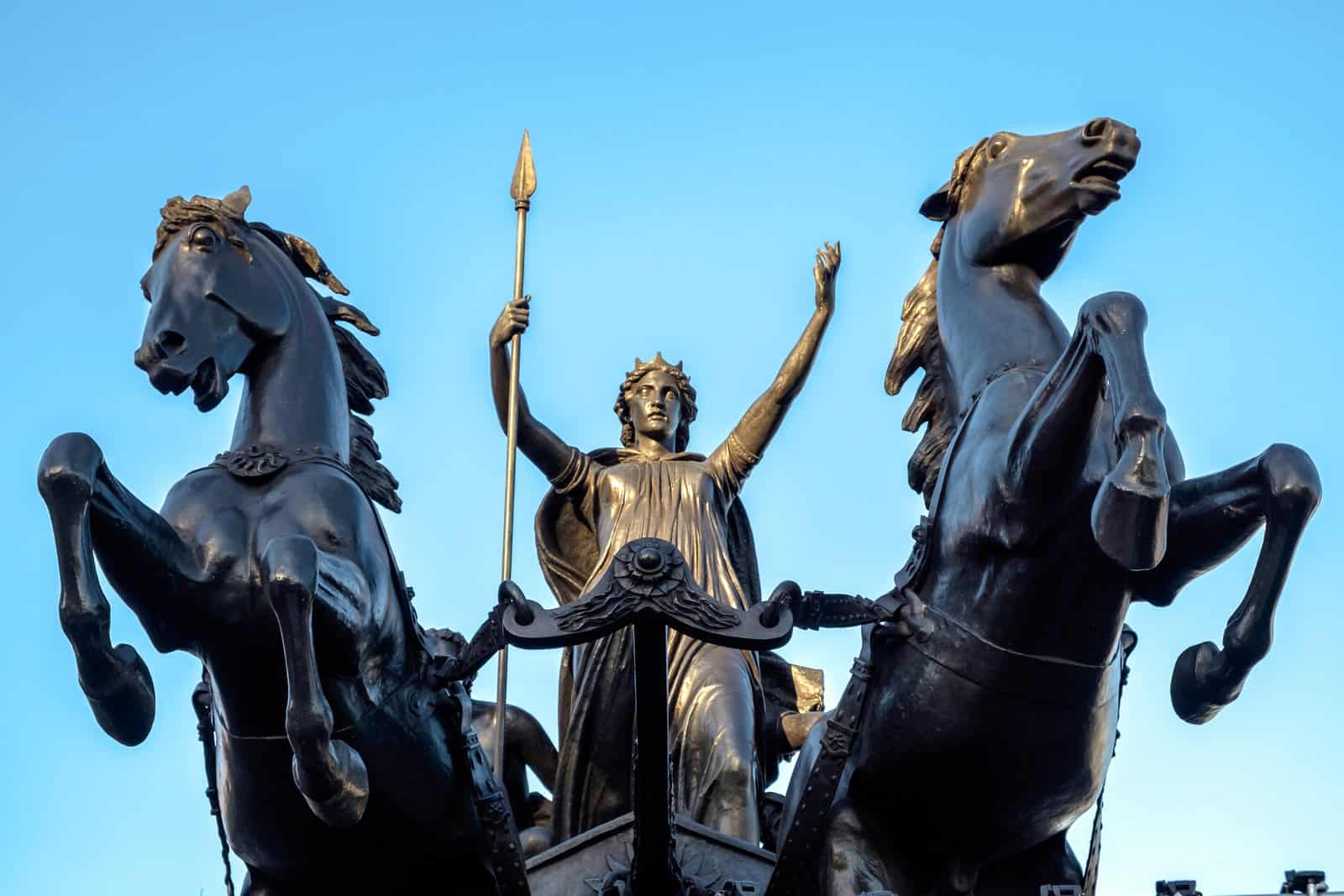
Boudica, queen of the Iceni tribe of what is now Norfolk, led one of the most significant armed rebellions in British history in approximately 60 AD. After the Romans treated her people with extraordinary cruelty following the death of her husband, Boudica united several Celtic tribes and launched a military campaign that destroyed the Roman settlements at Camulodunum (Colchester), Londinium (London), and Verulamium (St Albans).

For a period, Boudica controlled territory that included what would become England’s capital city, making her, by a reasonable argument, the first queen to hold dominion over London. Roman sources describe her as tall, red-haired, and ferociously effective as a military leader. Her story is historically complex: the rebellion was ultimately crushed, and Boudica died, either from illness or by her own hand, but the scale of what she achieved against a professional Roman army remains remarkable.

Boudica’s story is also evidence that Celtic society gave women significant standing. Many Celtic women were trained as warriors alongside men, and several Celtic groups passed inheritance and leadership through the maternal line. This is a meaningful contrast to Roman society, where women had very limited public roles, and it gives children a clear example of how different ancient cultures organised gender and power in very different ways.

Curriculum Link: Boudica appears in the KS2 History curriculum and is an excellent subject for exploring the concept of significance: why do we remember her, what evidence do we have, and how does that evidence come mainly from Roman writers who were her enemies?

Fact 5: You Are Probably Speaking Celtic Right Now

celts

The Celtic languages did not disappear when the Romans arrived. Welsh, Scottish Gaelic, Irish Gaelic, Cornish, and Breton are all living Celtic languages, and their influence runs far deeper into everyday British English than most people realise. The clearest examples are place names.

The word ‘Avon’, as in the River Avon, simply means ‘river’ in Celtic. There are several rivers named Avon across England and Wales, which tells you that English speakers, at some point after the Celtic languages began to fade, looked at a river and asked its Celtic name, were told ‘afon’ (river), and wrote that down as if it were a proper name. The same pattern appears with ‘loch’ (lake in Scottish Gaelic), still used across Scotland today, and with ‘pen’ (headland or hilltop), which appears in Penrith, Penzance, and dozens of other place names.

Edinburgh, Dundee, Cardiff, Carlisle, and Caernarfon all carry Celtic roots. ‘Dun’ or ‘din’ meant a fort or hill fort in Celtic, which is why so many Scottish and Northern English towns beginning with ‘Dun’ sit on high ground near ancient fortifications. Teaching children to decode these place names turns a map of Britain into a living Iron Age document.

When children realise that the river in their town, or the hill their school is built on, has a Celtic name that has survived two thousand years of Roman occupation, Viking settlement, and Norman conquest, the Iron Age suddenly stops being a textbook chapter and becomes part of their real world.

Celtic Place Name Decoder

Celtic WordMeaningModern UK Example
Afon / AvonRiverRiver Avon (several across England and Wales)
Dun / DinFort or hill fortDundee, Edinburgh, Dunbar
PenHeadland or hilltopPenrith, Penzance, Penarth
Caer / CarFortified settlementCarlisle, Cardiff, Caernarfon
Llyn / LochLake or waterLoch Ness, Llyn Tegid (Bala Lake)
Brig / BriHill or high placeBrighouse, Brig o’Turk

Teaching the Iron Age Celts: Resources and Classroom Support

celts

The Celts sit within the KS2 History curriculum’s broader coverage of early British history, alongside the Stone, Bronze, and Iron Ages. For teachers planning this unit, the richest learning tends to happen when children are invited to think like historians: weighing sources, comparing artefacts, and connecting what they study to the world they can see around them.

LearningMole’s curriculum-aligned video resources cover the Iron Age and early British history for primary classrooms, with clear, child-friendly explanations designed to support both whole-class teaching and independent learning. Our educational videos are particularly useful for visual learners who benefit from seeing concepts rather than just reading about them. You can explore the full range of KS2 history resources on LearningMole, including supporting materials for teachers and activities families can use at home.

For teachers: The Roman vs Celtic comparison table above works well as a group sorting activity, giving pairs of children a set of statements to allocate before discussing where they might overlap. The place name table can be extended using an Ordnance Survey map of your local area, asking children to identify any place names with Celtic roots near where they live.

For parents supporting home learning: The Celtic place names activity needs nothing more than a map and this article. Try searching your nearest town or city, along with any rivers or hills nearby, and see what you can decode together. It is a genuinely engaging way to connect a history topic to a child’s immediate environment.

Frequently Asked Questions About the Celts

celts

What age group is this article suitable for?

This article is written for KS2 children aged 7 to 11, with a particular focus on Years 4 and 5 when the Iron Age and early British history typically appear in the National Curriculum. The content is suitable for classroom use by teachers, home study with parents, and independent reading by able Year 3 pupils. Some sections, particularly around source bias and the linguistic legacy of the Celts, extend naturally to challenge higher-ability learners.

Where does the topic of the Celts appear in the KS2 curriculum?

The Celts appear within the KS2 History requirement to study changes in Britain from the Stone Age to the Iron Age. Specifically, the National Curriculum for England asks children to understand the ‘late Neolithic hunter-gatherers and early farmers… Bronze Age religion, technology and travel… Iron Age hill forts: tribal kingdoms, farming, art and culture.’ The Celts are the people who lived through much of this Iron Age period, approximately 800 BC to 43 AD. Boudica and the Roman invasion also link directly to the KS2 requirement to study the Roman Empire and its impact on Britain.

Did the Celts really paint themselves blue?

This is one of the most persistent questions children ask, and the honest answer is: probably not in the way most images suggest. Julius Caesar wrote that British warriors used woad, a plant that produces a blue dye, to mark their bodies before battle. However, modern experiments have shown that woad is difficult to use as body paint and the colour fades quickly on skin. It is more likely that woad was used to dye fabric or for ceremonial purposes rather than as regular battle decoration. The famous blue-painted warrior image owes more to later romanticisation than to firm archaeological evidence.

Are the Celts and Vikings the same thing?

This is a very common misconception, and clearing it up is worth a dedicated moment in any lesson. The Celts were primarily an Iron Age people, flourishing roughly between 800 BC and 43 AD. The Vikings arrived in Britain much later, beginning their raids around 793 AD, nearly 800 years after the main period of Celtic history covered in KS2. The two groups were distinct peoples with different origins, languages, beliefs, and material cultures. Some areas of Britain, particularly in Scotland and Ireland, maintained Celtic culture through the Viking period and beyond, but the Celts and Vikings are not the same group and did not exist at the same time in Britain.

What did the Celts do for fun?

More than you might expect. Celtic society valued music, poetry, and storytelling enormously; bards were among the most respected members of a tribe. Board games were also popular: the Irish game Fidchell and the Welsh game Gwyddbwyll were both Celtic strategy games somewhat similar in principle to chess. Feasting was central to Celtic social life, and large communal gatherings around food and music were regular events. The Celts also competed in physical contests and valued skills in horsemanship and chariot racing. For children, this makes a vivid contrast with the warfare-focused image and gives a much fuller sense of what everyday Iron Age life might have involved.

What happened to the Celts after the Romans arrived?

The Roman invasion of Britain in 43 AD did not immediately or completely erase Celtic culture. In much of England, a Romano-British culture developed, blending Roman and Celtic elements. In Wales, Scotland, Ireland, and Cornwall, Celtic languages and customs survived the Roman period altogether because Rome never fully conquered those areas. After the Romans withdrew from Britain in the early 5th century AD, Celtic peoples reasserted their influence across much of the island. The Celtic languages that survive today, particularly Welsh and Scottish Gaelic, are a direct continuation of Iron Age Celtic speech.

How can I find out if I live near any Celtic archaeology?

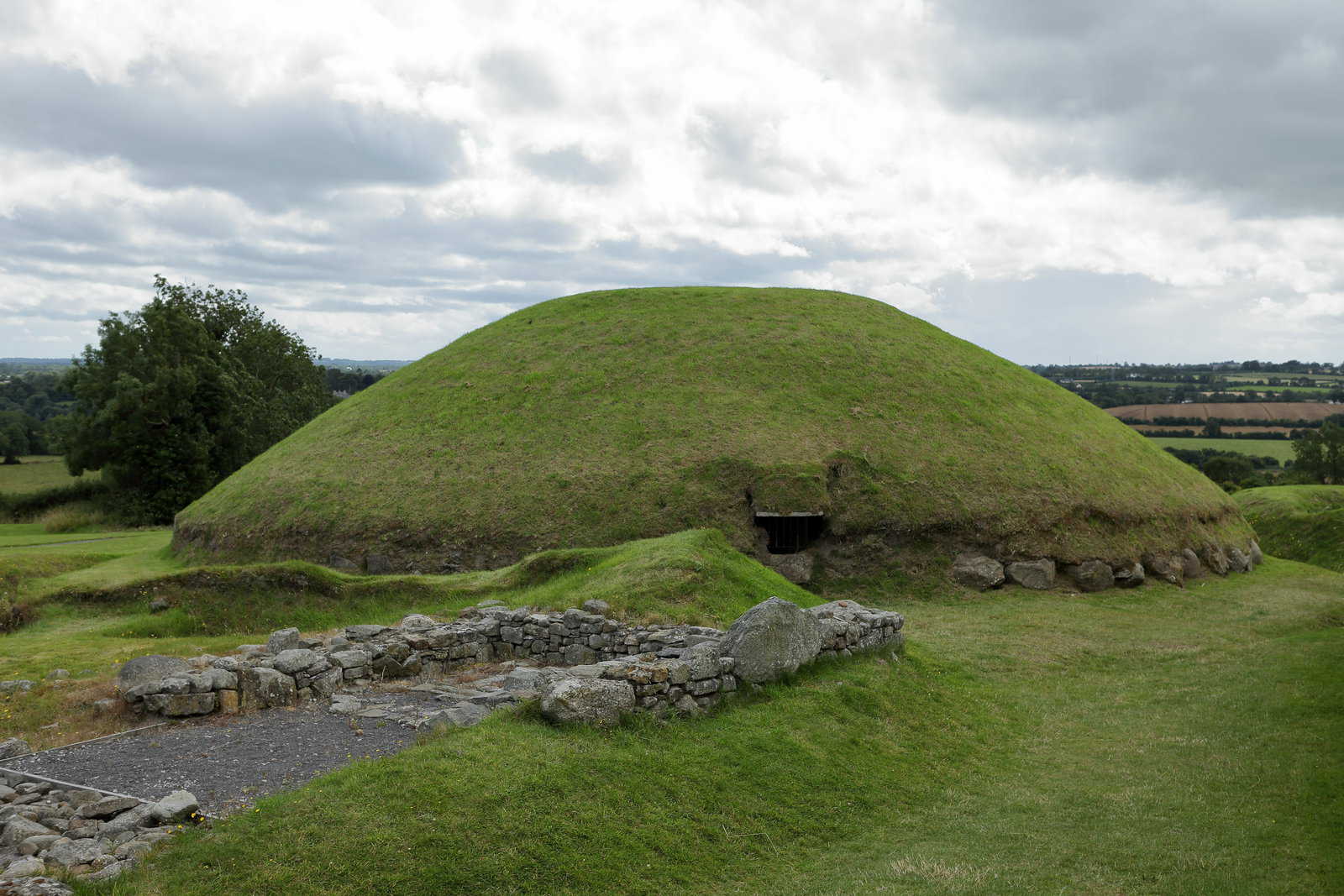
Hill forts are the most visible form of Celtic archaeology in Britain, and many are accessible to the public. Maiden Castle in Dorset is one of the largest and best preserved in Europe. Tre’r Ceiri in Wales and Traprain Law in Scotland are also excellent examples. The Historic England and Cadw websites both have searchable databases of scheduled ancient monuments where you can look up sites near your home or school. Using these databases as a research task is a strong practical activity for upper KS2, combining historical learning with basic digital research skills.

Where can I find more resources for teaching the Iron Age and the Celts?

LearningMole provides curriculum-aligned video resources and teaching materials covering KS2 History topics including the Iron Age and early British history. Our resources are designed by experienced educators to make complex historical topics engaging and accessible for primary-aged children. Teachers can browse the full KS2 history resource library on LearningMole, and parents can access a wide range of supporting materials for home learning. A subscription gives full access to over 1,000 educational videos covering maths, English, science, history, and much more.

Conclusion

celts

The five facts in this article were chosen because they each do something specific: they correct a lazy assumption about the Celts. The stereotype of the unwashed, irrational barbarian was largely constructed by Roman writers who had every motive to make their conquered enemies look frightening and primitive. Archaeology tells a more interesting story of a people who invented soap, wore beautifully designed clothing, built complex hillforts, gave women military and social status, and created a linguistic legacy so durable that it still shapes how we name rivers and towns across Britain today.

For KS2 teachers and parents, the Celts offer something genuinely rare in primary history: a topic where children can develop real historical thinking skills, not just collect facts. Questions of source bias, the nature of evidence, and the difference between what people wrote and what archaeology shows are all directly accessible through Celtic history, and all directly supported by the National Curriculum’s requirements for historical enquiry at Key Stage 2.

LearningMole’s curriculum-aligned resources for KS2 History support teachers in delivering the Iron Age and early British history with clarity and depth. Whether you’re planning a full half-term unit or looking for a single engaging lesson to complement your scheme of work, the combination of the content here and LearningMole’s educational video library gives you the building blocks to bring the Iron Age to life in the classroom and at home.

Leave a Reply

Your email address will not be published. Required fields are marked *