Some of the world’s rarest animals are also its strangest and most remarkable. A salamander that can regrow its own heart. A mammal covered entirely in scales. A parrot that cannot fly at all. These are not fictional creatures from a story book; they are real, living animals, and every one of them is at genuine risk of disappearing forever within our lifetimes.
This article looks at five exquisite facts about endangered animals, chosen because each one reveals something genuinely astonishing about how that species survives against the odds. It fits within the UK National Curriculum for KS2 Science (Living Things and Their Habitats) and Geography, giving teachers and parents a ready-made way to connect a child’s natural sense of wonder about the animal world with real scientific understanding of habitats, adaptation, and human impact.
Rather than focusing only on loss, this guide also looks at what has actually worked. Alongside the exquisite facts, you will find a clear explanation of what “endangered” really means, the main causes behind species decline, a closer look at two of the rarest large animals on Earth, and genuine UK conservation success stories that show recovery is not just possible but already happening across the British countryside that children can visit themselves.
Make This Easier with LearningMole
Learning about endangered animals doesn’t require a stack of worksheets and a search for diagrams that actually match what you’re covering in class. LearningMole’s educational videos break down all the details into short, visual lessons that are aligned with the KS1 and KS2 curriculum, so you can drop a video into a lesson and know it covers exactly what children need to learn.
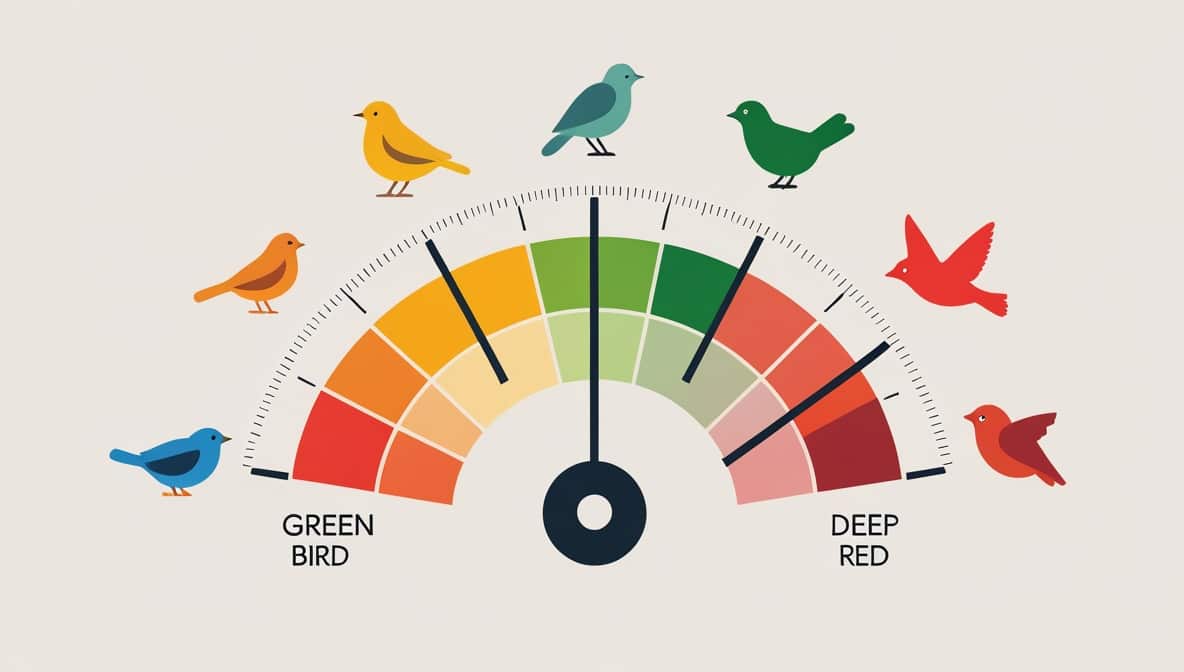
An endangered animal is one facing a serious risk of extinction in the near future, based on how few individuals remain and how quickly their numbers continue to decline. Scientists use the International Union for Conservation of Nature (IUCN) Red List to categorise species, from those doing well to those that have already vanished entirely. Assessments look at population size, how fast numbers are dropping, how fragmented the remaining habitat is, and whether any part of the population is still capable of breeding successfully.
Extinction is permanent. Once the last individual of a species dies without leaving offspring, that species is gone for good; no amount of searching, hoping, or captive breeding afterwards will bring it back. This is exactly why the categories below matter so much in practice. They act as an early warning system, giving conservationists, governments, and communities time to act before a species crosses the point of no return.
IUCN Status
What It Means in Simple English
Least Concern
Plenty of these animals exist; no immediate worry
Near Threatened
Numbers are dropping and need close watching
Vulnerable
At real risk of becoming endangered soon
Endangered
Very few are left; extinction is a serious danger
Critically Endangered
Extremely close to extinction in the wild
Extinct in the Wild
Only survives in zoos or captive breeding programmes
Extinct
Gone forever; none remain anywhere on Earth
These categories are not fixed forever. Species can move between them in either direction: a species can slide from Vulnerable to Endangered as pressures worsen, but with the right protection in place, it can also move the other way, from Critically Endangered back towards Vulnerable, as several of the animals later in this article demonstrate. The IUCN reassesses many species every few years using updated population surveys, which is why the numbers quoted for animals like the Amur leopard and Javan rhino can shift slightly from one year to the next.
Why Are Animals Becoming Endangered?
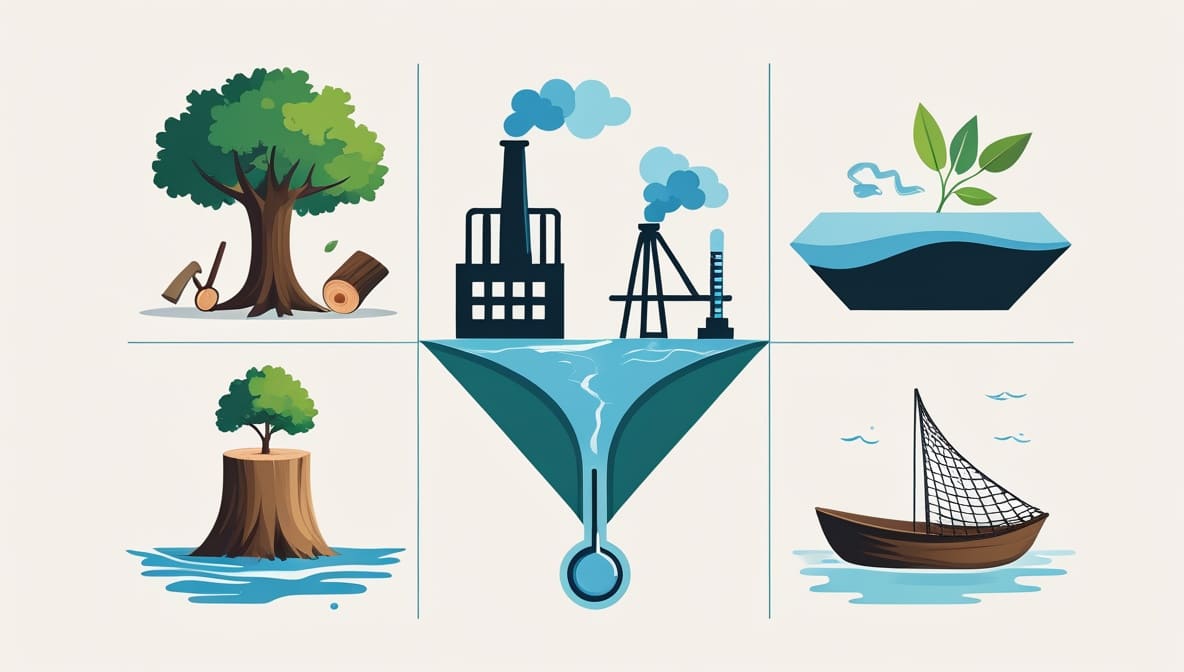
Human activity is the single biggest driver of animal extinction today, and it acts through multiple pathways simultaneously. Overhunting and overfishing have directly reduced populations of countless species, while construction, farming, and industry have destroyed the habitats animals depend on for food, shelter, and safe breeding grounds. Deforestation, the large-scale clearing of forests and trees, removes both homes and food sources at once, often faster than a species can adapt, relocate, or recover.
Pollution adds further pressure that is easy to overlook. Plastic waste in oceans harms marine animals directly, while chemical run-off from farms and industry can poison waterways that entire food chains depend on. Invasive species, plants or animals introduced (often accidentally) to a new environment, can also devastate native wildlife that has no natural defences against them; this is precisely what happened to New Zealand’s kakapo, covered later in this article.
Climate change adds further pressure on top of all this. Rising global temperatures, melting ice, and more frequent extreme weather events are pushing species out of habitats they have relied on for thousands of years. Puffins are struggling as warming seas disrupt the small fish they feed on, while polar bears face shrinking sea ice, the very platform they need for hunting seals. When habitat loss, pollution, and climate pressures combine on a single species, recovery becomes far harder to achieve without direct, sustained human help.
For UK primary classrooms, this connects directly to the KS2 Science curriculum on how living things and their environment can change over time, and it gives Geography lessons a genuine, real-world case study in cause and effect that pupils can trace clearly from human action through to ecological consequence.
Five Exquisite Facts About the World’s Rarest Creatures
The Axolotl: Nature’s Master of Regeneration
The axolotl, a Mexican salamander, can regrow entire limbs, its spinal cord, and even parts of its heart and brain, all without scarring. This ability goes far beyond simple healing; scientists study axolotls closely because understanding exactly how regeneration works could one day inform human medicine, particularly in areas such as wound healing and organ repair.
Despite this remarkable biological trait, axolotls are critically endangered in the wild, surviving now almost entirely in the canals and waterways of Xochimilco near Mexico City, where pollution and introduced fish species have devastated their natural population.
The Pangolin: The Only Scaly Mammal on Earth
Pangolins are the only mammals covered in hard, overlapping scales made of keratin, the same material found in human fingernails and rhino horn. When threatened, a pangolin curls into a tight, near-impenetrable ball that even large predators such as lions struggle to open. Sadly, this same natural armour offers no protection whatsoever against illegal wildlife trade, which has made pangolins the most trafficked mammal in the world, hunted for their scales and meat despite international trade bans.
The Snow Leopard: The “Ghost of the Mountains”
Snow leopards live at altitudes of up to 5,000 metres across Central Asia’s mountain ranges, camouflaged so effectively by their thick, pale, smoky-grey fur that local communities have long called them “ghosts of the mountains.” Their unusually long tails, sometimes nearly as long as their entire body, act as both a counterbalance on steep, rocky terrain and a source of warmth when wrapped around the body while resting. Fewer than 4,000 to 6,000 snow leopards are thought to remain in the wild, scattered thinly across twelve countries.
The Kakapo: The World’s Only Flightless Parrot
New Zealand’s kakapo is the only parrot species on Earth that cannot fly and is the heaviest parrot alive, weighing up to four kilograms. It is also nocturnal, uses a booming call that can travel over a kilometre to attract mates, and can live for 90 years or more, an exceptionally long lifespan for any bird.
Ground-based predators such as rats and stoats, introduced to New Zealand by settlers, devastated kakapo numbers because the birds evolved with no natural defence against land predators. Today, every individual kakapo is closely monitored by name as part of an intensive, dedicated conservation programme.
The Hawksbill Turtle: A Living Kaleidoscope of the Ocean
Hawksbill turtles get their name from their narrow, hooked beak, which they use to reach sponges tucked deep inside coral crevices, a diet almost no other sea creature can manage, making them important for coral reef health. Their strikingly patterned amber-and-brown shells once made them a prime target for the tortoiseshell trade, used to make jewellery and ornaments. Today, hawksbill turtles remain critically endangered, though international trade bans and protected nesting beaches have helped some populations stabilise.
Species Spotlight: Amur Leopards and Javan Rhinos
Two of the world’s most critically endangered large animals show just how close a species can come to the very edge before genuine recovery becomes possible, and how different that path can look depending on where a species lives.
Species
Estimated Population
Location
Biggest Threat
Amur Leopard
Around 100 in the wild
Far East Russia, north-east China
Habitat loss, shortage of prey
Javan Rhino
Around 75 individuals
Ujung Kulon National Park, Java, Indonesia
Poaching, disease, habitat loss
The Amur leopard’s population has grown slowly but steadily in recent years, thanks to protected reserves, anti-poaching patrols, and cross-border cooperation between Russia and China; a genuine sign that targeted, sustained conservation work can succeed even for animals with numbers this critically low. Javan rhinos remain more precarious.
Confined entirely to a single protected national park, the species faces the added risk that a single disease outbreak or natural disaster could threaten a significant proportion of the remaining population at once, which is why conservationists are now working to establish a second, separate population elsewhere on Java as insurance against exactly that scenario.
From the Brink of Extinction: UK Conservation Success Stories
Recovery is not just theoretical; the UK has several of its own examples of species pulled back from the very edge of extinction.
The red kite had been reduced to just a handful of breeding pairs in remote parts of Wales by the 1930s, driven there by decades of persecution and egg-collecting. A reintroduction programme begun in the 1980s and 1990s, using birds brought from Sweden and Spain, has since restored red kites across large parts of England and Scotland, and the distinctive forked-tail silhouette is now a familiar sight circling over motorways and countryside alike.
The large blue butterfly tells a similarly hopeful story with an unusual scientific twist. It went extinct in the UK in 1979 after scientists misunderstood its highly unusual reliance on a specific species of red ant during its caterpillar stage; the caterpillars actually trick the ants into raising them inside the ants’ nests. Once that relationship was properly understood, a careful reintroduction programme brought the species back to specially managed sites in south-west England, where it now breeds successfully year after year.
The Eurasian beaver adds a third example. Hunted to extinction in Britain around 400 years ago for its fur and meat, beavers have been carefully reintroduced to sites in Scotland and England over the past two decades. Their dam-building naturally creates wetland habitats that benefit numerous other species, making the beaver’s return a rare case where restoring one animal helps an entire ecosystem recover alongside it.
“Children respond powerfully to stories of recovery, not just stories of loss. When we show them that the red kite, the large blue butterfly, and the beaver were all brought back from the edge through careful, patient scientific work, we give them something better than sadness. We give them a genuine reason to believe their own curiosity about the natural world can lead somewhere useful,” says Michelle Connolly, Founder of LearningMole and former teacher with over 15 years of classroom experience.
Teaching Resources and Support: Classroom and Home Learning
These stories work well as a starting point for classroom discussion, but children generally benefit from revisiting a topic through more than one format. LearningMole’s animal facts and video resource hub offers curriculum-aligned videos that let children see many of these species in motion, which tends to make the science stick in a way text alone cannot.
For teachers planning a unit on habitats or human impact on the environment, ready-made, curriculum-aligned videos and activities can save valuable planning time while keeping the National Curriculum links clear and consistent across a term. Parents supporting this topic at home can use the same resources to extend what children have covered in class, without needing any specialist science background themselves.
The learningMole subscription/video library page gives access to the full library of educational videos covering science, geography, and animal topics for primary-aged children.
Frequently Asked Questions
What does it mean when an animal is described as endangered?
An endangered animal is one facing a serious risk of extinction because its population is small and continuing to decline. Scientists track this using the IUCN Red List, which ranks species by their risk of extinction. Extinction is permanent, so the endangered classification exists as an early warning that gives time for conservation action.
Why are animals becoming endangered in the first place?
The main causes are habitat loss from farming, construction, and deforestation; overhunting and overfishing; and, increasingly, climate change. These pressures often combine, making recovery harder than if a species faced just one threat alone. This connects directly to the KS2 Science curriculum on how environments and living things affect one another.
Are these facts suitable for KS2 pupils?
Yes. The facts and language here are pitched for children aged 7 to 11, matching KS2 Science (Living Things and Their Habitats) and Geography objectives. The content balances the seriousness of extinction with genuine scientific wonder, avoiding language that could cause distress while remaining accurate.
How can teachers use this article in a lesson?
The article works well as a reading comprehension exercise, a research starter for a habitats topic, or a discussion prompt on human impact on the environment. The comparison tables are particularly useful for data handling and classification, and the conservation success stories provide a natural link to discussions of the scientific method and evidence.
Where can I find more resources on endangered animals?
LearningMole’s video library covers a wide range of animal and habitat topics aligned with the UK National Curriculum, with new content added regularly. LearningMole’s endangered animals and conservation resource page provides further reading and video resources on this specific topic.
How can parents support this topic at home?
Parents do not need scientific expertise to help here; watching a short video together, then talking through what made each animal interesting, is often enough to reinforce classroom learning. Visiting a local nature reserve or zoo with a conservation programme can also make the topic feel real rather than abstract.
Can endangered animals actually be saved from extinction?
Yes, and the red kite and large blue butterfly are proof of it within the UK alone. Recovery generally depends on protecting habitat, controlling the specific threat a species faces, and sometimes carefully managed reintroduction programmes. It is slow work, but it does succeed.
How can this topic be adapted for different abilities?
Younger or less confident readers can focus on the five exquisite facts and the simple IUCN table, while more confident pupils can extend into the comparison tables, the causes of extinction, and independent research into a chosen species. The structure allows the same lesson to stretch across a wide range of abilities without needing separate materials.
Conclusion
Extinction has already claimed species that most of us will never see outside a museum case or an old illustration. Dodos, woolly mammoths, and sabre-toothed cats, the kind of animals children may recognise from films long before they realise they were once real, are reminders of what is lost when a species disappears for good. Every one of the five animals in this article still has a chance to avoid that fate.
What makes species like the axolotl, the pangolin, and the kakapo worth protecting is not just that they are rare; it is that each one does something genuinely remarkable that no other animal on Earth quite matches. That combination of rarity and wonder is exactly what makes this such a rich topic for curious young minds, and exactly why losing any one of them would mean losing something science cannot replace.
The recovery of the red kite and the large blue butterfly shows that this story need not end in loss. With careful protection, sustained effort, and children growing up who understand and care about these animals, species that are critically endangered today can still have a future. That is a message worth teaching alongside the facts themselves.
Want full access to LearningMole’s library of our videos, quizzes, and printable resources? See our subscription plans to unlock everything KS1 and KS2 teachers need for primary education.
Maths Circus, an innovative platform we've crafted, presents a captivating realm where children learn mathematics through the exciting theme of a circus. The joy of juggling numbers and solving circus...
Mexican traditions blend the customs of ancient Mesoamerican peoples, such as the Aztecs and the Maya, with Catholic festivals brought by Spanish settlers in the sixteenth century. The result is...
The moose (Alces alces) is the largest member of the deer family alive today, and a fully grown bull can stand about 2 metres tall at the shoulder, which makes...






Leave a Reply