Italian food is loved all over the world, but the dishes most families in the UK know as “Italian” are often quite different from what people actually eat in Italy. A real Neapolitan pizza has a soft, blistered crust and only a handful of toppings, while a proper carbonara from Rome contains no cream at all. Learning about these differences gives children a tasty way into geography, history and food science, and it makes the next family meal or classroom cooking session far more interesting.
This guide covers ten classic Italian dishes, where each one comes from and why it tastes the way it does. It also looks at the popular street foods that Italians buy and eat on the move, the myths that have grown up around Italian cooking in Britain, and the ways teachers can link the topic to the National Curriculum in England through design and technology and Key Stage 2 geography. If your class is also studying Italian culture, customs and traditions, the food covered here fits neatly alongside that wider topic.
LearningMole is a free UK educational platform founded by former primary school teacher Michelle Connolly, and every resource mentioned in this article is free for teachers, parents and children to use. Whether you are planning a Year 4 food technology lesson, preparing a topic on a European country or simply cooking with your children at the weekend, the dishes below give you plenty to talk about, taste and discover.
Ten classic Italian dishes at a glance
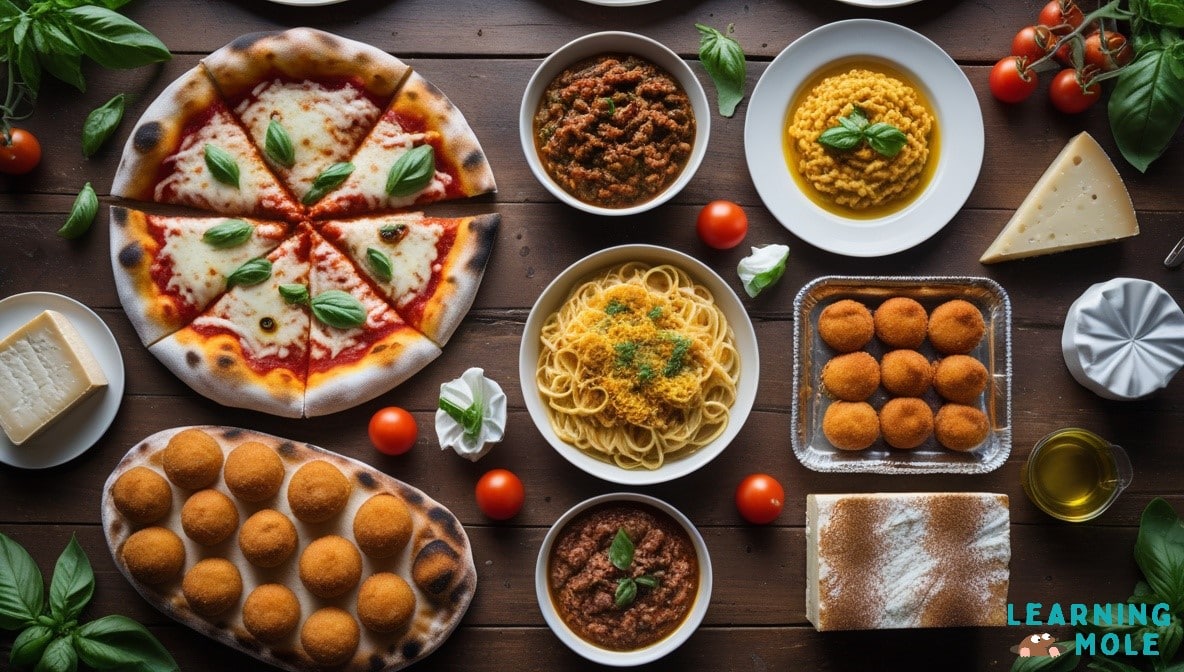
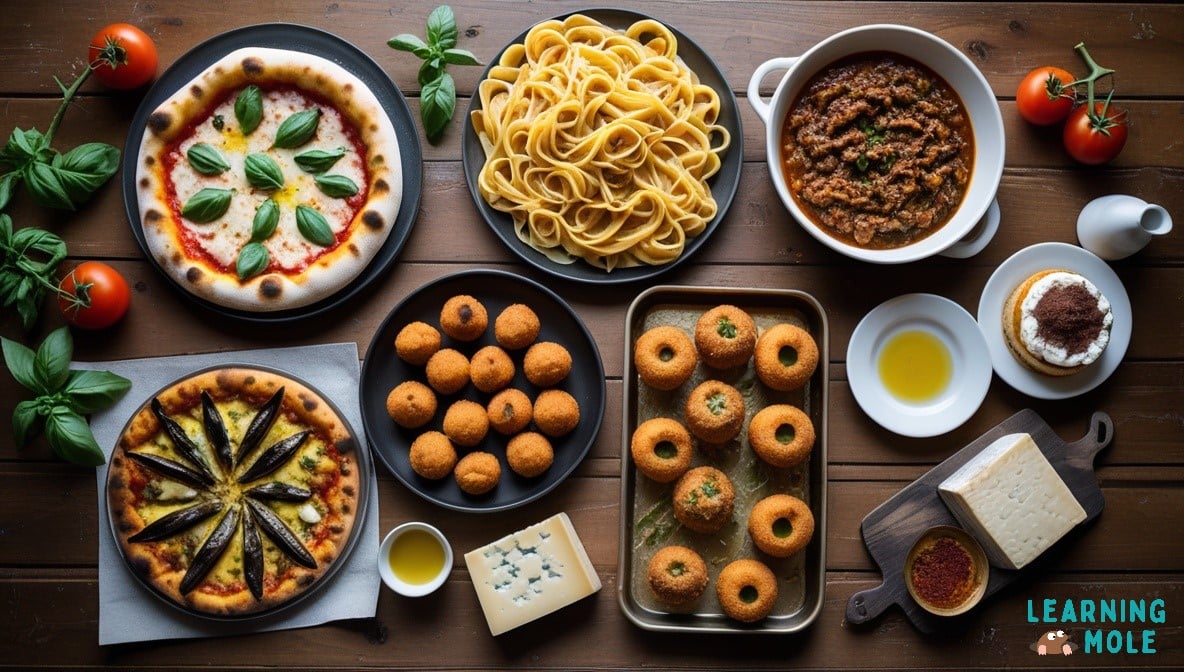
The ten dishes in this guide come from every part of Italy, from the Alpine north to the island of Sicily, and each one reflects the farming and climate of its home region. The table below gives a quick overview that works well as a planning reference or a printed handout.
Number
Dish
Region of origin
Main ingredients
1
Pizza Napoletana
Campania (Naples)
Soft wheat dough, San Marzano tomatoes, buffalo mozzarella, basil
Green egg pasta, ragù, béchamel sauce, Parmigiano Reggiano
6
Arancini
Sicily
Saffron rice, ragù or cheese filling, breadcrumbs
7
Parmigiana di melanzane
Southern Italy
Fried aubergine, tomato sauce, cheese, basil
8
Focaccia Genovese
Liguria (Genoa)
Flatbread dough, olive oil, salty brine
9
Polenta e funghi
Northern Italy
Cornmeal, mushrooms, cheese
10
Tiramisù
Veneto
Sponge biscuits, coffee, mascarpone, cocoa
Italian food is shaped by geography and frugal cooking
Italian cooking changes from region to region because each part of the country has its own climate, soil and farming traditions. Two ideas explain most of what makes Italian food distinctive: the contrast between the north and the south, and a long tradition of cooking well with very little.
The north and south of Italy cook with different ingredients
Northern Italy is dominated by the Po Valley, the largest area of flat farmland in the country. Its fertile soil and plentiful water support dairy cattle and rice fields, which is why northern dishes often use butter, cream, cheeses and rice. The Alps to the north add mountain foods such as cornmeal, mushrooms and hard cheeses.
Southern Italy and the islands are hotter and drier, with rocky hillsides that suit olive trees, tomatoes and hard durum wheat far better than grazing cattle. As a result, southern cooking relies more on olive oil, dried pasta made from durum wheat and sheep’s milk cheeses. LearningMole uses this north and south contrast as a clear example of how physical geography affects what people eat, and it links well to classroom activities for teaching geography in Key Stage 2.
Cucina povera and protected local ingredients
Many of Italy’s best-known dishes began as cucina povera, which means “cooking of the poor”. Families made filling meals from cheap or leftover ingredients, turning stale bread into soups, using every part of an animal and cooking beans, vegetables and grains in season. This thrifty approach makes a useful starting point for conversations about reducing food waste at home and school.
Italy also protects many of its traditional foods by law. A product with Protected Designation of Origin status (DOP in Italian, standing for Denominazione di Origine Protetta) must be made in a specific area using traditional methods. Parmigiano Reggiano, Pecorino Romano and Mozzarella di Bufala Campana all hold this status, so children can see a direct link between a food, a place and the people who produce it.
10 must-try authentic Italian dishes
Each dish below includes where it comes from, what goes into it and one piece of food science or history that makes it a good talking point with children. LearningMole has arranged the list to move from the classic dishes of the south and centre through to the rice, cornmeal and dessert traditions of the north, so teachers can follow a rough route up the map of Italy during a lesson.
1. Pizza Napoletana (Campania)
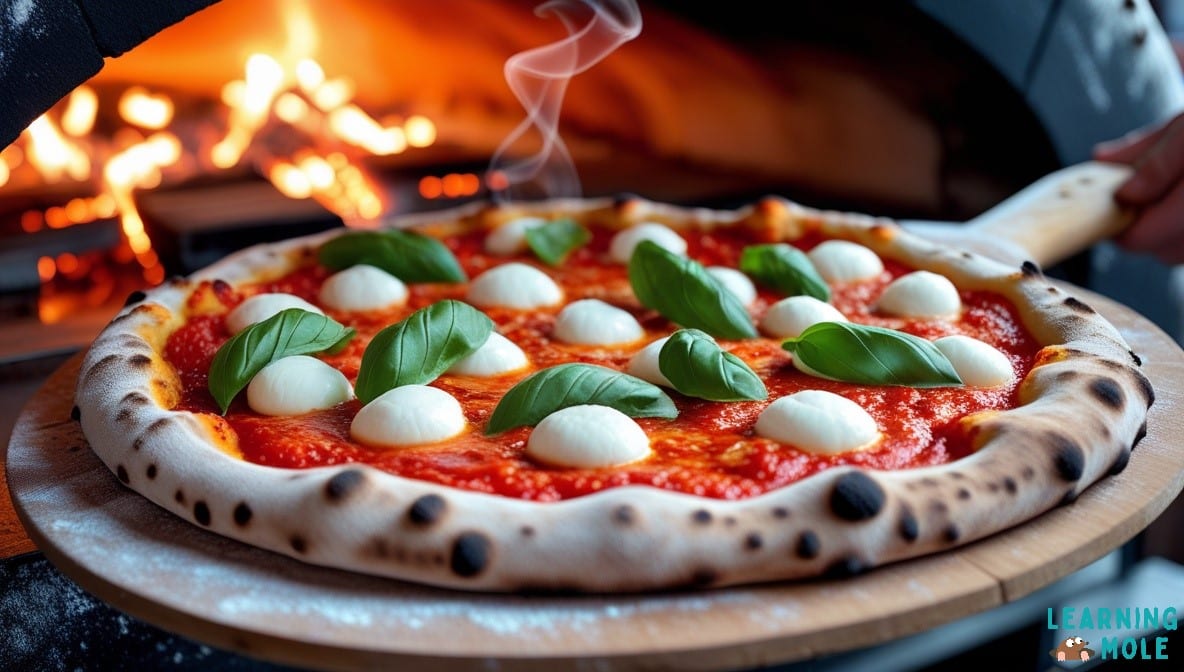
Italy is the original home of pizza, and the city of Naples is where the modern version took shape. A true Neapolitan pizza has a soft, thin centre and a puffy, slightly charred crust called the cornicione, cooked for around a minute in a very hot wood-fired oven. Italians keep the toppings simple and use only a few fresh ingredients, so the flavour of the tomato and cheese comes through clearly.
The classic Margherita uses San Marzano tomatoes, mozzarella and fresh basil. Many pizzerias use mozzarella di bufala, a soft cheese made from the milk of water buffalo raised in Campania. In 2017, UNESCO added the art of the Neapolitan pizza maker, or pizzaiuolo, to its list of the world’s intangible cultural heritage. The long, slow rise of the dough is a simple way to show children how yeast produces gas that makes bread light and airy, and pizza is also a favourite for teaching fractions using pizza slices.
2. Tagliatelle al ragù (Emilia-Romagna)
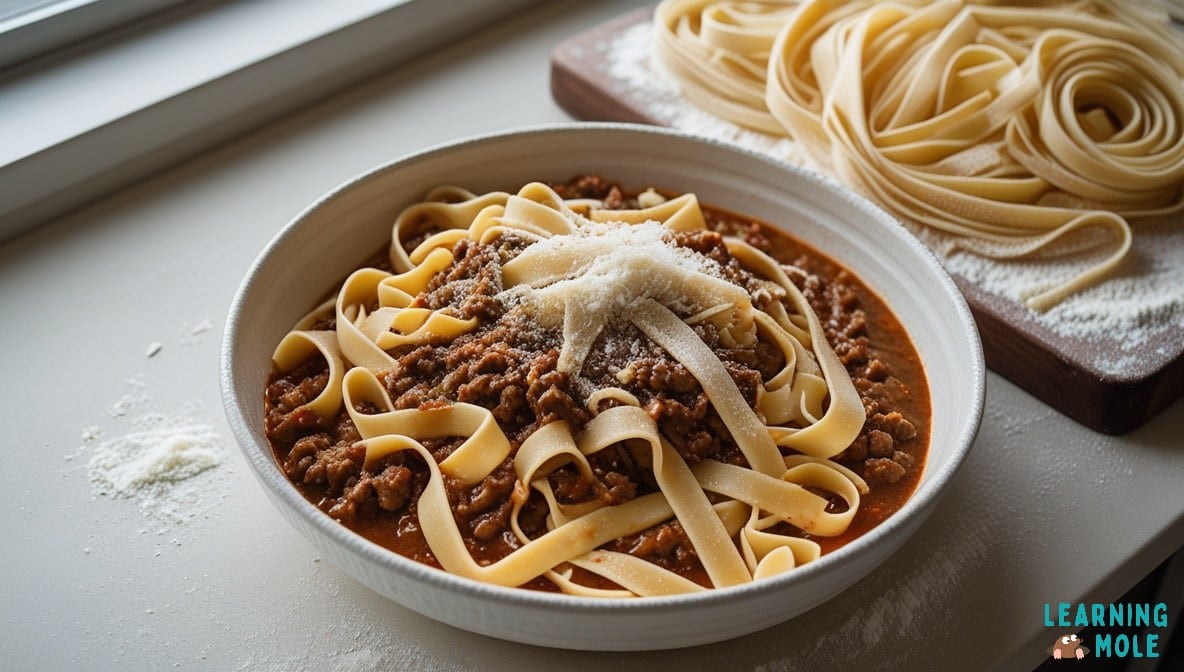
Pasta is a staple of Italian cooking, and Italians eat it in hundreds of shapes, each made from a dough that can be cut, rolled or moulded in different ways. In Bologna, the city’s famous meat sauce is traditionally served with tagliatelle, flat ribbons of fresh egg pasta, rather than with spaghetti.
The ragù is cooked slowly for several hours with minced meat, a small amount of tomato, onion, carrot, celery and often a splash of milk. Bolognese cooks pair it with tagliatelle because the wide, slightly rough ribbons hold a thick meat sauce well. Matching pasta shape to sauce is a lesson in itself: thin, smooth strands suit light, oily sauces, while wider or ridged shapes suit heavier ones.
3. Spaghetti alla carbonara (Lazio)
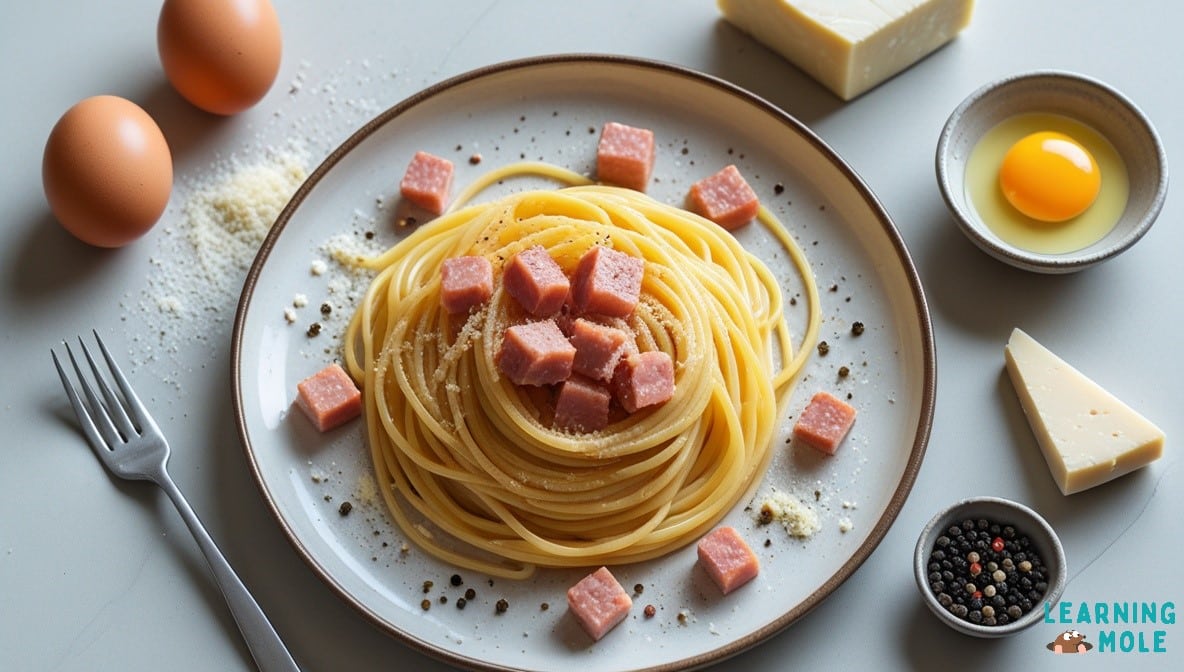
Carbonara is one of the most famous dishes of Rome, and it is made with only four main ingredients: guanciale (cured pork cheek), eggs, grated Pecorino Romano cheese and black pepper. The traditional Roman recipe contains no cream, no garlic and no onion.
The silky sauce comes from science. Off the heat, toss hot pasta, a little of its starchy cooking water, the melted fat from the guanciale, and the egg-and-cheese mixture. The starch helps the fat and liquid combine into a smooth, creamy coating, which is called an emulsion. If the pan is too hot, the egg sets and turns lumpy, so carbonara is a good way to show older pupils how heat changes proteins.
4. Risotto alla Milanese (Lombardy)
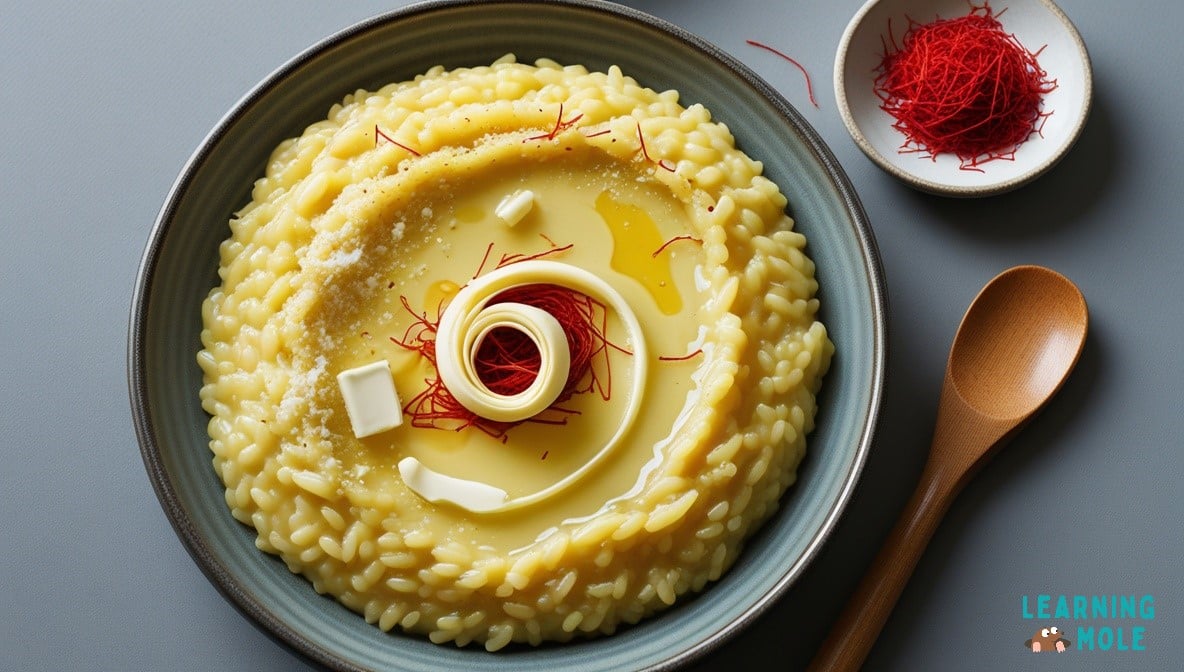
Risotto alla Milanese is a golden rice dish from Milan, coloured and flavoured with saffron. It is made with short, round risotto rice such as Arborio or Carnaroli, cooked slowly while hot stock is added ladle by ladle.
Stirring releases starch from the outside of each grain, which thickens the liquid into a creamy sauce without any cream being added. The dish is finished with butter and Parmigiano Reggiano, and traditional versions also include beef bone marrow. Because rice grows in the flooded fields of the Po Valley, risotto is a clear example of northern Italian farming on the plate.
5. Lasagne alla Bolognese (Emilia-Romagna)
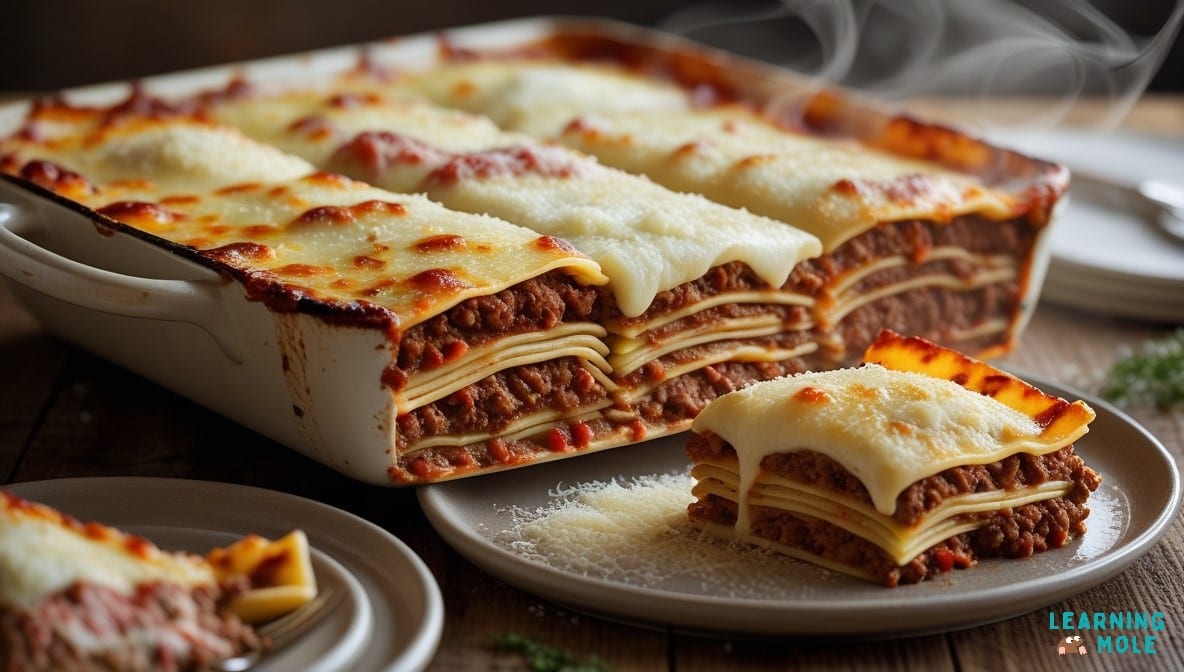
The traditional lasagne of Bologna is made with thin sheets of fresh egg pasta, often coloured green with spinach, layered with ragù, béchamel sauce and grated Parmigiano Reggiano. It is then baked until the top is golden.
The Bolognese version uses béchamel, while some southern recipes use ricotta, which shows how even a single dish varies between regions. Lasagne is a good recipe for older children to help assemble, because building the layers involves careful measuring and planning.
6. Arancini (Sicily)
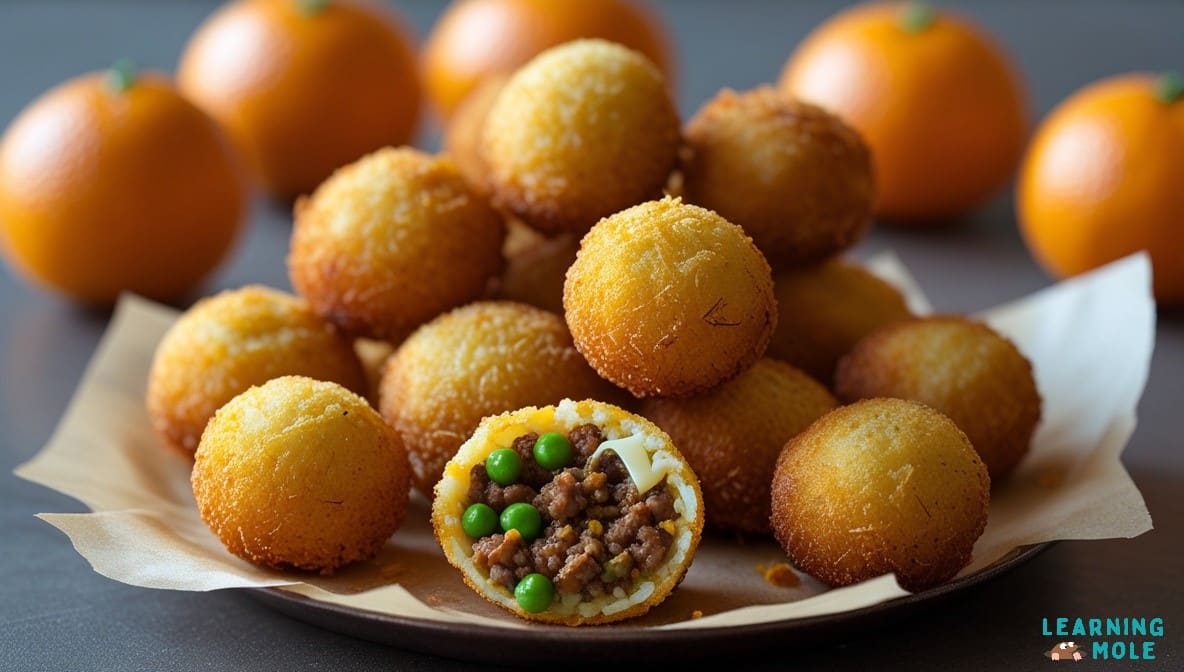
Arancini are golden balls of saffron rice, usually filled with ragù and peas or with cheese, then coated in breadcrumbs and fried. The name comes from the Italian word for orange, because the finished balls look like small oranges.
Sicily was ruled by Arab emirs for more than two centuries in the Middle Ages, and rice and saffron are often credited to that period of Sicilian history. Sicilians still argue about the name: in Palermo they are usually called arancina, while in Catania they are arancino. This small detail makes a memorable example of how language changes from one city to another.
7. Parmigiana di melanzane (Southern Italy)
Parmigiana di melanzane is a baked dish of fried aubergine slices layered with tomato sauce, basil and cheese. Despite its name, it usually has little to do with the city of Parma, and both Sicily and Campania claim it as their own.
It is a vegetarian dish that depends on summer produce, since aubergines, tomatoes and basil all grow best in the hot southern sun. Children can compare the ingredients with those of lasagne to see how southern cooks built a filling meal from vegetables, with no meat needed.
8. Focaccia Genovese (Liguria)
Focaccia is a flatbread that people in Italy eat at any time of day, from breakfast through to an afternoon snack. It has a fluffier texture than pizza because the dough is left to rise for longer and is baked in a deeper tray.
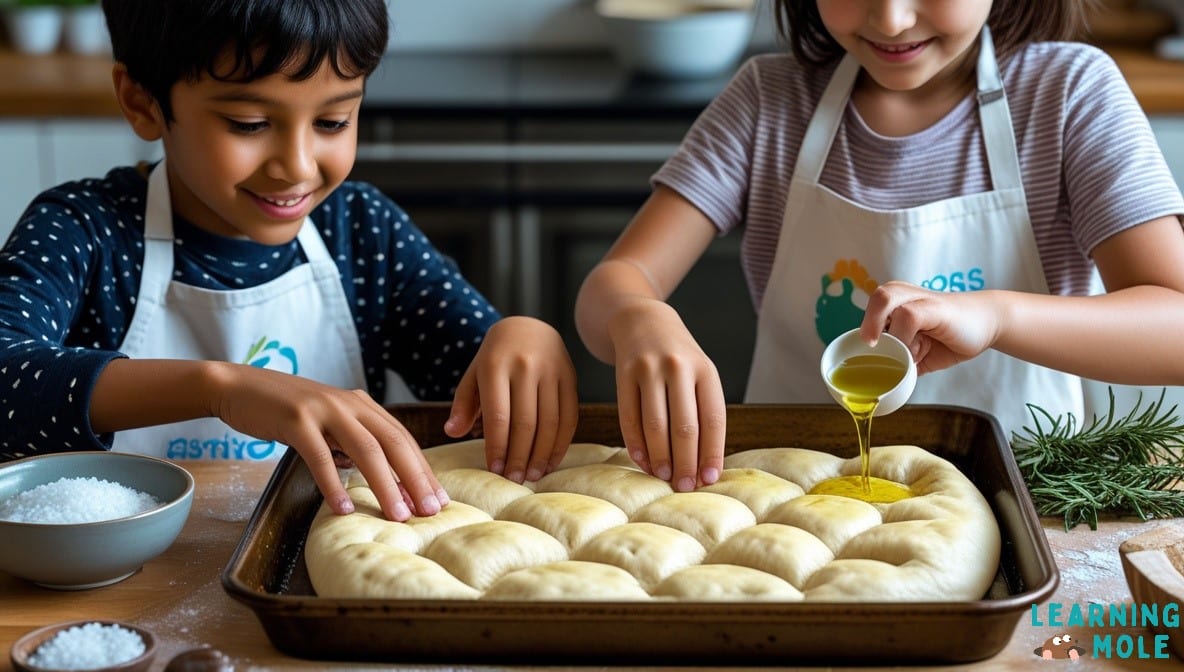
The version from Genoa is pressed with fingertips to make small dimples, then covered with olive oil and a salty water brine before baking. The brine collects in the dimples, giving a soft centre and a crisp, salty top. Bakers in other regions add olives, rosemary, onions or tomatoes, and some sweet versions are topped with sugar or grapes. Making focaccia is one of the easiest ways to introduce children to yeast doughs, since there is no shaping or rolling involved, which makes it a good choice for a first bread-making lesson at school or at home.
9. Polenta e funghi (Northern Italy)
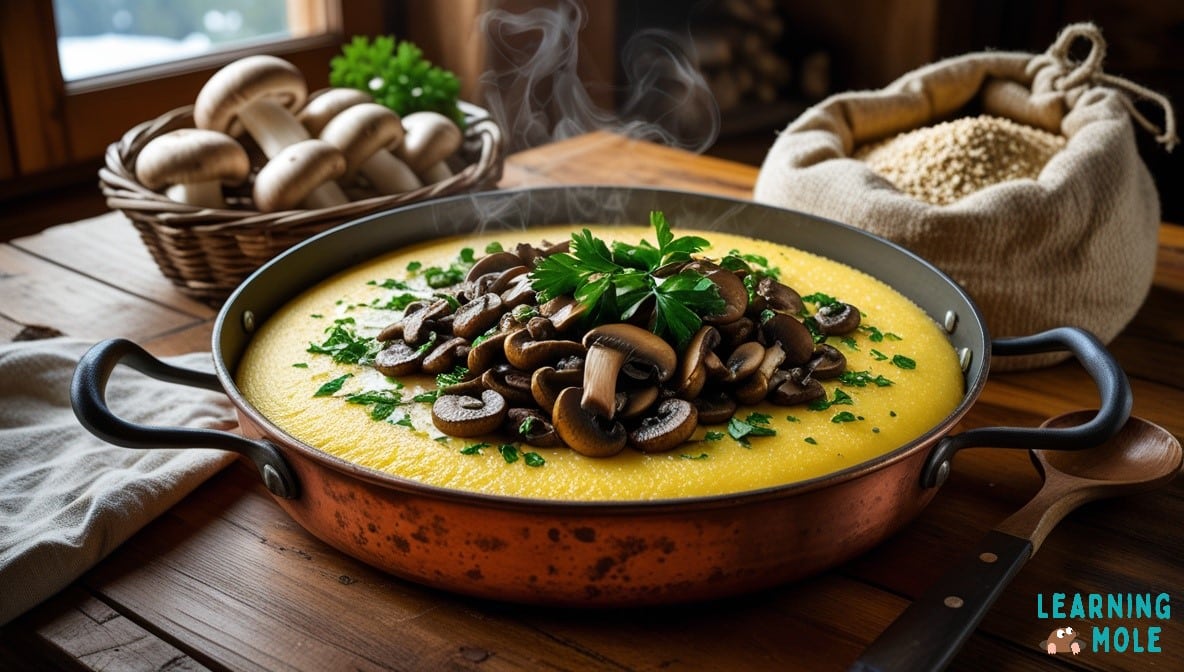
Polenta is a thick, warming porridge made from coarse ground cornmeal, cooked slowly and stirred often. In the mountains of northern Italy, it is often served with mushrooms and melted cheese.
Maize was unknown in Europe before the voyages to the Americas, so polenta made from corn only became common in Italy in the centuries that followed. Before then, polenta was made from other grains, chickpeas or chestnut flour. This makes polenta a good starting point for discussing how foods travelled around the world and changed what people ate.
10. Tiramisù (Veneto)
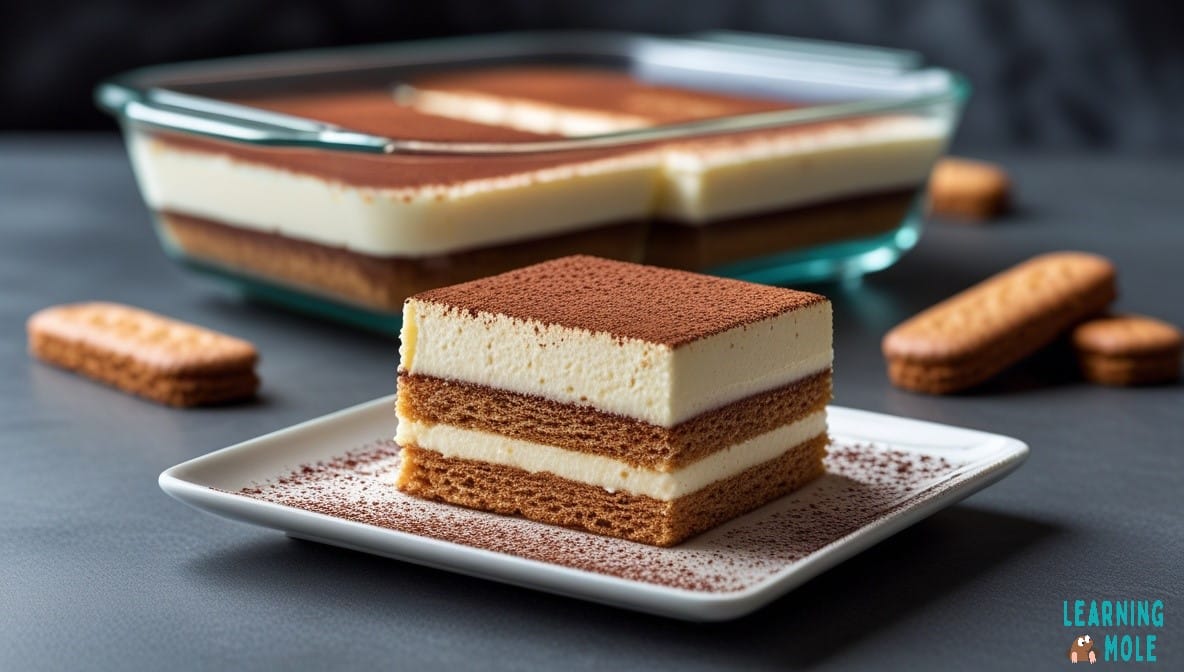
Tiramisù is a chilled dessert made from savoiardi (sponge finger biscuits) dipped in coffee and layered with a mixture of mascarpone cheese, egg and sugar, then dusted with cocoa. Its name means “pick me up”. The Veneto region is most often linked with its creation in the second half of the twentieth century, although neighbouring Friuli Venezia Giulia also claims it.
Traditional tiramisù uses raw eggs and strong coffee, so it needs adapting for young children. For a classroom or family version, use pasteurised eggs or an egg-free mascarpone and cream filling, and swap the coffee for warm hot chocolate or diluted cocoa.
Popular Italian street foods to try
Alongside the classic dishes, Italy has a strong tradition of street food that people buy from bakeries, market stalls and vans and eat on the move. Many of these snacks are folded, stuffed or fried, which makes them easy to carry.
Street food
Where it is popular
What it is
Calzone
Naples
Pizza dough folded over a filling and baked or fried
Panzerotti
Puglia
Small half-moon dough parcels, usually fried
Mozzarella in carrozza
Campania
Fried mozzarella sandwich dipped in egg
Porchetta
Central Italy
Slow-roasted, boneless pork served in a bread roll
Panelle
Sicily (Palermo)
Thin chickpea flour fritters, often served in bread
Lampredotto
Florence
Slow-cooked tripe sandwich with green sauce
Brioche con gelato
Sicily
Ice cream served inside a soft brioche bun
Calzone and panzerotti
Calzone originated in Naples and is very similar to pizza. The dough is filled with ingredients such as mozzarella, ricotta, ham or salami, then folded over and baked until golden. The name comes from the Italian word for a trouser leg or stocking, which describes its long, folded shape. Panzerotti, from Puglia in the south, are smaller half-moon parcels usually filled with mozzarella and tomato and fried until the cheese melts.
Mozzarella in carrozza
Mozzarella in carrozza is often compared to a toasted cheese sandwich. Slices of mozzarella are placed between two pieces of bread, dipped in beaten egg and fried until golden. The name means “mozzarella in a carriage”, which is thought to describe the way the bread carries the melting cheese, or the strings of cheese that stretch out like reins when the sandwich is pulled apart.
Porchetta
Porchetta comes from central Italy and is one of its best-loved street foods. It is a whole boneless pork joint, seasoned with herbs and spices such as fennel, rosemary and garlic, rolled and roasted slowly until the meat is tender and the skin is crisp. Slices are usually served simply in a crusty bread roll.
Panelle
Panelle are thin fritters made from chickpea flour, water and salt, cooked into a paste, cooled, sliced and fried. They are a savoury Palermo speciality, often eaten in a sesame bread roll with a squeeze of lemon. Because they contain no wheat, panelle are a good example of how chickpeas, a crop grown around the Mediterranean, became part of everyday Sicilian food.
Lampredotto
Lampredotto is a traditional sandwich from Florence. It is made from the fourth stomach of a cow, slow-cooked in a broth with vegetables and herbs, sliced and served in a bread roll, often topped with a green herb sauce called salsa verde. It is a clear example of cucina povera, since it turns a cheap cut that might otherwise be wasted into a popular meal.
Brioche con gelato
Brioche con gelato is ice cream served inside a soft, slightly sweet brioche bun, a popular treat in Sicily during the hot summer months. Sicilians also eat granita, a type of crushed ice dessert, with a brioche, sometimes for breakfast. For children, this is a fun example of how a hot climate shapes the way people eat.
Common Italian food myths in Britain
Many dishes sold as Italian in Britain have changed a great deal from the originals. Comparing the two versions, as LearningMole does in the table below, helps children understand that recipes change as they travel, and that traditional Italian cooking usually depends on fewer, carefully chosen ingredients.
Italian dish
Traditional ingredients
Common British version
Why the original works
Carbonara
Guanciale, egg, Pecorino Romano, pepper
Bacon, double cream, garlic
Egg, cheese and starchy water make the creamy sauce
Ragù alla Bolognese
Slow-cooked meat sauce, served with tagliatelle
Spaghetti with a tomato-heavy mince sauce
Wide fresh ribbons hold the thick sauce
Pizza Napoletana
Few toppings, very hot oven
Thick base, lots of cheese and toppings
High heat cooks a thin base in about a minute
Garlic bread
Bruschetta: toasted bread rubbed with garlic and olive oil
Baguette with garlic butter
Olive oil and fresh garlic suit the simple bread
Spaghetti bolognese is the best-known example. In Bologna, ragù is traditionally served with tagliatelle or baked in lasagne, and the sauce contains much less tomato than most British versions. Garlic bread as it is sold in British supermarkets is also not a traditional Italian dish, although Italians do eat bruschetta.
Linking Italian food to the UK primary curriculum
Italian food fits directly into two subjects in the National Curriculum in England: design and technology through cooking and nutrition, and Key Stage 2 geography through the study of a European region. Schools in Northern Ireland, Scotland and Wales can use the same material within their own curriculum frameworks, and LearningMole, which is based in Belfast, writes its free resources for teachers and parents across the UK.
“Children learn far more about food when they can smell the basil, knead the dough and watch it rise than they ever will from a worksheet. Italian cooking is ideal for this, because the recipes are simple and every ingredient comes with its own story about where it was grown,” says Michelle Connolly, LearningMole founder, who has over 15 years of experience as a primary school teacher.
Design and technology: cooking and nutrition
The design and technology programmes of study state that pupils in Key Stage 1 should use the basic principles of a healthy and varied diet to prepare dishes and should understand where food comes from. In Key Stage 2, pupils should prepare and cook a variety of mainly savoury dishes using a range of cooking techniques, and should understand seasonality and know how ingredients are grown, reared, caught and processed.
Focaccia, simple tomato sauces and vegetable dishes such as parmigiana make excellent savoury recipes for this, and the seasonal nature of Italian cooking gives a natural way to discuss when fruit and vegetables are grown. Our primary nutrition teaching resources and cooking projects that build maths skills support this work. Always check pupils’ allergies and dietary needs before any tasting or cooking activity, since many Italian dishes contain wheat, dairy and egg.
Key Stage 2 geography: regions, land use and climate
The Key Stage 2 geography curriculum asks pupils to study the human and physical geography of a region in a European country, including land use and the distribution of natural resources such as food. Italy is an ideal choice. Pupils can map the dishes in this guide onto Italy’s regions and explain how the flat Po Valley, the Alps and the dry south each produce different crops. Our Italy facts for kids and guide to maps and globes help pupils locate Italy and its regions before they begin. LearningMole’s geography resources are aligned with the National Curriculum, so they slot straight into existing Key Stage 2 planning.
Italian food activities for the classroom and home
Two simple, low-cost activities work well with this topic in school or at home. Both need only everyday ingredients, a printed map and some paper, which makes them practical for a busy classroom or a kitchen table.
Mediterranean herb and olive oil tasting
Set out small bowls of fresh basil, rosemary and oregano, along with extra virgin olive oil and plain bread for dipping. Children smell, touch and taste each one, then record the flavour in their own words and note where in Italy the herb or oil is most often used. Younger children can sort the herbs by smell, while older pupils can research how olive oil is made and why olive trees grow well in southern Italy.
Italian food detective mapping task
Give pupils ten clue cards, each describing one dish from this article through its ingredients and the climate of its home region, without naming the region. Pupils use a blank outline map of Italy to place each card in the correct region and explain their choice. The task brings geography and food together, and it works equally well as a group challenge or a homework project for families.
Teaching resources and support
LearningMole provides free, curriculum-aligned teaching resources and educational videos for primary teachers, parents and children aged 4 to 11, covering geography, science, cooking and much more. All our resources are completely free, so you can use them in class or at home without any sign-up costs.
For this topic, our geography videos for kids help children learn about countries and their regions, and our article on table etiquette for children makes a natural follow-up to an Italian meal at home. Teachers looking for a maths link can use maths in the kitchen activities for measuring, scaling recipes and working out cooking times.
Parents can use the dishes in this guide, together with LearningMole’s free home learning resources, to turn family meals into learning. Cooking focaccia together, comparing a shop-bought pizza with a homemade Neapolitan-style one, or finding each dish’s region on a map all reinforce what children learn in school.
Frequently asked questions
What are the top 10 authentic Italian dishes everyone should try?
The ten classics in this guide are Pizza Napoletana, tagliatelle al ragù, spaghetti alla carbonara, risotto alla Milanese, lasagne alla Bolognese, arancini, parmigiana di melanzane, focaccia Genovese, polenta e funghi and tiramisù. Together they cover the main regions of Italy, from the Alps to Sicily, and show how local farming shapes each region’s cooking. LearningMole’s table near the top of this guide lists the region and main ingredients of every dish for quick reference.
Why is spaghetti bolognese not considered authentic in Italy?
In Bologna, the meat sauce known as ragù is traditionally served with fresh tagliatelle ribbons or baked in lasagne, not with spaghetti. The original sauce also uses far less tomato than most British versions. Spaghetti bolognese became popular outside Italy, and many Italians see it as a foreign adaptation of their recipe.
How does Italian food link to the Key Stage 2 design and technology curriculum?
The National Curriculum in England asks Key Stage 2 pupils to prepare and cook a variety of mainly savoury dishes using a range of cooking techniques, and to understand seasonality and how ingredients are grown, reared, caught and processed. Italian cooking suits these aims well. Dishes such as focaccia, tomato sauce and parmigiana use simple techniques including kneading, chopping and baking, while ingredients such as buffalo mozzarella, Parmigiano Reggiano and olive oil come with clear stories about where and how they are produced. Teachers can also use Italy’s protected food products to show pupils how a place and a food can be linked by law. LearningMole’s free nutrition and geography resources support these lessons.
Is this guide suitable for Key Stage 1 or Key Stage 2 children?
The guide works for both stages with some adaptation. Key Stage 1 children can focus on tasting, smelling and handling ingredients, naming fruit and vegetables and helping with simple tasks such as pressing dimples into focaccia dough. Key Stage 2 pupils can take on the food science, such as how yeast makes dough rise and how starch thickens risotto, along with the regional geography of Italy and the history of how ingredients such as maize and saffron arrived there. Parents can use the same activities at home with children of any primary age.
Why does traditional carbonara not contain cream?
Traditional Roman carbonara gets its silky texture from egg, grated Pecorino Romano, the fat from the guanciale and a little starchy pasta water, all mixed together off the heat. These ingredients form a creamy emulsion on their own, so cream is not needed. Adding it dulls the sharp, salty flavour of the cheese and pork.
What resources help teach world food in primary schools?
The most useful resources combine hands-on experience with geography. Printable regional food maps, simple picture recipe cards with clear hygiene steps, tasting record sheets and worksheets that trace a food from farm to plate all work well. Short educational videos help children picture places they have not visited. LearningMole offers free curriculum-aligned videos and teaching materials that teachers can use alongside practical cooking, and all of them are free to access.
What does cucina povera mean?
Cucina povera means “cooking of the poor” and describes the traditional Italian habit of turning simple, cheap and seasonal ingredients into satisfying meals. Stale bread, beans, vegetables and less expensive cuts of meat all play a part. The idea remains a useful lesson for children today about avoiding food waste.
Bringing Italian food into learning
Italian food offers far more than pizza and pasta. Each of the ten dishes in this guide, from Neapolitan pizza to tiramisù, reflects the land, climate and history of the region where it began, and the street foods sold in Naples, Palermo and Florence show how ordinary people turned simple ingredients into meals worth queuing for.
For teachers, Italian cooking connects naturally with the National Curriculum in England. It supports the cooking and nutrition aims of design and technology and gives Key Stage 2 pupils a clear, memorable way to study a region of a European country. For parents, cooking a dish together and finding its home on a map of Italy turns an ordinary meal into a lesson children enjoy.
LearningMole’s free teaching resources and educational videos make it easy to build on this topic in class or at home. Browse our geography teaching resources or read more about Italian culture and traditions for the next lesson, with every resource free for teachers, parents and children to use.
Maths Circus, an innovative platform we've crafted, presents a captivating realm where children learn mathematics through the exciting theme of a circus. The joy of juggling numbers and solving circus...
Article Summary What this article covers: Active reading strategies for UK primary pupils, set out as a before, during and after reading framework with a teacher think-aloud script, a margin...
Respecting others means treating people as if their feelings, opinions and personal space matter as much as your own. For children, this is a skill they learn through practice and...
Transformations describe how a shape moves or changes on a flat surface. In primary maths, children meet three movements that keep a shape exactly the same size: translation (a slide),...




Leave a Reply