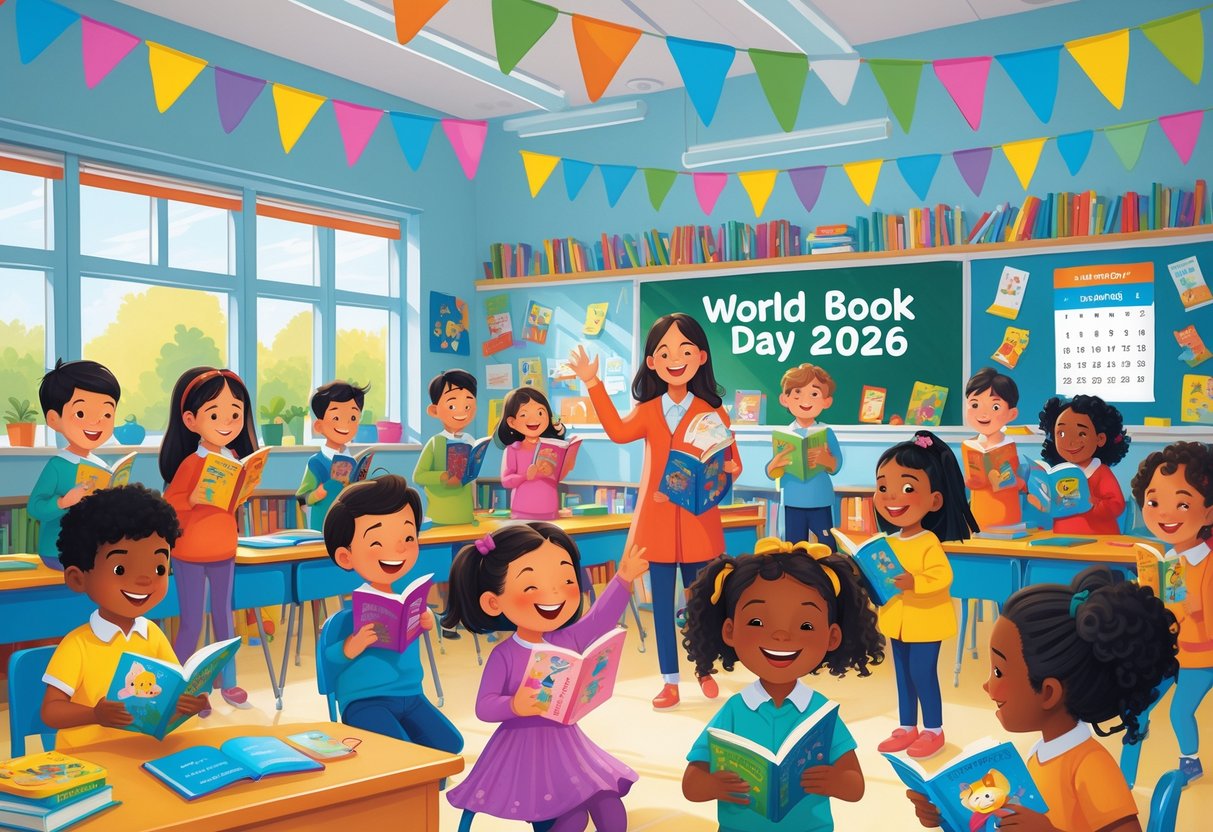
World Book Day activities for primary school let children get hands-on with stories, build their reading skills, and start to love books for life. World Book Day 2026 lands on Thursday, 5 March, so teachers and families have time to come up with creative classroom projects, costume ideas, and reading challenges to bring favourite characters and stories to life.
You might run a simple drop-everything-and-read session. Or maybe you’ll turn your school into Hogwarts for the day. The celebration opens up loads of ways to get young readers excited.
Michelle Connolly, who founded LearningMole and taught in primary schools for over 15 years, says, “World Book Day is one of the most exciting days in the primary calendar because it connects reading with creativity, play, and shared experiences. When children see their teachers dressed as book characters and participate in story-themed activities, reading becomes something joyful rather than just another lesson.” LearningMole, a UK educational platform, shares curriculum-aligned resources so teachers can celebrate World Book Day all year, not just in March.
You don’t have to make World Book Day complicated or pricey. From poetry performances and book character dress-up days to story mapping and extreme reading competitions, you’ll find loads of practical ideas for every year group from Reception up to Year 6.
Make This Easier with LearningMole
Planning a whole World Book Day timetable from scratch every year is a lot of work for one day. LearningMole’s reading and storytelling videos give you ready-made sessions for each year group, so the day runs itself while pupils stay engaged. See our subscription plans for full school access to our reading and literacy videos.
What Is World Book Day and Why Is It Important?
World Book Day started in 1995 through UNESCO and now reaches millions of children across the UK every year. The event aims to give every child access to books and build excitement around stories and characters they love.
World Book Day’s History and Purpose
UNESCO launched World Book Day in 1995 as a worldwide celebration of reading and books. The UK and Ireland mark the event every year on the first Thursday in March. World Book Day 2026 falls on Thursday, 5 March.
The World Book Day charity leads the UK celebration. Their main mission is to promote reading for pleasure and make sure every child can own a book. Children get special £1 book tokens that they can swap for exclusive World Book Day books in February and March. These tokens help families get books, no matter their budget.
The 2026 book selection features popular characters like Peppa Pig and Unicorn Academy. Authors such as Rose Ayling-Ellis, Jamie Smart and Hannah Gold have joined in this year.
Impact on Children’s Reading for Pleasure
Reading for pleasure helps children’s academic progress and well-being. World Book Day brings every book, fiction or non-fiction, into the spotlight and helps children discover more about themselves and their friends.
Schools use this day to start conversations about favourite stories and characters. When you celebrate World Book Day in your classroom, children see their friends excited about different books. That peer buzz often nudges reluctant readers to try something new.
The event breaks down barriers by offering free resources and affordable books. Teachers often notice that the excitement from World Book Day sticks around. Many schools stretch it into a full book week to keep the momentum going.
Key Goals and Traditions
The celebration focuses on three main goals: making books exciting, giving children book ownership, and promoting reading for pleasure beyond the classroom. Schools use a mix of activities to bring stories to life.
Dressing up as book characters is the most popular tradition. Children get to step into their favourite character’s shoes for the day, which deepens their love for stories. Many schools invite authors, run reading challenges and set up creative writing workshops.
Other common traditions include:
Book swaps where children exchange pre-loved books.
Reading buddy sessions that pair older and younger pupils.
Storytelling assemblies led by teachers and students.
Library takeovers that turn spaces into story settings.
Your school can grab free activity packs, assembly plans, and online resources from the World Book Day charity. These materials make it possible for every school to join in, regardless of budget.
When Is World Book Day 2026? Key Dates and Details
World Book Day 2026 falls on Thursday, 5 March. You’ll have plenty of time to plan engaging activities for your pupils. Schools usually start getting ready weeks ahead to make the most of this literacy celebration.
UK and Global Dates
World Book Day 2026 takes place on Thursday, 5 March. This date marks a UNESCO celebration of reading and books that people have recognised worldwide since 1995.
The early March date falls during Term 4, when most primary teachers are juggling assessments and planning. Children receive their special £1 book tokens to use in February and March 2026. These tokens let pupils pick from exclusive books with popular characters like Peppa Pig and Unicorn Academy, plus new titles from Rose Ayling-Ellis and Hannah Gold.
The event links to the National Year of Reading, so it’s a great time to set your school’s literacy focus for 2026.
How Schools Prepare for the Event
You’ll want to start your World Book Day planning well before March. Many teachers like to organise costume ideas, download activity packs, and book author visits at least a month ahead.
Your preparation might include picking class books for shared activities, making reading displays, or setting up whole-school events. Some schools turn it into a full book week, theme all lessons around a chosen text, and invite parents to reading sessions.
LearningMole shares curriculum-aligned video resources that fit World Book Day activities, especially for Key Stage 1 and Key Stage 2 English. You can also grab free resources from the official World Book Day website, BBC Teach, and the National Literacy Trust.
Planning World Book Day in Primary Schools
Start by identifying what’s stopping your pupils from reading, and set goals that fit their needs. Schools that plan early can make events work for all year groups and help children build a reading habit that lasts.
Whole-School Planning Tips
Begin planning at least six weeks before World Book Day on 5 March 2026. A downloadable planning tool helps you map out activities, assign staff roles, and set clear timelines.
First, find out what barriers your pupils face in reading. Maybe it’s a lack of time, low confidence, or not enough books. Once you know the problems, you can set clear goals like offering more book choices, making reading social, or boosting participation across the school.
Use an editable planning table to list each activity, the resources needed, who’s in charge, and how you’ll measure success. This way, everyone stays in the loop, and nothing gets missed. Try pairing classes so older pupils can share stories with younger ones, or schedule author visits and storytimes throughout the week.
Talk to parents and carers early. Send home information about the importance of reading at home and how families can get involved. Many schools find that involving parents boosts engagement and shows children that reading matters to everyone.
Creating a Reading Culture
World Book Day gives you a chance to build habits that support reading for pleasure all year. Focus on activities that match your pupils’ needs, not just one-off celebrations.
Work with groups like the National Literacy Trust to get free resources that make reading enjoyable. LearningMole offers curriculum-aligned videos and teaching materials for Key Stage 1 and Key Stage 2.
Set up reading challenges that carry on after World Book Day. Try a class library swap, start a book club, or set aside 15 minutes each day for independent reading. Teachers often see that small, regular reading routines have more impact than big, one-off events.
Make reading visible in your school. Put up book recommendations from pupils and staff, create cosy reading corners, and celebrate when children try new books or genres.
Inclusive and Accessible Activities
Choose activities that suit all abilities and backgrounds. Not every child can buy a costume or have books at home, so offer options that make it easy for everyone.
Provide dress-up choices using things you already have at school, like coloured paper, cardboard, or fabric scraps. Some schools organise costume swaps where families can donate and borrow outfits. You might even suggest that children come as a colour or an emotion from their favourite book, rather than a specific character.
Pick World Book Day ideas for schools that don’t need lots of resources. Book tastings, story swaps, reading buddy sessions, and book-themed art projects suit mixed-ability classes. Audiobooks and graphic novels also help pupils who find traditional reading tough.
Think about sensory needs when planning big events. Offer quiet spaces for children who find assemblies overwhelming. Give a range of activities so pupils can choose what works for them. Teachers often notice that giving children a choice makes them more enthusiastic and willing to join in.
World Book Day Resources for Teachers
Teachers can grab free classroom materials, downloadable lesson plans, and ready-made activity packs that save time. These resources help you build engaging lessons and encourage reading for pleasure across all year groups.
Official Activity Packs and Guides
The World Book Day website offers free classroom resources like lesson plans, assembly guides, and printable materials. These packs let you deliver fun activities without hours of prep. Registration closed in February 2026, but teachers who signed up can still use the materials.
You’ll find assembly scripts for ages 5-11 and 11+. The packs include activity ideas linked to this year’s £1 book titles. Many resources focus on the six elements of reading for pleasure rather than on a single theme.
Primary schools get materials automatically unless they’ve opted out of mailings. Secondary schools need to register separately. Welsh schools receive exclusive resources from Books Council Wales, including Welsh language materials.
Printable Worksheets and Templates
Downloadable worksheets help you set up literacy activities quickly. Children can complete these on their own or work together in groups.
You’ll find book review templates, character description sheets and reading challenge trackers. Many activity sheets match Key Stage 1 and Key Stage 2 curriculum objectives.
Some resources also connect with PSHE and RSHE requirements and celebrate books at the same time. Templates usually include book recommendation forms, so children can share their favourite stories with classmates.
Digital token guidance sheets show you how to explain the redemption process to families. Printable tokens are available from 12 February 2026. Families can redeem them until 15 March 2026.
Best Online Resource Hubs
Several websites offer educational resources just for World Book Day planning. These platforms have video content, interactive activities and materials linked to the curriculum. Teacher resource sites sort activities by age and subject. You’ll discover craft ideas, literacy games and sensory play suggestions for early years up to Year 6.
Many hubs add new content every year. Some platforms focus on PSHE-aligned World Book Day lessons, while others promote reading all year round. Most sites have both free and premium resources. You can pick materials that fit your budget and teaching style.
Creative World Book Day Activities for Primary School
Primary schools can turn World Book Day into a lively celebration with character dress-up events, dedicated reading time and peer recommendation projects. These activities boost excitement for books and develop critical literacy skills across Key Stages 1 and 2.
Book Character Celebrations
Dressing up as favourite book characters remains a big hit for World Book Day activities in primary schools. You can encourage children to make simple costumes at home using things they already have, instead of buying expensive outfits.
Try organising a character parade. Each class walks through school while others guess who they’re dressed as. Year groups sometimes work together on group costumes from books they’ve studied in English lessons.
Simple costume ideas include:
The Gruffalo (brown clothing with card features)
Gangsta Granny (grey wig and glasses)
Harry Potter (school uniform with house scarf)
Matilda (blue dress and ribbon)
The Cat in the Hat (striped hat)
Set up photo stations with book-themed backdrops. Children can take pictures with friends and create memories while celebrating their favourite stories.
Drop Everything and Read
Drop Everything and Read gives the whole school a set time to stop and read together. This approach shows that reading matters in every subject and year group. Try scheduling it at a surprise time for extra fun. When the signal sounds, everyone—including teachers, office staff and the headteacher—grabs a book and reads for 15-20 minutes.
Let children choose where to read. The library corner, under tables or cosy spots in corridors, works well. Younger pupils in Key Stage 1 can share picture books with reading buddies from older year groups.
Some schools run daily reading sessions throughout World Book Day week. You could add phonics practice for younger readers who need structured decoding activities.
Book Review and Recommendation Projects
Book review projects help children think critically and share their reading experiences with classmates. You can give book review templates to guide them through analysing plot, characters and their own responses.
Try a book speed dating activity. Children get three minutes to persuade a partner to read their chosen book.
Display finished reviews on classroom walls or collect them in a class book guide. Year 5 and 6 pupils can create video book reviews using tablets. Younger children might draw their favourite scenes with simple written recommendations.
Effective review elements:
Star rating system
Character descriptions
Favourite quote or moment
Who would enjoy this book
Similar books to try next
Organise reviews by genre or reading level to help children pick new books that suit their interests and abilities.
Bringing Books to Life: Classroom Ideas
Drama and creative writing turn reading into hands-on fun. These activities help children connect with stories more deeply. They work well on World Book Day and in regular literacy lessons.
Storytelling and Drama Performance
Drama activities turn your classroom into a stage. Children become the characters they’ve been reading about. Hot seating is a favourite. One child sits in character, and classmates ask about their motivations and feelings. This works brilliantly for exploring characters like Matilda or the BFG.
You can organise character guessing games. Children act out short mime scenes from books, and others guess the character and story. This supports comprehension and builds confidence, especially for shy readers.
Try themed performances, like a Mad Hatter’s tea party from Alice in Wonderland. Children recreate a famous scene using simple props and costumes from the dressing-up box. Year 2 and Year 3 classes often enjoy this immersive approach.
Freeze frame activities let groups create still images of key story moments. Other children describe the scene and predict what happens next. This activity builds inference skills for the Key Stages 1 and 2 curriculum.
Rewriting and Imagining Story Endings
Creative writing activities that rework familiar stories help children understand how narratives work. Ask your class to rewrite the ending of a well-known tale by changing one key decision a character makes.
What if the Three Little Pigs invited the wolf in for tea?
Story maps help children plan alternative endings. They draw the original plot as a path, then make a fork for their new version. This supports the planning skills needed in the National Curriculum writing objectives.
Challenge Year 5 and 6 pupils to write an extra chapter set five years after the original story. Where is Harry Potter now? What happened to Charlie after he inherited the chocolate factory?
Young children learn best through hands-on activities and play. These World Book Day activities for EYFS help nursery and reception children enjoy stories while they build early literacy skills through sensory exploration and creative play.
Story Sacks and Sensory Play
A story sack holds a book and props or objects that bring the story to life for young children. You can make one by picking a favourite picture book and gathering items that match the story.
For The Very Hungry Caterpillar, add toy fruit, a soft caterpillar and a butterfly puppet. If you use Dear Zoo, include small toy animals for children to hold as each animal appears.
You might prepare a story bag exploration activity so children take turns holding the right animal when it’s revealed.
Story sacks support the Development Matters framework for Communication and Language. Children touch and explore each item while you read, which helps them learn new vocabulary.
Ask questions like “Who has the giraffe?” or “What does the elephant feel like?” to encourage speaking and turn-taking.
Add sensory materials like rice, pasta or fabric scraps. Children can use these for small world play and recreate story scenes after you’ve finished reading.
Interactive Storytelling for Little Learners
Interactive storytelling makes children part of the story. Use actions, sounds and repeated phrases that children join in with as you read. Books with repetitive text are perfect for this age. We’re Going on a Bear Hunt lets children slap their legs, swish through grass and splash through rivers. The Gruffalo has a repeated refrain that even the youngest children quickly pick up and chant along.
LearningMole has free phonics and literacy videos showing effective storytelling techniques for EYFS staff. Pause at key points to ask questions like “what do you think happens next?” or “how is the character feeling?” Change your voice for each character so children can tell who’s speaking. Use facial expressions and gestures to match the mood of each scene. Props help too. A simple puppet or toy related to the story gives children something to focus on and helps them follow the narrative.
EYFS Morning Starters and Colouring Ideas
Quick morning activities set a cheerful tone for World Book Day. Display book character images around your setting and play a guessing game as children arrive. World Book Day colouring sheets provide a calm, focused activity that builds fine motor skills. Choose designs with popular characters like Elmer the Patchwork Elephant or The Hungry Caterpillar.
Children can colour while chatting with friends and adults about their favourite books. Set up a book-themed craft station where children make bookmarks using card, stickers and crayons. Even simple mark-making on bookmarks supports early writing in the EYFS curriculum.
A book parade is a fun starter if children come in costume. Give each child a chance to show their costume and say who they are. This builds confidence and speaking skills. Take some photos and create a display to celebrate reading in your setting.
Author Visits and Special School Events
When authors and illustrators visit your school, they inspire children to read and write. You can arrange in-person visits or connect with authors online to suit your budget and schedule.
Inviting Authors and Illustrators
Local bookshops often support schools with discounts, author visits and prize donations for World Book Day. Reach out to bookshops near you ahead of March to discuss possible partnerships. Many authors offer school visits year-round, not just for World Book Day.
If you plan an author visit, get your pupils ready by reading the author’s books in advance. Build classroom activities around the texts so children arrive with questions and ideas. Some schools organise writing workshops where authors guide pupils through their creative process.
Ask authors to sign books or bookplates for children to keep. Set up a book sale so families can buy signed copies. Budget around £200-£500 for most author visits, though costs can vary depending on the author and your location.
Virtual Author Events and Live Lessons
The BBC Teach website streams a World Book Day Live Lesson for Key Stage 2 pupils each year. This free resource airs live on CBBC and online on 5th March, so your whole school can join in with professional authors and presenters.
Author Tom Palmer made video diaries showing his writing journey from the first idea to the finished book. These videos cover researching, planning, drafting and editing.
You can find more authors’ live content on platforms like Authorfy. They offer interviews with over 100 authors and illustrators who talk about their stories and favourite books.
Virtual events work well for smaller schools with tight budgets. Many authors now offer Zoom sessions. They read from their books, answer questions and share writing tips with your class.
Fun Reading Challenges and Competitions
Reading challenges and quizzes can turn World Book Day into a lively competition. Kids get motivated to read throughout the year, not just for one day. Activities like the masked reader challenge and team quizzes really build some excitement. They help create a sense of community in the classroom.
School-Wide Reading Challenges
Try organising reading challenges that get the whole school involved. The masked reader challenge works for any age group. Staff read short passages from children’s books while wearing masks or hiding behind screens. Pupils have a go at guessing who’s reading.
Another fun idea is the “Guess Who’s Coming to Dinner?” challenge. Here, children match dinner plates to famous story characters. This activity fits nicely with both Key Stage 1 and Key Stage 2. It’s simple but gets everyone thinking.
Set up reading bingo cards with different book tasks. Kids might need to “read outside”, “share a book with a friend” or “try a new genre”. LearningMole has free videos about book genres and reading techniques. These can support your reading challenges.
World Book Day Quizzes and Games
Book quizzes get children chatting about their favourite stories. They also test what they know about books and characters. Run a World Book Day quiz with questions on authors, famous opening lines and beloved characters. Some schools tweak formats like the Great Big Footy & Booky Quiz to suit their classes.
Short daily challenges work well as morning starters or between lessons. These quick games keep the energy up without taking over your timetable. Try character description games where pupils act out book characters and classmates guess who they are. It’s always a laugh.
Team competitions build connections between year groups. Set up a school treasure hunt using clues from different books. Or, create relay races where teams answer book questions at each station. Simple, but really effective.
Craft and Creation: Bookmarks, Masks, and Art Activities
Primary pupils love making things. Hands-on crafts help them connect with stories in a new way. Making bookmarks lets children personalise their reading. Character masks give them a chance to step into their favourite stories.
Printable Bookmarks for Pupils
Designing bookmarks is a simple yet personal activity for World Book Day. All primary year groups can join in, and you don’t need loads of materials.
Materials needed:
Cardstock or thick paper
Colouring pencils or felt-tip pens
Scissors
Laminating pouches (optional)
Ribbon or yarn for tassels
Younger pupils might prefer colouring in templates with familiar book characters. Older children can design their own bookmarks based on a class book or their favourite story.
Turn it into a literacy lesson by having pupils add a favourite book quote. That way, they look back at texts and pick out lines that matter to them. Some teachers laminate the bookmarks, so they last all year. It’s a small touch, but children really appreciate it.
Character Masks and Book-Themed Crafts
Making character masks brings stories alive. Paper plate masks are quick to make and don’t need special tools.
Popular mask ideas include:
The Gruffalo
Where the Wild Things Are monsters
Alice in Wonderland characters
Harry Potter house mascots
Book day crafts go beyond masks. Try finger puppets, peg dolls or shadow puppets.
These crafts help build speaking and listening skills. Children often use them for storytelling sessions.
LearningMole has art tutorials that guide pupils through trickier book crafts. Year 3 and Year 4 classes sometimes combine crafts with drama, using their masks in hot-seating or role play.
Extending the Celebration: Building a Year-Round Reading Community
World Book Day is just the start. The real win comes when schools keep children reading all year. Regular reading opportunities and family connections make a big difference. Local resources can help boost literacy for everyone.
Promoting Reading Beyond World Book Day
Reading for pleasure does more than boost test scores. Set up a classroom book swap each month, where children bring in books from home to trade. This lets pupils try new titles without spending money. It also gets them chatting about what they like to read.
Track books read throughout the year with a challenge chart, not just in March. Organise buddy reading sessions where Year 6 pupils read to Reception classes each week. Older kids gain confidence, while younger ones see good reading in action. It’s a win for everyone.
LearningMole offers free literacy videos that align with reading activities year-round. Short story animation clips often work as great conversation starters before quiet reading time. Set aside 15 minutes a day for silent reading, and join in yourself. When children see adults reading for fun, they realise it’s not just another lesson or bit of homework.
Engaging Families and Local Libraries
Parents have a huge impact on reading habits at home. Send out monthly book recommendation lists for different reading levels, so families know what to look for at the library. Mix up fiction and non-fiction titles that link to class topics. That way, everyone finds something interesting.
Invite local librarians to school to talk about library membership. Many families don’t know that library cards are free and open the door to thousands of books. Try a resource for schools initiative where the library sets up a small collection in your school entrance. Parents can browse while waiting at pickup.
Host family reading evenings where parents and children come together for stories and simple book activities. Keep it relaxed with biscuits and squash, focusing on books and conversations.
Share reading tips in your school newsletter to help parents support reading at home. Suggest things like reading street signs on walks or checking out recipe books before cooking.
Frequently Asked Questions
Teachers planning World Book Day activities often have questions about timing, resources and age-appropriate ideas. World Book Day 2026 lands on Thursday, 5 March, so there’s plenty of time to get creative and keep it budget-friendly.
What are some fun and free activities for primary schools to celebrate World Book Day?
Try a “drop everything and read” session. When you ring a bell, everyone stops and grabs their favourite book. It costs nothing and sparks great conversations about reading choices. Works for all ages. A “blind date with a book” is popular in KS2. Wrap books in brown paper, write playful descriptions on the front, and let pupils pick based on the blurb. They only get to unwrap their book once they leave the library. It’s a fun surprise. Ask pupils to give one-minute elevator pitches about their favourite book. This builds public speaking skills and gets everyone excited about reading. Draw large paper character outlines in the hall or playground. One pupil lies down, others trace around them, and then the group fills in the outline with words describing a book character.
Could you suggest some easy-to-download World Book Day activities for primary school teachers?
LearningMole has free curriculum resources you can adapt for World Book Day. There are literacy videos and printable materials for both Key Stage 1 and Key Stage 2. The official World Book Day website offers downloadable activity packs, assembly plans and online resources made for teachers. You can use these straight away with little prep. Ready-made lesson plans and printables focus on popular children’s books. Many include worksheets, craft templates and activity guides you can print off. Plenty of sites offer free book review templates. These help KS1 pupils practise explaining their opinions, especially using “because” in their writing.
What engaging activities can I plan for toddlers to join in the World Book Day fun?
Making fairytale fridge magnets lets toddlers retell stories in their own words. Just use a card, small magnets, scissors and glue, and let children draw their favourite characters to stick on the fridge. A Dear Zoo story sack is always a hit. Wrap up toy animals in parcels addressed to your setting, then let children open them as you read the story. Making Stick Man characters from Julia Donaldson’s book is simple. Go on a nature walk to collect sticks, then decorate them with paint, googly eyes and fabric scraps. Host a Mad Hatter’s tea party based on Alice’s Adventures in Wonderland. Set up a tea party area with mismatched cups and silly party games inspired by the story.
Do you have any creative ideas for World Book Day costumes for primary school children?
Book character costumes don’t need to be fancy or pricey. For a Harry Potter theme, a simple outfit in house colours does the job, and most children already have something suitable. Stick Man just needs brown clothes and maybe a few twigs pinned on. The Gruffalo costume is brown clothes, a cardboard tail and a bit of face paint for purple prickles. Where’s Wally is probably the easiest. You only need a red-and-white-striped top, blue jeans, round glasses, and a bobble hat. For less obvious characters, props work well. A jar labelled “honey” makes Winnie the Pooh clear, and a cardboard lightning bolt turns anyone into Harry Potter.
How can teachers incorporate World Book Day into their lesson plans in a way that’s exciting for students?
Turn your classroom into Hogwarts by renaming it after a house and making simple decorations like hanging paper candles. Group pupils into houses and rotate them through activities like potion making, wand crafting and drama based on Defence Against the Dark Arts. Try a lesson where book characters end up in the wrong stories. Ask pupils to imagine what happens if a library mixes up its books, then write about where their favourite characters might land. Use maps to spark storytelling. Pupils can plot journeys for their characters, thinking about how settings affect their choices. This fits Key Stage 2 writing aims. Dedicate each lesson that day to a different book. Include maths problems with book characters, science experiments inspired by stories, and art projects creating story scenes.
What are some unique World Book Day ideas that schools can use to inspire a love of reading?
Try running an extreme reading competition. Parents snap photos of their children reading in odd places. You can display these photos around the school and let everyone vote for the most creative spot. Kids have read in trees, bathtubs, and even shopping trolleys. Whole-school story writing gets everyone involved. Each class writes a paragraph for several stories, then passes a box with a character, setting and object to the next class. By Friday, you end up with some wild and wonderful stories to show off in the corridor. You might like the idea of creating an A3 class book. Every child designs a page about a character, setting or message from the text you’re studying. Put all the pages together, and you’ll have a giant book to add to the library. Literacy murals stick around long after the day itself. Pupils team up with an art coordinator or a keen volunteer to design and paint book-inspired artwork on the corridor or playground walls. Why not stretch things out with a whole book week? Theme lessons around one story and invite parents to read with their children at the end of the week. It’s a great way to bring everyone together and make reading feel special.
Maths Circus, an innovative platform we've crafted, presents a captivating realm where children learn mathematics through the exciting theme of a circus. The joy of juggling numbers and solving circus...
The 9 times table multiplication has a reputation for being tricky, yet it holds more mathematical magic than any other table in the primary curriculum. Every answer follows two neat...
Article Summary What this article covers: Ten differences between river otters and sea otters, from size, fur and swimming style to diet, tool use and family life, plus which otter...
Article Summary What this article covers: The nine main types of natural disasters, how each one works and how they are measured, which hazards genuinely affect the UK, and how...





Leave a Reply