Winds range from light breezes to natural hazards, such as hurricanes and tornadoes. The wind is caused by differences in pressure in the Earth’s atmosphere. Air from a high-pressure area will move towards an area of low pressure.
We will be talking about wind as a form of energy. First, we will refresh your memory with some wind facts. So, let us begin this article with the will to learn all there is to know about wind as a form of energy.
High winds are caused when air moves between areas with large differences in air pressure. The wind is always in motion. It forms when the sun heats one part of the atmosphere differently than the other part.
This causes the expansion of warmer air, making less pressure where it is warmer than where it is cooler. Air always moves from high pressure to lower pressure and this movement of air is wind.
Cool air will move in and replace the warm air. When warm air rises, it causes wind. The wind is the flow of gases on a large scale. On the surface of the earth, wind consists of the bulk movement of air.
In meteorology, winds are often referred to according to their strength and the direction from which the wind is blowing. Short bursts of high speed wind are termed gusts. Wind energy is a form of renewable energy source.
The most important wind energy fact is that this green energy source is leading the renewable energy market with installations that keep growing each year. Back in 2007, the estimations on worldwide installations for onshore wind energy barely reached 100 GW.
Electricity: how is it measured?
Electricity production and consumption are most commonly measured in kilowatt-hours. A kilowatt-hour means one kilowatt (1,000 watts) of electricity produced or consumed for one hour.
Today, the global capacity of wind power reaches over 540 GW. That represents an increase of nearly 550% in one decade.
That is since turbines convert the wind’s kinetic energy into mechanical or electrical energy. In turn, this energy is used to provide the necessary power needed for many fields, such as industry, agriculture, and many more.
Mechanical energy
Wind energy can be harnessed by sails for transportation (sailboats) and other purposes, such as grinding grain and pumping water. In the United States, some six million mechanical windmills were in operation in the late 1880s.
Until about 1935, it kept helping homesteaders and farmers to settle the West. Mechanical wind energy is most commonly used today for pumping water in rural or remote locations.
Electrical energy
Harnessing the wind for electricity generation is the most widespread use of wind energy today. Wind turbines, activated by the wind, generate electricity for homes, businesses, and sell to utilities.
In the U.S., the use of wind for electricity generation by utilities is limited but growing. In 2002, less than 1% of U.S. electricity supply came from wind power. Some European countries get a larger share of their electricity from the wind.
As Denmark gets 20% of its total electricity supply from wind energy, while Germany gets 5%.
Wind power
Wind power is the conversion of the energy in the wind into electricity. Wind energy has been used for thousands of years. The first windmills were built over 1500 years ago, for both grinding stones that crushed grain into flour, and to pump water.
Windmills have also been used to pump water out of wells on farms in South Africa since the old days. By the end of 2009, wind power supplied 1.3% of global electricity consumption. Wind power is widely used in European countries, the United States, and Asia.
However, it is still a relatively new technology in South Africa. Studies have shown that South Africa has a lot of wind and will be able to produce a lot of electricity from wind. Wind power is a growing source of electricity for today’s generation.
Worldwide, the wind is the fastest-growing energy source. Its installed generating capacity increased by an average of 32% annually from 1998 to 2002. Its use is expanding because modern technology has reduced the cost by more than 80% since the first commercial wind turbines were installed in California in the 1980s.
Many of those wind turbines still work today and can be seen in Palm Springs and Tehachapi in Southern California, and the Altamont Pass outside San Francisco. In areas with an excellent wind resource, it can sometimes be more affordable to get new power by building a wind farm than by building coal, natural gas, or another type of power plant.
In addition, wind energy is a clean, safe, and renewable (inexhaustible) power source. China in 2015, made up 33.6% of the world’s wind power and installed more wind turbines than all countries within the European Union combined.
China, the USA, and Germany are the three countries that produce and use the most wind energy in 2020 in the world.
Wind turbines
In ancient history and for centuries, wind energy, in the form of windmills, was used for tasks such as grinding grain and pumping water.
Today, advanced wind machinery known as wind turbines is used in many parts of the world to convert the wind’s kinetic energy into electrical energy. Modern trade wind turbines produce electricity by using rotational energy to power a generator. Wind energy is harnessed through the use of wind farms.
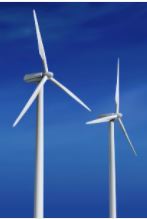
The land between the turbines is used for agricultural and other purposes. Most large wind turbines are of roughly the same design. The wind turbine has a three-blade horizontal axis directed upwind, attached to a motor structure on top of a tall tubular tower.
The method of generating electricity from wind energy using turbines,
as the wind moves the blades of the turbine that resemble a fan, which leads to its rotation, which in turn operates the generator responsible for generating mechanical, and electrical energy.
Wind turbines convert wind energy into electrical energy by using the aerodynamic force resulting from the rotating blades.
That works in the same way as the plane’s wings or the propeller.
When the wind flows and reaches the blade, the air pressure decreases on one side of this blade, and this pressure difference creates lift and drag forces. The lifting force is stronger than the drag force.
This leads to the rotation of the blade, which is connected to the generator either directly through the turbines or indirectly through a shaft and gearbox. This, in turn, leads to the operation of the generator that generates electricity.
Most wind turbines are divided into two main types: horizontal turbines and vertical turbines. Wind turbines can be built either on large water bodies such as oceans or lakes. These turbines consist of a shaft or tower high above the large blades and the engine’s base.
The blades of large wind turbines that produce up to 1.8 megawatts of power may be over 130 feet (40 meters) long,
and can be placed on towers about 260 in height feet (about 80 meters) long and can be used to provide power for individual homes.
Types of wind turbines
There are two types of wind machines (turbines) used today, based on the direction of the rotating shaft (axis): horizontal-axis wind machines and
vertical-axis wind machines. The size of wind machines varies widely.
There are two types of wind machines (turbines) used today, based on the direction of the rotating shaft (axis): horizontal-axis wind machines and vertical-axis wind machines. The size of wind machines varies widely.
Small turbines used to power a single home or business may have a capacity of fewer than 100 kilowatts. Some large commercial-sized turbines may have a capacity of 5 million watts or 5 megawatts.
Larger turbines are often grouped into wind farms that provide power to the electrical grid. Horizontal-axis turbines look like windmills. Most wind machines that are being used today are the horizontal-axis type.
Horizontal-axis wind machines have blades like airplane propellers. A typical horizontal wind machine stands as tall as a 20-story building and has three blades that span 200 feet across. The largest wind machines in the world have blades longer than a football field.
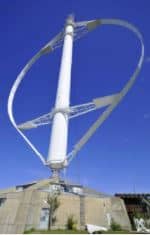
Wind machines stand tall and wide to capture more wind. Vertical-axis Turbines Look Like Egg Beaters Vertical-axis wind machines have blades that go from top to bottom. The most common type is the Darrieus wind turbine, named after the French engineer Georges Darrieus.
He patented the design in 1931. It looks like a giant, two-bladed egg beater. This type of vertical wind machine typically stands 100 feet tall and 50 feet wide. Vertical-axis wind machines make up only a tiny share of the wind machines used today.
How does a wind turbine work?
Like old-fashioned windmills, today’s wind machines (also called wind turbines) use blades to collect the wind’s kinetic energy. The wind flows over the blades creating lift, like the effect on airplane wings, which causes them to turn.
The blades are connected to a drive shaft that turns an electric generator to produce electricity. With the new wind machines, there is still the problem of what to do when the wind isn’t blowing.
Horizontal-axis wind turbines are most commonly used today. The wind blows through blades, which converts the wind’s energy into rotational shaft energy. The blades are mounted atop a high tower to a drive train, usually with a gearbox.
That uses the rotational energy from the blades to spin magnets in the generator and convert that energy into electric current. The shaft, drive train, and generator is covered by a protective enclosure called a nacelle.
Electronic and electrical equipment including controls, electrical cables, ground support equipment, and interconnection equipment control the turbine, ensure maximum productivity, and transmit the electric current.
Today’s utility-scale turbines can be 100 meters (over 300 feet) high or more. Blades Rotor Tower Nacelle Foundation Cables Wind turbines are designed in such a way that the wind makes the rotor blades turn.
The wind makes the blades spin around. This action then turns the rotor, to which the blades are joined to. The rotor is connected to the nacelle, which contains the gearbox. This makes electricity when it turns. The wind turbines are connected to the electricity supply grid through thick cables.
Most turbines have three or two blades, which rotate around a central hub to drive a generator housed in the nacelle. Blades are made from materials such as fiberglass, carbon fiber, or wood laminates.
They are designed to withstand the force of strong winds. The nacelle is the large housing at the top of the tower. It contains the generator and other important components such as the gearbox and control equipment.
The tower sits in a steel-reinforced concrete foundation. The foundation ensures the turbine can withstand forceful winds. It is always below ground level and so cannot be seen. If the wind gets any faster than about 25 meters per second, the turbines will automatically shut down and turn their blades out of the wind. They do this to prevent damage.
How much power do wind turbines make?
The amount of electricity that a wind turbine makes depends on two things: the speed of the wind and the size of the wind turbine.
The energy in the wind increases with the wind speed. When the wind’s speed doubles, the energy it contains increases by eight. This means a wind turbine will produce more electricity when the wind is stronger.
Larger turbines can capture more of the wind’s energy. So, make more electricity. At those times, other types of power plants must be used to make electricity. Wind Production In 2008, in the United States, generated a total of 52 billion kilowatt-hours, about 1.3% of total U.S.
Although this is a small fraction of the Nation’s total electricity production, it was enough electricity to serve 4.6 million households or to power the entire state of Colorado. The amount of electricity generated from wind has been growing rapidly recently.
The generation of wind in the United States nearly doubled between 2006 and 2008. New technologies have decreased the cost of producing electricity from wind, and growth in wind power has been encouraged by tax breaks for renewable energy and green pricing programs.
Many utilities around the country offer green pricing options that allow customers the choice to pay more for electricity that comes from renewable sources to support new technologies. Wind power plants require careful planning.
As operating a wind power plant is not as simple as just building a windmill in a windy place. Wind plant owners must carefully plan where to locate their machines. One important thing to consider is how fast and how much the wind blows at the proposed locations.
As a rule, wind speed increases with altitude and over open areas that have no windbreaks. Good sites for wind plants are the tops of smooth, rounded hills, open plains or shorelines, and mountain gaps that produce wind funneling.
Wind speed is not the same across the country. Wind speed varies throughout the United States. It also varies from season to season. In Tehachapi, California, the wind blows more from April through October than it does in the winter.
This is because of the extreme heating of the Mojave Desert during the summer months. The hot wind turbines in the ocean air over the desert rise. As the cooler, denser air above the Pacific Ocean rushes through Tehachapi Mountain and takes its place.
In a state like Montana, on the other hand, the wind blows more during the winter. Fortunately, these seasonal variations are a good match for the electricity demands of the regions. In California, people use more electricity during the summer for air conditioners.
In Montana, people use more electricity during the winter for heating.
Major wind power locations
Wind turbines (sometimes called wind machines) generated electricity in 31 different states in 2008. The States with the most wind production are Texas, California, Iowa, Minnesota, and Oklahoma.
Most of the wind power plants in the world are located in Europe and in the United States, where government programs have helped support wind power development. As of 2008, the United States ranks first in the world in wind power capacity.
Followed by Germany, Spain, and China. Denmark ranks ninth in the world in wind power capacity but generates about 20% of its electricity from wind. Offshore Wind Power Conditions are well suited along much of the coasts of the United States to use wind energy.
However, some people oppose putting turbines just offshore, near the coastlines. People think the wind turbines will spoil the view of the ocean. Currently, there is a plan to build an offshore wind plant off the coast of Carrier’s vertical wind turbine in Martin.
Wind farm
wind energy plants, or wind farms, as they are sometimes called, are clusters of wind machines used to produce electricity. A wind farm usually has dozens of wind machines scattered over a large area.
A wind farm is a large group of wind turbines in one place used to produce electricity. A large wind farm may consist of hundreds of individual wind turbines distributed over an extended area.
Wind farms convert the wind’s naturally existing kinetic energy to electrical energy, using the aerodynamic force from the rotor blades. That, in turn, is what we use to power everything in our lives that requires electricity.
Wind farms will generate electricity at wind speeds that are between about 5 meters per second (18 kilometres per hour or a gentle breeze) and about 25 meters per second (90 kilometres per hour or a gale).
The world’s largest wind farm, the horse hollow wind energy Center in Texas, has 421 wind turbines that generate enough electricity to power 220,000 homes per year. Many wind plants are not owned by public utility companies.
Instead, they are owned and operated by business people who sell the electricity produced on the wind farm to electric utilities. Wind energy is an economic power resource in many areas of the country.
The wind is a clean fuel; wind energy plants (also called wind farms) produce no air or water pollution because no fuel is burned to generate electricity. Growing concern about emissions from fossil fuel generation increased government support.
Moreover, higher costs for fossil fuels (especially natural gas and coal) have helped wind power capacity in the United States grow substantially over the past 10 years. The most serious environmental drawbacks to wind machines may be their negative effect on wild bird populations and the visual impact on the landscape.
To some, the glistening blades of windmills on the horizon are an eyesore; to others, they’re a beautiful alternative to conventional power plants.
Wind factors
The following are factors on which wind energy depends and affects the exit and generation of energy from it. Wind in the desert is typically extreme and unrestricted by trees and vegetation.
Wind energy can be an effective erosion and transportation agent if it is strong and blows across fine-grained sediments such as stands, sits, and clay. As with all energy supply options, wind energy can have adverse environmental impacts, including the potential to reduce, fragment, or degrade habitats for wildlife, fish, and plants.
Furthermore, spinning turbine blades can pose a threat to flying wildlife like birds and bats. The impact on birds of prey and migratory birds through the turbines does not kill many birds each year, but the total deaths could eventually tip the species into decline.
The majority of birds killed by wind turbines are birds of prey. Birds of prey and wind developers are both drawn to the same sites-hills and ridges where the wind provides lift for soaring birds.
The effect of wind in the vineyard is important for winegrowers for many reasons. Continuous strong winds may damage the vines and impede growth. And the wind effect depends on water depth and increases in importance as the depth decreases, whereas the pressure effect is independent of depth.
Facts about wind energy
· Wind energy is the most competitive energy source.
A typical argument from fossil advocates is that wind energy is much more expensive than fossil sources. The truth is that since fossil fuel plants require coal, oil, and natural gas to work, the operation and maintenance costs are very high.
When you summarize the expenses over a lifetime and take a look at the legalized cost of energy, then you realize that wind energy is not only competitive, but it’s cheaper than installing a generation plant based on coal, natural gas, or combined cycle technology.
Saying that wind energy is expensive is nothing but a renewable energy myth.
· The first modern wind turbines were built in the 1940s in Vermont, USA.
In 1941, the Smith-Putnam wind turbine, the world’s first-megawatt wind turbine, was connected to the local electric distribution system.
· The world’s largest wind turbine is located in Hawaii, USA.
· Today’s wind turbines can be less noisy than a car.
Since wind turbines are considerable devices that have large moving blades, it is logical that they will create some noise. There is no point in denying it. However, the effects of this noise have been widely exaggerated, and every so often, it is hard to separate fiction from reality.
The sounds created by wind turbines are related to the changes in wind speed due to the blades moving; these have been classified as tonal and low-frequency sounds. When comparing these sounds with other typical sounds that can be found on the streets of a city, researchers have found that a wind energy farm is not as loud as is believed.
Modern wind turbines produce very little noise. The turbine blades produce a whooshing sound as they encounter turbulence in the air, but this noise tends to be masked by the background noise of the blowing wind.
· Fossil fuel plants are more dangerous for birds than wind turbines’ height.
The typical misconception against wind turbines is that they represent the greatest danger for bird species around the globe, mainly due to collisions with blades or towers. However, those who argue such statements seem to forget the effect caused on birds by other conventional sources of energy.
· Wind Energy will not damage the power grid.
Due to the intrinsic variability of wind energy,
it is often believed that wind power exposes great risks to the power grid since the transmission system needs to be balanced at all times,
and radical ups and downs in available power from wind farms could lead to blackouts or a lower quality of service.
However, the truth is that the wind resource is highly predictable, and as time and data are collected, forecast methods improve their accuracy.
· The first developed windmills were wind energy in 2000 BC in Persia and Ancient China.
· In Vermont in 1940, the first modern turbine was built.
· To pump water and crush grain, we have used wind energy for hundreds of years.
· Wind energy requires a production tax credit (PTC) to achieve these economics.
· If wind energy displaces energy from existing coal plants, then rates will go up.
· Wind variability does increase the day-to-day and minute-to-minute operating costs of a utility system because the wind variations do affect the operation of other plants.
· Wind energy is a converted form of solar energy, which is produced by the nuclear fusion of hydrogen into helium at its core.
· As an inexhaustible and free energy source.
It is available and plentiful in most regions of the earth. In addition, more extensive use of wind power would help reduce the demand for fossil fuels, which may run out sometime in this century, according to their present consumption.
·
The wind is simple air in motion.
It is caused by the uneven heating of the earth’s surface by the sun. Since the earth’s surface is made of extremely diverse types of land and water, it absorbs the sun’s heat at different rates.
· China has a long history of using windmills.
The unearthed mural paintings from the tombs of the late Eastern Han Dynasty (25–220 AD) at Kandahar, Liaoning City, have shown exquisite images of windmills, evidencing the use of windmills in China for at least approximately 1800 years.
· Wind turbines are used directly to do work such as water pumping or grain grinding.
The practical vertical axis windmills were built in Sis tan (eastern Persia) for grain grinding and water pumping, as recorded by a Persian geographer in the ninth century.
· Wind turbines are used to convert wind energy to electricity.
Wind energy is a special form of kinetic energy in the air as it flows. It can be either converted into electrical energy by power-converting machines or directly used for pumping water, sailing ships, or grinding gain.
History of wind Power
Over 5,000 years ago, the ancient Egyptians used the wind to sail ships on the Nile River. Later, people built windmills to grind wheat and other grains. The earliest known windmills were in Persia (now called Iran).
These early windmills looked like large paddle wheels. Centuries later, the people of Holland improved the basic design of the windmill. They gave it propeller-type blades, still made with sails.
Holland’s windmills are world-renowned. American colonists used windmills to grind wheat and corn, pump water, and cut wood at sawmills. As late as the 1920s, Americans used small windmills to generate electricity in rural areas without electric service.
When power lines began to transport electricity to rural areas in the 1930s, local windmills were used less and less, though they can still be seen on some Western ranches. Windmills Make a Comeback after Oil Shortages.
The oil shortages of the 1970s changed the energy picture for the Country and the world. It created an interest in alternative energy sources, paving the way for the re-entry of the windmill to generate electricity.
In the early 1980s, wind energy took off in California, partly because of state policies that encouraged renewable energy sources. In the 1990s, the push came from a renewed concern for the environment in response to scientific studies indicating potential changes to the global climate if the use of fossil fuels continues to increase.
Wind energy has become one of the most important and remarkable alternatives for the generation of electricity from renewable energy sources. This source of energy presents several advantages that make it the most suitable technology for utility-scale projects.
Solar and wind energies
Solar and wind energies are eligible for home usage. They are two of the most sustainable and environmentally friendly sources of energy, and they are intrinsically linked. Interestingly, wind energy actually wouldn’t exist if it weren’t for solar energy.
Wind exists due to the sun unevenly heating the surface of the earth. As hot air rises, cooler air moves in to fill the void. So, it makes sense that, as long as the sun continues to shine, the wind will continue to blow, and we will continue reading on Learning Mole.
Finally
In the end, we conclude that the wind is used to generate electricity using kinetic energy from air movement and is converted into electrical energy using wind turbines or wind energy conversion systems.
wind energy
In the end, we conclude that the wind is used to generate electricity using kinetic energy from air movement and is converted into electrical energy using wind turbines or wind energy conversion systems.
The wind is a clean and inexhaustible source that is used to produce energy,
And wind energy is energy extracted from the kinetic energy of the wind by using wind turbines to produce electric energy, and it is a type of electromechanical energy.
Abundant and renewable energy is found in all regions,
But its availability varies from one site to another. It is clean, renewable energy that does not produce emissions such as greenhouse gases during operation, and it needs varying areas depending on the size of the plant and the type of towers used.
As we have been stressing, the wind is a renewable energy source that does not pollute, so some people see it as a suitable alternative to fossil fuels. So, keep on visiting our Learning Mole to get more knowledge and information about all different kinds of stuff.
This was all about the wind turbines. We hope you enjoyed it. To practice even more on wind and learn other interesting subjects, keep visiting Learning Mole.
Geometric jewellery is an artistic convergence of precise shapes and deliberately crafted angles, blending the mathematical rigour of geometry with the fluidity of design. We see the essence of shape...
Mathematics and nature intertwine in fascinating ways, creating patterns and sequences that delight and educate. As we observe the world around us, we find that counting petals and leaves isn't...
Maths on the farm is not just about profits and yields; it's a fundamental part of daily farm life, especially when it comes to managing livestock. Our days begin with...



Leave a Reply