Unschooling resources in the UK help families who want their children to learn through everyday life and their own interests, not just a set curriculum. UK law allows unschooling under home education law, and families find support through national networks, online groups, specialist books, and flexible learning platforms that fit with child-led education. Whether you’re just starting or you’ve been unschooling for a while, the right resources can make you feel supported and less alone.
Michelle Connolly, founder of LearningMole and a former primary teacher with over 15 years’ classroom experience, says, “families often thrive when they combine freedom with access to quality materials that spark genuine curiosity.” LearningMole, a UK educational platform, offers curriculum-aligned videos and resources that can fit alongside unschooling when children get interested in certain topics.
This guide brings together networks, books, online tools, and real stories to help you build a lively learning environment at home.
Finding the right support really matters. From connecting with the principles of unschooling to discovering local groups and understanding the legal side, you can create an educational journey that respects your child’s curiosity and their own pace.
Key Takeaways
Unschooling is legal in the UK as a form of home education that follows the child’s interests instead of a set curriculum
Supportive communities like the UK Unschooling Network and helpful books and online platforms are available
A flexible home learning environment with a mix of resources and social opportunities helps children learn naturally through daily life
What Is Unschooling and How Does It Differ from Homeschooling?
Unschooling puts children in charge of what, when and how they learn. Traditional homeschooling usually sticks to a structured curriculum. The focus is on following your child’s interests, not set lesson plans.
Education theorist John Holt started this philosophy in the 1970s. He believed children learn best when they’re free from formal lessons and standardised tests.
The main idea is to trust your child’s natural desire to learn. You provide resources and support, but your child chooses what to explore and when.
No set timetable, no workbooks, and no pressure to cover specific topics by a certain age.
Real-world experiences take the place of formal lessons
Progress isn’t measured by tests or grades
Autonomous and Interest-Led Learning
Autonomous learning means your child guides their own education based on what grabs their interest. If they get hooked on space, you might end up watching documentaries, building rockets, and heading to planetariums for weeks.
When their interest shifts to cooking, learning might mean reading recipes, measuring ingredients, and figuring out chemical reactions.
It’s not about letting children do whatever they want. You create an environment full of books, materials, outings, and conversation.
You answer questions, find resources, and help connect your child with new experiences.
Consensual living stretches into daily family life too. You involve your child in decisions about bedtimes, meals, and activities, respecting their autonomy while keeping the family’s wellbeing in mind.
This builds confidence and self-direction.
Many UK families mix autonomous learning with some gentle guidance, especially for basics like reading and maths that help later in life.
Comparing Unschooling and Traditional Homeschooling
Unschooling families trust that their children will pick up what they need just by living an interesting, engaged life.
Both approaches are legal in the UK. If your local authority contacts you, you’ll need to show your child is getting a suitable education.
Unschooling in the UK: Legal and Cultural Considerations
Unschooling is legal in the UK as of 2026. You have a lot of freedom in how you educate your child at home.
You’ll need to know your legal rights and how other UK families make this work.
Legislation and Educational Requirements
You don’t need special qualifications or permission from your local council to start unschooling in most cases. The UK legal framework for home education says you must provide a suitable full-time education from age 5, but you don’t have to follow the National Curriculum.
If your child is already in school, you need to write to the headteacher to withdraw them. The school removes your child from the roll and lets your local authority know.
Your legal duty is to make sure your child gets an education suited to their age, ability, and any special needs. This doesn’t mean you have to stick to school subjects or timetables.
You might want to keep an informal record of your child’s learning activities. This can help if your local authority asks about the education you’re providing.
Common Approaches within UK Families
Most UK families who unschool use an autonomous learning approach. Your child leads their own learning based on what interests them, not a set curriculum.
The UK Unschooling Network has nearly 10,000 members and describes unschooling as helping education happen rather than teaching. You see learning happening naturally through all areas of life, not just formal study.
In practice, this might mean:
Following your child’s curiosity about dinosaurs into books, research, and museum trips
Learning maths through cooking, shopping, and pocket money
Building literacy by reading books your child chooses
Exploring science on nature walks and trying experiments they suggest
Many families mix styles. You offer resources and chances, but your child decides what to explore and when.
Some prefer terms like ‘autonomous learning’ or ‘consensual living’ instead of unschooling, but the main idea stays the same.
Working with Local Authorities as an Unschooler
Your local authority has a duty to check if children are getting suitable education. They might contact you to ask about your home education setup, but you don’t have to meet them or allow visits.
You can reply in writing, describing how your unschooling approach provides a suitable education. Focus on the learning opportunities you offer and how your child’s interests guide what they learn.
Some councils understand unschooling better than others. You might need to explain child-led learning and show that learning doesn’t always look like schoolwork.
Keep your description factual and show how daily life builds knowledge and skills.
If you run into trouble with your local authority, the UK Unschooling Network offers support and advice from families who’ve been there. They can help you understand your rights and talk to officials who might not get unschooling yet.
Key Organisations and Community Networks
Finding other unschooling families makes the journey less lonely. The UK has several networks where you can meet experienced unschoolers, ask questions, and swap ideas.
UK Unschooling Network
The UK Unschooling Network acts as a central hub for families interested in child-led learning. This organisation helps parents support education rather than teach in the usual way.
They avoid limiting children’s interests and activities. When you ask for advice, replies should stick to an unschooling philosophy.
Members check if their suggestions restrict the child before sharing.
The network welcomes all “flavours” of unschooling, including families who prefer terms like autonomous learning or consensual living.
You’ll find people at every stage of their unschooling journey.
Online Support Groups and Forums
LearningMole offers free curriculum-aligned videos that some unschooling families use when children get interested in a topic. You can find resources for maths, English, and science that suit your child’s curiosity.
You might also find connections in broader networks. These groups let you swap tips about routines, handling questions from relatives, and dealing with local authorities.
Connecting via Facebook
The UK Unschooling Network runs a Facebook group with nearly 10,000 members who are unschooling or planning to start. You need to be unschooling or planning to when you join.
This platform lets you ask questions and get answers from experienced families. You can search past posts for help with specific problems.
The group includes pinned posts with their unschooling principles and useful files.
Facebook groups give fast support when you need it. You can share successes, work through challenges, and make friends with like-minded parents across the UK.
Essential Unschooling Books and Influential Voices
Key books by people like John Holt and modern experts give the philosophical background for unschooling. Resources from parenting specialists offer practical tips for daily family life.
Recommended Reading List
A few books really stand out for families curious about unschooling in the UK. Free to Learn by Peter Gray looks at how children pick up knowledge naturally through play and self-chosen activities.
The research focus gives parents plenty to think about if they’re questioning the usual school route.
How Children Learn by John Holt remains a classic. Holt shows how young people absorb information when adults trust them and give them freedom.
UK bookshops offer a range of unschooling titles that cover different sides of child-led education.
If you want research plus real-life stories, Unschooled: Raising Curious, Well-Educated Kids by Kerry McDonald blends academic insight with family experiences.
You could also check out LearningMole for curriculum-linked videos. These support interest-led learning, especially handy if your children get curious about specific maths or science topics.
Pioneers: John Holt and Sir Ken Robinson
John Holt led the unschooling movement after working as a teacher and growing frustrated with traditional education. He launched the magazine Growing Without Schooling (often called John Holt GWS), the first publication for homeschooling and unschooling families.
Holt believed children have natural curiosity and an ability to learn that schools sometimes squash.
He focused on trusting children to guide their own education. He wrote about how forced learning can damage motivation and argued that children learn best through real-world experiences, not just classroom drills.
Sir Ken Robinson, while not an unschooling campaigner, inspired many UK families with his talks about creativity and education reform. He questioned the industrial model of schooling and pointed out how traditional systems often miss nurturing unique talents.
Modern Thought-Leaders and Parenting Experts
Modern voices offer practical advice for families facing daily unschooling challenges. Pam Laricchia shares stories in Stories of an Unschooling Family, showing how child-led learning plays out over the years.
Her writing gives parents a glimpse of unschooling beyond just the theory.
Dr Laura Markham’s Aha! Parenting fits well with unschooling ideas. She puts the focus on connection and emotional intelligence, guiding parents to respond calmly instead of using punishments or rewards.
Sheila McCraith started The Orange Rhino challenge to help parents manage frustration and anger. This support proves especially helpful during deschooling, when families find new rhythms.
Rachel Rainbolt and Kerry McDonald bring fresh perspectives through podcasts and articles, talking about modern issues like screen time and socialisation. Their advice helps UK families adapt unschooling to today’s world while holding onto values like trust and freedom.
Online Learning Tools and Platforms
Unschooling families in the UK can use platforms offering structured lessons but without the rigid timetable of school. These tools give you space to follow your child’s interests and still access quality content in maths, science, humanities and more.
Khan Academy for All-Ages Learning
Khan Academy hosts thousands of free video lessons and practice exercises. Self-directed learners find it useful.
The platform covers maths from early primary up to A-level, plus science, computing and humanities, all linked to UK curriculum aims.
You can set up a parent account to track progress, but many unschoolers let their children explore on their own. The videos break down ideas clearly, and practice questions offer instant feedback.
Key subjects available:
Maths (Key Stage 1 through A-level)
Sciences (biology, chemistry, physics)
Computing and coding
Art history and economics
You can use the platform on tablets and computers, so learning fits easily into daily life. Children can pause, rewind, and rewatch as often as they like.
Open Culture and Free Course Hubs
Open Culture gathers free online courses, audiobooks, films and textbooks from universities around the globe. Older children and teens who want more than standard school subjects find this collection handy.
You can find courses from places like Oxford, Cambridge, and the Open University. Subjects range from philosophy and literature to advanced maths and computer science.
Most materials include video lectures, reading lists, and downloadable resources.
Many resources suit GCSE and A-level students who want to dig deeper into specific topics.
Coursera and Access to Specialist Subjects
Coursera teams up with universities to offer courses in specialist areas that schools rarely cover. Most courses charge for certificates, but you can audit many for free and still watch all the videos and access readings.
Teens interested in psychology, data science, creative writing or architecture can try university-level courses taught by real lecturers. The platform suits Key Stage 4 students exploring career options or preparing for further study.
Some courses run on set schedules, but many let you set your own pace. If interests change, you can drop out without penalty.
Exploring Educational Sites Like Shmoop
Shmoop provides study guides, test prep and learning resources with a conversational, sometimes quirky tone. It covers literature, history, civics and test prep for standardised exams.
Literature guides break down both classic and modern books with summaries, character analysis and themes. History content comes to life through stories, not just facts.
Shmoop uses American spelling and examples, but the main content works for UK families. The site offers free sections and premium subscriptions.
LearningMole also has curriculum-aligned videos in maths, science and English, aimed at UK primary learners aged 4 to 11.
Subject-Specific and Thematic Resources
Unschooling families often dive into content by subject or real-world theme, matching their children’s interests. Good resources in history, hands-on projects, and STEM offer structure without strict curriculum rules.
Learning History with Zinn Education Project
The Zinn Education Project shares people’s history resources that look at history from different points of view. This works well for unschoolers who want to explore civil rights, labour movements, and social justice using primary sources and teaching activities.
You can download free lessons that encourage children to think critically about historical stories. The materials suit children aged 11+ who are ready to look at different perspectives.
For younger children using educational history resources, start with stories about ordinary people, not just famous leaders. This helps children see that history includes everyday individuals making choices in remarkable times.
Creative Activities and DIY Learning
Stone Age Techie offers practical STEM activities using household items and recyclables. The site focuses on engineering challenges and maker projects for primary-age children at home.
You can follow instructions to build simple machines, create art, and try science experiments. Most activities need little prep and use things you probably already have.
Many unschooling families mix creative projects with subject learning. One activity might include measuring (maths), reading instructions (literacy), and exploring reactions (science).
Science, Technology, Engineering, and Maths Resources
STEM learning resources help families explore science through videos, experiments and hands-on tasks. You can find topics from the human body to space.
Maths resources break down tricky ideas like fractions, geometry and calculations with visuals. Video content helps children who don’t like traditional textbooks.
For English, grammar and literacy materials provide structure and support alongside creative writing. You can tweak these to fit your child’s reading level and interests.
Try topic-based SEND resources if your child needs extra support or a different approach. These work well for any child who likes multi-sensory or adapted content.
Faith-Based and Alternative Perspectives
Unschooling families in the UK come from all sorts of backgrounds. Some weave religious beliefs into learning, while others focus on child-led or secular approaches.
These perspectives shape how families organise their days and pick resources.
Christian Unschooling Resources
Christian unschooling blends faith-based learning with child-led exploration. You can find materials that mix biblical teaching into daily activities, instead of splitting religious education from everything else.
British Youth for Christ has faith-based resources for young people like Rock Solid and Lumen for ages 11-18. These tackle big topics from a Christian angle and support discipleship.
Many Christian unschooling families join online groups to connect with others who share their style.
You might mix scripture reading with nature walks, talk about theology at mealtimes, or look at science through a creationist lens. The main thing is letting your children’s curiosity shape their spiritual journey, not just following a set curriculum.
Some families join church youth groups or home ed co-ops, so children can learn with others from similar backgrounds.
Free Range Kids Philosophy
The free range approach values independence, outdoor play and sensible risk. You give your children space to explore their neighbourhood, make choices, and learn from what happens.
This fits well with unschooling, as both trust children’s natural ability to learn without adults hovering. Maybe you let your seven-year-old walk to the shop alone or let your children build dens in the woods.
LearningMole has free science and maths videos to support independent learning when children want structured content on their own.
Free range kids build problem-solving skills, spatial awareness and confidence. You focus on teaching safety, not avoiding all risks, so your children learn to assess situations for themselves.
Secular and Inclusive Approaches
Secular unschooling sticks to evidence-based learning without religious content. You can use resources that teach religion and worldviews educationally instead of promoting a belief.
Many UK unschoolers choose inclusive materials that show diverse families, cultures and beliefs. You might use resources that compare different worldviews, letting your children think critically about them.
Humanist groups offer advice on approaches to topics like ethics and philosophy without faith.
Progressive education resources support modern methods that help children gain 21st-century skills. You pick materials based on accuracy and educational value, not religious alignment, so your children can develop their own beliefs as they grow.
Stories, Blogs, and Real-Life Experiences
Reading about real UK families who unschool gives you a sense of how this approach works day to day. Blogs, journals, and podcasts share practical insights into the ups and downs of unschooling families.
UK Unschooling Blogs
The UK Unschooling Network Blog shares ideas about unschooling as an educational philosophy. It focuses on activities children choose themselves and learning through daily life. UK families write posts about how their children learn outside of formal lessons.
Stories of an Unschooling Family offers resources and personal reflections on unschooling and family life. You’ll find honest stories about parenting and learning together.
Trusting Wilder gathers unschooling resources the family enjoys using. They talk about how they answer questions from concerned grandparents and guide their children without sticking to traditional teaching.
If you want curriculum-linked materials to go with self-directed learning, LearningMole has free videos in maths, English, and science for ages 4 to 11.
Personal Journals and Family Stories
Family journals give you a real glimpse into unschooling. A Place on a Hill follows one family’s move to rural Spain and their shift away from high-pressure schooling.
BuzzFeed spoke to people who grew up unschooled. They describe how unschooling lets children and parents spend their days together, learning as a family.
A story from i news shows a UK family who removed their children from school so they could learn for themselves. Unschooling counts as homeschooling in the UK. Children need full-time education from age five, but they don’t have to follow the national curriculum.
Video and Podcast Recommendations
The Life Without School podcast by Issy covers unschooling through frank conversations and research. Topics include what unschooling means, how to talk to worried relatives, and ways to support your child’s learning.
The Conrad Family podcast episode 106 features Essie Richards, who talks about her family’s move to unschooling in rural Cornwall after her son faced bullying. They discuss how self-directed learning can spark curiosity and help children feel safe.
Social media creators post unschooling videos, answer questions, and share their stories. Many talk about how their mums encouraged them to follow what interested them.
Building a Home Learning Environment
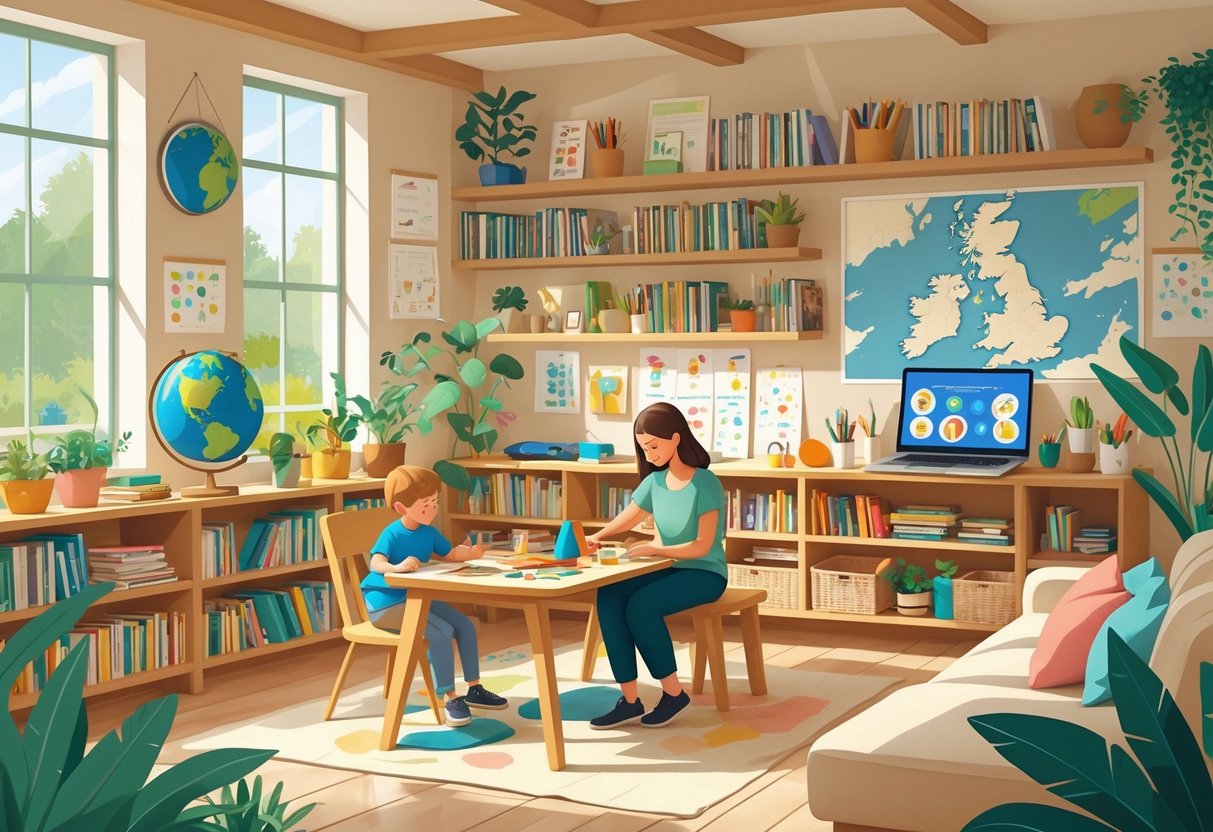
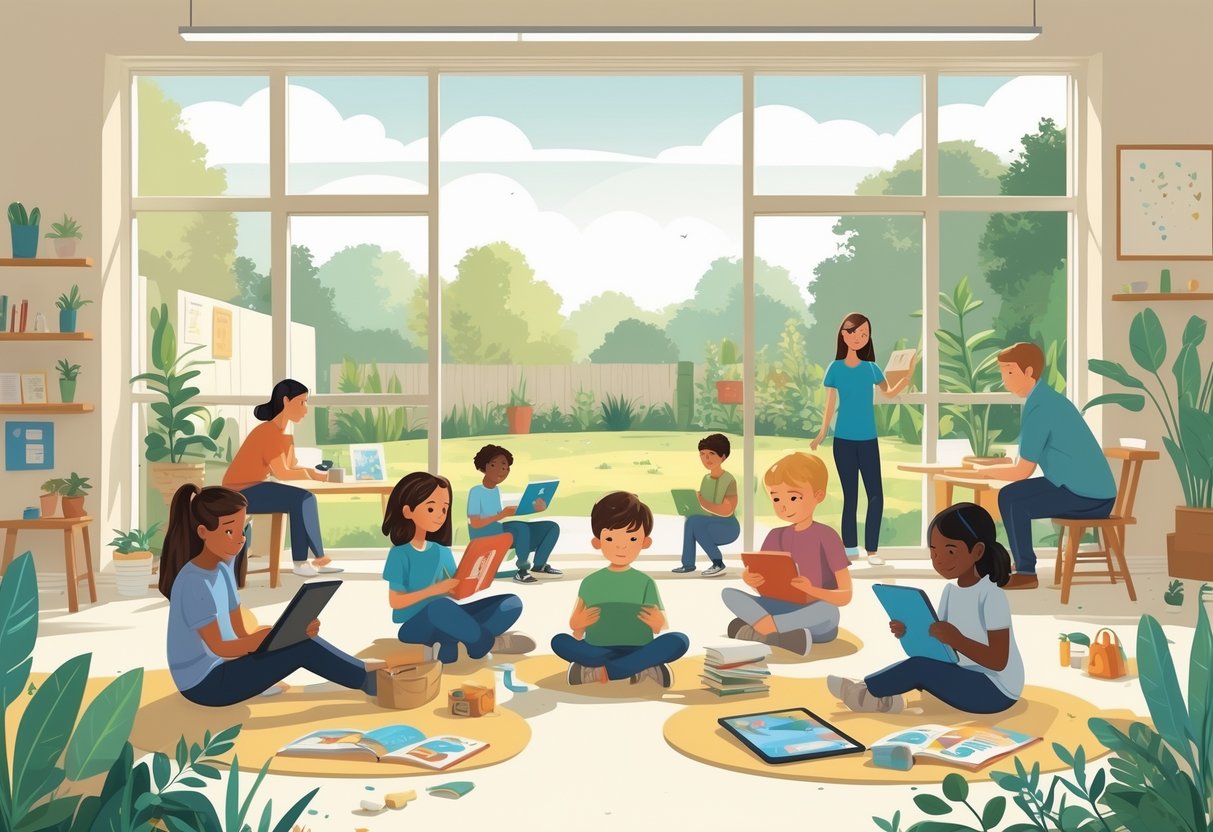
A supportive home environment gives children the space and encouragement they need to follow their interests. The right mix of resources, technology, and freedom lets young learners explore in their own way.
Set up areas where your child can reach books, art supplies, and building materials. Make sure they can get what they want without asking every time. A low shelf in the living room beats a locked cupboard.
Key elements to include:
Cosy reading spots with decent lighting
Open storage for crafts and art
Space for messy projects like painting or science
A quiet nook for focus
Try to remove obstacles between your child and what interests them. If your seven-year-old wants to build a cardboard castle at 10am, they shouldn’t need you to fetch everything.
Natural light and access to outside spaces matter. Many families find learning happens just as much in the garden as it does indoors.
Using Technology Effectively
Technology can help children explore, but it doesn’t replace hands-on activities. LearningMole provides free videos in maths, English, and science for ages 4-11. Watch these together if your child gets curious about a topic.
Mix screen time with other things. A child might watch a documentary about Ancient Egypt, then spend hours making pyramids from boxes. The video sparks ideas, but the real learning comes from doing.
Useful digital resources:
Video platforms for exploring topics
Interactive maths games
Virtual museum tours and nature shows
Creative apps for music, animation, or coding
You don’t need fancy gear. A basic tablet or laptop opens up most resources. Local libraries often have free computer access if you need it.
Set up parental controls, but don’t lock things down too tightly. Unschooling flourishes when you trust your child to make good choices, even with technology.
Encouraging Lifelong Curiosity
Curiosity grows when you take your child’s questions seriously. Instead of quick answers, try to explore together. If your eight-year-old asks why the sky is blue, you might watch a video on light, then use a prism to split sunlight.
UK families who unschool let their children’s interests lead the way. Sometimes that means saying yes to odd requests. If your child wants to spend weeks learning about trains, that’s real education.
Ways to support curiosity:
Visit museums, nature reserves, and historic sites often
Keep a range of books around
Allow time for boredom, since it often leads to creativity
Share your own hobbies and interests
Let your children see you being curious too. If you wonder about something and look it up together, you show that learning never really ends. This fits with the unschooling idea that education happens through living, not just lessons.
Don’t turn every interest into a lesson. If your child loves dinosaurs, they’ll pick up reading through dinosaur books, maths by measuring dinosaur sizes, and history by learning about extinction.
Social Opportunities and Community Life
Unschooling families build social connections through local groups, outdoor activities, and everyday interactions. Children make friends and pick up social skills without the classroom.
Most areas have Facebook groups for “Home Education” plus your town or county. These help you find local families with similar ideas. The UK Unschooling Network also shares guidance and principles.
Your children can join sports clubs, drama, or music lessons nearby. Swimming, football, and dance welcome home educators during the day and evenings. Libraries often run free craft sessions, story times, and teen book clubs for regular social time.
Outdoor Adventures and Local Resources
Nature reserves and parks give children space to play and meet others. Forest school sessions run in many places and welcome home educated children for outdoor learning.
You might let your children explore the neighbourhood as they grow. Walking to the shop, playing at the park, or cycling to a friend’s house builds confidence.
Community centres, museums, and galleries run weekday workshops for home educators. National Trust sites and wildlife centres offer memberships for affordable visits.
Nurturing Social Skills through Everyday Life
Children pick up social skills by talking to people of all ages in daily life. Chatting with shopkeepers, asking librarians for help, or ordering at a café all teach real-world communication.
Teenagers often work part-time in shops or cafés. They learn teamwork and customer service. Volunteering at a charity shop, animal shelter, or community garden brings new friends and responsibility.
Online friends through gaming, social media, or video calls add to face-to-face friendships. Children learn to communicate in different ways and connect over shared interests, not just age.
Tracking Progress and Embracing the Journey
Unschooling doesn’t use tests or reports, but families often notice growth through photos, conversations, and real-life activities. You can see how interests change and skills develop over time.
Reflecting on Learning Without Traditional Assessment
You don’t need to mark worksheets or hand out grades. Progress shows up in daily moments: your child explains how a pulley works after watching a video, writes a story about a game character, or works out change at the shop.
Take photos, videos, or notes to spot patterns in what your child enjoys and how their skills change. Snap a picture when they build something tricky with Lego, record them reading to a sibling, or save their hand-drawn maps.
Keep a journal and jot down notes once a week. Write what they did, questions they asked, and what seems to be getting easier. You don’t need to prove anything to anyone. This just helps you understand your child’s learning style.
LearningMole has free curriculum videos in maths, science, and English. If your child keeps coming back to these or uses ideas from them, you’re seeing real engagement.
Sharing and Celebrating Achievements
Talk with your child about what they’re proud of. Ask them to show family members their latest project, whether that’s a Minecraft build, a new recipe, or facts about their favourite topic.
Build a portfolio together with photos, writing, art, and notes about trips or walks. Let your child pick what goes in. This becomes a personal record, not just a box-ticking exercise.
Some families share progress on blogs or in social media groups for encouragement. Others keep things private. Either way works.
Documenting learning gives your child a record they can look back on. They’ll see progress in what matters to them, not just what a curriculum lists.
Adjusting Approaches as Your Family Grows
What works for a seven-year-old usually doesn’t suit a twelve-year-old. Younger children often need more structure and hands-on activities.
Older ones might start to chase deeper interests on their own. You might notice your child’s learning style changing over time.
They could move from needing lots of physical activity to wanting quiet reading time. Sometimes, they’ll shift from solo projects to working with friends.
Your own approach will likely change as well. Early unschooling means letting go of school expectations and trusting the process.
As you grow more confident, you start to spot learning opportunities more easily. You might worry less about ticking every traditional subject off a list.
Ask if they want more resources, different activities, or just more time to explore what they’re already interested in.
Frequently Asked Questions
Parents exploring unschooling in the UK often ask about resources, legality, and how to actually do it. Understanding the differences between unschooling and traditional approaches helps families make choices about their children’s education.
What are the top recommended unschooling resources available in the UK?
The UK Unschooling Network on Facebook connects nearly ten thousand home educators who share advice and support. This group focuses on families who are already unschooling or planning to start.
LearningMole offers curriculum-aligned video resources for maths, English and science. These can support child-led learning for ages 4-11.
The platform has both free and subscription options. It’s handy for families who want accessible educational content.
The principles of unschooling guide from The Green Parent explains core ideas without pushing lesson plans or tests. You can also find podcasts and video resources for different learning styles and family needs.
How does unschooling differ from traditional homeschooling?
Unschooling focuses on child-led learning based on curiosity and real-world experiences. Traditional homeschooling usually follows a structured curriculum much like schools do.
Unschooling skips lesson plans, curriculum, assignments, quizzes and grades. Adults support learning by encouraging children’s natural interests.
Learning happens through everyday life, not just set study times. Children guide their own education and parents provide resources or opportunities.
Are there any drawbacks associated with unschooling children?
Unschooling takes a lot of parental involvement and trust in your child’s ability to learn independently. Some families struggle to trust the process, especially during the deschooling phase.
You might get questions or criticism from family members who don’t understand unschooling. Social opportunities need to be found since children aren’t in a typical school setting.
Record keeping can be tricky without formal assessments or grades. Some parents worry about gaps in knowledge compared to the National Curriculum.
In which countries is unschooling legally recognised as a form of education?
The UK allows unschooling as part of home education rights. Parents must make sure children get a suitable education.
Local authorities might ask for information about your approach. In the United States, homeschooling laws vary by state but usually allow unschooling within home education rules.
Canada lets families unschool under provincial homeschooling regulations. Australia recognises unschooling in most states through distance education or home education registration.
New Zealand permits it under homeschooling provisions with minimal government oversight.
Is financial support available for parents who choose to homeschool or unschool in the UK?
The UK government doesn’t provide direct financial support specifically for home educating families. You won’t get funding equal to what schools receive per pupil.
You can still claim Child Benefit and any other benefits you’re entitled to based on your household situation. Working Tax Credits might be available if you qualify and are home educating.
Some local authorities offer library resources, educational materials or the odd workshop. Most unschooling families pay for educational resources, activities and outings themselves.
What steps should I follow to start unschooling my child legally in the United Kingdom?
If your child goes to school, write to the headteacher to formally deregister them. You don’t need to ask the local authority or the school for permission.
After you send the letter, the school tells your local authority that your child has left the register. If your child already attends school, you don’t have to contact the council yourself.
Allow time for deschooling when your child leaves traditional schooling. This break gives children a chance to recover from old learning routines.
You don’t have to stick to the National Curriculum or teach certain subjects at fixed times. Sometimes the local authority might get in touch to check your child is getting a suitable education, but you can explain your unschooling approach in your own words.
Maths Circus, an innovative platform we've crafted, presents a captivating realm where children learn mathematics through the exciting theme of a circus. The joy of juggling numbers and solving circus...
Mexican traditions blend the customs of ancient Mesoamerican peoples, such as the Aztecs and the Maya, with Catholic festivals brought by Spanish settlers in the sixteenth century. The result is...
The moose (Alces alces) is the largest member of the deer family alive today, and a fully grown bull can stand about 2 metres tall at the shoulder, which makes...






Leave a Reply