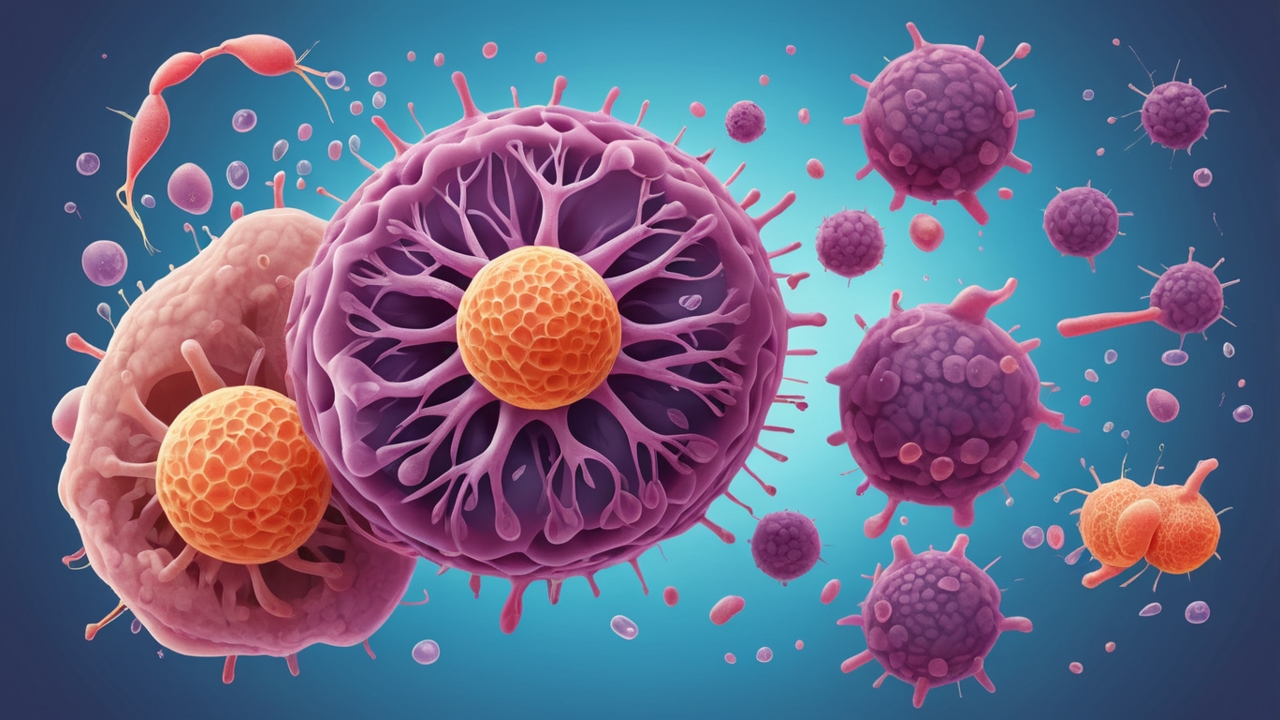
Types of Cells Facts for Kids: Look at your hand. It seems like one solid thing, but if you could zoom in with a powerful microscope, you’d discover something amazing: your hand is made of trillions of tiny living units called cells. In fact, your entire body—from your brain to your bones, from your skin to your heart—is built from these microscopic building blocks. Cells are the smallest units of life, and every living thing on Earth is made of at least one cell.
The discovery of cells revolutionised our understanding of life. In 1665, English scientist Robert Hooke looked at a thin slice of cork under a microscope and saw tiny box-like compartments that reminded him of the small rooms (called cells) where monks lived. He named these structures “cells,” and the name stuck. Later, other scientists discovered that all living things are composed of cells, that cells originate from other cells through cell division, and that cells carry out all the processes of life.
Today, we know that cells are incredibly complex and diverse. Some organisms consist of just a single cell that must perform all the necessary functions to stay alive. Others, like humans, are made of trillions of cells working together, with different types of cells specialised for various jobs. Understanding the different types of cells and how they function is fundamental to comprehending all of biology—from how your body fights disease to how plants produce food from sunlight, from how bacteria can survive in boiling hot springs to how a single fertilised egg develops into a complete organism.
In this article, we’ll explore five terrific facts about the types of cells. You’ll learn about the two fundamental categories that all cells fall into, discover the amazing variety of specialised cells in your own body, understand the key differences between plant and animal cells, explore the difference between single-celled and multicellular organisms, and learn why sex cells are completely different from regular body cells.
Fact 1: There Are Two Main Types of Cells: Prokaryotic and Eukaryotic
Despite the incredible diversity of life on Earth—from bacteria to blue whales, from mushrooms to giant sequoia trees—all cells fall into just two basic categories: prokaryotic cells and eukaryotic cells. This fundamental division is one of the most important classifications in biology, and understanding the difference helps explain how different organisms live and function.
The words “prokaryotic” and “eukaryotic” come from Greek roots. “Karyon” means nucleus, and “pro” means before, while “eu” means true. So prokaryotic literally means “before nucleus”, and eukaryotic means “true nucleus.” This naming reveals the most significant difference between these cell types.
Prokaryotic cells are simpler and smaller. They don’t have a membrane-bound nucleus—instead, their DNA floats freely inside the cell in a region called the nucleoid. Prokaryotic cells also lack other membrane-bound compartments called organelles. They’re like studio apartments where everything happens in one open space. Despite their simplicity, prokaryotic cells are remarkably successful. They’re the most ancient form of life on Earth, having existed for over 3.5 billion years, and they’re still the most abundant organisms on the planet today.
Only two groups of organisms have prokaryotic cells: bacteria and archaea. Both are single-celled microorganisms, though they’re quite different from each other at the molecular level. You’re probably familiar with bacteria—they’re everywhere. Some bacteria live in your intestines and help you digest food. Others cause diseases like strep throat or food poisoning. Bacteria live in soil, water, air, and inside other organisms. Archaea are less familiar but equally widespread. Many live in extreme environments like hot springs, salt lakes, or deep ocean vents, though they also inhabit normal environments.
Eukaryotic cells are larger and much more complex. Their defining feature is a membrane-bound nucleus that contains their DNA. This nucleus is like a command centre or library where genetic information is stored and protected. Eukaryotic cells also contain numerous other membrane-bound organelles—specialised compartments that perform specific functions, like mitochondria for energy production, endoplasmic reticulum for protein processing, and Golgi apparatus for packaging molecules. If prokaryotic cells are studio apartments, eukaryotic cells are mansions with many rooms, each designed for a particular purpose.
Four major groups of organisms have eukaryotic cells: animals (including humans), plants, fungi (mushrooms, yeasts, moulds), and protists (a diverse group including amoebas and algae). Eukaryotic organisms can be single-celled, like yeast or amoebas, or multicellular, like humans, trees, and mushrooms.
The size difference between these cell types is dramatic. A typical prokaryotic cell might be 1-5 micrometres across (a micrometre is one-millionth of a meter). Eukaryotic cells are usually 10-100 micrometers across—ten to one hundred times larger. In terms of volume, eukaryotic cells can be a thousand times bigger than prokaryotic cells.
Despite their differences, both cell types share some fundamental features, providing evidence that all life on Earth shares a common ancestor. Both have DNA as their genetic material, though it’s organised differently. Both have ribosomes, the molecular machines that build proteins. Both have cell membranes that control what enters and exits the cell. Both carry out the basic processes of life: obtaining and using energy, growing, responding to their environment, and reproducing.
The distinction between prokaryotic and eukaryotic cells matters for many practical reasons. For example, antibiotics that kill bacteria work by targeting features unique to prokaryotic cells, which is why they can kill bacteria without harming human cells. Understanding these cellular differences is also crucial for studying evolution—scientists believe eukaryotic cells evolved from prokaryotic ancestors through a process where one cell engulfed another, leading to the complex cells we see today.
Fact 2: Your Body Contains Over 200 Different Types of Specialised Cells
Your body is an incredibly complex community of approximately 37 trillion cells. What makes this community even more remarkable is that these cells come in over 200 different specialised types, each with a unique structure designed for a specific function. This specialisation is what allows your body to perform all its sophisticated functions, from thinking and seeing to moving and healing.
All these different cell types started from a single fertilised egg cell. That original cell contained all the genetic information needed to build your entire body. As the embryo developed, cells began specialising through a process called differentiation. Different genes are turned on or off in other cells, leading each cell down a particular developmental path. Once specialised, most cells remain that type for life.
Blood cells are some of the most familiar specialised cells. Red blood cells carry oxygen from your lungs to all your body tissues. They’re shaped like tiny doughnuts without holes (biconcave discs), which gives them more surface area for carrying oxygen. Remarkably, mature red blood cells don’t even have a nucleus—they’ve ejected it to make more room for oxygen-carrying haemoglobin molecules.
White blood cells come in several varieties and form your immune system’s army, fighting infections and foreign invaders. Platelets, which help your blood clot when you’re injured, are actually fragments of larger cells rather than complete cells themselves.
Muscle cells are designed for contraction and movement. Skeletal muscle cells, which move your bones, are long, cylindrical, and packed with contractile proteins arranged in visible stripes. A single muscle cell can stretch from one end of a muscle to the other—some are several inches long. Cardiac muscle cells, found only in your heart, have a similar striped appearance but are branched and connected to neighbouring cells, allowing your heart to contract as a coordinated unit. Smooth muscle cells, found in your intestines and blood vessels, lack stripes and work automatically without conscious control.
Nerve cells, called neurons, are perhaps the most distinctive cells in your body. They’re specialised for transmitting electrical signals rapidly across long distances. A neuron has a cell body containing the nucleus, branching extensions called dendrites that receive signals from other neurons, and a long projection called an axon that carries signals away.
Some neurons have axons over three feet long, stretching from your spine to your toes. Neurons in your brain form incredibly complex networks, with each neuron potentially connecting to thousands of others—this network is the physical basis of your thoughts, memories, and consciousness.
Epithelial cells form the protective barriers of your body. They cover your skin, line your digestive system, and form the surfaces of your organs. Skin cells at the surface are actually dead cells filled with a tough protein called keratin—they create a protective layer that’s constantly shed and replaced. The epithelial cells lining your intestines are specialised for absorbing nutrients from food. Those in your lungs are extremely thin to allow oxygen and carbon dioxide to pass through easily.
Your bones contain three types of specialised cells. Osteoblasts build new bone by secreting the minerals and proteins that make bone hard. Osteocytes are mature bone cells that maintain bone tissue. Osteoclasts break down old bone, allowing your skeleton to be constantly remodelled and repaired throughout your life. This trio works together to keep your bones strong and healthy.
Some cells are highly specialised for sensory functions. Rod and cone cells in your eyes detect light—rods for dim light and black-and-white vision, cones for colour vision in bright light. Hair cells in your inner ear detect sound vibrations and head movements. Taste receptor cells on your tongue detect chemicals in food, allowing you to taste sweet, salty, sour, bitter, and umami flavours.
Reproductive cells—sperm and eggs—are so different from other body cells that we’ll discuss them separately in Fact 5. Fat cells store energy as lipid droplets. Pancreatic beta cells produce insulin, the hormone that regulates blood sugar. Each of these cell types has a unique structure perfectly suited to its specific function.
The specialisation of cells allows for division of labour, making complex organisms possible. Instead of each cell doing everything poorly, cells specialise and do one job excellently. These specialised cells organise into tissues (groups of similar cells), tissues form organs (like your heart or brain), organs form systems (like your circulatory or nervous system), and systems work together to create a functioning organism.
Stem cells are a special category that warrants mention. These unspecialised cells can divide and develop into various specialised cell types. Embryonic stem cells can become any cell type in the body. Adult stem cells, found in bone marrow and other tissues, have more limited potential but can still produce several cell types. Stem cells are crucial for growth, healing, and maintaining tissues throughout your life, and they hold tremendous promise for regenerative medicine.
Fact 3: Plant Cells and Animal Cells Have Important Differences
Both plant cells and animal cells are eukaryotic—they have nuclei and organelles—but they also have key differences that reflect their very different lifestyles. Plants are stationary organisms that make their own food through photosynthesis, while animals are mobile organisms that must consume food. These lifestyle differences have led to different cellular structures.
The most obvious difference is that plant cells have rigid cell walls, while animal cells don’t. The plant cell wall is a tough layer made of cellulose (a complex carbohydrate) that surrounds the cell membrane. This wall provides structural support and protection. Because plants don’t have skeletons, their cell walls serve that function—they’re what allow a tree to stand 300 feet tall or a flower stem to remain upright.
Cell walls are also why wood is hard and why you can hear a crisp snap when you break a carrot. Animal cells have only a flexible cell membrane, no wall. This flexibility allows animal cells to change shape and is essential for movement—imagine how difficult it would be to move if every cell in your body were encased in a rigid box.
Perhaps the most important difference is that plant cells contain chloroplasts, while animal cells do not. Chloroplasts are the organelles where photosynthesis occurs. Inside chloroplasts, light energy from the sun is converted into chemical energy stored in glucose molecules. Chloroplasts contain chlorophyll, the green pigment that captures light energy—this is why plants are green. Because plants can make their own food through photosynthesis, they don’t need to eat. Animals completely lack chloroplasts and must obtain energy by consuming other organisms.
Interestingly, plant cells have both chloroplasts and mitochondria. They make food in chloroplasts through photosynthesis, then break down that food in mitochondria through cellular respiration to release usable energy—the same process animal cells use. Animal cells only have mitochondria because they must obtain food from external sources.
Another significant difference involves vacuoles—fluid-filled sacs inside cells. Plant cells typically have one large central vacuole that can occupy 30-90% of the cell’s volume. This large vacuole stores water, nutrients, and waste products. More importantly, when filled with water, it creates turgor pressure that pushes against the cell wall, keeping the plant firm and upright.
When plants don’t get enough water, their vacuoles shrink, turgor pressure decreases, and the plant wilts. Animal cells have smaller vacuoles or sometimes none at all, and those they do have serve different purposes, like transporting materials or digesting captured particles.
The shape of plant and animal cells also differs. Plant cells are generally rectangular or box-shaped because of their rigid cell walls. When you look at plant tissue under a microscope, the cells look like neatly stacked bricks. Animal cells come in a tremendous variety of shapes—round, flat, elongated, star-shaped—depending on their function. Nerve cells have long projections, muscle cells are elongated, and red blood cells are disc-shaped. This variety is possible because animal cells lack rigid walls.
Despite these differences, plant and animal cells share many structures. Both have a nucleus containing DNA. Both have an endoplasmic reticulum where proteins are processed. Both have a Golgi apparatus that packages molecules for transport. Both have ribosomes that build proteins. Both have cell membranes that control what enters and leaves the cell. These similarities remind us that plants and animals share a common evolutionary ancestor and that the fundamental processes of life are the same in both groups.
Fact 4: Some Organisms Are Made of Just One Cell, While Others Have Trillions
Life on Earth exhibits an amazing range of complexity in terms of cell number. At one end of the spectrum are unicellular organisms—organisms consisting of just a single cell that must perform all life functions. At the other end are multicellular organisms, composed of billions or trillions of cells that work together. Both strategies are highly successful.
Unicellular organisms are actually the majority of life on Earth. Bacteria are the most abundant organisms on the planet. A single teaspoon of soil contains more bacteria than there are people on Earth. These single-celled organisms live everywhere—in soil, water, air, inside other organisms, even in environments we consider extreme, like boiling hot springs or frozen Antarctic lakes. Each bacterial cell is a complete, independent organism that obtains nutrients, grows, responds to its environment, and reproduces.
Other unicellular organisms include archaea (microorganisms similar to bacteria but with different biochemistry), many protists (like amoebas and paramecia), and yeasts (single-celled fungi). An amoeba, for example, is one cell that can move by changing shape, engulf food particles, and reproduce by splitting in two.
A paramecium is covered with tiny hair-like structures called cilia that beat in coordinated waves, propelling it through water. Yeasts are single-celled fungi used in baking bread (they produce carbon dioxide that makes dough rise) and brewing beer (they produce alcohol through fermentation).
The advantages of being unicellular include rapid reproduction. Bacteria can divide every 20 minutes under ideal conditions, meaning one bacterium could theoretically produce millions of descendants in a day. Unicellular organisms need fewer resources and can adapt quickly to environmental changes through rapid reproduction and mutation. They can also survive in extreme conditions that would kill complex organisms.
Multicellular organisms range from relatively simple to extraordinarily complex. Simple multicellular organisms like Volvox (a spherical colony of algae cells) consist of similar cells with limited specialisation. Sponges, among the simplest multicellular animals, have only a few cell types and lack true tissues and organs. At the complex end are organisms like humans, with over 200 specialised cell types organised into sophisticated tissues, organs, and systems.
The advantages of being multicellular include the ability to grow larger, which protects from predators and environmental hazards. Multicellular organisms can develop specialised cells optimised for particular functions, increasing efficiency. They can have complex structures like brains, eyes, and circulatory systems that allow sophisticated behaviours and capabilities impossible for single cells. Multicellular organisms can also inhabit a wider range of environments and generally live longer than unicellular organisms.
The size difference is remarkable. A typical bacterium measures 1-5 micrometres. A human egg cell, one of the largest human cells, is about 100 micrometres—just barely visible to the naked eye. However, a human body contains approximately 37 trillion cells, and large organisms, such as elephants or giant sequoia trees, contain even more.
Both unicellular and multicellular strategies are successful—neither is inherently “better.” They’re simply different solutions to the challenges of survival and reproduction. In fact, the total biomass of bacteria on Earth exceeds that of all animals and plants combined, showing that single-celled life is thriving.
Fact 5: Sex Cells Are Totally Different from Regular Body Cells
If you’re human, your body contains two fundamentally different categories of cells: somatic cells (body cells) and gametes (sex cells). Understanding the difference between these cell types is crucial for understanding reproduction, genetics, and why you’re a unique individual.
Somatic cells make up all the tissues and organs of your body—your skin, muscles, bones, brain, and everything else except sperm or eggs. In humans, somatic cells contain 46 chromosomes arranged in 23 pairs. This complete set is called diploid (2n), meaning it consists of two sets of chromosomes—one set from your mother and one from your father. Somatic cells divide by a process called mitosis, which creates two identical daughter cells, each with the same 46 chromosomes as the parent cell. This is how your body grows and repairs damaged tissues.
Gametes—sperm cells in males and egg cells (ova) in females—are completely different. Their sole purpose is reproduction. Gametes contain only 23 chromosomes, exactly half the normal number. This half set is called haploid (1n), meaning one set of chromosomes. Gametes are produced through a specialised type of cell division called meiosis, which reduces the chromosome number by half and generates genetic diversity.
Why do gametes have only half the chromosomes? Because during fertilisation, when a sperm and egg combine, their 23 chromosomes merge to create a fertilised egg (zygote) with the full 46 chromosomes. If sperm and eggs each had 46 chromosomes, the offspring would have 92, their children would have 184, and chromosome numbers would double every generation. Having gametes with half the chromosomes ensures that chromosome numbers remain constant across generations.
Sperm and egg cells are dramatically different from each other. Sperm cells are among the smallest cells in the human body, measuring only about 5 micrometres across (not counting the tail). They’re designed for one purpose: swimming to reach an egg. A sperm cell consists of a head containing the nucleus with 23 chromosomes, a midpiece packed with mitochondria to provide energy, and a long tail (flagellum) that whips back and forth to propel the sperm forward. Sperm are produced continuously in massive numbers—millions per day—from puberty throughout a man’s life.
Egg cells are the largest cells in the human body, measuring about 100 micrometres in diameter—roughly the size of a grain of sand and just visible to the naked eye. Unlike sperm, eggs don’t swim; other mechanisms carry them along. Eggs contain much more than just DNA—they’re packed with cytoplasm containing nutrients, proteins, RNA, and organelles that will support the developing embryo in its earliest stages. All the eggs a woman will ever have are formed before she’s born, though they’re released one at a time (usually) starting at puberty.
During meiosis, the process that creates gametes, genetic material is shuffled in two important ways. First, matching chromosomes can exchange segments in a process called crossing over, creating new combinations of genes. Second, when chromosomes separate, it’s random which member of each pair goes to which daughter cell—this is called independent assortment. These processes ensure that every single gamete is genetically unique. This is why siblings from the same parents aren’t identical (unless they’re identical twins, which come from a single fertilised egg that split).
When a sperm successfully fertilises an egg, their nuclei fuse, combining 23 chromosomes from each parent to create a new cell with 46 chromosomes. This single cell, called a zygote, contains a unique combination of genetic information from both parents. The zygote then begins dividing by mitosis, and every cell in the resulting organism descends from this one cell and contains the same 46 chromosomes.
Sex determination in humans depends on sex chromosomes. Eggs always carry an X chromosome, while sperm carry either an X or a Y chromosome. If an X-carrying sperm fertilises the egg, the result is XX (female). If a Y-carrying sperm fertilises the egg, the result is XY (male). So it’s actually the sperm that determines biological sex.
Types of Cells Facts Conclusion
Cells are the fundamental units of all life on Earth, and understanding the various types of cells is crucial to comprehending biology. All cells fall into two basic categories—prokaryotic (simple cells without nuclei, found in bacteria and archaea) and eukaryotic (complex cells with nuclei, found in animals, plants, fungi, and protists).
The human body contains over 200 specialised cell types, each perfectly designed for specific functions. Plant and animal cells both belong to the eukaryotic category but have key differences, including cell walls, chloroplasts, and vacuoles that reflect their different lifestyles. Life ranges from unicellular organisms that contain all life functions within a single cell to multicellular organisms comprising trillions of cooperating cells.
Finally, sex cells differ fundamentally from body cells, containing half the chromosomes and creating genetic diversity through meiosis. Understanding these cellular facts provides a foundation for comprehending how living organisms function, grow, reproduce, and evolve.
We hope you enjoyed learning more about the types of cells as much as we loved teaching you about them. Now that you know how majestic biology is, you can move on to learn about other living organisms and STEM articles like: Viruses, Microorganisms, and Bacteria.
Why not subscribe to our LearningMole Library for as little as £1.99 per month to access over 3400 fun educational videos.
Maths Circus, an innovative platform we've crafted, presents a captivating realm where children learn mathematics through the exciting theme of a circus. The joy of juggling numbers and solving circus...
The 9 times table multiplication has a reputation for being tricky, yet it holds more mathematical magic than any other table in the primary curriculum. Every answer follows two neat...
Article Summary What this article covers: Ten differences between river otters and sea otters, from size, fur and swimming style to diet, tool use and family life, plus which otter...
Article Summary What this article covers: The nine main types of natural disasters, how each one works and how they are measured, which hazards genuinely affect the UK, and how...




Leave a Reply