Tricky Words for Kids Phase 1: A Parent and Teacher Guide

Avatar of Michelle Connolly
Updated on: Educator Review By: Michelle Connolly

Tricky Words for Kids Phase 1: Most children learning to read in the UK will come home from Reception or Year 1 clutching a small list of words their teacher calls “tricky.” These are not random words chosen to frustrate young readers. They are the most common words in written English that cannot be fully decoded using the phonics rules a child has learned so far.

Words like “the,” “said,” “was,” and “to” appear constantly in books and classroom texts, yet they refuse to follow the expected letter-sound patterns. When a child tries to sound out “was” as “w-a-s,” they produce something that sounds nothing like the actual word. That gap between expectation and reality is exactly what makes these words tricky.

LearningMole, a UK educational platform founded by former primary teacher Michelle Connolly, has supported thousands of families working through this exact challenge with curriculum-aligned phonics resources and video guides designed for home and classroom use.

There is an important distinction that causes a great deal of confusion for parents. Strictly speaking, Phase 1 phonics in the UK National Curriculum is not about letters or words at all. It focuses entirely on listening. Children in EYFS work on hearing environmental sounds, body percussion, rhythm, rhyme, and alliteration — the auditory foundations that make later reading possible.

Tricky words are not formally introduced until Phase 2, when children begin connecting letters to sounds. The reason so many parents search for “Phase 1 tricky words” is that they are looking for the very first words their child will encounter, and “Phase 1” has become a shorthand for “the beginning of phonics.” This guide explains both what Phase 1 actually covers and what tricky words children meet as they move into Phase 2 and beyond.

Whether you are a parent supporting a child who has just started school or a teacher looking for a clearer way to explain the phonics journey to families, this guide gives you what you need. It covers the meaning of tricky words, the Phase 2 words children learn first, practical activities for home and classroom, and how modern phonics schemes in UK schools approach the teaching of common exception words. The activities here are hands-on, low-cost, and easy to repeat — because that repetition is exactly what builds the automatic recognition children need for fluent reading.

Are There Tricky Words in Phase 1 Phonics?

Phase 1 phonics does not include tricky words. This surprises many parents, but it is an important distinction that protects children’s learning progression.

Phase 1 sits within the EYFS Statutory Framework under Communication and Language. Its purpose is to develop phonological awareness — the ability to hear and manipulate sounds in spoken language — before children are asked to connect those sounds to written letters. The seven aspects of Phase 1 cover:

  • Environmental sounds (listening to sounds in the world around them)
  • Instrumental sounds (identifying sounds from instruments and objects)
  • Body percussion (clapping, stamping, and rhythm work)
  • Rhythm and rhyme (songs, nursery rhymes, and rhyming activities)
  • Alliteration (identifying words that start with the same sound)
  • Voice sounds (exploring pitch, volume, and pace in spoken language)
  • Oral blending and segmenting (hearing sounds in words without seeing letters)

Children who work through Phase 1 thoroughly arrive at Phase 2 with strong listening foundations. Those foundations matter because tricky words rely partly on visual memory. A child with poor phonological awareness will struggle more with tricky words because they cannot identify the parts of the word that do not follow phonics rules. Skipping Phase 1 to rush toward printed words is one of the most common mistakes in early reading, and it tends to make everything harder later on.

Phase 1 FocusWhat Children DoUK Curriculum Link
Environmental soundsListen to and identify sounds in the worldEYFS Communication and Language
Rhythm and rhymeClap syllables, join in with rhyming songsEYFS Communication and Language
Oral blendingHear individual sounds blended into wordsPre-reading phonological awareness
AlliterationNotice words beginning with the same soundEYFS Literacy — reading preparation

The key takeaway: if a child is in Phase 1, the focus should be entirely on listening games, not printed word lists. Rushing to flashcards before auditory awareness is solid often creates confusion rather than confidence.

The Bridge: How Children Move from Phase 1 to Tricky Words

A child is ready to begin Phase 2 and encounter their first tricky words when they can hear individual sounds in spoken words, blend sounds together when spoken aloud, and follow simple spoken instructions about sound. These are listening skills, not reading skills, and they develop through the activities in Phase 1.

The transition typically happens in Reception Year, usually in the autumn or spring term, depending on the child’s readiness and the school’s phonics scheme. Phase 2 introduces the first letter-sound correspondences — the grapheme-phoneme correspondences (GPCs) that allow children to start decoding simple words like “sat,” “pin,” and “dog.” Alongside these decodable words, schools introduce a small set of tricky words that children will encounter immediately in simple texts.

The reason tricky words are introduced alongside decodable words in Phase 2 is practical. Simple reading books contain words like “the,” “to,” and “I” on almost every page. A child cannot read even the simplest sentences without recognising them. Rather than asking children to decode these words — which often yields the wrong result — teachers help them learn them by sight, noting which parts of the word are regular and which are tricky.

StageWhat the Child Can DoWhat Comes Next
Phase 1 (EYFS)Hear and identify sounds in speech and environmentPhase 2 letter-sound correspondences
Early Phase 2Decode simple CVC words (sat, pin, dog)First tricky words by sight
Mid Phase 2Read simple sentences using known soundsExtend tricky word vocabulary
Phase 3Know all Phase 2 sounds plus new digraphsPhase 3 tricky words (he, she, we, etc.)

The Phase 2 Tricky Word List

What Is a Tricky Word?

A tricky word is a word that cannot be fully decoded using the phonics rules a child has learned at that point in their phonics programme. These words appear so frequently in written English that waiting until children have learned all the relevant letter-sound patterns would prevent them from reading real books for months.

In the UK National Curriculum, tricky words are also called common exception words. Different validated phonics schemes use slightly different names: Read Write Inc. calls them “red words,” while some other programmes use terms like “Heart Words” or “Harder to Read and Spell words” (HRS words). The underlying concept is the same across all schemes — words that must be partially or fully learned by sight because they do not decode cleanly.

It is worth noting that many tricky words are only temporarily tricky. Once a child learns the relevant grapheme-phoneme correspondence, the word becomes decodable. The word “her,” for example, is tricky in Phase 2 because children have not yet learned the “er” digraph. By Phase 3, it becomes decodable. A small number of words are permanently tricky because they contain genuinely irregular spellings — words like “said” and “was” fall into this category.

The Core Phase 2 Tricky Words

These are the first tricky words children encounter in most UK phonics programmes, typically introduced in Reception Year alongside their first Phase 2 letter-sound correspondences:

Tricky WordWhy It Is TrickyWhat the Child Has Learned So Far
the“th” is a digraph not yet taught; “e” is unstressedIndividual letter sounds only
to“o” makes an /oo/ sound, not the expected short /o/Individual letter sounds only
noFollows phonics rules — not actually irregularIncluded early as a high-frequency
goFollows phonics rules — not actually irregularIncluded early as high-frequency
ICapital letter for a pronoun; high-frequency short wordIndividual letter sounds only
into“in” decodable; “to” contains irregular vowel soundIndividual letter sounds only

A useful point here: “no” and “go” are not technically irregular. They can be decoded using phonics rules. However, they are introduced as sight words at this stage because they are so common and children encounter them before learning the relevant grapheme-phoneme correspondences with confidence. Some schools and schemes will teach these as decodable rather than tricky, which is equally valid.

Phase 3 Tricky Words

As children progress through phonics, the list of tricky words grows. The Phase 3 words children work toward include: he, she, we, me, be, was, my, you, they, her, all, and are. These words appear in the same simple reading books as Phase 2 content, which is why many parents and teachers refer to this list when searching for “tricky words for kids.”

5 Playful Activities for Teaching Tricky Words at Home and in Class

tricky words for kids

Tricky words require repeated exposure across multiple contexts. A single flashcard session will not build automatic recognition. The following activities work because they return children to the same words in different ways, building the visual memory that makes reading fluent. All of these can be adapted for home or classroom use.

1. Read It, Make It, Write It

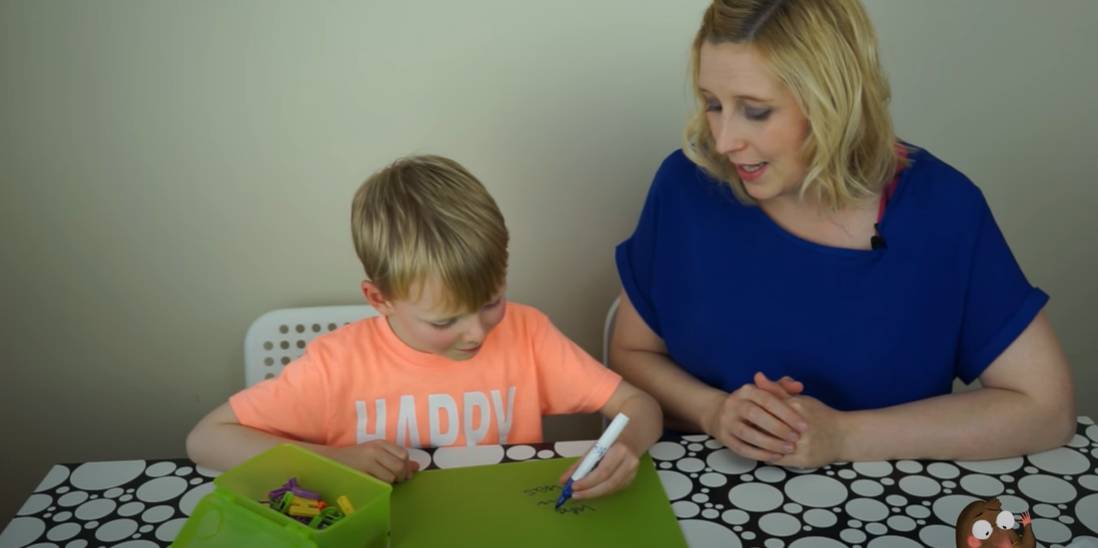
This activity works particularly well for young learners because it engages three different learning pathways at once. Write a tricky word on a whiteboard or a large piece of paper. Ask the child to read it aloud. Then have them make the word using magnetic letters, letter tiles, or write it on a mini whiteboard.

Finally, ask them to write the word from memory once you have covered or erased the original. Start with the word visible, then make it progressively more challenging by reducing the time the word is visible before covering it. Words to try first: the, to, I, was, said.

2. Tricky Word Treasure Hunt

Hide tricky word cards around a room. Give the child a list of the target words (with pictures for pre-readers). Children search the room, find each card, say the word aloud, and collect it. This works for the Phase 2 and Phase 3 lists and can be adapted by mixing in decodable words to reinforce the distinction. For classroom use, organise this as a team game where children take turns finding and reading words. For home use, any room works, and the physical movement helps embed the words in memory.

3. Splat the Word

Write tricky words on individual pieces of paper or use large flashcards laid on the floor or a table. Call out a word, and the child has to “splat” it using their hand, a flyswatter, or a rolled-up sock. For two players, this becomes a racing game. For solo play, time the child and challenge them to beat their previous score. This game is particularly effective for high-frequency words because the fast-recognition element builds automaticity, which is exactly what fluent reading requires.

4. Stepping Stones

Write tricky words on pieces of paper or card laid out across the floor like stepping stones. Children must read each word aloud before they can step on it. Add a challenge by asking them to use the word in a sentence before moving to the next stone. This gross motor approach suits younger children who benefit from combining movement with learning. In a classroom, this works as a corridor activity or outdoor learning session. At home, it works across any room with enough space.

5. Tricky Word Drawing

For each tricky word, ask the child to draw a small picture inside or around the letters that helps them remember it. The word “said” might be surrounded by a speech bubble. “Was” might have a thought bubble. “The” might be decorated with small stars. This is a memory technique that connects the visual form of the word to a meaningful association, which supports orthographic mapping — the process by which words move from effortful decoding to automatic recognition.

Tricky Words in Modern UK Phonics Schemes

tricky words for kids

Most UK schools now use a validated synthetic phonics scheme following the Department for Education’s requirements. Each scheme handles tricky words slightly differently in terms of sequencing and terminology, but the underlying approach is consistent: introduce the words at the point where children need them for reading, teach the regular parts using phonics, and build visual recognition for the irregular parts.

SchemeTerm Used for Tricky WordsWhen First Introduced
Little Wandle Letters and SoundsTricky words / Common exception wordsGroup 1, alongside the first letter sounds
Read Write Inc.Red words (vs green/decodable words)Set 1 speed sounds
Jolly PhonicsTricky wordsGroup 1, alongside first letter sounds
Floppy’s PhonicsCommon exception wordsStage 1
Letters and Sounds (2007, legacy)Tricky words / High-frequency wordsPhase 2

Parents sometimes worry when they discover their child’s school uses a different scheme from a worksheet they have found at home. The key question is not which scheme is being used, but whether the words being practised match the words their child is currently working on in school. Ask the class teacher for the current tricky word list — most schools will share this at the start of each half-term.

“Phonics teaching works best when parents and teachers are using the same language at home and at school. When a child hears a ‘tricky word’ from their teacher and then hears the same phrase at home, they build confidence in both settings. That consistency matters far more than which specific resources you use.” — Michelle Connolly, Founder of LearningMole and former teacher with over 15 years of classroom experience

Teaching Resources and Support

tricky words for kids

LearningMole provides curriculum-aligned phonics resources for UK teachers and parents, covering the full phonics journey from EYFS through KS1. The platform’s educational videos break down phonics concepts — including tricky words — into clear, child-friendly explanations that work alongside whatever scheme your school uses.

For parents supporting tricky word practice at home, LearningMole’s phonics video content supports the “read it, make it, write it” approach and other multisensory methods covered in this guide. The resources are designed to complement what children are doing in class, not replace teacher instruction.

For classroom resources, LearningMole’s KS1 phonics materials cover common exception words across phases, with activities suitable for whole-class teaching, guided reading groups, and home learning. Visit learningmole.com to explore the full phonics resource library, including free video content on the LearningMole YouTube channel with over 260,000 subscribers.

Video note for editorial team: Search for ‘LearningMole tricky words’ on YouTube to find the most relevant phonics activity video to embed here. If a dedicated video covering the Phase 1 to Phase 2 tricky words transition does not exist, flag for the content team — this is a clear gap that matches the article’s primary search intent.

Frequently Asked Questions

tricky words for kids

What are the Phase 1 tricky words?

Strictly speaking, there are no tricky words in Phase 1 phonics. Phase 1 focuses entirely on listening skills and phonological awareness — hearing sounds, rhythm, and rhyme in spoken language. Tricky words begin in Phase 2, when children start connecting letters to sounds. The first Phase 2 tricky words are: the, to, no, go, I, and into. If you are looking for the first words your child will learn to read by sight, this Phase 2 list is what you need.

How many tricky words should a Reception child know?

By the end of Reception, most children following a UK validated phonics scheme will have been introduced to the Phase 2 tricky words (the, to, no, go, I, into) and begun working on Phase 3 words (he, she, we, me, be, was, my, you, they, her, all, are). The number of words a child can read automatically varies — some children will be secure on all of these, others will still be developing recognition of a few. Progress at this stage depends on phonological awareness, school attendance, and how much reading practice happens at home. If you are concerned about your child’s progress, speak to their class teacher.

Why is ‘the’ a tricky word?

The word “the” contains a digraph — “th” — that children have not been taught at the point it is introduced as a tricky word. Even when children later learn the “th” digraph, the vowel in “the” is an unstressed schwa sound (like a soft “uh”) rather than the expected short /e/. This makes it impossible to fully decode using basic phonics rules. The word “the” is introduced early despite its trickiness because it is the most common word in written English and appears on virtually every page of any reading book.

At what age do children start using tricky words in the UK?

Most children in England begin learning their first tricky words in Reception Year, typically between age 4 and 5. This happens once they have covered the first few letter-sound correspondences in Phase 2. Some children who start school later or who need more time with Phase 1 listening activities may begin tricky words slightly later — this is normal. The Year 1 phonics screening check includes some common exception words, so most children will have worked through Phase 2 and Phase 3 tricky words before the end of Year 1.

My child is in Phase 1 — should I start flashcard practice now?

There is no need to rush to flashcards during Phase 1. The best support you can offer at this stage is listening activities: singing nursery rhymes, clapping syllables in words, playing “I Spy” with initial sounds, and reading books aloud together. These Phase 1 activities build the phonological awareness that makes tricky word learning easier later. Starting flashcards too early can lead to guessing habits and does not make as much difference as strong listening foundations. When your child’s teacher introduces the first tricky words in Phase 2, that is the right moment to begin targeted practice.

What is the difference between tricky words and sight words?

“Sight words” and “tricky words” are related but not identical. A sight word is any word a reader recognises automatically, without needing to decode it — this includes words that are fully decodable but have been practised enough to become automatic. Tricky words, in the UK phonics framework, specifically refers to words that cannot be fully decoded using the phonics rules a child has learned at that point. All tricky words eventually become sight words with enough practice, but not all sight words are tricky — many decodable words also become automatic with repetition.

How can parents help children learn tricky words at home?

The most effective home practice involves short, frequent sessions rather than long drill sessions. Five minutes of tricky word practice three or four times a week produces better results than a thirty-minute session once a week. Use a mix of activities — flashcards one day, the Splat game another, writing practice the next — to keep the words fresh without making practice feel like a chore. Always ask your child’s teacher which specific words are being covered that week, so home practice reinforces classroom learning rather than jumping ahead.

Where can I find Phase 2 tricky word resources?

LearningMole provides free and subscription-based phonics resources for parents and teachers, including content covering common exception words at each phase. Visit learningmole.com for curriculum-aligned KS1 phonics materials, or search the LearningMole YouTube channel for free phonics video activities you can use at home. The Department for Education’s phonics guidance documents, available at gov.uk, also include the full common exception word lists for each year group.

Putting It All Together

A group of children and a teacher working together on punctuation activities in a classroom with punctuation symbols and learning materials around them.

Tricky words are not a sign that something has gone wrong in phonics teaching. They are a practical response to the reality of written English: some very common words do not follow the rules children are learning, and children need these words to read real books. The confusion between Phase 1 and tricky words is understandable — both relate to the earliest stages of reading — but the distinction matters. Phase 1 builds the listening foundation; tricky words are introduced in Phase 2, once that foundation is in place.

For parents, the most useful thing to know is which words your child is currently working on at school, and then to practise those specific words through varied, short activities. The read-it-make-it-write-it method, the Splat game, stepping stones, and word treasure hunts all return children to the same words in different ways, building the automatic recognition that fluent reading depends on. None of these activities requires special equipment or significant preparation time.

For teachers, making the Phase 1 to Phase 2 transition explicit — and explaining it clearly to parents at curriculum evenings — removes a significant source of confusion and helps families support classroom learning more effectively. When parents understand why Phase 1 has no tricky words, they are less likely to rush ahead with flashcards before their child is ready. LearningMole’s phonics resources support both sides of this conversation, providing teachers with curriculum-aligned materials and parents with clear, jargon-free guidance on how to help at home.

Explore LearningMole’s Phonics Resources

LearningMole provides free and subscription-based educational resources aligned with the UK National Curriculum, including curriculum-aligned phonics content for EYFS and KS1. Whether you are a teacher planning phonics sessions or a parent supporting tricky word practice at home, our video resources and teaching materials cover every stage of the phonics journey.

Explore our phonics teaching resources | Watch free phonics videos on the LearningMole YouTube channel

Leave a Reply

Your email address will not be published. Required fields are marked *