Five Facts About Bones
Get ready for a bone-rattling adventure with “5 Facts About Bones”! This video invites you to explore the amazing skeleton hidden inside your body and discover the incredible ways bones keep you strong and on the move. From your tiny toes to your sturdy skull, we’ll uncover essential facts and fascinating secrets about bones—how they support your body, protect important organs, and help you jump, run, and play. Learn how bones grow, heal when broken, and why they’re always changing as you get older. We’ll also explore the different shapes and sizes of bones and meet some of the smallest and largest bones in your body. Join us as we dig deep into the science of skeletons and expand your knowledge of what makes you stand tall. It’s an exploration that will leave you amazed by the power and wonder of your own bones! 🦴💀🏃♀️
Transcription for Five Facts About Bones
Please note this transcript is generated automatically and may contain errors.
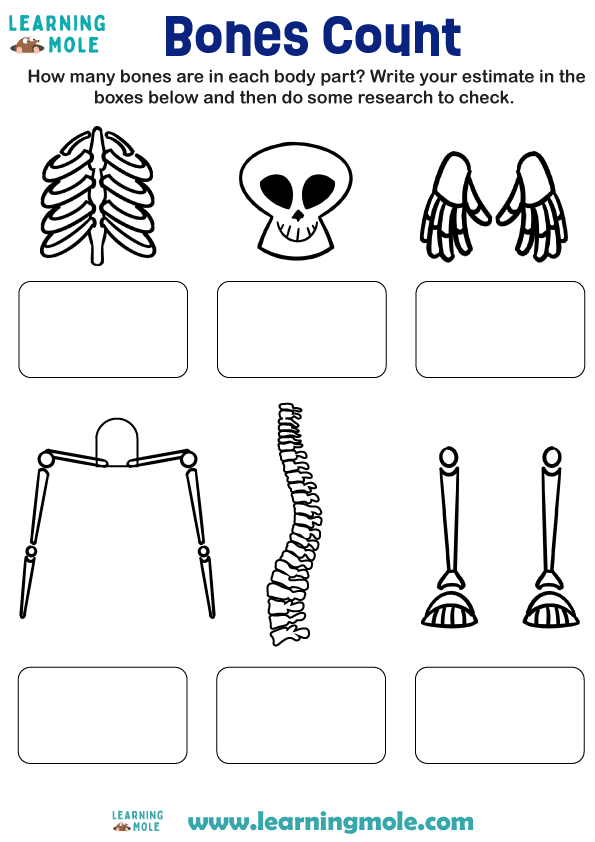
Today we are going to learn five brilliant facts about bones fact number one. You have more bones when you are a baby then when you do as an adult, the skeleton of an adult has 206 bones, but when a baby is born they have 300 that’s almost 100 more bones. So where do these bones go? They don’t disappear instead. They fuse with other bones to become bigger as they grow these unfused bones help the baby avoid breaking bones if they fall clever fact number two. Your bones make your blood the blood in the body is made up of red blood cells and white blood cells the red blood cells carry oxygen around the body the white blood cells help the body fight diseases and infections white blood cells also help the body create scabs after we get cut so they can heal both the red blood cells and the white blood cells are created in the bones.
They are made by the soft and middle part of the bones, which is called the marrow. f*** number three. Only one bone in the body isn’t connected to others. The high odd bone is located in the throat and helps us talk and swallow. It does not move with joints with other bones and is only connected to Bones around it with muscles. The high odd bone is shaped like the letter U and its name comes from the Greek word Heidi’s which means shaped like a u fact number four archaeologists study historical objects and Remains the left in the ground by all civilizations.
Some archaeologists are experts in the bones left behind by historical people in order to learn about the people of that time. They reconstruct the face of that person using this skull. This means we can see the person’s face. Sometimes thousands of years after their time the bones of humans can also tell us lots of other things like what they ate if they bone during their lives and if they ate well if someone did not eat well for a time in their life it can chill on their teeth.
These marks are called Harris lines and can tell archaeologists about the food available in the time and place fact number five. Humans and giraffes have the same number of bones in their neck. Your neck is made up of seven bones that move around with the help of muscles and nerves the bones in your neck move. So you can look around in any direction and support your head. Even though giraffes have a much longer neck. They have the same number of bones in their necks just seven bones that are much bigger to hold up the neck of giraffes. Hope you enjoyed my five brilliant bone facts. See you soon.