What this article covers: The types of STEM toys that build scientific thinking in children from toddlers to Year 6, matched to EYFS and National Curriculum topics, with guidance on choosing safe, open-ended toys for home and school.
Who this is for: Parents and carers choosing educational toys or gifts, early years practitioners planning provision, and primary teachers looking for hands-on resources that support science, maths and computing.
Key takeaway: The best STEM toys let children ask a question, make a prediction, test it and see a real result, and the most useful ones link directly to what children learn at school.
Expert view: “STEM toys are a springboard for imagination, making abstract concepts tangible and accessible for young minds,” says Michelle Connolly, Founder of LearningMole and former teacher with over 15 years of classroom experience.
Quick facts:
Working scientifically, which includes asking questions, observing closely and carrying out simple tests, is part of the science curriculum from Year 1 onwards.
The KS1 computing curriculum expects pupils to create and debug simple programs, which floor robots and screen-free coding toys support directly.
LearningMole provides over 3,300 free educational resources aligned with the UK National Curriculum, including science and maths videos for primary-aged children.
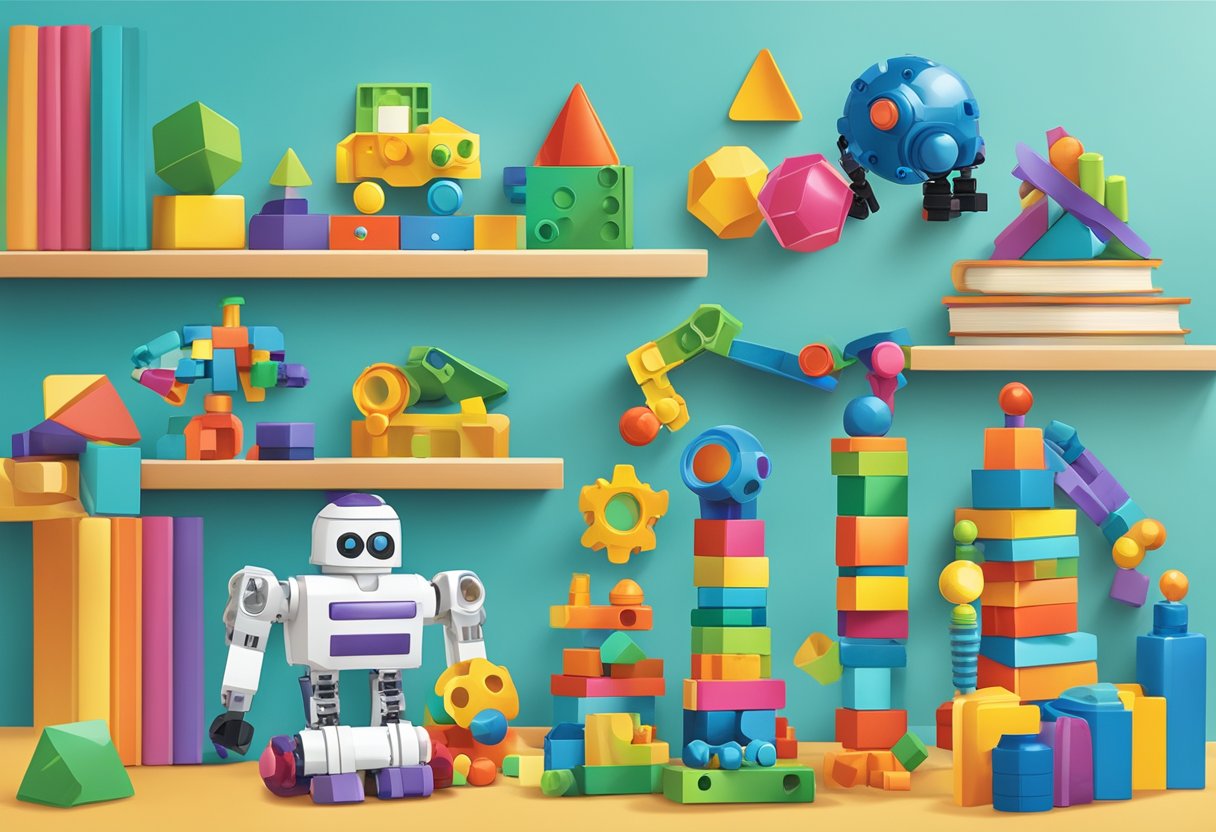
STEM toys encourage scientific thinking when they let children explore cause and effect, build and test their own ideas, and see real results. Our top picks are open-ended toys matched to the child’s age. Examples include building blocks for toddlers, floor robots for early coding, and magnet and circuit kits for KS2. Each one links to EYFS or UK National Curriculum learning.
LearningMole is a UK educational platform providing curriculum-aligned teaching resources for primary schools, including science and maths videos that pair well with hands-on play. The picks below describe types of toy instead of brands, so parents and teachers can choose products that fit their budget and space.
STEM toys build the habits of scientific thinking
Scientific thinking is the habit of asking questions, making predictions, testing ideas and explaining what happened. Good STEM toys practise every part of that cycle through play, long before children meet formal experiments at school.
The science curriculum calls this working scientifically. From Year 1, pupils learn to ask simple questions, observe closely, carry out simple tests, and use what they notice to suggest answers. A child who builds a ramp, guesses which car will roll furthest and then tries it is already doing all of these things.
Trial and error builds problem-solving and creativity
STEM toys work best when things sometimes go wrong. A tower that falls, a circuit that does not light or a robot that turns the wrong way gives children a problem to solve. Working out why, then trying again, builds resilience and the confidence to learn from mistakes.
This kind of play is also creative. Children who design their own structures or invent a new marble run route are combining imagination with logic. That mix sits at the centre of scientific thinking, and it is how scientists and engineers work.
A good STEM toy is open-ended, safe and matched to the child
The most useful STEM toys can be used in more than one way, give a real result children can observe, and suit the child’s current stage. A toy that does everything at the press of a button teaches far less than one that children have to build, adjust or program themselves. When comparing toys, check the five points below.
The toy can be used in different ways, so children return to it over months instead of days.
Children can see real cause and effect, such as a light turning on or a structure holding weight.
The challenge suits the child’s age, with room to grow harder as skills develop.
The toy links to something children learn at school, such as magnets, circuits or shape.
The toy carries a UKCA or CE mark and an age warning that fits the child.
Our top picks by age and stage
The table below matches our top picks to each stage and to the EYFS or National Curriculum topics they support. These are toy types, so you can choose any well-made product that fits the description.
Age or stage
Curriculum link
Top pick toy type
Question to ask the child
Recommendation
Toddlers (1 to 3)
EYFS Understanding the World
Stacking blocks, shape sorters, water play tools
“What happens if we add one more?”
Choose chunky, sturdy pieces with no small parts
Reception (4 to 5)
EYFS Mathematics and Understanding the World
Magnifying glasses, counting toys, simple construction sets
“What do you notice?”
Add a magnifier to outdoor play
Years 1 and 2
KS1 working scientifically and computing
Floor robots, ramps and cars, simple magnet sets
“Can you make it go to the door?”
A floor robot is the strongest single pick for this age
A safe circuit kit links directly to Year 4 science
Years 5 and 6
Forces, Electricity, KS2 computing
Gear and pulley kits, programmable robots, chain reaction kits
“How could you lift it with less force?”
Choose kits that allow open building, not only set models
Toddlers and preschoolers learn through simple cause and effect
For children under five, the best STEM toys are simple, sturdy and sensory. They let children explore shape, size, number and cause and effect, which supports the EYFS areas of Mathematics and Understanding the World.
Shape sorters and stacking cups teach children how shapes fit together and how size changes. Push-and-pull toys, balls and simple ramps show cause and effect in action, and they get children moving while they think. Water and sand play with jugs, funnels and sieves introduces early ideas about volume and flow.
Counting toys, such as an abacus or number puzzles, help children connect numbers to quantities while strengthening fine motor control. Sensory toys with different textures encourage close observation, and a sturdy magnifying glass turns any garden into a place to investigate.
Picture books about nature, building and the body belong in a STEM collection too. Sharing a book about minibeasts before a garden hunt builds vocabulary and gives children ideas to test. The EYFS describes playing and exploring, active learning, and creating and thinking critically as the characteristics of effective learning, and these toys support all three.
Building and construction toys teach engineering basics
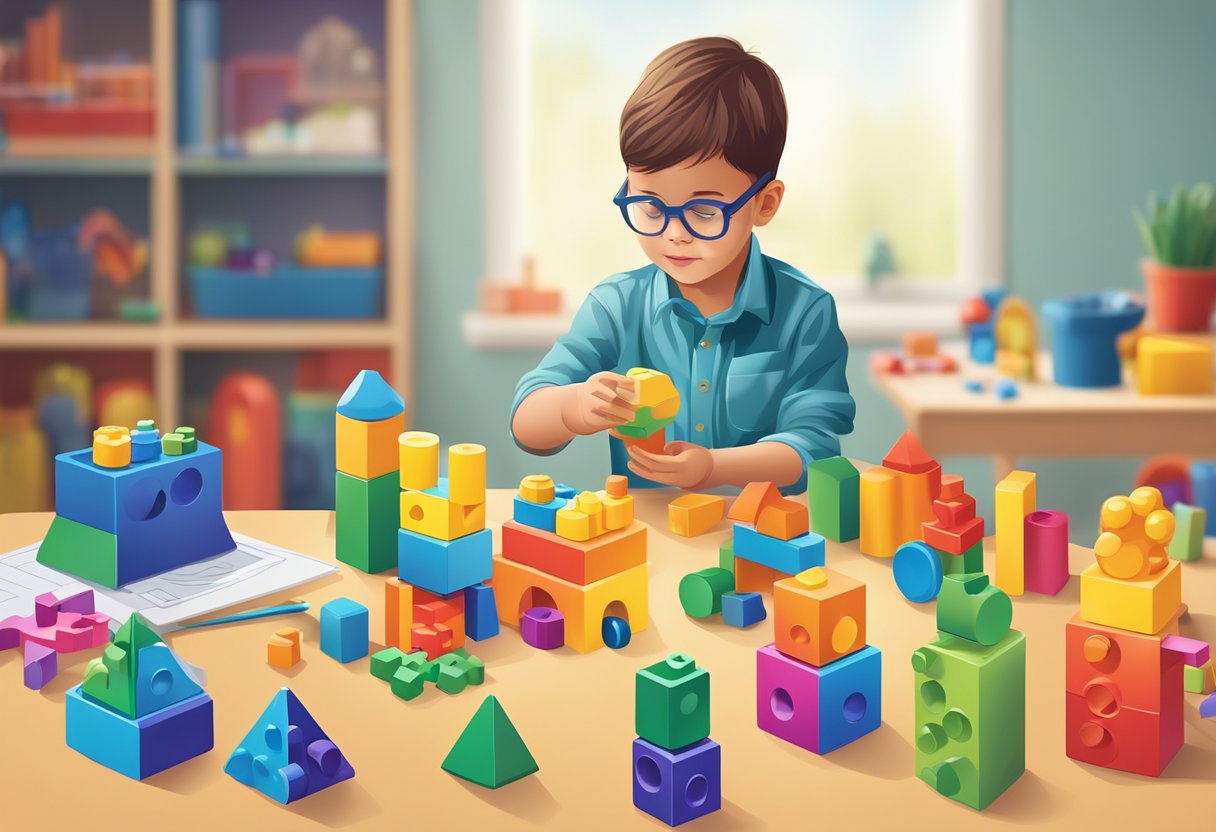
Building and construction toys give children hands-on experience of balance, structure and shape. They suit every age, from wooden blocks for toddlers to gear and pulley kits for Year 6.
Blocks and building sets
Stacking blocks teaches young children about balance and stability as towers wobble and fall. Interlocking bricks and magnetic tiles let older children build more complex structures, and they quickly learn that wide bases and triangles make strong designs. Ask children to build the tallest tower they can from a fixed number of pieces, then compare designs.
Engineering sets with gears and pulleys
Engineering sets with gears, axles, levers and pulleys show how machines work. In Year 5 science, pupils learn that mechanisms such as levers, pulleys and gears allow a smaller force to have a greater effect. A child who builds a pulley to lift a toy bucket understands that idea far better than one who only reads about it.
Magnetic toys
Magnet sets reveal invisible forces in an accessible way. Children discover that magnets attract some materials and not others, and that magnets can attract or repel each other. These ideas appear in the Year 3 forces and magnets unit, so a simple magnet kit gives children a head start.
Science kits bring experiments into the home
Science kits give children real equipment and a structure for simple experiments. They work best when adults encourage children to predict what will happen before they start.
Beginner microscopes and magnifiers suit children who love collecting leaves, insects and stones, and they encourage the close observation the science curriculum values. Crystal-growing kits show change over several days, which teaches patience and careful recording. Simple experiment sets, such as those exploring dissolving or changes of state, connect to topics children meet in KS2.
Circuit kits are one of the most useful science picks for older primary children. In Year 4, pupils learn to build simple series circuits with cells, wires, bulbs, switches and buzzers, and to identify common conductors and insulators. A safe snap-together circuit kit lets children test these ideas at home.
Always follow the age guidance and supervision advice on science kits, particularly any that include chemicals, so children build scientific thinking safely. Encourage children to record their predictions and results in a notebook, just as they would at school.
Coding toys and robots develop computational thinking
Coding toys teach children to break a task into steps, put them in order and fix mistakes, which is called computational thinking. These skills sit at the heart of the computing curriculum from KS1 onwards.
The KS1 computing curriculum expects pupils to understand that algorithms are precise instructions and to create and debug simple programs. Floor robots that move forward, back and turn when children press buttons are the best starting point. Children set a goal, such as reaching a toy on the other side of the room, plan the steps, test them and correct any errors.
In KS2, pupils design, write and debug programs, including programs that control physical systems, using sequence, selection and repetition. Programmable robots and buildable kits with motors and sensors suit this stage well. Measuring distances and angles for a robot’s route also gives children practical maths practice.
Maths toys turn number and shape into play
Maths toys help children explore number, pattern, shape and measurement through play. They support classroom learning and give parents an easy way to talk about maths at home.
A colourful abacus helps young children count, and later shows addition and subtraction in a visual way. Pattern blocks and tangram puzzles teach children how shapes fit together, building spatial awareness and early geometry. Balance scales let children compare weights and explore the idea of equal and unequal.
Marble runs combine maths, engineering and science. Children plan a route, predict where the marble will go and adjust the track when it misses, practising sequencing and measurement along the way. Asking “How could you make the marble go slower?” brings in ideas about slopes and friction.
Creative STEM toys combine art, music and science
Creative STEM toys show children that science and art work together. Combining them, often called STEAM, suits children who love making as much as experimenting.
Kits for building simple instruments teach children how sound is made, which links to the Year 4 sound unit, where pupils learn that sounds come from vibrations. Children can change the length of a string or the amount of water in a bottle and hear how the pitch changes.
Programming a small robot to move in time to music combines coding with creativity, and drawing tools that create symmetrical patterns make geometry visible. Our guide to encouraging creative expression with arts and crafts toys has more ideas for creative play at home.
Outdoor STEM toys put physics in motion
Outdoor STEM toys combine physical activity with real science. They let children see forces, weather and the natural world in action on a much bigger scale than indoor toys allow.
Foot-powered air rockets show how force affects distance and direction, and children can test whether stamping harder or changing the angle makes a difference. Kites and paper gliders introduce air resistance, which pupils study in Year 5. A rock tumbler polishes stones over several days and links to the Year 3 rocks unit, where pupils compare different kinds of rock.
Bug viewers, bird feeders and simple rain gauges turn a garden or school grounds into an outdoor laboratory. Recording what they see each week teaches children to gather data over time, a key part of working scientifically.
Logic games and puzzles build planning skills
Logic games and puzzles teach children to plan ahead, think spatially and test ideas, all of which feed into scientific thinking. They suit family game time as well as quiet independent play.
Marble maze puzzles, in which players build a path to guide a marble to a target, ask children to picture a 3D route before they build it. Sequencing games and coding board games teach the logic behind programming without a screen. Choose games with graded challenge cards, so children can start with easy puzzles and work up to harder ones.
Advanced STEM toys suit older primary pupils
Children in upper KS2 are ready for STEM toys that take several sessions to complete and reward careful planning. These toys challenge pupils to apply what they have learned at school.
Electronics kits with resistors, switches and buzzers let children build alarms and simple devices, extending the circuits they meet in Year 4 and Year 6. Chain reaction kits challenge children to design a sequence of moving parts, which builds understanding of forces and energy transfer. Programmable robotics kits with sensors let children write programs that respond to their surroundings, matching the KS2 computing expectation of controlling physical systems.
Some projects will need adult support at first. Offer help with the first build, then step back so children can modify the design and solve problems themselves.
Safety checks matter for every STEM toy
STEM toys often include small parts, magnets, batteries or chemicals, so check every product before buying. A few simple checks prevent most accidents.
Look for the UKCA or CE mark and follow the age warning on the box. Keep toys with small parts away from children under three, and store older siblings’ kits out of reach. Take extra care with small, powerful magnets and button batteries, which are dangerous if swallowed, and check that battery compartments are secured with a screw. Supervise all experiments that involve heat, water or chemicals, and follow the instructions exactly.
Choosing STEM toys for school and home
Parents, teachers and gift-givers each look for slightly different things, but the same principles apply. The best STEM toy is one the child will return to, that suits their age and interests, and that connects to what they are learning.
Parents should focus on age-appropriateness, durable materials and real learning value, choosing toys that match the child’s current interests. Teachers can look for toys that support specific curriculum objectives and work well for small groups. A set of floor robots or circuit kits for a science table is a good example. When buying a gift, a toy that offers months of open-ended play is usually better value than a novelty that is finished in an afternoon.
Think about size and storage too. Very large sets can overwhelm younger children and end up unused, while a smaller kit that the child can manage independently often gets far more play.
Teaching resources and support for STEM learning
LearningMole’s curriculum-aligned teaching resources and science videos pair well with STEM toys, giving children the background knowledge to make sense of what they discover through play. Ready-made resources save planning time for teachers and give parents a clear starting point.
Classroom resources
Teachers can show a short LearningMole video to introduce a topic such as magnets, circuits or forces, then let pupils explore with hands-on kits. LearningMole produces educational videos aligned with the UK National Curriculum for children aged 4 to 11, and schools can access the full library through a LearningMole school subscription.
Supporting STEM learning at home
Parents and carers can use LearningMole’s free science and maths videos on YouTube to explain what children see when they play. Watching a short video about magnets before opening a new magnet set, for example, gives children ideas to test straight away. Our home learning guides and activity ideas offer more ways to build STEM learning into family life.
Frequently asked questions
What are some engaging STEM toys suitable for 10 to 12-year-olds?
Programmable robotics kits, electronics sets and chain reaction building kits suit 10 to 12-year-olds well. These toys let children design, build and program their own projects, extending what they learn about circuits, forces and coding in upper KS2. Choose kits that allow open building as well as set models, so children can apply their own ideas once they have mastered the basics.
Can you suggest any STEM educational toys for children aged 3 to 5?
Simple construction sets, shape sorters, counting toys, magnifying glasses and water play tools all suit children aged 3 to 5. These toys build early number sense, spatial awareness and observation skills, which support the EYFS areas of Mathematics and Understanding the World. Choose sturdy pieces without small parts for younger children in this range.
Which STEM toys are best recommended for children around seven years of age?
Floor robots, magnetic building sets and simple machine kits are strong choices for seven-year-olds. Floor robots support the KS1 computing curriculum by teaching children to plan and debug simple programs. Toys that ask children to follow and adjust a sequence of steps build logical reasoning and patience at this age.
How do STEM toys benefit children with an interest in engineering?
Engineering toys, such as building sets, gear and pulley kits and bridge-building challenges, teach children how structures and machines work. Children learn through testing that some shapes are stronger than others and that mechanisms can make lifting easier, which links to Year 5 science. These toys also build planning and problem-solving skills that engineers use every day.
Are there any STEM toys that kids particularly favour?
Children often love toys that give a clear, exciting result, such as robots they can program, rockets they can launch or crystals they can grow. Toys that let them build something of their own design are also popular, because children feel a real sense of achievement. The toys children return to most are usually open-ended ones with many possible uses.
How do I know if a STEM toy is educational?
An educational STEM toy asks the child to do the thinking, by building, testing, predicting or programming. Be wary of toys that do everything at the press of a button or that the child will finish in one session. Check whether the toy links to topics children learn at school, such as magnets, circuits, shape or simple coding.
Are STEM toys safe for young children?
STEM toys are safe when they suit the child’s age and carry a UKCA or CE mark. Keep toys with small parts away from children under three, and take particular care with small magnets and button batteries. Supervise experiments involving water, heat or chemicals, and always follow the manufacturer’s instructions.
Pick one STEM toy and one question this week
Choose one toy from our top picks that suits your child’s age, and plan one question to explore with it. With a magnet set, for example, ask your child to predict which household materials the magnet will pick up. Let them test each prediction and explain what happened, which practises scientific thinking from start to finish.
LearningMole provides free and subscription-based educational videos and resources aligned with the UK National Curriculum, covering science, maths, English and much more. Explore LearningMole’s teaching resources or find out about school access to support the scientific thinking your child builds through play.
Maths Circus, an innovative platform we've crafted, presents a captivating realm where children learn mathematics through the exciting theme of a circus. The joy of juggling numbers and solving circus...
The 9 times table multiplication has a reputation for being tricky, yet it holds more mathematical magic than any other table in the primary curriculum. Every answer follows two neat...
Article Summary What this article covers: Ten differences between river otters and sea otters, from size, fur and swimming style to diet, tool use and family life, plus which otter...
Article Summary What this article covers: The nine main types of natural disasters, how each one works and how they are measured, which hazards genuinely affect the UK, and how...




Leave a Reply