Do you know that the game of chess is the world’s oldest known game that requires skill? Playing chess can provide a wealth of information regarding the lifestyle of people during the middle ages.
Chess
Chess is like a miniature Middle Ages history; you only need to study the pieces and how they’re used. You’ll see that it’s a reflection of the board’s layout and the game’s rules.
The six chess pieces on the board represent another aspect of life during the Middle Ages, such as one of the many ceremonies, significant events, or wars.
It is known that Chess was played in china, India, and Persia many centuries ago; however, different theories exist regarding the game’s actual country of origin. The chess game quickly became popular across Europe due to invasions.
As a reflection of how they lived, the Europeans gave the chess pieces the names we still use today. The words represent how people of different social ranks conducted their daily lives. The game of Chess has a history that dates back nearly 1500 years.
After its inception in northern India in the sixth century AD, the game eventually made its way to Persia. Following the Arab conquest of Persia, the chess game became famous worldwide. Subsequently, the game made its way to Southern Europe due to the Moorish conquest of Spain.
Who Was The First Person To Create The Game Of Chess?
The game of Chess is said to have been presented as a present to King Shirham of India by Grand Vizier Sissa Ben Dahir, who is credited with its invention. The earliest known game was played in Baghdad between a historian believed to have been a favourite of three different caliphs and one of his students.
The game was found in a manuscript from the 10th Century. By the 10th Century, Muslims had introduced the chess game to Spain, Sicily, and North Africa. Due to a pronunciation error made by British merchants, the game was initially referred to as shah, which translates to “king” in Persian.
Shah mat means “the king is finished.” Chariot, Horse, Elephant, and Soldiers are the four pieces that make up the chess board.
Chess pieces
CHESS Is An Acronym For These Pieces (Pawns)
The board game Chaturanga, from which Chess evolved, was a war game; therefore, it is highly likely that Chess was initially developed to hone one’s strategic and tactical thinking abilities.
By the 15th CenturyCentury, Chess had gained the reputation of being the “royal game,” suggesting that it was a game that was played frequently by royalty, including kings and queens. What did people once call the game of Chess?
Chaturanga
Where Did the Game of Chess Come From? The game, now known as Chess, can be traced back to India in the sixth Century when it appeared in its earliest known form. This precursor, Chaturanga (or catur) was played on a grid of eight squares by eight squares.
It featured the most comparable pieces to modern Chess. The Afrasiab Chessmen are widely considered to be the world’s oldest chess pieces. Checkerboard, shogi, and board game are all synonyms for one another.
The pieces known as pawns on a chessboard stand in for serfs or labourers. Because there are more of them than any other piece on the board, they frequently have to be given up to protect the more valuable pieces.
During the middle ages, serfs were regarded as little more than the landowners’ property or chattel. During this time in history, serfs endured an excruciatingly tricky life. They put in a lot of effort but only lived to be young.
They were frequently abandoned without any protection as wars raged all around them. They could be bought and sold, used as a distraction, or even put to death to provide landowners with a means of evading danger.
On a chessboard, the castle piece represents the home, or the refuge, just as a castle did in mediaeval times when it functioned as a home. Each side is given two courts in the chess game, called rooks.
The knight on a chessboard is symbolic of the trained and experienced soldier. Who served during the Middle Ages? This soldier’s duty was to guard people of rank, and in a game of Chess, there were two knights on each side of the board.
In Chess, knights have higher importance than pawns but a lower influence than bishops, kings, and queens. They can be sacrificed in the same way pawns can to save the more critical pieces, which is their role in the game of Chess: to protect the more critical pieces.
In the board game chess, the “church” is represented by a piece called a bishop. In mediaeval times, religion was a significant component of daily life, and the church was a powerful economic and military institution.
A character representing the idea of religion was able to make its way into the game. In the Catholic Church, a priest who had worked his way up to a more influential position that he held throughout the entirety of his career was given the title of bishop. The chess game has two bishops on each side of the board.
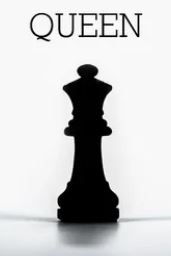
In a chess game, the queen is the only piece on the board representing a woman, and she is also the most powerful piece in the game. In a chess game, there is only room for one queen on each of the two teams.
the game of Chess
A significant number of people are oblivious to the fact that queens in mediaeval times frequently held positions that were both powerful and precarious. Her counsel was sought out frequently by the King, and it was common practice for the queen to engage in political manoeuvring within the court.
However, kings had the ability to cast aside their wives or even put them behind closed doors in convents with the blessing of the church (and without the approval of the queen). As a result, many women plotted simply to maintain their position in court.
Throughout history, the machinations of queens working either for or against their kings are well documented. During this period, the queen typically held more power than the King, and this dynamic’s history is well documented.
However, the overwhelming majority of individuals are also the most powerful. He is also the most powerful and holds the most territory. Protected on the chessboard as he would have been in real life during the middle ages.
During the times of the Middle Ages, to hand over the King would have meant handing over the kingdom to the attacking armies, which would have resulted in a change for the worse. Protecting the King from harm served everyone’s best interest, from the lowest-ranking serf to the highest-ranking official in the kingdom.
In Chess, the most powerful piece is not the King, but the King is the most important piece. The game is over for you if you are unable to keep your King safe. What is this, exactly? The King, the chariot (rook), the vizier (queen), the horse (knight), the elephant (bishop), and two soldiers make up the pieces (pawns).
The Game Piece
The Playing Piece The pawn occupies the position with the least value on the chessboard, and each player is allotted eight pawns to use.
It’s possible that playing Chess won’t help your test performance all that much.
Although playing Chess has been shown in several studies to improve one’s cognitive abilities and mathematical and memory recall, this improvement does not necessarily translate into higher test scores.
Chess is completely devoid of any element of chance, in contrast to card games such as poker, craps, Monopoly, and bridge.
The queen, which is represented by the symbol, is the most powerful piece in the game of Chess.
She has the ability to move any number of squares in any direction, including vertically, horizontally, and diagonally, combining the abilities of the rook and the bishop.
At the beginning of the game, each player is given one queen, which is to be positioned in the middle of the first rank next to the player’s King.
Atlas Obscura describes Elista, Russia, as the “Chess City.”
There are six distinct kinds of chess pieces to choose from. Each of the two sides begins the game with a total of 16 pieces, including eight pawns, two bishops, two knights, two rooks, one queen, and one King.
GM Magnus Carlsen 2861
GM is the title of world chess champion and currently belongs to Magnus Carlsen. Even though GMs Garry Kasparov and Bobby Fischer are still in the conversation, many people believe he is the best player. He has ever lived in the history of the game. In any case,
The point that stands out as particularly remarkable and noteworthy is that Carlsen has already earned… opening Wheeler before he turns 30 years old.
The “Opening”
“opening moves” of a chess game are the first moves made by each player in the game.
If you have a strong opening, you will have increased opportunities to take pawns and pieces from your opponent, better protection for your King,
control over an area of the board (especially the centre), greater mobility for your pieces, and possibly even the chance to win the game.
Magnus Carlsen is currently the best player in the world when it comes to the game of Chess. Since 2013, he has been the incumbent on the title. World chess champion, which he has held continuously since then.
It is more accurate to refer to Chess as a game than a sport. And the same argument could be made regarding any other game out there. Because it compels us to engage in analytical thought and come up with original approaches to the problems we face, playing Chess is not a productive use of our time.
It requires significant effort, strategic thinking, memorisation (previous games), critical thinking, and study. In addition, it is common knowledge that Einstein could play the game of Chess.
However, it is said that he did not enjoy the game’s competitive nature. He tried to get better at the game; he was an excellent player. Our loss was a benefit to the field of physics; as you will see later on tonight, his skills were truly remarkable.
Marilyn Vos Savant
Vos Savant is widely regarded as the most intelligent individual in the community due to the fact that she possesses an IQ that ranks among the highest in the world. Her name is in the Guinness World Record book for having the most intelligence.
The most important reason the King is made weak is that it would be more challenging to achieve checkmate on a strong king. The game’s pace would be much more drawn out than it is currently. Because of this, the game was designed so that the King could advance only one square in any given direction at a time. This restriction applies to all directions.
Do You Want To Learn About The History Of Chess?
There are many interesting facts and stories about where this game came from, who invented it and why.
Search to acquire further information regarding these things and how we might be able to use archaeology for more purposes than just finding old buildings!
The game of Chess is one that has been enjoyed for a very long time, thousands of years. The game’s origin is unknown, but many theories about how it came about to exist. Many theories about how it came about to exist
The most famous story says that an Indian king invented it to pass the time while travelling with his army.
Another theory states that it started as an Indian variant on an older Chinese game called “chaturanga”, which ancient military tactics and strategies may have inspired.
Thanks to the discoveries of archaeologists worldwide. We now have reasonableness records that come from Persian and Arabic sources, dating the complete history of Chess. The earliest written chess records come from Persian and Arabic sources, dating back to the 6th CenturyCentury.
These accounts describe a very similar game to modern Chess, except that it used different pieces and had no rules about how many moves you could make per turn.
The first recognizable set of rules for playing Chess appeared in an 11th-century manuscript called “The Book of Chess” by al-Adli ar-Rumi (or Rhum). Chess has been around for over 2,000 years, so learning its history can be a blast! It’ll give you a little know-how that no one else possesses.
Chess Is A Viral And Challenging Game
You will become familiar with the history of Chess as you progress through this module.
The basics of Chess and then go through the names of the chess pieces, initial setup materials and the goal of a chess game.
One of the most widely played games in the world is Chess and challenging strategy games. World’s most popular and challenging strategy games.
For centuries, people have delighted in its pleasures, and they continue to do so today is very popular today.
A chess game can last from a few minutes to several hours, depending on how experienced both players are and what type of chess rules they use.
Understanding the basics of Chess is essential to relatively playing the game. This manual will provide much information that should be absorbed before playing your first game. The introduction teaches the history of Chess, explains how each piece moves on the board and teaches beginners how to name each chess square and its abbreviated form.
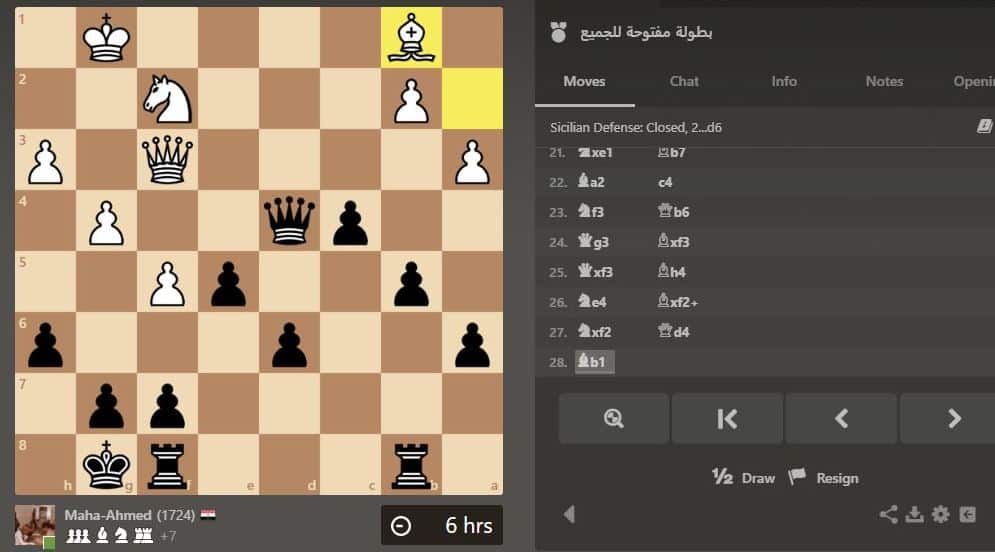
A game of Chess aims to capture your opponent’s King. To win, you must take away all of your opponent’s pieces or put him in checkmate. When a player gets checkmated and cannot make any moves to prevent the loss of the game, his King is taken off the board.
A round ends when one player has lost all of his pieces or has been put in checkmate; or when both players agree that no further action can improve either side’s position.
A Player Can Lose A Game In Many Ways
He may be forced to resign when his position is impossible to win.
He may make an illegal move, or his King may be taken by one of your pieces.
You have won the game if you have captured all of your opponent’s pieces other than their King.
It is known as checkmate, and the game ends immediately.
You are responsible for getting rid of all your belongings and opponent’s pieces or putting them in checkmate to win.
When a player gets checkmated and cannot make any moves to prevent the loss of the game, their King is taken off the board.
When both players agree that no further action can improve either side’s position.
A draw occurs when both players agree that the position of the game is such that neither can win.
The most common cause of a draw in Chess is an impasse, where no moves by either player will improve their position and thus, they may as well agree to an interest.
If only one King is left, one player wins the game and cannot move without being captured by the opponent’s pieces; they have lost.
Check Mate!
There’s nothing more to add in a game of Chess, except maybe…back to homework.
The chess game is played on a board with relatively eight rows, called the ‘files’ and eight columns called the ‘ranks’.
The pieces are placed in different positions on the board according to their value:
The classic chess game is played on a board with two players, a square board with squares arranged in a grid with eight ranks and eight files.
The digits 1 through 8 are utilized in order to denote the ranks, and the letters A through H are used to denote the files.
The chessboard is arranged so that the square with the light colour is at the right end of the rank that is closest to each player in turn order. Each player controls their own set of 16 pieces.
The parts are labelled with the categories “white” and “black.” Each player begins the game with one King, one queen, two rooks, two bishops, two knights and eight pawns. Each player controls their own set of 16 pieces.
Nowadays, many people take Chess as a game of war. Yes, there is something military about it. But this development happened rather recently: before that, relatively relatively relatively game of art and intellect. The chessboard is a battlefield where two armies fight each other.
Queen
The pieces represent the soldiers that take part in this battle. Learn the basics of Chess. You will pick up the skills necessary to set up a chessboard in the course, how each square on the board is named, and how pieces move around the board.
Once you understand the basics, we’ll get into more complex topics like checkmate, en passant pawns, castling and how armies are organized. It is commonly believed that the game of Chess is one of the oldest board games still played today.
However, the overwhelming majority of individuals believe that although people probably have the impression that Chess is an old game, it is actually quite recent compared to the other board games on this list.
The precise location of where Chess was first played is unknown; however, the vast majority of historians agree that it was in India during the Gupta Empire, somewhere around the sixth century AD. Some historians believe that it originated in China.
The classic board game for two players is known as Chess. In order to differentiate it from other board games with similar rules, such as xiangqi and shogi, it is sometimes referred to as Wes chess or internati chess.
The current version of the game, known as CenturyCentury, originated in the latter half of the twentieth century in Spain and the rest of Southern Europe 20th CenturyCentury.
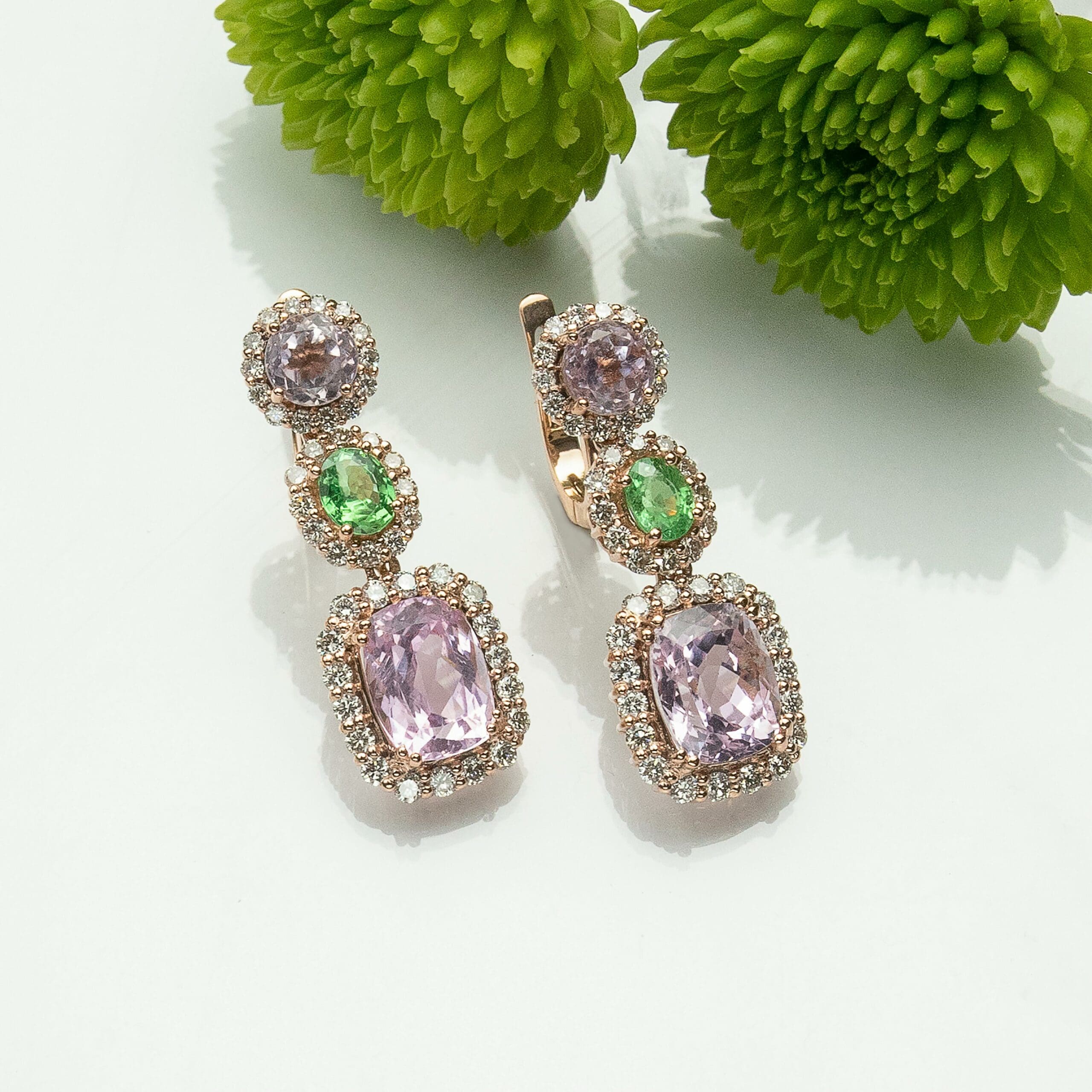
Geometric jewellery is an artistic convergence of precise shapes and deliberately crafted angles, blending the mathematical rigour of geometry with the fluidity of design. We see the essence of shape...
Mathematics and nature intertwine in fascinating ways, creating patterns and sequences that delight and educate. As we observe the world around us, we find that counting petals and leaves isn't...
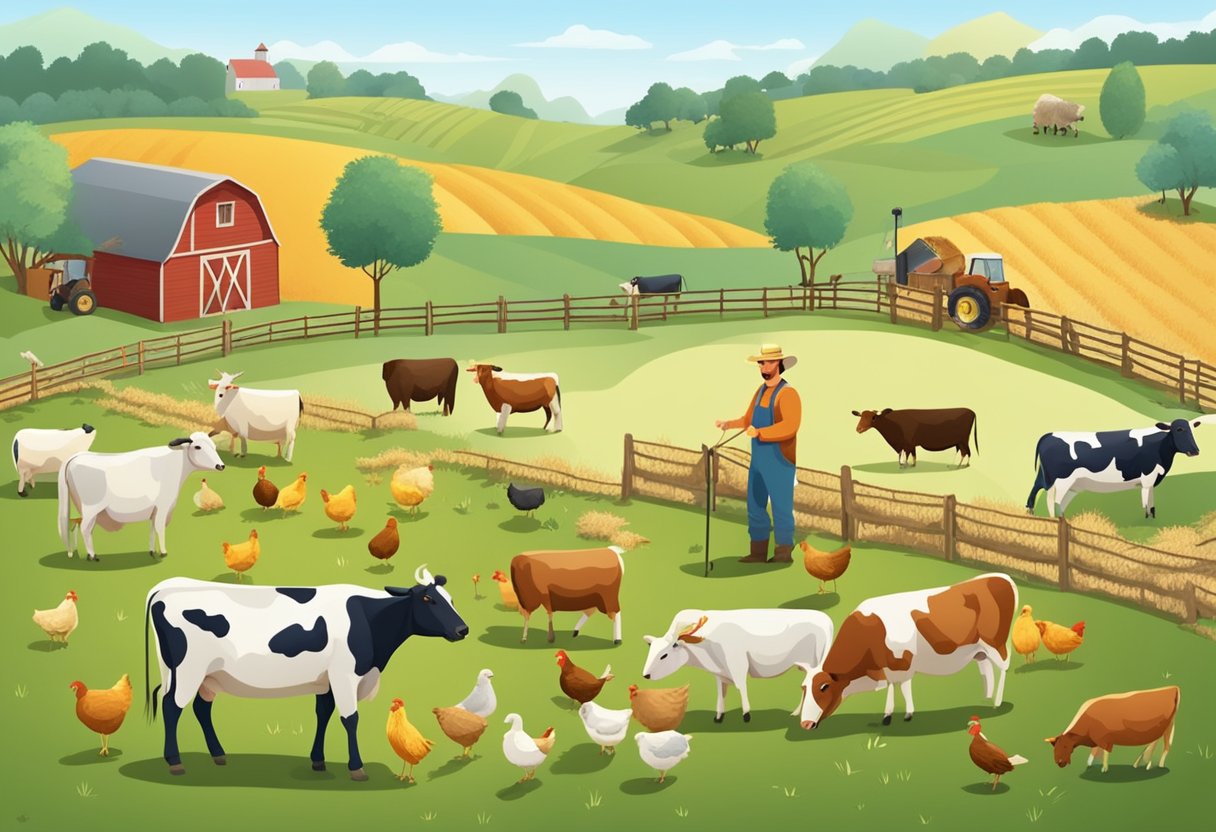
Maths on the farm is not just about profits and yields; it's a fundamental part of daily farm life, especially when it comes to managing livestock. Our days begin with...



Leave a Reply