The Awesome Grid Method: Multiplication for Kids 5
Table of Contents
The Grid Method: When children move from mental maths to tackling larger numbers, many hit a wall. The grid method provides a visual, step-by-step approach that breaks down complex multiplication into manageable chunks, making it one of the most effective strategies for Year 5 pupils learning to multiply numbers up to 4 digits by 2-digit numbers. This method bridges the gap between basic times tables and formal column multiplication, giving children the understanding they need to progress with confidence.
The grid method works because it makes place value visible. Rather than working with abstract numbers, children can see exactly which parts of the calculation they’re multiplying and why. This visual clarity prevents the most common errors that plague children at this stage: losing track of zeros, forgetting to add partial products, or mixing up place values.
For teachers planning Year 5 maths lessons and parents supporting homework, the grid method offers a structured approach that builds genuine number sense whilst meeting National Curriculum requirements.
What makes this method particularly valuable is its flexibility. Children struggling with multiplication find the grid gives them a reliable framework to work within, whilst more confident learners can use it to check their mental calculations or transition towards column methods.
The same technique that helps a Year 3 child multiply 24 × 6 scales up seamlessly for a Year 5 child tackling 4,321 × 16. LearningMole’s curriculum-aligned multiplication resources demonstrate these progressive stages through engaging video content, showing children how to partition numbers, set up grids accurately, and combine partial products with confidence.
What is the Grid Method? (And Why Teachers Love It)

The grid method, also known as the box method or area model, is a multiplication strategy that partitions numbers by place value and organises calculations in a visual grid. Children split each number into its component parts (hundreds, tens, ones), multiply these parts separately, then add the results together to find the final answer.
Teachers value this approach because it makes mathematical thinking visible. When a child multiplies 43 × 27 using a grid, you can see exactly where they’re partitioning each number, which times table facts they’re applying, and how they’re recombining the partial products. This transparency makes misconceptions easy to spot and correct before they become embedded.
The method aligns perfectly with the UK National Curriculum’s emphasis on understanding place value and using visual representations before moving to abstract calculations. From Year 3 onwards, children are expected to progress from concrete resources through pictorial representations to abstract methods. The grid method sits squarely in that pictorial phase, providing a bridge that makes the later transition to column multiplication much smoother.
“The grid method isn’t just a trick for getting answers. It builds understanding of what multiplication actually means and why the formal algorithms work. Children who master the grid approach rarely struggle with column multiplication later because they’ve already internalised the place value relationships,” explains Michelle Connolly, Founder of LearningMole and former teacher with over 15 years of classroom experience.
The method works for all types of multiplication covered in primary schools:
- Single-digit by multi-digit (6 × 243)
- Two-digit by two-digit (27 × 34)
- Three-digit by two-digit (456 × 23)
- Four-digit by two-digit (3,467 × 18, required in Year 5)
Each calculation follows the same logical structure, which gives children confidence as they progress to larger numbers.
How to Master the Grid Method: Step-by-Step
Let’s work through a Year 5 level example: 346 × 27. This requires multiplying a three-digit number by a two-digit number, which is a core Year 5 objective.
Step 1: Partitioning Like a Pro
Split each number by place value:
- 346 becomes 300 + 40 + 6
- 27 becomes 20 + 7
This partitioning step connects directly to children’s understanding of place value from earlier years. If children struggle with partitioning, they need more work on recognising the value of each digit’s position. LearningMole’s place value videos provide visual demonstrations that make this concept concrete.
The key is to write each partition in expanded form clearly. Some children find it helpful to use colours: blue for hundreds, red for tens, green for ones. This colour-coding supports children with dyscalculia or working memory difficulties by creating strong visual cues.
Step 2: Setting up the Awesome Grid
Draw a grid with one partition along the top and the other down the left side. The grid creates separate boxes for each multiplication that needs to happen. Children can see there will be six separate calculations (3 × 2 = 6 boxes), which makes the task feel manageable rather than overwhelming.
Step 3: The “Zero Rule” for Multiplying by Tens
This is where many children make errors, so spend time here. When you multiply by 20, you’re really multiplying by 2 tens, not just 2.
Fill in the top row (multiplying by 20):
- 300 × 20 = 6,000 (not 600)
- 40 × 20 = 800 (not 80)
- 6 × 20 = 120 (not 12)
The “zero rule” isn’t about adding zeros randomly. It’s about understanding that 20 means 2 tens, so 300 × 20 means 300 groups of 2 tens, which equals 6,000.
A common mistake is children writing 600 instead of 6,000 because they multiply 3 × 2 and forget the place value. Using colour-coding helps: if 300 is written in blue and 20 in red, the answer 6,000 should combine these colours to signal it contains both hundreds and tens.
Now fill in the bottom row (multiplying by 7):
- 300 × 7 = 2,100
- 40 × 7 = 280
- 6 × 7 = 42
Step 4: Bringing it All Together with Column Addition
Add all six partial products: 6,000 + 800 + 120 + 2,100 + 280 + 42 = 9,342
The final addition step reinforces why the grid method is so effective: children can check each partial product separately if the final answer looks wrong. This self-checking ability builds mathematical confidence and problem-solving skills.
Year 5 Challenges: 4-Digit Numbers and Beyond

The UK National Curriculum specifically requires Year 5 children to multiply numbers up to 4 digits by a 2-digit number. This is a significant step up in complexity, but the grid method scales beautifully.
Let’s tackle 4,321 × 16 – a challenge that looks daunting but becomes manageable with the grid approach.
Partition:
- 4,321 becomes 4,000 + 300 + 20 + 1
- 16 becomes 10 + 6
Fill in each box:
Top row (× 10):
- 4,000 × 10 = 40,000
- 300 × 10 = 3,000
- 20 × 10 = 200
- 1 × 10 = 10
Bottom row (× 6):
- 4,000 × 6 = 24,000
- 300 × 6 = 1,800
- 20 × 6 = 120
- 1 × 6 = 6
Add all eight partial products: 40,000 + 3,000 + 200 + 10 + 24,000 + 1,800 + 120 + 6 = 69,136
This example demonstrates why the grid method is so effective for building understanding. Children can see that multiplication involves repeated addition of place value chunks, not magic tricks with numbers. Each box in the grid represents a real mathematical relationship: 4,000 lots of 10, 300 lots of 6, and so on.
Working with 4-digit numbers also reveals common errors more clearly:
- Forgetting zeros when multiplying by tens (writing 4,000 instead of 40,000)
- Misaligning digits during the final addition
- Losing track of which row they’re on
The grid structure prevents these errors because each calculation sits in its own space, clearly labelled by which parts are being multiplied.
For children who find this complexity challenging, LearningMole’s multiplication videos break down 4-digit calculations into smaller stages, demonstrating each partitioning step and partial product calculation with clear visual representations.
Grid Method vs Column Multiplication: Which is Better?

This question arises in nearly every Year 5 classroom and parent evening. The answer: both methods have value, and the grid method prepares children to succeed with column multiplication.
The Grid Method:
- Strengths: Makes place value visible, prevents loss of zeros, allows error-checking of each step, suits visual learners
- Limitations: Takes more space on the page, requires more writing, slower for simple calculations
Column Multiplication:
- Strengths: Compact, faster once mastered, efficient for complex calculations
- Limitations: Abstract, easy to lose track of place value, errors harder to identify
Think of the grid method as the training wheels that prepare children for the efficiency of column multiplication. When children understand why they’re multiplying by tens and hundreds through using the grid, the column method makes sense. The numbers they write in each row of long multiplication are the same partial products from the grid – they’re just written more compactly.
Many teachers introduce column multiplication by showing it side-by-side with a grid for the same calculation, helping children see the connection. Once this link is clear, children can choose which method suits them for different tasks.
The National Curriculum doesn’t mandate one method over another. What matters is that children can multiply accurately and explain their reasoning. The grid method excels at developing that reasoning because every step is explicit and visible.
Troubleshooting: 3 Common Mistakes Kids Make

Mistake 1: The Zero Mystery
Error: Writing 300 × 20 = 600 instead of 6,000
Why it happens: Children multiply the digits they see (3 × 2 = 6) without considering place value. They know they need “some zeros”, but guess rather than working it out systematically.
Fix: Teach the “zero counting” method. 300 has two zeros, 20 has one zero, so the answer needs all three zeros: 6,000. Better still, partition showing the tens explicitly: 300 × (2 tens) = 600 tens = 6,000.
Mistake 2: Misaligned Addition
Error: Adding the partial products incorrectly because the place values aren’t aligned
Fix: Use squared paper so each digit sits in its own column. Write the largest number first, then align subsequent numbers by place value. Some children benefit from colour-coding: ones in green, tens in red, hundreds in blue, thousands in purple.
Mistake 3: Incomplete Grids
Error: Forgetting to fill in all the boxes, especially in larger grids with 8 or 12 sections
Fix: Count the boxes before starting and check that the number matches the number of partial products at the end. For 346 × 27, there should be six boxes (3 partitions × 2 partitions = 6). If you only have five partial products when adding up, something’s been missed.
Teaching Resources and Support

Classroom Resources
LearningMole provides curriculum-aligned video resources that demonstrate the grid method with visual clarity. Our multiplication and division videos show each partitioning step and partial product calculation, making abstract concepts concrete for Years 3-6.
Teachers preparing grid method lessons can access printable grid templates in various sizes, worked examples for different year groups, differentiated activities for mixed-ability classes, and assessment tasks aligned to National Curriculum objectives.
Supporting Learning at Home
Parents helping with homework benefit from understanding the method their child is being taught at school. The grid method can look unfamiliar to parents who learned column multiplication, but once they see how it works, most recognise its clarity.
For home learning, LearningMole’s resources work well because videos explain at a child’s pace with pause-and-rewind capability, step-by-step examples match school methods, activities progress from 2-digit to 4-digit calculations, and content aligns with what children learn in UK classrooms.
Why Video Resources Work
Visual demonstrations help children retain mathematical procedures more effectively than text-based explanations alone. When children can see numbers being partitioned, grids being filled in, and partial products being added, they build mental models that support independent work.
LearningMole’s multiplication resources use colour, animation, and clear voiceover to make each stage of the grid method explicit. This combination of visual and auditory information supports different learning styles and helps children who struggle with written instructions alone.
FAQ: Everything You Need to Know About the Grid Method
At what age should children start learning the grid method?
Children typically encounter the grid method in Year 3 when they begin multiplying 2-digit numbers by single digits. The UK National Curriculum introduces multiplication using place value partitioning from Year 3, with complexity increasing through KS2. By Year 5, children should be comfortable using the grid method for calculations up to 4 digits by 2 digits.
Is the grid method better than the column method?
The grid method and column method serve different purposes. The grid method builds understanding by making place value visible and showing why multiplication works. Column multiplication is more efficient once understanding is secure. Most children benefit from starting with the grid method before transitioning to column multiplication in Year 5 or 6. The grid method is better for learning; column multiplication is better for speed once the concept is understood.
Why do schools use the grid method now?
UK schools teach the grid method because it prevents the most common multiplication errors: losing zeros, mixing up place values, and treating multiplication as a memory exercise rather than a logical process. The method aligns with current pedagogical understanding about how children learn maths most effectively: moving from concrete resources through pictorial representations to abstract methods. Research shows children who understand the “why” behind procedures make fewer errors and develop stronger number sense.
What is the difference between the grid method and the area model?
The grid method and area model are the same approach with different names. Both partition numbers by place value and organise calculations into a grid or array structure. Some teachers call it the “box method” when working with younger children. The term “area model” emphasises that each box in the grid represents an area calculation (length × width), which connects to children’s work on finding areas of rectangles.
Can you use the grid method for decimals?
Yes, the grid method works excellently for decimal multiplication in Years 5 and 6. The grid structure helps children keep decimal points aligned and see which place values they’re multiplying. For example, 3.4 × 2.6 partitions as (3 + 0.4) × (2 + 0.6), creating four boxes. The method is particularly helpful for understanding why the answer has two decimal places when each number has one decimal place.
Is the grid method taught in UK secondary schools?
Yes, the grid method appears in secondary maths when students learn to expand algebraic brackets. The technique for expanding (x + 3)(x + 5) is identical to the grid method for multiplying numbers. Students create a 2 × 2 grid with algebraic terms instead of numbers. This connection makes the grid method particularly valuable; time spent learning it in primary school pays dividends in secondary algebra.
How do I help a child who keeps getting the wrong number of zeros?
The zero problem stems from weak place value understanding. Use colour-coded place value charts where hundreds are always blue, tens are always red, and ones are always green. When multiplying 300 × 20, children can see they’re combining “three blues” with “two reds”, which creates “six purples” (thousands). Physical place value counters also help: show 300 as 3 hundred counters, multiply by 20 using arrays, and count the result as 60 hundred counters = 6,000. LearningMole’s place value videos demonstrate this concretely.
What resources help teach the grid method effectively?
Effective grid method teaching requires squared paper for alignment, place value charts showing hundreds/tens/ones, coloured pencils for visual coding, and access to visual demonstrations. LearningMole’s curriculum-aligned videos show grid method calculations with clear step-by-step progression from simple to complex examples. Printable grid templates in various sizes help children practise without getting distracted by drawing accurate boxes. Manipulatives like base-ten blocks make the connection between physical grouping and abstract multiplication explicit.
Explore LearningMole’s Maths Resources
LearningMole provides curriculum-aligned educational videos and teaching materials for primary mathematics. Our multiplication resources progress from basic times tables through grid method calculations to column multiplication, supporting children at every stage of their maths journey.
Whether you’re a teacher planning Year 5 lessons or a parent helping with homework, our library covers core KS1 and KS2 maths topics with engaging, child-friendly explanations. Explore our multiplication and division resources or browse our full maths video collection for comprehensive curriculum support.
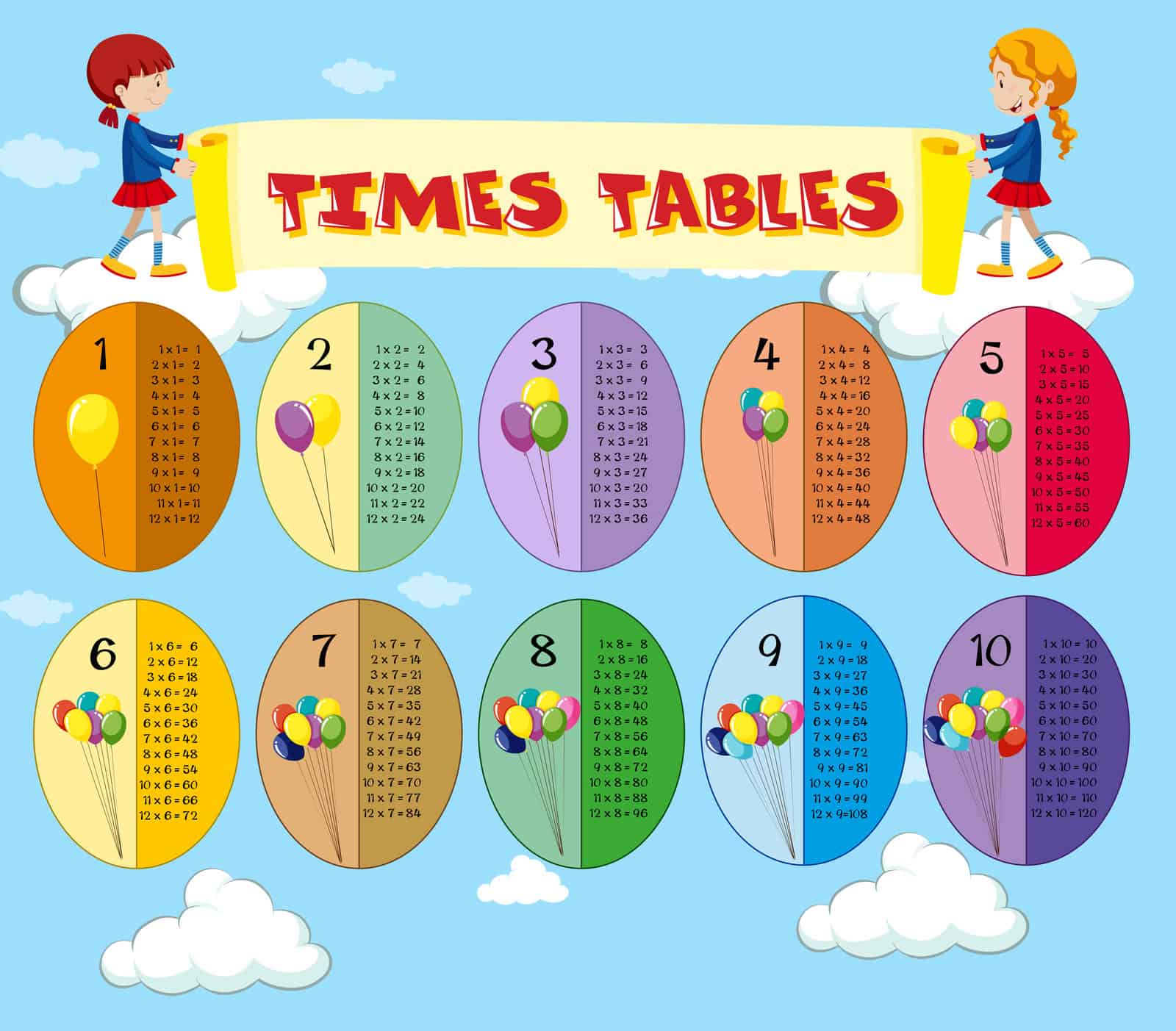
Would you like to know more about multiplication? Come and check our timetables articles: x10 Magic Tables, x9 Magic Tables, x8 Magic Tables, x7 Magic Tables, x6 Magic Tables, x5 Magic Tables, x4 Magic Tables, x3 Magic Tables and x2 Magic Tables.


Leave a Reply