Finding reliable teaching resources India schools can trust takes some research, but the country now has a strong base of government and private options. DIKSHA, run by the Ministry of Education, offers curriculum-linked content in multiple languages, while NCERT’s official website provides free textbooks and teaching aids for every stage.
These sit alongside apps, video libraries (including free lessons on LearningMole’s YouTube channel, @LearningMole) and teacher communities that support classroom and home learning. For a wider library of classroom-ready videos and guides across every subject, browse our teaching resources.
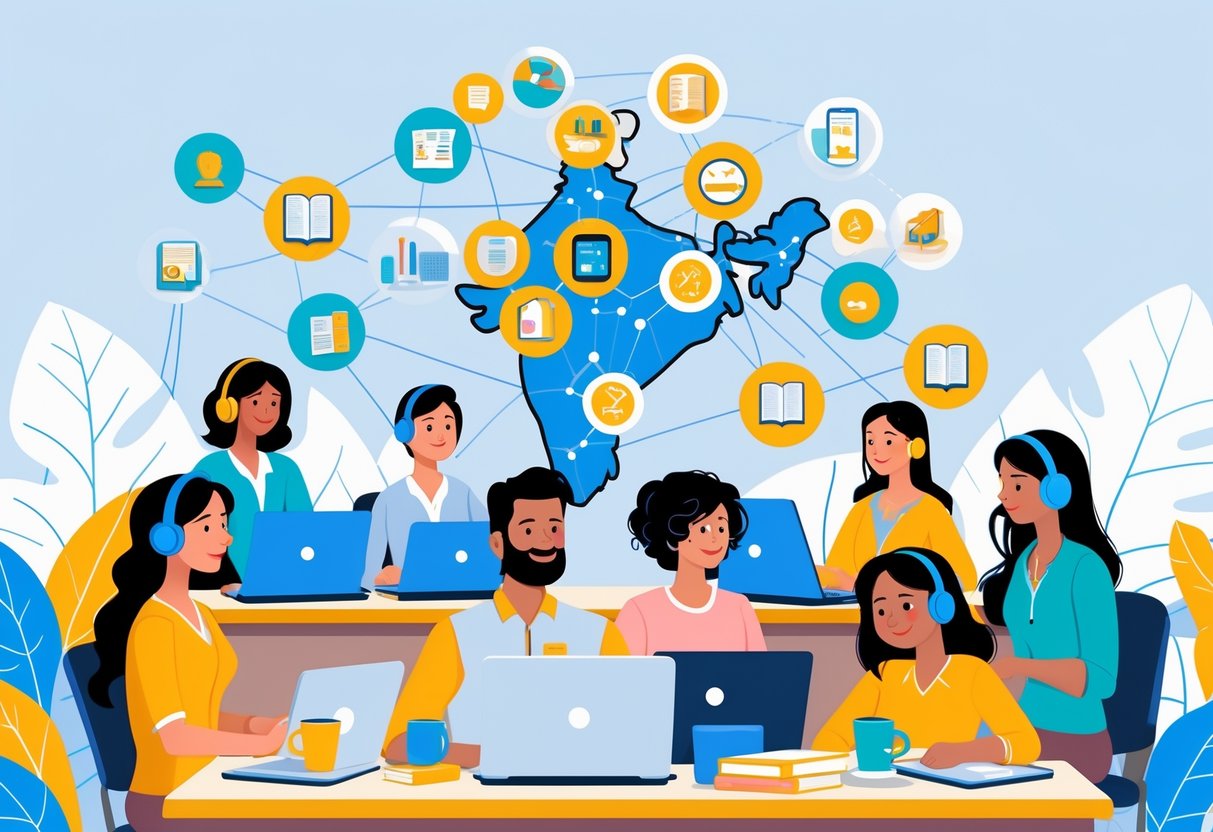
India offers a wide range of educational materials. Government platforms like DIKSHA, private resources, and open educational content support both classroom and digital learning.
These resources help educators teach across different curriculum standards and contexts.
Definition and Types of Resources
Teaching resources in India include digital platforms, printed materials, and interactive tools. These tools support educators in delivering lessons effectively.
Government initiatives like DIKSHA provide teaching materials in multiple languages. These materials align with national curriculum standards.
Digital platforms are central to modern education. They offer video lessons, interactive exercises, and assessment tools for teachers.
Traditional resources include textbooks, worksheets, and printed materials. The NCERT website provides curriculum-aligned textbooks and teaching aids.
Open Educational Resources (OER) are freely accessible materials. Teachers use and adapt these high-quality resources for their classrooms.
Michelle Connolly, founder of LearningMole, says, “The diversity of teaching resources in India shows the country’s commitment to accessible, quality education.
Current Trends in Indian Education
Mobile-based learning platforms are changing how teachers access resources. Applications like Teacher App deliver free educational content and training to educators’ smartphones.
Technology integration has grown rapidly. Platforms offer live classes, attendance tracking, and administrative tools for classroom management.
Multilingual content helps teachers reach students in different states. Resources are now available in many regional languages.
Professional development resources now go beyond traditional training. Websites offer courses on educational psychology, teaching methods, and technology use.
Role in Supporting Teachers
Teaching resources in India help educators handle diverse classroom challenges. They provide lesson plans, assessment tools, and curriculum guidance to save preparation time.
Skill development programs help teachers improve their teaching methods. Platforms offer training in classroom management, subject techniques, and technology use.
Administrative support tools simplify routine tasks. Teachers use attendance systems, fee management tools, and parent communication platforms.
Content accessibility ensures teachers get quality materials, regardless of location or school resources. This helps maintain teaching standards everywhere.
Collaborative networks let teachers share resources and ideas. Many platforms build communities where educators connect and work on projects together.
Popular Online Learning Platforms for Teachers
Teachers in India now use digital platforms to deliver educational content and manage classrooms. These resources include both Indian solutions and global platforms adapted for India.
The platform supports CBSE, ICSE, IGCSE, NIOS, and Kerala board syllabi. You can track student progress and hold regular parent-teacher meetings.
Vedantu provides live group classes for students in Classes 6 to 12. Their WAVE technology makes online sessions interactive. The platform focuses on JEE, NEET, and Olympiad preparation.
Unacademy is a leader in competitive exam preparation. You can access resources for UPSC, NEET, CAT, and other entrance tests. Their educator network includes top performers from across India.
Michelle Connolly, founder of LearningMole, says, “Indian platforms understand local curriculum needs and exam patterns, making them invaluable for teachers.”
Global Resources Used in India
International platforms have adapted for Indian educators and students. Khan Academy offers free content in multiple Indian languages, covering maths, science, and SAT preparation.
You can track student progress with personalised dashboards. Their interactive lessons work well for foundational learning.
Google Classroom helps with assignment distribution and classroom management. You can integrate it with Google Meet, Docs, and Drive for online learning.
Skillshare focuses on creative skills. Teachers use it for professional development in design, photography, and digital content creation.
These global platforms bring proven methods and localised content to Indian users.
User Benefits and Features
Modern online teaching platforms offer features that make teaching easier. Live interactive whiteboards support real-time collaboration.
Key platform features include:
Automated attendance tracking and progress reports
Built-in assessment tools and quiz generation
Screen sharing and breakout rooms
Lesson recording for playback
Mobile app access for flexible teaching
Automated grading systems reduce administrative workload. Most platforms provide analytics to show student engagement and learning gaps.
Chegg India gives subject experts flexible earning opportunities. You can answer academic questions in subjects like accounting, physics, and engineering.
The platforms support different teaching styles. You can use live instruction, recorded lessons, or blended approaches.
Regular updates keep you equipped with the latest technology features.
Access to Lesson Plans and Worksheets
Teachers in India can access thousands of ready-made lesson plans and worksheets through digital platforms. Customising these materials helps meet local classroom needs.
Sourcing Ready-Made Lesson Plans
The DIKSHA platform provides lesson plans mapped to Indian curricula for all school stages. You can access these materials offline on smartphones and tablets.
Key platforms for ready-made resources:
DIKSHA: Government-backed platform with NCERT-aligned content
Teacher Planet: Lesson plans for Indian history and culture
Twinkl India: Interactive activities and presentations
Viva TSP: Video explanations and worksheets for CBSE grades 1-5
Most platforms organise content by subject, grade, and learning outcomes. You will find concept videos, assessment aids, and activity sheets ready for use.
Michelle Connolly, founder of LearningMole, says, “These platforms save teachers valuable preparation time by providing quality-tested resources.”
The materials come in regional languages and follow state board requirements. This reduces the need to adapt content.
Customising Materials for Indian Classrooms
Standard lesson plans often need changes to fit your classroom. Consider students’ language skills, cultural backgrounds, and available resources.
Essential customisation steps:
Translate key terms into local languages.
Replace examples with familiar contexts.
Modify activities based on classroom materials.
Adjust complexity for mixed-ability classes.
Many teachers create bilingual worksheets by adding explanations in students’ mother tongues. This helps students understand complex ideas.
You can edit digital worksheets with simple tools. Use local festivals, foods, or traditions as examples to make lessons engaging.
Time-saving tips:
Keep a template bank of modified layouts.
Create vocabulary boxes for key terms.
Add visual cues for non-English speakers.
Use simple language for instructions.
Sharing and Collaboration Among Teachers
Teacher communities in India share lesson plans and classroom strategies. Free lesson plan repositories let you contribute materials and access others’ work.
Many states have teacher networks for sharing worksheets. Other educators give feedback and suggest improvements.
You can partner with nearby schools to share resources. This lowers individual workload and maintains quality materials.
Effective sharing practices:
Include notes on what worked well.
Mention grade levels and subjects.
Share successes and challenges.
Provide context about your students.
Digital platforms make collaboration simple. You can upload and download resources from teachers with similar needs.
Integrating Digital Educational Content
Digital educational content changes how students learn. Videos, eBooks, and apps create engaging classrooms and support different learning styles.
Types of Content: Videos, eBooks, Apps
Educational videos make complex topics easy to understand. You can use animations for maths or documentary clips for history.
Science experiments become safer when you show them on video first. Language lessons benefit from native speaker guides and cultural clips.
eBooks provide interactive reading experiences that go beyond traditional textbooks. Digital books include dictionaries, adjustable text, and audio narration.
Educational apps give immediate feedback and personalised learning paths. Maths apps change difficulty based on student performance.
Content Type
Best For
Key Benefits
Videos
Visual learners
Replay, pause for notes
eBooks
Independent reading
Searchable, portable, accessible
Apps
Practice sessions
Instant feedback, gamification
Language apps use spaced repetition for better vocabulary retention. Creative apps let students make presentations and digital artwork.
Implementing Multimedia in Classrooms
Start with one multimedia tool per subject. This helps you avoid feeling overwhelmed.
Interactive whiteboards support whole-class discussions and collaborative problem-solving.
Smart classrooms and interactive tools make education more engaging and accessible. Instantly project student work for peer feedback sessions.
“Digital content allows teachers to cater to different learning preferences whilst maintaining curriculum standards,” says Michelle Connolly, founder of LearningMole.
Plan your lessons with technology as a support tool, not the main focus. Use tablets for research projects so students can compare sources quickly.
Set clear expectations for device usage. Establish rotation systems for shared equipment.
Create digital portfolios so students can track their progress across subjects.
Online learning platforms offer high-quality resources, especially for remote areas. Assign differentiated homework using learning management systems.
Train students on digital citizenship before introducing new platforms. Use multimedia assessment tools that show student understanding in different formats.
Professional Development for Teachers
Teachers can earn certifications and credentials through government bodies and educational institutions. Practical workshops and seminars give hands-on learning experiences.
Certifications and Credentials
The National Council for Teacher Education (NCTE) sets teacher qualification standards in India. NCTE India provides teaching resources, guidelines, and professional standards for Indian educators.
Government-backed programmes offer structured learning pathways. The Continuous Professional Development (CPD) programme in association with CBSE requires teachers to complete 50 hours of learning annually.
This initiative connects educators with CSIR labs and research institutions across India.
You can take free professional development online courses for teachers and earn certifications. These programmes cover modern teaching methodologies and educational technology integration.
“Online courses have changed how teachers develop their skills whilst maintaining classroom responsibilities,” says Michelle Connolly, founder of LearningMole.
International certifications from the British Council offer multilingual teaching approaches and English language development programmes. These qualifications boost your teaching credentials and career prospects.
Workshops and Seminars
Face-to-face training sessions teach practical skills you can use immediately in your classroom.
Regular workshops and blended learning approaches help you stay updated with educational practices and technologies.
Peer learning networks provide opportunities for collaborative professional growth. TeacherSITY offers professional development programs with community networks and web-based support systems for modern teaching challenges.
Subject-specific seminars focus on curriculum updates and teaching methods. These sessions address practical challenges like large class sizes and limited resources.
You’ll find workshops on:
Technology integration for interactive lessons
Assessment techniques that save marking time
Differentiation strategies for diverse learners
Behaviour management approaches
Many programmes combine theory with hands-on activities. This helps you apply new concepts directly in your teaching.
Curriculum-Aligned Resources and NEP 2020
Modern teaching resources must fit India’s changing educational framework. These resources should also encourage critical thinking and innovative lesson plans.
The National Education Policy 2020 changes how educational content connects with classroom practice.
Alignment with Indian Syllabi
Your teaching resources need to match state board requirements and CBSE guidelines. Most Indian schools follow structured syllabi by grade levels and learning outcomes.
Key alignment areas include:
Subject-specific competencies for each grade
Language progression from regional to English medium
Cultural context in all subjects
Assessment patterns matching board exams
Michelle Connolly, with her background in educational technology, says, “Effective curriculum alignment means your lesson plans should bridge policy guidelines with real classroom needs.”
NEP-friendly resources help teachers create support systems. These materials focus on competency-based learning, not rote memorisation.
State board variations require:
Regional language integration
Local cultural examples
State-specific historical content
Geography lessons with local environments
Your educational content should address multiple learning styles. Visual learners benefit from diagrams and charts. Auditory learners need discussion-based activities.
NEP 2020 Recommendations
The National Education Policy 2020 promotes holistic and flexible learning approaches. This policy shifts the focus from exam-centric teaching to skill development.
Core NEP 2020 principles include:
Multidisciplinary learning across subjects
Critical thinking through inquiry
Technology integration in daily lessons
Continuous assessment instead of final exams
Your lesson plans should use innovative teaching practices that engage students. Digital tools and interactive platforms connect traditional and modern methods.
The policy suggests reducing curriculum load by 50%. Focus on essential concepts rather than covering too much content.
Implementation strategies include:
Project-based learning activities
Cross-curricular connections
Local community involvement
Skill-based assessments
You can use NCERT’s updated teaching materials that align with new frameworks. These resources support both foundational and school education stages.
Fostering Critical Thinking in Students
Building critical thinking skills helps students become active problem-solvers. They learn to analyse, evaluate, and create solutions on their own.
Careful resource selection and proper assessment methods help students develop these skills across all subjects.
Resource Ideas and Activities
Question-based worksheets support critical thinking development. Create worksheets with open-ended questions that ask students to justify their answers.
Design activities with real-world scenarios. Present students with local community problems and ask them to suggest solutions using research and analysis.
Debate formats work well for Years 4-6. Choose topics like “Should school uniforms be mandatory?” to encourage inquiry-based learning and reasoning skills.
Activity Type
Age Group
Time Required
Compare and contrast worksheets
Years 2-3
20 minutes
Problem-solving scenarios
Years 4-5
30 minutes
Research projects
Years 5-6
Multiple lessons
Michelle Connolly says, “Critical thinking worksheets must move beyond right-or-wrong answers to help children explore the ‘why’ behind their reasoning.”
Try these activities:
“What if” scenarios that change story outcomes
Evidence hunts where students find proof for claims
Perspective taking through character role-plays
Assessment Methods
Traditional tests do not measure critical thinking well. Use portfolio assessments where students collect their reasoning over time.
Rubrics focused on thinking processes give better feedback than marks. Assess how students approach problems, not just their final answers.
Create peer assessment opportunities where students evaluate each other’s reasoning. This builds analytical skills and encourages collaborative learning.
Assessment Method
What It Measures
Best Used For
Thinking journals
Reflection and reasoning
Daily practice
Problem-solving tasks
Application of logic
Weekly challenges
Group discussions
Verbal reasoning
Topic conclusions
Observation checklists help you track student progress during activities. Notice which students ask questions, challenge assumptions, or suggest new approaches.
You can use exit tickets with questions like “What made you change your mind today?” or “What evidence convinced you most?”
Consider self-assessment tools where students rate their own thinking. This builds metacognitive awareness and critical analysis skills.
Resources for Different Educational Stages
Educational resources need to fit the developmental needs and learning styles of each age group.
Primary teaching materials focus on foundational skills through play-based activities. Secondary resources emphasise analytical thinking and exam preparation.
Primary School Materials
Primary school resources should build core literacy and numeracy skills with engaging, hands-on activities.
The foundational stage covers children from nursery through Class 2. At this age, learning happens best through play, movement, and stories.
Essential Primary Resources:
Interactive maths manipulatives and counting games
Phonics cards and reading comprehension worksheets
When teaching addition to Year 1 students, use colourful counters and visual aids instead of abstract worksheets. Quality teaching resources cover core subjects like English, maths, and social studies.
Digital Resources for Primary:
Educational apps with games
Interactive whiteboard content
Audio books and storytelling resources
Simple coding activities and STEM kits
Secondary School Materials
Secondary education resources prepare students for higher-level thinking and exams.
The secondary stage includes Classes 6-12. Students develop subject specialisation and analytical skills.
Key Secondary Resources:
Subject-specific textbooks aligned with curriculum standards
Laboratory equipment for science work
Reference materials and research databases
Mock examination papers and assessment tools
Career guidance and counselling materials
Educational content at this level needs depth and complexity. Students need resources that challenge their thinking and prepare them for exams.
Advanced Learning Materials:
Online learning platforms with video lectures
Digital libraries and research tools
Virtual laboratory simulations
Project-based learning templates
Collaborative workspace tools
Lesson plans should balance theory with practical application. Secondary students benefit from case studies, group projects, and real-world problem-solving that connect learning to future careers.
Adapting Resources for Diverse Learners
Teachers need flexible approaches and tools to create educational content for every student. By adapting curriculum and materials for diverse learners, teachers build environments where all students can succeed.
Inclusive Approaches
Your classroom includes students with different abilities, backgrounds, and learning styles. Universal Design for Learning (UDL) gives you flexible teaching methods to meet these varied needs.
Begin by checking your lesson plans for barriers. Ask if a student with dyslexia can read the text or if visual learners will understand a concept without diagrams.
Michelle Connolly, founder of LearningMole, says, “Teachers who embrace inclusive approaches often find their whole class benefits from multiple ways of presenting information. What helps one child usually helps many others too.”
Try these practical adaptations:
Offer materials in audio, visual, and text formats
Use clear and simple language in instructions
Add visual cues and diagrams
Let students choose how to show their learning
Break tasks into smaller steps
Open Educational Resources (OER) let you modify content freely, making learning more equitable. You can adjust reading levels, add visual supports, or create audio versions without worrying about copyright.
Differentiated Instruction Tools
Differentiated assessment uses many formats, including flexible timing and adaptive technology. Your educational content should reflect these varied approaches.
Assessment Modifications:
Give students more time for tests
Use alternative question formats
Offer oral assessments instead of written ones
Use portfolio-based evaluation
Allow peer assessment
Technology supports differentiation. Text-to-speech software helps struggling readers. Interactive whiteboards engage kinaesthetic learners. Recording devices let students share ideas verbally.
Create lesson plans at different complexity levels. The basic version covers essential concepts. The intermediate adds more detail. The advanced version includes extension activities. All versions focus on the same learning objectives.
Learning Style
Resource Adaptation
Example
Visual
Add diagrams, charts, colours
Mind maps for science topics
Auditory
Include recordings, discussions
Podcast-style history lessons
Kinaesthetic
Hands-on activities, movement
Maths manipulatives, drama
Keep a resource bank of adapted materials. When you modify a worksheet for one student, save it for future use. Build collections of simplified texts, visual supports, and extension activities.
Present your differentiated approach as options for everyone. Students should not feel singled out for using different materials.
Free and Paid Resource Platforms in India
Teachers in India can use both free government-backed resources and premium subscription services. These platforms provide basic curriculum materials and advanced interactive content for classroom learning.
Top Free Websites and Apps
The Indian government offers several free platforms for teachers and students. DIKSHA is the national digital education platform with curriculum-aligned content in many subjects and languages.
Khan Academy is a popular free resource. You can find thousands of video lessons covering maths, science, and humanities that match Indian curricula.
NCERT’s official website provides free textbooks and supplementary materials. These resources cover all subjects from primary to secondary levels in several Indian languages.
Educational websites in India for teachers include BYJU’S free content section and Vedantu’s free resources. These sites offer practice questions, concept videos, and lesson plans at no cost.
Popular Free Platforms:
DIKSHA (Government of India)
Khan Academy India
NCERT official resources
Google Classroom
YouTube Educational channels
Michelle Connolly notes, “Free educational resources can be incredibly valuable, but teachers need to evaluate them carefully to ensure they match their specific curriculum requirements and teaching goals.”
Premium Resources and Subscriptions
Paid platforms offer more features and personalised learning experiences. Online teaching platforms in India like Vedantu, Unacademy, and BYJU’S provide subscription-based access to advanced content.
Premium services include interactive simulations, progress tracking, and adaptive learning technologies. You can use automated assessments, parent dashboards, and personalised learning paths.
Coursera and Udemy offer professional development courses for teachers. These platforms help you improve your teaching skills and learn about new educational technologies.
Premium Platform Features:
Personalised learning analytics
Interactive multimedia content
Professional development courses
Advanced assessment tools
Priority customer support
Most digital education platforms in India offer free trials and flexible pricing. You can test premium features before choosing a subscription.
Subscription costs usually range from ₹500 to ₹5,000 per month, depending on the platform and features.
Future Trends in Indian Teaching Resources
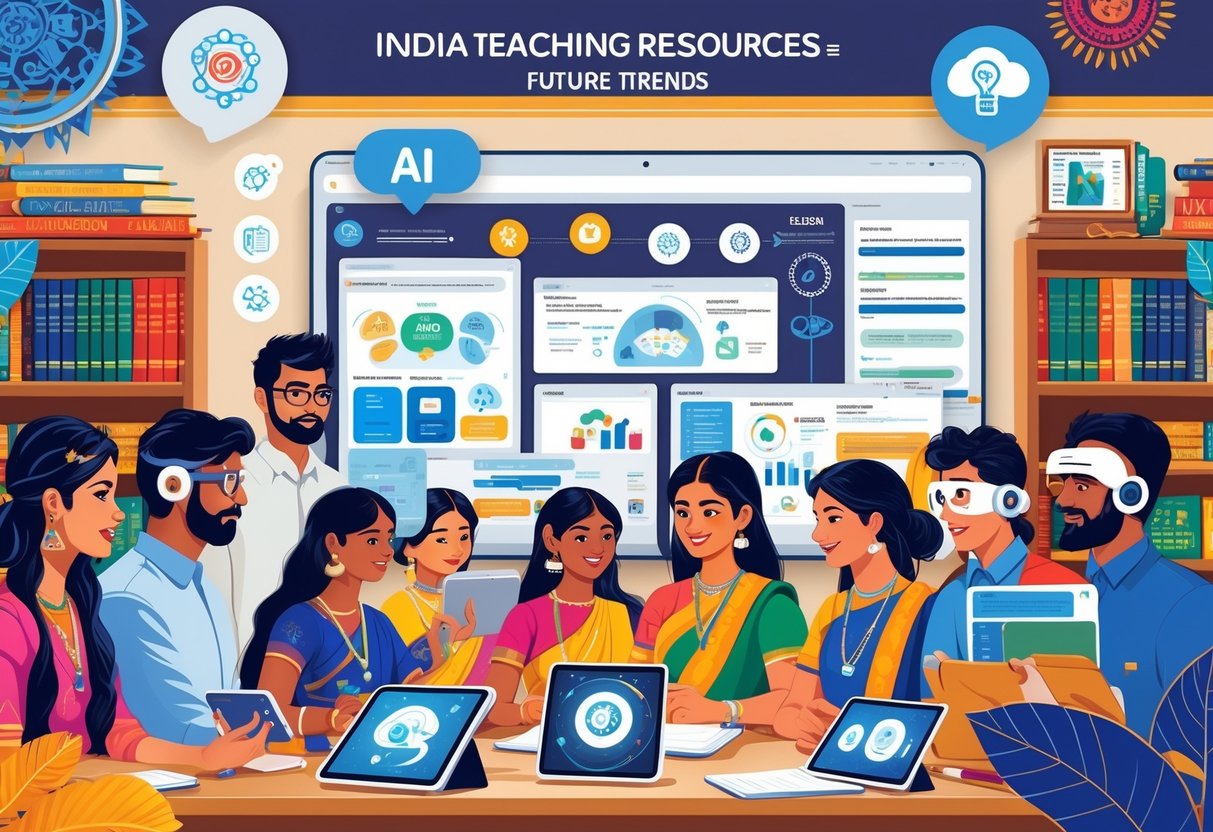
Indian teaching resources are changing quickly through digital transformation and new technology tools. These updates are reshaping how teachers deliver lessons and how students learn.
Digital Transformation
Digital platforms are changing teaching resources across India. AR and VR technologies turn classrooms into immersive learning spaces, going beyond textbooks and worksheets.
Online learning platforms now provide curriculum-aligned content. You can access interactive worksheets, multimedia presentations, and assessment tools through one digital interface.
Key digital resource developments:
Cloud-based lesson planning tools
Interactive whiteboards with curriculum content
Digital libraries with thousands of educational videos
Real-time collaboration platforms for group projects
Michelle Connolly says, “Digital resources allow teachers to personalise learning at scale whilst maintaining the human connection that’s essential for effective teaching.”
EdTech startups are expanding and offering more advanced teaching materials. Online professional development courses help you stay current with digital teaching methods.
Emerging Technology Tools
Artificial Intelligence enables tailored learning through adaptive platforms that assess student strengths and weaknesses. These tools provide customised content for individual needs.
Revolutionary technology tools:
Technology
Application
Benefit
AI Tutoring Systems
Personalised practice questions
Addresses learning gaps automatically
VR Field Trips
Virtual museum visits
Brings world experiences to classroom
Gamification Platforms
Interactive quizzes and rewards
Increases student engagement
Voice Recognition
Language pronunciation practice
Provides instant feedback
Gamification makes learning engaging and interactive with leaderboards and badges. This method works especially well for STEM subjects.
You can use augmented reality apps that add digital information to physical textbooks. Students point their tablets at diagrams and see 3D animations explaining complex ideas.
Machine learning algorithms analyse student performance and suggest resources. This saves you time searching for materials so you can focus on teaching.
Frequently Asked Questions
Indian educators often look for guidance on teaching resources and government support systems. These common questions address how to find free materials, use online platforms, and access curriculum resources.
What are the best online platforms for teacher resources in India?
DIKSHA is India’s main educational platform. This government initiative offers over 80,000 curriculum-linked resources in 15 languages. The platform provides explanation videos, interactive games, quizzes, and lesson plans aligned to NCERT and CBSE standards. Teachers can access content for grades 6 to 10 directly through the CBSE portal. E-Pathshala is another resource with audio files, videos, and eBooks for classes I to XII. The National Repository of Open Educational Resources (NROER) contains interactive content, audio files, and educational videos. SWAYAM offers courses covering school education from grades IX-XII and higher education programmes. Teachers can find NIOS-developed secondary and senior secondary content on this platform.
Where can I find free educational resources for primary teachers?
E-Pathshala provides primary resources through eBooks in ePUB format and flip books. These materials cover classes I to XII in several Indian languages. The platform aligns its content with NCERT textbooks, making lesson planning easier for primary teachers. You can access audio files to support different learning styles. DIKSHA uploads Creative and Critical Thinking questions weekly for classes VII-X, covering reading, mathematics, and science literacy. These resources help build analytical thinking skills in older primary students. CBSE offers a question bank for class X students, giving practice materials for exam preparation.
How can Indian educators access Khan Academy’s teaching materials?
Khan Academy operates as a global platform. Indian teachers access its free video lessons and practice exercises directly through the website. The platform works alongside government resources like SWAYAM Prabha, which runs 32 DTH TV channels that broadcast educational content 24/7. These channels are available across India with DD Free Dish Set Top Box. Many educators use Khan Academy’s content with local materials from DIKSHA and E-Pathshala. This gives students both global perspectives and curriculum-aligned Indian content. Michelle Connolly says that combining international platforms with local curriculum resources creates a more complete learning experience for students.
What government-provided teaching resources are available in India?
The Indian government offers digital infrastructure through several key platforms. DIKSHA is the main hub used by 35 States/UTs and CBSE to improve teaching experiences. SWAYAM Prabha operates 32 educational TV channels that broadcast content around the clock. Channel 27 (Panini) focuses on secondary education, and Channel 28 (Sharda) covers senior secondary content. The National Digital Library of India brings together resources for schools, colleges, and universities. This platform serves teachers, students, and differently-abled pupils at all levels. Government YouTube channels provide subject-specific content. NIOS runs channels for classes 9-10 and 11-12, and CBSE offers content for class 12 Physics, Chemistry, and Mathematics.
Can you recommend comprehensive teaching materials for the Indian curriculum?
DIKSHA offers comprehensive curriculum-aligned materials for Indian schools. The platform organizes content based on NCERT textbook structures. This setup makes it easy for teachers to find what they need. Textbook question banks give class X students plenty of practice materials. These resources help with both teaching and assessment preparation. NROER includes many types of content such as 2,779 documents and 1,345 interactive pieces. It also provides 6,153 videos to support different teaching styles and learning preferences. CBSE’s podcast app ‘CBSE-Shiksha Vani’ shares audio content, including storytelling and academic subjects. This platform helps students, parents, and teachers stay informed.
How does the Bureau of Indian Education support teachers with resources?
The search results do not provide specific details about the Bureau of Indian Education’s teacher support programmes. India offers educational support through various government initiatives and policies. The National Education Policy (NEP) 2020 is a government initiative aimed at improving India’s education system. This policy guides the development of resources and teacher support programmes. Teacher support programmes help teachers improve their professional skills through training and recognition. Volunteer teacher programmes also support classroom efforts. Government platforms like DIKSHA and SWAYAM provide teachers with access to high-quality resources. These platforms offer professional development opportunities for teachers.
What are the best teaching resources India teachers can access for free?
DIKSHA and NCERT’s official website remain the most widely used free platforms, offering curriculum-aligned lesson plans, textbooks and videos in multiple Indian languages. Khan Academy and Google Classroom are popular additions for video lessons and assignment management alongside these government resources. Michelle Connolly, LearningMole founder, has over 15 years of experience, and notes that combining government platforms with international content gives Indian teachers a fuller picture of what’s available. For a broader library of classroom-ready videos and guides, teachers can browse our teaching resources.
Maths Circus, an innovative platform we've crafted, presents a captivating realm where children learn mathematics through the exciting theme of a circus. The joy of juggling numbers and solving circus...
Respiratory System Facts for Kids: You breathe roughly 20,000 times a day, and almost every one of those breaths happens without you thinking about it. The respiratory system is the group...
Article Summary What this article covers: An introduction to Christianity for children, covering who Christians are, the story of Jesus, the Bible, churches and worship, Christian symbols, the main festivals...
Article Summary What this article covers: How Roman numerals work, where they came from, why the Romans had no zero, how their system compared with Egyptian and Babylonian numbers, the...





Leave a Reply