Quality summer term resources combine engaging activities with structured learning. These resources help prevent academic decline and keep students motivated.
The best platforms provide curriculum-aligned materials. They also offer flexible tools that suit different learning environments.
Top Summer Learning Tools
Digital platforms now lead summer learning. Reading programmes help children keep their literacy skills sharp with interactive stories and phonics games.
Learning Heroes Summer ReCharge is a collaborative planning tool. It lets you work with families to create personalised learning plans and strengthens the partnership between home and school.
Mathematics apps give children daily practice through gamified exercises. Adaptive algorithms adjust the difficulty to match your child’s performance.
Michelle Connolly, founder of LearningMole, says, “Summer learning tools work best when they feel like play—children engage more when activities spark curiosity.”
Essential tool categories include:
Reading platforms with levelled texts and comprehension activities
Mathematics games featuring problem-solving challenges
Summer reading programmes offer structured ways to maintain reading fluency. Choose platforms with both fiction and non-fiction texts at various levels.
Writing activities should link to your child’s interests. Travel journals, comic creation, and digital storytelling tools keep children engaged while building writing skills.
Mathematics Resources
Visual maths resources help children understand abstract ideas. Fraction bars, geometry manipulatives, and measurement tools make learning concrete.
Science and Nature Study
Everyday science experiences turn simple toys into learning tools. Water play teaches physics, and gardening shows life cycles at work.
Creative Arts
Art supplies, musical instruments, and drama activities support creative expression. Summer offers more time for these activities to flourish.
Free and Paid Resource Platforms
Free Options
Public libraries run summer programmes with reading challenges and workshops. Museums and libraries offer trusted, family-friendly learning experiences.
Many educational websites provide free summer content. Khan Academy covers many subjects, and BBC Bitesize offers curriculum-aligned activities for UK students.
Premium Platforms
Paid subscriptions often give you more tracking and personalised learning paths. These platforms usually offer detailed progress reports and adaptive content.
Hybrid Approaches
You can combine free and paid resources for the best results. Use free content for exploration and paid platforms for structured skill building.
Choose platforms that fit your child’s learning needs. Some children like gamified content, while others prefer traditional workbook formats.
Key Maths Resources for the Summer Term
Summer learning resources help children avoid the summer slide. They keep maths engaging with themed activities and interactive materials.
These resources mix skill practice with seasonal fun. They help children keep up their maths during the summer months.
Summer Maths Activity Packs
Activity packs offer structured learning to prevent summer learning loss. Each pack includes worksheets, games, and creative challenges with summer themes like ice cream and beaches.
Choose packs with answer keys and parent guidance notes. These features make it easier for you to help your child, even if the maths is new.
Michelle Connolly says, “The best summer maths packs mix skill revision with seasonal themes that capture children’s curiosity.”
Essential features to seek:
Age-appropriate content that matches curriculum standards
A mix of computation and problem-solving activities
Visual elements like illustrations and diagrams
Progress tracking sheets
Online Summer Math Games
Digital platforms turn summer maths practice into interactive adventures. Gamification keeps children engaged and reinforces core concepts through play.
Pick platforms with adaptive difficulty levels that adjust to your child’s abilities. This keeps the challenge just right and avoids frustration.
Many online resources offer detailed progress reports. You can see which areas need more support and celebrate your child’s achievements.
Top features to prioritise:
Curriculum-aligned content
Multi-device compatibility for flexibility
Offline options for travel or limited internet
Reward systems to motivate participation
Switch between different platforms each week. This keeps things fresh and lets children see maths in different ways.
Hands-On Numeracy Kits
Physical manipulation helps children understand maths through touch and movement. These kits turn abstract ideas into real objects for deeper learning.
Essential manipulatives include:
Base-ten blocks for place value
Fraction tiles for understanding parts and wholes
Measuring tools for practical maths
Pattern blocks for exploring geometry
Create summer-themed activities with everyday items. For example, use seashells for counting or measure sunflower growth to teach data collection and graphing.
Store materials in clearly labelled containers. This helps children work independently and stay focused.
English and Reading Programmes
Strong English and reading programmes support effective summer learning. These programmes combine reading lists, grammar activities, and interactive comprehension resources to keep literacy skills sharp.
Summer Reading Lists
Building a good summer reading list means balancing challenge and enjoyment. Include books that match different reading levels within each year group.
Story writing challenges with specific grammar targets
Digital grammar apps with progress tracking
Writing activities work well when they connect to children’s interests and experiences. Summer holidays offer material for descriptive writing, diary entries, and creative stories.
Weekly Writing Challenges:
Week 1: Write a postcard from an imaginary holiday destination
Week 2: Create a comic strip with dialogue and speech bubbles
Week 3: Write instructions for a summer game or activity
Week 4: Compose a persuasive letter about a summer wish
These challenges cover different text types and keep writing enjoyable. Adjust word counts or vocabulary to fit your child’s level.
Storytelling and Comprehension Resources
Storytelling activities build speaking, listening, and reading comprehension skills. Use resources that encourage children to participate actively.
Digital storytelling tools add a modern twist. Children can create audiobooks, record story reviews, or make simple video book reports.
Comprehensive summer reading programmes help children avoid losing reading progress over the holidays. Children can lose up to three months of reading skills without regular practice.
Family Involvement Strategies:
Reading partnerships: Children and adults read the same book
Story swapping: Family members take turns choosing books
Book discussion dinners: Talk about current reads over a meal
Community storytelling: Share stories with friends or neighbours
Include prompts for discussion, creative response activities, and links to other subjects in your storytelling resources. This builds comprehension, vocabulary, and wider knowledge.
Science, Technology, and Creative Projects
Summer science investigations mix hands-on experiments with digital tools. Creative design projects blend art with educational technology for engaging summer STEM activities.
Science Investigation Packs
Summer science packs turn everyday materials into exciting experiments. You can set up investigation stations with household items like vinegar, baking soda, and food colouring.
Essential Investigation Components:
Observation journals for recording predictions and results
Measuring tools such as rulers, scales, and timers
Safety equipment like gloves and goggles
Material lists with clear instructions for each experiment
Michelle Connolly explains that hands-on science investigations help children develop critical thinking skills and maintain curiosity about the world.
Try creative hands-on STEM activities by grouping experiments into themed weeks. Focus on topics like water cycles, plant growth, or simple chemistry.
Popular investigation themes include growing crystals, making volcano eruptions, and building simple circuits. Each pack should offer extension activities for different ability levels.
Technology & Coding Activities
Digital summer learning resources introduce programming concepts through games and interactive projects.
You can start with visual coding platforms that use drag-and-drop blocks instead of complex text-based languages.
Recommended Coding Platforms:
Scratch Junior for ages 5-7 with simple block programming
Code.org offering free courses with step-by-step tutorials
Tynker providing game-based coding challenges
BBC Micro combining physical computing with coding
This pack includes sensory play ideas like glowing jellyfish pools and textured stars, plus printable games such as the Spider Web Board Game and Sea Creature Races.
“Summer learning for SEN children works best when activities feel like play rather than formal lessons,” says Michelle Connolly, founder of LearningMole with 16 years of classroom experience.
“The key is finding that balance between engagement and educational value.”
Popular Activity Types:
Sensory exploration stations
Interactive choice-making games
Story-based learning with familiar characters
Movement and music activities
Art and craft projects with adaptive tools
Inclusive Planning and Support Tools
You can structure activities around each child’s routine and sensory needs by using effective summer planning resources.
These resources recognise that one size does not fit all.
You can create resource boxes with different themes such as ocean adventures, space exploration, or garden discoveries.
This approach lets you rotate activities while maintaining familiar formats that children recognise and enjoy.
Transition and End of Year Activities
You can help students reflect on their learning journey and prepare for transition by using structured activities in the final weeks of summer term.
These resources offer memory-making opportunities and emotional support during what can be an anxious time for many pupils.
Reflection and Memory Book Templates
Memory books give students a way to capture their growth throughout the year.
You can create simple templates with sections for favourite memories, new skills, and friendships.
“Memory books provide children with a tangible record of their achievements and help them recognise how much they’ve progressed,” says Michelle Connolly, founder of LearningMole with 16 years of classroom experience.
Popular memory book sections include:
Academic achievements – subjects mastered and challenges overcome
Friendship pages – drawings or photos of classmates
Growth tracking – height measurements and skill comparisons
You can try countdown activities where students complete one special task each day leading up to summer holidays.
Write goodbye letters for students who are leaving or moving to secondary school.
These personal messages provide comfort and encouragement during significant transitions.
Summer social stories help neurodivergent learners understand changes to their routine.
Summer Clubs and Extracurricular Enrichment
Summer clubs give students structured learning environments that combine education with enjoyment.
STEM programmes build technical skills, creative workshops develop artistic abilities, and sports activities promote physical development and teamwork.
STEM Holiday Clubs
STEM clubs offer hands-on learning experiences that make science, technology, engineering, and maths exciting during the summer learning period.
These programmes run weekly sessions covering robotics, coding, chemistry experiments, and engineering challenges.
“Many students discover their passion for STEM subjects through holiday clubs where they can explore without the pressure of formal assessment,” says Michelle Connolly, founder of LearningMole with 16 years of classroom experience.
Popular activities include:
Robot building workshops using LEGO Mindstorms or Arduino kits
Computer programming sessions with Scratch or Python
Science experiments like volcano eruptions and slime creation
Engineering challenges such as bridge building and tower construction
Most clubs accept children aged 6-16 and provide all necessary materials.
Sessions usually cost £25-40 per day, with many offering sibling discounts.
Creative Writing and Drama Camps
Writing and drama camps nurture imagination while helping children develop communication skills and confidence.
These programmes combine storytelling, performance, and creative expression in supportive environments.
Activities include:
Script writing and character development workshops
Poetry sessions exploring different forms and styles
Drama games building confidence and teamwork
Performance preparation leading to end-of-week shows
Camps often focus on themes like fantasy adventures, mystery stories, or historical periods.
Professional writers and actors often lead sessions and share industry insights with young participants.
Most programmes welcome children aged 7-17.
Age-appropriate groups ensure suitable content difficulty.
Daily rates range from £30-50, including lunch and materials.
Sports and Outdoor Challenges
Sports camps combine physical activity with skill development, offering everything from traditional team sports to adventure activities.
These programmes promote fitness, teamwork, and resilience through outdoor experiences.
Traditional Sports Options:
Football and rugby coaching
Cricket and tennis instruction
Swimming lessons and water sports
Athletics and cross-country running
Adventure Activities:
Rock climbing and abseiling
Orienteering and survival skills
Team building challenges
Environmental exploration projects
Many camps use school facilities or outdoor centres and provide professional coaching and safety equipment.
Full-day programmes typically cost £20-35.
Specialist adventure camps charge £40-60 per day.
Qualified instructors guide children through skill progression and maintain safety standards.
Assessment and Progress Tracking
You can use effective assessment during summer term to measure student growth and celebrate achievements.
Michelle Connolly, founder of LearningMole with 16 years of classroom experience, says, “Summer term evaluations should capture not just academic progress, but also confidence levels and enthusiasm for learning.”
Use both quantitative and qualitative measures.
Include sections for attitude towards learning, collaboration skills, and independence levels alongside academic achievements.
Create age-appropriate reflection sheets with simple questions. Use visual scales like smiley faces or traffic light systems for younger students.
Traffic Light Self-Assessment:
🔴 Red: I need more help with this
🟡 Yellow: I’m getting better at this
🟢 Green: I understand this well
Write “I can” statements that match learning objectives. Let students tick boxes or colour stars to show their confidence with specific skills.
Set up weekly reflection journals for students to write about their favourite learning moments. Ask them to name one challenge and one strategy that helped them improve.
Use digital self-assessment tools with older primary students. Simple online forms or apps help them track progress and set personal goals for the next week.
Progress Certificates and Rewards
Celebrate individual achievements during summer learning programmes with progress certificates and rewards. Recognition motivates students and provides tangible evidence of their development.
Create certificates that highlight specific accomplishments instead of generic awards. Titles like “Master of Multiplication Tables” or “Creative Writing Champion” feel more meaningful.
Design a tiered reward system to acknowledge different types of progress.
Academic Achievement Certificates:
Subject mastery awards
Improvement in specific skills
Reaching personal targets
Problem-solving persistence
Personal Development Recognition:
Helping others learn
Showing resilience during challenges
Demonstrating leadership qualities
Contributing positively to group work
Use measuring youth outcomes approaches to ensure certificates reflect genuine progress. Link rewards to learning objectives rather than just effort.
Create a “Progress Portfolio” for students to collect certificates and work samples. This builds a record of their summer term journey for parents and future teachers to appreciate.
Parent and Carer Guidance
Parents and carers support summer learning best when they have clear guidance. The right home learning packs, support strategies, and collaborative activities help maintain progress and keep summer enjoyable.
Home Learning Packs
Home learning packs offer structured activities to bridge the gap between school terms. These packs include worksheets, reading materials, and hands-on projects for independent or guided learning.
Key components of effective learning packs:
Age-appropriate reading books with comprehension questions
Many summer learning resources combine digital and physical materials. This variety keeps children engaged and develops different skills.
Pack organisation tips:
Set up a dedicated learning space at home
Schedule 20-30 minutes of pack time daily
Rotate subjects to maintain interest
Celebrate completed activities with small rewards
Tips for Supporting Summer Learning
Support your child’s summer learning with consistent routines and simple educational activities.
Daily learning strategies:
Read together for 15 minutes each day
Practice maths through cooking or shopping
Encourage journal writing about summer experiences
Use educational apps for short sessions
Local libraries offer summer reading programmes with rewards and social interaction. These programmes help prevent reading skills decline during long breaks.
Offer help when needed without doing the work for them
Learning environment essentials:
Good lighting and comfortable seating
Minimal distractions from screens or noise
Easy access to books and materials
Regular breaks for physical activity
Collaborative Learning Activities
Collaborative activities engage the whole family and reinforce academic skills. These shared experiences make learning positive and strengthen family bonds.
Family learning ideas:
Cook recipes that use measuring and fractions
Plan day trips using maps and research skills
Start a family book club with age-appropriate books
Try science experiments together
Outdoor activities offer hands-on learning opportunities. Nature walks can include science observation, maths through measuring, and literacy with nature journals.
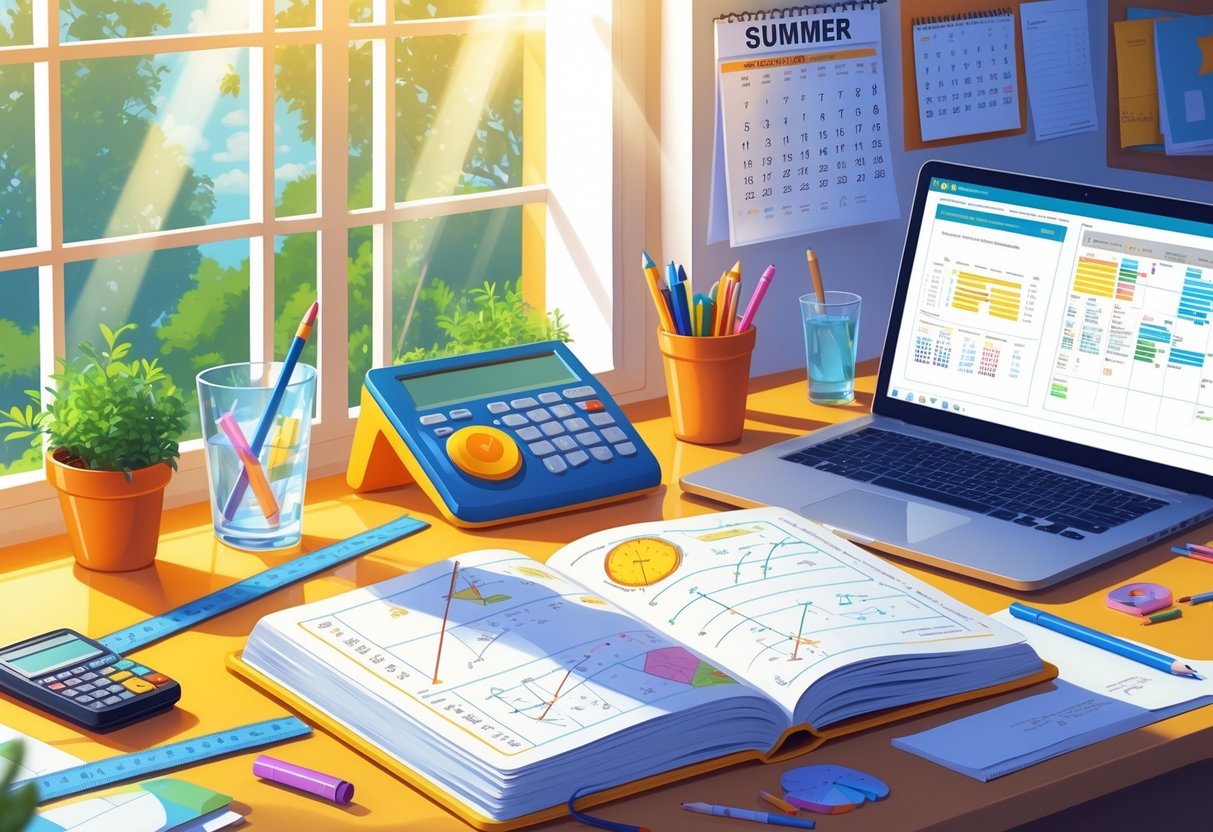
Teachers use specialised planning tools to manage the unique challenges of the summer term. Visual calendars, planners, and organised storage systems help streamline your workflow during this busy period.
Editable Display Calendars
Display calendars act as visual anchors for summer term planning. You can create a clear timeline to help pupils track important dates and events.
Key features to look for:
Monthly overview layouts for the summer term
Colour-coding options for subjects or activities
Space for notes on sports days, trips, and assessments
These calendars are valuable during summer term when you juggle assessments, sports events, and transitions. Teachers also use them to communicate dates to parents and staff.
Choose editable calendars to adjust dates as needed. Digital versions offer flexibility, while printed versions provide a constant visual reference in your classroom.
Lesson and Event Planners
Planning tools help you coordinate academic content and special events typical of summer term. Summer learning planning resources offer frameworks for structuring your term.
Essential planner components:
Feature
Purpose
Benefit
Weekly overviews
Track multiple events
Prevents double-booking
Assessment schedules
Plan testing periods
Avoids overwhelming pupils
Trip coordination
Manage permissions
Streamlines admin tasks
Transition planning
Prepare year-end moves
Reduces pupil anxiety
Use your planner for both routine lessons and special summer activities. Include space for outdoor learning, sports day preparations, and celebrations.
Many teachers use summer study planners to balance curriculum requirements with seasonal activities. These tools help maintain academic focus in a relaxed summer atmosphere.
Choose planners that work with your existing systems. This reduces administrative work and keeps your planning consistent.
Folder Dividers and Organisers
Organise paperwork carefully during summer term when documents increase quickly. Store report cards, assessment data, transition documents, and event permissions in a systematic way.
Effective organisation strategies:
Subject-based dividers for curriculum materials
Event-specific folders for sports days and trips
Assessment portfolios for pupil work samples
Administrative sections for permissions and correspondence
Use colour-coded systems to find documents quickly. This saves time during busy periods.
Digital organisers work well alongside physical storage. Photograph important documents for backup and keep physical copies for quick reference.
Label everything clearly and consistently. This helps colleagues find files during events or when preparing handover notes.
Set up your organisation system to support daily teaching and end-of-year administration. Plan storage to handle the extra paperwork at the end of summer term.
Outdoor and Practical Learning Resources
Learning outside the classroom boosts student engagement with summer term content. Nature exploration kits offer structured investigations, and playground activities encourage social learning through movement and games.
Nature Exploration Kits
A well-designed exploration kit turns any outdoor space into a hands-on classroom. Include magnifying glasses, collection containers, and guides for local plants and insects.
Create themed kits for specific learning objectives. For example, a ‘mini beast’ kit might have bug catchers, observation sheets, and a simple microscope. For plants, add measuring tapes, sketch pads, and pH strips.
Essential kit components:
Collection tools: Tweezers, small spades, collection bags
Investigation aids: Hand lenses, rulers, colour charts
Michelle Connolly, with a background in educational technology, says outdoor exploration kits bridge digital learning and hands-on discovery. These kits help children develop scientific observation skills naturally.
Store kits in weatherproof containers that children can carry. Label each item and include simple instruction cards with activity ideas.
Set up learning stations with playground markings. For example, a hundred square on tarmac becomes a giant number line for maths, while compass directions support orienteering.
Active learning games:
Number races: Children run to find answers around the playground
Shape hunts: Find geometric shapes in equipment
Science circuits: Explore forces, materials, and movement at stations
Change activities with the seasons to keep them fresh. Water play in hot weather combines cooling off with science about states of matter.
Use playground games to reinforce learning through movement and repetition. Children who struggle at desks often excel when learning through physical challenges.
Solar ovens show energy transfer, and shadow investigations explore Earth’s movement.
Set up long-term observation projects that last several weeks.
Plant growth experiments, weather monitoring, and butterfly lifecycle studies let children collect data over time.
Popular summer science activities:
Solar experiments: Test which materials heat up fastest in sunlight.
Water cycle demonstrations: See evaporation and condensation in action.
Shadow tracking: Record changes throughout the day.
Create investigation stations around your outdoor space.
Each station can focus on different scientific skills like measuring, observing, predicting, and recording results.
Link outdoor investigations to indoor follow-up work.
Children can graph weather data, write up experiment results, or research the science behind their observations.
Encourage children to ask questions about what they see outdoors.
These questions often lead to engaging science investigations and help develop critical thinking.
Developing Social and Emotional Skills
The summer term offers unique opportunities to strengthen pupils’ emotional intelligence and social skills through structured wellbeing programmes and mindful reflection.
These approaches help children build resilience and self-awareness during a key part of the school year.
These resources include activities focused on emotional regulation, friendship building, and stress management.
You can make packs with emotion cards, friendship scenario worksheets, and calming exercises.
Summer SEL activities help strengthen children’s self-esteem and emotional intelligence while preparing them for transitions.
Michelle Connolly, an expert in educational technology, says, “Wellbeing packs work best when they combine creative expression with practical coping strategies that children can use independently.”
Consider these essential elements for your packs:
Emotion recognition cards with facial expressions and feeling words
Many teachers find that social-emotional learning through hands-on activities makes a lasting impact.
These packs help pupils who have trouble expressing emotions verbally.
Mindfulness and Reflection Exercises
Mindfulness exercises help pupils build self-awareness and emotional regulation during the busy summer term.
Simple breathing techniques and guided reflections fit easily into your daily routine.
Start with five-minute sessions that focus on body awareness and present-moment attention.
You can use nature sounds, guided imagery, or simple meditation apps designed for children.
Reflection activities help pupils process their experiences and emotions.
Try daily check-ins where children share one highlight and one challenge from their day.
Essential mindfulness techniques include:
Activity
Duration
Best Time
Deep breathing
2-3 minutes
Before lessons
Body scan
5 minutes
After break
Gratitude reflection
3 minutes
End of day
Mindful walking
10 minutes
Outdoor time
Regular mindfulness practice gives pupils coping strategies they can use throughout their school years.
Create quiet reflection corners in your classroom with comfortable cushions and calming visuals.
Many pupils benefit from having a dedicated space for emotional processing and mindful moments.
Frequently Asked Questions
Parents and teachers often have similar questions about summer learning options for children.
These questions usually focus on finding quality programmes, accessing free resources, and choosing age-appropriate activities that keep learning fun during the holidays.
What are the best summer learning programmes for primary school children?
The best summer programmes for primary children combine structured learning with fun activities.
Look for programmes that keep routines but offer hands-on experiences your child doesn’t get during regular term time.
These programmes work best when they reinforce core skills in maths, reading, and writing through interactive methods.
Michelle Connolly, founder of LearningMole, says, “Summer learning should feel different from regular school but still maintain educational value. Children respond well to programmes that blend outdoor activities with literacy and numeracy practice.”
Maths Circus, an innovative platform we've crafted, presents a captivating realm where children learn mathematics through the exciting theme of a circus. The joy of juggling numbers and solving circus...
Athena was the ancient Greek goddess of wisdom, strategy and defensive warfare, and the protector of the city of Athens, which still carries her name. In the stories the Greeks...
The Mysterious World of Bees: Bees are stranger and cleverer than most children expect, and the UK alone is home to around 270 bee species. Only one of them is...
Fruit helps protect the body from disease because it delivers fibre, vitamins, minerals and natural plant compounds that support the heart, the gut, blood sugar control and healthy cells. The...







Leave a Reply