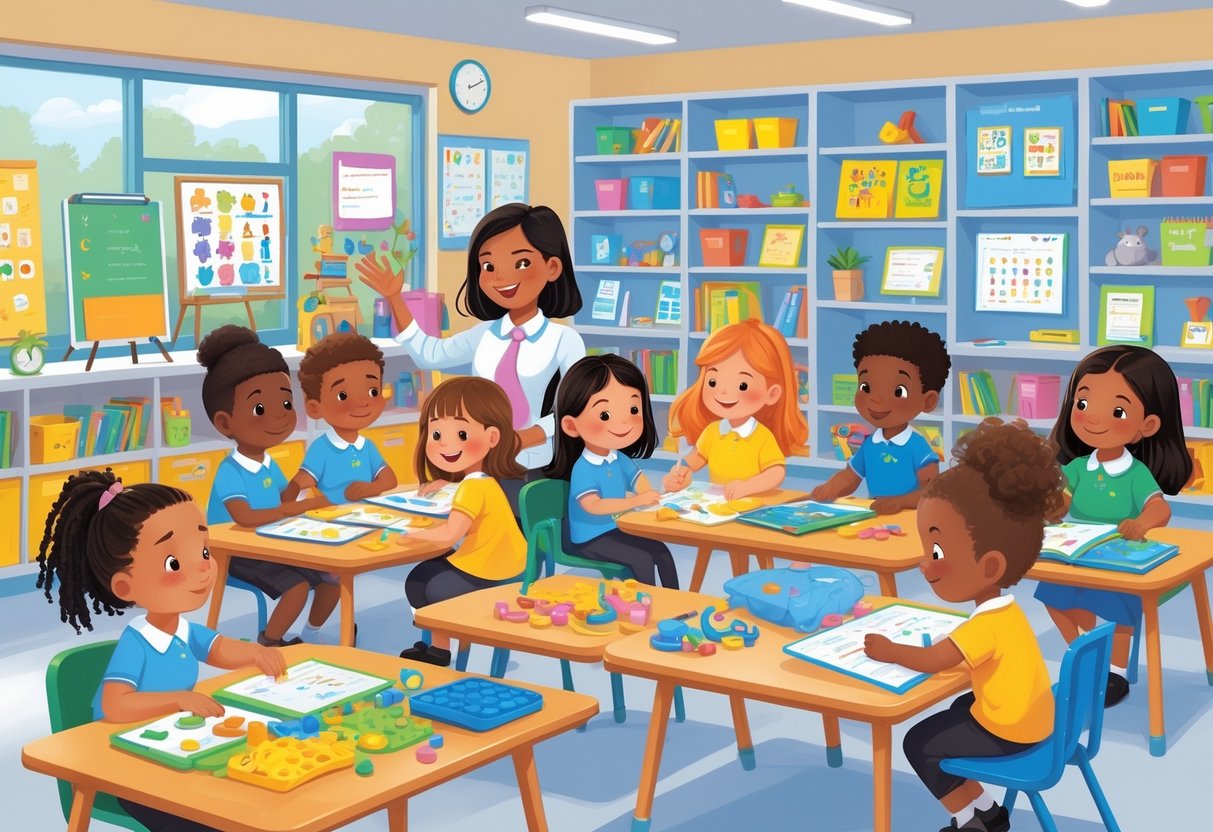
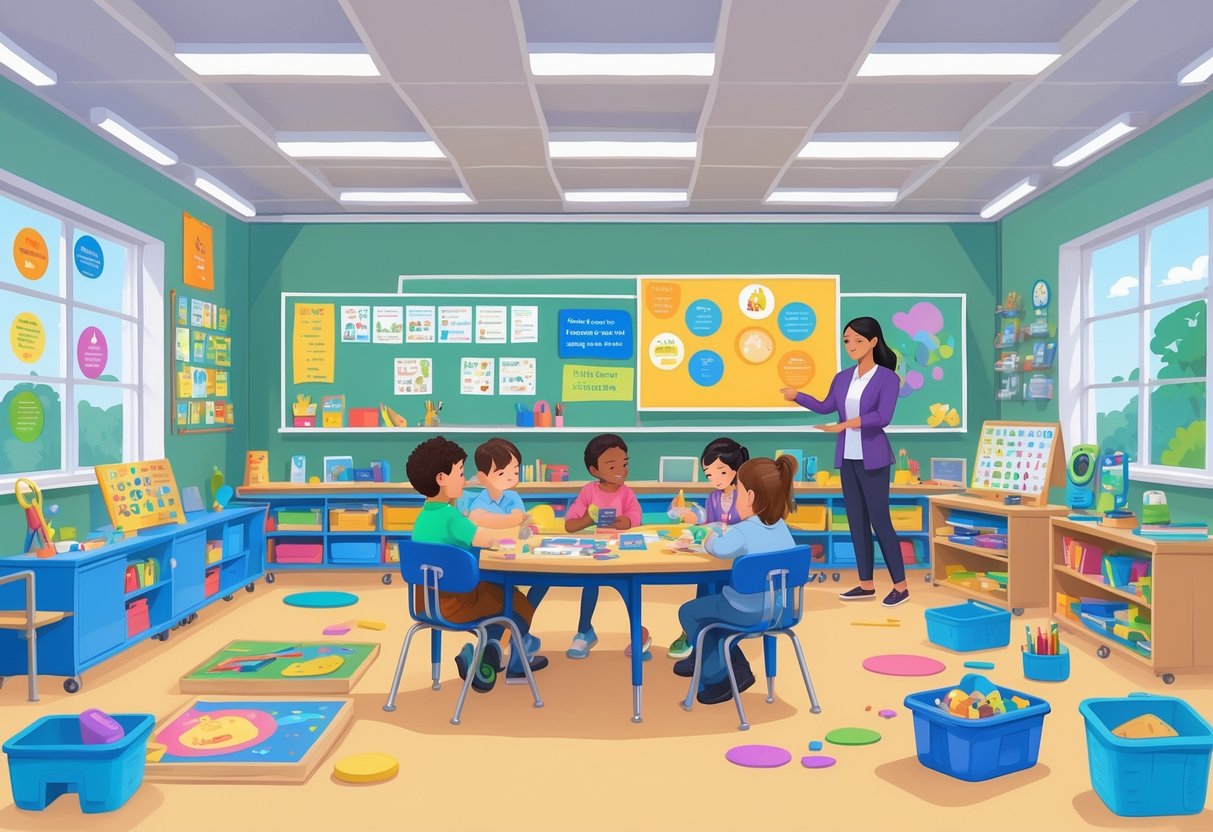
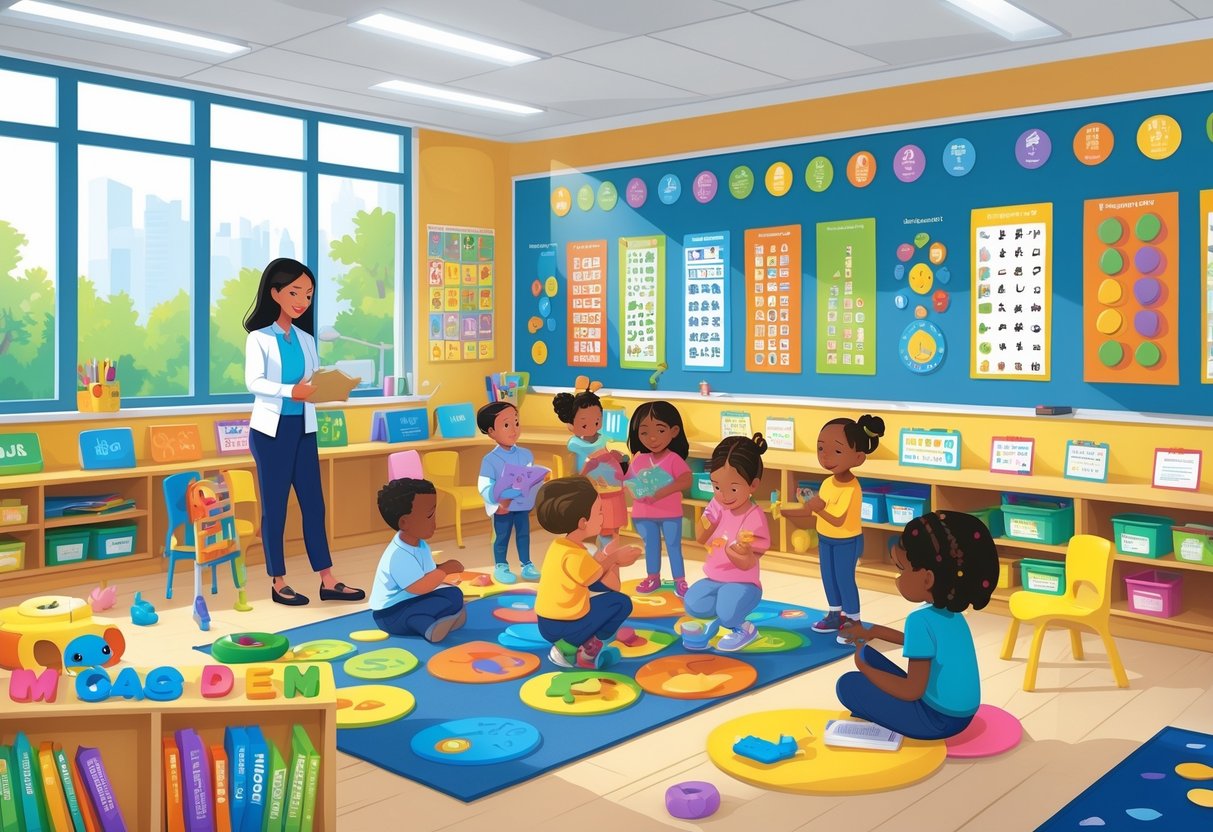
SEN teaching resources for primary school cover visual aids, worksheets, games, and activities. These support children with special educational needs across subjects like literacy, numeracy, and communication. Teachers use these materials to adapt lessons so all pupils can access the curriculum at their own pace.
The right resources really can make a difference. Children with diverse needs often engage better with learning and gain confidence when lessons feel accessible.
Michelle Connolly, founder of LearningMole and a former primary teacher with over 15 years of classroom experience, says, “Well-designed SEN resources don’t just support individual learners. They create an inclusive classroom where every child can participate meaningfully.”
Whether you work with pupils who have autism, speech and language difficulties, or cognitive challenges, the right tools make planning and teaching much easier.
SEN resources include visual aids, worksheets, and activities that help primary pupils with special educational needs access the curriculum.
Effective materials use clear visuals, simple language, and hands-on activities tailored to specific learning needs.
Resources cover all subjects and can support children with autism, communication difficulties, sensory needs, and cognitive challenges.
What Is SEN and SEND?
SEN describes children who need extra help with learning. SEND includes both special educational needs and disabilities.
Both terms refer to students who require more support than mainstream teaching usually provides.
Defining Special Educational Needs
Special educational needs include a wide range of learning challenges that affect how children access education. SEN stands for special educational needs and applies to pupils who struggle with specific areas of learning compared to most children their age.
Children with SEN might find reading, writing, maths, communication, or behaviour difficult. Some need help with concentration or understanding instructions.
Others might need support with social skills or managing their emotions in the classroom.
Schools identify and address the special educational needs of the pupils they support. Most children with SEN receive help in mainstream settings through targeted interventions.
Teachers adapt lessons and provide extra resources to match each child’s learning style.
The Role of SEND in Primary Education
SEND combines special educational needs with disabilities. This gives a fuller picture of what support a student might need.
Primary schools use SEND provisions so every child can access learning that suits their needs.
Schools use their ‘best endeavours’ to provide special educational support for children receiving SEN assistance.
The SEND system in primary education includes various support levels. Your child might get extra help in the classroom, work in small groups, or use specialist equipment.
Some pupils have regular sessions with teaching assistants or external professionals, like speech therapists.
SEN focuses on educational needs without always including physical or medical disabilities. SEND is broader and covers both learning difficulties and disabilities that affect education.
A child with dyslexia falls under SEN because it’s a learning need. A pupil with cerebral palsy would fall under SEND, as it involves both a physical disability and educational implications.
Some children have SEN without disabilities, while others have SEND and need several types of support throughout their school day.
Understanding the Role of the SEN Teacher
SEN teachers take on specific duties that differ from mainstream classroom roles. They work alongside SENCos to create individualised support plans and adapt teaching methods for pupils with a range of needs.
These professionals help autistic pupils and others with special educational needs access the curriculum.
Responsibilities of a SEN Teacher
A SEN teacher assesses each pupil’s learning profile and creates tailored interventions for specific challenges. You need to figure out whether a child learns best through visual, auditory, or kinaesthetic methods before selecting resources.
Your daily work involves adapting curriculum content to make it accessible but still age-appropriate. This might mean modifying worksheets, creating visual supports, or breaking tasks into smaller steps.
Core responsibilities include:
Conducting individual assessments and tracking progress
You keep detailed records of each pupil’s progress to inform your planning. Regular observations help you spot when strategies need changing.
Communication with parents is another essential part of the job. You share ideas that families can use at home so there’s consistency between school and home learning.
Working Collaboratively with SENCos
Collaboration between teachers and specialists strengthens support for pupils with special educational needs. The SENCO coordinates provision across the school, and you put strategies into practice in your classroom or small group sessions.
Weekly meetings with your SENCO let you discuss pupil progress, share concerns, and plan next steps for individual education plans. You bring classroom observations, while the SENCO offers specialist knowledge about specific conditions and available resources.
Your SENCO arranges assessments from external specialists like educational psychologists or speech therapists. You provide detailed information about how each pupil performs in different learning situations, which helps specialists make accurate recommendations.
Collaborative tasks include:
Joint planning of intervention programmes
Reviewing Education, Health and Care Plans
Coordinating with teaching assistants
Sharing successful strategies with mainstream colleagues
You work together to find appropriate resources and training. The SENCO may arrange professional development about specific learning difficulties, while you spot practical classroom needs.
Supporting Autistic Pupils
Autistic pupils benefit from structured, predictable environments with clear visual supports. You might create visual timetables that show the day’s activities in pictures or symbols.
This helps pupils understand what happens next and can reduce anxiety.
Sensory needs matter when supporting autistic pupils. You might reduce clutter on worksheets, provide quiet spaces for breaks, or offer fidget tools during focused work.
Social communication often needs explicit teaching with social stories and role-play. Many autistic pupils find unwritten social rules tricky, so you break down interactions into clear steps with visual prompts.
Effective strategies include:
Using concrete language instead of idioms
Providing processing time after questions
Offering choices to support autonomy
Maintaining consistent routines and transitions
You adapt your communication style by being direct and specific in your instructions. Instead of “get ready”, you say “put your pencil down and look at me”.
Special interests can motivate learning if you include them in lessons. A pupil who loves trains might practise maths through timetable problems or writing by describing locomotives.
Types of SEN Teaching Resources
Primary schools use three main categories of SEN resources. Visual materials show information through images and symbols. Sensory tools engage touch and movement. Digital platforms offer interactive learning experiences.
Visual Learning Materials
Visual aids help pupils with special educational needs understand concepts and routines more easily. Picture cards and symbol charts work well for children who process information better through images than words.
Many teachers create visual timetables with pictures or symbols. These reduce anxiety for autistic pupils who need predictable structures.
Flash cards are great for vocabulary building and concept recognition. You can use them for letter recognition, number work, or 2D and 3D shapes in maths lessons.
Emotion recognition cards help pupils identify and express feelings.
Printables offer flexible visual support across subjects. Teachers often laminate worksheets with clear visual instructions so pupils can reuse them with dry-wipe markers.
Symbol-supported text combines pictures with words, making content accessible for reluctant readers or those with communication difficulties.
Colour-coded systems help organise learning by subject or difficulty. This visual organisation supports pupils who struggle with transitions between activities.
Sensory and Tactile Tools
Sensory resources support pupils who need physical input to concentrate and process information. Fidget toys, textured materials, and weighted items help children with attention difficulties stay focused.
These tools provide the movement and touch some learners need.
Manipulatives for maths let pupils handle physical objects while learning number concepts. Counters, blocks, and number lines make abstract ideas concrete.
Pupils with dyscalculia benefit from this hands-on approach.
Textured letter cards help children learn letter formation through touch. Sand trays and playdough support early writing skills by building muscle memory.
Communication boards with tactile elements give non-verbal pupils ways to express needs and choices.
Standing desks and exercise balls suit pupils who need movement throughout the day. These simple adaptations help hyperactive learners access lessons without constant reminders to sit still.
Digital and Interactive Resources
Digital platforms provide ready-made activities that save planning time and meet diverse needs. Interactive activities engage pupils with immediate feedback and self-paced learning.
Tablets offer intuitive interfaces that many SEN pupils find easier than traditional computers.
Text-to-speech software helps dyslexic pupils and those with reading difficulties access written content on their own. Voice recognition tools let children with writing challenges express ideas verbally.
Communication apps with symbol support give non-verbal pupils voice output using pictures or text.
Switch-activated games allow pupils with physical disabilities to join in. These tools respond to simple touches or movements, so everyone can take part.
Apps that teach maths through movement combine physical activity with curriculum content.
You can customise digital worksheets by adjusting font size, adding visual supports, or changing colour schemes. This flexibility means you can create several versions from one template to suit individual learning profiles.
Using Printables in SEN Classrooms
Printables offer flexible, reusable materials that you can tailor to individual learning needs. They help create structured teaching environments.
These resources reduce preparation time and provide the visual support many SEN learners need.
Supporting Differentiated Learning
Printables let you create multiple versions of the same activity at different difficulty levels. You can adjust text size, add visual symbols, or simplify instructions to suit each child’s abilities.
For pre-readers, you might use symbol-supported worksheets with images and text. These help children who struggle with reading access the same curriculum content as their peers.
Laminated printables with Velcro attachments work well for TEACCH systems used with autistic learners.
Number formation sheets with dotted fonts support both numeracy skills and fine motor development. You can laminate these for daily practice, making them cost-effective and more environmentally friendly.
Colour coding different sections helps children who benefit from visual organisation.
Visual timetables and task cards printed and displayed around your classroom provide consistent reference points. Many children with SEN find these printed visual supports reduce anxiety about transitions and daily routines.
Benefits for Teachers and Learners
Printables save loads of planning time once you’ve built up a decent library of resources. You can reuse materials with different year groups by tweaking the difficulty or switching up the theme, but the activity itself stays familiar.
Children start to feel more independent when they know the printed format. A Year 3 pupil who finds new concepts tricky often does better when the worksheet layout matches something they’ve seen before. This steady routine really boosts confidence.
Laminated printables let you set up hands-on matching, jigsaws or sorting tasks. These activities engage learners who struggle with written work. You can wipe them clean and reset for the next student, which is honestly a lifesaver on a busy day.
Key advantages:
Low cost compared to specialist equipment
Easy to store and organise
Quick to adapt for individual needs
Portable for different learning spaces
Reusable when laminated
Best Practices for Adaptation
Start with your curriculum objectives and plan backwards. Make sure printables target just one or two skills at a time. For example, a phonics worksheet should focus on a couple of sound patterns, not everything at once.
Use clear fonts like Arial or Comic Sans, size 14-16, for readability. Leave plenty of white space to avoid clutter. Children with processing difficulties do better with simple layouts and clear separation between sections.
Add visual supports such as colour borders, numbered steps or picture cues. LearningMole includes video resources that go alongside printables, especially for maths and science where seeing things done helps a lot.
Test your printables with one or two pupils before you roll them out to the whole class. Watch for any stumbling points, then tweak things. Sometimes you’ll need bigger answer boxes, clearer instructions or new images to keep everyone engaged.
Keep a record of which printables work for which pupils. This saves time and helps teaching assistants pick out the right resources for each child.
Flash Cards for Primary SEN Pupils
Flash cards give you a flexible teaching tool that supports children with special educational needs. They really help with repetition and visual learning. They’re especially handy for building vocabulary, number recognition and communication for pupils who need structure and predictability.
Customising Flash Cards for Diverse Needs
You can adapt flash cards to fit each pupil’s learning needs. Some children need larger text, while others do better with tactile features like textured surfaces or raised letters. Pupil activity flashcards can use different colours to help students with visual processing issues sort categories.
Try breaking down tricky words into smaller chunks or using simpler language for literacy. For maths, add number lines or dot patterns next to the numerals. Laminating cards makes them last longer for repeated use, and using punch holes with ring binders keeps sets together and tidy.
Customisation options:
Adjustable font sizes (usually 18-36 point)
High contrast colour schemes (black on yellow works well)
Rounded corners for safety and sensory comfort
Velcro strips for matching activities
Using Picture-Based Flash Cards
Picture flash cards work well for pupils who learn better through images than text. These cards link pictures with words, helping children connect objects and names. Resources for autistic pupils often rely on visual supports, since many autistic children are strong visual learners.
Pick clear photos or simple illustrations without busy backgrounds. Real photos usually work better than cartoons for everyday objects and actions. For tricky words in phonics, add visual cues to help children remember odd spellings.
Picture flash cards support lots of activities. Pupils can sort by category, put them in order or use them in speaking games. For Year 1 children, matching animal pictures to their names helps with both reading and recognition.
Integrating Symbol Cards in Lessons
Symbol-based communication cards let pupils express needs, feelings and ideas when talking is tough. These cards use standard symbols for actions, objects or emotions. You can start with a few basic symbols during circle time and add more as children get used to them.
Some pupils use symbol cards alongside speech to make their meaning clearer, while others use them as their main communication method. In lessons, stick relevant symbol cards on the board so children can point or join in discussions. This works in any subject, from PE to art.
Common symbol card applications:
Activity
Symbol Use
Morning routine
Selecting daily tasks
Group work
Requesting help or materials
Transitions
Understanding next activity
Behaviour support
Expressing emotions appropriately
Symbol systems like Makaton or Widget keep things consistent in school and at home. When children recognise the same symbols everywhere, they feel more confident communicating. You can link phonics activities to symbol cards by matching letter sounds with actions.
Clock Faces and Time-Related Resources
Clock faces form the base for teaching time in primary schools. Structured activities and games let pupils practise and reinforce time skills using hands-on learning.
Start with just the hour, then add half-hours and quarter-hours. Many teachers like interactive clock face templates that children can make themselves. This hands-on work helps them see how hour and minute hands move.
For SEN learners, you might want resources with clearer visuals. Customisable random clocks are good because you can set the difficulty. Try using colour-coded hands or bigger numbers for children who need extra support.
Telling the Time Activities
Year 2 and 3 pupils learn best with different activities that link time to their daily lives. Clock clip cards are great in autism classrooms, as children can pick answers using pegs or clips.
You can grab 14 free printable clock faces for matching, sequencing or timeline work. These help with both analogue and digital time, which matches National Curriculum expectations.
LearningMole has video tutorials showing time-telling strategies with animations. This makes the concept more real for visual learners. The maths section covers time activities for children aged 4 to 11.
Clock Bingo and Matching Games
Games make time recognition fun, not stressful. You can make clock bingo cards with time combinations that suit your class.
Popular clock games:
Match analogue times to digital
Find pairs like 3:30 and half past three
Snap with matching clock faces
Memory games using time vocabulary
These activities are good for small groups or independent stations. Change the time intervals to suit your class, starting with o’clock for younger pupils and moving to five-minute jumps for Year 4 and up.
The Importance of Visual Timetables
Visual timetables help children with special educational needs make sense of their day using pictures and symbols. They ease anxiety by showing what’s next and give pupils time to get ready for changes.
Creating Consistent Routines
Visual timetables work best when you use them the same way every day. Children with SEN usually feel safer when they know what’s coming. A picture routine helps them understand the order of lessons.
Update your visual timetable each morning before class starts. This gives pupils a chance to see what’s ahead. Most teachers put the timetable at eye level so children can check it easily.
Each child needs different visual supports. Some work best with photos, others like simple symbols or drawings. Choose images that fit the pupil’s understanding.
Here are some options:
Photographs of your own classroom and activities
Symbol cards like Widgit or Boardmaker
Simple drawings with labels
Word cards for readers
An editable visual timetable lets you add activities that fit your class. You can include the child’s name, their favourite colour or familiar images. Personal touches help children spot their schedule quickly.
Think about accessibility. Make pictures big enough and use high contrast colours. Some children need a small card version to carry around.
Boosting Independence in Pupils
Visual timetables teach children to manage their own time. They can check the schedule and know if it’s maths or playtime. This builds confidence and independence.
Some children need a ‘now and next’ board, showing just two activities at a time. As they get used to routines, you can add more slots.
Teachers often notice pupils start checking timetables on their own. They grab the right books or line up at the right time. These small steps really boost self-esteem and help children feel in control.
Accessibility Considerations in Resource Design
Making teaching materials work for every child means thinking about physical access, sensory needs and how you present information. Good design stops barriers before they start.
Making Resources Inclusive
Your teaching materials should suit children with different abilities right from the start. Choose fonts like Arial or Comic Sans, at least 14 point. Avoid busy backgrounds and leave lots of white space around important content.
Colour choices matter. Don’t use colour alone to show meaning, since some children can’t see it. If you use red text for mistakes, add a symbol or underline too. Keep contrast high between text and backgrounds.
Use simple language that matches your pupils’ reading ages. Break instructions into steps, not long paragraphs. Add icons, photos or diagrams alongside words. A SEND-friendly classroom approach uses resources in different formats so every child can join in their own way.
Adapting for Physical and Sensory Needs
Many children need resources adjusted to fit their physical abilities or sensory preferences.
Laminated cards feel easier to grip and last longer than plain paper. Thick pencils, pencil grips or adapted scissors help children with fine motor challenges join in activities.
When you design materials, consider sensory processing needs.
Skip resources with strong smells, really bright colours or shiny surfaces that reflect too much light. Some pupils focus better with a fidget tool handy or when sitting on a wobble cushion, so add these options if needed.
Physical Adaptations Checklist:
Choose sturdy materials that survive repeated use.
Offer alternatives to writing, such as drawing, pointing or using digital tools.
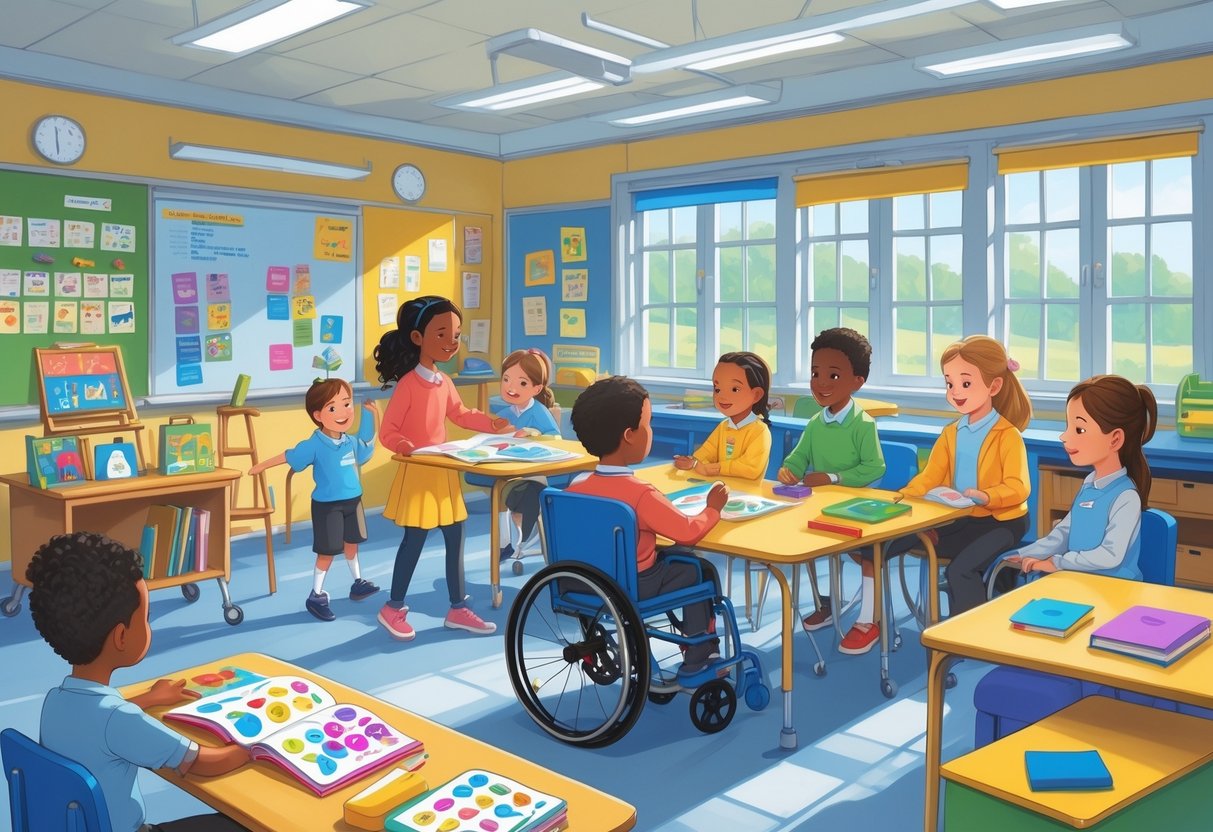
Place resources at different heights for wheelchair users.
Provide manipulatives in a range of sizes to match grip strengths.
LearningMole offers video tutorials and interactive activities that children can use at their own pace. This supports those who need more time to process or prefer visual learning.
Ensuring Digital Accessibility
Digital resources should work with assistive technology like screen readers and speech-to-text software.
Add alt text to every image so users know what’s pictured. Use proper headings so navigation tools do their job.
Videos need captions and transcripts. These help not just deaf pupils but also children who understand written words better than spoken ones.
Keep animations simple. Add pause controls, since flashing content can trigger seizures or overwhelm some children.
Test your digital materials on tablets and computers with different screen sizes.
Try them with accessibility features turned on, like voice control and high contrast modes.
Tag PDFs properly and use built-in heading styles in Word documents, not just bold text.
Topic-Based SEN Resources for Primary Schools
When you organise SEN materials around curriculum subjects or pupil interests, children connect with learning more easily.
Using printables and structured activities on different topics makes lessons more accessible for children with special educational needs.
Maths resources often include visual aids, number lines and hands-on materials to help children grasp abstract ideas.
For literacy, adapted texts and phonics materials break down tricky tasks into smaller steps.
English materials for SEN pupils usually use simple vocabulary, clear fonts and picture support to boost understanding.
Key subject areas include:
Number work with visual counting aids
Reading comprehension using symbols
Writing frames with sentence starters
Practical science activities with step-by-step guides
Theme and Interest-Based Activities
Topic work draws children in through subjects they already find interesting.
Teachers often use themes like animals, transport or seasons to teach across different curriculum areas.
You might try history topics such as castles or Romans, using simple timelines and visual resources.
Science activities about plants, animals or weather work best with hands-on experiments.
Interest-based learning supports children who find traditional lessons tough.
If a pupil loves dinosaurs, you can weave that interest into counting, writing or art projects. Sometimes that’s the spark that builds confidence and covers key skills.
Motivating Learning through Topics
When you link SEN resources to clear themes, children see the reason behind their learning.
If you connect literacy skills to a space topic or use a favourite character in maths, engagement usually goes up.
Ask your SENCO which strategies suit each child, as autism looks different for everyone.
Adapting Resources for Autism
Sensory-friendly resources make learning smoother for autistic pupils.
Use matte paper, not glossy, to cut down glare. Pick pencils and pens with comfy grips, and offer fidget tools to help with focus.
Digital resources often suit autistic learners.
LearningMole has curriculum-aligned videos in different formats, which can help those who don’t like lots of text.
You can adapt your classroom by:
Cutting down visual clutter on walls and displays.
Setting up clear learning zones for different activities.
Letting pupils use noise-reducing headphones during quiet work.
Providing alternative seating, like wobble cushions.
Written materials need care.
Stick to simple fonts like Arial or Comic Sans, size 12 or bigger. Don’t cram too much on one page. Put key words in bold to highlight important bits.
Task boards support autistic pupils to work on their own.
Show each step of an activity with pictures and simple words, so pupils can check their progress without always asking an adult.
Promoting Social Inclusion
Autism acceptance education in assemblies and tutor time helps non-autistic pupils develop positive attitudes towards autistic classmates.
Talk about differences in a matter-of-fact way, without singling anyone out.
Structured social opportunities usually work better than unstructured break times.
Set up lunchtime clubs based on interests, so autistic pupils can join in with others who share those passions.
Board games, LEGO clubs and computing groups give everyone something to talk about.
Help children make friends by:
Assigning peer buddies for transitions and breaks.
Teaching everyone about different ways of communicating.
Creating small group activities with clear social rules.
Remembering that friendship might look different for autistic pupils.
Some autistic pupils need you to teach social skills directly, not just through observation.
Work with your SENCO to run small group sessions on things like turn-taking, reading facial expressions and understanding unwritten social rules.
Safe spaces really matter.
Give autistic pupils access to quiet areas when they feel overwhelmed, without treating it as a punishment.
Many schools find this actually increases participation in mainstream activities, since pupils know they can take a break if needed.
Frequently Asked Questions
Teachers working with SEN pupils often wonder about practical strategies, visual tools, differentiation, social skills, communication support, and involving families in learning.
What are some effective strategies for supporting SEN pupils in primary classrooms?
High quality teaching that removes barriers helps most SEN pupils in mainstream classrooms.
Getting to know each child as an individual lets you spot their needs and strengths.
Breaking tasks into smaller steps makes learning more manageable.
Use visual timetables to help children see their day’s structure.
Regular routines give children a sense of security and help them know what to expect.
Offer quiet spaces for children to take breaks when overwhelmed. Some pupils need fidget tools or movement breaks between activities.
Think about seating arrangements too. Try placing SEN pupils where they can see you clearly and have fewer distractions.
Praise specific actions rather than giving general compliments. Pre-teaching key vocabulary or concepts before the main lesson helps SEN pupils feel more confident.
What types of visual aids can help primary school children with SEN in their learning?
Visual supports help many SEN pupils process and remember information.
Picture symbols with words on classroom labels help children with reading difficulties or those learning English.
Now and next boards show what’s happening now and what’s next, which reduces anxiety for pupils who struggle with transitions.
You can make these boards with pictures, symbols or words, depending on the child.
Task cards with step-by-step pictures help pupils work independently.
Colour coding subjects or activities helps children organise their materials and understand the day’s structure.
Visual timers show how much time is left for an activity, which helps pupils who find time tricky.
SEN teaching resources often come with ready-made visual aids you can tweak for your classroom.
Number lines, multiplication grids and phonics mats support children who need extra help with basic skills.
Photos of real objects work well for younger pupils or those with more significant learning needs.
How can I differentiate my teaching to cater for a range of SEN needs in the classroom?
Plan lessons with different entry points so all pupils can join in at their level.
Offer the same topic through activities that need different amounts of support or complexity.
Provide resources at various levels for the same task.
Some pupils might use real objects, others pictures or written numbers. That way, everyone learns the same concept but in a way that suits them.
Change your questioning to include all pupils.
Use open questions with more than one answer, so children at different levels can join in.
Give pupils extra thinking time before expecting answers.
Let children record their ideas in different ways. Some draw, others write or use voice recording.
Sometimes SEN pupils benefit from working with higher attaining peers who model good practice. Other times, they need small group teaching with you or a teaching assistant.
Are there any particular games or activities that can assist SEN students with their social skills?
Turn-taking games teach pupils to wait and follow rules.
Simple board games work well because they have clear structures and finish quickly.
Start with games that only take a few minutes so children experience success.
Circle time activities let pupils practise listening and sharing.
You might pass an object around so everyone knows whose turn it is to speak.
Role play lets pupils practise social situations in a safe space before real life.
Cooperative games where everyone works together build teamwork skills.
Parachute games get children moving while they collaborate.
Paired activities like buddy reading help pupils form one-to-one relationships.
Structured playground activities reduce anxiety for children who find free play overwhelming.
Teaching specific playground games gives SEN pupils something to do and a way to join in.
Social stories prepare children for new situations by explaining what will happen and how they might respond.
What resources can I use to improve communication skills for non-verbal SEN pupils?
Communication aids help non-verbal pupils share their needs and ideas. Picture Exchange Communication Systems (PECS) let children swap picture cards to ask for things or activities.
You start with items that really motivate the child. Over time, you add more pictures to build their range.
Makaton signing supports speech development and gives children a quick way to communicate. Many mainstream primary schools teach basic Makaton signs to everyone, which helps non-verbal children feel more included.
Voice output devices come in all sorts, from single-message buttons to tablets packed with vocabulary. When pupils press pictures or type words, these tools speak for them.
Apps on tablets can help too. Some pupils like symbol-based systems, while others go for text-to-speech.
Interactive books with sound buttons encourage pupils to ask for ‘more’ or pick what happens next in a story.
Visual communication books let pupils point to pictures that show what they want or how they feel. These low-tech tools work well because you don’t have to charge them or know much about technology.
You can tailor them to your classroom routines and the child’s interests.
How can I involve parents and carers more in their child’s SEN education at primary level?
Keep communication regular. Parents get a better idea of what their child learns and how to help at home when you keep them in the loop.
A quick note in a home-school book does wonders. Everyone stays updated about the day’s successes and any little bumps.
Invite parents to review meetings. You can chat together about targets and next steps.
Explain the strategies you use in school. Parents can then try out similar ideas at home.
Share some activities that link to classroom learning. It helps when parents know exactly what to do.
Run workshops for parents. Show them different SEN approaches and resources in action.
You might demonstrate things like visual timetables or phonics games. When parents see these techniques, they usually feel more at ease about supporting learning.
Send home resources that match classroom work. Word cards, number games, or links to educational videos all help.
LearningMole offers free curriculum-aligned videos for maths, English, and science. Parents can use these with children aged 4-11 at home.
Let parents volunteer in school if they have time. Watching their child in the classroom can be eye-opening.
Maths Circus, an innovative platform we've crafted, presents a captivating realm where children learn mathematics through the exciting theme of a circus. The joy of juggling numbers and solving circus...
The 9 times table multiplication has a reputation for being tricky, yet it holds more mathematical magic than any other table in the primary curriculum. Every answer follows two neat...
Article Summary What this article covers: Ten differences between river otters and sea otters, from size, fur and swimming style to diet, tool use and family life, plus which otter...
Article Summary What this article covers: The nine main types of natural disasters, how each one works and how they are measured, which hazards genuinely affect the UK, and how...






Leave a Reply