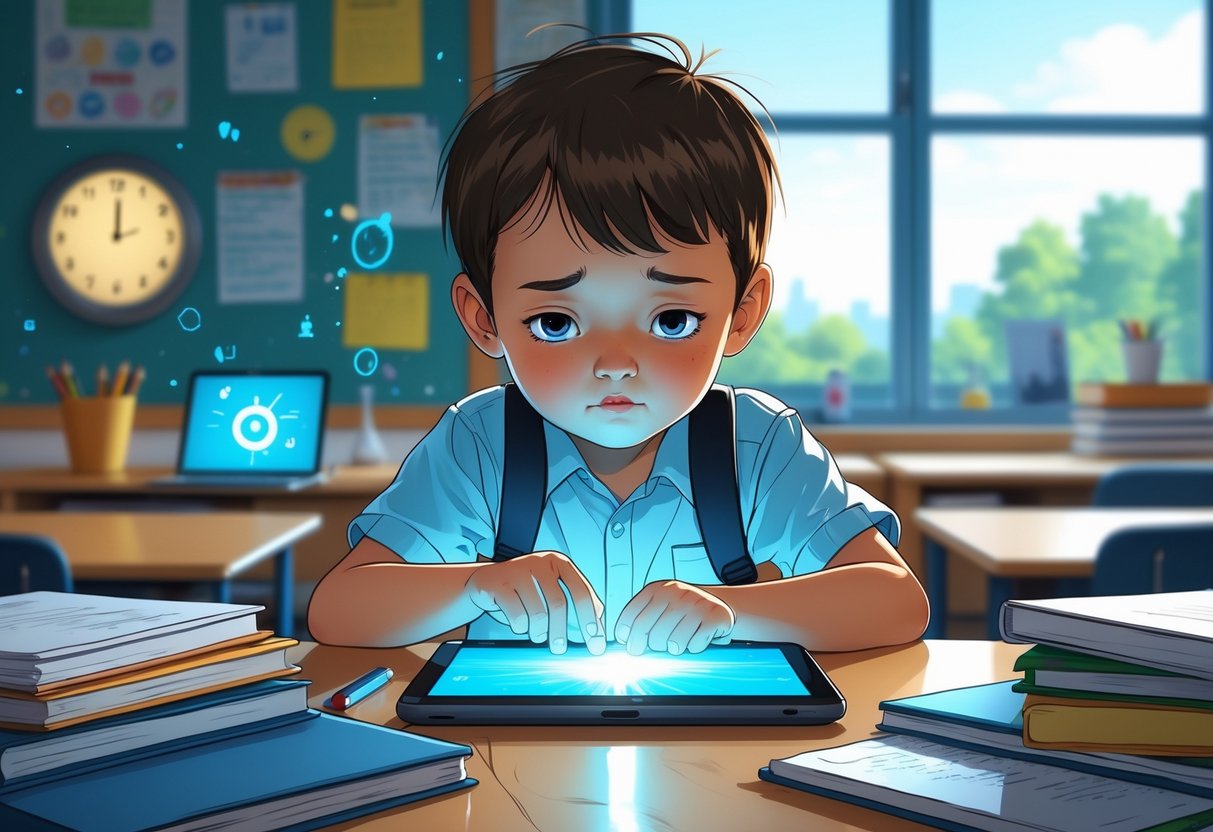
Research shows that when primary school children have high levels of screen time, their reading and maths scores on standardised tests drop. A study of Canadian children found that pupils who watched more TV and digital media each day did worse in elementary school assessments. This matters to UK parents and teachers trying to work out just how screens affect learning during Key Stage 1 and Key Stage 2.
Michelle Connolly, founder of LearningMole and a former primary teacher with over 15 years in the classroom, points out that “the type of screen time matters just as much as the amount. Educational content designed for the curriculum can support learning, whilst passive viewing often does the opposite.” LearningMole, a UK educational platform, offers curriculum-aligned video resources to help parents and teachers make screen time more purposeful for children aged 4-11.
The evidence on screen time’s impact on academic achievement goes beyond test scores. Parents worry about behaviour, social skills, sleep and physical activity when children spend too long in front of screens. Knowing what the research actually says can help you set up better routines at home and support your child’s development through primary school.
Key Takeaways
High screen time, especially TV and digital media, links to lower reading and maths achievement in primary school children.
The type of screen use matters more than total time. Educational content supports learning better than passive viewing.
Managing screen time means thinking about its effects on sleep, physical activity and social development, as well as academic performance.
Understanding Screen Time in Primary School
Primary school children now spend an average of 90 to 110 minutes a day on screens. Most of this time goes to television and digital media, not video games.
The types of screen activities, usage patterns and total exposure have changed a lot in recent years. The COVID-19 pandemic sped things up even more.
Definition and Types of Screen-Based Activities
Screen time means the hours you and your children use electronic devices like televisions, smartphones, tablets or computers. Researchers split screen-based activities into categories to see what effects they have.
TV and digital media make up the bulk of children’s screen exposure. This includes watching TV programmes, streaming videos and using educational apps. Studies show these activities take up about 90 minutes a day.
Video games form a smaller but still important part. Boys usually play more, averaging 9 to 15 minutes per day, while girls spend 4 to 5 minutes. About 21 to 27 per cent of primary school children play video games regularly.
Educational screen use during school hours adds another layer. Your child’s exposure now covers both recreational and learning-focused activities through the day.
Trends in Screen Media Use Among School-Aged Children
Screen time among children aged 6 to 14 has climbed steadily over the past decade. Primary school children now get between 96 and 110 minutes of screen exposure daily, depending on their age.
Younger primary children, around age 5 to 6, spend about 96 minutes daily on screens. By age 11 or 12, this rises to 110 minutes. Boys consistently spend a bit more time on screens than girls.
The type of screen activity shifts by gender. Boys use more time for video games, but TV and digital media viewing times look similar for boys and girls. Nearly 27 per cent of boys in Year 3 play video games, compared to just 13 per cent of girls.
Family income and parents’ education levels also shape media use. Children in higher-income homes often have access to more devices, though this doesn’t always mean they spend more time on them.
Changes in Screen Exposure After the COVID-19 Pandemic
The pandemic changed how children use screens for both learning and fun. Remote learning brought long stretches of screen-based activities that weren’t needed before.
Many primary schools brought in digital platforms and video calls during lockdowns. Your child probably had a big jump in educational screen time, and some of that has stuck even after returning to classrooms. Teachers now use more tech in daily lessons than before 2020.
Research from 2022 and 2023 shows this new reality. The shift has sparked worries about balancing the good of educational technology with the possible downsides for learning and wellbeing. Interventions to reduce excessive screen time in schools are getting more attention.
Parents now find it harder to separate educational from recreational screen use. The normalisation of screens at school has blurred the old boundaries about what’s appropriate for your children.
Screen Time for Learning: What Does the Evidence Show?
Research finds the type of screen use matters more than how much time children spend on devices. Educational technology can support learning when children engage with the content. Passive viewing doesn’t offer much for academic performance.
Active Versus Passive Screen Use in Education
Not all screen time affects learning the same way. Active screen use means children interact with content, solve problems or make choices. Passive use means just watching videos or scrolling without much thought.
Research suggests we should focus on how screens are used, not just how long. Children who use educational apps actively tend to learn more than those who just watch digital media.
Teachers notice that interactive maths games help Year 3 pupils practise times tables better than just watching videos. The big difference is that active use makes children think, respond and use their knowledge.
Streaming platforms can trap children in endless watching, with no natural stopping points. This makes it tough for them to learn self-control around screen media use.
Impact of Educational Technology in the Classroom
The evidence for educational technology boosting academic performance is mixed. Not much independent research proves that technology alone improves learning in primary schools.
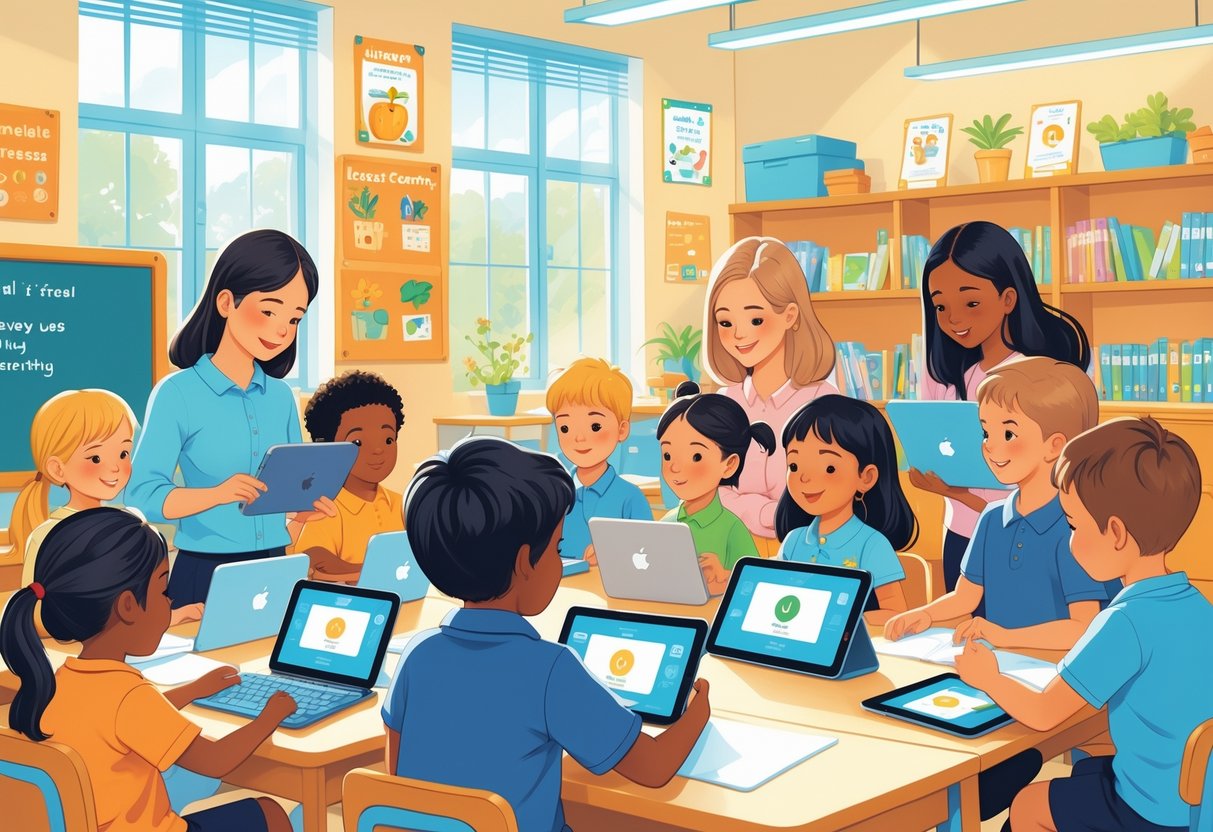
Digital tools work best when they back up traditional teaching. A Year 5 class might use tablets to research Victorian history, then discuss their findings together. The screen helps learning, but it doesn’t replace teacher-led discussion.
Screen-based learning can go both ways for children’s development. Quality matters more than quantity. Well-designed programmes that fit curriculum goals help children build specific skills.
Try to balance screen-based lessons with hands-on activities, outdoor learning and group work. Too much device use means children miss out on chances to build social skills and physical coordination.
AI in Education and Its Effects
AI in education tools are showing up more in UK classrooms. These programmes adjust to each child’s learning speed and give instant feedback on maths or spelling.
Early evidence says AI tutoring systems can help children who need extra support in certain subjects. A Year 6 pupil struggling with fractions might get a boost from an AI programme that adapts to their answers.
However, research points to concerns about relying too much on screens for learning and language development. AI tools should help, not replace, real interaction with teachers and classmates.
The best results come when AI-assisted learning goes hand in hand with regular teacher feedback. Children still need adults to help them understand things deeply and use what they know in different situations.
Screen Time Guidelines and Recommendations
The American Academy of Pediatrics updated their media use recommendations in 2016. They moved away from strict time limits and now focus on how children use screens. International advice varies, but most organisations say quality of screen exposure matters more than sticking to a set number of hours for primary-aged children.
British and International Screen Time Guidelines
You won’t find official screen time limits from the UK government for primary school children. The NHS encourages parents and teachers to balance screen activities with physical play, sleep and face-to-face interaction, not just count minutes.
Most health organisations agree that screens shouldn’t take the place of key activities. Your pupils still need enough sleep, outdoor play and time with others, no matter how much they use digital devices.
Recommendations from the American Academy of Pediatrics
The American Academy of Pediatrics guidelines recommend modelling healthy screen use and turning off devices during family time. They moved away from setting strict time limits because there’s not enough evidence that exact restrictions help all children.
Instead, they tell parents to focus on content quality and context. Educational screen time with an adult is not the same as unsupervised entertainment viewing. Adults should join in activities that don’t involve screens, like reading together or playing outside.
Too much screen time means children miss out on learning and interaction. Prioritise active engagement over passive use when using digital tools in class.
School-based interventions can help reduce screen time and increase physical activity among pupils. You’ll need to think about your local community and culture when putting policies in place.
Many schools now plan regular screen breaks in their timetables. You might add five-minute movement activities between digital lessons or make sure outdoor play balances classroom tech use. Some schools set up screen-free zones or times to encourage social interaction and traditional learning along with digital resources.
Academic Performance and Screen Use
Research finds that children who spend more hours on screens tend to score lower on reading and maths tests. Studies with thousands of school-aged children show that watching TV and playing video games have the strongest negative links to test performance.
Relationships Between Screen Time and Test Scores
A prospective study of Canadian children found a link between high total screen time in young children and lower scores in reading and maths on standardised tests. The researchers tracked 3,322 children through Grade 3 and 2,084 through Grade 6, measuring both screen exposure and academic outcomes.
Each extra hour of daily screen time reduced the odds of higher performance. In Grade 3, an additional hour meant a 9% drop in the likelihood of better reading scores and a 10% drop for maths scores. TV and digital media showed similar effects, and video game use linked to a 23% reduction in reading achievement odds.
This negative pattern continued into Grade 6. TV and digital media still led to an 11% decrease in maths performance for every extra hour. Researchers considered family income, maternal education, and Individual Education Plans, but the findings didn’t change.
Effects of Media Multitasking on Learning Outcomes
When children use multiple screens at once or jump between different activities, they lose focus on schoolwork. Kids who watch TV while doing homework or switch between tablets and computers struggle to remember information and finish tasks accurately.
The relationship between screen exposure and academic performance shows that time spent watching TV and playing games correlates with lower test scores. Not all screen use is equal. Passive viewing and gaming tend to have stronger negative effects than educational activities.
Media multitasking shrinks working memory capacity and makes it harder to process new ideas. This especially affects subjects like maths that require full attention and step-by-step thinking.
Systematic Reviews and Meta-Analyses: Key Findings
A systematic review of screen media use looked at 58 cross-sectional studies and found that watching television and playing video games consistently linked to lower academic results. The meta-analysis showed this pattern across different ages and countries.
While overall screen time had weaker links to grades, what children did on screens mattered more. Watching TV and playing games showed clear negative effects. Educational apps and homework-related computer use sometimes had neutral or even positive results.
Longitudinal studies following children over time shed light on whether screens cause lower achievement or if struggling students simply spend more time on devices. Evidence points to both: too much screen time cuts into study time and sleep, which then brings down test results.
Cognitive Development in Relation to Screen Exposure
Research shows that screen exposure affects cognitive development in different ways, depending on content quality, viewing context, and how long children spend in front of screens. Language skills, problem-solving, and attention span all change based on how children use screens, especially in their early years.
But it’s not all negative. Context matters more than viewing quantity. Educational content viewed with adults can support learning, while background TV or age-inappropriate programmes may slow development.
How children interact with screens makes a difference. Interactive screens that respond to children’s input work differently from passive viewing. Touchscreens, for instance, show mixed results. Some children improve hand-eye coordination, while others can’t transfer screen learning to real life.
Screen Time and Executive Function in Children
Executive functions include working memory, flexible thinking, and self-control. These skills grow quickly during primary years and are crucial for school success.
Children who spend a lot of time on screens often show weaker executive skills. They might find it hard to switch tasks, stay focused in lessons, or control their impulses in class.
The “video deficit effect” shows that young children learn less from screens than from real-life experiences. Between 12 and 24 months, children need twice as many screen demonstrations to learn the same thing as from a live demonstration.
Key executive function impacts include:
Shorter attention span during non-screen activities
Trouble following multi-step instructions
Weaker impulse control
Slower processing of visual information in real situations
Teachers often see these issues when children move from screen-heavy home routines to classroom settings that require focus.
Real-time interaction is still the best way to build vocabulary. When adults watch with children and talk about what they see, language outcomes improve. This back-and-forth helps kids connect screen content to real life.
Background television interrupts parent-child conversations. It cuts down both the number and quality of words spoken, which are key for language learning. Kids in homes with constant background TV hear fewer words and have shorter chats with adults.
By age two, children start to process speech from screens a bit better. Still, phonics development needs interactive practice, which screens alone can’t provide. The listening skills needed for reading come from real conversations, not just passive listening.
Social, Emotional, and Physical Development
Screen time changes how children interact with others and manage their emotions. Research links excessive use to behavioural challenges. Increased screen time can lead to emotional and behavioural problems, and children facing these difficulties often turn to screens for comfort.
Social Skills and Interpersonal Relationships
Children who spend more time on screens have fewer chances to practise face-to-face communication. When your pupils use devices during breaks or after school, they miss out on building conversation skills, reading body language, and handling social situations.
The relationship between social development and screen use works both ways. Children with existing social difficulties might pick screen-based activities because they feel easier than real-world interactions. This can lead to a cycle where less social practice weakens their skills even more.
You might spot that children who engage in passive screen usage, like scrolling social media, act differently from those who use screens actively. Video calls with family, for example, can help children stay connected when used well.
Children who spend a lot of time on screens may feel more anxious, less confident, or even aggressive. These emotional challenges often show up in class as trouble focusing, mood swings, or pulling away from group work.
What children watch matters as much as how much they watch. Educational programmes designed for Key Stage 1 and 2 can help learning, while age-inappropriate content might cause distress. It helps when parents keep an eye on what their children access and set clear rules for device use at home.
Physical Health: Activity, Sedentary Behaviour and BMI
When your child sits in front of a screen, they’re not running, jumping, or playing. This simple swap means more screen time leads to less physical activity.
The NHS recommends children aged 5 to 11 get at least 60 minutes of moderate to vigorous activity each day. Screen time often eats into this. When children watch TV or play games for hours, they lose chances for active play that supports their growth.
Teachers often see that children with high screen time at home struggle more in PE lessons that require stamina and coordination.
Sedentary Behaviour and Lifestyle Consequences
A sedentary lifestyle isn’t just sitting still. It means your child’s body misses out on the movement it needs to grow well.
Children sitting for more than four hours a day face higher health risks. The effects go beyond fitness. Sitting for long stretches slows blood flow and changes how the body handles glucose.
Primary school children need all sorts of movement throughout the day. Their bodies are still building muscle and bone. Long periods of sitting can disrupt this growth and cause posture problems that last.
This link between screens and BMI isn’t just about being inactive. Children often snack while watching TV or gaming, eating more calories without realising.
Studies have found strong correlations between screen time and obesity, especially in boys. For every extra hour of sitting, waist size goes up by 3.4 centimetres and BMI by 1.4 kg/m².
Other health markers affected by too much screen time include:
Blood pressure: High screen time links to higher systolic and diastolic readings
Cardiovascular health: Over two hours daily raises future heart disease risk
Muscle development: More screen time means weaker trunk muscles
Your child’s screen habits today shape their physical health for years to come.
Potential Risks: Excessive Screen Time and School Performance
Too much screen time can hurt children’s focus, disrupt their sleep, and lower their academic performance. Results can vary, though, depending on how children use screens and how much time they spend on them.
Risks of Prolonged Screen Use for Academic Achievement
Extended recreational screen time often affects primary school pupils’ cognitive abilities. Studies of children aged 8 to 11 years found that those spending more than two hours a day on smartphones or video games showed poorer working memory, processing speed, attention, language skills and executive function than peers who used screens less.
Screens interrupt learning and make it harder for your child to concentrate. Research suggests it can take up to 20 minutes for pupils to refocus after browsing the internet or checking a notification. Classrooms where children frequently check devices face a real challenge.
Teachers say that identifying learning difficulties has become harder because excessive screen use can mask or even mimic genuine learning problems. The effects include shorter attention spans and a higher risk of distraction.
Screens can cause physical health problems that directly impact learning. Digital eye strain from too much screen time adds to the growing myopia problem among primary school children.
Sitting still for long periods with screens also means less physical activity, and research shows movement supports motor skill development.
Sleep disruption stands out as a particularly serious risk. Children sometimes use screens late at night or even wake up to check devices. Poor sleep increases the risk of mental health problems like depression, which makes it even harder for children to focus on schoolwork.
Social media use remains strongly linked to late bedtimes and wake times in young people. Heavy social media users are about 70% more likely than moderate users to fall asleep later. Late bedtimes predict worse academic and emotional outcomes for primary school pupils.
Blue light from screens and stimulating content both interfere with natural sleep patterns. Tired children struggle to focus in lessons, fall behind, and sometimes turn to screens even more to cope with stress or boredom.
Heterogeneity of Research Findings
Studies on screen time effects show mixed results, partly because researchers measure different types of screen use. Active use, such as creating content or chatting with others, produces different outcomes than passive use like scrolling or watching videos.
Key factors affecting research results:
Type of screen activity (educational or recreational)
Duration and timing of use
Age of the child
Supervised or unsupervised use
Device type (tablet, phone, computer)
Research on cognitive development shows that screens can help education and learning in some situations. That explains why some studies find benefits while others find risks. Your child’s individual situation makes a big difference.
Children with existing vulnerabilities feel these effects more strongly. Those from families with financial difficulties, children with disabilities, mental health issues or special educational needs often experience more negative effects than those without these challenges.
Researchers keep updating their findings. Many now call for long-term studies that follow children over time to clarify how screen use affects educational outcomes.
Children who spend more than two hours a day on recreational screens often have disrupted sleep patterns. Research shows that screen time delays bedtime and reduces total sleep.
The issue isn’t just staying up late. Kids might wake up during the night to check devices or reply to messages. This broken sleep means they’re missing out on the deep rest needed for memory and learning.
Studies looking at primary school children’s screen habits found that high screen time groups only reached 75% sleep efficiency, compared to healthier rates in children with less exposure. Consistent, quality sleep is essential for your child to perform well in Key Stage 1 and Key Stage 2.
Impacts of Screen Time Before Bed
Using screens in the hour before bed causes particular problems for children’s sleep. The blue light from tablets, phones and computers suppresses melatonin, so your child finds it harder to get sleepy.
Content plays a big role too. Exciting games, dramatic videos or social chats stimulate the brain when it should be winding down. Research into screen time effects found children using devices at bedtime struggled to relax and settle their thoughts.
Poor sleep from evening screen use does more than make children tired. They can’t concentrate in maths and literacy lessons. They might get irritable with classmates and find it harder to manage emotions at school.
Teachers often spot tired pupils struggling with tasks that need sustained attention, like reading comprehension or multi-step problem solving in Year 3 and above.
Strategies for Reducing Sleep Disruption
Try setting a screen-free period of at least an hour before bedtime. This gives your child’s brain time to wind down naturally. Keep devices out of bedrooms, as even having a phone nearby tempts children to check it at night.
Practical steps you can try:
Set up a device collection spot downstairs before bed
Stick to regular bedtimes allowing 10-11 hours of sleep
Show good habits by limiting your own evening screen use
LearningMole offers educational videos on healthy habits and body systems that can help children understand why sleep matters. These resources work best as daytime learning tools, not bedtime viewing.
A visual timer showing when screen time ends each night can help younger children in Reception through Year 2 understand boundaries. Many families have success with reward charts for screen-free evenings and good sleep routines.
Parental and School Strategies for Healthy Screen Use
Parents and schools both shape children’s screen time by setting clear boundaries, supervising actively and organising structured programmes. When families and educators work together, primary school children can develop healthy digital habits that support learning.
Role of Parental Controls and Co-Viewing
Parental controls let you set screen time limits and block inappropriate content on your child’s devices. These tools allow you to block websites, set app time limits and keep track of what your child watches or plays.
Co-viewing means you watch or use digital content with your child, instead of leaving them alone with screens. This gives you the chance to talk about what they see online. You can ask questions, explain confusing content and teach critical thinking.
Research shows that parental efforts mainly focus on limiting screen time, but you should think about content quality too. Watching educational programmes together helps reinforce school concepts. This kind of active engagement makes screen time more valuable than just passive viewing.
School-Based Interventions and Programmes
Schools can run structured interventions to cut down on excessive screen time. A review of school-based interventions found that these programmes modestly reduced screen time and boosted physical activity among pupils.
Effective school strategies:
Clear rules on when and how pupils use devices in lessons
Teacher-led discussions about healthy digital habits
Parent workshops on age-appropriate screen guidelines
Curriculum content covering online safety and digital wellbeing
Your child’s school might use educational technology in lessons but still protect screen-free learning time. Families and schools can work together by sharing consistent messages about device use. Some schools send home family media plans that match classroom expectations.
Encouraging Balanced Media Habits
You can help your child balance screen time by creating daily routines that include physical play, reading and face-to-face chats. Set times when screens aren’t allowed, like during meals or before bed.
Platforms like LearningMole offer curriculum-aligned videos for maths, English and science that connect to what your child learns at school. Choose educational content that encourages active thinking.
Ways to promote balance:
Encourage outdoor play after school
Set device-free zones at home
Model healthy screen habits yourself
Plan weekend activities without screens
Help your child find hobbies beyond digital entertainment
Children learn best when digital tools support, not replace, hands-on experiences. Mix screen-based learning with practical activities for social skills and creativity.
Frequently Asked Questions
Research highlights links between screen time and academic achievement in primary pupils, while raising concerns about development and the need for balancing educational and recreational use.
How does screen time impact children’s ability to learn in primary school?
Screen time affects learning in different ways depending on what children watch and how long they watch it. Research on screen time and academic achievement found that more screen time in young children was linked to lower achievement in reading and maths by Year 3. For every extra hour of daily screen time, children had lower odds of meeting or exceeding provincial standards.
The type of screen use matters a lot. Educational content can support learning goals set by the National Curriculum. Recreational screen time, especially before school age, tends to show negative links with later academic performance.
TV and digital media viewing showed stronger negative links to achievement than video games in younger pupils. By Year 6, the relationship gets more complicated as children develop different usage patterns.
What are some potential negative consequences of excessive screen time on early childhood development?
Children really need back-and-forth conversation with adults to build language. Passive screen watching just doesn’t cut it. If children spend lots of time with screens, they miss out on those rich chats that boost vocabulary and communication.
Social-emotional growth also depends on face-to-face time with others. When screens dominate, children lose chances to share, read facial expressions and handle emotions in real life.
Physical development can slow down too. Sitting for long stretches means less active play, which is key for motor skills and healthy growth. Using screens near bedtime can disrupt sleep as well.
Can screen time have positive effects on children’s learning outcomes and, if so, what are they?
Screen time can help learning if you use it wisely with educational content. Parents spot educational benefits when the content matches what children learn at school.
Quality programmes designed for certain ages reinforce National Curriculum topics. Videos that explain maths concepts, phonics or science can support classroom learning if you pick them carefully.
Interactive educational apps let children practise skills at their own pace. They give instant feedback, so children learn from mistakes. Some apps even adjust their difficulty as children progress.
Digital tools can make learning more accessible for children with special educational needs. Text-to-speech features back up reading, and visual aids or interactive bits help different learning styles grasp tricky ideas.
Platforms like LearningMole offer curriculum-based videos for maths, English, science and phonics, aimed at children aged 4 to 11. These resources focus on structured learning, which is quite different from general entertainment screen time.
What does recent research from 2021 and 2022 suggest about the relationship between screen time and educational performance in primary school pupils?
The timing of screen exposure matters. Screen time in the early years links to standardised test performance years down the line. Early habits might shape learning pathways as children grow.
Not all screen time affects every subject the same way. Maths achievement drops more consistently with higher screen time in both Year 3 and Year 6. Reading scores show a similar trend in younger children, but the link weakens by Year 6.
How might excessive screen time influence the neurological development of young children?
Early childhood brain development moves quickly and responds to everything in the environment. Excessive screen time during these years might shape developing neural pathways.
Young brains need all kinds of stimulation to build strong connections. Reading books, playing with toys and talking with adults all work together, activating several senses at once. Screens mostly engage sight and sound, cutting down on physical and hands-on experiences.
Attention systems are still growing in primary-aged children. Fast-paced screen content with lots of scene changes might affect how children learn to focus and stick with tasks. This could make traditional classroom learning harder.
Executive function skills like planning, working memory and self-control grow when children practise them. If screens replace activities that build these skills, development may lag. Children need chances to make choices, solve problems and manage their own behaviour.
The developing visual system matters too. Long stretches of close-up screen viewing during growth years has sparked concern about eye development, though researchers are still studying these links.
What are the top considerations for parents when managing their children’s screen time in relation to educational activities?
Start with content quality. Pick programmes and apps that actually teach something, not just entertain. Try to find resources that match Key Stage expectations and support what your child learns at school.
Set clear boundaries for when and how long your child uses screens. Make some times screen-free, like at meals, before bed or during family activities. Kids usually do better with predictable routines that balance screen time and other experiences.
Sit with your child and watch programmes together. Chat about what you see. Ask questions and try to link what’s on the screen to real-life situations. This way, you turn passive watching into something more interactive and meaningful.
Keep an eye on total daily screen time across all devices. Schools and families need consistent approaches to help children build digital skills. Track recreational and educational screen use separately so you know what your child actually does online.
Choose non-screen options for core development. Make sure your child spends plenty of time playing outside, reading real books, being creative or just chatting with others. Digital activities can’t really replace these experiences.
Think about your own habits. Children watch how you use screens and often copy you. Try to show balanced technology use and give your full attention during non-screen time.
Maths Circus, an innovative platform we've crafted, presents a captivating realm where children learn mathematics through the exciting theme of a circus. The joy of juggling numbers and solving circus...
The 9 times table multiplication has a reputation for being tricky, yet it holds more mathematical magic than any other table in the primary curriculum. Every answer follows two neat...
Article Summary What this article covers: Ten differences between river otters and sea otters, from size, fur and swimming style to diet, tool use and family life, plus which otter...
Article Summary What this article covers: The nine main types of natural disasters, how each one works and how they are measured, which hazards genuinely affect the UK, and how...





Leave a Reply