Science activities in the classroom are more engaging when they connect to the bigger picture. Irish educators are now working to better align science lessons with curriculum goals, making learning both meaningful and effective. Well-designed science activities aligned with Irish curriculum help students develop critical thinking skills while meeting educational standards across multiple subjects.
Science teaching in Ireland is moving towards an integrated approach. The Irish primary curriculum emphasises connections between science, technology, engineering, and maths (STEM).
“When we align science activities with curriculum goals, we’re not just teaching isolated facts—we’re helping children see how science connects to their everyday world,” says Michelle Connolly, educational consultant with over 16 years of classroom experience.
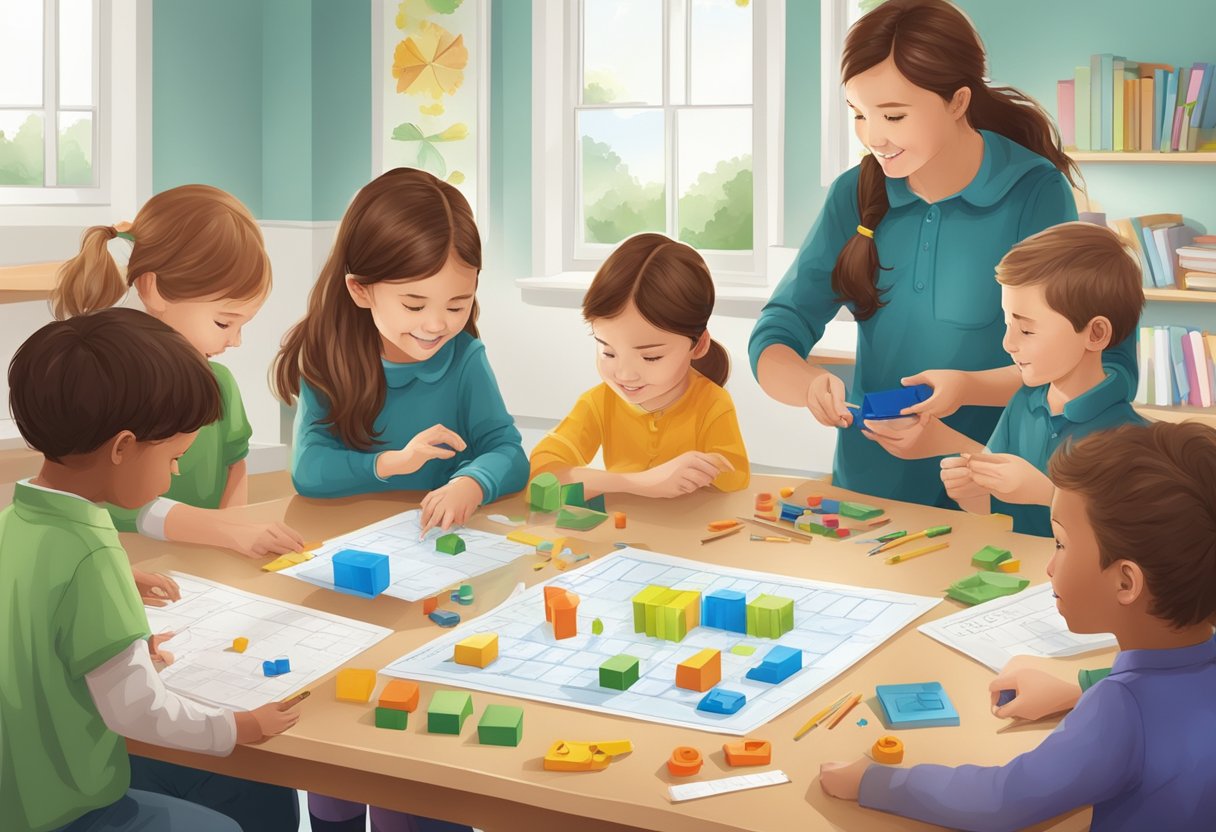
This shift towards curriculum-aligned science promotes deeper understanding through hands-on learning. Rather than following recipes, students engage in genuine inquiry and exploration. This approach helps learners develop scientific thinking skills while meeting key curriculum requirements.
Science Activities Aligned With Irish Curriculum
Aligning science activities with the Irish curriculum requires careful consideration of educational frameworks, learning outcomes, and assessment methods. Proper alignment ensures that teaching practices match curricular goals, creating meaningful learning experiences for students across all educational levels.
Science in Primary Education
The evolution of science education in the Irish primary curriculum has seen significant development over the years. The current approach focuses on inquiry-based learning rather than rote memorisation, encouraging young learners to explore and discover scientific concepts firsthand.
Primary science curriculum development has been influenced by international best practices while maintaining relevance to the Irish educational context. You’ll find that the curriculum emphasises hands-on activities that develop both knowledge and skills.
“As an educator with over 16 years of classroom experience, I’ve seen how properly aligned science activities spark curiosity and build foundational understanding in young learners,” notes Michelle Connolly, educational consultant and founder of LearningMole.
When planning your science lessons, consider using formative assessment techniques that align with curriculum objectives. Simple experiments with everyday materials can help you achieve multiple learning outcomes while keeping pupils engaged.
Incorporating STEM
STEM education integrates science, technology, engineering, and mathematics in a cross-curricular approach. The Irish curriculum increasingly recognises the importance of STEM for developing critical thinking skills and preparing pupils for future careers.
When incorporating STEM activities, you should focus on:
Problem-solving tasks that require application of knowledge
Collaborative projects that mirror real-world scenarios
Design challenges that encourage innovative thinking
Curriculum alignment in STEM requires thoughtful planning to ensure activities meet specific learning objectives. You can adapt many traditional science lessons to include engineering principles or mathematical concepts.
For example, a lesson on forces can incorporate simple machine design, allowing pupils to apply scientific knowledge while developing engineering skills. This integrated approach helps learners see connections between subjects.
ICT Skills and Digital Literacy
Digital literacy has become an essential component of science education in Irish schools. The curriculum now emphasises the use of technology not just as a teaching tool but as a skill set pupils must develop.
Resources like Webwise.ie provide guidance on integrating digital skills safely and effectively. You can use these resources to enhance your science lessons whilst teaching responsible technology use.
When teaching science with technology, consider these approaches:
Incorporate virtual experiments for scenarios difficult to replicate in class
Teach evaluation skills for assessing online scientific information
“Drawing from my extensive background in educational technology, I’ve found that digital tools in science education work best when they enhance rather than replace hands-on investigation,” explains Michelle Connolly.
The alignment between practical activities and curriculum requirements should guide your technology choices. Select digital resources that support specific learning outcomes rather than using technology for its own sake.
Understanding the Scientific Method
The scientific method serves as the backbone of inquiry-based learning in Irish primary schools. This structured approach helps pupils develop critical thinking skills while exploring science concepts aligned with the curriculum.
Steps of Inquiry
The scientific method follows a logical sequence that you can easily implement in your classroom. Start by encouraging pupils to observe their surroundings and ask questions about what they see. In Irish primary schools, this aligns with the curriculum objectives of developing curiosity and investigation skills.
Next, guide your pupils to gather information through research. This might involve reading books, watching videos, or conducting interviews. The third step involves forming a prediction based on their research.
“I’ve found that children grasp scientific concepts best when they actively participate in each step of the inquiry process,” explains Michelle Connolly.
Once they’ve made predictions, help them design and conduct experiments to test their ideas. This hands-on approach is essential for meaningful learning.
Hypothesis Formulation
Creating a good hypothesis is a crucial skill that takes practice. A hypothesis is simply an educated guess that can be tested through experimentation. When teaching hypothesis formulation to your pupils, emphasise these key elements:
It must be testable through experimentation
It should be clear and specific
It should include both independent and dependent variables
For example, rather than saying “Plants need light,” a better hypothesis would be “Plants grown in direct sunlight will grow taller than plants kept in shade.”
Irish curriculum guidelines recommend using familiar contexts for hypothesis development. Try using local environmental issues or everyday scenarios that pupils can relate to.
Help pupils understand that it’s perfectly acceptable if their hypothesis turns out to be incorrect. The scientific process values honest results over “correct” answers.
Maths and Numeracy
Mathematics and numeracy skills form the foundation of scientific understanding in the Irish curriculum. These skills help pupils develop logical thinking and problem-solving abilities that are essential across all STEM subjects.
Mathletics and Online Resources
Mathletics.eu is a popular digital maths resource that perfectly aligns with the Irish primary curriculum. This platform offers interactive activities and games that make practising mathematics enjoyable for pupils of all ages.
“I’ve seen how digital resources like Mathletics transform maths from a daunting subject to an exciting adventure for children,” says Michelle Connolly.
Other valuable online tools include:
Scoilnet’s Maths Resources: Specifically designed for the Irish curriculum
Khan Academy: Free lessons aligned with key mathematical concepts
Mangahigh: Game-based learning that reinforces numeracy skills
These platforms provide opportunities for personalised learning paths, immediate feedback, and progress tracking to help you identify gaps in your pupils’ mathematical understanding.
Developing Numeracy Skills
Numeracy skills extend beyond basic arithmetic and must be integrated across the curriculum. Science experiments offer perfect opportunities to develop these skills through measurement, data collection and analysis.
Try these practical approaches to enhance numeracy:
Use real-world scientific contexts when teaching mathematical concepts
Incorporate measurement activities in science experiments
Practise data representation through graphs and charts
“Having worked with thousands of students across different learning environments, I’ve found that children grasp mathematical concepts most effectively when they see them applied in practical science activities,” Michelle Connolly explains.
The Irish educational system emphasises cross-curricular connections between maths and science. When you integrate these subjects, you help pupils understand that mathematics isn’t isolated but a vital tool for scientific discovery.
Literacy in Science
Scientific literacy goes beyond just knowing facts—it involves reading, writing, and speaking about science with understanding. The Irish curriculum emphasises these skills to help students become scientifically literate citizens who can engage with scientific ideas and communicate them effectively.
Science-Related Reading
Science reading materials require specific skills that differ from those of other subjects. When students read scientific texts, they encounter specialised vocabulary, diagrams, graphs and technical explanations that need careful interpretation.
To improve science reading skills, you should incorporate a variety of text types aligned with curricular requirements. These might include:
Science textbooks and e-books
Scientific journals (simplified for appropriate age levels)
News articles about scientific discoveries
Experiment instructions and lab reports
“I’ve found that regular exposure to diverse scientific texts dramatically improves students’ comprehension skills,” explains Michelle Connolly.
Try creating a classroom reading corner with science-focused materials that change monthly based on your current topics. This encourages independent exploration of scientific concepts.
Enhancing Vocabulary
Scientific vocabulary development is crucial for scientific literacy in the Irish curriculum. Students need to understand and use technical terms confidently.
Effective vocabulary strategies include:
Word walls – Display new scientific terms with visual aids
Science dictionaries – Create personalised glossaries in notebooks
Etymology exploration – Study word origins to understand meaning
Spelling activities – Weekly practice with scientific terminology
Regular use of these terms during hands-on activities reinforces their meaning. For example, when conducting experiments, encourage students to explain their observations using precise vocabulary.
You can also use games like science-themed Pictionary or crosswords to make vocabulary practice engaging. This process-driven approach helps students develop the language skills needed for scientific discussions and writing.
Interactive Learning
Interactive learning transforms science activities into engaging experiences that boost understanding and retention. The Irish curriculum emphasises hands-on approaches where pupils can explore scientific concepts through active participation rather than passive observation.
Utilising Multimedia Resources
Science teaching in Ireland has evolved to embrace dynamic and interactive classroom experiences. Multimedia resources provide excellent opportunities to bring abstract concepts to life.
You can use:
Virtual Labs: These allow pupils to conduct experiments safely without expensive equipment. Virtual chemistry laboratories are particularly effective for demonstrating reactions that might be difficult to show in a classroom setting.
Interactive Whiteboards: Create collaborative learning experiences where pupils can manipulate variables and see immediate results.
“I’ve seen how multimedia transforms science lessons from passive to participatory,” says Michelle Connolly. “When children interact with content, they’re not just learning science—they’re becoming scientists.”
GoNoodle for Engaged Learning
GoNoodle offers brilliant movement-based activities that align perfectly with the Irish science curriculum’s focus on process-driven learning.
When using GoNoodle for science:
Incorporate movement breaks between complex concepts to improve focus and retention
Use dance routines that demonstrate scientific principles, like states of matter
Try the “Have Fun Teaching” science songs that cover curriculum topics with catchy tunes
GoNoodle activities help pupils understand difficult concepts through physical movement, making abstract ideas concrete. For example, pupils can become water molecules moving faster or slower to demonstrate changes in states of matter.
These energetic activities are particularly effective for younger learners who benefit from kinaesthetic approaches to understanding scientific concepts. They also provide valuable opportunities for cross-curricular learning.
Exploring the Natural World
The Irish curriculum places strong emphasis on connecting children with the natural world through hands-on experiences. Science activities that explore nature help students develop critical observation skills while fostering appreciation for Ireland’s unique ecosystems.
Biodiversity and Ecosystems
Ireland offers rich opportunities for exploring biodiversity in school science programmes. You can help your students investigate local habitats by creating simple field guides for your school grounds or nearby parks. These activities align perfectly with the Irish curriculum while making learning meaningful.
“I’ve found that children develop deeper scientific understanding when they can observe biodiversity firsthand,” notes Michelle Connolly.
Create a mini nature reserve in your school garden
Map different habitats in your local area
Monitor seasonal changes in plant and animal life
Use National Geographic Kids resources for species identification
A simple biodiversity survey can transform abstract concepts into tangible experiences. Even small green spaces contain fascinating ecosystems that demonstrate food webs, adaptation and interdependence.
Outdoor Activities and Nature Studies
Taking science outdoors dramatically enhances student engagement with the curriculum. The forest school approach has gained popularity in Irish primary education, encouraging children to interact directly with natural environments.
Nature scavenger hunts focused on scientific principles
“Having worked with thousands of students across different learning environments, I’ve observed that outdoor nature studies create those ‘lightbulb moments’ when scientific concepts suddenly click,” explains Michelle Connolly.
These activities help your students recognise that science isn’t confined to textbooks but exists in the world around them. The Irish curriculum specifically encourages “seeing science in the natural world” as noted in research on sustainable development education.
Consider incorporating technology by having students document their findings with digital photography or simple data collection apps. This combines traditional nature studies with modern scientific methods.
Integrating History and Science
Linking history with science offers unique learning opportunities that enhance students’ understanding of both subjects. This cross-curricular approach illuminates how scientific developments have shaped Ireland’s past and how historical events have influenced scientific progress.
The Great Famine: An Epidemiological Study
The Irish Great Famine (1845-1849) presents an excellent opportunity to combine historical learning with scientific investigation. This devastating period was triggered by the potato blight, a disease caused by the microorganism Phytophthora infestans.
You can guide students to explore how this fungus-like pathogen spread through Ireland’s potato crops, destroying the main food source for millions. This investigation introduces key epidemiological concepts while providing historical context.
Activities might include:
Creating microscope slides to examine modern plant pathogens
Mapping the spread of the blight across Ireland using historical data
Conducting simple experiments with potato tubers to understand plant diseases
“I’ve found that studying the Famine through a scientific lens helps students grasp both the biological factors and human impact of this tragedy,” notes Michelle Connolly.
Biotechnology Through The Ages
Biotechnology isn’t just a modern field—Irish people have been using biological processes for thousands of years in food production and agriculture.
You can explore this rich history by examining traditional Irish practices like:
Cheese-making and fermentation techniques
Selective breeding of livestock and crops
Traditional plant-based medicines and remedies
These historical practices can be integrated with a modern science curriculum by having students recreate historical biotechnology processes in the classroom.
Try setting up simple experiments where students can make butter or yoghurt using traditional methods, then compare these processes with modern industrial approaches. This helps illustrate how scientific understanding has evolved while honouring Ireland’s heritage of practical biotechnology.
Student-led investigations into biotechnology’s development provide a perfect opportunity to make science learning more enquiry-based rather than following prescribed recipes.
Health and Wellness Education
Health and wellness education in the Irish curriculum connects science learning with personal health practices and broader societal health challenges. The integration of these topics helps students understand how individual choices impact both personal well-being and community health while exploring the scientific aspects of disease transmission.
Personal and Community Health
In the Irish primary curriculum, personal and community health topics are aligned with well-being objectives to help you understand the connection between individual choices and public health. Science activities often focus on practical experiments that demonstrate key health concepts.
“I’ve found that children grasp health concepts best when they can visualise the invisible—like germs spreading or nutrients working in their bodies,” notes Michelle Connolly.
Try these hands-on activities with your class:
Germ spread demonstration: Use glitter on hands to show how germs transfer from person to person
Food nutrient testing: Simple experiments to identify proteins, carbohydrates and fats
Clean water filtration: Build simple water filters to understand environmental quality
The curriculum also explores how physical activity contributes to health outcomes, with outdoor learning opportunities that make these connections meaningful.
Impact of Diseases on Societies
Understanding how diseases affect communities is an essential part of science education that bridges biology with social studies. The Irish curriculum examines historical outbreaks alongside current health challenges to build critical thinking skills.
Through guided science activities, you can help students explore concepts like outbreak, epidemic, and pandemic through age-appropriate simulations:
Disease spread modelling: Using coloured water to show how infections move through populations
Historical timeline projects: Researching major disease events and their impacts
Vaccination science: Simple demonstrations showing how herd immunity works
These activities align with the curriculum’s health discourses while building scientific literacy around population health concepts.
Environmental quality investigations help students connect human activities to disease patterns. By monitoring local water or air quality, you create real-world connections between environmental science and community health outcomes.
Collaborative and Creative Thinking
Irish science education thrives when students work together and think creatively. These approaches help develop essential skills that support learning across the curriculum while making science more engaging and meaningful.
Group Projects and Teamwork
Group projects provide excellent opportunities for students to develop collaborative skills that are essential in science education. When you assign team-based activities, you encourage pupils to share ideas, distribute tasks, and build communication skills.
“Having worked with thousands of students across different learning environments, I’ve found that collaborative science projects create the richest learning experiences. Students not only learn scientific concepts but develop lifelong skills in compromise and leadership,” explains Michelle Connolly.
Consider these team-based activities that align with the Irish curriculum:
Water cycle models: Small groups create visual representations
Habitat investigations: Teams research and present local ecosystems
Simple machine challenges: Groups design solutions using pulleys or levers
Most teachers find that rotating roles within groups ensures all students develop different skills. This approach supports both shy and outgoing children to contribute meaningfully.
Fostering Creativity and Innovation
Science education in Ireland is increasingly focused on nurturing creative thinking alongside scientific knowledge. When you incorporate open-ended questions and design challenges, you help pupils develop innovative approaches to problem-solving.
Pose ‘what if’ scenarios that encourage multiple solution pathways
Create invention challenges using recycled materials
Hold science fairs where pupils develop original investigations
These approaches help pupils connect science to real-world issues. For instance, a lesson on electricity might challenge teams to design energy-saving devices for their school.
It’s important to balance structured learning with creative freedom. Providing clear assessment criteria while allowing for creative expression helps pupils understand expectations while still thinking outside the box.
Assessment and Feedback
Assessment and feedback are vital components of science education that enable both teachers and pupils to track learning progress effectively. They help ensure activities align with curriculum goals while providing opportunities for meaningful improvement.
Authentic Assessment Methods
When assessing science activities, you must move beyond traditional testing. Authentic assessments capture pupils’ true understanding through hands-on demonstrations and practical work.
“I’ve found that authentic assessment in science allows children to show what they truly understand rather than what they can memorise,” explains Michelle Connolly.
Consider using:
Performance tasks: Have pupils design experiments to demonstrate their understanding
Science journals: Encourage regular reflections on observations and learnings
Project-based assessments: Align with the Irish primary science curriculum through culminating projects
The Discover Primary Science programme offers excellent frameworks for authentic assessment that you can easily adapt to your classroom needs.
Monitoring Progress and Providing Feedback
Effective feedback helps pupils understand both their strengths and areas for improvement in science learning. Make your feedback specific, timely and actionable.
Use digital tools from focal.ie to track progress in science vocabulary development, particularly helpful for bilingual science education.
Consider these feedback approaches:
Two stars and a wish: Highlight two positive aspects and one area for improvement
Self-assessment checklists: Help pupils evaluate their own learning
Peer feedback sessions: Teach pupils to give constructive criticism
Regular monitoring allows you to adjust your teaching approach based on pupils’ needs. Record observations during practical activities to gain insights into their thinking processes.
Create simple rubrics that clearly show what success looks like at different levels. This helps both you and your pupils understand expectations for science activities.
Resources and Further Reading
Finding quality resources that align with the Irish curriculum can help make science lessons more engaging and effective. Here are some top resources you can explore:
Online Platforms
Twinkl offers a vast collection of curriculum-aligned science worksheets, lesson plans and interactive resources specifically designed for Irish primary schools.
Focal provides Irish-language resources for bilingual science education, supporting Gaelscoileanna and Irish-medium education.
Digital Learning Tools
Webwise offers guidance on safe internet research for science projects, helping pupils develop critical digital literacy skills alongside scientific inquiry.
Mathletics provides cross-curricular resources connecting maths and science, perfect for data handling and measurement activities.
You’ll find that textbooks remain valuable, though they vary in their approach to inquiry-based learning. Research shows many Irish primary textbooks need improvement to better support hands-on investigation.
Consider joining professional networks like the Irish Science Teachers’ Association for continuous professional development opportunities and resource sharing with fellow educators.
Frequently Asked Questions
Teachers across Ireland seek practical ways to implement engaging science activities that meet curriculum requirements. Here are answers to common questions about finding and using suitable science resources for Irish primary and secondary schools.
What types of science experiments are suitable for primary school students in Ireland?
Primary school students in Ireland benefit most from hands-on experiments that connect to their everyday lives. The Irish primary science curriculum emphasises exploration and discovery through simple investigations. Water experiments like floating and sinking activities work brilliantly for younger pupils. Simple plant growth experiments help children understand life cycles and plant needs. Weather stations and simple chemistry experiments using kitchen ingredients are also curriculum-aligned activities that excite young learners.
How can I find science activity resources that match the Irish secondary school curriculum?
The Irish secondary school science curriculum emphasises inquiry-based learning and practical application. Look for resources that specifically mention Junior Cycle or Leaving Certificate alignment. Professional organisations like the Irish Science Teachers’ Association offer curriculum-mapped resources on their website. The Professional Development Service for Teachers (PDST) provides excellent teaching materials aligned with syllabus requirements. Educational publishers in Ireland produce textbooks and workbooks with experiments designed specifically for the Irish curriculum. Digital platforms like Scoilnet host teacher-created content that’s been vetted for curriculum relevance and educational quality.
Can you suggest engaging activities for celebrating Science Week in Irish schools?
Science Week offers brilliant opportunities for cross-curricular activities that highlight the joy of scientific discovery. Consider organising a school-wide science fair where students showcase projects based on this year’s theme. Invite local scientists or STEM professionals to give interactive talks or demonstrations. Virtual options work well too if in-person visits aren’t possible. Plan nature walks focusing on local ecosystems and biodiversity, connecting science to geography and the local environment.
Where can I download free materials for teaching science in line with the Irish curriculum?
The PDST website offers comprehensive free science teaching resources specifically designed for the Irish curriculum. Their materials include lesson plans, activity sheets, and assessment tools. Science Foundation Ireland provides excellent downloadable resources through their Discover Primary Science and Maths programme. These materials are curriculum-aligned and regularly updated. Scoilnet hosts thousands of teacher-created resources that you can filter by class level and curriculum strand. The European Space Education Resource Office (ESERO) Ireland offers space-themed resources that align with the Irish curriculum and are completely free.
What are some effective science activities for Key Stage 1 and Key Stage 2 pupils in Ireland?
For Key Stage 1 (Junior Infants to 2nd Class), sensory exploration activities work brilliantly. Simple classification exercises where pupils sort objects by properties develop key science skills. Weather diaries and seasonal observation projects help young children connect science to their daily experiences. Mini-beast hunts in the school grounds encourage observation skills. For Key Stage 2 (3rd to 6th Class), electrical circuit building activities align perfectly with the curriculum. Design-and-make challenges like creating water filters or parachutes develop engineering thinking.
How does the Irish science curriculum incorporate hands-on learning in the classroom?
The Irish science curriculum places practical investigation at its core. It moves away from memorisation towards active learning experiences. The curriculum documents explicitly state that science lessons should not be lecture-based. Teachers are encouraged to use the 5E instructional model: Engage, Explore, Explain, Elaborate and Evaluate. This approach ensures hands-on activities come before conceptual explanations. The curriculum requires that 50% of science teaching time should involve practical work. This acknowledges the importance of developing procedural knowledge alongside conceptual understanding. Assessment approaches have evolved to measure not just factual knowledge but also practical skills, scientific reasoning and the ability to design investigations.
Maths Circus, an innovative platform we've crafted, presents a captivating realm where children learn mathematics through the exciting theme of a circus. The joy of juggling numbers and solving circus...
Foreword A child may be confident using a smartphone to chat on messaging apps or find videos on YouTube. However, they may not understand why certain content appears on their...
Mammals are animals with a backbone that breathe air through lungs, have hair or fur at some stage of life and feed their young on milk. Scientists sort every mammal...
Norse mythology creatures range from Jörmungandr, a serpent long enough to circle the human world, to Ratatoskr, a gossiping squirrel on a giant tree. This guide explains 13 of them...






Leave a Reply