School assembly resources offer structured materials and guidance to help you create meaningful gatherings for your school community.
These resources include ready-made presentations, activity guides, and planning frameworks that address themes such as character education and curriculum topics.
Types of School Assemblies
Schools use different assembly formats to meet educational goals and student needs.
Whole-school assemblies bring everyone together for shared experiences and important announcements.
Key Stage assemblies allow you to focus on age-appropriate content for specific year groups.
You might run separate assemblies for KS1 and KS2 pupils to make sure the material fits their developmental stage.
Themed assemblies highlight topics like anti-bullying, environmental awareness, or cultural celebrations.
Kindness assembly resources offer slides and teacher notes for both primary and secondary schools.
Sports Day preparation and transition assemblies also fit well during this period.
Wellbeing and Citizenship Topics
Mental Health and Emotional Intelligence
May’s Mental Health Awareness Week is a good time for wellbeing assemblies.
You can include mindfulness exercises, stress management techniques, and peer support strategies.
Consider inviting local counsellors or mental health professionals to speak about emotional regulation and seeking help.
Citizenship and Community Values
Anti-bullying assemblies are effective in November during Anti-Bullying Week.
Focus on bystander intervention, reporting procedures, and celebrating kindness.
British Values Integration
You can weave democracy, rule of law, individual liberty, and mutual respect into various assembly themes.
Social Responsibility Themes
Charity fundraising assemblies teach empathy and community engagement.
Partner with local food banks, animal shelters, or international charities to give students real ways to help others.
Student-led assemblies work especially well with citizenship themes, as children take ownership of important social messages.
Historical and Cultural Assemblies
Significant Historical Dates
February’s Holocaust Memorial Day needs careful, age-appropriate planning. Focus on teaching tolerance, diversity, and standing up to prejudice instead of sharing graphic details.
Remembrance Day assemblies in November encourage respect for sacrifice and service. Share stories about local war memorials, family experiences, and peacekeeping efforts.
Black History Month highlights more than famous figures. Celebrate contemporary achievements and contributions from the local community.
Invite local role models to share their experiences with students.
Religious and Cultural Festivals
Plan inclusive assemblies for Eid, Chinese New Year, and Vaisakhi that inform students respectfully. Work with local community groups to provide authentic insights.
Discuss archaeological finds, local famous people, or historical buildings students see every day. These links help students relate to historical periods in a personal way.
Subject-Focused Assemblies
Subject-focused assemblies turn curriculum topics into engaging school-wide experiences. These presentations help students connect classroom learning to real life and build excitement for new subjects.
Science and Environment
Science assemblies spark curiosity with hands-on demonstrations and interactive experiments. Invite students to join simple chemical reactions, physics demonstrations, or biology activities.
Popular science assembly topics include:
Volcanoes and earthquakes with erupting models
Space exploration using planetarium visuals
Animal adaptations with guest speakers from wildlife centres
Weather patterns with interactive meteorology tools
Environmental assemblies link science to real-world issues. Highlight topics like recycling, renewable energy, or local wildlife conservation.
Invite local environmental groups or scientists to speak. These guests make the topic more relevant for students.
Michelle Connolly notes that science assemblies work best when students can see, touch, and participate.
Quick implementation tip: Connect with secondary school science departments for equipment loans and student volunteers to help with demonstrations.
Literacy and Reading
Reading celebration assemblies inspire a love of books for all ages. Showcase student work, invite authors, or create themed presentations around popular books.
Effective literacy assembly formats include:
Poetry performances where students recite favorite poems
Book character parades with creative costumes
Storytelling sessions led by teachers or guests
Writing competitions with public recognition
Language-focused assemblies help students appreciate communication. Explore word origins, celebrate multilingual students, or show how language changes over time.
Partner with local libraries for guest storytellers or arrange virtual author visits. Publishers often offer free resources to enhance assemblies.
Practical tip: Rotate classes to present book reviews or creative writing each month.
Mathematics and Numeracy
Maths assemblies make mathematics interesting by showing patterns, puzzles, and real-world uses. Use visual puzzles, magic tricks, or interactive challenges to teach concepts.
Engaging mathematical topics for assemblies include:
Number patterns in nature like Fibonacci sequences
Geometry in architecture by exploring shapes in buildings
Problem-solving challenges for classes to solve together
Numeracy celebrations highlight student achievements and the value of maths in life. Recognize times tables champions, mental maths contests, or student-created mathematical art.
You can link maths to art through symmetry, to music through rhythm, or to PE through measurement.
Time-saving approach: Invite Year 6 students to present maths concepts to younger pupils, helping both groups learn.
Assemblies for Personal Development
School assemblies for personal development give students ways to learn about emotional wellbeing, social skills, and character growth. These assemblies address topics like mental health, inclusion, and resilience.
Mental Health and Resilience
Mental health assemblies teach students to understand their feelings and develop coping skills. Use interactive presentations to normalize discussions about emotions and stress.
Key topics to cover:
Recognizing emotions and their causes
Simple breathing techniques for anxiety
When and how to ask for help
Daily habits that support wellbeing
Michelle Connolly explains that practical mental health assemblies help students use real strategies right away.
Personal development assemblies might include video clips about overcoming challenges or group activities focused on problem-solving.
Invite school counsellors or mental health professionals to speak. This helps students see that seeking support is normal.
Anti-Bullying Campaigns
Plan anti-bullying assemblies to address all types of harassment. Cover cyberbullying, exclusion, and physical intimidation while empowering bystanders to act.
Effective assembly elements include:
Role-play scenarios with appropriate responses
Clear reporting steps students can remember
Peer testimonials about overcoming bullying
Discussions about conflict versus bullying
Encourage a ‘telling culture’ so students know when to involve adults.
Use interactive polls to find out about bullying concerns in your school. This helps address real issues.
Highlight students who show kindness and inclusion. Positive reinforcement encourages good behaviour.
Diversity and Inclusion
Diversity assemblies celebrate differences and build understanding among students. Explore cultural traditions, family structures, and different abilities or learning needs.
Plan assemblies around events like Black History Month or Disability Awareness Week. This is a good time to highlight diverse role models and achievements.
Practical inclusion activities:
Students share family traditions or languages
Talk about unconscious bias and assumptions
Celebrate different learning styles and talents
Show how diversity strengthens communities
Invite community members to share their experiences. This helps students see beyond stereotypes.
Discuss inclusion beyond visible differences. Talk about economic diversity, neurodiversity, and family circumstances to create a welcoming environment.
Faith and Religious Assemblies
Faith-based assemblies teach children about Christian values, world religions, and spiritual reflection. Use scripts, visual aids, and activities to create meaningful collective worship.
Christian Festivals and Values
Bible Based Assemblies provides resources created by staff and volunteers. Find stories, visual aids, and pupil questions that make planning Christian assemblies easier.
Michelle Connolly highlights that well-planned religious assemblies help children develop empathy and understand different perspectives.
Big Start Assemblies offers ready-made sessions for KS1 and KS2. They include free Bible-based assemblies about ‘giants of faith’ and more content through subscription.
Key Features You’ll Access:
Ready-to-use scripts and plans
Multi-media content with games and songs
Visual aids for different age groups
Questions to engage pupils
SPCK Publishing’s assembly bank offers over 1,600 free scripts covering Christian festivals, values, and Bible stories.
World Religions and Beliefs
Multi-faith assembly resources help you teach about religions from Baha’i to Zoroastrian. These materials suit schools wanting to share diverse religious festivals and beliefs.
Essential Multi-Faith Topics:
Festivals from different religions
Shared values between world faiths
Cultural celebrations and meanings
Stories from various traditions
Try Inter Faith Week activities such as hall stations, multi-faith conferences, and prejudice-awareness assemblies.
Faith in Kids provides seasonal resources, including Easter materials and family activities. Adapt these for different religious celebrations throughout the year.
Rotating between faith traditions helps pupils see common themes like kindness, community, and respect.
Interactive and Creative Activities
Drama activities turn passive listeners into active participants. Music creates memorable shared experiences and strengthens school community bonds.
Drama and Role-Play
Role-play activities involve students directly in assemblies. Have pupils act out historical events, safety situations, or social skills.
Ask Year 6 pupils to demonstrate playground conflict resolution through role-play. This gives younger students practical ideas and older students leadership roles.
Michelle Connolly explains that drama helps children understand complex topics emotionally. Acting out scenarios shows consequences more clearly than lectures.
Interactive quizzes keep students interested and help reinforce learning objectives. Use technology or hands-up voting to involve everyone at once.
Popular Quiz Formats:
True/false questions with physical movements
Multiple choice using coloured cards
“Think-Pair-Share” discussions encourage students to talk through answers with a partner. Team challenges between year groups add excitement and friendly competition.
Design questions that match your curriculum topics. For example, during Science Week, ask pupils to identify animals by their sounds or guess mystery objects from clues.
Game Structure Tips:
Mix easy and challenging questions
Include visual elements when possible
Keep scoring simple so everyone understands. Make sure every child gets a chance to participate.
Interactive school assembly games feature hands-on experiments and creative challenges that grab students’ attention and deliver educational content.
Alternate between individual and group questions to keep energy levels high.
Start by setting clear assembly objectives before contacting speakers. Match experts to your themes—invite local police for safety talks, environmental scientists for Earth Day, or authors for literacy celebrations.
Michelle Connolly, founder of LearningMole, says, “The most effective speakers engage students through storytelling and interactive elements.”
Contact speakers at least six weeks ahead of time. Provide clear briefs about the audience’s age, assembly length, and key messages.
Discuss appropriate content for your age groups. Arrange pre-assembly meetings to build rapport.
Local professionals often say yes to school invitations. Reach out to doctors, firefighters, business owners, artists, or charity workers who can share career insights and community connections.
Survey families about their expertise, hobbies, or cultural backgrounds. You may discover parents who are musicians, craftspeople, world travellers, or community volunteers.
Offer simple participation opportunities that fit busy schedules. Brief presentations work better than long commitments.
Cultural celebration assemblies featuring family traditions
Career talks showcasing diverse professions
Hobby demonstrations like photography or cooking add variety. Community service stories can inspire pupils to take action.
Prepare parent speakers well. Offer practice sessions and provide templates if needed. Pair nervous speakers with confident staff members for support.
Offer virtual participation for parents who can’t attend in person. Video calls enable global connections and help parents stay involved.
Technological Tools for Assemblies
Modern technology turns school assemblies into dynamic learning opportunities. Using presentation equipment and digital platforms helps engage every student.
Presentation and AV Equipment
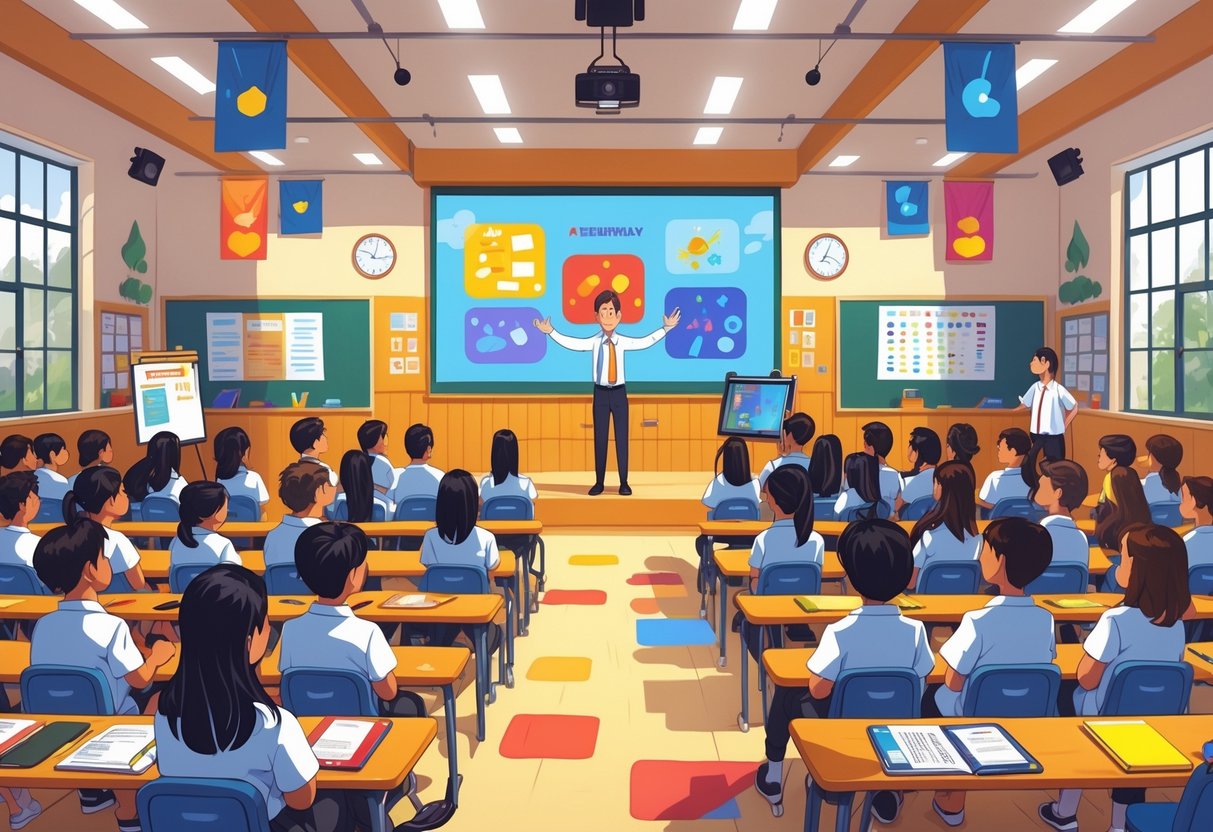
Reliable audiovisual equipment ensures every student hears and sees clearly. Interactive whiteboards let you show presentations, videos, and interactive content to the whole room.
Essential AV Equipment:
Wireless microphones – Let speakers move freely and stay heard
Portable speakers – Provide clear sound in large halls
Document cameras display physical objects or demonstrations in real time. Tablets and laptops run presentation software and interactive apps.
Michelle Connolly says, “The right equipment transforms assemblies into interactive experiences that genuinely engage students.”
Invest in a portable PA system for outdoor events or spaces without built-in sound. Many schools use interactive presentation tools for polls, quizzes, and question submissions.
Technical Setup Checklist:
Equipment
Check Before Assembly
Microphones
Battery levels, wireless connection
Projectors
Bulb brightness, focus adjustment
Speakers
Volume levels, audio clarity
Internet
Connection stability, backup options
Digital Resource Sharing
Digital platforms extend assembly learning beyond the hall. Virtual assembly formats help reach students who can’t attend or allow sharing with multiple year groups.
Cloud-based tools let you share slides, videos, and interactive content with teachers before or after assemblies. This supports classroom discussions and reinforces messages.
Effective Digital Sharing Methods:
Google Classroom – Upload assembly materials for later access
School websites – Publish key takeaways and resources
Video recordings create highlights for absent students. QR codes link to extra resources students can explore on their own.
Many schools use multimedia content integration for engaging experiences. Short video clips, animations, and interactive demos capture attention.
Digital Resource Planning:
Test all digital tools before assembly day. Prepare backup plans, including offline options and printed materials, in case of technical issues.
Classroom Follow-Ups to Assemblies
Reinforce assembly messages in your classroom through targeted discussions and projects that connect to the themes.
Discussion Activities
Circle time discussions help unpack assembly themes. Start with open questions like “What did you think about today’s assembly?” or “How could we show kindness in our classroom this week?”
Try this approach:
Give students a few minutes to share thoughts with a partner
Use a talking stick to manage contributions
Write key ideas on the whiteboard as students speak. End by agreeing on one action the class will take together.
Michelle Connolly observes, “The most powerful assembly follow-ups happen when children see direct connections between the message and their daily classroom interactions.”
Role-play activities let students practice assembly concepts safely. If the assembly focused on bullying, create scenarios to rehearse helpful responses.
For friendship themes, have pairs show good listening skills.
Quick discussion starters:
Project and Homework Links
Turn assembly themes into simple homework that families can do together. Create activity sheets that extend learning home without adding stress.
Design homework tasks that need few resources but encourage reflection:
Assembly Theme
Homework Activity
Time Needed
Kindness
Interview a family member about a kind act
15 minutes
Perseverance
Try learning a new skill for 10 minutes daily
Week-long
Community
Draw your neighbourhood helpers
20 minutes
Class projects can keep assembly messages alive for weeks. Make kindness trees where students add leaves for acts of kindness they’ve seen.
Build friendship walls with photos and positive messages from your class.
Project ideas:
Measuring Assembly Impact
Track how well your school assemblies work to improve future events and see their true value. Collect feedback from students and watch their reactions to understand what works.
Student Feedback Methods
Quick Exit Surveys help right after assemblies. Hand out simple cards with 3-4 questions as students leave. Ask questions like “What was the most important thing you learned?” or “How likely are you to use today’s advice?”
Digital tools make feedback easier. Create QR codes linking to short Google Forms or use apps like Mentimeter for instant responses.
Focus groups with small groups from different years provide deeper insights. Meet within a day of the assembly and ask open-ended questions about what held their attention or caused confusion.
Michelle Connolly says, “Getting honest feedback from students is crucial for improving assemblies. They’ll tell you what resonated and what felt boring.”
Follow-up activities in classrooms show if key messages stuck. Ask teachers to spend 10 minutes the next day discussing assembly themes. Student responses reveal what they understood and remembered.
Evaluating Engagement
Visual cues during assemblies show how engaged students are. Look for heads turning, fidgeting, or checking phones. Engaged students sit forward, make eye contact, and respond to questions.
Track participation levels in different segments. Count hands raised during Q&A or note how many students volunteer for demonstrations.
Noise levels can show attention spans. Quiet, focused audiences signal strong engagement, while more chatter suggests waning interest.
Use simple engagement rubrics for staff observing assemblies:
Engagement Level
Student Behaviours
Action Needed
High
Eye contact, questions, forward posture
Continue approach
Medium
Some fidgeting, occasional talking
Adjust pace or activity
Low
Looking away, frequent talking, restlessness
Change topic or method
Teacher observations give valuable data since staff know their students well. Ask staff to note which usually disengaged students stayed focused, or if typically attentive pupils seemed distracted.
Frequently Asked Questions
School assemblies raise many practical questions about planning, content selection, and engaging different age groups. Common concerns include choosing suitable themes and finding interactive resources to keep students involved.
What are some engaging topics for primary school assemblies?
Themes that connect to children’s daily lives and current learning work best for primary school assemblies. Popular topics include anti-bullying, character building, and science demonstrations with hands-on activities.
Seasonal themes like harvest festivals, environmental awareness, or cultural celebrations also engage students. Interactive assemblies about STEM subjects capture young learners’ attention with experiments and demonstrations.
Michelle Connolly, founder of LearningMole, says, “Children respond brilliantly to assemblies that invite them to participate rather than just observe.” She adds that topics like friendship, kindness, and exciting science discoveries generate strong engagement.
Community helpers, healthy living, and road safety make excellent assembly themes. You can invite guest speakers such as police officers, firefighters, or healthcare workers to speak on these topics.
How can I find age-appropriate assembly themes for secondary students?
Assemblies that address real-world issues and personal development resonate with secondary students. Mental health awareness, career guidance, and social responsibility are popular themes for teenagers.
Current affairs, environmental challenges, and digital citizenship also interest secondary students. Assemblies for older students often last 45-50 minutes, allowing deeper exploration of these topics.
Peer-led assemblies are effective at the secondary level. Students can present on study skills, university preparation, or creative projects they have completed.
Guest speakers from local businesses, universities, or charities provide fresh perspectives. Topics might include entrepreneurship, volunteering, or specialist subjects.
Where can I source interactive activities for school assembly presentations?
Educational websites offer downloadable assembly resources like scripts, activity sheets, and multimedia presentations. Many sites include teacher support materials to help with preparation.
Drama groups and educational theatre companies provide ready-made assembly programmes. These often include audience participation and follow-up classroom activities.
Local museums, libraries, and community centres offer educational outreach programmes. These organisations bring props, costumes, and interactive demonstrations to your school.
Educational assembly providers typically include teacher support materials and suggested follow-up activities in their services.
Can you suggest ways to include student participation in assemblies?
Begin with interactive warm-ups such as songs, chants, or simple movement exercises. These activities engage the audience from the start.
Ask questions and include Q&A sessions throughout the presentation. This keeps students alert and involved.
Invite volunteers to demonstrate activities, assist with experiments, or role-play scenarios. Select helpers from different year groups to maintain interest.
Use props that students can handle or examine. Pass objects around or invite small groups to come forward for a closer look.
Encourage the whole audience to participate together. This could include voting, repeating phrases, or performing simple actions.
What are the best practices for organising a multicultural school assembly?
Consult with families from different cultural backgrounds in your school community. This helps ensure authentic representation and avoids stereotypes.
Communicate the assembly’s purpose and importance to school staff well in advance. Ask staff to help promote the event through various channels.
Invite community members to share personal experiences, traditional stories, or cultural demonstrations. This adds authenticity and personal connection.
Include interactive elements like tasting different foods, learning greetings in various languages, or joining in traditional games or dances.
Highlight similarities between cultures, such as shared values like family, friendship, and celebration.
Provide teachers with resources for follow-up activities in classrooms. This helps continue discussions about diversity and inclusion.
Could you recommend any assembly resource websites tailored for UK schools?
Religious education councils share assembly materials about different faiths and ethical themes. These materials respect diverse beliefs and meet statutory requirements for collective worship.
Charitable organisations offer free assembly resources related to their causes. Topics include anti-bullying, environmental protection, and global citizenship.
Local authority websites provide assembly planning guides and suggested themes. You can check your council’s education department for region-specific resources.
Educational publishers sell subscription services with weekly assembly plans and presentations. They also include seasonal themes and current affairs discussions for UK schools.
Teacher resource websites host user-generated content like assembly scripts, PowerPoint presentations, and activity ideas. Many sites offer free basic access and premium features.
Maths Circus, an innovative platform we've crafted, presents a captivating realm where children learn mathematics through the exciting theme of a circus. The joy of juggling numbers and solving circus...
Singers use their voices as musical instruments to perform songs in theatres, recording studios, choirs and at events. Most of their working day, though, is spent practising, learning music and...
Article summary What this article covers: How primary teachers can use online assessment tools such as live quizzes, polling, digital exit tickets and digital portfolios to check understanding, give faster...
Article summary What this article covers: The role of AI in education for primary-aged children in the UK, including what artificial intelligence is, how schools in England use it, the...










Leave a Reply