In every classroom and home, discarded materials hold remarkable potential. A yoghurt pot becomes a torso, bottle caps transform into wheels, and cardboard boxes provide structural foundations. Building a recycled robot bridges creativity with environmental responsibility, turning rubbish into powerful learning opportunities that teach engineering, problem-solving, and sustainable design thinking.
These projects use materials freely available in recycling bins, removing financial barriers whilst teaching children that innovation doesn’t require purchasing new resources. Every project becomes a lesson in resourcefulness and environmental stewardship.
When pupils design a chassis that can support weight or engineer joints allowing movement, they’re applying real-world engineering principles using materials that would otherwise fill landfills. The constraints of working with found materials actually strengthen learning outcomes, as children develop adaptability and creative thinking that serve them throughout their education.
Why Recycled Robotics Matters in Education
The UK generates over 222 million tonnes of waste annually. When children build with recycled components, they encounter genuine design challenges that strengthen learning outcomes. Unlike shop-bought kits with perfectly matched pieces, creating robots from Pringles tubes and egg cartons requires authentic problem-solving around weight distribution, structural integrity, and material properties.
This hands-on approach directly supports the National Curriculum for Design and Technology across Key Stages 1-4. Students explore how structures strengthen, how mechanisms generate motion, and how design choices affect functionality. At Key Stage 1, pupils work with reclaimed materials to design and make products. By Key Stage 3, they’re analysing how materials and components work together, understanding sustainable design principles that extend far beyond the classroom.
“When children build with recycled materials, they’re learning that limitations can drive creativity,” says Michelle Connolly, founder of LearningMole with over 16 years of classroom experience. Every challenge they overcome reinforces problem-solving skills extending far beyond the art room.
The environmental dimension adds significant depth to these projects. Standard plastic toys use virgin materials that persist in landfills for centuries. By repurposing high-density polyethene bottles or corrugated cardboard, pupils extend material lifecycles whilst developing a repair-over-replace mindset. When a robot’s arm detaches, the response isn’t disposal but redesign and re-engineering. This resilience applies to countless life situations beyond craft projects.
Selecting Materials for Your Recycled Robot
Success begins with thoughtful material selection. Not all recyclables work equally well for robot construction. Understanding material properties helps pupils make informed design choices whilst developing scientific observation skills.
Structural Components
Corrugated cardboard from delivery boxes provides excellent structural strength. The fluted middle layer creates rigidity that thin card cannot match. For added stability, layer two pieces with grains running perpendicular to each other, creating a makeshift plywood effect that resists bending. This technique, borrowed from actual packaging design, dramatically increases strength without adding much weight.
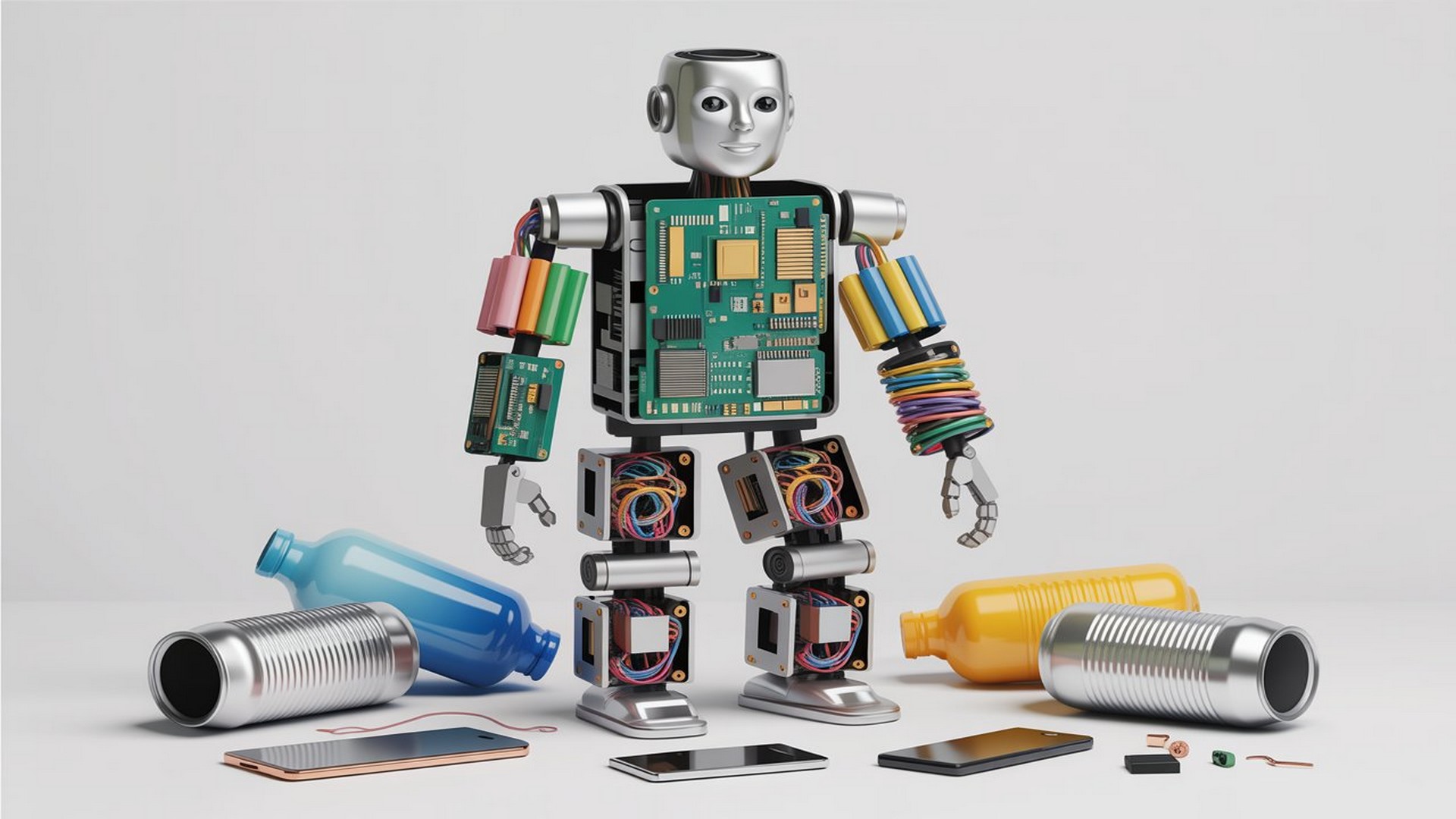
Plastic containers offer durability and water resistance. Yoghurt pots make ideal heads or body segments, whilst larger bottles form torsos or storage compartments. Bottle caps serve multiple purposes as wheels, joints, or decorative elements. Their uniform size and pre-drilled centres simplify axle installation when pupils need rotating parts.
Metal tins from canned goods provide impressive outer armour, creating an authentic robot aesthetic. Sharp edges require careful handling, though. Cover cut edges with masking tape or fold them over for safety. The reflective surface needs no additional decoration, saving time whilst teaching pupils to work with inherent material qualities.
Joining Methods Without Adhesives
Moving beyond glue improves functionality and environmental credentials. Sellotape isn’t recyclable, and hot glue creates permanent joints, preventing repair or disassembly. Alternative methods prove more effective and educational, teaching mechanical principles used in actual engineering.
Slot-and-tab joints allow cardboard pieces to interlock securely. Cut a slit in one component and create a matching tab on another. This technique requires precise measurement and cutting, and develops fine motor skills alongside construction knowledge. The joints remain strong under tension whilst allowing disassembly if needed.
Paper fasteners create excellent rotating joints for articulated limbs. Pierce holes through the components, insert the fastener, and spread the legs on the reverse. This simple mechanism allows shoulders, elbows, and knees to move naturally. Pupils quickly grasp how mechanical joints function through hands-on experimentation with these basic pivots.
Elastic bands and strings provide flexible connections. Thread the string through the punched holes for hinges that fold flat. Elastic bands work brilliantly for tension mechanisms, storing energy that can power simple movements. These connections teach energy storage and mechanical advantage concepts without requiring expensive materials.
Found Technology Components
Broken electronics contain surprisingly useful components for robot enhancement. Old USB cables provide decorative wiring, suggesting connectivity and power systems. Remove the plastic sheathing to expose colourful internal wires, adding visual complexity.
Ballpoint pens yield multiple useful parts. The spring creates bouncy antennae responding to movement. The outer barrel forms arm or leg segments. The clip becomes a gripper or mounting bracket. Encouraging pupils to deconstruct and reimagine everyday objects builds systems thinking valuable across many subjects.
LED lights from tea lights or old toys can illuminate robot eyes when connected to small batteries. This simple circuit work introduces electrical concepts safely. Always ensure electronic components are properly cleaned and checked before classroom use.
Designing Your Recycled Robot Blueprint
Successful builds begin with planning. Spending time on design thinking significantly improves final outcomes.
Understanding Robot Anatomy
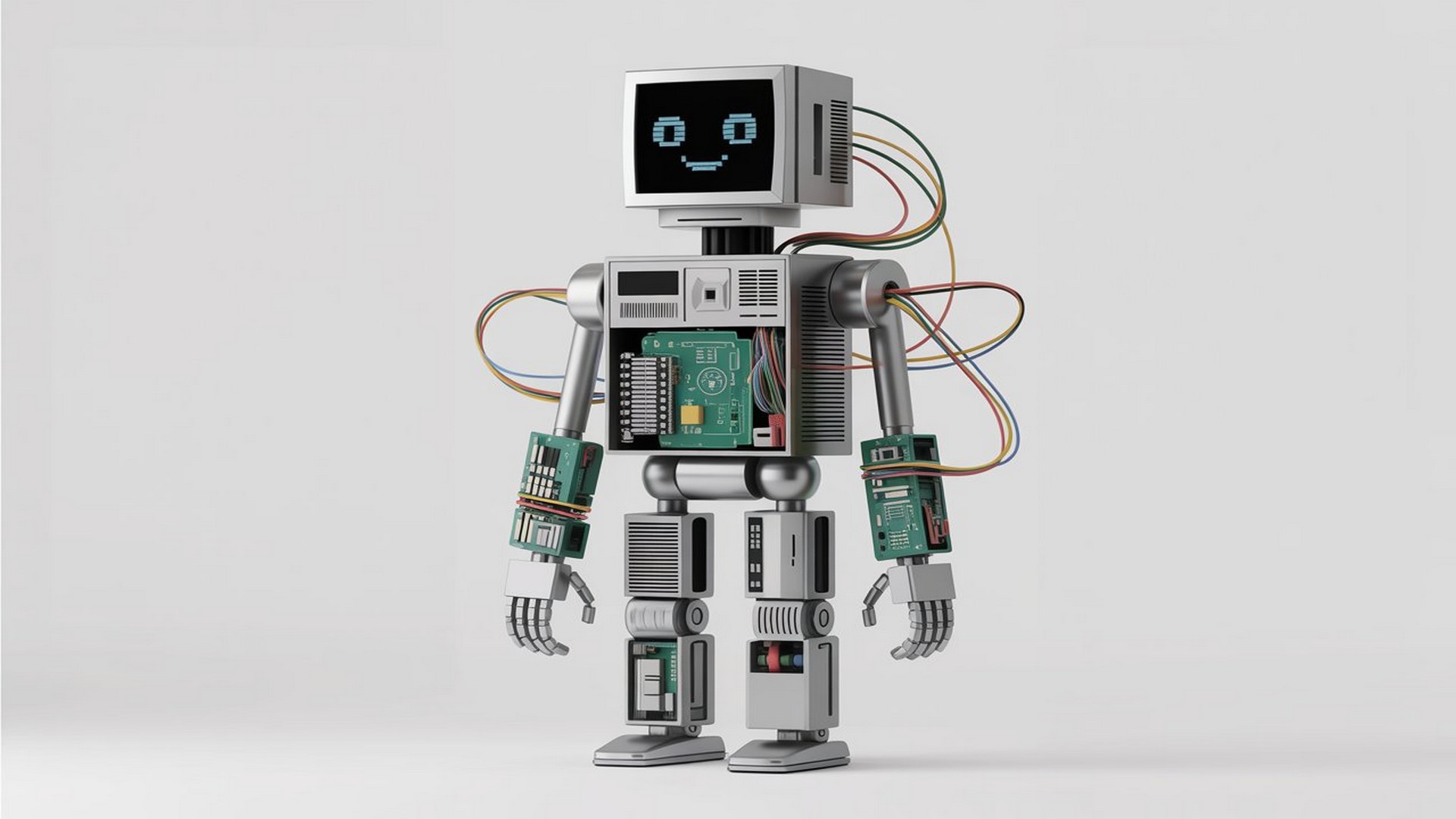
Real robots comprise functional systems that pupils can replicate. The chassis provides structural support like a skeleton. Actuators create movement. Sensors gather information. Power systems supply energy. Even non-functional models benefit from considering these elements during design.
Encourage pupils to sketch robots before building. This planning helps them consider proportions, balance, and material requirements. A top-heavy design will topple. Long arms need substantial shoulder joints.
Balance proves critical for standing robots. The base should be wider than the top, creating a low centre of gravity. Adding weight to the feet with small stones or sand increases stability.
Building Your Recycled Robot Step by Step
With materials selected and designs complete, construction can begin. Breaking the process into manageable stages prevents overwhelm and allows pupils to see progress incrementally, maintaining motivation throughout longer projects.
Creating the Robot Body
Start with the largest structural element, typically the torso. A cereal box, a large plastic bottle, or stacked tins work well. This becomes the anchor point for all other components. Ensure it’s sturdy enough to support attached limbs and features without toppling or collapsing under their weight.
If using cardboard, reinforce corners and edges where stress concentrates. Add internal bracing with strips of corrugated card glued across open spaces. This technique, borrowed from packaging design, dramatically increases strength without adding much weight. For cylindrical bodies, plastic bottles offer ready-made forms. Cut them if needed to achieve the desired height, but keep cuts smooth and safe, covering any sharp edges.
Adding Articulated Limbs
Arms and legs bring personality to robot designs. Straight limbs look mechanical, whilst jointed appendages suggest movement capability. Even if the robot won’t actually move, visible joints imply functionality and sophistication.
Create simple joints by overlapping two cardboard strips and securing with a paper fastener. This allows rotation like a hinge. Position these at the shoulders, elbows, hips, and knees. Adjust the tightness by how far you spread the fastener legs on the reverse side.
For more sophisticated joints that move in multiple directions, use ball-and-socket joints. Push a wooden skewer through a polystyrene ball from packaging, then into the body. The ball can rotate freely, allowing more natural positioning similar to actual robotic joint engineering.
Tubes make excellent limb segments. Kitchen roll tubes, paper towel tubes, or rolled card create uniform cylinders. Varying diameters of the upper and lower limbs add visual interest and suggest the mechanical advantage principles used in actual machinery.
Designing the Robot Head
The head offers maximum creative opportunity. Faces communicate personality, making robots more engaging for younger children. Consider the expression you want to convey through eye positioning, mouth shape, and other features such as antennae or sensors.
Large circular eyes create a friendly appearance. Use jar lids, bottle caps, or cut circles from contrasting materials. Position them wide apart for approachability or close together for focus. Add pupils by attaching smaller circles or drawing them on with permanent markers.
Antennae suggest communication and sensing capabilities. Pipe cleaners work well if available, but coat-hanger wire, bent straws, or twisted paper create effective alternatives. Top them with small spheres like beads, foam balls, or crumpled foil for a classic robot look that suggests receivers or transmitters.
Adding Detail and Character
Final details transform basic structures into individual creations. Control panels, buttons, lights, and mechanical details suggest complex internal systems even when the robot is entirely static, adding narrative possibilities.
Bottle caps make excellent buttons and dials. Arrange them in panels on the chest or arms. Different colored caps add visual variety. Thread colourful string or yarn between components to suggest wiring and internal connections. Old shoelaces provide flexible cables that loop naturally, adding depth and complexity to the visual design.
Cross-Curricular Learning Through Robot Building
Recycled robot projects connect with multiple curriculum areas, extending learning beyond design and technology. This integration creates richer educational experiences whilst demonstrating how subjects interconnect in meaningful ways.
Science Connections
Robot building explores materials and properties hands-on. Pupils test which materials withstand tension, compression, and torsion. They discover that cylindrical forms resist crushing better than flat surfaces, applying geometry to structural engineering. Understanding why corrugated cardboard is stronger than flat card teaches about material science and engineering principles.
Simple circuits can illuminate robot eyes or spin motors. These applications make abstract electrical concepts concrete by showing how circuit completion enables current flow. Pupils learn about conductors, insulators, and energy transfer through practical experimentation that makes theoretical knowledge memorable.
When building moving components, pupils explore forces, motion, levers, and pulleys. They see how levers amplify small movements, how pulleys redirect force, and how rotational motion converts to linear movement. These mechanical principles underpin countless real-world machines from construction equipment to household appliances.
Mathematics Applications
Measurement permeates construction. Pupils measure materials for cutting, calculate proportions for balanced designs, and use templates for repeated shapes. These practical applications reinforce measurement skills in meaningful contexts where accuracy directly affects outcomes.
Symmetry becomes visually obvious in robot design. When one arm is longer than the other, the aesthetic and practical imbalance becomes immediately apparent. Pupils naturally adjust to create symmetrical designs, understanding how mathematical concepts manifest physically and why symmetry matters in design and engineering.
Three-dimensional thinking develops as pupils visualise how flat materials assemble into volumetric forms. They estimate the amount of material needed, calculate surface areas for decoration, and consider how components fit together spatially. This spatial reasoning transfers to geometry, technical drawing, and architectural concepts.
Literacy Opportunities
Robot projects generate excellent writing opportunities. Pupils create instruction manuals documenting their building process. This procedural writing has genuine purpose, as others might follow their instructions to replicate successful designs. The authentic audience raises writing standards beyond typical classroom exercises.
Creative writing flourishes around robot characters. What is the robot’s function? Where does it operate? What challenges does it face? These narrative prompts engage reluctant writers by connecting literacy with hands-on making they’ve invested in personally.
Technical vocabulary enters discourse naturally. Terms such as chassis, articulated joints, structural integrity, and tensile strength are necessary for describing and discussing projects. This specialised language develops in authentic contexts rather than through isolated vocabulary exercises, making retention and application more likely.
Environmental and Citizenship Education
Every recycled robot reinforces environmental awareness. Pupils see directly how materials can be repurposed rather than discarded. They calculate how much waste their project diverted from landfills, making abstract environmental concepts tangible and personal.
Discussions about consumption and waste arise naturally. Why do we generate so much packaging? How can design choices reduce waste? What happens to items we discard? These conversations build environmental literacy and responsible citizenship that influences behaviour beyond school settings.
The circular economy becomes understandable through practical application. Pupils see how materials retain value after their initial use, challenging the linear take-make-dispose model dominating much of consumer culture. This understanding shapes future purchasing and disposal decisions.
Troubleshooting Common Construction Challenges
Even well-planned projects encounter obstacles. Anticipating common issues helps pupils develop resilience and problem-solving strategies that serve them throughout their education and beyond.
Structural Instability
Wobbly or toppling robots frustrate young builders. The solution usually involves lowering the centre of gravity or widening the base. Add weight to feet using small stones, sand, or modelling clay sealed in plastic bags or containers. This principle mirrors how real buildings and structures achieve stability.
If problems persist, check joint strength. Loose connections where limbs attach allow wobbling that undermines the entire structure. Reinforce joints with additional fasteners or by overlapping more material at connection points. Sometimes, redesigning the joint entirely works better than attempting repairs on inadequate initial designs.
For cardboard structures that bend or collapse, add internal bracing. Strips of card glued across open sections create rigid frameworks, similar to how joists strengthen floors in actual buildings. This principle applies across all scales from toy robots to skyscrapers.
Component Attachment Failures
When pieces repeatedly detach, the joining method may be inappropriate for the forces involved. Glued joints work well for static connections but fail under tension or repeated movement. Switch to mechanical fastenings, such as paper clips, wire, or sewn connections, for joints that experience pulling forces.
Consider the material properties at play. Smooth plastics don’t hold glue well unless roughened first with sandpaper. Metals may need pilot holes drilled before screws can grip effectively. Matching the joining method to materials prevents frustration whilst teaching practical engineering principles.
Sometimes the solution involves a complete redesign rather than a better attachment. If robot arms keep falling off, perhaps they’re too heavy for the chosen attachment method or body material. Making lighter arms or using stronger body materials may prove simpler than finding strong enough adhesives.
Aesthetic Disappointments
Pupils sometimes feel disappointed with how their robots look compared to imagined designs. This gap between vision and execution is common and offers valuable insights into iterative design processes.
Encourage viewing the first attempt as a prototype. Professional designers rarely create final products immediately. Building multiple versions, each improving on the last, models real-world design processes used across industries. The second robot benefits from lessons learned building the first.
Sometimes simple additions dramatically improve appearance. A coat of paint unifies disparate materials, creating visual cohesion across varied components. Adding small details like buttons, wiring, or decorative elements draws eyes toward intentional features rather than construction imperfections. Teaching these finishing techniques builds aesthetic awareness, which is valuable in many contexts.
Advanced Recycled Robot Projects
Once basic skills are developed, more ambitious projects become possible, challenging older pupils whilst maintaining the recycling ethos.
Adding Genuine Movement
Simple mechanisms create actual movement. A rubber band wound around an axle provides potential energy. When released, it spins wheels, propelling the robot forward. Cams convert rotational motion into reciprocating motion, perfect for nodding heads or waving arms. Linkages connect multiple moving parts so one action triggers several motions.
Incorporating Basic Electronics
Small motors salvaged from old toys can power recycled robots. Connected to batteries through switches, they drive wheels or spin propellers. LED lights add impressive effects with minimal complexity. Solar panels from garden lights introduce concepts of renewable energy.
Creating Robot Communities
Collaborative projects can create entire robot communities. Pupils design robots with specific functions within a larger ecosystem. Building robot habitats extends projects further. Group projects develop collaboration skills as pupils negotiate design decisions and coordinate efforts.
Assessment Strategies for Robot Projects
Effective assessment captures both process and product, recognising that learning happens throughout construction.
Require pupils to photograph robots at various stages. Progress images reveal decision-making and problem-solving that are invisible in finished pieces. Design journals encourage reflection. Pupils sketch ideas, note material selections, describe challenges, and explain solutions.
Clear rubrics help pupils understand expectations. Criteria might include structural integrity, creative use of materials, evidence of problem-solving, and sustainability considerations. Involve pupils in creating assessment criteria to build ownership.
Exhibition opportunities validate pupils’ efforts. A robot gallery or special assembly recognises learning investment. Digital documentation extends the audience beyond the immediate community.
Supporting Different Learning Needs
Recycled robot projects adapt readily to varied abilities, making them genuinely inclusive activities.
Provide templates and guides for pupils needing additional structure. Pre-drawn body shapes or step-by-step photo instructions reduce cognitive load. Open-ended challenges suit pupils ready for greater independence. Design briefs like “Create a robot that could work underwater” prompt creative problem-solving.
Partner pupils strategically, pairing those with different strengths. Larger-scale projects using bigger boxes suit those with limited fine motor control. Alternative joining methods accommodate different abilities. If split pins prove too fiddly, treasury tags or wooden clothespins work better.
Robot building’s hands-on nature engages pupils struggling with traditional academic work. Permission to create robots inspired by favourite films or games makes projects personally relevant. Choice throughout the process respects autonomy and builds engagement.
The Creative Process Behind Recycled Art
Creating robot sculptures from waste embodies an artistic movement merging environmental consciousness with creative expression.
Artists working with recycled materials develop exceptional observational skills. They see not what an object is but what it could become. A bottle cap isn’t just packaging waste but a potential eye, wheel, or decorative element. The patina and wear on recycled materials add character impossible to replicate with new components.
Professional sculptors employ sophisticated techniques. Welding joins metal components permanently, though cold-joining methods, such as rivets or bolts, provide alternatives suitable for school settings. Layering creates depth, with multiple planes at varied distances from core structures.
Michelle Reader creates figurative sculptures entirely from household waste, working in this medium for over two decades. Robert Bradford repurposes old toys into large-scale sculptures. These artists demonstrate professional possibilities within recycled art, validating pupils’ creative efforts.
Following materials from creation through disposal and reuse teaches systems thinking. Pupils consider where plastic originates, how manufacturing consumes energy, and how disposal creates persistent pollution. Material properties relate to environmental impact. Plastics persist because they resist decomposition.
Robot projects prompt discussions about why we generate so much packaging waste. Pupils question whether all packaging serves necessary functions. Planned obsolescence becomes apparent when salvaging components from broken electronics.
Manufacturing new materials from raw resources produces significant greenhouse gas emissions. By extending the lifecycles of materials, recycled robot projects demonstrate individual climate action. Transportation emissions relate to material choices. Local materials carry lower carbon footprints.
Extending Learning Beyond the Classroom
Robot projects naturally extend into homes and communities, creating opportunities for family involvement.
Send home simple robot-building challenges families can complete together. Create a class blog showcasing robots with accompanying stories. Families can view their children’s work and see the learning happening at school. Encourage pupils to teach their younger siblings robot-building skills.
Partner with local recycling centres or environmental organisations for material sourcing or exhibitions. Organise community workshops where pupils teach skills to adults. Enter community sustainability competitions or festivals with robot projects.
Create tutorial videos showing robot-building techniques others can follow. Use social media to share progress (with safeguarding measures). Contributing to maker communities or educational resource sites spreads knowledge beyond immediate contexts.
The Future of Sustainable Making
Recycled robot projects connect to broader movements transforming how we make and consume.
The global maker movement celebrates DIY creativity and community knowledge sharing. Recycled robot projects embody maker values: learning through making, sharing knowledge freely, and valuing process alongside products. Maker spaces provide community access to tools supporting creative projects.
The circular economy reimagines production and consumption, keeping materials in use as long as possible. Design for disassembly allows products to be taken apart for repair or component reuse. Industrial symbiosis connects industries so one’s waste becomes another’s input.
Recycled robot projects introduce pupils to career possibilities they might not otherwise encounter. Sustainable design, green engineering, environmental consulting, and upcycling businesses all need creative problem-solvers comfortable working within material constraints.
Resources for Teachers and Parents
Supporting successful robot projects requires accessible resources and clear guidance.
Establish a collection system well before starting projects. Send requests home weeks in advance, allowing families time to gather materials. Create visual guides showing desirable materials. Partner with local businesses for material donations.
Sharp edges on tins and cut plastic require attention. Cover edges with tape or sand them smooth. Small components present choking hazards for younger children. Supervise carefully with buttons, beads, or small decorative items. Water-based adhesives and paints are better suited to classroom use than solvent-based products.
LearningMole offers extensive video resources demonstrating construction techniques and problem-solving strategies. Subscription access provides downloadable planning documents, assessment frameworks, and curriculum mapping tools.
Conclusion
Building robots from recycled materials combines creativity, engineering, environmental awareness, and hands-on learning. These projects teach problem-solving capabilities, materials knowledge, spatial reasoning, and environmental literacy. Pupils see directly how constraints drive innovation and how waste becomes valuable.
The accessibility of recycled robot projects removes financial barriers to rich learning experiences. Every household generates materials suitable for creative reuse, ensuring background doesn’t determine who can participate in maker education.
Most importantly, these projects inspire. Pupils discover capabilities they didn’t know they possessed, solve problems independently, and see their efforts valued. This confidence transfers to other learning domains, building self-efficacy that supports all educational efforts.
Start your recycled robot project today. Gather materials from your recycling bin, sketch initial ideas, and begin transforming waste into learning opportunities. The journey from discarded object to treasured creation teaches lessons lasting far longer than the projects themselves.
Maths Circus, an innovative platform we've crafted, presents a captivating realm where children learn mathematics through the exciting theme of a circus. The joy of juggling numbers and solving circus...
Article Summary What this article covers: Twenty-eight polar animals sorted properly by pole, with 21 from the Arctic, 5 from the Antarctic and 2 found at both, along with the...
Article Summary What this article covers: Five active learning strategies for home education (inquiry-based learning, Socratic questioning, gamification, the concrete-pictorial-abstract approach and teaching back), with zero-preparation ideas for busy parents,...
Article Summary What this article covers: Ten facts about Egypt’s modern history from 1952 to today, including the end of the monarchy, the Suez Crisis, the Aswan High Dam and...





Leave a Reply