Personality types give children and adults a shared vocabulary for something they already notice every day: one classmate wants to finish the task first, another wants to check every detail, and a third needs a quiet minute before speaking. Used well, that vocabulary helps pupils understand their own reactions and read other people more kindly. Used badly, it turns into a set of boxes that children hide inside, which is why this guide treats personality as a set of flexible patterns that grow and change through childhood.
This guide is written for UK primary teachers, parents and carers, with upper Key Stage 2 pupils (Years 5 and 6) as the main audience in mind. It explains the Big Five traits that psychologists use, the everyday Type A, B, C and D profiles, and the difference between introverts, extroverts and ambiverts. It then shows how each idea links to statutory Relationships and Health Education in England, to Personal Development and Mutual Understanding in Northern Ireland, and to the free PSHE teaching resources on LearningMole that teachers can use alongside it.
LearningMole is a free UK educational platform, founded in Belfast by former primary teacher Michelle Connolly, that provides curriculum-aligned videos and teaching resources for children aged 4 to 11. The approach here comes from the classroom: every section ends with something a teacher can try on Monday morning or a parent can try at the kitchen table, from a ‘what charges your battery?’ drawing activity to a group-work framework that gives every temperament a job to do.
Personality describes the patterns in how we think, feel and get along with others
Personality is the set of fairly consistent patterns in how a person thinks, feels and behaves across different situations. Psychologists describe it as a mix of inherited tendencies (temperament) and the habits, values and skills a person builds through family life, school, friendships and culture. A child who is cautious at four may still be careful at 11, but by then they may also have learned to volunteer an answer when they feel safe.
Researchers still disagree on a single definition, but for teachers and parents the useful point is simple: personality describes tendencies, and tendencies can be supported and stretched. If you want to start with the emotional vocabulary that sits underneath personality, the LearningMole guide to teaching kids about emotions is a good first step.
Traits sit on a spectrum, so nobody fits inside a rigid box
A personality type is a broad category that groups common behaviours together, while a personality trait is a single quality, such as curiosity or patience, that every person has to a greater or lesser degree. Most modern research treats personality as traits on a sliding scale, because very few people sit at the extreme end of anything. A child can be very sociable at a birthday party and very private about their schoolwork, and both are true.
This matters in a classroom because labels stick. A pupil who hears ‘she is the shy one’ may stop trying to speak, and a pupil who decides ‘I am Type A, so I cannot help snapping’ has found an excuse in place of a strategy. Carol Dweck’s research on growth mindset at Stanford University offers a better frame: abilities and habits develop with effort and support, and the same applies to social skills such as patience, turn-taking and speaking up. LearningMole’s guide to growth mindset, resilience and perseverance has activities that pair well with this section.
The Big Five model is the benchmark psychologists use
The Big Five model, also called OCEAN, is the most widely used framework in personality research. It grew out of decades of work by many researchers, including Paul Costa and Robert McCrae in the United States, and it describes personality through five broad traits, each running from low to high. The table below translates each trait into language that works with Key Stage 2 pupils, with a practical response for adults.
Big Five trait
What it can look like in a child
What teachers and parents can do
Openness
Asks lots of ‘what if?’ questions, enjoys new ideas, art and stories
Offer open-ended tasks, and give children who score lower a clear starting point
Conscientiousness
Keeps a tidy tray, finishes tasks, likes plans and checklists
Praise effort and organisation, and help very conscientious children accept ‘good enough’
Extraversion
Talks ideas through out loud, gains energy from groups
Give talk time in pairs, and protect quiet thinking time for less extraverted classmates
Agreeableness
Shares easily, avoids arguments, notices when others are upset
Teach polite ways to disagree so kind children can still say what they think
Neuroticism (emotional sensitivity)
Feels worry or frustration strongly, may need reassurance
Teach calming strategies early, and avoid treating sensitivity as a weakness
A sliding-scale picture works well on a classroom wall: five horizontal lines, each with a low and a high end, and no ‘right’ place to stand. Pupils can mark where they think they sit today and notice that a friend’s marks are different without being better or worse.
Types A, B, C and D describe four everyday behaviour patterns
Types A, B, C and D are an informal way of grouping behaviour, and they are best treated as shorthand for conversation instead of a scientific diagnosis. The Type A and Type B labels began with the American cardiologists Meyer Friedman and Ray Rosenman, who described a hurried, competitive ‘Type A’ behaviour pattern in the late 1950s.
Types C and D were added later in health psychology research, with Type D associated with the Belgian psychologist Johan Denollet in the 1990s, and the everyday meanings used in schools and workplaces have drifted some way from that research. Most people show a mix of all four, a combination sometimes described as a ‘Type X’ personality, where two or more patterns are equally strong.
Type A: the goal-driven achiever
Type A children like to be in charge of their own work, set themselves targets and move quickly. They often volunteer to lead, enjoy competition and take responsibility without being asked. The watch-outs are impatience with slower classmates, frustration when plans change and perfectionism that can tip into worry before tests. Adults can help by praising the process as well as the result, building short pauses into group tasks, and teaching that a mistake is information about what to try next.
Type B: the calm collaborator
Type B children tend to be relaxed, patient and adaptable, and they are usually easy for others to like. They cope well with change and often make peace in a group. Their watch-outs are putting off tasks until the last minute and avoiding conflict even when they disagree. A Type B pupil can be a quiet leader in a group project when given a clear role, such as keeping the group on track or checking that everyone has spoken, and a gentle deadline structure helps with procrastination.
Type C: the careful problem-solver
Type C children value accuracy and fairness. They read instructions closely, notice errors and like to understand why something works before they move on. They can find unstructured tasks stressful, dislike sudden changes and may hold back an answer they are not certain about. Clear success criteria, a short plan for open-ended work and plenty of warning before routines change all help Type C pupils settle and show what they know.
Type D: the cautious, sensitive observer
Type D children are often loyal, observant and thoughtful, and they notice how other people are feeling long before adults do. They prefer routine, value trusted friendships and are usually reliable members of a team. Their main watch-out is worry that stays hidden, because a Type D pupil may say everything is fine while feeling anxious about a friendship or a piece of work. Pastoral approaches that work well include regular low-key check-ins, a named adult they can go to, worry boxes or journals, and praise given privately.
Profile
Natural strengths
Common stress points
How teachers and parents can support
How classmates can work with them
Type A
Drive, organisation, willingness to lead
Delays, changed plans, fear of failing
Praise effort, build in pauses, model calm responses to mistakes
Agree a plan early and give them a clear part to lead
Type B
Patience, flexibility, friendliness
Deadlines, conflict, too little structure
Break tasks into short stages with checkpoints
Ask for their view directly, because they may not offer it
Type C
Accuracy, logic, careful thinking
Vague tasks, sudden change, being rushed
Share success criteria and warn of changes in advance
Give them time to check and value their questions
Type D
Loyalty, empathy, reliability
Hidden worry, new groups, public attention
Hold private check-ins and offer a trusted adult
Invite them in quietly and keep promises
Introverts, extroverts and ambiverts recharge their energy in different ways
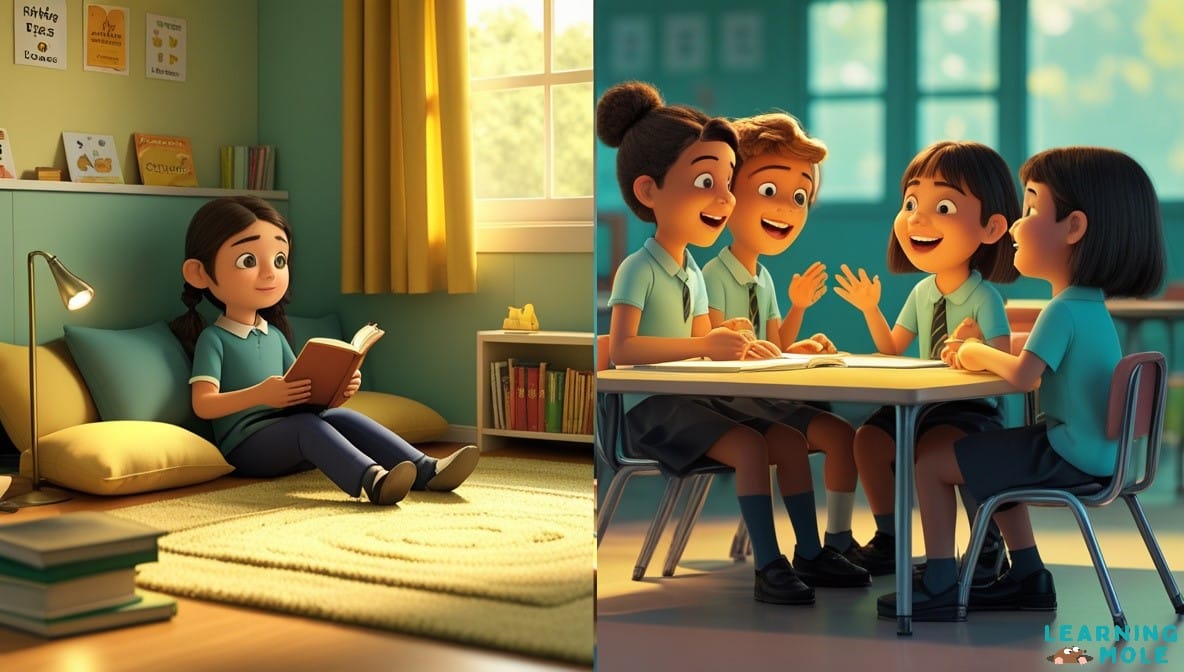
Introversion and extraversion describe where a person gets their energy, and that is a separate question from shyness. Carl Jung introduced the terms in his 1921 book Psychological Types, and they remain the best-known part of personality psychology. An introverted child recharges through quiet time alone or with one close friend, an extroverted child recharges through company and conversation, and an ambivert sits near the middle and swings between the two depending on the day.
Busy classrooms affect introverted and extroverted children differently
A busy primary classroom is noisy, bright and social for most of the day, and children respond to that stimulation in different ways. The psychologist Hans Eysenck proposed that introverts reach their comfortable level of arousal more quickly, so a lively room tires them sooner, while extroverts seek out more stimulation; later research has given this theory mixed support, but it matches what many teachers see by Friday afternoon. Introverted pupils often think before they speak, so a class that rewards only the fastest hand loses their best answers.
Extroverted pupils often think by talking, so silent independent work for long stretches can leave them restless. Small changes to the room help both groups: a quiet corner, predictable sensory breaks and a clear signal for ‘thinking time’ all reduce overload. The LearningMole guide to classroom management for introverted students covers this in more depth, and the article on sensory toys and emotional regulation suggests simple tools for children who need a calming break.
Small changes in class and at home help every child thrive
The single most useful classroom habit is wait time: pausing for several seconds after asking a question before taking any answers, so that deep thinkers have time to form a response. Talk partners, mini whiteboards and written responses give introverted children a way in without a whole-class spotlight. Extroverted children benefit from structured roles in group work, such as spokesperson or discussion chair, which channel their energy into the task.
At home, the ‘What charges your battery?’ activity works well for the whole family. Each person draws a battery and lists five things that drain their energy and five things that recharge it, then the family compares drawings. Children are often surprised to find that a parent recharges by reading alone while a sibling recharges by playing football with friends, and that conversation builds empathy far faster than a lecture about being patient with each other.
Social style
How they recharge
Learning environment that suits them
Common misconception
Golden rule for classmates
Introvert
Quiet time alone or with one friend
Calm spaces, time to think, written or paired tasks
That introverts are unfriendly or unhappy
Give them time to answer and do not speak over them
Extrovert
Company, conversation and activity
Discussion, group work, practical tasks
That extroverts are always confident inside
Take turns and leave space for quieter voices
Ambivert
A mix of both, depending on the day
Variety, with a choice between quiet and social work
That they cannot make up their minds
Ask how they are feeling today before planning together
Understanding others turns differences into shared strengths
The real value of learning about personality types is understanding other people, because most friendship problems in primary school come from misreading a classmate’s behaviour. A quiet child is often read as unfriendly, a fast decision-maker as bossy, and a careful checker as fussy. When pupils have words for these patterns, they can see that a classmate’s reaction usually reflects a need (for order, calm, action or connection) and is rarely a personal attack. LearningMole’s guide to teaching empathy and kindness builds on the same idea.
The empathy bridge helps children settle disagreements
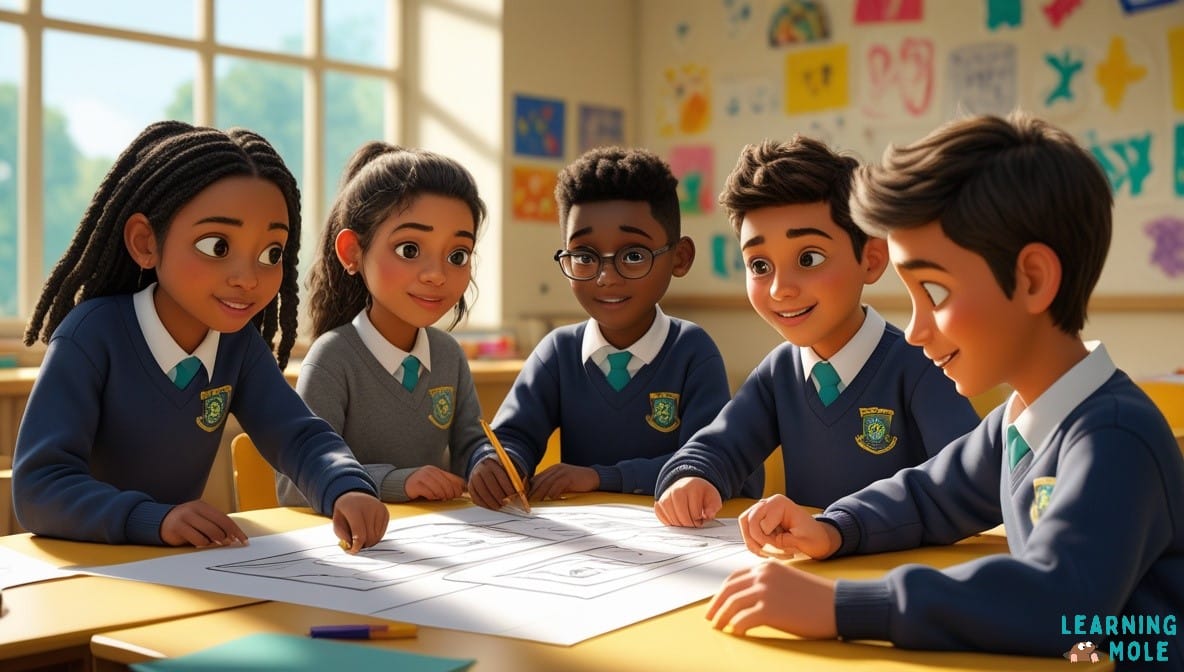
The empathy bridge is a four-step routine that pupils can use when two different personalities clash, for example when a fast-paced Type A child wants to start building straight away and a Type C partner wants to read the instructions first. Teachers can display it on the wall and practise it through short role-plays before pupils need it for real, and the routine links directly to anti-bullying work and to the PSHE skills of active listening and respectful conflict resolution.
Pause and notice what is happening, including how each person is reacting.
Work out what each person needs, such as a plan, a quiet moment, a chance to act or a chance to be heard.
Show that you understand the other view, using a sentence such as ‘I can see why reading the instructions matters to you.’
Agree on a compromise that uses both strengths, such as reading the first three steps together and then starting to build.
Group roles let every temperament make a real contribution
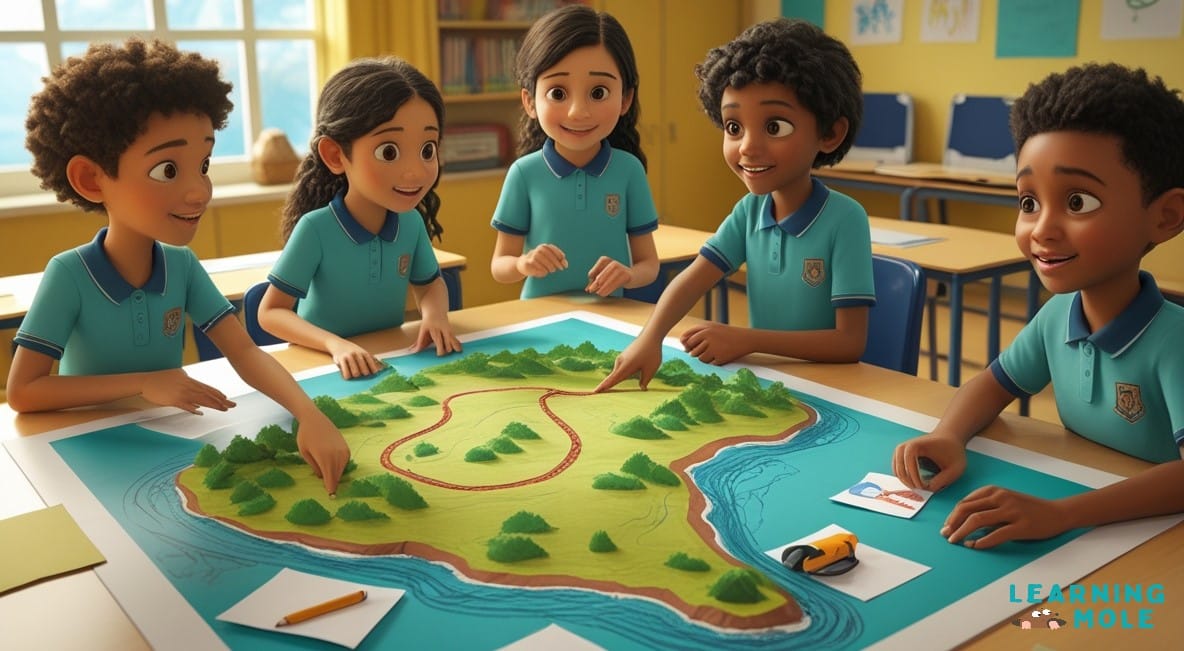
Group work runs more smoothly when roles match natural strengths, and pupils learn most when they also try a role that stretches them. The ‘Classroom Expedition’ activity asks small groups to plan a trip to an imaginary island. One child acts as the route planner, mapping the journey step by step, which often suits Type A and Type C pupils. Another acts as the supply organiser, checking that nothing is missing, while a third acts as the morale officer, making sure everyone is included and the group stays positive, which suits many Type B and Type D pupils. The field explorer comes up with bold ideas and presents the plan to the class.
After the activity, ask each group to explain which role was hardest to do without. Pupils usually conclude that the expedition needed every role, which is the point the lesson exists to make. For more ideas, see LearningMole’s strategies for collaborative learning.
Genes, family life and experience all shape a child’s personality
Personality grows from both nature and nurture. A 2015 review of twin and family studies by Ivana Vukasović and Denis Bratko estimated that genes account for around 40 per cent of the differences between people’s personalities, with the rest shaped by experience. Temperament shows up early, in how a baby reacts to noise, new faces or changes in routine, and those early tendencies form the starting point for later personality.
Family life has a strong influence in the first years, because children learn how to handle feelings and treat others by watching the adults around them, and a stable, predictable home tends to support confidence. School, friendships and culture add further layers as children grow, and physical health plays a part too, since a tired or hungry child rarely shows their usual personality.
Personality also keeps changing after childhood. A large review of long-term studies by Brent Roberts and colleagues, published in 2006, found that people on average become more conscientious, more agreeable and more emotionally stable as they move into adulthood. For a child, that is an encouraging message: the way you react today is a starting point that will keep developing.
Personality tests have a long and mixed history
People have tried to sort personalities for more than 2,000 years. The Greek physician Hippocrates, writing around the fifth century BCE, linked health and character to four bodily fluids (blood, yellow bile, black bile and phlegm), and the later physician Galen turned these into four temperaments. The theory is long abandoned, but the idea of a small number of personality types has survived.
Modern testing began during the First World War, when the American psychologist Robert Woodworth developed the Woodworth Personal Data Sheet for the US Army to identify recruits who might struggle with the stress of combat. In 1921, the Swiss psychiatrist Hermann Rorschach published his inkblot test, and Carl Jung published his work on introversion, extraversion and four psychological functions (thinking, feeling, sensation and intuition).
Jung’s ideas led to the Myers-Briggs Type Indicator (MBTI), developed by Katharine Cook Briggs and her daughter Isabel Briggs Myers, which sorts people into 16 types and is still popular with employers, although many psychologists question its reliability because people often receive a different type when they retake it. Hans Eysenck’s inventory measured extraversion and emotional stability, and workplace tools such as the CAPIER Profile assess how traits relate to particular jobs. All of these were designed for adults, so online personality tests are a poor way to label a child; a conversation about strengths and preferences is far more useful in a primary setting.
Personality work links directly to PSHE and the UK curriculum
Teaching about personality fits naturally into PSHE, because the statutory guidance asks schools to help pupils understand themselves, value difference and manage relationships. In England, Relationships Education and Health Education have been compulsory in primary schools since September 2020, and the Department for Education’s revised statutory guidance on relationships, sex and health education applies from September 2026.
Statutory Relationships and Health Education in England
Personality lessons support several parts of the primary guidance. The Respectful Relationships theme asks pupils to respect others who are very different from them, and the Caring Friendships theme covers how to manage disagreements and repair friendships. The Families and People Who Care for Me theme recognises that every family is different, and the Mental Wellbeing strand of Health Education asks pupils to recognise and talk about their feelings using a varied vocabulary. Personality language gives pupils a practical way to meet each of these aims.
Northern Ireland, Scotland and Wales
Northern Ireland’s primary curriculum covers the same ground through Personal Development and Mutual Understanding (PDMU), which focuses on self-awareness, relationships and respect for others. In Scotland, the material fits the Health and Wellbeing area of Curriculum for Excellence, and in Wales it fits the Health and Well-being Area of Learning and Experience in the Curriculum for Wales.
Neurodiversity and emotional literacy
Personality work should include every child, including autistic pupils and pupils with ADHD, sensory processing differences or anxiety. Some behaviour that looks like a personality type may reflect a sensory need or a communication difference, so teachers should treat personality language as a description of preferences and never as a substitute for proper SEND assessment. Michelle Connolly, founder of LearningMole and a former primary school teacher with over 15 years of classroom experience, explains the value of this approach.
‘When children have words for how they work best, they stop seeing a quiet classmate as unfriendly or a fast one as bossy. In Year 6, that understanding can calm a lot of friendship worries before the move to secondary school.’
Teaching resources and support for classroom and home
LearningMole provides free curriculum-aligned videos and teaching resources that support personality and emotional literacy lessons at every stage of primary school. Teachers can combine the activities in this guide with the social and emotional learning resources on LearningMole, which help pupils build the vocabulary for feelings, friendships and self-awareness.
Useful resources to prepare for a personality unit include printable self-reflection journals, group-role badges for the Classroom Expedition activity, empathy scenario cards for role-play, a Big Five sliding-scale display and calm-down mats for emotional regulation. For a closer look at individual qualities such as honesty, patience and kindness, the LearningMole article on personality traits for children works well as a follow-on lesson.
Parents can use the same material at home. The ‘What charges your battery?’ drawing, a short chat about each family member’s strengths and a LearningMole video watched together all give children a low-pressure way to talk about who they are and how they get along with others. Every resource on LearningMole is free to use, so families and schools can try different approaches without any cost.
Frequently asked questions
What is the difference between a personality type and a personality trait?
A personality type is a broad category that groups common behaviours together, such as ‘introvert’ or ‘Type A’. A personality trait is a single quality, such as curiosity or patience, that every person has to some degree on a sliding scale. Psychologists generally find traits more accurate, because most people sit somewhere in the middle and very few fit a type perfectly.
Can a child’s personality type change as they grow older?
Yes, personality changes throughout childhood and adolescence and continues to change in adulthood. Core temperament, such as how sensitive a child is to noise or new situations, has a biological basis and tends to stay fairly stable. How a child acts on that temperament changes a great deal with brain development, experience, support at home and school, and deliberate practice of social skills. A cautious seven-year-old can become a confident 11-year-old who still prefers to think before speaking.
How does teaching personality types link to the UK PSHE curriculum?
In England, statutory Relationships Education and Health Education ask primary pupils to respect people who are different from them, manage disagreements in friendships and talk about their feelings using a wide vocabulary. Lessons on personality types support all of these aims by giving pupils words for their own preferences and those of others. In Northern Ireland, the same content fits Personal Development and Mutual Understanding, and LearningMole’s free PSHE resources can support lessons across the UK.
Is this personality guide suitable for Key Stage 1 or Key Stage 2 pupils?
The full guide is written for upper Key Stage 2 (Years 5 and 6) and pupils preparing for the move to secondary school, because the Big Five model and the Type A to D profiles need a degree of reflection. The simpler ideas, such as how people recharge their energy and how to notice a friend’s feelings, can be adapted for Key Stage 1 through stories, puppets and picture books. Younger children respond well to the battery drawing activity without needing any labels at all.
What are the four main personality types (A, B, C and D) in simple terms?
A Type A child is driven and fast-moving, while a Type B child is relaxed and patient. Children described as Type C are careful and focused on getting details right, and Type D describes a cautious, sensitive child who thinks a lot about other people’s feelings. Most children show a mix of more than one type.
What teaching resources work best for exploring empathy in schools?
Role-play activities work best, because empathy grows through practice in realistic situations. Empathy scenario cards, a visual Big Five sliding scale, and group projects with clear roles and short reflection journals all give pupils the chance to see a situation from another person’s point of view. LearningMole’s free videos and PSHE resources can introduce each topic before pupils try the activities themselves.
How can teachers help introverted pupils thrive in busy classrooms?
Give consistent thinking time before taking answers, and use paired discussion before any whole-class sharing. Offer a quiet space for independent work, and value written and drawn contributions as highly as spoken ones, so that thoughtful pupils can show what they know without the pressure of a quick public answer.
Start with one conversation about strengths this week
Personality types are most useful when they help children understand themselves and each other, and least useful when they become labels that limit what a child believes they can do. The Big Five traits show that everyone sits somewhere on a set of sliding scales, the Type A to D profiles give pupils a quick way to talk about everyday behaviour, and the difference between introverts and extroverts explains why the same classroom can feel energising to one child and draining to another.
For teachers, the simplest starting point is a single PSHE lesson built around the battery drawing or the Classroom Expedition, followed by the empathy bridge displayed on the classroom wall for pupils to use during the rest of the term. For parents, a relaxed conversation about what each family member finds easy, hard, tiring or energising can do more for a child’s self-understanding than any online test. In both settings, the aim is the same: children who can say ‘this is how I work best’ and ‘I can see why you need something different’.
LearningMole’s free library of curriculum-aligned videos and teaching resources can support every stage of that work, from emotional vocabulary in Key Stage 1 to friendship and transition lessons in Year 6. Browse the free PSHE and wellbeing resources on LearningMole to plan your first personality lesson, and pair it with the emotions guide for children to build the vocabulary pupils will need.
Maths Circus, an innovative platform we've crafted, presents a captivating realm where children learn mathematics through the exciting theme of a circus. The joy of juggling numbers and solving circus...
The 9 times table multiplication has a reputation for being tricky, yet it holds more mathematical magic than any other table in the primary curriculum. Every answer follows two neat...
Article Summary What this article covers: Ten differences between river otters and sea otters, from size, fur and swimming style to diet, tool use and family life, plus which otter...
Article Summary What this article covers: The nine main types of natural disasters, how each one works and how they are measured, which hazards genuinely affect the UK, and how...










Leave a Reply