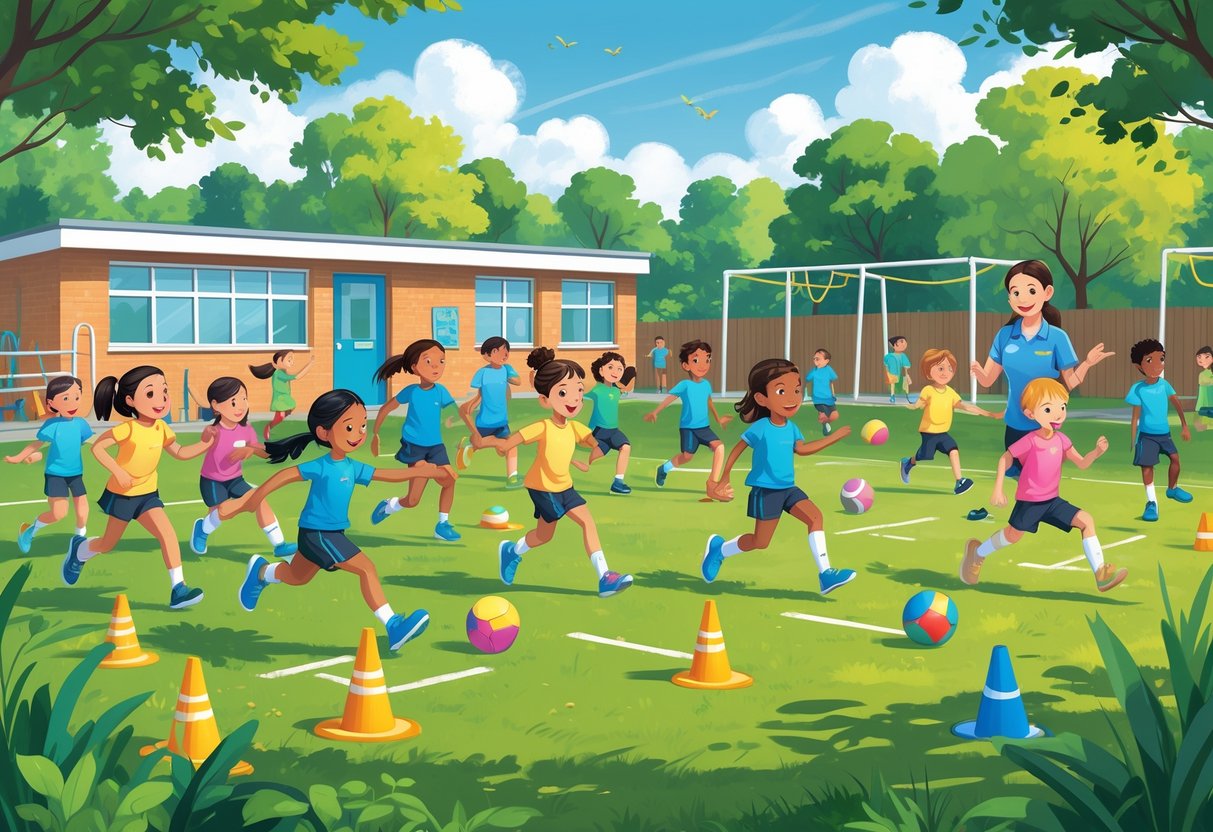
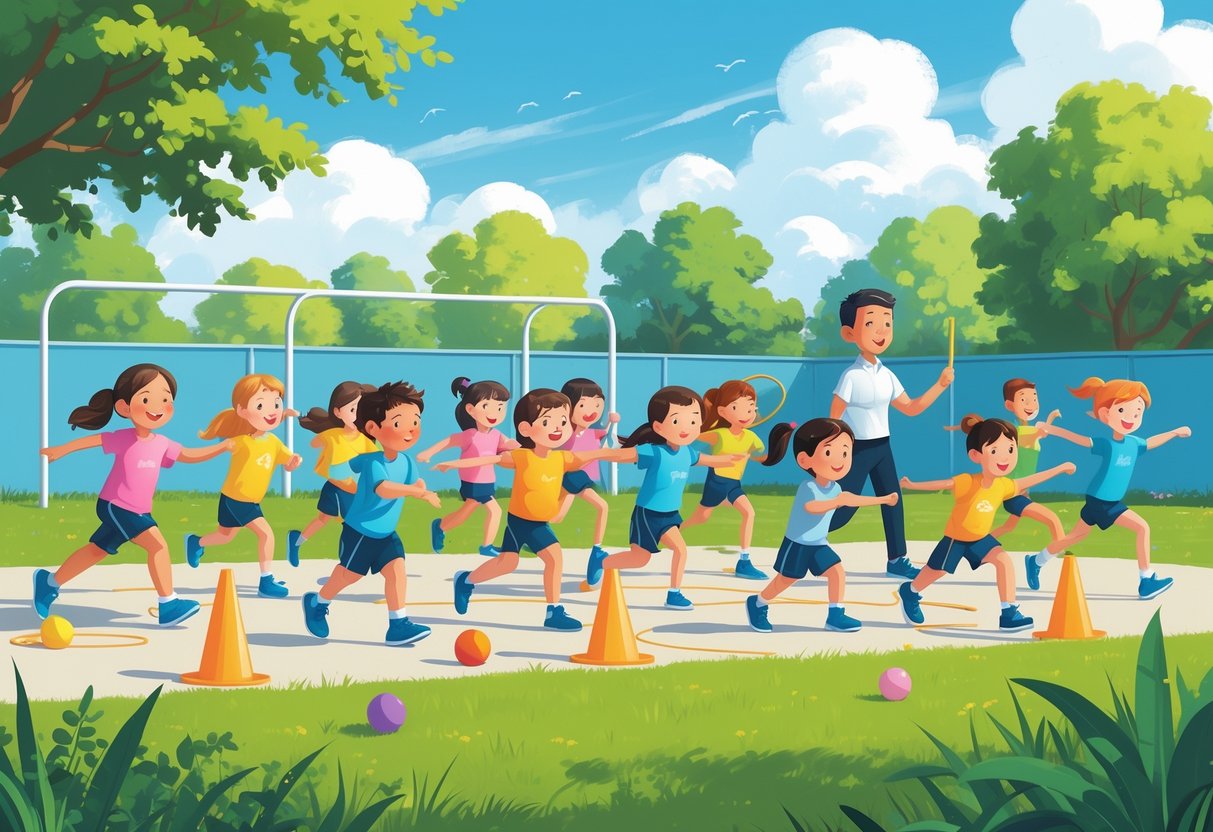
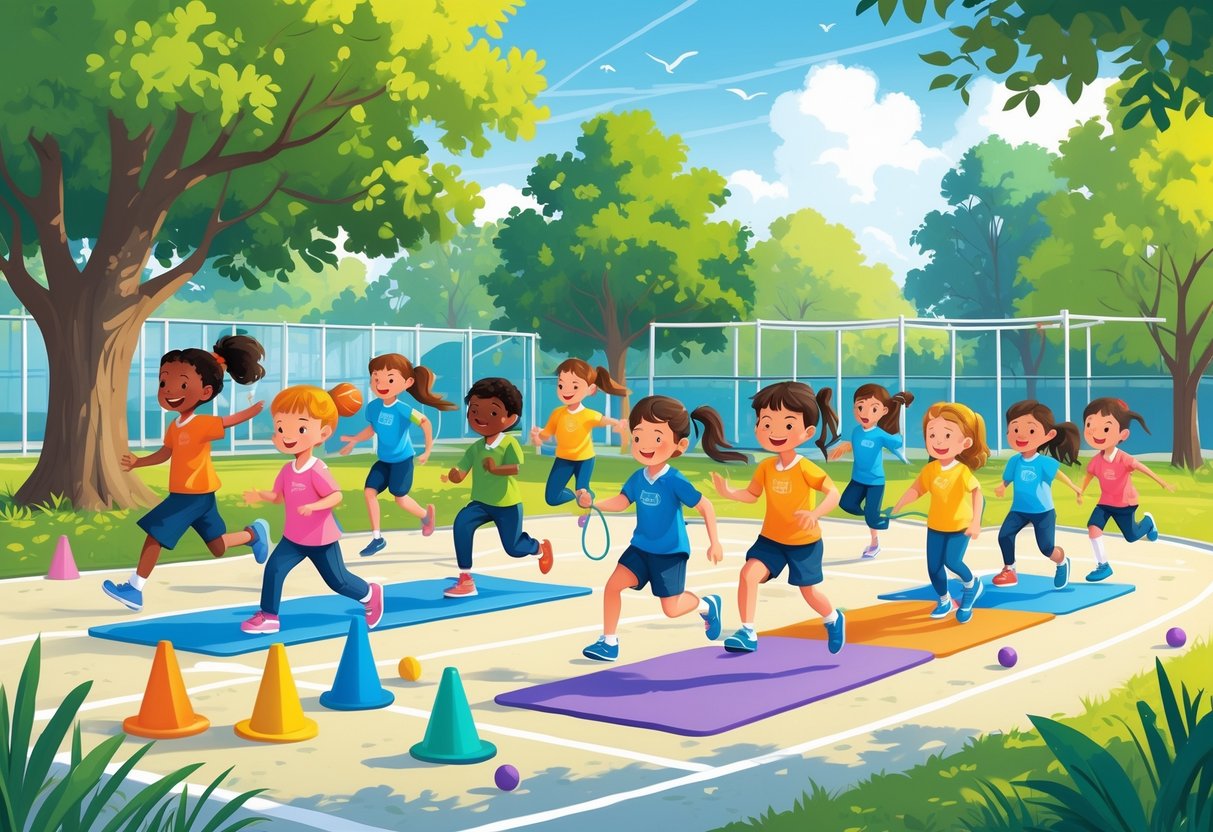
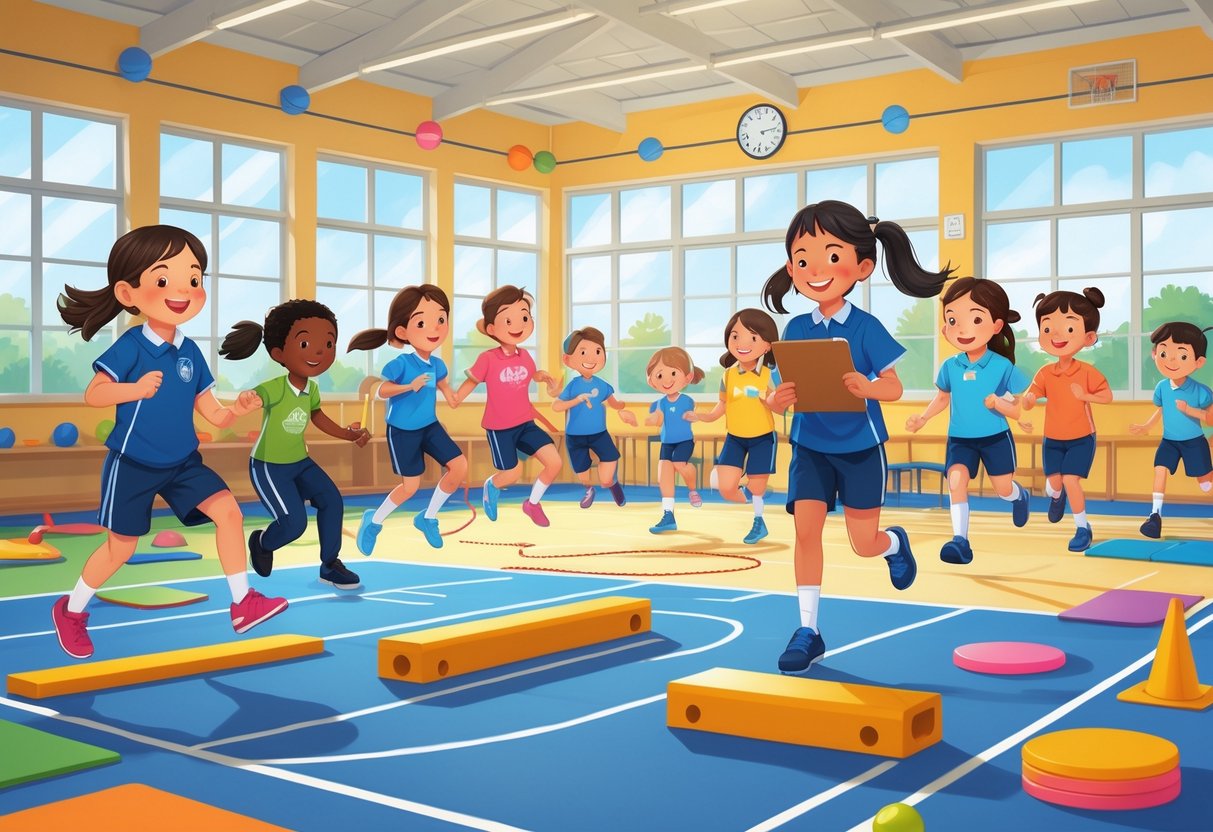
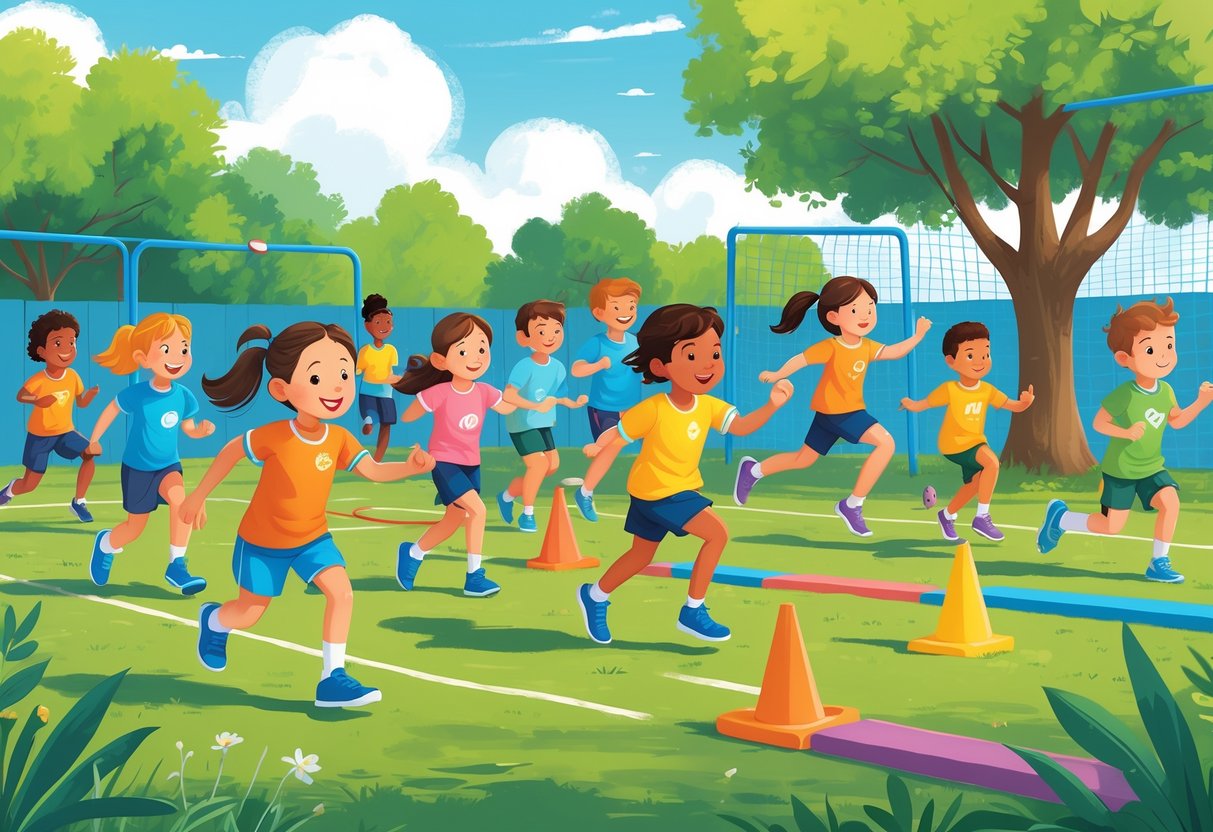
Primary school PE resources and activities give teachers ready-made lesson plans, equipment ideas and structured games that help children develop physical skills while having fun. Quality PE resources save planning time and give every child the chance to build confidence, learn movement skills and stay active during school hours.
Many UK primary schools now use a mix of free online materials and subscription programmes to deliver engaging physical education that meets National Curriculum requirements.
Michelle Connolly, founder of LearningMole and a former primary teacher with over 15 years of classroom experience, says, “PE is where many children discover what their bodies can do, and the right resources make all the difference in creating lessons that are inclusive, active and genuinely enjoyable.” LearningMole is a UK educational platform that provides curriculum-aligned resources for primary schools. The platform supports teachers and parents with materials across subjects, including PE and wellbeing activities for children aged 4 to 11.
From simple tag games to fitness circuits and sport-specific drills, the right PE activities keep lessons varied and children engaged. Whether you teach Early Years or Year 6, having a bank of tested games and clear activity plans helps you deliver lessons that develop fundamental movement skills and meet the needs of every pupil.
Key Takeaways
PE resources offer structured lesson plans and activities that develop movement skills and keep children active at school.
Good PE planning includes tag games, dance, sport drills and fitness stations for different ages and abilities.
Quality programmes and free online materials help teachers deliver engaging lessons aligned with UK National Curriculum requirements.
The Importance of PE in Primary Schools
PE gives children essential foundations for physical and mental development and supports their academic progress. Regular physical activity in primary schools helps pupils build movement skills, set up healthy habits, and develop social competencies that last a lifetime.
Physical Literacy and Child Development
Physical literacy forms the building blocks for all movement and physical activity. When you run quality PE sessions, you help children develop fundamental movement skills like running, jumping, balancing, throwing and catching.
These skills don’t just appear on their own. Children need structured opportunities to practise and refine movements in a supportive environment.
Primary schools play a big part here because many pupils spend long periods sitting or doing sedentary activities.
Research shows that children who master fundamental movement patterns during primary years feel more confident taking part in physical activities as teenagers and adults. The importance of physical activity goes beyond fitness. It builds coordination, spatial awareness and body control that support learning in other areas.
Encouraging Healthy Lifestyles
Childhood obesity rates keep rising across the UK, so PE lessons matter more than ever. Regular physical education helps pupils maintain healthy weight levels and teaches them how their bodies respond to different types of movement.
Quality PE programmes introduce children to activities they might enjoy for life. When you make these experiences positive and engaging, not just competitive, pupils are more likely to stay active outside school.
PE teachers can help pupils see the link between physical activity and overall wellbeing. Lessons that include chats about heart rate, breathing and muscle function give children practical knowledge about their bodies.
Benefits of regular PE for health:
Burns calories and increases metabolism
Strengthens bones and muscles
Improves cardiovascular fitness
Reduces stress and anxiety
Builds positive exercise habits early
Academic and Social Benefits
Physical activity boosts concentration, memory and classroom behaviour. When pupils take part in PE, they often come back to lessons more focused and ready to learn.
Studies on school-based physical activity have found that schools with strong PE programmes often see improvements in core subject performance. Movement increases blood flow to the brain, which supports cognitive function and information retention.
PE lessons also help children develop social skills. Team activities teach cooperation, communication and fair play. Pupils learn to follow rules, take turns and support classmates with different ability levels.
Social competencies developed through PE:
Working together towards shared goals
Showing respect for opponents and teammates
Bouncing back from challenges
Learning to win and lose with grace
Building confidence in new situations
Physical education gives pupils the chance to practise problem-solving and decision-making in active settings. These experiences add to classroom learning and support whole-child development across the curriculum.
Effective PE Planning Strategies
Good PE planning balances structured curriculum coverage with flexible, active learning that meets all pupils’ needs. Teachers need clear mapping tools, adaptable activities and simple tracking methods to deliver high-quality lessons.
Curriculum Mapping and Lesson Design
Effective PE planning starts with a clear curriculum map that shows progression across year groups. Your PE planning should cover key skills in games, gymnastics, dance, athletics and outdoor activities throughout the year.
A strong curriculum map includes:
Sequential units that build on previous learning
National Curriculum objectives for each Key Stage
Time allocation for different activity areas
Equipment requirements and safety considerations
Primary PE Planning offers over 1,000 lesson plans with video tutorials and knowledge organisers to support active learning. Each lesson should have a clear warm-up, main activity and cool-down.
You can find downloadable PE lesson plans sorted by sport and age group to save preparation time. Design your lessons to keep pupils moving for at least 30 minutes of each session.
Adapting Activities for Diverse Needs
Your PE lessons should include all pupils, no matter their ability, confidence or physical needs. Active learning works best when activities have built-in variations that challenge different skill levels.
STEP principles: adjust Space, Task, Equipment or People
Multi-ability stations where pupils pick their challenge level
Paired work to support less confident learners
Visual demonstrations along with verbal instructions
Teachers often offer three versions of each activity: a foundation level, a core level and an extension level. This keeps everyone involved without singling out anyone.
LearningMole provides video resources with inclusive PE activities for mixed-ability classes. You can also plan alternative roles like coaching, officiating or analysing for pupils who can’t take part fully in physical activity.
Assessment and Progress Tracking
In PE, assessment focuses on observing skill development, understanding and participation instead of competitive performance. Your tracking system should record progress across several areas but not pile on extra work.
Practical assessment methods include:
Observation checklists for key skills in each unit
Self-assessment where pupils reflect on their learning
Peer feedback during partner activities
Video analysis of technique and performance
A PE tracker tool makes data collection easier and helps you spot pupils who need extra support. Track progress termly, not weekly, to see real development patterns.
Your records should show how pupils develop movement skills, tactical awareness and personal qualities like teamwork and resilience. Keep assessment quick and focused by noting only significant achievements or concerns during lessons.
Essential PE Resources for Primary Schools
Having the right equipment and materials makes PE lessons work better and helps pupils build skills with confidence. Good resources support varied activities across year groups and keep children safe and engaged.
PE Equipment and Apparatus
Gymnastics mats are essential for safe floor exercises and give cushioned surfaces for rolls, balances and landing activities. They let pupils develop agility, coordination and flexibility while building confidence in movement.
Balls of different types serve many purposes in your PE curriculum. Footballs work well for team games and coordination activities, while soft foam balls suit younger children who are still developing grip and catching skills. Aim for at least one ball between two pupils to maximise activity time.
Beanbags help develop hand-eye coordination, especially with EYFS and Key Stage 1 children. They don’t roll away like balls, so they’re perfect for throwing and target games. You can also use them as props in gymnastics lessons or for practising hockey skills.
Cones create boundaries, mark out obstacle courses and serve as visual aids for spatial awareness activities. Store them in colour order so you can quickly set up spaces for different activities or groups.
Balance beam benches support movement development and help children build core strength. The dual-sided design offers both wide and narrow surfaces, providing challenges for different age groups.
Teaching Materials and Digital Tools
A whistle helps you manage behaviour and get attention during active lessons, especially outdoors. It adds structure and lets you pause activities quickly.
Whiteboards work as valuable teaching aids in PE, even though people often overlook them. Use them to show learning objectives, draw skill diagrams, explain game tactics or display steps to success. They’re also handy for tracking scores and giving visual feedback.
A stopwatch or sports watch lets you time activities, pace your lessons and help pupils track their improvements. This is especially useful during athletics lessons where children can see progress.
LearningMole offers curriculum-aligned video resources to support PE planning and delivery. The platform provides free materials covering movement skills and physical activities for children aged 4-11.
Sport bibs give essential visual organisation for team games and tag activities. Different colours help children spot teammates and understand game structures. Try to wash them regularly to keep them fresh.
Hoops come in different sizes and colours, offering various challenge levels for pupils. Beyond hula hooping, you can use them as targets for accuracy games, relay races or as part of obstacle courses. They’re surprisingly versatile.
Visual skill cards showing correct techniques help pupils see what good performance looks like. Display these at stations during circuit training or skill activities so children can check them on their own.
Posters showing sports equipment, safety rules and movement vocabulary support learning throughout your PE curriculum. Put them at child height where pupils can see them during lessons and while changing.
Fundamental Movement Skills Development
Primary school children build physical literacy through three core movement categories: travelling actions, object control and body awareness. Each skill type supports different aspects of physical development and gets pupils ready for more complex activities across the PE curriculum.
Locomotor Skills
Locomotor skills mean moving the body from one spot to another. Walking, running, hopping, skipping, galloping and jumping all fall under this category.
When teaching running, you could encourage pupils to keep their heads up, land on the balls of their feet and swing their arms forwards and backwards. Skipping needs coordination between hopping and stepping, and honestly, many Year 2 pupils struggle with it at first.
Schools that integrate fundamental movement skills into PE lessons rather than treating them as separate activities usually see better progress. Try introducing just one or two teaching points per skill in each lesson.
This helps avoid overwhelming pupils and lets them really develop skills within your existing curriculum. It’s a simple change, but it makes a difference.
Manipulative and Object Control Skills
Manipulative skills involve controlling objects by throwing, catching, kicking, striking and dribbling. Children improve hand-eye coordination and learn to judge speed, distance and direction through practice.
Start younger pupils with larger, softer equipment. A Year 1 class learning to catch will have more success with beanbags or big foam balls before moving to smaller ones.
Reduce the distance between partners at the beginning. Breaking skills into steps helps children master the technique.
For throwing, you might teach the stance first, then arm movement, then follow-through. Teaching resources from organisations often give clear movement descriptions and checklists to help plan lessons.
Balance and Coordination Skills
Balance and coordination make up the stability side of fundamental movement skills. Balancing on different body parts, twisting, turning, bending and stretching all play a part.
Children who develop strong stability skills usually feel more confident in all physical activities. Static balance means holding still, like standing on one leg or making shapes with the body.
Dynamic balance is about staying in control while moving, such as walking along a bench or jumping and landing safely. Both types matter for physical literacy.
You can include balance activities in every PE lesson, no matter the main focus. During warm-ups, ask pupils to freeze in different positions.
In games, add elements that need quick direction changes. Resources for Foundation Stage pupils often focus on these skills because they support success in athletics, dance, games and gymnastics later.
Popular PE Activities and Games
Primary school PE games help children build fundamental movement skills and stay active. These fun PE activities range from simple creative movement exercises to more structured team challenges that fit National Curriculum requirements.
Creative Movement and Team Challenges
Creative movement activities help younger children develop body awareness and coordination. You can use music to encourage free movement, asking children to move like different animals or respond to rhythm changes.
These activities suit Reception and Key Stage 1 pupils who are still building basic motor skills. Team challenges bring in a cooperative element.
Simple activities like partner balance exercises or small group obstacle courses encourage teamwork and build strength and agility. Set up stations where teams rotate between different tasks every few minutes to keep things lively.
Physical education resources often include challenge cards that teachers can tweak for different age groups. These cards usually involve hopping, jumping, balancing and throwing.
You can easily adjust difficulty levels to suit all abilities. That flexibility is a real plus.
Parachute and Cooperation Games
Parachute games stay popular in primary schools because everyone takes part at once. Children hold the edges of a big parachute and work together to make waves, lift it high or trap balls underneath.
These games teach timing and cooperation naturally, without complicated rules. Classic parachute activities include Mushroom, Cat and Mouse and Popcorn.
Each game develops different skills and keeps all children engaged. You can tweak parachute games for your curriculum by adding counting, colour recognition or directional language.
For instance, calling out “everyone wearing blue, swap places” mixes movement with quick thinking. These little changes make parachute time both educational and fun.
Invasion Games for Beginners
Invasion games bring in tactical thinking and teamwork through simplified versions of sports like football, basketball and tag rugby. Start with basic rules and smaller playing areas for younger children.
This helps them grasp concepts like attacking, defending and creating space. Tag rugby works well for Key Stage 2 because it removes contact but keeps the core skills of passing and supporting teammates.
Children wear tags on belts, and opponents pull the tags instead of tackling. This makes the game safer and more inclusive.
Small sided games, like 3v3 or 4v4, give children more touches and chances to make decisions than full team matches. Set up several pitches across your sports hall or playground so more children can play at once.
Tag Games for Engagement and Activity
Tag games build cardiovascular fitness and teach strategic thinking and spatial awareness through fast-paced chasing. These games work well across Key Stage 1 and Key Stage 2 because you can easily adjust rules and boundaries for different abilities.
Classic Tag Variations
Traditional tag forms the basis for dozens of PE activities that keep children moving. Freeze tag asks tagged players to stand still with legs apart until a teammate crawls through to unfreeze them, adding teamwork to the chase.
British Bulldogs starts with one child in the middle while others try to cross the area without getting caught. Each tagged player joins the catchers, so the challenge grows as the game goes on.
Blob tag begins with two children holding hands as “it”. When they tag someone, that player joins the chain.
Only the children on the ends can tag others with their free hands, so your class needs to coordinate movement as the blob gets bigger. Duck, Duck, Goose is a classic for Reception and Year 1.
Children sit in a circle while one walks around tapping heads and saying “duck” until picking a “goose”, who then chases them around the circle.
Thematic Tag for Skill Building
Animal tag introduces movement patterns by assigning animals to groups. Kangaroos hop, horses prance, bears crawl on all fours.
This game develops motor skills and keeps energy levels high. Octopus tag uses court end zones, with children trying to cross without being tagged by the octopus in the middle.
Tagged players become seaweed and stand still, waving their arms to catch runners. You can find related movement activities on LearningMole in their PE video resources.
Zombie tag adds a throwing element, giving “humans” soft beanbags or foam balls to freeze zombies for 15 seconds. Children need to decide when to use their limited equipment.
Toilet tag gets everyone laughing. Tagged children squat with one arm out like a handle until teammates “flush” them back into the game.
Incorporating Dance in Primary PE
Dance builds rhythm awareness and physical coordination, and gives children a creative way to express themselves. These activities support Key Stage 1 and 2 PE goals through structured movement patterns and improvisation.
Basic Dance Routines and Rhythms
Begin with simple movements to help children find and follow the beat. Clapping, toe tapping and marching on the spot teach them to recognise tempo and timing.
You can use teaching rhythm and beat activities that move from whole beats to half beats as children get more confident. Line dances are great for teaching choreographed sequences.
These routines help children remember movement patterns and stay in time with classmates. LearningMole has free video demos that show how to break dance steps down for Year 2 and Year 3.
Keep routines short at first, maybe four to eight counts. This gives enough structure without overwhelming anyone.
Repeat the sequence several times so movements become natural, then add variations like changing direction or speed.
Dance for Coordination and Expression
Physical coordination improves when children try out different movement qualities. Encourage them to test sharp, sudden gestures versus smooth, flowing motions.
This contrast builds body control and introduces the idea of dynamics in dance. Creative movement activities let pupils respond to stories, emotions or natural events through dance.
A Year 4 class might act out the water cycle with melting, evaporating and condensing movements. These engaging dance activities link PE with other subjects and build confidence in self-expression.
Partner work and group formations teach spatial awareness. Children learn to keep their own space and coordinate with others.
Simple mirroring or making group shapes challenges pupils to watch closely and adjust their movements.
Sport-Specific Activities: Basketball and Dodgeball
Basketball and dodgeball offer excellent chances to develop fundamental movement skills while keeping children engaged through team-based play. These sports help primary pupils build hand-eye coordination, spatial awareness and cooperation, all in line with Key Stage 1 and 2 PE objectives.
Basketball Skills and Mini-Games
Introduce basketball through station-based activities focusing on specific skills like dribbling, passing and shooting. Start with ball handling tasks: children tap the ball above their heads, pass it around their waist or practise figure-of-eight movements between their legs.
Set up a zig-zag cone course for dribbling practice, asking pupils to weave through and switch hands at each cone. Partner passing activities help with chest and bounce passes, and children can increase distances as they get better.
Small group games keep everyone active. Try “Five Pass Keep-Away”, where teams of two or three try to complete five passes in a row for a point.
“Hot Shot Spot” challenges children to dribble to certain spots and score, taking the spot back to their line once they succeed. Basketball Golf gives a creative twist: pupils start at the free-throw line and try to make a basket in as few shots as possible.
After a miss, they shoot from wherever they collect the rebound, keeping score over nine rounds.
You can make the game more inclusive and educational by using soft foam balls instead of rubber ones. Create zones where everyone stays active throughout the activity.
Team-based versions, where the whole group works towards a shared goal, work better than elimination games. Try dodgeball variations with simple rules that focus on dodging and throwing accuracy.
Games where children collect objects while avoiding balls or where everyone has multiple lives keep participation high. If you want video demonstrations of throwing and catching techniques, LearningMole offers curriculum-aligned PE resources that break down fundamental movement skills for Key Stage 1 and 2.
Fitness Circuits and Active Learning Stations
Fitness circuits give students a chance to move around in short bursts, rotating through different activities that work a range of physical skills. You can adapt these active learning stations for mixed-ability classes, making sure each exercise fits various fitness levels.
Designing Circuit Sessions
Set up stations around the hall or playground. Put up signs or cards at each spot so everyone knows what to do.
Most teachers run stations for about 45 seconds, with quick breaks in between. Two students per station usually works well and gets them working together.
Fitness station activity cards really help with setup. These cards show both pictures and descriptions of each exercise.
Aim for 8 to 12 stations in total. That’s enough variety without making things too chaotic.
Music sets the pace. When you pause the music, students move clockwise to the next station.
A typical fitness circuit lasts 15 to 20 minutes. It fits nicely into a PE lesson or even as a quick active break.
Set up jumping jacks for cardio. Add press-ups, squats or planks for strength.
Stretching or balance challenges work well for flexibility and coordination.
You might dedicate a couple of stations to sport-specific skills, like throwing bean bags or dribbling balls. That way, you link the circuit to National Curriculum goals and help children build competence in a range of sports.
Reviewing and Selecting Quality PE Programmes
Picking the right PE programme takes a bit of thought. You want resources that support learning and offer ongoing help for teachers.
Good programmes combine strong teaching materials with chances for professional growth.
Evaluating Resource Effectiveness
The best PE programmes cover foundation, Key Stage 1 and Key Stage 2. When you review options, check out platforms like The PE Hub with over 1,600 resources—documents, illustrations and videos all in one place.
Make sure programmes have progression ladders and clear assessment tools. You need to see how skills develop from early years to Year 6.
Quality resources should include ways to adapt activities, both up and down, within lesson plans. That helps you cater for all ability levels.
Look for programmes that support you outside of lesson planning. PE planning resources should include materials for sports days, class activities and school events.
LearningMole offers curriculum-aligned videos and teaching materials that fit PE delivery across primary year groups.
Take-home exercises are a bonus. They get parents involved in their children’s physical development.
Seasonal resources, like for Christmas or Easter, keep things interesting through the year.
Look for guides that explain the ‘how’ and ‘why’ behind activities. These make it easier to deliver lessons, even if PE isn’t your specialist subject.
Resources should include Ofsted Deep Dive prep materials. That way, your school is ready for inspections.
See if programmes show their impact through reviews and school feedback. Many platforms let you try resources with your class before you subscribe.
Frequently Asked Questions
Teachers and parents ask all sorts of practical questions about PE in primary schools. They want creative activity ideas, ways to organise large groups and tips for finding good resources that don’t need fancy equipment.
What are some creative PE activities suitable for primary school children?
Creative PE activities work best when they mix movement with imagination. Animal walks—like bear crawls, crab walks and frog jumps—help younger pupils build coordination and stay engaged through imaginative play.
Dance and movement activities let children express themselves and build fitness. You could try freeze dance, where pupils move to music and freeze in funny shapes when it stops. Or create simple routines based on stories or classroom themes.
Obstacle courses using cones, hoops and benches challenge children to climb, balance and jump. Change the layout often to keep things fresh.
How can one effectively organise PE lessons for large groups in primary schools?
Station-based learning keeps large groups active. Set up four to six activity stations around your space and have small groups rotate every five to eight minutes.
Use clear visual signals for transitions. A whistle, clapping pattern or music works well, and you won’t need to shout.
Teach these signals early so children know what to do.
Assign roles within groups, like equipment collector, timekeeper or demonstrator. This gives children responsibility and keeps everyone involved.
Can you suggest some no-equipment PE games ideal for elementary level students?
Tag games need only space and work brilliantly for fitness. Try stuck-in-the-mud, where tagged players freeze until freed, or blob tag, where tagged players join hands with the tagger.
Follow-the-leader activities build coordination and observation skills. Children copy movements like hopping or skipping, with different pupils taking turns to lead.
Mirror games in pairs are great. One child leads, the other copies. It builds body awareness and control, and you don’t need any equipment.
Add twists, like moving in slow motion or using just one arm, to make it trickier.
What are the best winter-themed physical education games for primary schools?
Snowball throw games use scrunched-up paper or soft bean bags as pretend snowballs. Set up targets at different distances or play team games where children try to knock down cones.
Arctic animal movements make warm-ups more fun. Children waddle like penguins, lumber like polar bears or slide like seals across the floor.
Winter sports simulations let children try skiing or ice skating through modified movements. They can jump side to side for skiing or glide for skating, building balance and coordination.
Where can I find a comprehensive PDF of PE resources and activities for primary school educators?
Complete PE curriculum resources have lesson plans, activities and assessments organised by year group and key stage. These materials support your planning from start to finish.
LearningMole has free curriculum-aligned videos and teaching materials for primary subjects, including resources for physical development and activity-based learning for children aged 4-11.
The PE Resources Bank covers everything primary schools need, from classroom activities to sports day planning and curriculum mapping. These collections save you loads of preparation time.
Could you recommend enjoyable physical education games for young children in Key Stages 1 and 2?
Parachute games pull the whole class together and help them learn to cooperate. Children grab the edges of a big parachute and try making waves, bouncing balls or playing mushroom by lifting it high and quickly sitting underneath.
These activities fit Key Stage 1 pupils, who usually love the excitement.
Relay races get everyone moving and laughing. You can adapt them for different abilities, and kids stay interested. Try bean bag balancing, hopping races or dribbling balls to match your current PE focus but still keep things fun and competitive.
Treasure hunts add in a bit of problem-solving and plenty of physical movement. You can hide coloured cones or cards around the area, then give children clues to find them. Ask them to skip or gallop between each find to keep the energy up.
Maths Circus, an innovative platform we've crafted, presents a captivating realm where children learn mathematics through the exciting theme of a circus. The joy of juggling numbers and solving circus...
Article Summary What this article covers: Facts about forces and motion for primary children, including Newton's three laws, friction, gravity, air and water resistance, measuring forces and simple machines, with...
Article Summary What this article covers: Fun monkeys facts for kids, explained for UK primary pupils, with links to the National Curriculum for science at Key Stage 1 and Key...
Respiratory System Facts for Kids: You breathe roughly 20,000 times a day, and almost every one of those breaths happens without you thinking about it. The respiratory system is the group...





Leave a Reply