Creating characters with simple materials like paper bags is a wonderful way to spark imagination and creativity. Paper bag puppets have been a beloved crafting activity for many years, combining the joy of art with the thrill of performance. With just a few common items, such as paper bags, some craft supplies, and a dash of inventiveness, anyone can transform a humble paper bag into a vibrant character.
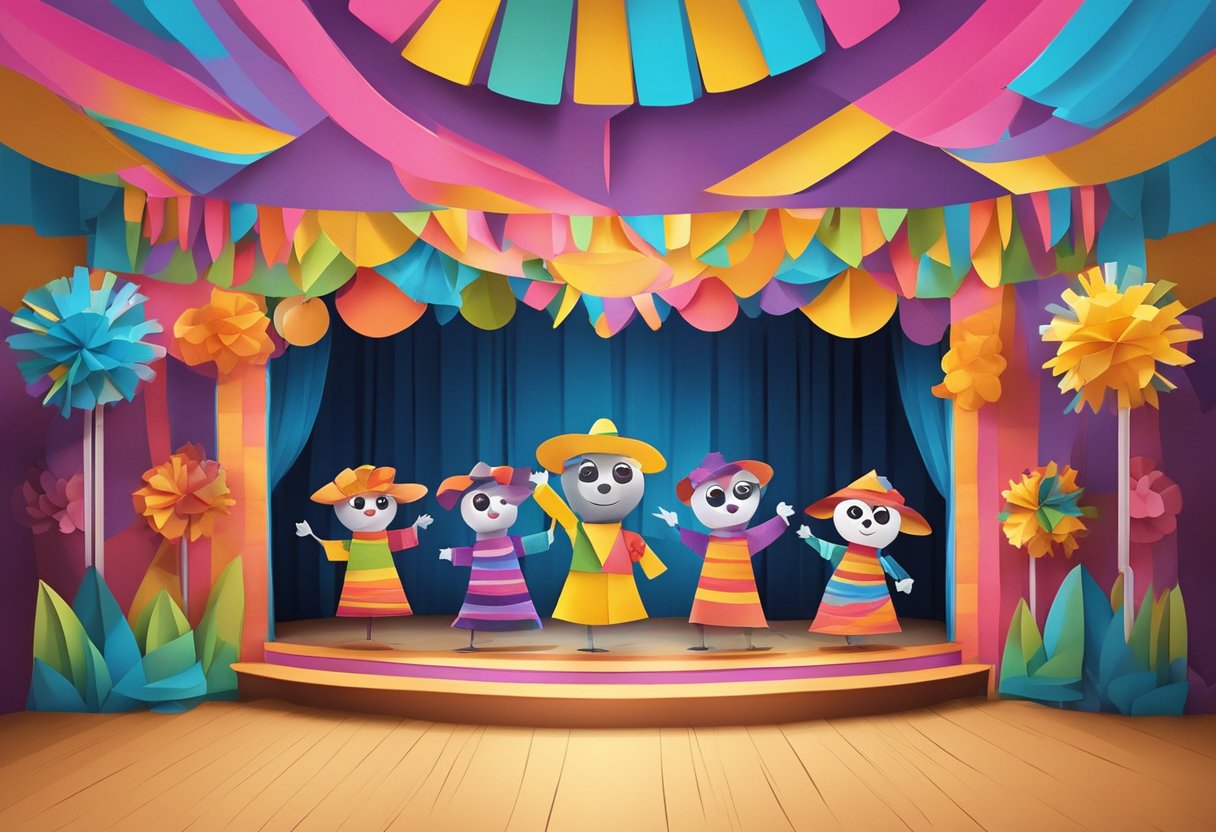
Paper Bag Puppets: Colorful paper bag puppets dancing on a stage with vibrant backgrounds and props
As we explore the craft of paper bag puppetry, we discover that it is not only an artistic endeavour but also a developmental tool that enhances motor skills, storytelling abilities, and emotional expression. The beauty of puppet-making lies in its simplicity and the endless possibilities it presents, making it an inclusive activity for children of all ages and abilities. Michelle Connolly, our founder with 16 years of classroom experience, often says, “With a paper bag puppet, a child’s creativity can take flight, and the stories they tell come from the heart.”
Key Takeaways
Paper bag puppets ignite imagination with simple craft materials.
Puppet-making supports developmental skills through creative play.
Paper bag puppetry is an inclusive activity suitable for diverse ages and abilities.
Getting Started with Paper Bag Puppets
Creating paper bag puppets is an engaging way to spark imagination and storytelling. With just a few simple supplies, anyone can start crafting characters that are ready to star in their homemade plays and stories.
Choosing the Right Materials
To begin crafting your paper bag puppet, you will need a few key materials. Make sure to have:
Paper bags: Medium-sized lunch bag style paper bags provide the perfect base for your puppet.
Scissors: A good pair of scissors is essential for cutting out shapes and details.
Glue: Use PVA glue or a glue stick for sticking your materials securely to the bag.
Markers:Bold markers in various colours will help bring your character’s features to life.
Construction paper: A selection of construction paper comes in handy for creating clothes, accessories and more.
Basic Techniques
Once you have your materials, it’s time to assemble your puppet:
Face: Decide the orientation of the paper bag; the bottom flap will serve as the puppet’s mouth. Use your markers to draw the eyes and nose directly on the bag or cut out shapes from construction paper and glue them on.
Body: Cut out clothing and accessories from the construction paper. Be creative—try crafting hats, scarves, or even a superhero cape.
Mouth: Fold the bottom flap of the bag up to create a crease, allowing the puppet’s mouth to open and close effectively.
“We often find that children learn better when they can interact with their projects,” says Michelle Connolly, founder of LearningMole and an educational expert with 16 years of classroom experience. “Creating puppets is a great exercise in storytelling and craftsmanship.”
By following these basics, you’re well on your way to making a paper bag puppet that’s not just a craft, but a character with its own story waiting for you to tell.
Crafting for Development
When we engage children in the creation of paper bag puppets, we’re doing so much more than just crafting. We are facilitating the development of essential motor and social skills that are vital in their growth.
Enhancing Motor Skills
Fine motor skills are crucial for a child’s development, and crafting paper bag puppets is an excellent way to nurture these skills. As Michelle Connolly, founder of LearningMole and an educational consultant with extensive classroom experience, advises, “Manipulating paper, scissors, and glue provides children with a hands-on way to develop their dexterity and hand-eye coordination.”
Cutting out shapes for the puppet’s features
Gluing pieces onto the paper bag
Drawing or painting on details
These activities require precision and care, which are foundational in fine-tuning a child’s motor abilities.
Fostering Imagination and Role-Play
Crafting paper bag puppets sets the stage for role-play and pretend play, which are instrumental in nurturing a child’s imaginative capacities. As Connolly puts it, “Role-play with homemade puppets encourages story-building and the development of complex social skills.” Our puppets become characters in a story crafted by the children themselves, allowing them to express emotions, experiment with language, and engage in creative play.
Versatile scenarios for puppet interactions
Voices and dialogues crafted by young minds
Stories that emerge from play, reflecting a child’s understanding of the world
This form of play not only entertains but also contributes significantly to a child’s cognitive and social-emotional development.
Simple Paper Bag Puppet Designs
Creating paper bag puppets is a wonderful way to engage in a fun DIY activity while breathing life into simple materials. By using a common paper bag, some imagination, and a few craft supplies, we can transform a mundane object into a character filled with personality.
Animal Creations
To start our journey into animal paper bag puppets, we find that creatures such as bears, bunnies, and frogs make delightful characters. For a bear paper bag puppet, gather brown construction paper, a pair of googly eyes, and a black marker for details like the nose and mouth. Simply cut out the bear’s ears and snout from the construction paper, glue them onto the bag, add the eyes, and draw the face to finish the look.
Similarly, creating a bunny paper bag puppet involves pink and white construction paper for the ears and snout, with added googly eyes and whiskers. Little ones particularly love the playful nature of a bunny, making it a favourite among young crafters.
Frog paper bag puppet: Craft these with green construction paper for the face and larger googly eyes. Adding accordion-folded legs can give a jumping effect!
Crafting these animals isn’t just fun; it’s also a creative exercise that can bring plenty of joy and enhance storytelling skills.
Fantasy Figures
When we shift our focus to the realm of fantasy, the possibilities are only limited by our imagination. A unicorn paper bag puppet is a hit for anyone who adores a touch of magic. Start with white construction paper, a multicoloured yarn for the mane, and don’t forget a shiny horn!
Mermaid paper bag puppet: Use shimmering blue and green papers to mimic scales and craft long flowing hair from yarn. This allows the mystical allure of the ocean to inspire our puppet’s design.
Michelle Connolly remarks, “Incorporating fantasy figures into play can encourage children’s storytelling abilities and foster a sense of wonder.” Her extensive background in education shows us that the art of puppetry is not only about creation but also about bringing stories to life and expanding the horizons of a child’s imagination.
Themed Puppets for Special Occasions
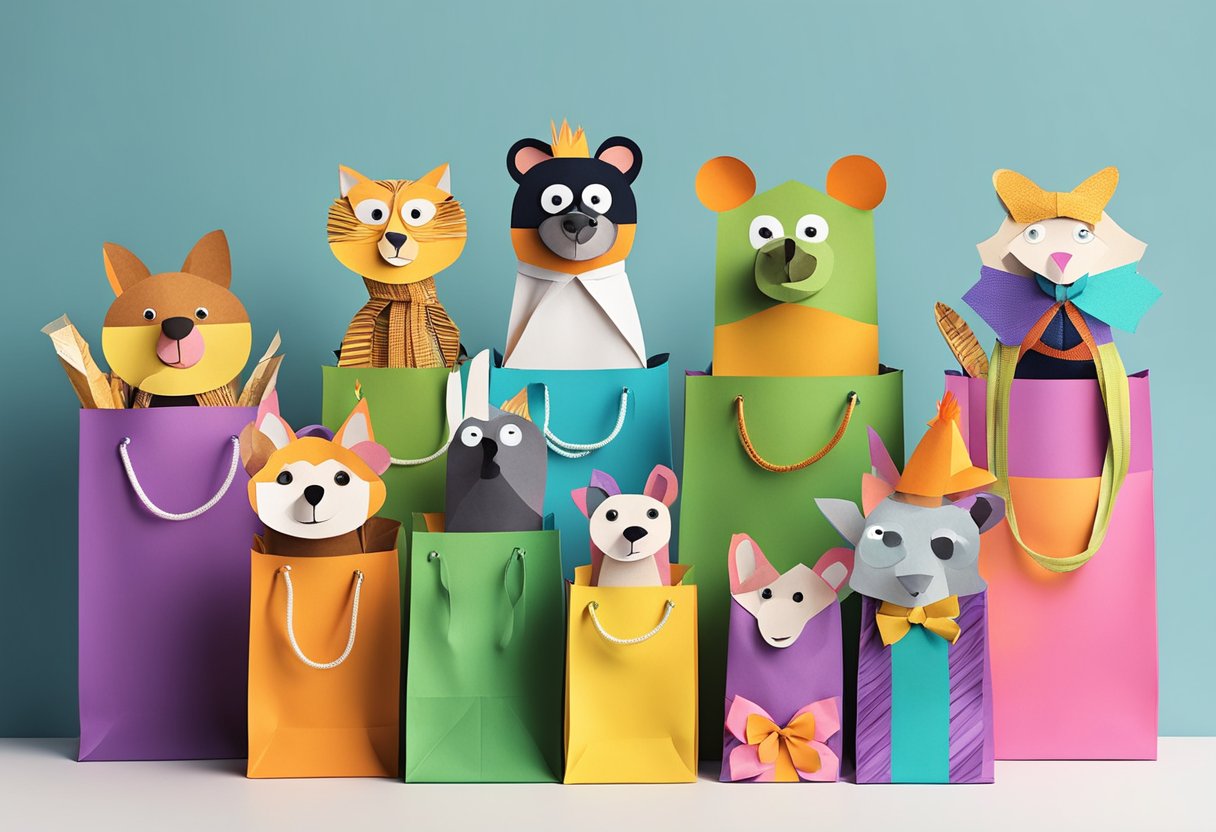
Paper Bag Puppets: Colorful paper bags transformed into lively puppets for special occasions
Creating themed paper bag puppets for special occasions can add a unique touch to celebrations and provide a fun, crafty activity for kids. These puppets can introduce an element of storytelling and imagination to any festive event.
Halloween Spooks
For a Halloween party, we can craft spooky monster paper bag puppets that are both frightening and adorable. To make these, we’ll need coloured paper bags, some construction paper, and a pinch of creativity. Cut out shapes for eyes, mouths, and other monstrous features, then glue them onto the bags. Kids might make their monster puppets with green scales, jagged teeth, and comical eyes. Another beloved Halloween character is the owl paper bag puppet, with its enigmatic charm. Creating these involves designing a set of large, captivating eyes and adding feather-shaped cutouts to give the owl its characteristic plumage.
Festive Celebrations
During the festive season, there’s a wealth of characters we can bring to life. A gingerbread man paper bag puppet is perfect for Christmas, crafted with brown paper decorated with squiggles to imitate icing and adorned with cut-out sweet treats for buttons. Meanwhile, a cheerful penguin paper bag puppet is sure to be a hit in the winter months. To create this, we’ll use white and black construction paper for its body and an orange beak, not forgetting the signature waddle.
Our creative process not only crafts a puppet but weaves a narrative into each character, enriching the festive atmosphere. Michelle Connolly, founder of LearningMole, with her vast experience, says, “Crafts like these form more than just a creative outlet; they’re storytelling tools that can bring characters to life and make any occasion memorable for children.”
Interactive Storytelling with Puppets
In the realm of education, especially early literacy, puppetry can be a magical tool. It breathes life into stories and nurtures the listening and speaking skills vital for young learners.
Bringing Stories to Life
Puppet shows captivate imaginations, taking children on journeys through vibrant worlds found in books and movies. The tactile experience of handling puppets encourages them to recreate epic tales or script their own unique narratives. For example, a simple paper bag puppet could become a bold knight from a beloved book or an audacious astronaut inspired by a favourite movie. The physicality of puppetry allows stories to leap off the page and come alive, fostering a connection between the tangible and the fantastical.
Encouraging Narrative Skills
As we weave puppetry into storytelling, we’re not just entertaining; we’re building foundational skills. Michelle Connolly, a seasoned educational consultant, asserts, “When children animate a puppet, they aren’t just playing; they’re constructing dialogues and anticipating plot twists, which sharpens their narrative abilities.” By orchestrating a puppet show, learners practice the art of storytelling, enhancing their ability to structure a coherent tale with a clear beginning, middle, and end. They must consider character development, plot progression, and the use of expressive language—all of which are critical aspects of storytelling.
Advanced Puppet Crafts
Creating advanced puppet crafts allows us to delve into a world of imagination where simple materials are transformed into vivid characters. Our approach goes beyond basic puppetry, incorporating intricate designs and unique features that can make our puppet creations come alive with personality and flair.
Using Templates for Complex Designs
We use templates to ensure our lion puppets and other complex designs have perfect symmetry and dimension. Templates act as a guide, allowing us to cut out intricate facial features with precision. By employing these patterns, we piece together the elements to form a cohesive and expressive character. For example, creating a lion puppet involves layering mane patterns, shaping the facial contours accurately, and aligning features for a lifelike appearance.
Adding Special Features
To add depth and character to our puppets, we incorporate special features like googly eyes that can move and capture the essence of the puppet’s personality. We also use pipe cleaners for whiskers or to outline the face, providing texture and a three-dimensional aspect. Each addition, whether it’s creating a tufted mane or attaching moveable limbs, is crafted carefully to bring forth the unique traits of our puppets.
By using high-quality materials and carefully planned details, we transform a basic paper bag into a memorable puppet with its own story to tell.
Educational Puppet Activities
In our exploration of educational tools, we’ve discovered that puppet activities captivate preschoolers, making learning more engaging. Through these creative endeavours, children can grasp complex concepts playfully.
Learning with Animals
Animals spark curiosity in children, and paper bag animal puppets serve as excellent aids to introduce preschoolers to the animal kingdom. For instance, with an elephant paper bag puppet, children learn about size, habitat, and social behaviour through storytelling and role-play. The bee paper bag puppet becomes a friendly character to discuss the importance of pollination and the environment.
Exploring Professions
Puppets can be more than just play; they can inspire future careers. Introducing a firefighter paper bag puppet allows us to discuss the role and importance of emergency services. Discussing the tools and responsibilities of a firefighter provides a real-life context for children. Similarly, a dinosaur paper bag puppet could lead a session on paleontology, igniting an interest in the prehistoric past and the science behind unearthing fossils.
Michelle Connolly, with her 16 years in the classroom, emphasises, “Puppets are not only fun but also an extraordinary way to bring to life various professions for young learners.”
Our approach is to ensure that every educational moment is not just a lesson but a doorway to discovery.
Creative Play and Performance
We’ve found that there’s much joy and educational value in the simple art of puppetry with materials as humble as paper bags. Our experiences have shown that this form of storytelling can spark children’s imagination and serve as a platform for them to step into various roles, from a mischievous cat in a hat to a wise Yoda, teaching valuable lessons in a playful environment.
Setting up a Puppet Theatre
Creating a puppet theatre is the first step to a memorable performance. To begin, decide on a location that is easily accessible to both the puppeteer and the audience. A tabletop or a cleared shelf space can suffice for a miniature stage. Then, gather simple materials like a cardboard box or a tension rod and curtain to craft your stage. Decorate it to reflect the setting of your story, but remember, keep it lightweight and manageable for quick scene changes.
Hosting a Puppet Show
For a successful puppet show, prepare a script that captures the audience’s attention and guides your performers. Whether it’s an educational script from LearningMole’s extensive resources or an original tale, the narrative should be clear and engaging. Next, invite participants to use their own cat in a hat puppet or a Yoda puppet to convey the story effectively. “Puppets offer a special kind of magic, allowing us to explore new worlds,” observes Michelle Connolly, founder of LearningMole. Finally, encourage audience interaction to make the experience more immersive and dynamic. With these components, you’ll weave a performance that’s both educational and entertaining.
Craft Inspirations from Around the Web
When looking to bring paper bag puppets to life, the internet is a treasure trove of inspiration and how-to guides that cater to all skill levels and ages. From family blogs to craft communities, there’s an abundance of resources just a click away.
Family Blogs and Craft Communities
We’ve discovered family-centred blogs like Kids Activities Blog and Artsy Momma, where creative parents share their crafty adventures, including paper bag puppet creations that spark the imagination. These sites are a joy for both parents and children to explore, filled with user-friendly tutorials and photographs to guide you every step of the way. Messy Little Monster is another fantastic resource, uncovering a world of vibrant and engaging crafts, perfect for family bonding and educational play.
Free Resources and Tutorials
On the lookout for free paper bag puppet templates? You’re in luck! Across the web, there are plenty of generous crafters distributing their designs without charge. These templates are a perfect starting point, especially when you need to whip up a character quickly or are helping kids to take their first steps in crafts. Utilising these free resources not only saves time but also helps in learning the basic structures of puppet-making before embarking on more complex projects.
Our hands-on experience aligns with Michelle Connolly from LearningMole, who states, “Simple materials like paper bags are a canvas for creativity and learning, providing a platform for children to express themselves and learn through play.” Our joint aim is to support this blend of education and entertainment, making crafts accessible to all.
In summary, the web is abundant with ideas and resources that can take simple materials like paper bags and transform them into engaging educational tools. By tapping into the collective knowledge of the online crafting community, we enrich the lives of our kids with just a pinch of creativity and a lot of fun.
Caring for Paper Bag Puppets
When we create something wonderful like paper bag puppets using simple materials, their lifespan is just as important as their creation. It’s vital to store and maintain them properly to ensure they can be enjoyed again and again.
Storage Tips
Storing our paper bag puppets correctly is key to preserving their appearances and functionality. We should always store them:
In a cool, dry place away from direct sunlight to prevent fading and moisture damage.
Flat if possible, but if space is an issue, gently fold them along the seams.
Inside a sturdy container or box to prevent them from being squashed or torn.
Repairs and Maintenance
Despite our best care, paper bag puppets can undergo wear and tear. For effective repairs and maintenance:
Keep a repair kit stocked with common craft supplies like clear tape, glue, and scissors.
Approach rips or tears by carefully applying tape to the inside of the puppet to maintain the exterior look.
When reinforcing weak spots, consider using cardstock or additional layers of brown paper bags for extra sturdiness.
“Simple craft materials are the essence of creativity in the learning process; taking care of them is just as much a part of the educational journey as the initial act of making,” advises Michelle Connolly from LearningMole, highlighting the intrinsic value of preserving educational craft creations.
Guidelines for Safe Puppeteering
When bringing paper bag puppets to life, it’s crucial that we prioritise safety, especially when crafting with children. This section covers basic safety guidelines to ensure that our puppet-making activity is both fun and secure.
Age-Appropriate Crafts
For young crafters, especially preschoolers, it’s vital to select age-appropriate tools. Avoid sharp scissors; instead, opt for child-friendly ones that safely cut paper. Glue sticks are preferable to liquid glue, which can be messy and more difficult for small hands to control. Always choose non-toxic, washable materials for coloring and decorating, like crayons and water-based markers.
Supervision and Safety
We must supervise children closely during crafting. The use of scissors for cutting needs to be monitored to prevent accidents. Glue and other adhesives should be used sparingly to avoid spills and sticky situations. Michelle Connolly, founder of LearningMole, advises, “Always engage with children during craft activities – it encourages safe practices and boosts their confidence in creating something unique.”
By following these guidelines, we can ensure that puppeteering with paper bags is a safe and enjoyable experience for all.
Frequently Asked Questions
Paper Bag Puppets: Colorful paper bag puppets come to life on a stage
In this section, we answer the most common queries about creating paper bag puppets using simple materials. Whether you’re a beginner looking for basic steps or searching for specific design inspiration, our guidance caters to all levels of creativity.
What materials do I need to create a paper bag puppet?
To start crafting a paper bag puppet, you’ll need a paper bag, some construction or craft paper, scissors, glue, and markers or paint. “Every good craft starts with simple materials, and the beauty of paper bag puppets is that they’re wonderfully uncomplicated,” says Michelle Connolly, a founder and educational consultant with 16 years of classroom experience.
Can you guide me through making a paper bag puppet step-by-step?
Certainly! Begin by placing the paper bag flat with the flap facing up; this will be the puppet’s face. Cut out features from the craft paper and glue them onto the bag. Add details with markers or paint. “Remember, every fold and cut adds character to your puppet,” adds Michelle Connolly, highlighting the essence of customisation in puppet-making.
Where can I find printable templates for paper bag puppets?
Printable templates for paper bag puppets are available online. They offer an array of designs that can be used as a reference or directly applied to your paper bag to create various characters.
How can I make a paper bag puppet resemble a specific community helper?
To fashion a paper bag puppet after a specific community helper, think about the key elements of their uniform or gear and replicate those with paper cut-outs. For instance, for a firefighter, you’d want to include a helmet, a badge, and perhaps a hose. “Incorporating distinctive features will make your community helper puppets instantly recognisable,” advises Michelle Connolly, leveraging her educational expertise.
What are some easy paper bag puppet designs for beginners?
Start with simple animals or shapes that require minimal details, such as a cat or a ghost. These designs often rely on the shape of the bag and require only a few facial features or additional elements. Michelle Connolly suggests, “Simple designs are perfect for gaining confidence in puppet creation before moving on to more complex projects.”
Are there any resources available for free to help with crafting paper bag puppets?
Yes, there are many free resources available that provide guidance, inspiration, and printable templates to help with your paper bag puppet projects. These resources can range from simple instructions to downloadable patterns that can jump-start your creativity.
Maths Circus, an innovative platform we've crafted, presents a captivating realm where children learn mathematics through the exciting theme of a circus. The joy of juggling numbers and solving circus...
Mexican traditions blend the customs of ancient Mesoamerican peoples, such as the Aztecs and the Maya, with Catholic festivals brought by Spanish settlers in the sixteenth century. The result is...
The moose (Alces alces) is the largest member of the deer family alive today, and a fully grown bull can stand about 2 metres tall at the shoulder, which makes...




Leave a Reply