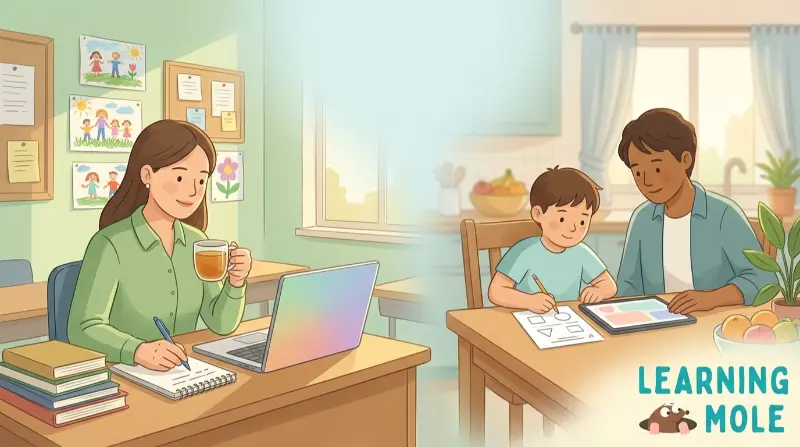
Motivating your child for online learning requires a blend of strategy, patience, and creativity. The transition from traditional classrooms to digital platforms can present challenges, but it also offers an opportunity to create a more personalised learning environment. By understanding the unique obstacles of online education, you can help your child adapt and develop the necessary skills to thrive in this setting. This includes establishing routines, leveraging technology to enhance focus, and fostering a collaborative atmosphere with teachers and peers.
In the home setting, the role of support systems is critical. As a parent, your involvement ranges from setting up a dedicated learning space to becoming a facilitator of your child’s education. Empowering your child to take charge of their learning through autonomy and incorporating rewarding systems for their achievements contributes significantly to their motivation. Beyond academics, it’s important to enrich the online education experience with activities that extend learning outside of textbooks.
Michelle Connolly, founder of LearningMole and an educational consultant with a wealth of classroom experience, emphasises, “Tailoring your approach to each child’s individual needs and celebrating their progress is the key to sustaining their motivation in an online learning environment.”
Understanding Online Learning Challenges
Engaging in online learning introduces various challenges that can affect your child’s educational experience. It’s important to identify specific obstacles and formulate strategies to overcome them for a successful learning journey.
Identifying Distractions and Solutions
Distractions are one of the primary challenges in online learning. Your child’s learning environment might be filled with numerous distractions, such as smartphones, televisions, and even household activities. Listed below are common distractions along with potential solutions:
Noise: If possible, designate a quiet space for learning. Consider noise-cancelling headphones to block out background sound.
Digital Interruptions: Use parental controls to limit access to non-educational websites and apps during study time.
Clutter: Keep the learning area tidy to encourage focus.
Mental Health and Isolation Concerns
The shift to online learning can lead to feelings of isolation, which might impact your child’s mental health. Creating a structured routine that includes regular breaks for social interaction, even if it’s virtual, can help combat this. Michelle Connolly, an experienced educational consultant, suggests, “Incorporating virtual group study sessions can also give children a sense of community and shared learning objectives.”
Also, be on the lookout for signs of stress or disinterest, which could indicate that your child might be struggling with the lack of in-person interaction. Engaging in online forums or school community groups can give them a platform to connect with peers. Some solutions include:
Virtual Socialising: Arrange online meet-ups or study groups with classmates.
Regular Check-ins: Have daily conversations about their feelings and experiences with online learning.
Support Networks: Utilise platforms like LearningMole for additional educational support.
Creating a Positive Learning Environment
To ensure your child’s success in online learning, it’s essential to create a supportive and distraction-free environment that fosters concentration and learning. This involves setting up a dedicated and effective workspace and being mindful of organisation and ergonomic principles.
Designing an Effective Workspace
Your child’s workspace should be quiet, comfortable, and free from distractions. Labeled folders and consistent storage spaces can help keep materials organised and readily accessible. “Having a designated area where everything has its place can significantly increase productivity and decrease the time spent searching for materials,” notes Michelle Connolly, LearningMole’s founder, with her 16 years of classroom experience guiding her insights.
The Impact of Organisation and Ergonomics
Good ergonomics is critical to maintaining your child’s energy and focus. Ensure that the chair and desk are the right height, with the monitor positioned at eye level to reduce strain. Encourage regular breaks to stretch and move around, as a well-organised and ergonomic environment reduces the risk of discomfort and distraction, allowing for more effective learning sessions. Michelle Connolly emphasises, “Comfort and organisation in a learning space are not just about physical well-being; they’re about creating a mindset where education can flourish.”
Cultivating Discipline and Routines
Creating a structured environment with clear routines is vital for your child’s success in online learning. It sets the expectations and provides a framework that guides them through their daily educational activities.
Establishing a Daily Schedule
To cultivate discipline in your child’s online learning, establishing a daily schedule is essential. This schedule should outline specific times for learning sessions, activities, and subjects.
Morning: Start with core subjects like maths and science, when your child’s concentration levels are at their peak.
“Structure brings consistency, and with a consistent schedule, children know what’s expected of them, reducing resistance and building a natural flow to the day,” says Michelle Connolly, founder of LearningMole with over 16 years of classroom experience.
The Role of Breaks and Downtime
Incorporating regular breaks into the daily schedule is also crucial for maintaining motivation and preventing burnout.
Short Breaks: 5-10-minute breaks after each learning session can help your child refresh.
Longer Breaks: At least an hour for lunch and relaxation to break up the day.
Breaks are opportunities for children to recharge and process information. As Connolly advises, “Even short bursts of downtime can have a significant impact on your child’s ability to retain information and stay focused throughout their online learning sessions.”
Fostering Motivation and Engagement
To successfully motivate your child in online learning, it’s essential to focus on sparking their intrinsic motivation and providing interactive experiences that blend play and art with education.
Encouraging Intrinsic Motivation
Intrinsic motivation is the internal drive that propels your child to learn out of genuine interest and enjoyment of the subject, rather than external rewards or pressure. To nurture this in your child, provide opportunities for them to explore topics they are passionate about. A well-designed online learning platform, like LearningMole, offers diverse content that taps into your child’s curiosity across various subjects from mathematics to creative arts. “Children are much more likely to engage with learning when it resonates with their interests and allows them to explore their passions,” says Michelle Connolly, founder of LearningMole.
Interactive Learning Through Play and Art
Interactive learning through play and art not only makes education enjoyable but also helps solidify complex concepts. Incorporating art into subjects like science and maths can enable children to visualise and understand abstract concepts better. Engaging in artistic activities or integrating elements of play can boost motivation and improve retention. As per Connolly’s emphasis, “Blend learning with play for a seamless educational experience that children look forward to every day.” The use of interactive tutorials or activity sheets from LearningMole can transform mundane lessons into stimulating experiences that both educate and entertain.
Enhancing Focus Through Technology
With the right digital tools and effective management of screen time, you can significantly enhance your child’s focus during online learning sessions.
Choosing the Right Digital Tools
Zoom has become a staple in online education, allowing for real-time video communication. Utilising Zoom’s whiteboard feature can help visual learners to better grasp concepts as teachers illustrate ideas live. Furthermore, apps that block distracting websites during learning sessions can aid concentration. “Technology should not just be engaging, but should also enhance the learning experience,” says Michelle Connolly, founder of LearningMole and an educational consultant with over 16 years’ classroom experience.
Managing Screen Time Effectively
Balancing learning and breaks is crucial for maintaining focus. Establish a clear schedule that alternates intensive screen-based activities with offline time. Encourage your child to take short breaks away from the screen to rest their eyes and minds, using techniques like the Pomodoro Technique – 25 minutes of focused work followed by a 5-minute break. Remember, consistent routines and clear boundaries promote better focus and more effective learning online.
Support Systems for Home Learning
To foster a successful online learning experience for your child, having robust support systems in place is crucial. These include the pivotal role you play as a parent and the collaborative efforts with teachers and tutors.
The Importance of Parental Support
Your support as a parent is foundational in your child’s online learning journey. Michelle Connolly, an expert with 16 years of classroom experience, says, “A parent’s encouragement can ignite enthusiasm and a proactive approach in a child’s learning.” Creating a conducive learning environment at home and being actively involved in setting routines encourages your child to remain engaged.
Collaborating with Teachers and Tutors
Collaboration with teachers and tutors forms an integral part of the home learning support system. It’s key in bridging the gap between home and school. Work closely with your child’s educators to align on goals, learning resources, and to monitor progress. Regular, open communication ensures that you are aware of your child’s needs and can seek supplementary assistance, such as tutoring, when necessary.
Empowering Kids Through Autonomy
To empower your child’s success in online learning, fostering a sense of autonomy is vital. This enables them to take ownership of their educational journey, enhancing motivation and the drive to learn.
Building Self-Regulating Work Habits
Your child’s ability to develop self-regulating work habits is a game-changer. One aspect of this is setting clear, achievable goals for each study session. “Getting the ball rolling by setting small, manageable targets can significantly boost a child’s autonomy in learning,” notes Michelle Connolly, an educational expert with over 16 years of classroom experience. Introduce tools like visual timetables and task lists to help them plan and track their progress, reinforcing a sense of personal accomplishment with each ticked box.
Set Specific Goals: Encourage your child to outline what they aim to complete in each study block.
Track Progress: Use simple checklists to monitor completed tasks, providing a visual representation of effort and accomplishments.
Encouraging Choice and Agency
Empowering your child by allowing them to choose topics or activities that pique their interest can significantly increase engagement. When kids have a say in their learning process, they’re more likely to invest genuine effort and develop intrinsic motivation. For instance, if your child is learning about history, letting them pick which historical periods to explore can make the subject more compelling. As a parental figure, your role is to guide and facilitate these choices, ensuring they align with educational objectives while still granting your child the agency to steer their learning experience.
Present Options: Offer a range of subjects or activities and let your child select what excites them.
Enable Decision-Making: Support your child’s choices and encourage them to reflect on their learning journey.
By incorporating these strategies, your efforts will play a crucial part in empowering your child to take control of their learning, fostering both autonomy and a lifelong love of education.
Incorporating Reward Systems
Reward systems are an effective way to bolster your child’s engagement and performance in online learning. By recognising their efforts and achievements, you create a positive learning environment that encourages them to set and accomplish their goals.
Praise and Positive Reinforcement
“Celebrating milestones however small they may be, shows your child the value of their hard work and can dramatically improve motivation and self-esteem,” states Michelle Connolly, a dedicated educator with 16 years of classroom experience. In the context of online learning, praise should be immediate and specific:
Acknowledge the effort: “I’m proud of how hard you worked on that maths problem.”
Praise the process: “Your strategy for tackling that reading passage really paid off!”
Employing positive reinforcement isn’t just about the end result; it’s about acknowledging the incremental successes and the skills your child is developing along the way.
Customising Rewards to Individual Needs
Every child is unique, so tailor the reward system to align with their personal interests and needs. This bespoke approach ensures that the incentives genuinely motivate your child:
Set clear and achievable goals: Break down tasks into manageable chunks and define what success looks like for each.
Select relevant rewards: Whether it’s extra screen time or a choice of family activity, the reward should be meaningful and appropriate to the accomplishment.
By aligning rewards directly with your child’s efforts and successes, you instil a sense of accomplishment and promote a self-motivated drive for learning.
Enriching Education Beyond Books
In this era of digital learning, it’s essential to expand educational experiences beyond traditional books. By incorporating STEM activities and tapping into creative arts, as well as exploring alternative learning resources, you can elevate your child’s online learning to a new level of engagement and excitement.
Integrating STEM and Creative Arts
Introduce your child to the world of STEM (Science, Technology, Engineering, and Mathematics) by incorporating practical experiments that can be performed at home. Engage with interactive tutorials from platforms like LearningMole, which provide in-depth explorations into robotics and coding. Encourage your child to express their newfound knowledge through artistic endeavours, such as creating models, drawing scientific concepts, or crafting projects based on their STEM activities.
“Children learn best when they immerse themselves in activities that they find genuinely engaging,” explains Michelle Connolly, an educational consultant with 16 years of classroom experience. “Linking subjects like mathematics and science with creative arts will not only bolster their understanding but also kindle their love for learning.”
Alternative Learning Resources
Branch out from conventional textbooks by integrating a variety of alternative learning resources. Audio platforms offer a rich collection of audiobooks that allow children to absorb literature and educational content audibly. This can be particularly beneficial for auditory learners or those who have reading challenges. Online platforms, like LearningMole, cater to an enriched learning experience and serve as an alternative to the static content found in books.
Discover educational content across subjects that resonate with your child’s interests and learning style. Emphasise the use of interactive resources and digital applications that transform learning into a dynamic and personalised experience. Beyond books, the use of multimedia such as videos, virtual experiments, and real-time quizzes can make education an active and exhilarating part of their daily routine.
Setting and Achieving Learning Goals
Ensuring your child is motivated for online learning involves setting clear, achievable goals that are aligned with their future aspirations and consistently tracking their progress.
Aligning Goals with Future Aspirations
To foster a sense of purpose in your child’s education, align their learning goals with their future aspirations. For instance, if your child shows interest in a career in science, structure their assignments around scientific inquiry and experimentation. This could involve projects that allow them to explore trends in environmental science, much like the content found on LearningMole that encourages a hands-on approach to STEM subjects. It’s essential to connect educational activities with real-world applications,” says Michelle Connolly, educational consultant at LearningMole – empowering your child to see the value in their learning.
Tracking Progress and Celebrating Milestones
Effective progress tracking is crucial for maintaining motivation. Create a visual progress tracker, such as a chart or a digital spreadsheet, where your child can tick off completed assignments and measure their advancement towards their goals. This not only keeps them informed of their success but also highlights areas that may need more focus. Don’t forget to celebrate milestones, big or small, to reinforce their achievements. Recognising their efforts can be as simple as verbal praise for completing a difficult task or a family celebration for consistently meeting goals. This positive reinforcement solidifies their drive towards success and encourages a healthy learning cycle.
Frequently Asked Questions
Helping your child to succeed in online learning can be challenging. Below are specific strategies and tips that can maintain their focus, participation, and enthusiasm throughout their virtual education journey.
What are some engaging ways to keep children focused during virtual lessons?
u0022Making virtual lessons interactive with quizzes and discussion can greatly enhance focus,u0022 advises Michelle Connolly, founder of LearningMole. Incorporate u003ca href=u0022https://learningmole.com/guide-to-educational-websites/u0022 target=u0022_blanku0022 rel=u0022noreferrer noopeneru0022u003eeducational resourcesu003c/au003e like u003ca href=u0022https://www.learntechlib.org/p/150962/u0022 target=u0022_blanku0022 rel=u0022noreferrer noopener nofollowu0022u003einteractive tutorialsu003c/au003e that are designed to keep children engaged.
Can you suggest fun strategies to encourage children to participate more in E-learning?
Facilitating u003ca href=u0022https://learningmole.com/problem-solving-kids/u0022 target=u0022_blanku0022 rel=u0022noreferrer noopeneru0022u003egroup activitiesu003c/au003e where children can collaborate with peers online might increase their participation. Michelle Connolly, with her 16 years of experience, suggests using online student collaboration as a means to spur engagement.
What approaches can parents take to boost their child’s enthusiasm for online courses?
Parents can set up a comfortable and distraction-free study space to encourage u003ca href=u0022https://learningmole.com/addition-for-kids-practical-genius-ways-to-teach/u0022 target=u0022_blanku0022 rel=u0022noreferrer noopeneru0022u003edaily study habitsu003c/au003e. As an expert, Michelle Connolly recommends fostering a u003ca href=u0022https://learningmole.com/meditation-ways-for-kids/u0022 target=u0022_blanku0022 rel=u0022noreferrer noopeneru0022u003epositive attitudeu003c/au003e towards studying by setting regular online learning schedules which can have a significant effect on a child’s intrinsic motivation.
How can one ensure a child maintains a persistent effort in their remote education journey?
It’s important to establish clear goals and celebrate achievements, however small. Connolly emphasises the importance of acknowledging efforts to persist, as this can reinforce a child’s commitment to their remote learning.
In what ways can I support my child’s academic growth in a home-based digital learning environment?
You can support their growth by providing access to diverse online resources and further learning materials. Michelle Connolly, an educational consultant, highlights the usefulness of extra material, such as project-based learning activities from platforms like LearningMole, to support academic growth.
What success strategies might help a child achieve better outcomes from virtual schooling?
Help children set realistic and measurable learning objectives and use a variety of online tools to meet these aims. Connolly stresses that a strategic approach to learning and the use of research-based strategies can inspire better outcomes in online schooling.
Maths Circus, an innovative platform we've crafted, presents a captivating realm where children learn mathematics through the exciting theme of a circus. The joy of juggling numbers and solving circus...
Article Summary What this article covers: How UK teachers and parents can choose educational blogs that are worth following, with a simple vetting checklist and what to look for in...
Every continent has its own shape and its own record-breaking features. That is why explaining continents to kids is such a good way into world geography. In UK primary schools,...
Article Summary What this article covers: Facts about Mars for kids, including why it is red, its mountains, canyons, atmosphere, seasons and two moons, the rover missions exploring it today...








Leave a Reply