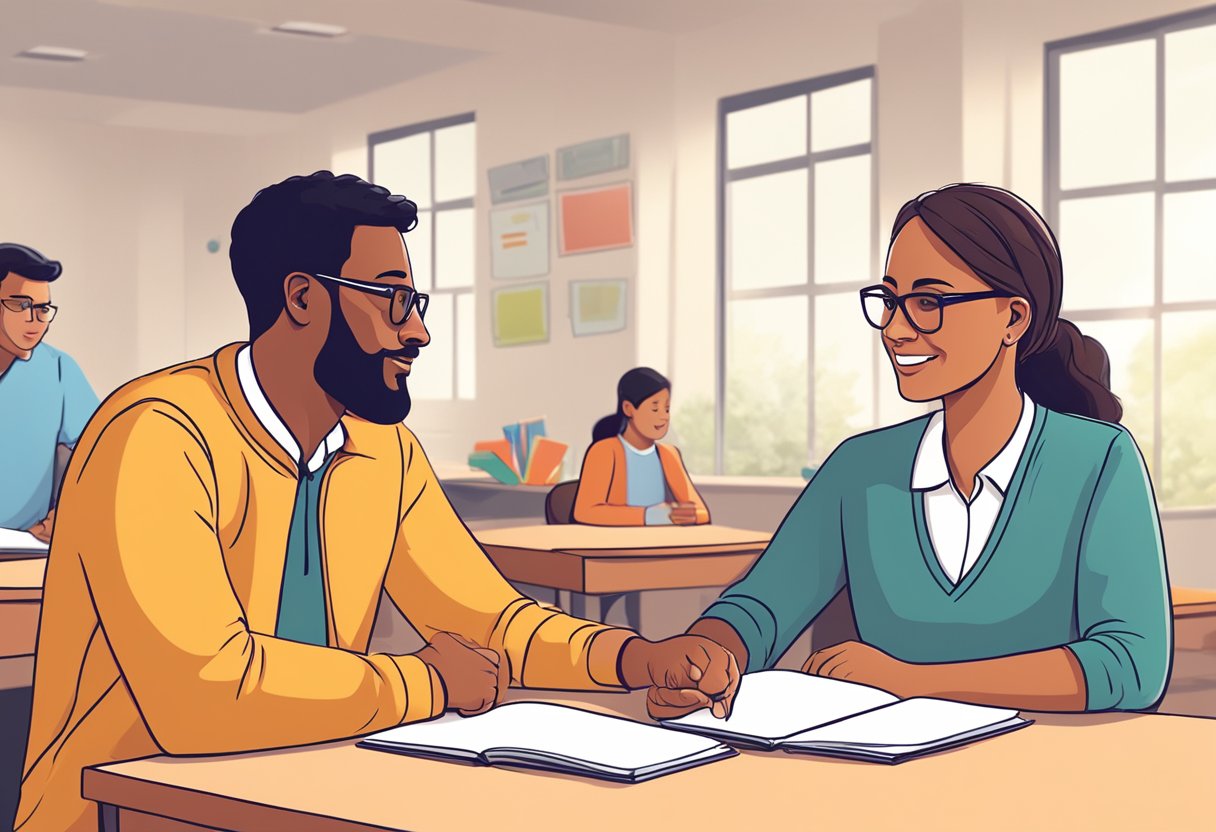
Parent-teacher meetings are a valuable opportunity to foster a partnership between educators and families, aiming to support each student’s educational journey. These meetings serve as a platform where you can discuss your child’s progress, address any concerns, and strategise for upcoming challenges. It’s your chance to work collaboratively with teachers to ensure the best possible outcomes for your child’s learning and well-being.
Effective communication during these meetings is critical. By preparing in advance and approaching each conversation with clear objectives, you can maximise the impact of the time spent with your child’s teacher. Setting specific goals and expectations, discussing your child’s behavioural and social development, and understanding his or her academic progress are all integral topics that can be covered.
Michelle Connolly, founder of LearningMole and an educational consultant with over a decade and a half of classroom experience, shares this view: “A constructive dialogue during parent-teacher meetings lays the foundation for your child’s success both inside and outside the classroom.”
The Purpose of Parent-Teacher Meetings
Parent-teacher meetings are a crucial component of your child’s education, offering a unique opportunity for you to engage with educators and contribute to your child’s academic and social development.
Understanding the Role of Feedback
Feedback exchange is pivotal at a parent-teacher conference. It provides insight into your child’s progress, areas of strength, and areas that may need improvement. Michelle Connolly, an educational consultant with over a decade and a half of classroom experience, highlights, “Effective feedback is a two-way street; it informs teachers of home circumstances that may affect learning, while parents gain a clearer picture of their child’s school experience.”
Feedback can include:
Academic performance updates
Behavioural observations
Social interaction assessments
Importance of Collaboration
The collaboration between you and the teacher is another cornerstone of these meetings. It’s about building a partnership that focuses on maximising learning outcomes and ensuring the well-being of your child.
Discuss strategies supporting learning at home and at school
Plan for regular communication to track progress
Emphasis on teamwork reinforces commitment from both sides, establishing a cohesive strategy for your child’s success.
Preparation Strategies for Meetings
Thorough preparation is key to successfully navigating a parent-teacher meeting. This groundwork ensures that the finite time available is used optimally, focusing on your child’s educational progress and areas for growth.
Agenda and Questions
Creating an agenda and a list of specific questions you wish to address during your meeting helps to keep the conversation focused and productive. Start by:
Listing key topics or concerns about your child’s education you want to discuss.
Preparing questions pertaining to your child’s educational experience.
Remember, it’s also beneficial to invite your child’s input when preparing questions. They often provide insights into areas you may not have considered.
Reviewing Academic Data Beforehand
Before the meeting, take time to review your child’s report card and any other provided academic data. This allows you to:
Identify trends or changes in performance.
Refer to specific grades or teacher comments during the discussion.
It’s practical to bring along a copy of the report card or any other relevant documents to the meeting. That way, both you and the teacher can reference the same data during your conversation, enabling a more detailed and constructive dialogue about your child’s achievements and areas needing improvement.
A well-prepared parent is invaluable not only to their own child’s success but also to the teachers who work with them. As Michelle Connolly, founder of LearningMole and an experienced educational consultant, states, “Taking an active role in preparation for parent-teacher meetings equips you with the tools to advocate effectively for your child’s educational journey.”
Effective Communication Techniques
In parent-teacher meetings, the key to a productive conversation lies in employing successful communication techniques that foster clarity and understanding. By adopting these methods, you can create a constructive and collaborative dialogue.
Facilitating Open Discussions
To facilitate an open discussion, begin by setting a welcoming tone that encourages parents to share their thoughts freely. It’s important to start the meeting with a positive affirmation about their child’s progress or a specific achievement. Communication should be two-way: actively listen and invite questions to understand parents’ perspectives and concerns.
Use open-ended questions to prompt further discussion.
Summarise what you’ve heard to confirm your understanding.
Provide clear, jargon-free explanations of the student’s progress.
Managing Emotions and Body Language
Managing emotions is crucial in maintaining an objective and empathetic atmosphere. Stay calm and composed even when the conversation takes a challenging turn. Remember, body language also communicates volumes.
Maintain eye contact to show engagement.
Use nods and smiles to encourage sharing.
Be mindful of your facial expressions, as they can convey your response to the conversation.
According to Michelle Connolly, an expert with over 16 years of classroom experience, “A teacher’s ability to manage both verbal and non-verbal cues can significantly influence the outcome of a parent-teacher meeting.” Your non-verbal cues can either build trust or create barriers, so it’s vital to control them effectively.
Understanding Academic Progress and Grades
When it comes to parent-teacher meetings, it is crucial to grasp your child’s academic progress and understand their grades. This helps you identify their strengths, areas for improvement, and how best to support their educational journey.
Interpreting Report Cards
Report cards are a snapshot of your child’s academic performance over a certain period. Grades on these cards reflect test scores, participation, homework completion, and sometimes soft skills like teamwork and punctuality. Remember, the grade ‘A’ signifies excellent understanding, while a ‘C’ might indicate that your child is meeting the expected standards, and a ‘U’ suggests there is significant room for improvement.
Assessments and Observations
Beyond report cards, teachers often use various assessments and observations to measure student learning. Regular assessments provide insight into a student’s understanding of the curriculum, while observational notes can reveal learning behaviours and engagement levels. It’s important to discuss these with the teacher to get a fuller picture of your child’s academic progress.
Michelle Connolly, founder of LearningMole, says, “Regular assessment provides a concrete benchmark for academic success, but it’s important to look beyond numbers to see the full scope of a child’s learning.” Michelle’s expertise stems from her 16 years of classroom experience, and her insights emphasise the importance of a well-rounded view of your child’s education.
Addressing Student Behaviour and Social Development
When preparing for parent-teacher meetings, it is essential to discuss students’ behavioural concerns and social development. This conversation allows for a constructive dialogue focussed on positively shaping the students’ future.
Identifying and Discussing Concerns
At the outset of the meeting, identify specific behavioural concerns. Instead of using vague descriptors, provide concrete examples of the student’s behaviour that need attention. For example, “Lately, Jamie has been interrupting lessons frequently, which disrupts the learning process.” This targets the issue directly, allowing parents to understand the exact nature of the concern.
“Every child has a unique set of strengths and weaknesses, and it’s crucial to navigate these with sensitivity and a clear strategy,” says Michelle Connolly, founder of LearningMole.
Highlighting Positive Conduct
Equally important is the recognition of the student’s positive behaviour and social milestones achieved. Highlighting strengths reinforces positive conduct and boosts the student’s self-esteem. Construct your feedback to reflect both strengths and progress.
“Positive reinforcement not only motivates but also builds the confidence that is essential for a child’s social development,” advises Michelle.
Parent-teacher meetings can become a platform for supporting a child’s behavioural and social growth by focusing on the specifics and balancing concerns with positive conduct.
Role of Homework and Assignments
Homework and assignments play an integral part in the educational journey, offering a bridge between learning in school and at home. They serve not only as a practice tool but also as a vital form of academic feedback.
Supporting Homework Completion
To support homework completion, it’s essential that you craft assignments which align with your students’ learning in the classroom. Providing clear, concise instructions and necessary resources are critical steps in fostering independent learning. Integration of online tools and platforms can streamline parent-teacher communication, ensuring that guardians are well-informed and can offer the right support at home. Michelle Connolly, founder of LearningMole, emphasises that “Good homework practice supports not just academic achievement but also the child’s ability to learn and work independently.”
Utilising Homework as Feedback
Homework is an invaluable input for both teacher and student. It serves as a canvas reflecting a student’s understanding and application of the subject matter. A careful review of completed assignments can provide critical academic data, highlighting areas of student strength and those requiring further reinforcement.
Michelle Connolly advises, “Homework should not be seen just as extra work but as an essential feedback mechanism, which informs the next steps in the learning process.” By using homework as feedback, the collaboration in parent-teacher meetings can be focused on practical strategies for student improvement.
Homework Strategy
Purpose
Clear Instructions
Ensures that students understand what is expected of them.
Resource Accessibility
Allows students to complete tasks effectively at home.
Regular Feedback
Identifies learning gaps and informs future teaching.
Remember that homework and assignments are not just about completing tasks; they’re about reinforcing learning, providing feedback, and supporting your child’s educational growth.
Setting Specific Goals and Expectations
Effective parent-teacher meetings are all about clarity and direction. By setting specific goals and focusing on targeted outcomes and action steps, you’ll ensure that both you and the teacher work cohesively towards the student’s success.
Targeted Outcomes for Students
In order to maximise the potential of parent-teacher meetings, it’s crucial to outline specific goals tailored to the student’s needs. This involves a detailed discussion about the student’s current strengths and weaknesses. Together, you and the teacher can pinpoint areas that require improvement and set realistic targets. For instance:
Literacy: Enhancing reading comprehension levels by one grade through targeted reading exercises.
Setting these precise targets is the first step towards a structured plan for educational growth and development.
Parent and Teacher Action Steps
After identifying the outcomes, it’s essential to determine the action steps for both parents and teachers. Here’s a concise breakdown:
For Parents:
Engage in daily reading sessions to boost literacy.
Utilise resources from LearningMole for creative home-learning strategies.
For Teachers:
Provide personalised feedback on assignments to address specific areas.
Organise additional support where necessary, such as peer tutoring sessions.
Michelle Connolly, a founder and education expert at LearningMole, endorses this collaborative approach: “It’s about crafting a partnership where both parties are actively involved in the child’s learning journey.” By setting the stage with clear goals and specified actions, your parent-teacher meetings can transition into a powerful alliance for educational achievement.
Inclusion of Students in Meetings
When involving your child in parent-teacher meetings, you’re paving the way for enhanced engagement and personal development. They become active participants in their educational journey, reflecting on their achievements and considering their academic progress.
Benefits of Student-Led Conferences
Student-led conferences are a modern approach where students take the lead in discussing their own learning with their parents and teachers. This method has several key benefits:
Promotes Self-Reflection: Students assess their own work and progress, gaining insights into their strengths and areas for improvement.
Encourages Accountability: By discussing their achievements, students take responsibility for their learning outcomes.
As Michelle Connolly, founder and educational consultant at LearningMole, with over 16 years of classroom experience, remarks, “Student-led conferences bridge the communication gap between children and adults, allowing students to voice their educational experiences confidently.”
Enhancing Student Ownership
Incorporating students into meetings dramatically increases their sense of ownership over their education. When students are entrusted with presenting their work, they are more motivated to:
Set Personal Goals: Being involved in meetings encourages students to set and strive for personal academic targets.
Reflect on Learning: Students engaging directly with their progress become more self-aware learners.
By fostering an environment where students often present their work, you’re instilling a sense of pride and a proactive attitude towards learning. Remember, your child’s active participation is a stepping stone to self-improvement and greater academic engagement.
Support and Resources for Families
When preparing for parent-teacher meetings, remember that you have a wealth of support and resources at your disposal. The right tools and assistance can significantly enrich your child’s educational journey.
Access to Translators and Educators
If English isn’t your first language, or you require information in another language, access to a translator can be vital. Schools often provide translators during parent-teacher meetings to ensure clear and productive communication. You can also find online platforms with dedicated educators who help bridge language barriers. One such platform, LearningMole, offers a variety of educational content and can be an invaluable resource for understanding complex educational topics and strategies.
Additional Support Channels
Beyond translators, there are multiple channels through which you can seek additional support. Online forums, local community groups, and dedicated websites offer resources tailored to the needs of families. For instance, you may find interactive tutorials, articles on fostering a productive home learning environment, or lesson plans to support your child’s learning at home.
Michelle Connolly, founder of LearningMole and an educational consultant with 16 years of classroom experience, emphasises that “It’s about giving parents the tools they need to support their child’s education in a way that is empowering and effective.”
Remember, by tapping into these resources, and you’re not just attending a meeting; you’re building a partnership that supports your child’s academic growth.
Encouraging Ongoing Communication
Effective parent-teacher meetings are not a once-off event; they’re a continuous stream that builds bridges between home and school. Here is how you can make the most of this vital connection.
Building Long-Term Relationships
To develop a strong, long-term relationship with your child’s teacher, consider interactions as more than just periodic meetings. Regular communication is key, and it’s important to establish this at the start of the academic year. As Michelle Connolly, with over a decade and a half of classroom experience and founder of LearningMole, advises: “Create a rapport early on, and maintain this with consistent, open dialogue.”
Continuous Feedback Loop
A continuous feedback loop between parents and teachers helps monitor student progress and promptly address concerns. Use a variety of channels like email, school apps, or face-to-face meetings to keep the conversation going. Michelle Connolly puts it succinctly: “Frequent, informal updates can shed light on improvements and challenges more regularly than formal reporting periods.”
Concluding on a Positive Note
When ending a parent-teacher meeting, it’s imperative that both parties leave with a sense of progression and positivity. This not only reaffirms the student’s achievements but also sets the tone for future engagement and growth.
Recognising Achievements and Growth
It’s crucial to acknowledge the strides a student has made, however small they may seem. As Michelle Connolly, founder of LearningMole and educational consultant with extensive classroom experience, says, “Every bit of progress deserves celebration; it’s the accumulation of these small victories that lead to significant academic success.” Discuss specific instances where the student has demonstrated improvement or mastered new skills, whether in mathematics, science, languages, or the arts. By focusing on these achievements, you help build the student’s confidence and motivation to continue learning.
Planning for the Next Steps
Equally important is looking ahead and planning for continued progress. Highlight areas where the student can further develop and set realistic goals. To foster an encouraging environment, brainstorm strategies together with parents to support the student’s learning journey, considering resources from platforms like LearningMole that offer diverse educational content and hands-on learning experiences. Establishing these clear next steps ensures that everyone involved has a shared understanding of the expectations and a commitment to the student’s educational growth.
Frequently Asked Questions
Preparation and mutual understanding are key to approaching parent-teacher meetings. This FAQ section will provide guidance on maximising the potential of these important conversations.
How can one best prepare for a productive parent-teacher meeting?
To prepare effectively, review your child’s recent work, note any concerns or questions you have, and outline desired outcomes from the meeting. Michelle Connolly, founder and educational consultant at LearningMole, advises, “Gather your thoughts and any relevant examples of your child’s work before the meeting to ensure a focused and informed discussion.”
What are the essential topics to cover during a parent-teacher conference?
Discuss your child’s academic progress, their strengths and any areas for improvement. Attendance, behaviour, and social interactions are also crucial subjects. “It’s imperative to touch upon your child’s emotional and social development, as these are just as important as academic achievements,” says Connolly.
What should teachers expect from parents during these meetings?
Teachers should anticipate parents will ask questions, seek clarity on their child’s progress and want to understand how they can support learning at home. “Teachers appreciate when parents come prepared with questions—it shows engagement and a desire to support their child’s education,” comments Michelle Connolly.
Can both parents and teachers establish common goals in a parent-teacher meeting?
Open dialogue is essential. Discuss and agree on academic and personal development goals for the student, and plan how both parties can work towards achieving them. As Connolly puts it, “Setting joint objectives during these meetings can significantly bolster a child’s educational experience.”
What are the most effective strategies for teachers to communicate student progress to parents?
Teachers should provide clear examples of a student’s work, give context for their assessments, and be honest yet constructive about the student’s achievements and areas for development. “Feedback should be balanced, pairing challenges with strategies for improvement,” suggests Michelle Connolly.
Maths Circus, an innovative platform we've crafted, presents a captivating realm where children learn mathematics through the exciting theme of a circus. The joy of juggling numbers and solving circus...
Article Summary What this article covers: The 11 most popular farm animals in Britain, what each one is kept for, and the names for their males, females, young and groups,...
The 9 times table multiplication has a reputation for being tricky, yet it holds more mathematical magic than any other table in the primary curriculum. Every answer follows two neat...
Article Summary What this article covers: Ten differences between river otters and sea otters, from size, fur and swimming style to diet, tool use and family life, plus which otter...










Leave a Reply