Manticore Facts for Kids: Have you ever heard of a creature with the body of a lion, the face of a human, and a tail covered in venomous spikes that it could shoot like arrows? This terrifying yet fascinating beast is called the manticore, and it’s one of the most extraordinary creatures from ancient mythology. Whilst the manticore never actually existed in real life, it has captivated people’s imaginations for thousands of years and continues to appear in books, films, and games today.
The manticore is what we call a “legendary creature” or “mythical beast”—an imaginary animal that people in ancient times believed might actually exist somewhere in the world. In an age before aeroplanes, cameras, and the internet, when much of the world remained unexplored and mysterious, travellers would return from distant lands with stories of incredible creatures they claimed to have seen or heard about. The manticore was one of these legendary beasts, described in ancient texts and passed down through generations of storytellers.
What makes the manticore particularly interesting is how it combines features from different animals and even humans into one impossibly strange creature. Ancient people often imagined hybrid creatures—beings that mixed parts from various animals—perhaps as a way of explaining the unknown or expressing their fears about the dangerous wilderness beyond their familiar territories. The manticore represents a perfect example of this tradition, blending the strength of a lion, the intelligence of a human, and fantastical weaponry that made it one of the most feared creatures in ancient legends.
Understanding mythical creatures like the manticore isn’t just about learning entertaining stories from long ago. It helps us understand what ancient people feared, what they valued, and how they tried to make sense of a world that seemed full of mysteries and dangers. These legends also reveal how stories and ideas travelled between different cultures along ancient trade routes, changing and evolving as they passed from one civilisation to another. The manticore’s journey from ancient Persia through Greek and Roman writings to medieval European bestiaries and finally to modern fantasy literature shows us how myths have always been living, changing things rather than fixed stories.
Today, whilst we know the manticore was never real, it continues to fascinate us and appears in fantasy novels, role-playing games, films, and television programmes. Its bizarre appearance and deadly abilities make it a favourite amongst creators of fantasy worlds, and learning about its origins gives us a window into both ancient history and the timeless human love of storytelling. Let’s explore five magnificent facts about the manticore that will help you understand this legendary creature and appreciate the rich tradition of mythology that brought it to life.
Fact #1: The Manticore Originally Came from Ancient Persian Legends
The story of the manticore begins not in ancient Greece or Rome, as you might expect for a creature from classical mythology, but in Persia—the ancient empire that existed in what is now modern-day Iran and surrounding regions. The name “manticore” itself comes from the Persian words “martyaxwar” or “mardkhora,” which literally mean “man-eater.” This gruesome name tells you immediately what ancient Persians believed was most terrifying about this creature: it ate people!
According to Persian legends, the manticore lived in the jungles and forests of India, which the ancient Persians considered a distant, exotic, and dangerous land full of strange and wonderful creatures. In those times, India was at the edge of the known world for Middle Eastern civilisations, and travellers’ tales from such faraway places often became exaggerated and mixed with fantasy. The manticore may have originated from confused or exaggerated reports of real animals like tigers, which were unfamiliar to people who had never travelled to India.
The ancient Greek physician and historian Ctesias, who lived in the 5th century BCE, is credited with first bringing the manticore legend to the Greek-speaking world. Ctesias spent many years in Persia as a physician to the Persian king Artaxerxes II. During his time there, he collected stories about distant lands, including descriptions of the manticore. When he returned to Greece, he wrote about these fantastic creatures in his book “Indica,” which described the wonders and marvels of India.
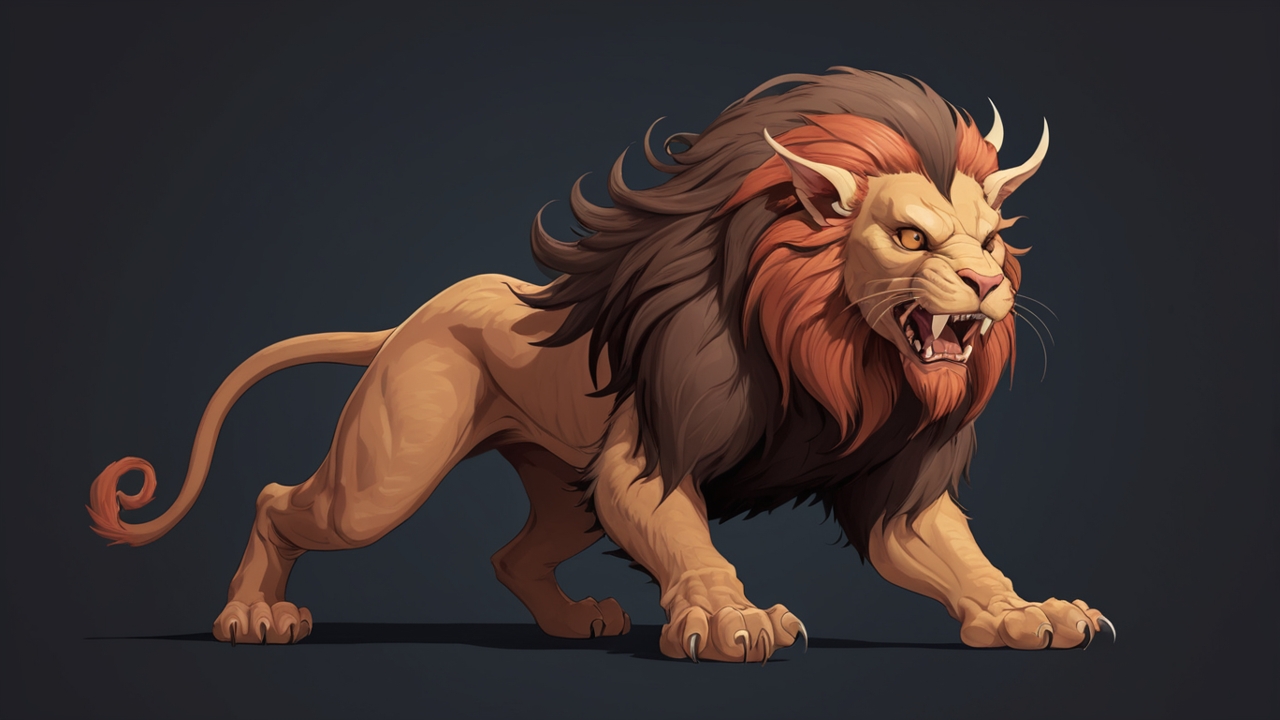
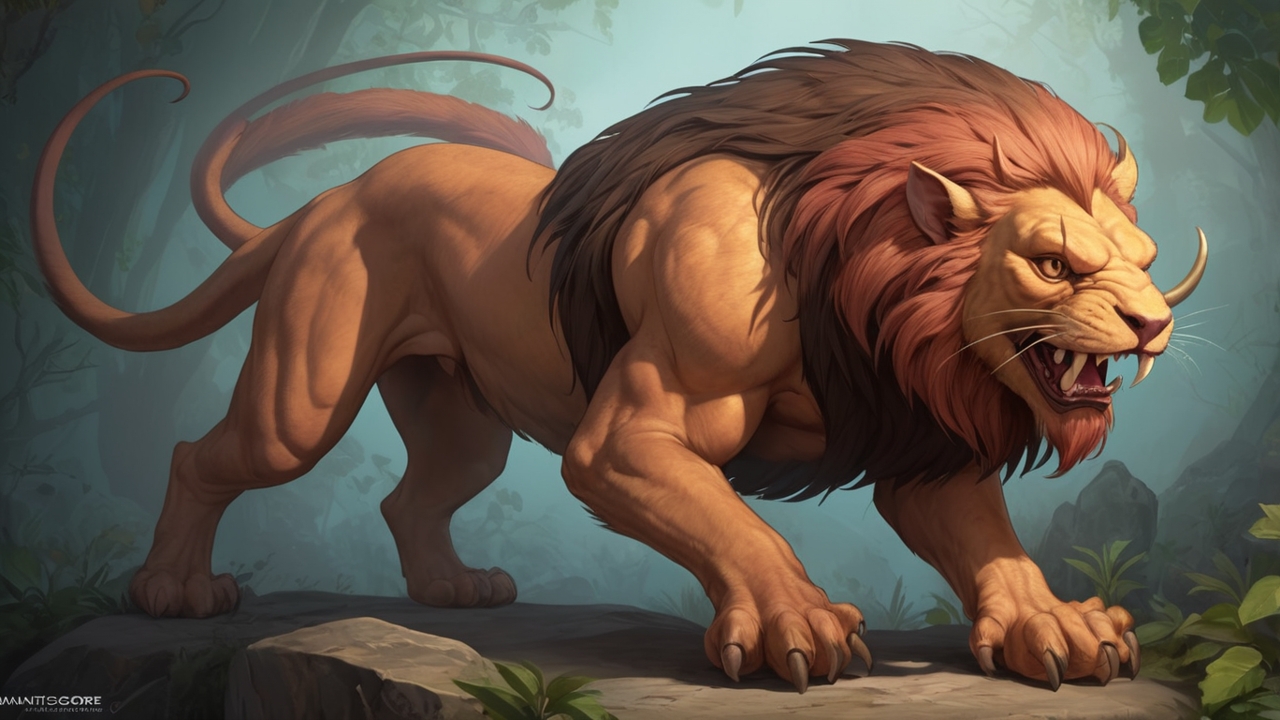
In Ctesias’s description, the manticore was said to be the size of a lion with reddish fur like a lion’s mane. However, unlike any real animal, it had a human face with blue or grey eyes, and three rows of teeth in both its upper and lower jaws—similar to a shark! Its most distinctive and terrifying feature was its tail, which was covered in venomous spines or quills like a porcupine. According to the legend, the manticore could shoot these spines at its prey or enemies, and once struck, the victim would die almost instantly from the poison.
The description also emphasised the manticore’s incredible speed and agility—faster than any bird in flight, according to some accounts. It was said to have a voice that sounded like a mixture of a trumpet and a pipe, creating an eerie, unsettling sound that warned travellers of danger. Most frightening of all, the manticore was supposed to be insatiably hungry for human flesh, devouring its victims completely—bones, clothes, and all—leaving no trace behind.
What’s particularly interesting about the manticore’s Persian origins is how this reveals the ancient world’s fascination with exotic lands. Persia sat at a crossroads between East and West, and stories from India, Central Asia, and beyond would pass through Persian culture before reaching the Mediterranean world. The manticore legend reveals how ancient people processed information about unfamiliar animals from distant regions, often blending reality with imagination to create legendary beasts that reflected their anxieties about the unknown.
Understanding the Persian roots of the manticore also helps us appreciate how myths travelled and evolved across cultures. What began as Persian stories about a dangerous man-eater in the Indian jungles would eventually become part of Greek, Roman, and European mythology, with each culture adding its own details and interpretations to the legend.
Fact #2: The Manticore’s Appearance Combined the Most Dangerous Features of Multiple Animals
One of the most fascinating aspects of the manticore is how it combines elements from different creatures into one supremely dangerous predator. Ancient people who created and shared this legend carefully selected the most frightening and impressive features from various animals, plus human characteristics, to craft a beast that represented the ultimate threat. Understanding why each element was chosen tells us a great deal about what ancient people feared and respected in the natural world.
The body of a lion was the foundation of the manticore’s terrifying form. In the ancient world, lions were considered the most powerful and fearsome predators. They were symbols of strength, courage, and royalty, but also of danger and the wild, untamed nature of the animal kingdom. By giving the manticore a lion’s body, the legend-makers ensured it would be recognised as an apex predator—a creature at the top of the food chain with no natural enemies. The reddish colour described in many accounts might have been influenced by reports of tigers, whose orange coats could have seemed red to observers unfamiliar with the animal.
The human face is perhaps the most disturbing feature of the manticore. Adding human characteristics to an animal creates what we call an “uncanny” effect—something that’s almost human but not quite, which tends to unsettle us deeply. The human face suggested intelligence and cunning, making the manticore much more dangerous than a mere beast. A lion hunts by instinct, but a creature with human-like intelligence could plan, deceive, and outsmart its prey. Some descriptions gave the manticore grey or blue eyes, which might have seemed particularly alien and disturbing to ancient Mediterranean people who typically had brown eyes.
The three rows of teeth are a particularly horrifying detail that appears consistently across different versions of the legend. This feature might have been inspired by sharks, which do have multiple rows of teeth, though how ancient Persian storytellers knew about sharks’ teeth remains a mystery. The multiple rows of sharp teeth emphasised the manticore’s ability to devour its victims completely, leaving nothing behind—a detail that made the creature even more terrifying because there would be no remains to bury or mourn.
The scorpion-like tail covered in venomous spines is perhaps the manticore’s most distinctive feature. This gave the creature a ranged weapon, allowing it to kill from a distance by shooting its poisonous quills like arrows. This detail might have been inspired by porcupines, which were known to ancient peoples, though porcupines don’t actually shoot their quills. The legend likely exaggerated this defensive behaviour into an active attack capability. The venom in the spines made them instantly lethal, ensuring that even if prey escaped the manticore’s claws and teeth, the poisoned spines would still claim them.
Some later versions of the legend added wings to the manticore, making it even more formidable by giving it the ability to fly. This addition likely occurred as the legend was passed through different cultures, with storytellers incorporating features from other mythical beasts, such as gryphons or dragons. Whilst not part of the original Persian description, winged manticores appear in some medieval European accounts.
The manticore’s voice was described as a bizarre combination of sounds—like a trumpet and pipes playing together, or, in some versions, a blend of human speech and animal roars. This unsettling voice served as an audio warning of the creature’s presence and added to its otherworldly, unnatural character.
This careful combination of features reveals how mythmakers thought about danger and predation. They took the most fearsome aspects they knew—the lion’s strength, human intelligence, overwhelming teeth, projectile weapons, and deadly venom—and combined them into a single nightmare creature. The manticore represents a kind of “perfect predator” that embodies multiple forms of danger at once, making it nearly impossible to defend against or escape from.
Fact #3: Ancient Writers Genuinely Believed the Manticore Might Be Real
One of the most surprising facts about the manticore is that many educated people in the ancient world actually believed this creature might exist. This wasn’t just a fairy tale told to children—respected scholars, physicians, and natural historians included the manticore in their serious works about animals and distant lands. Understanding why intelligent people believed in such an impossible creature helps us appreciate how different the ancient world was from our modern understanding.
Ctesias, the Greek physician who first brought the manticore to Greek attention, presented it as a real animal living in India. He didn’t describe it as a legend or myth but as an actual creature that existed in a distant land, just as elephants, rhinoceroses, and other exotic animals did. For ancient Greeks, India represented the edge of the known world—a place of wonders where anything seemed possible. If elephants with trunks and rhinoceroses with horns could exist, why not a lion with a human face and a spiked tail?
Aristotle, one of the greatest philosophers and natural historians of ancient Greece, was more sceptical. In his works on animals, he questioned Ctesias’s reliability and expressed doubt about many of the fantastic creatures described in accounts of India. However, he didn’t categorically dismiss the manticore as impossible, which shows that even the most rational thinkers of the ancient world couldn’t completely rule out such creatures when reports came from distant, unexplored regions.
The Roman author Pliny the Elder, writing in the 1st century CE, included the manticore in his massive encyclopaedia called “Natural History.” Pliny’s work attempted to catalogue all knowledge about the natural world, and he included the manticore alongside real animals, describing it based on Ctesias’s account but adding that some people called it “martichoras.” Pliny’s “Natural History” was enormously influential and was considered an authoritative source on animals for over a thousand years, which meant that belief in the manticore persisted throughout the Roman Empire and into the Middle Ages.
Why did educated people believe such accounts? Several factors contributed to this. First, ancient people had no way to verify or disprove reports from distant lands. There were no photographs, videos, or quick communication methods. If a traveller or physician who had lived in Persia for years claimed to have heard reliable accounts of a man-eating beast in India, there was no easy way to check whether this was true. People had to rely on the credibility of the source rather than empirical evidence.
Second, ancient natural history was filled with genuine animals that seemed almost as fantastic as the manticore. Giraffes, hippopotamuses, crocodiles, and elephants must have seemed incredibly strange to people who had never seen them. If such bizarre-looking creatures existed, why couldn’t there be others even more unusual? The line between the truly exotic and the genuinely impossible was much blurrier than it is today.
Third, ancient people understood animal classification differently from how we do. They didn’t have our modern understanding of evolutionary biology and genetic relationships between species. The idea of “hybrid” creatures that combined features from different animals seemed more plausible. If mules could be born from horses and donkeys, perhaps other combinations were possible as well.
During the Middle Ages, bestiaries—illustrated books describing various animals, both real and legendary—continued to include the manticore. These Christian works often gave moral or religious interpretations to animals, and the man-eating manticore was sometimes used as a symbol of evil, sin, or the devil. Mediaeval scholars generally accepted that the manticore existed somewhere in the distant East, though few claimed to have seen one personally.
It wasn’t until the age of scientific exploration and classification in the 17th and 18th centuries that the manticore was finally relegated to the realm of pure mythology. As Europeans explored and mapped the entire world, it became clear that no such creature existed. The manticore joined dragons, unicorns, and phoenixes as recognised myths rather than genuine zoological mysteries.
This fact teaches us an important lesson about the history of knowledge. What seems obviously impossible to us with our modern understanding wasn’t at all clear to ancient people working with limited information about the world. Their belief in the manticore wasn’t stupidity—it was a rational response to the information available to them and to the genuine mysteries that existed before the entire world had been explored and documented.
Fact #4: The Manticore Appears in Many Modern Fantasy Books, Games, and Films
Whilst the ancient belief in the manticore as a real creature has long since faded, this legendary beast has found new life in modern fantasy literature, role-playing games, films, and television programmes. Understanding how the manticore has been reimagined in contemporary culture shows us how ancient myths continue to inspire creativity and storytelling today.
The manticore appears in numerous fantasy novels, often as a dangerous creature that heroes must face. Authors have taken the basic concept from ancient legends and adapted it to fit their fictional worlds, sometimes staying close to the original description and other times adding new abilities or characteristics. In some stories, manticores are portrayed as completely evil man-eaters, whilst in others, they’re depicted as intelligent beings capable of speech and even negotiation.
One of the most famous modern appearances of the manticore is in the role-playing game Dungeons & Dragons, which has introduced countless young people to this ancient legendary creature. In D&D, the manticore is depicted much as ancient sources described it—with a lion’s body, human-like face, and a tail that can shoot spikes at enemies. Game players might encounter manticores as dangerous foes in wilderness adventures, and the creature has become a staple of fantasy gaming culture. Through games like this, the manticore legend has reached a far wider audience than it ever did in ancient times.
The “Harry Potter” series by J.K. Rowling features manticores in its wizarding world. Whilst they don’t play major roles in the main books, they’re mentioned as dangerous magical creatures, and one appears in the film “Fantastic Beasts: The Crimes of Grindelwald.” Rowling’s version stays fairly true to the traditional description, portraying the manticore as a highly dangerous beast that wizards must be trained to handle carefully.
The manticore has appeared in numerous films and television programmes as well. The fantasy series “Merlin” featured a manticore as a formidable opponent. The creature has appeared in various adventure and fantasy films, though often with design elements that differ from ancient descriptions. Some modern interpretations give manticores wings, whilst others change the tail design or make the face more or less human-like depending on the creators’ vision.
Video games have embraced the manticore enthusiastically. The creature appears in games like “The Witcher” series, “God of War,” “Final Fantasy,” and many others. Each game tends to put its own spin on the creature’s appearance and abilities, but all draw inspiration from the ancient legends. These digital representations have introduced the manticore to millions of players worldwide who might never have encountered the legend otherwise.
The manticore has also found a place in modern card games, board games, and collectable figure games. Trading card games like “Magic: The Gathering” have featured manticore cards, and the creature appears in many fantasy-themed board games as a powerful adversary or summonable ally.
What’s particularly interesting is how modern reinterpretations sometimes diverge from ancient descriptions. Some modern manticores are depicted as possessing dragon-like qualities, such as breathing fire or exhibiting more reptilian features. Others emphasise different aspects—perhaps focusing on the creature’s intelligence and giving it the ability to speak or even form alliances with humans. These adaptations show how myths remain flexible and continue to evolve even thousands of years after their origin.
The enduring popularity of the manticore in modern fantasy culture demonstrates the lasting power of ancient mythology. Despite being created by Persian storytellers over two thousand years ago, this impossible creature continues to fascinate us and inspire new stories. The manticore has made the remarkable journey from ancient legend to classical literature, through medieval bestiaries, to contemporary fantasy—a testament to its enduring appeal.
For young people interested in fantasy literature, games, or films, learning about the ancient origins of creatures like the manticore adds depth and context to the stories they enjoy. It’s fascinating to realise that the monster you’re fighting in a video game or reading about in a novel has a history stretching back to ancient Persia and the earliest days of Western literature.
Fact #5: The Manticore Legend Might Have Been Based on Misunderstood Real Animals
One of the most intriguing questions about the manticore is whether this legendary creature might have originated from confused or exaggerated reports of real animals. Scholars who study mythology and ancient history have proposed several theories about what actual creatures might have inspired the manticore legend, and exploring these possibilities helps us understand how myths can develop from kernels of truth.
The most popular theory is that the manticore legend began with reports of tigers that were misunderstood or exaggerated as they passed from person to person. Tigers were native to India and were unknown to ancient Persians and Greeks, who hadn’t travelled there. When travellers returned with descriptions of these large, powerful, reddish-orange cats with black stripes, their accounts might have become distorted—either through genuine misunderstanding, language barriers, or deliberate exaggeration to make stories more exciting.
Tigers are indeed fierce predators that occasionally attack humans, especially in areas where human settlements encroach on tiger territory. Ancient travellers hearing about “man-eating” tigers might have taken this literally and embellished the accounts. The tiger’s reddish-orange coat could have become the manticore’s red lion-like body. The black stripes might have been forgotten or transformed into other features as the story travelled from India to Persia to Greece.
The human face of the manticore is harder to explain through tiger misidentification. Still, some scholars suggest that this might have originated from primitive artistic representations of tigers that stylised their faces in ways that resembled human features, or from masks and ceremonial costumes used in Indian cultures that blended human and tiger elements. Alternatively, the human face might have been added to emphasise the creature’s supposed intelligence and cunning—qualities that man-eating tigers would certainly need.
The tail covered in spikes that could be shot like arrows might have originated from confusion with porcupines. Indian crested porcupines are large rodents with long quills that they can rattle and raise when threatened. Whilst porcupines don’t actually shoot their quills, they can become detached and embedded in the attackers who get too close. The quills are barbed, making them difficult and painful to remove. Someone unfamiliar with porcupines might hear descriptions of these defensive quills and imagine them as projectile weapons, especially if language barriers or cultural differences affected the transmission of the story.
Another possibility is that the manticore legend combined features from multiple animals that travellers encountered or heard about in India and surrounding regions. The body might derive from tigers or lions, the spiked tail from porcupines, and the rows of teeth from crocodiles or sharks (though it is puzzling how inland Persians would know about sharks’ teeth). Ancient people often struggled to describe unfamiliar animals accurately, and combining features from several creatures into one description might have seemed like the best way to convey the various dangers present in a foreign land.
Some scholars have even suggested that the manticore legend might have been influenced by confused reports of apes or primates, which would have seemed disturbingly human-like to people unfamiliar with them. However, this theory is less popular because it doesn’t explain the lion-like body or the spiked tail.
It’s also possible that the manticore wasn’t based on any single real animal but rather represents a symbolic embodiment of the dangers travellers faced in foreign lands. From a Persian or Greek perspective, ancient India was a place of many threats—tigers, venomous snakes, treacherous terrain, diseases, and hostile peoples. The manticore might have been a way of personifying all these dangers into a single, terrifying creature that represented everything that could kill an unwary traveller.
Understanding these possible real-world origins doesn’t diminish the manticore as a legend—rather, it makes it more interesting by showing us how ancient people processed information about the world. It reminds us that myths often have roots in reality, even if they grow far beyond those roots. The transformation from real tigers or porcupines into the legendary manticore illustrates the power of human imagination and the ways in which stories evolve as they are passed through different cultures and languages.
This fact also teaches us to be thoughtful about how we interpret stories and descriptions from cultures different from our own. What seems like fantasy or exaggeration might have originated as a genuine attempt to describe something unfamiliar, with misunderstandings and cultural differences contributing to the fantastical elements along the way.
Conclusion
The manticore stands as one of mythology’s most fascinating and enduring legendary creatures. From its origins in ancient Persian stories about the dangerous lands of India, through its adoption by Greek and Roman writers who believed it might be real, to its appearance in medieval bestiaries and modern fantasy entertainment, this impossible beast has captivated human imagination for over two thousand years.
What makes the manticore particularly interesting is how it combines multiple forms of danger into a single creature—the strength of a lion, the intelligence suggested by a human face, the deadly efficiency of multiple rows of teeth, and the ranged killing power of venomous projectile spines. This carefully constructed combination reveals what ancient people most feared about predators and the unknown wilderness beyond civilisation’s borders. The manticore represented the ultimate threat, a creature against which there was no defence.
The fact that educated scholars once genuinely believed in the manticore’s existence reminds us how different the ancient world was from our modern understanding. Without the ability to quickly verify information or explore every corner of the globe, ancient people had to evaluate reports based on the credibility of their sources rather than empirical evidence. The manticore seemed plausible in an era when the world still held many genuine mysteries and when exotic real animals seemed almost as impossible as legendary ones.
Today, whilst we know the manticore never existed outside of human imagination, it continues to thrive in fantasy literature, games, and films. Modern reimaginings of this ancient legend introduce new generations to a creature conceived by Persian storytellers millennia ago, demonstrating the timeless appeal of mythical beasts and the enduring power of storytelling. The manticore’s journey from ancient Persia to your favourite fantasy game or book shows how myths remain living, evolving parts of human culture rather than dead relics of the past.
Whether the manticore originated from misunderstood reports of tigers and porcupines or was purely a creation of imagination, it represents humanity’s attempt to understand and express the dangers of an incompletely known world. Learning about the manticore isn’t just about discovering a fascinating monster—it’s about understanding how ancient people thought, how myths develop and spread between cultures, and how the stories we tell reflect our deepest fears and most vivid imaginations. The magnificent manticore, impossible though it may be, continues to teach us about ourselves and our endless fascination with the fantastic.
We hope you enjoyed learning more things about manticore as much as we loved teaching you about them. Now that you know how majestic these mythical creatures are, you can move on to learn about other ones like: Elves, Unicorns, Mermaids, and Pegasus.
Why not subscribe to our LearningMole Library for as little as £1.99 per month to access over 3400 fun educational videos.
Maths Circus, an innovative platform we've crafted, presents a captivating realm where children learn mathematics through the exciting theme of a circus. The joy of juggling numbers and solving circus...
Singers use their voices as musical instruments to perform songs in theatres, recording studios, choirs and at events. Most of their working day, though, is spent practising, learning music and...
Article summary What this article covers: How primary teachers can use online assessment tools such as live quizzes, polling, digital exit tickets and digital portfolios to check understanding, give faster...
Article summary What this article covers: The role of AI in education for primary-aged children in the UK, including what artificial intelligence is, how schools in England use it, the...








Leave a Reply