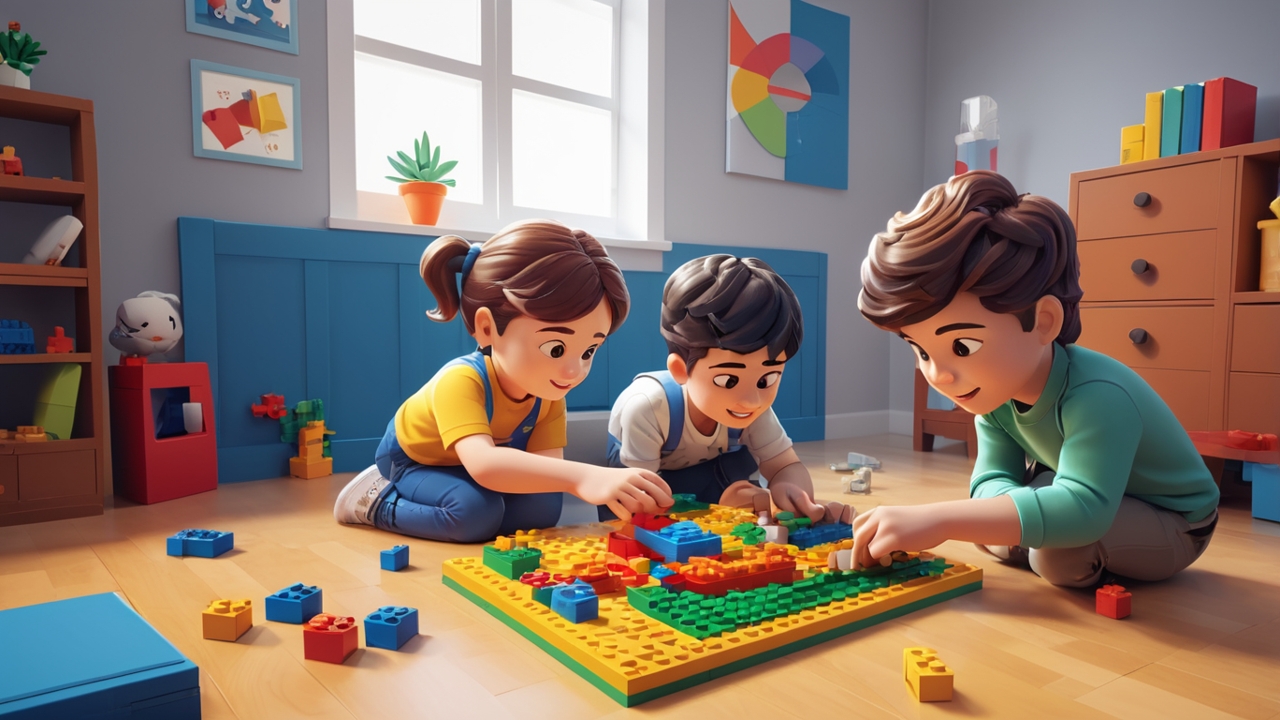
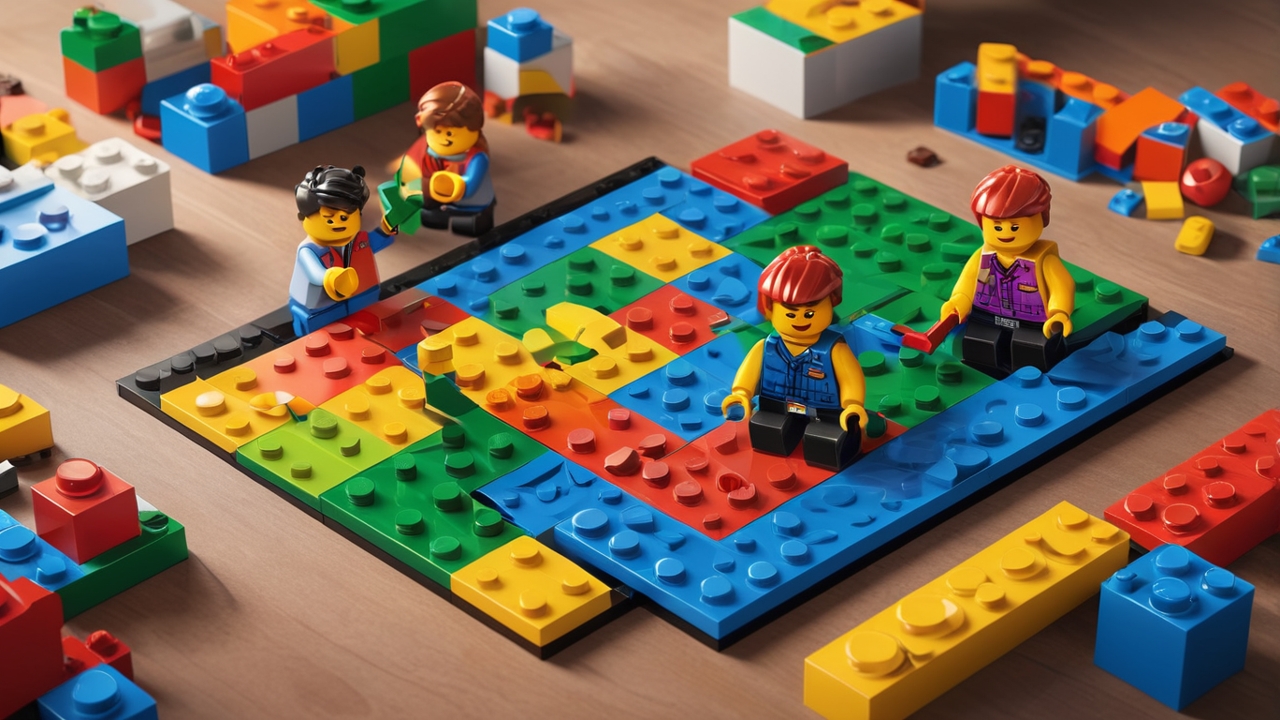
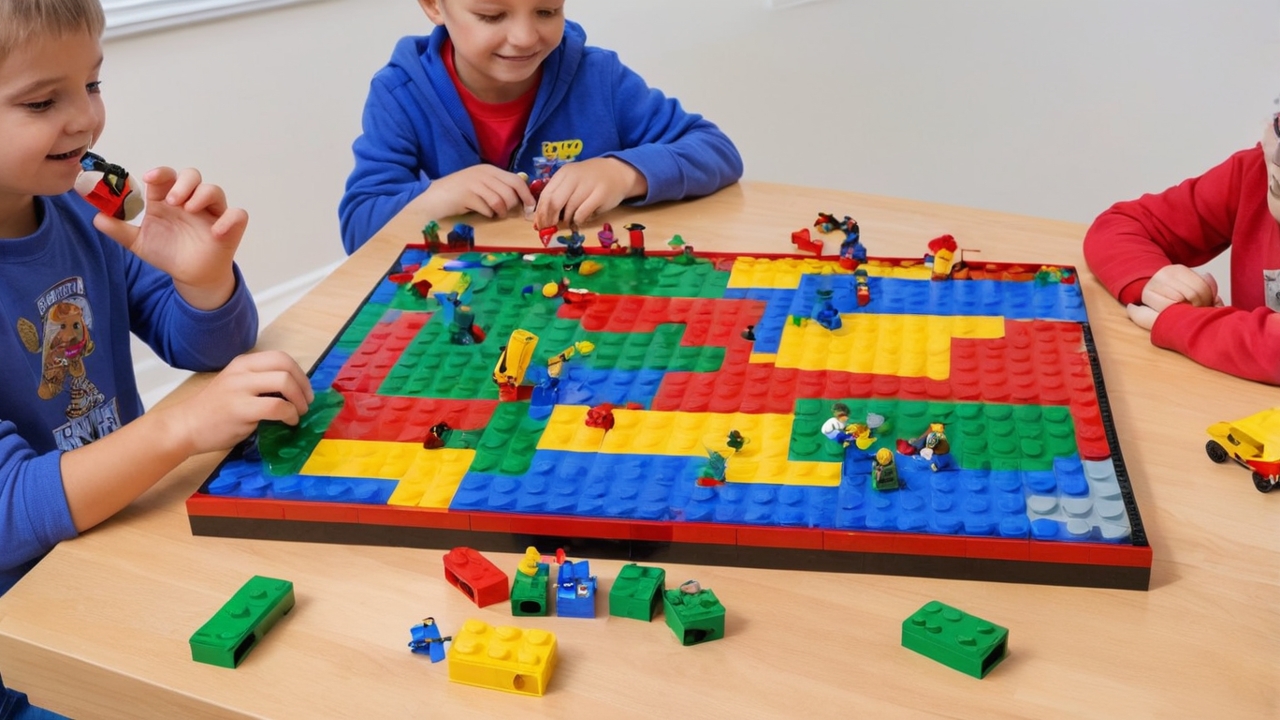
Lego Math Games for Kids: Pick up a handful of Lego bricks, and you already have the best subtraction manipulative in any primary classroom. Children who have spent years building with bricks understand intuitively that a tower of ten can be taken apart, that pieces can be removed, and that what remains can be counted.
That physical understanding is exactly the foundation that formal subtraction needs, and it is one that worksheets alone rarely provide. The UK National Curriculum expects children to work with concrete materials before moving to pictorial, and then abstract methods, and Lego bricks fit that requirement perfectly across EYFS, KS1, and KS2.
The four activities in this guide are built around the Concrete-Pictorial-Abstract (CPA) approach, which is central to maths mastery teaching in England. Each activity starts with children physically handling bricks, counting, removing, and rearranging, before any written number sentence appears. The first two activities (the Subtraction Tower Race and Lego Bowling) cover basic take-away subtraction, suited to Reception through Year 2.
The third and fourth activities move into territory that most competing resources skip entirely: using bricks to teach regrouping (borrowing) and bar modelling. These are the concepts that trip up Year 3 and 4 children, and the ones where a physical model makes the biggest difference. The activities are mapped to the National Curriculum throughout, so teachers can connect them directly to planning.
LearningMole, a UK educational platform founded by former primary school teacher Michelle Connolly, has produced more than 800 curriculum-aligned videos for primary schools. The approach here reflects the same principle that runs through all of LearningMole’s resources: that children learn mathematical concepts most securely when they can see and feel what the numbers actually mean, before anyone asks them to write a single digit on paper.
Whether you are a Year 2 teacher planning a maths lesson, a Year 3 lead looking for a hands-on way to tackle column subtraction, or a parent supporting home learning at the kitchen table, these four activities give you a practical, curriculum-grounded starting point.
1. The Subtraction Tower Race (EYFS and KS1)
Children learn subtraction fastest when the numbers are visible in front of them. The Subtraction Tower Race makes every step of a take-away calculation concrete, giving even the youngest learners a physical model that matches the number sentence.
Materials and Setup
Two baseplates per pair (one per child)
A collection of single-stud bricks in two colours (one colour per player)
A die or number cards (use 1–6 for EYFS, 1–10 for Year 1, 1–20 for Year 2)
A subtraction mat (draw a simple tens and units grid on paper if needed)
How to Play
Each child builds a starting tower of 10 bricks. On each turn, one child rolls the die, and both children remove that many bricks from their towers. The first child to reach zero wins. For Year 2, start towers at 20 bricks and use a 1–10 number card set.
The deceptively simple act of physically removing bricks gives children a concrete experience of subtraction before they encounter the abstract symbol. When a child takes 4 bricks off a tower of 10, they see 6 remaining without needing to count on fingers. This physical reference point is the foundation that makes the written number sentence 10 − 4 = 6 meaningful rather than arbitrary.
SEND Adaptation For children with dyscalculia or motor difficulties, use Duplo bricks rather than standard Lego, the larger size makes removal easier and reduces frustration. The “clicking” sound and physical resistance as a brick is removed provides multi-sensory feedback that reinforces the concept of taking something away. Allow children to vocalise each removal: “I had 10, I took 4, now I have…” before counting the remainder.
2. Lego Bowling: Visualising the Take-Away Method
Lego Bowling uses the familiar setup of a bowling game to practise number bonds and introduce the take-away method in a way that has strong visual and pictorial appeal. It works particularly well for building number bonds to 10 and 20.
Setup
Build 10 small Lego stacks (2–3 bricks tall) and stand them in a triangle formation on a baseplate
Use a small ball or rolled-up sock as the “bowling ball”
Keep score on a whiteboard or simple tally chart
How It Supports Number Bonds to 10 and 20
After each roll, children count how many stacks were knocked down, then work out how many remain standing: “10 take away 3 is 7.” The visual of the remaining stacks makes the subtraction tangible. For number bonds to 20, use two rows of 10 stacks.
For a pictorial bridge to the abstract, ask children to draw what they see before and after each roll — 10 stacks, then 3 crossed out, then 7 standing. This drawing step is the pictorial stage of CPA, and it moves children one step closer to writing 10 − 3 = 7 without needing the physical bricks in front of them. LearningMole’s primary maths resources include video explanations that reinforce this concrete-to-pictorial bridge for home learning.
Classroom Management Tip For classes of 30, set up six bowling lanes (one per table group of five). Rotate roles: one bowler, one counter, one recorder, and two checkers. The checker role — verifying the subtraction before recording — adds peer assessment naturally and keeps all five children actively engaged even when only one is bowling.
3. The Brick Borrowing Challenge: Subtraction with Regrouping
Regrouping, what many children still call borrowing, is where take-away subtraction gets genuinely difficult. Abstract written methods ask children to cross out a digit and add a small 1 somewhere nearby, with no explanation of what actually happened. A Lego Tower of Ten makes the process visible and logical.
Consider the calculation 32 − 14. In the units column, children need to take 4 from 2, which they cannot do without regrouping. Written methods handle this invisibly. With Lego bricks, it becomes a physical event.
Using Towers of Ten to Teach Column Subtraction
Give each child a baseplate and a supply of single bricks and pre-built towers of 10. Ask them to build the number 32: three towers of 10 in the tens column, two single bricks in the units column.
Now pose the subtraction: “We need to take away 4 units, but we only have 2. What can we do?” Let children think before guiding them to “borrow” a tower of 10 from the tens column and move it to the units side. They then physically unclick the tower into 10 individual bricks. Now the units column holds 12 bricks. Take away 4. Count what remains: 8. Then remove 1 tower (representing 10) from the tens column: two towers remain. The answer is 28.
“When children un-click that tower of ten,” says Michelle Connolly, Founder of LearningMole and former primary school teacher with over 15 years of classroom experience, “you can see the understanding arrive. Regrouping is no longer a rule; it’s something that makes physical sense. That’s the difference between a child who can do column subtraction and a child who truly understands it.”
Step-by-Step: The Regrouping Flow
Build the starting number using towers (tens) and single bricks (units)
When units needed > units available, physically move one tens tower to the units column
Un-click the tower into 10 individual bricks — children count aloud: “Now I have 12 units”
Remove the required number of unit bricks and count what remains
Record the written calculation alongside the brick model — the written method maps exactly to what was done physically
Colour-Coded Brick System for Classroom Sets
Organising classroom brick sets by colour prevents confusion when multiple children are working at once. The table below shows a recommended colour-coding system that keeps place value clear throughout the activity.
Lego Brick Colour
Place Value
How to Use in Class
Red 1×1 bricks
Units (1s)
One brick = one unit; count individually to build or subtract
Blue 1×10 bricks (tower)
Tens (10s)
One tower = ten units; un-click to show regrouping (borrowing)
Yellow 1×1 flat plates
Tenths (0.1s)
Optional extension for Year 5/6 decimal work
Green base plate
Working surface
Children build all columns on their base plate to avoid mixing
SEND Adaptation Children with dyscalculia benefit particularly from the tactile feedback of un-clicking a tower: the physical resistance and audible click reinforce the idea that something real has happened. Provide a visual place value mat alongside the bricks, children place their towers on the mat and can refer to column labels as they work. For children with motor difficulties, pre-build the towers of 10 and store them in small trays so the physical breakdown step remains manageable.
4. The Lego Bar Model: Solving Word Problems
Bar modelling is used widely in UK primary schools as part of maths mastery, and Lego bricks are a natural physical version of the bar model. Where a drawn bar model shows quantities as rectangles, a Lego bar model makes the part-part-whole relationship three-dimensional and adjustable.
Understanding Part-Part-Whole Relationships
Present a word problem: “Sam had 15 stickers. He gave 6 to his friend. How many does he have left?” Ask children to build a bar of 15 bricks in one colour. Now ask: “Can we show the 6 he gave away?” Children swap 6 bricks for a contrasting colour, creating a physical bar model with two distinct parts.
The subtraction is now visible: the whole (15 bricks) is in front of them, one part is clearly marked (6 bricks in the second colour), and the unknown part (the answer) is the remaining section. Children can count the remaining bricks before writing 15 − 6 = 9.
This activity connects directly to bar modelling as practised across UK schools, giving children a physical reference for a representation they will use throughout their maths education. For extension work, pose problems where the whole is unknown: “Sam gave away 6 stickers and has 9 left: how many did he start with?” to introduce inverse operations.
The Missing Part Mystery (2-Player Extension) Player 1 builds a bar of any number between 10 and 20 bricks, then hides some under a cup. Player 2 is told the total and counts the visible bricks, then subtracts to find the hidden “part.” This game builds fluency with part-part-whole relationships and naturally introduces the idea that subtraction and addition are inverses, key understanding for Year 3 and 4.
Mapping Lego Maths to the UK National Curriculum
All four activities are grounded in the National Curriculum requirements for number and calculation across KS1 and KS2. The table below shows how each year group connects to the activities above.
Year Group
Key Stage
NC Subtraction Objective
Recommended Lego Activity
Reception / Year 1
EYFS / KS1
Subtract within 10 using concrete objects and pictorial representations
Subtraction Tower Race with Duplo; number bonds to 10
Year 2
KS1
Subtract two-digit numbers using concrete materials; understand place value
Lego Bowling for take-away; introduce two-digit towers
Year 3
KS2
Subtract three-digit numbers using formal written methods; understand regrouping
Brick Borrowing Challenge: Column Subtraction with Regrouping Towers
Year 4
KS2
Use formal written methods for larger numbers; apply to word problems
Lego Bar Model for part-part-whole; multi-step word problems
Year 5 / 6
KS2
Multi-step problems; check using inverse operations
Bar model extension with decimals; inverse-check using addition towers
For the full statutory requirements, see the DfE National Curriculum for Mathematics. The maths mastery framework underpinning the CPA approach is detailed in guidance published by the Education Endowment Foundation.
Teaching Resources and Support
LearningMole’s maths resources are designed to support exactly the kind of concrete-then-abstract teaching that these Lego activities practise. Video resources explain place value, subtraction, and regrouping for different year groups in language that children find clear and engaging, giving teachers a ready-made visual reference to show before or after the hands-on activity.
For teachers planning KS1 and KS2 maths lessons, LearningMole offers curriculum-aligned teaching materials covering number operations, place value, and problem-solving across all primary year groups. These resources work well as a complement to manipulative-based activities: children handle the bricks in the lesson, then revisit the concept through a short video for consolidation. Explore LearningMole’s primary maths resources to find video explanations and teaching materials aligned with the National Curriculum.
Parents supporting home learning can use the same approach: start with a short practical activity using household bricks or Duplo, then watch a LearningMole video together to reinforce the concept. The visual explanations in LearningMole’s maths videos use the same CPA language that children hear in school, which helps home learning feel consistent with classroom teaching rather than separate from it.
Frequently Asked Questions
How do you teach subtraction with regrouping using Lego?
Build the starting number using towers of 10 (blue bricks) for the tens column and single bricks (red) for the units column on a baseplate. When the units digit to be subtracted is larger than the units available, physically move one tower of 10 from the tens column to the units column and un-click it into 10 individual bricks. Children count the new total of units, remove the required number, and count what remains. The written column method maps directly to each physical step: move the tower = borrow; un-click = the small 1 added; count and remove = the written subtraction. This approach works well from Year 2 upwards and is particularly effective for children who have found written regrouping confusing.
What is the best age for Lego maths games?
Standard Lego bricks are suitable from around age 5, with supervision for children at the younger end of that range. For Reception and Year 1 (ages 4–6), Duplo bricks are preferable as they are easier to handle and less likely to cause frustration. Years 2–4 (ages 6–9) get the most from these activities, particularly the regrouping and bar model work. Year 5 and 6 children can extend the bar model activity to decimal subtraction and multi-step word problems.
Can I use Duplo instead of standard Lego?
Yes, and for EYFS and Year 1, it is actively recommended. Duplo’s larger size is easier for young children’s fine motor skills and makes the “un-clicking” step in regrouping more manageable. The place value colour-coding system works with Duplo just as it does with standard bricks. One practical consideration: Duplo and standard Lego studs are compatible at the connection point, so mixed sets can work, though uniform sets are easier to manage in a class setting.
How does Lego help children with dyscalculia?
Lego provides multi-sensory feedback that supports children who struggle with numerical abstraction. The physical act of removing a brick and feeling it leave the tower reinforces the concept of “taking away” in a way that a written symbol cannot. The clicking and un-clicking sounds add an auditory element. The colour-coding system gives a visual structure to place value without requiring children to hold abstract column positions in working memory. For children with dyscalculia, the concrete experience of regrouping, physically moving a tower and breaking it apart, often produces a breakthrough in understanding that months of written practice have not achieved.
Where can I find planning support and maths resources for these activities?
LearningMole offers curriculum-aligned maths resources for primary teachers covering number operations, place value, and problem-solving across KS1 and KS2. These include video explanations suitable for whole-class teaching and home learning. Visit LearningMole’s teaching resources to explore maths content aligned with the UK National Curriculum.
How do I manage a class of 30 children with Lego bricks?
The most effective classroom management approach is to work in “base-plate partners”, pairs sharing one baseplate, with clearly labelled colour-coded kit bags. Prepare kits in advance: one small bag per pair containing pre-sorted red 1×1 bricks (units), blue 1×2 bricks snapped into towers of 10 (tens), and a baseplate. Designate one role as “builder” and one as “recorder” per turn, rotating after each calculation. A class of 30 works well as six groups of five, with one pair sharing a baseplate and one child recording on a whiteboard. Keep a “brick hospital” tray in the centre of each table for dropped or stray bricks; this prevents the lesson from descending into brick retrieval.
Conclusion
Children who struggle with subtraction, particularly regrouping, almost always struggle because they have been asked to trust a written procedure they cannot see or feel. The activities in this guide put that physical understanding first. When a child has unlocked a tower of 10 with their own hands, “borrowing” stops being an arbitrary rule and becomes a description of something real.
The CPA progression matters here. Lego bricks are the concrete stage. The drawn bar model, the place value mat, and the tally chart after bowling are the pictorial stage. The written calculation comes last, and it comes easily when the preceding stages are secure. Teachers who allow sufficient time at the concrete stage consistently find that children move to written methods faster, not slower, and with far fewer errors.
LearningMole’s curriculum-aligned resources are designed to support exactly this kind of structured, progressive teaching across all primary year groups. Whether you are planning a single lesson or building a sequence of maths activities, explore LearningMole’s primary maths teaching materials for video resources and support that align with the UK National Curriculum and the maths mastery approach.
Maths Circus, an innovative platform we've crafted, presents a captivating realm where children learn mathematics through the exciting theme of a circus. The joy of juggling numbers and solving circus...
Article Summary What this article covers: How to calculate minutes and hours in primary maths, including reading analogue and digital clocks, converting between the 12-hour and 24-hour clock, working out...
Article Summary What this article covers: Facts about forces and motion for primary children, including Newton's three laws, friction, gravity, air and water resistance, measuring forces and simple machines, with...
Article Summary What this article covers: Fun monkeys facts for kids, explained for UK primary pupils, with links to the National Curriculum for science at Key Stage 1 and Key...






Leave a Reply