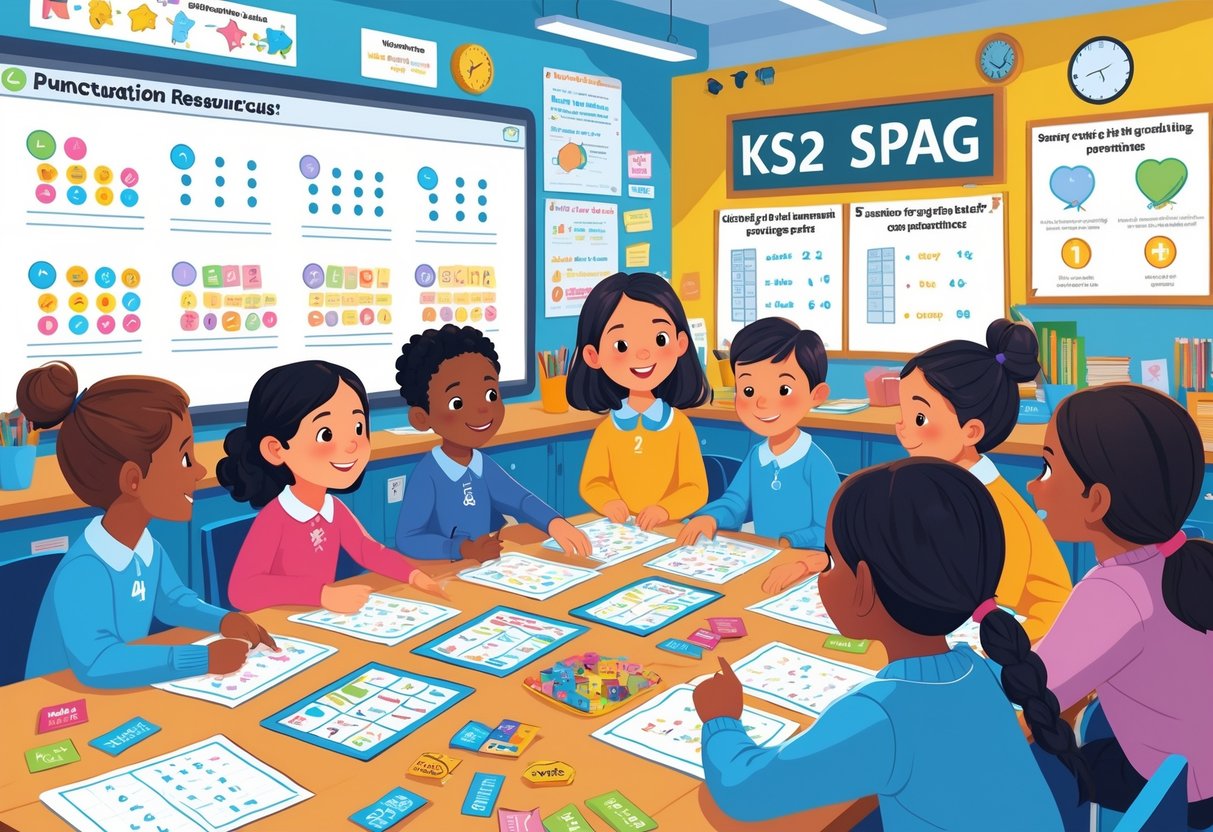
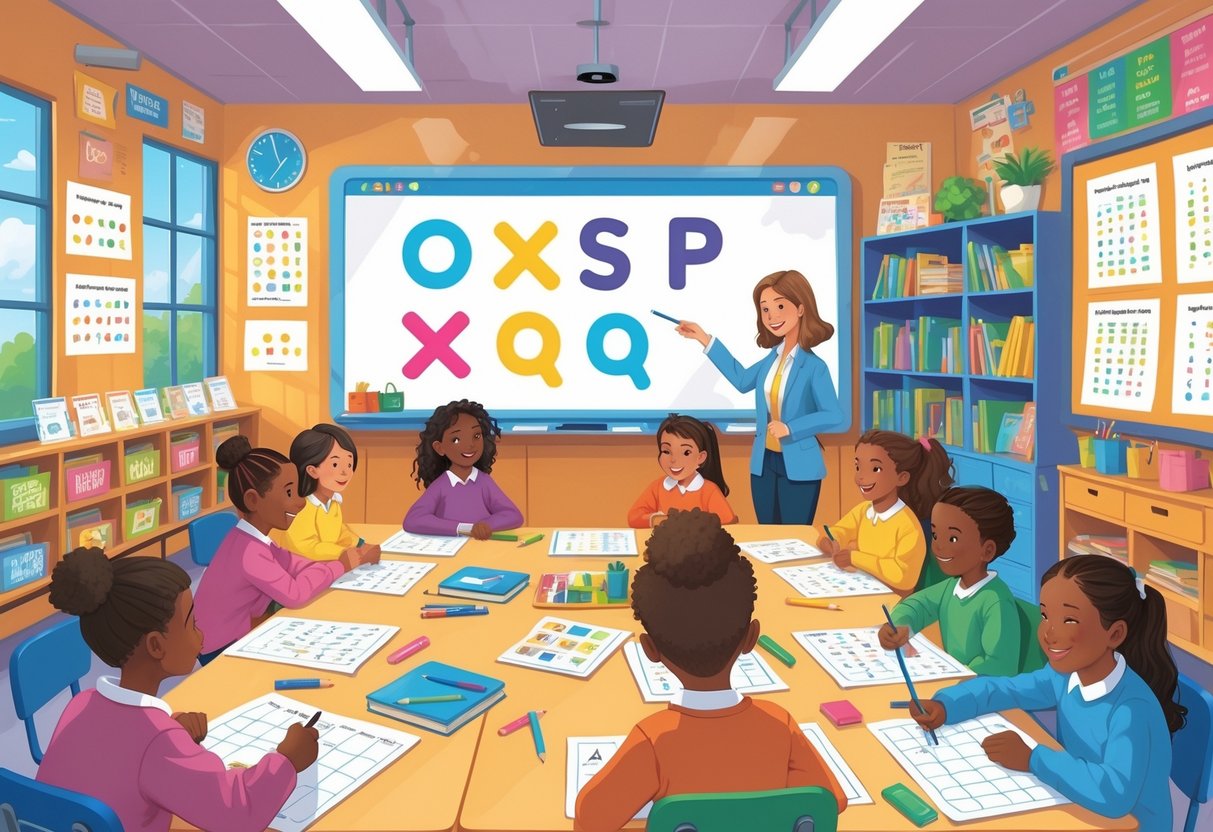
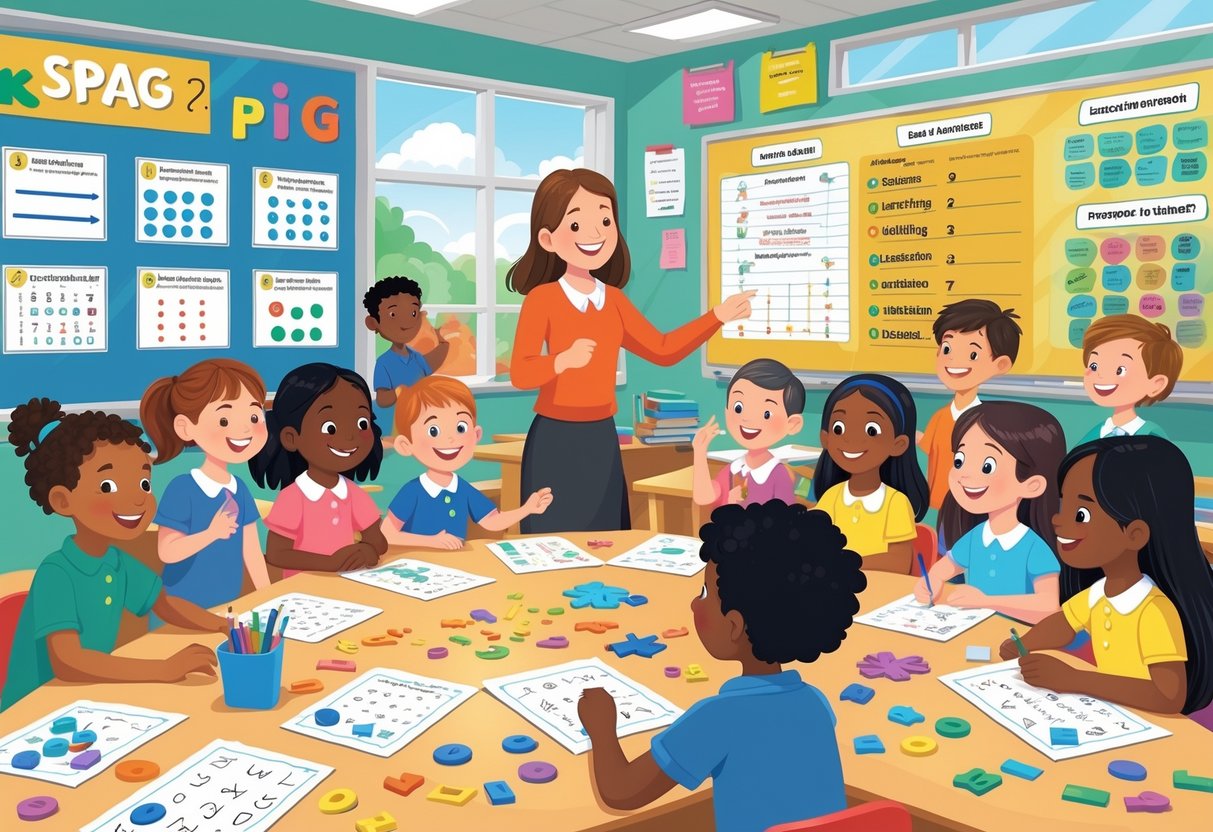
KS2 SPaG resources include lesson plans, worksheets, interactive activities and visual aids that help children aged 7 to 11 master spelling, punctuation and grammar skills required by the National Curriculum. The right materials can make teaching these topics much easier and a lot more engaging for your pupils.
Whether you need daily SPaG tasks or full planning for Years 3 to 6, quality resources support both classroom teaching and home learning.
Michelle Connolly, founder of LearningMole and a former primary teacher with over 15 years of classroom experience, says: “Good SPaG teaching connects grammar rules to real writing, helping children see why these skills matter in their everyday communication.” The best resources show this through practical examples and a mix of activities.
This guide looks at the main SPaG topics for Key Stage 2, the types of teaching materials out there, and how to use digital tools in the classroom. You’ll find ways to check progress, keep activities lively, and meet curriculum expectations while supporting every learner.
Key Takeaways
SPaG resources for KS2 cover core topics like punctuation, word classes, sentence structure and spelling rules through worksheets, games and planning materials.
The KS2 SPaG curriculum covers loads of topics. Children look at sentence types, verb tenses, word classes like nouns and adjectives, and punctuation marks such as commas, apostrophes and inverted commas.
They also study spelling patterns and rules to help them write more accurately.
Teachers use different SPaG activities and games to keep things interesting. Many schools follow structured programmes that introduce grammar concepts step by step, building on what children already know.
Importance for Key Stage 2 Learners
If your child masters SPaG, they’ll write more effectively in every subject. Clear punctuation makes their ideas easy to follow, and accurate spelling and grammar show confidence.
SPaG skills affect the quality of children’s writing in stories, reports and other texts. When pupils understand how sentences work, they can make their writing more interesting and varied.
Good grammar knowledge helps them edit their own work and spot mistakes on their own.
These skills also prepare children for secondary school. Strong spelling, punctuation and grammar abilities support reading comprehension, as children notice language patterns and understand how sentences fit together.
The curriculum lists specific objectives for each year. Year 3 children might learn about prefixes and conjunctions, while Year 6 pupils cover trickier things like subjunctive forms and semi-colons.
KS2 SPaG schemes match the DfE’s English Appendix 2, so teachers cover all the required content.
KS2 SPaG lessons work on building vocabulary through prefixes and suffixes, mastering punctuation from commas to semicolons, and understanding grammar structures like verb tenses and sentence types.
All these elements help children become confident writers who can express themselves clearly.
Vocabulary and Spelling Skills
Your KS2 pupils need to learn spelling patterns and word structures for writing more complex texts. The curriculum covers prefixes like ‘un-‘, ‘dis-‘, and ‘mis-‘, which change word meanings.
Suffixes such as ‘-tion’, ‘-ness’, and ‘-ly’ turn words into different word classes.
Root words form the base of vocabulary building. You’ll teach children to spot these base words and see how they change with different endings.
Homophones like ‘there’, ‘their’, and ‘they’re’ can be confusing and need lots of practice.
Word families help pupils connect related words. For example, ‘sign’, ‘signal’, and ‘signature’ all share a root. Many phonics activities support early spelling development, and this continues into KS2 with trickier patterns.
Common KS2 spelling focuses:
Silent letters (knight, gnome, wreck)
Double consonants (beginning, embarrass)
Unstressed vowels (different, interest)
Etymology and word origins
Punctuation Mastery
KS2 pupils move from using full stops and capital letters to more advanced punctuation. You’ll introduce inverted commas for direct speech, teaching how to punctuate dialogue correctly with commas and question marks inside the speech marks.
Apostrophes show possession or mark missing letters in contractions. Children learn the difference between ‘its’ and ‘it’s’, which often causes confusion.
Commas separate items in lists and clauses in longer sentences.
Colons introduce lists or explanations in formal writing. Semicolons join two related independent clauses without a conjunction.
Parentheses, dashes, and commas can all set off extra information in different ways.
Pupils practise these marks through SPaG-focused worksheets and regular writing. By Year 6, they should use punctuation confidently to make their writing clear and effective.
Grammar Essentials
Grammar skills grow throughout Years 3 to 6, starting with basic sentence structures and building up to complex sentences with more than one clause. You’ll teach the four sentence types: statements, questions, commands, and exclamations.
Word classes include nouns, verbs, adjectives, adverbs, pronouns, prepositions, conjunctions, and determiners. Pupils learn to spot these in texts and use them in their own writing.
Verb tenses can be tricky, especially the perfect forms like ‘I have walked’ or ‘She had eaten’.
Active and passive voice change how sentences present information. The active voice (‘The dog chased the cat’) turns into passive as ‘The cat was chased by the dog’.
Subjunctive mood appears in formal writing: ‘If I were you’ instead of ‘If I was you’.
Modal verbs like ‘could’, ‘should’, and ‘might’ show possibility and necessity. Relative clauses add detail with words like ‘which’, ‘who’, and ‘that’.
The KS2 SPaG scheme builds these concepts step by step across the key stage.
Types of KS2 SPaG Resources
Teachers pick from worksheets that reinforce grammar, games that make punctuation practice fun, and displays that keep key ideas visible all day.
Printable Worksheets
Worksheets give targeted practice for specific grammar and punctuation skills. KS2 SPaG resource packs include activities for contractions, homophones, verb tenses, and dictionary skills.
You’ll find worksheets for suffix and prefix work, punctuation, and spelling tests. Many teachers use colour-coded activities so children can spot the type of SPaG learning quickly.
The worksheets often come with answer sheets for easy marking.
Some packs include editable Word versions, so you can tweak the content for your class. Worksheets work well for morning starters, homework, or quick checks.
They help children practise English skills on their own while you work with small groups.
Interactive Games
Games turn KS2 SPaG practice into engaging activities that children actually enjoy. You can find interactive grammar games in complete schemes of work.
These include spin-the-wheel games, matching activities, and quizzes.
Digital games work well on interactive whiteboards for whole-class teaching. Children compete in teams to identify verb types or spot punctuation mistakes.
Card-based games using SPaG terms and definitions let pupils work together in pairs or small groups.
Teachers sometimes make their own card games using blank templates. Children create revision cards with punctuation marks on one side and usage tips on the other.
Physical sorting activities with prefix, suffix, and root word cards help kinaesthetic learners get to grips with tricky concepts.
Classroom Displays
Display materials keep grammar rules visible all day. You’ll want punctuation posters with inverted commas, apostrophes, semicolons, colons, and hyphens, all with clear examples.
Word mats listing the Years 3-4 and Years 5-6 statutory spelling words should sit at each table. Display bunting with SPaG terms helps create a learning environment that feels alive.
Memory strategy posters remind children about tricky spellings with visual cues.
Many teachers use punctuation pyramids to show the hierarchy of marks, from full stops up to more complex parenthesis.
A glossary of grammatical terms at child height means pupils can check definitions on their own. Laminated placemats work well on desks for quick reference during writing.
Engaging KS2 SPaG Activities
Interactive games and hands-on tasks help children practise spelling, punctuation and grammar in ways that feel less like worksheets and more like play.
These activities work well as lesson starters, homework, or revision before assessments.
Quizzes and Challenges
SPaG quizzes can turn grammar practice into a lively competition, sparking genuine excitement in children. You might set up quick-fire rounds where pupils spot verb tenses, find missing punctuation or correct spelling mistakes against the clock.
Lots of teachers find that daily 10-minute challenges work well as morning starters. These short activities wake up children’s brains without overwhelming them.
Try organising team-based competitions where groups race to find adverbs in sentences or place apostrophes correctly. Points and leaderboards push children to improve accuracy and boost confidence with tricky grammar. Quiz activities give instant feedback, so you can spot gaps and tweak your teaching as needed.
Card Sorting and Matching
Card activities let children get hands-on with language. You could make sets where pupils match sentence types to punctuation marks, or pair root words with prefixes and suffixes.
Colour-coded activities help children get to know the different areas of KS2 SPaG. Sorting tasks are great for teaching word classes, letting children group cards into nouns, verbs, adjectives and adverbs.
Matching games work well for homework, especially since parents don’t need to know all the grammar rules to join in. You might create sets where children match homophones to their meanings, or link fronted adverbials to main clauses.
Creative Group Tasks
Group work can turn KS2 SPaG into real teamwork and problem-solving. Challenge teams to write the longest sentence using specific grammar features like relative clauses or parenthesis, then let them assess each other’s work.
LearningMole has curriculum-aligned videos that introduce grammar ideas before group activities, so children understand the rules they’ll use. Story-building works well if you give each group certain punctuation marks or word types to include a set number of times.
Pupils can create grammar treasure hunts by hiding sentences around the classroom with particular features for other teams to find. These activities fit with the National Curriculum’s focus on using SPaG in real writing, not just isolated drills.
Digital and Online SPaG Tools
Digital platforms and tracking systems make SPaG practice more interactive for KS2 pupils and help you keep an eye on their progress. Many tools come with games, assessment features and built-in content from social media and video sites.
SPaG Online Platforms
Interactive spelling games for KS2 give pupils a playful way to practise grammar and punctuation rules. These platforms make revision feel like play, which keeps children focused.
LearningMole provides curriculum-aligned SPaG videos and activities that match National Curriculum requirements for Years 3 to 6. You’ll find free resources on grammar concepts like fronted adverbials, modal verbs and relative clauses.
Many platforms use Vimeo for videos and Embedly for rich media. Some sites include a Twitter widget for sharing or a Facebook module for community features. These tools may set cookies on your device, so check privacy settings as needed.
Digital tracking systems let you record individual progress across different SPaG objectives. This information helps you group children for intervention or challenge tasks.
Some platforms use online bookings plugins like Bookwhen to schedule one-to-one support or small group tutorials. Bookwhen cookies save your booking preferences and session history.
Educational Plugins
Twitter cookies and Facebook cookies power social sharing features on educational sites, making it quick to share resources with colleagues. Review cookie settings to control what data these plugins collect.
Video embedding tools show instructional content right on the page so pupils don’t have to leave the site. This helps them stay focused.
Interactive plugins support features like drag-and-drop exercises, matching games and fill-in-the-blank tasks. These work on tablets and computers, making them practical for whole-class or independent work.
Best Practices for Effective Use
To get the most from KS2 SPaG resources, you need thoughtful planning and clear strategies that fit your pupils. You’ll see results by weaving activities into daily lessons, offering the right challenge for each child, and building confidence for independent work.
Integrating Activities into Lesson Plans
Start each week by picking one or two grammar topics from the National Curriculum for your year group. Introduce the idea with a short 10-minute starter, then return to it in guided writing sessions later.
Weave SPaG into English lessons instead of teaching it on its own. When pupils write stories or persuasive texts, pause to practise the punctuation or sentence structures they’ll need for that piece.
Use SPaG presentations and exercises flexibly. Show slides to introduce a grammar point, then jump into practical exercises straight away.
Plan regular retrieval practice where pupils recall grammar rules from earlier weeks. Quick five-minute activities at the start of lessons help move knowledge into long-term memory. This works especially well for tricky concepts like apostrophes or verb tenses that pupils often forget.
Differentiation and Challenge for All
Give out worksheets at two or three levels for each grammar topic you teach. Plenty of KS2 SPaG worksheet packs offer built-in differentiation and matching answer sheets.
Challenge confident pupils by asking them to use grammar rules in creative writing. Instead of just spotting fronted adverbials, they could write a mystery story opening using three different types.
For pupils who find it tough, break down each concept into smaller steps. Teach commas in lists first, then move to commas for clarity, giving lots of practice along the way. LearningMole has free video tutorials that explain grammar visually, which helps pupils who need extra support.
Group pupils flexibly based on their understanding of specific concepts, not just overall ability. A child who’s great at punctuation might need help with word classes, so change your groupings as needed.
Supporting Independent Learning
Create reference materials that pupils can use while writing. Grammar mats with sentence types, punctuation rules and word class examples give quick reminders without breaking their flow.
Set up self-marking activities so pupils get instant feedback. Online platforms and answer sheets let children check their own work and spot mistakes right away.
Encourage pupils to be grammar detectives in their own writing. Teach them to read their work aloud and listen for missing punctuation or awkward sentences. This approach helps them catch errors on their own, not just depend on you.
Show model answers and worked examples that reveal your thinking process. When you demonstrate how to spot clauses or add apostrophes, pupils see the steps they need to follow themselves.
Managing Privacy and Cookies in SPaG Resources
When you use SPaG resources online, websites use cookies to keep your session secure and remember your settings. Most educational platforms need certain cookies to work, and others need your consent before they can run.
Understanding Necessary Cookies
Necessary cookies keep websites working properly when you browse SPaG teaching materials. You can’t disable these because they handle things like keeping you logged in or maintaining your shopping basket if you buy resources.
sessionid is a common necessary cookie. It creates a unique ID for your visit, so the website recognises you as you move around. Without it, you’d have to log in again every time you click a new link.
The alertdismissed cookie remembers which notifications or banners you’ve already closed. This stops the same message from popping up again and again, making your browsing smoother when you’re looking for grammar worksheets or punctuation activities.
Session Security and crfstoken
The crfstoken cookie keeps you safe when you submit forms or save resources to your account. It creates a unique code that checks your form submissions are real and not from bots trying to do things without your permission.
When you download worksheets, create an account or update your settings, crfstoken works quietly in the background. It checks each request comes from you, not an automated attack. This security is especially important on sites where you might store pupil data or payment info.
Teachers usually find this cookie pops up automatically when they log into resource libraries. You won’t notice it, but it keeps your account safe while you browse spelling and grammar materials.
Cookie Preferences and Consent
Most SPaG resource websites show a cookie notice when you first visit, asking you to accept or set your cookie preferences. You can usually accept all cookies or pick just the necessary ones and block analytics or marketing cookies.
Your preferences decide which types of cookies the website can store on your device. If you accept all cookies, the site may track how you use it to improve resources. If you reject optional cookies, you’ll still get all the teaching materials but the website won’t collect data about your browsing.
You can change your cookie preferences any time through the site’s settings or privacy policy. Some platforms like LearningMole make it easy to manage these settings, so you stay in control of your data while using their free SPaG videos and curriculum-linked resources.
Accessibility and Safe Use
Online SPaG platforms need strong security measures to protect children’s data and stop misuse. These protections run behind the scenes to keep contact forms secure, check that real people are using the site, and block harmful automated attacks.
reCaptcha and Security
reCaptcha checks stop bots from accessing educational resources meant for actual students and teachers. You’ll often see a checkbox or image task when you submit contact forms or create accounts on SPaG sites.
This security is especially important for primary schools. It prevents spam that could overwhelm teachers looking for SPaG worksheets and activities. Schools using sites like LearningMole get these protections when accessing free video resources for Years 3 to 6.
The technology works without storing personal information about children. It just confirms a human is making the request, not a computer trying to harvest data or flood systems.
Supporting File Uploads
File upload features let teachers share student work samples or submit assessment evidence through educational platforms. These systems check files carefully to stop harmful content from entering school networks.
Safe upload systems check file types, sizes and content before accepting them. Many SPaG resource platforms only allow common formats like PDF, DOC or JPG files. This blocks executable files that could carry viruses.
Schools should pick platforms that scan uploaded files automatically. The best systems also limit file sizes and clearly list which file types are allowed before you start uploading.
Cross Site Request Forgery Protection
Cross site request forgery protection stops attackers from tricking logged-in users into performing unwanted actions. This security feature matters when teachers manage student accounts or access premium teaching resources.
The system creates unique tokens for each session. When you submit a form or change settings on an educational platform, the platform checks that the request came from you and not from some dodgy third-party site.
Without this safeguard, someone could delete resources, change passwords, or access pupil data without permission. That’s a risk no school wants to take.
Most reputable KS2 SPaG platforms build in this protection automatically. You probably won’t notice it, but it’s an extra layer of security for schools handling sensitive information.
Analysing SPaG Performance
Tracking student performance on SPaG activities helps you spot which grammar concepts need more attention. Digital tools can collect data about student progress, while your browser and cookie settings decide what gets stored.
Using Matomo and Other Analytics
Matomo gives website owners data about how visitors use educational platforms. When you use SPaG resources online, Matomo cookies might track which worksheets you download most or how long students spend on activities.
Schools using digital SPaG platforms can view reports showing completion rates for grammar exercises. Maybe you’ll see Year 5 pupils struggle with subordinate clauses but breeze through comma usage.
This data helps you plan targeted interventions. Matomo collects useful information while respecting privacy.
The system records patterns like which punctuation activities get revisited or where students give up on tasks. You can then tweak your teaching based on these insights.
Some SPaG assessment materials include tracking features. These tools show which National Curriculum objectives individual pupils have mastered and which need more practice.
Setting Browser Preferences
Your browser settings control what data educational websites can collect about student activity. Most browsers let you block third-party cookies and still allow essential site functions.
Chrome users can find these settings in the three-dot menu under Privacy and Security. Firefox users look under Options, then Privacy & Security. Safari keeps these controls in Preferences under Privacy.
You can set browsers to clear history and cookies automatically when closing. This works well for shared classroom computers used by different students during the day.
However, you’ll lose features like saved progress on grammar games if you do this.
Adjusting Cookie Settings
Matomo cookies store information about your visits to SPaG resource websites. You control whether to accept these cookies through pop-up banners that appear when you visit educational platforms.
Essential cookies keep you logged in and remember your preferences. Analytics cookies track which grammar and punctuation resources get used most often.
Usually, you can accept essential cookies and reject analytics ones. Most educational websites show cookie preferences in their footer or settings menu.
You can change your choices at any time without losing access to teaching materials. Schools should check cookie policies to make sure they comply with data protection rules for pupils under 13.
Staying Up to Date with KS2 SPaG Trends
Teachers get a lot out of fresh resources and learning from tried-and-tested classroom approaches. New digital tools keep changing how children learn spelling, punctuation and grammar.
Sources for New Resources
You can find updated materials through several trusted platforms. Twinkl offers SPaG worksheets and resources for Years 3 to 6, with materials matched to the 2014 National Curriculum.
Their collection mixes free downloads and subscription content. LearningMole gives you curriculum-aligned videos that explain grammar with clear visuals, which makes those tricky rules less abstract for kids.
The platform includes dedicated SPaG content for Key Stage 2 pupils. Government websites publish official test materials every year.
Community-driven sites like Tes feature resources created by practising teachers. You get real classroom materials that have already been tried out with pupils.
Tips from Teachers
Teachers often mix different methods throughout the week. Some classes love games one day and prefer structured worksheets the next.
Notice which activities keep your pupils interested for longer. Breaking grammar rules into small chunks works better than long explanations.
Many teach one concept thoroughly over a few short sessions instead of squeezing everything into one lesson. Year 4 pupils seem to benefit from this spaced repetition.
Setting tasks at different levels lets all abilities make progress. You might prepare three versions of the same activity.
This stops struggling learners from getting frustrated and keeps things challenging for those who need it. Regular review sessions help children remember what they’ve learned.
Try spending ten minutes each Friday revisiting grammar points through quick games or quizzes.
Latest Technology for SPaG
Digital SPaG apps give children instant feedback, so they learn from mistakes right away. These programmes adapt to each pupil, offering harder questions as they improve.
Interactive whiteboards make whole-class teaching more lively. You can display sentences for pupils to correct together, drag words into place, or highlight punctuation errors as a group.
Online quiz platforms let you track progress across your class. You’ll see which grammar concepts need another look and which pupils could use extra support.
Many teachers use these tools for quick starter activities to get children thinking about SPaG from the start of the lesson. Tablet-based activities help pupils who struggle with handwriting, letting them focus on grammar rules without writing slowing them down.
Frequently Asked Questions
Teachers and parents usually ask similar questions when looking for SPaG materials for KS2 pupils. They want to know where to find free worksheets, interactive games, and platforms that give immediate feedback for independent learning.
What are some popular free SPaG activities for KS2 students?
Year 3 pupils can write themed short stories and correct SPaG errors in texts. They might also complete crosswords focused on grammar concepts.
Year 4 activities include spotting mistakes in sentences, identifying fronted adverbials, and adding prefixes or suffixes to root words. Year 5 students benefit from analysing poems, extending sentences with relative clauses, and writing descriptive paragraphs about pictures or objects.
Year 6 learners can fill in missing punctuation, solve grammar-focused anagrams, and underline objects in sentences. Interactive SPaG worksheets often come with answer sheets for marking and self-assessment.
These activities match the 2014 National Curriculum requirements for each year group.
Where can I find comprehensive KS2 English grammar, punctuation, and spelling worksheets in PDF format?
Many educational websites offer downloadable PDF worksheets covering all SPaG objectives. These resources usually include materials for Years 3 to 6, with content organised by grammar topic.
You can find worksheets covering statutory spellings, pronouns, possessives, and sentence features. The PDFs often come with both activity pages and answer sheets.
LearningMole provides curriculum-aligned English resources, including grammar and punctuation materials for KS2 pupils. Schools and parents use these to support classroom teaching or home learning.
How can I access interactive SPaG resources suitable for KS2 learners?
PowerPoint quizzes make testing pupils’ knowledge more engaging at the start or end of a topic. These presentations work nicely as discussion starters during whole-class sessions.
Board games give hands-on practice with complex sentences, conditional conjunctions, and other grammar concepts. These games often include printable boards, challenge cards, and scoresheets for pairs or small groups.
Dice games encourage creativity by offering sentence openers and prompts. Online teaching resources include digital activities children can do on tablets or computers during lessons.
Can you recommend some engaging SPaG games for KS2 pupils?
Complex sentences board games help pupils compose and change sentences according to set rules. These games suit pairs, threes, or groups of four, letting children build grammar skills and relationships.
Sentence opener dice games get creativity flowing when pupils feel stuck. A simple sentence opener can help children develop ideas and improve their writing.
Quiz-style PowerPoints test knowledge of conditional conjunctions and other grammar topics. Games create a relaxed environment where children can practise attention, listening, and focus for longer.
What are the best websites to download KS2 SPaG worksheets and resources without charge?
SPaG assessment materials help you check how well pupils understand grammar objectives. These resources include revision worksheets and target-setting materials matched to National Curriculum expectations.
Teachers can find SATs question packs with different question types linked to the KS2 SPaG paper. The questions appear in different formats to get pupils used to exam-style tasks.
Many websites offer colour-coded daily tasks to help children get familiar with different SPaG areas. These resources usually include answer pages for independent learning and quick marking.
Are there any online platforms that provide KS2 SPaG practice with instant feedback for students?
Lots of digital platforms now offer interactive grammar exercises. Pupils get immediate responses to their answers, which helps them spot mistakes straight away.
This feedback lets children understand concepts faster. Some online tools use adaptive learning, changing the difficulty as pupils improve.
These platforms track progress. Teachers and parents can see how children develop across different SPaG objectives.
Year 6 pupils who are preparing for their SATs really benefit from practice test packs. These packs simulate exam conditions and provide automated marking.
Interactive platforms usually include spelling rules. You’ll also find grammar games and writing activities that support the English curriculum, not just test prep.
Maths Circus, an innovative platform we've crafted, presents a captivating realm where children learn mathematics through the exciting theme of a circus. The joy of juggling numbers and solving circus...
Article Summary What this article covers: Facts about forces and motion for primary children, including Newton's three laws, friction, gravity, air and water resistance, measuring forces and simple machines, with...
Article Summary What this article covers: Fun monkeys facts for kids, explained for UK primary pupils, with links to the National Curriculum for science at Key Stage 1 and Key...
Respiratory System Facts for Kids: You breathe roughly 20,000 times a day, and almost every one of those breaths happens without you thinking about it. The respiratory system is the group...








Leave a Reply