Teaching Chinese characters to young learners is like opening a door to a new world of language and culture. While it may seem challenging at first, introducing Chinese characters early can benefit children naturally gifted at absorbing new information. Research shows multiple effective methods for teaching beginner Chinese characters, with studies indicating that the proper introduction can stimulate students’ interest and enhance their learning journey.
Children have a remarkable ability to recognise visual patterns, making them surprisingly receptive to learning Chinese characters. The key is using age-appropriate methods that make the process engaging rather than overwhelming.
Some teachers prefer a delayed introduction to Chinese characters, while others advocate for early exposure through fun, interactive activities that connect characters to their meanings.
Recent studies with young Singaporean children have explored different learning methods for Chinese characters. As an educational consultant with over 16 years of classroom experience, Michelle Connolly notes, “We often present Chinese characters through stories, games, and visual connections. When we do this, children surprise us with how quickly they begin recognising and reproducing them.”
The Basics of Chinese Characters
Chinese characters form the foundation of written Mandarin Chinese. These unique symbols have evolved over thousands of years and follow specific structural rules that help learners recognise and remember them.
Understanding Pinyin
Pinyin is a crucial first step when learning Chinese characters. It’s a system that uses the Roman alphabet to represent Mandarin Chinese sounds, making pronunciation accessible for beginners.
Pinyin includes four basic tones plus a neutral tone that changes the meaning of words. For example, the syllable “ma” can mean mother (mā), hemp (má), horse (mǎ), or scold (mà) depending on the tone used.
Many teachers introduce pinyin before Chinese characters to help you become comfortable with pronunciation. Research suggests this approach can be beneficial, though some studies indicate that delayed introduction to Chinese characters might hinder language development.
Chinese characters come in two primary forms: traditional and simplified. Simplified characters were developed in mainland China during the 1950s to increase literacy rates by reducing the number of strokes in complex characters.
Traditional characters are still used in Hong Kong, Taiwan and Macau. They contain more strokes and often preserve the original pictographic elements that help show a character’s meaning.
Simplified characters are used in mainland China and Singapore. They’re generally easier to write with fewer strokes. For example, the traditional character for “dragon” (龍) has 16 strokes, while its simplified version (龙) has only 5.
Most beginners start with simplified characters due to their relative simplicity, but understanding the basic elements of Chinese characters, such as radicals, is essential regardless of which system you choose.
The Importance of Pronunciation in Mandarin
Mastering pronunciation is a critical foundation for young learners of Mandarin Chinese. Proper pronunciation helps with being understood and aids in character recognition and reading development as students progress.
Tones in Mandarin Chinese
Tones are essential when learning Mandarin Chinese. Unlike English, Mandarin uses four main tones plus a neutral tone that completely changes the meaning of words. For example, depending on the tone, the syllable “ma” can mean mother, hemp, horse, or scold.
Young learners often struggle with Tone 3 (falling-rising) and tone distinctions. This is why regular practice is crucial for building proper muscle memory.
“As an educator with over 16 years of classroom experience, I’ve found that teaching tones through songs and physical movements helps children internalise these patterns naturally,” explains Michelle Connolly, educational consultant and founder of LearningMole.
Practise with tone pairs (especially challenging combinations)
Create visual tone marks in bright colours
Record and play back students’ voices
Zhuyin: An Alternative to Pinyin
While Pinyin is widely used internationally, Zhuyin (also known as Bopomofo) offers unique advantages for young learners of Mandarin. This phonetic system uses 37 symbols to represent sounds in Standard Mandarin and is commonly used in Taiwan’s educational system.
Zhuyin can be beneficial because its symbols don’t resemble Roman letters, potentially reducing confusion with English pronunciation. Each symbol represents a single sound, making the phonetic relationship easier for beginners.
When introducing characters to young students, consider these Zhuyin benefits:
Reduces interference from English pronunciation habits
Places symbols alongside characters rather than replacing them
Helps children focus on the unique sounds of Mandarin
Creates a more apparent connection between sound and character
Students who learn using Zhuyin often develop more accurate pronunciation and find it easier to make analogies between similar-sounding characters as they advance in their studies.
Building a Child-Friendly Chinese Vocabulary
Building a vocabulary that young learners can easily grasp and remember is essential for successful Chinese language acquisition. The right approach makes Mandarin characters less intimidating and more engaging for children.
Selecting Age-Appropriate Words
When helping children learn Chinese, begin with simple, concrete words that connect to their daily lives. Start with bare nouns like 猫 (māo/cat), 狗 (gǒu/dog), and 水 (shuǐ/water) rather than abstract concepts.
As an educator with over 16 years of classroom experience, I’ve found that children absorb Chinese characters more effectively when they relate to things they can see, touch, or experience,” notes Michelle Connolly, educational consultant and founder of learning resources for young language learners.
Group vocabulary by themes that interest children:
Family members: 妈妈 (māma/mum), 爸爸 (bàba/dad)
Animals: 熊猫 (xióngmāo/panda), 鱼 (yú/fish)
Colours: 红 (hóng/red), 蓝 (lán/blue)
Numbers: 一 (yī/one), 二 (èr/two)
Use picture cards with the character and its meaning to create visual associations. For younger children, limit new vocabulary to 5-7 words per lesson to prevent overwhelm.
Incorporating Vocabulary in Daily Activities
Making Mandarin vocabulary part of everyday routines helps children naturally absorb new words. Label household items with Chinese characters and pinyin to create a language-rich environment at home.
Morning routine naming: Say Chinese words for toothbrush (牙刷/yá shuā), breakfast (早餐/zǎo cān) as you use them
Mealtime vocabulary: Identify foods in Chinese while eating
Bedtime character stories: Create simple tales utilising the day’s new words
Songs and rhymes work brilliantly for vocabulary retention. The rhythmic patterns help children learn Chinese characters more effectively through multisensory engagement.
Digital apps with child-friendly interfaces can supplement learning with interactive games. Look for programmes incorporating movement, music, and visual cues to reinforce character recognition in a child-friendly approach.
Remember to celebrate small victories. When your child successfully uses a new Chinese word, offer specific praise to boost confidence and motivation.
Essentials of Writing Chinese Characters
Learning to write Chinese characters requires understanding specific techniques and patterns. The foundation of Chinese character writing involves structured practice grids and proper stroke sequences that help beginners develop good habits.
The 田字格 Method
The 田字格 (tiánzì gé) method uses a special grid that looks like the Chinese character for “field” (田). This four-squared grid helps you position each part of a character correctly. Using this method, you place the character within these guidelines to ensure proper proportions.
“The 田字格 grid is essential for young learners beginning their journey with Chinese characters,” explains Michelle Connolly, an educational consultant with over 16 years of classroom experience. “It provides the structure children need to develop spatial awareness of character components.”
The grid helps you understand where to start and end each stroke. You’ll find that characters look more balanced when written within these boxes.
For beginners, practising with 田字格 paper is highly recommended. These grids are commonly used in Chinese primary schools and are essential for young children’s early literacy.
Mastering Stroke Order
Stroke order isn’t optional in Chinese writing—it’s fundamental. Each character must be written following specific sequences that have been standardised over centuries.
Some basic stroke order rules include:
Write from top to bottom
Write from left to right
Horizontal strokes before vertical ones
Centre strokes before sides
Enclosures before contents
Following proper stroke order makes your characters more readable and helps you write more efficiently. It’s also crucial for learning Chinese characters more effectively.
Use stroke order diagrams or apps that demonstrate the proper sequence. First, practice each character slowly, carefully focusing on direction and sequence.
Remember that mastering stroke order early prevents bad habits that are difficult to correct later. Regular practice with proper technique builds muscle memory that will serve you throughout your Chinese learning journey.
Strategies for Teaching Chinese Grammar
Teaching Chinese grammar effectively requires creative approaches that engage young learners without overwhelming them. Grammar forms the backbone of language learning, and with the right strategies, children can master Chinese grammar patterns naturally while having fun.
Integrating Grammar in Everyday Practice
When you introduce Chinese grammar to young learners, remember to be consistent. Incorporate simple sentence structures into daily classroom routines rather than teaching grammar rules in isolation.
Start with basic sentence patterns like “This is…” (这是…) or “I like…” (我喜欢…) and practice them regularly. Visual aids such as colourful flashcards or character posters help children remember grammar patterns more easily.
“Michelle Connolly, an educational consultant and founder, says, ‘I’ve found that young learners absorb Chinese grammar most effectively when it’s presented through meaningful contexts rather than abstract rules.'”
Consider creating a “pattern wall” where you display new grammar structures each week. Children can refer to these models when constructing their own sentences, gradually building their confidence in using Chinese grammar correctly.
Try implementing the “sentence spinner” technique, which uses rotating wheels with different words to create varied sentences following the same grammar pattern.
Fun with Grammar: Games and Storytelling
Transform grammar learning into an exciting adventure through games and storytelling. Grammar doesn’t have to be dull—it can be the most engaging part of your Mandarin lessons!
“Sentence relay” games work brilliantly. Children race to arrange word cards correctly to form proper Chinese sentences. This reinforces word order understanding, which differs significantly from English.
Use storytelling with repetitive grammar patterns. Simple stories with recurring phrases allow children to predict what comes next and join in, naturally internalising the grammar structures.
Try creating grammar-focused songs or chants. Music helps children remember complex patterns more easily, making the learning experience enjoyable.
Picture books with simple, repetitive language structures provide excellent models for grammar learning. You can create picture books on specific grammar points relevant to your lessons.
Role-play activities with script templates allow children to practise Chinese grammar in realistic scenarios, helping them understand how grammar functions in real-life communication.
Facilitating Character Recognition
Learning Chinese characters requires effective recognition strategies that build upon repetition and engagement. The right learning tools and techniques can transform a daunting task into an enjoyable journey for young learners.
Flashcards and Memory Games
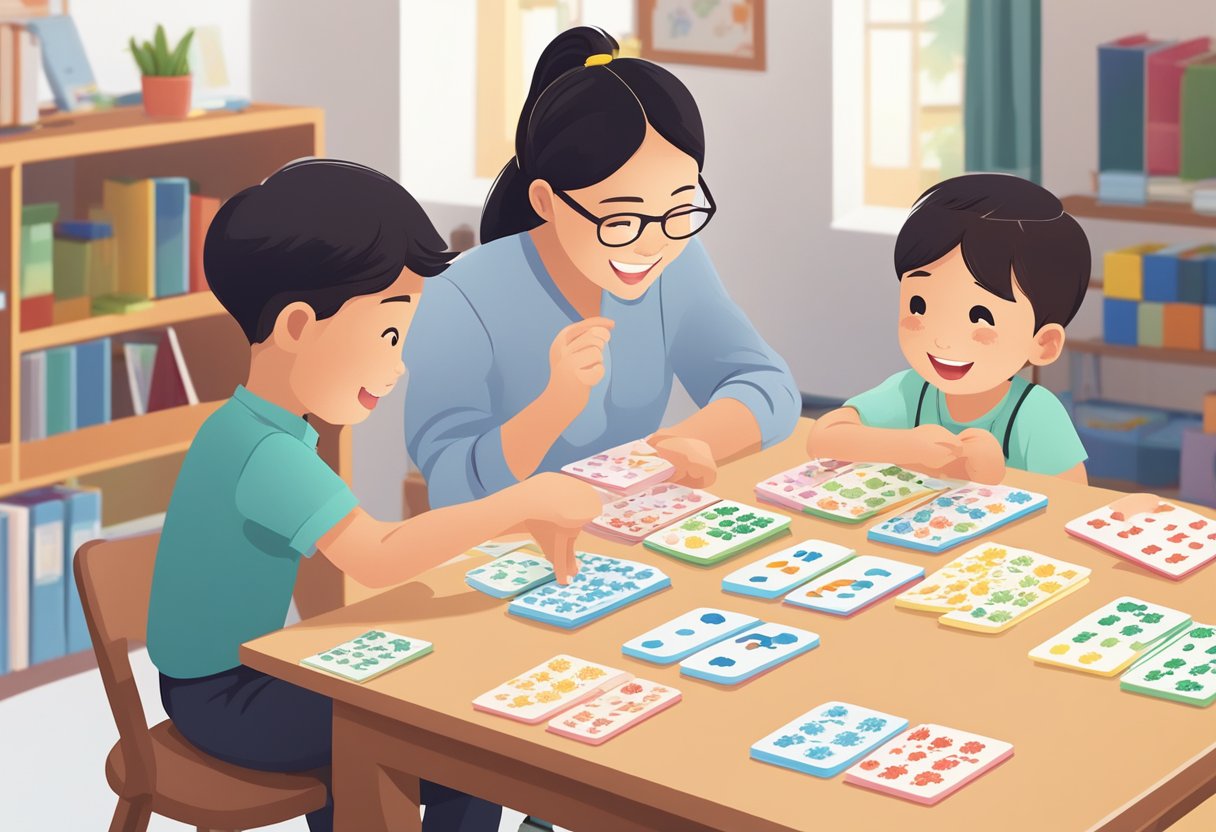
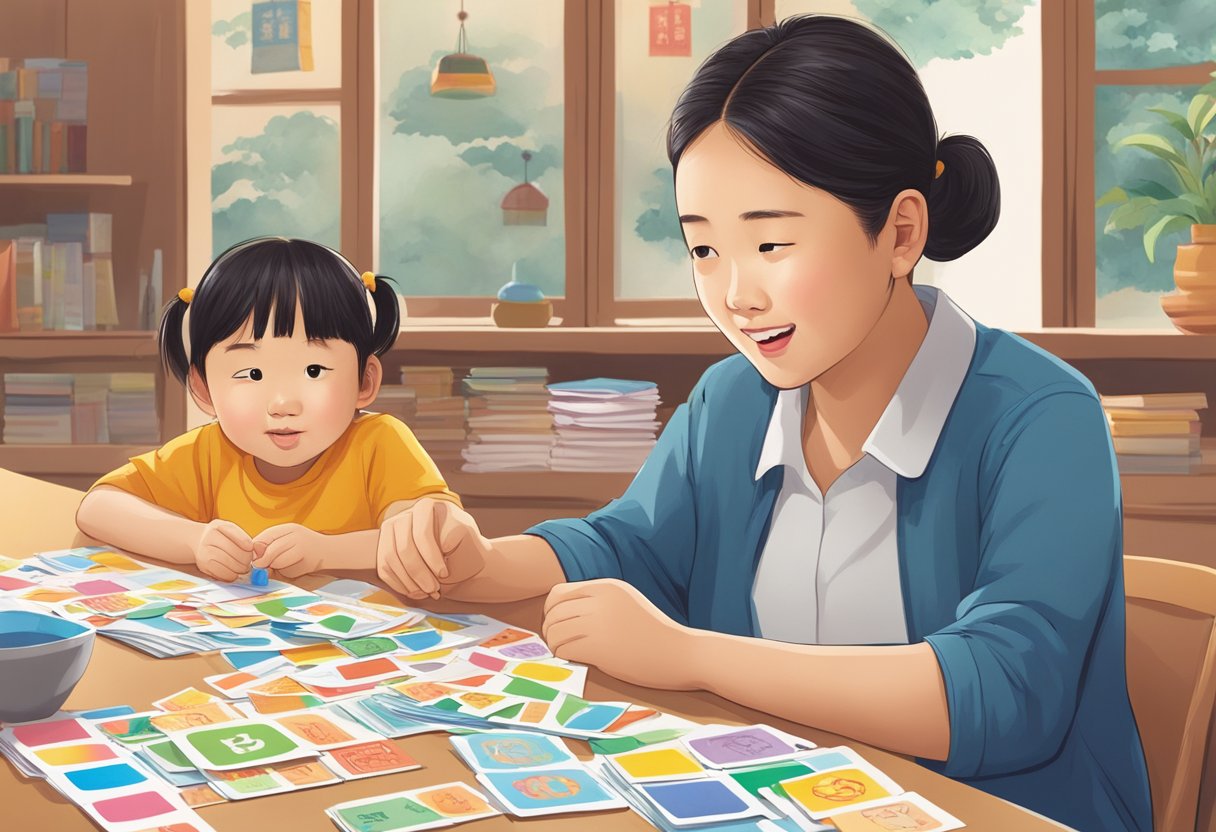
Flashcards remain one of the most effective tools for character recognition in Chinese language learning. Create colourful cards with the character on one side and its meaning, pronunciation, and an image on the other.
For best results, try these approaches:
Spaced repetition: Review characters at increasing intervals to strengthen memory
Character storytelling: Create simple stories linking the character’s appearance to its meaning
Radical breakdown: Highlight the components (radicals) within characters to help recognition
“Michelle Connolly, an educational consultant and founder, says, ‘I’ve found that children remember characters more effectively when they connect them to physical movements.'”
Memory games like character matching, where pupils match identical characters or connect characters with their meanings, make learning playful. Try character bingo or treasure hunts where learners identify characters hidden around the classroom.
Interactive Apps and Learning Tools
Digital solutions have revolutionised how children learn Chinese characters. Many apps utilise handwriting recognition technology, allowing learners to practise stroke order and receive immediate feedback.
Research shows that multisensory learning approaches significantly improve character retention. Apps that combine visual, auditory and tactile elements create stronger neural connections.
Michelle Connolly also notes, ‘Having worked with thousands of students across different learning environments, I’ve noticed that technology works best when it complements traditional learning rather than replacing it.’
Dialogic reading methods paired with digital tools can further enhance character recognition. For example, you might use interactive storybooks where children tap characters to hear pronunciations and meanings and see animations illustrating the character’s meaning.
Making the Most of Chinese Lessons
Practical Chinese lessons for young learners blend structured approaches with playful engagement. The key is to balance character recognition with meaningful context while tracking progress through achievable milestones.
Tailoring Lessons to Young Minds
When teaching Chinese characters to children, keep sessions short and focused. Young learners have limited attention spans, so aim for 15-20 minute activities that introduce only 2-3 new characters per lesson.
Research shows that an integrative perceptual approach works well with children. This means teaching characters through:
“Michelle Connolly, an educational consultant and founder, says, ‘I’ve found that young children remember Chinese characters best when they can connect them to a story or physical action.'”
Use colourful flashcards and incorporate characters into games like memory matching or character hunts. This approach makes Chinese language learning feel like play rather than work.
Measuring Progress and Keeping Motivated
Create a character achievement chart where pupils can track their growing vocabulary. Small, frequent wins are crucial for maintaining enthusiasm in language learning.
Celebrate progress with mini-ceremonies when milestone numbers are reached. This provides tangible evidence of achievement that young learners can proudly share.
Mix review methods to keep lessons fresh:
Digital character recognition games
Character treasure hunts around the classroom
Peer teaching opportunities
Creating simple sentences with learned characters
“Michelle Connolly also notes, ‘I’ve observed that children stay motivated when they can see their Chinese character knowledge building into real communication skills.'”
Incorporate technology thoughtfully—apps with audio pronunciation support can reinforce classroom learning at home, creating a bridge between lessons.
Cultural Insights Through Language Learning
Learning Chinese characters offers young learners a window into rich cultural traditions. The written symbols connect deeply to Chinese history, values, and ways of life beyond mere language acquisition.
Festivals and Traditions
When you introduce young learners to Chinese characters related to festivals, you’re helping them understand cultural celebrations meaningfully. The character 春 (chūn), meaning “spring,” connects directly to Chinese New Year celebrations, where families welcome a fresh beginning.
The character 福 (fú), meaning “good fortune,” is often displayed upside down during festivities because the word for “upside down” (dào) sounds like “arrived” in Mandarin Chinese. This wordplay teaches children about linguistic creativity in Chinese culture.
Learning Chinese characters connected to the Mid-Autumn Festival, like 月 (yuè) for “moon” and 团圆 (tuányuán) for “reunion,” helps children grasp the importance of family gatherings in Chinese tradition.
Michelle Connolly, an educational consultant and founder of LearningMole, says, ‘I’ve seen how teaching festival-related characters creates immediate cultural connections for children.’
Cultural Symbols and Their Meanings
Chinese characters often evolved from pictographs that represented important cultural symbols. The character 龙 (lóng) for “dragon” introduces children to this powerful symbol of good fortune and imperial power in Chinese culture.
Plants and animals are prominently featured in Chinese characters and cultural symbolism. The character 竹 (zhú) for “bamboo” teaches resilience and integrity, as bamboo bends but doesn’t break in storms.
Many characters reveal cultural insights through their formation. For example, 好 (hǎo) meaning “good” combines the characters for “woman” and “child,” reflecting traditional family values.
Using visuals to teach these characters helps young learners remember the symbol and its cultural significance. Try creating simple flashcards that pair characters with colourful images of their cultural meanings.
Character stories make learning memorable. The character 安 (ān) for “peace” shows a woman under a roof, illustrating the traditional concept that having a home brings security and tranquillity.
Parental Involvement in Language Acquisition
Parents play a crucial role in helping young children learn Chinese characters. Children progress when their parents get involved and feel more confident in their language skills.
“Michelle Connolly, an educational consultant with 16 years of teaching experience, says, ‘I’ve seen that children whose parents actively participate in their language journey develop stronger foundations in character recognition.'”
Research shows parental involvement significantly impacts children’s language development, especially when learning complex writing systems like Chinese characters.
Read picture books with Chinese characters together daily
Play character recognition games
Use character flashcards regularly
Point out characters in everyday environments
Practise writing characters together
When parents in Hong Kong participated in their children’s foreign language learning, the children showed more enthusiasm and better retention of new characters.
One effective method is using literacy bags that promote parental involvement. These contain books, activities and resources that families can enjoy together at home.
You can help your child build connections by asking them to name objects before introducing the written character. This approach allows them to link spoken words with their written forms.
Chinese parents who support app-based language learning find that technology can complement traditional character learning methods, especially when you guide your child through the process.
The Role of Multimedia Resources
Multimedia tools have transformed how young learners approach Chinese characters, making complex symbols more accessible through interactive experiences. These resources combine visual, audio and tactile elements that appeal to different learning styles, helping children remember characters more effectively.
Educational Videos and Songs
Videos and songs create memorable learning experiences for young Chinese language learners. These resources use animation, storytelling, and catchy tunes to introduce characters engagingly.
When selecting videos, look for those clearly demonstrating stroke order and character formation. Many educational channels offer series where characters are introduced with relevant vocabulary and cultural context. Songs with repetitive lyrics help children remember pronunciation and meaning through rhythm.
“Michelle Connolly, an educational consultant with 16 years of classroom experience, explains, ‘I’ve found that children retain Chinese characters much better when they learn them through music and movement.'”
Try incorporating short multimedia learning sessions into daily routines. Even 5-10 minutes of engaging with Chinese character videos can build familiarity.
Online Communities and Forums
Online communities provide valuable support for young learners and their parents or teachers. These platforms offer opportunities to connect with others on the same learning journey.
Many Chinese language learning communities offer sections specifically designed for beginners and young learners, with simplified explanations and age-appropriate activities.
These communities often showcase different approaches to character memorisation, allowing you to discover methods that work best for your child. Some forums also organise virtual meetups where children can practise recognising characters in a supportive environment.
Remember to verify any learning resources shared in these communities against trusted educational sources before incorporating them into your child’s learning routine.
Conclusion
Learning Chinese characters at a young age provides children with valuable cognitive benefits beyond language acquisition. The visual and spatial processing required to recognise and write characters enhances memory formation, pattern recognition, and fine motor skills development. Children engaging with Chinese characters through games, storytelling, and creative activities develop neural pathways that support linguistic competency and broader academic skills, including mathematics, art, and critical thinking. The systematic nature of character learning also introduces children to structured thinking processes and cultural concepts that expand their global awareness.
Fun and engaging teaching methods prove particularly effective for Chinese character instruction because they transform what could be overwhelming complexity into manageable, enjoyable challenges. Interactive approaches such as character-building games, story-based learning, and hands-on writing practice help children overcome initial intimidation while building confidence in their abilities. These methods recognise that sustained engagement requires intrinsic motivation rather than external pressure, creating positive associations with learning that encourage continued exploration of the Chinese language and culture.
The long-term benefits of early Chinese character education include enhanced cognitive flexibility, improved academic performance across subjects, and preparation for increasingly multicultural professional environments. Children who develop familiarity with Chinese characters gain access to one of the world’s most widely spoken languages while building appreciation for cultural diversity and historical depth. This foundation can inspire continued language study, international perspectives, and career opportunities that rely on cross-cultural communication skills, making early Chinese character instruction a valuable investment in children’s future academic and professional success.
Maths Circus, an innovative platform we've crafted, presents a captivating realm where children learn mathematics through the exciting theme of a circus. The joy of juggling numbers and solving circus...
Article Summary What this article covers: How UK teachers and parents can choose educational blogs that are worth following, with a simple vetting checklist and what to look for in...
Every continent has its own shape and its own record-breaking features. That is why explaining continents to kids is such a good way into world geography. In UK primary schools,...
Article Summary What this article covers: Facts about Mars for kids, including why it is red, its mountains, canyons, atmosphere, seasons and two moons, the rover missions exploring it today...






Leave a Reply