Bioluminescent Animals Facts for Kids: If you’re swimming in the ocean at night, and suddenly the water around you begins to sparkle and glow with blue-green light, it’s as if stars have fallen into the sea. Or you’re walking through a dark cave, and overhead you see what looks like a sky full of twinkling stars—except they’re not stars at all, but thousands of tiny glowing creatures on the cave ceiling. This magical phenomenon is called bioluminescence, and it’s one of nature’s most spectacular abilities.
Bioluminescence means “living light”—the ability of living organisms to produce their own light through chemical reactions in their bodies. While this might sound like something from a science fiction movie, it’s completely real and surprisingly common in nature! Most bioluminescent animals live in the ocean, especially in the deep sea, where sunlight never reaches. However, some glowing creatures also live on land, including the fireflies you might see twinkling in your backyard on summer evenings.
Scientists estimate that up to 90% of animals living in the deep ocean can produce light. That means in the darkest parts of our planet’s oceans, most creatures have the incredible ability to create their own illumination! Bioluminescent animals showcase nature’s creativity and problem-solving abilities, from tiny bacteria to giant squid, glowing jellyfish to flashing fireflies.
In this article, we’ll explore five beautiful facts about bioluminescent animals. You’ll learn how animals create light through chemistry, discover the amazing variety of glowing creatures in the deep ocean, understand the clever ways animals use light to survive, meet some surprising land-dwelling light makers, and find out how scientists are using bioluminescence to help humans. Get ready to dive into the glowing world of nature’s most dazzling creatures!
Fact 1: Bioluminescence is Created by a Chemical Reaction (Like Nature’s Glow Sticks!)
Have you ever played with glow sticks? When you bend a glow stick, it starts glowing because chemicals inside mix together and create light. Bioluminescence works on a similar principle, except it happens naturally inside living animals!
How the Magic Happens
Bioluminescence occurs when special chemicals inside an animal’s body react with oxygen. The main chemical involved is called luciferin (which comes from the Latin word “lucifer,” meaning “light-bringer”). When luciferin combines with oxygen, it needs help from an enzyme (a protein that speeds up chemical reactions) called luciferase. When these substances come together, they produce light—no heat, no fire, just pure, cold light!
Different animals have different types of luciferin and luciferase, which is why not all bioluminescent animals glow the same way. Some animals produce these chemicals themselves, while others have a fascinating partnership with bacteria that live inside their bodies and create the light for them. This cooperative relationship is called symbiosis—the animal provides the bacteria with food and a safe home, and the bacteria provide light in return!
Cold Light vs. Hot Light
What makes bioluminescence truly remarkable is its incredible efficiency. When you turn on a regular light bulb, much of the energy is wasted as heat—that’s why light bulbs get hot! But bioluminescence is “cold light,” meaning nearly 100% of the energy goes into producing light with almost no wasted heat. This makes bioluminescence one of the most efficient light sources in the entire universe!
Think about it: If our light bulbs were as efficient as fireflies, we could illuminate entire cities using a fraction of the electricity we currently use. Scientists and engineers study bioluminescence, hoping to create better, more energy-efficient lighting technology.
A Rainbow of Glowing Colours
While we often think of bioluminescence as blue or green, these glowing animals can produce several different colours. Blue and green light are the most common in the ocean. Why? Blue-green light travels the farthest through water. Other colours, like red, get absorbed quickly and don’t travel very far, making them less useful for communication or hunting in the ocean depths.
However, some animals have evolved to use this to their advantage! The dragonfish produces red bioluminescent light, which most deep-sea creatures can’t see because their eyes aren’t adapted to detect red wavelengths. This means the dragonfish has essentially created a secret spotlight—it can see potential prey illuminated by its red light, but the prey has no idea it’s being watched! It’s like having night-vision goggles in a world where no one else can see infrared light.
Some animals can even produce multiple colours or change the colour of their light. Certain squid species have light organs that can shift between different hues, possibly to communicate different messages or create more complex displays.
Nature’s Chemistry Set
The chemical reaction that produces bioluminescence is quite complex and varies among different animal groups. Scientists have discovered that luciferin evolved independently in different animal groups at least 40 times throughout evolutionary history! This means that many different types of animals figured out how to make light using different chemical pathways.
For example, firefly luciferin completely differs from the luciferin used by many marine animals. Jellyfish use yet another system. This diversity shows that creating light is such a useful ability that evolution has “invented” it repeatedly in different ways.
Understanding these chemical reactions has been incredibly valuable for science. The same chemicals that allow fireflies and jellyfish to glow are now used in laboratories around the world to study everything from cancer to pollution. But we’ll learn more about that later!
Fact 2: Over 90% of Deep-Sea Animals Glow in the Dark!
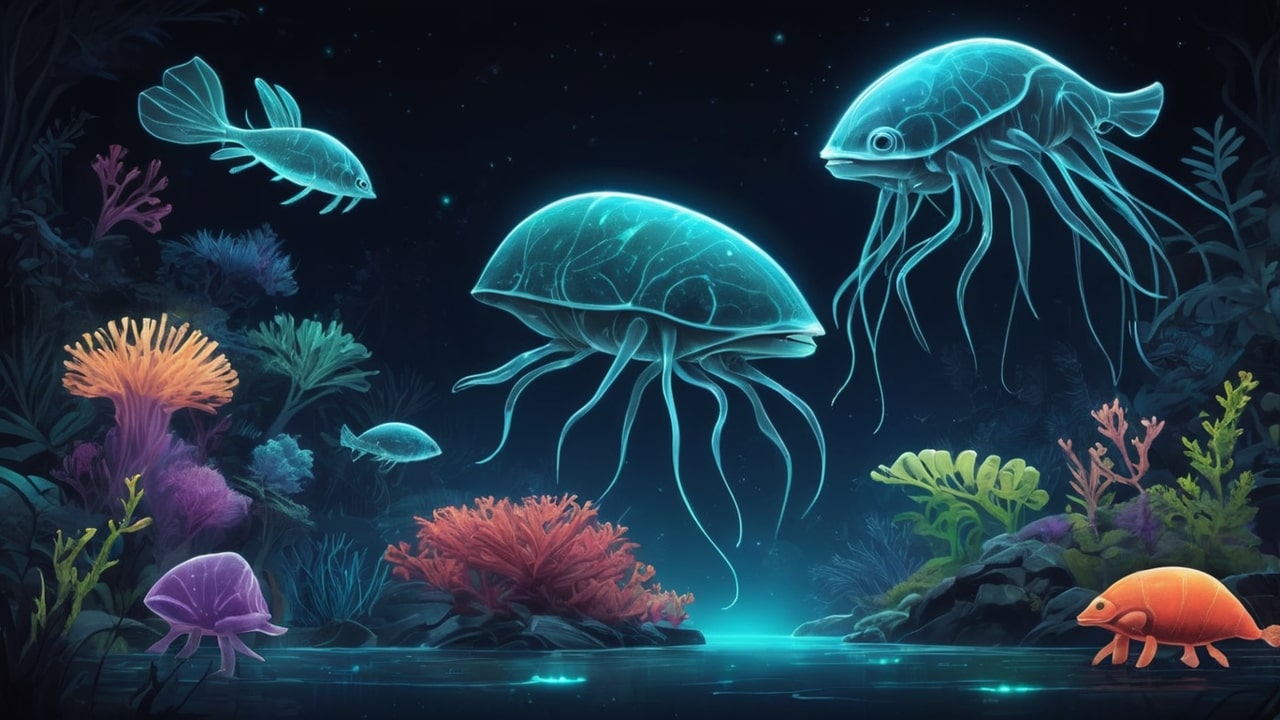
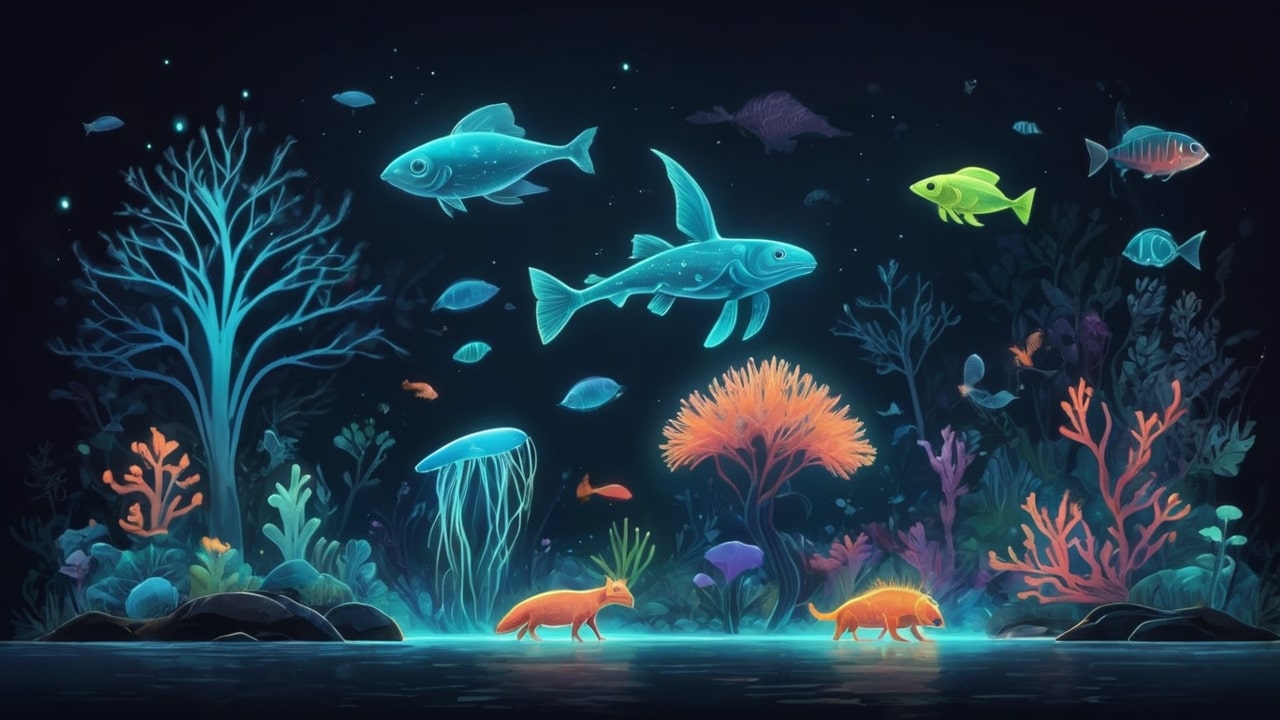
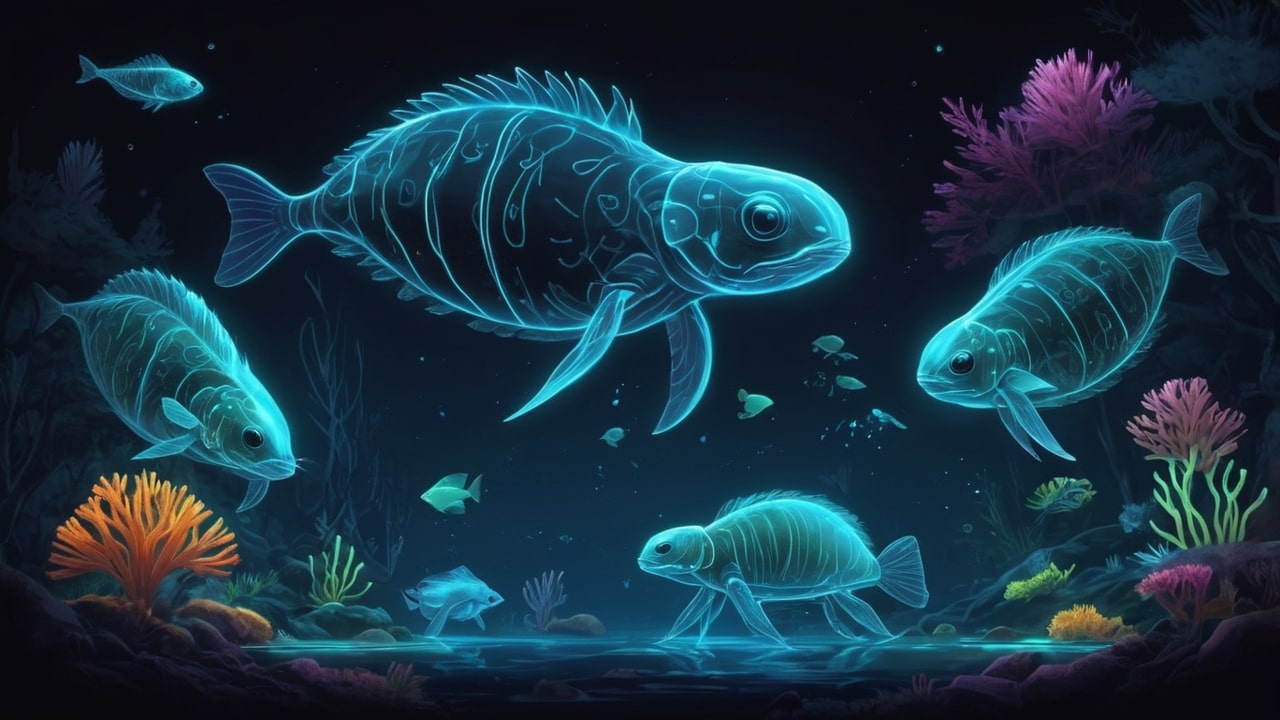
If you could shrink down and take a submarine to the deepest parts of the ocean, you’d witness one of the most spectacular light shows on Earth. In the pitch-black depths where sunlight cannot penetrate, the darkness is filled with countless glowing, twinkling, flashing creatures, creating an alien underwater light display.
Why the Deep-Sea Glows
Sunlight can only penetrate the ocean to a depth of about 1,000 feet (roughly 300 meters). Below that depth begins what scientists call the “midnight zone,” where eternal darkness reigns. Evolution has made bioluminescence incredibly common in this completely black environment because light becomes one of the most valuable tools an animal can have.
Scientists estimate that up to 90% of animals living in the deep ocean produce light in some form. In a world with no sunlight, being able to create your own light gives you enormous advantages—you can find food, attract mates, defend yourself, and communicate with others of your species. Bioluminescence in the deep sea isn’t a neat trick; it’s essential for survival.
Famous Deep-Sea Light Shows
Let’s meet some of the most remarkable glowing creatures from the ocean depths:
The Anglerfish is probably the most famous bioluminescent creature, and one of the strangest-looking animals on Earth. Female anglerfish have a long, modified spine that extends from their head like a fishing rod, and at the end dangles a glowing lure filled with bioluminescent bacteria. The anglerfish sits motionless in the darkness, waving its glowing lure to attract curious prey. When a fish swims close to investigate the light, the anglerfish’s huge mouth (filled with sharp, inward-pointing teeth) snaps shut in a fraction of a second!
Interestingly, only female anglerfish have this impressive light. Males are tiny—sometimes 60 times smaller than females—and don’t hunt for themselves. Instead, when a male finds a female, he bites onto her body and eventually fuses with her permanently, becoming essentially a sperm-producing parasite! It’s one of the strangest reproductive strategies in nature.
Firefly Squid are small squid (only about 3 inches long) whose entire bodies are covered with tiny light-producing organs called photophores. They can create spectacular light displays, flashing and pulsing different parts of their bodies. Every spring, thousands of firefly squid gather in Toyama Bay in Japan to spawn, creating a magical blue glow visible from the shore. This phenomenon has become a famous tourist attraction, drawing visitors worldwide to witness the glowing water.
Despite its scary name and blood-red colouring, the Vampire Squid is quite harmless and only about a foot long. It gets its name from the dark, cape-like webbing between its arms and its red eyes. When threatened, the vampire squid can turn itself inside-out, exposing its arm tips, which are covered in bioluminescent organs. It creates a spectacular light display that confuses and startles predators, giving the squid time to escape into the darkness. It can also release a cloud of glowing, bioluminescent mucus—imagine squirting glow-in-the-dark slime at your enemies!
Lanternfish are small fish (usually 2-6 inches long) with rows of light organs on their undersides. What’s remarkable about lanternfish is that each species has a unique pattern of lights, like a fingerprint that helps them recognise their own species in the dark. Despite being small and living in the deep ocean where we rarely see them, lanternfish are actually thought to be the most abundant vertebrates (animals with a backbone) on Earth! There might be more lanternfish than any other fish species.
The Giant Squid, the legendary sea monster that grows up to 43 feet long, has the largest eyes of any animal on Earth—as big as dinner plates! While much about giant squid remains mysterious (they live in the deep ocean and are rarely seen alive), scientists believe they may use bioluminescence to communicate with each other in the pitch-black depths. Their enormous eyes are specially adapted to detect even the faintest bioluminescent glows.
The Viperfish is a terrifying-looking predator with huge fangs so large that they don’t fit inside its mouth! Its body is lined with light organs called photophores that can flash and pulse. Some viperfish use their lights to attract prey, while others may use them to communicate or confuse enemies. Despite looking like something from a nightmare, viperfish are actually quite small, usually less than a foot long.
An Alien World We’re Just Beginning to Explore
The deep ocean is the largest habitat on Earth, yet it remains one of the least explored places on our planet. We’ve actually explored more of the Moon’s surface than we have of the deep ocean floor! Many deep-sea bioluminescent creatures look so strange and alien that when we discover them, they often don’t resemble anything we’ve seen before.
Scientists estimate that we’ve only discovered a fraction of the species living in the deep ocean. Every deep-sea expedition discovers new glowing creatures, from bizarre jellyfish to unknown squid and fish species. Some of these animals live miles below the ocean surface in conditions we once thought couldn’t support life—crushing pressure, freezing temperatures, and absolute darkness. Yet they’ve survived and thrived, developing sophisticated bioluminescent systems that allow them to live, hunt, and reproduce in Earth’s most extreme environments.
Fact 3: Animals Use Their Glow for Amazing Survival Tricks
Bioluminescence isn’t just beautiful—it’s one of nature’s most versatile survival tools! Animals have evolved incredibly clever ways to use their glowing abilities to hunt prey, find mates, defend themselves, and communicate. Let’s explore some of these amazing strategies.
Hunting with Light
For predators in the deep sea, light is an excellent hunting tool. We’ve already met the anglerfish, which uses its glowing lure like a fisherman uses bait. But there are other creative hunting strategies, too.
The dragonfish has evolved one of nature’s sneakiest hunting tricks. Remember how most deep-sea animals produce blue or green light? The dragonfish is different—it produces red bioluminescent light from organs under its eyes. Most deep-sea creatures have eyes adapted only for blue-green light and cannot see red wavelengths at all. This means the dragonfish has essentially created an invisible flashlight! It can illuminate its prey without the prey knowing they’re being watched, like a hunter with night-vision goggles in a world where no one else can see infrared.
The cookie-cutter shark uses bioluminescence for camouflage that doubles as a lure. This small shark (only about 20 inches long) has a glowing underside, but leaves one small dark patch on its throat. When viewed from below, the glowing belly makes the shark nearly invisible against the lighter water above—except for that dark patch, which looks like a small fish swimming alone. When a larger predator comes up to eat what it thinks is a small fish, the cookie-cutter shark attacks, using its specially adapted teeth to gouge out a round chunk of flesh from the surprised predator!
Finding Love with Light
In the vastness of the ocean—or even just in your backyard at night—finding a mate can be challenging. Many bioluminescent animals have solved this problem with light displays.
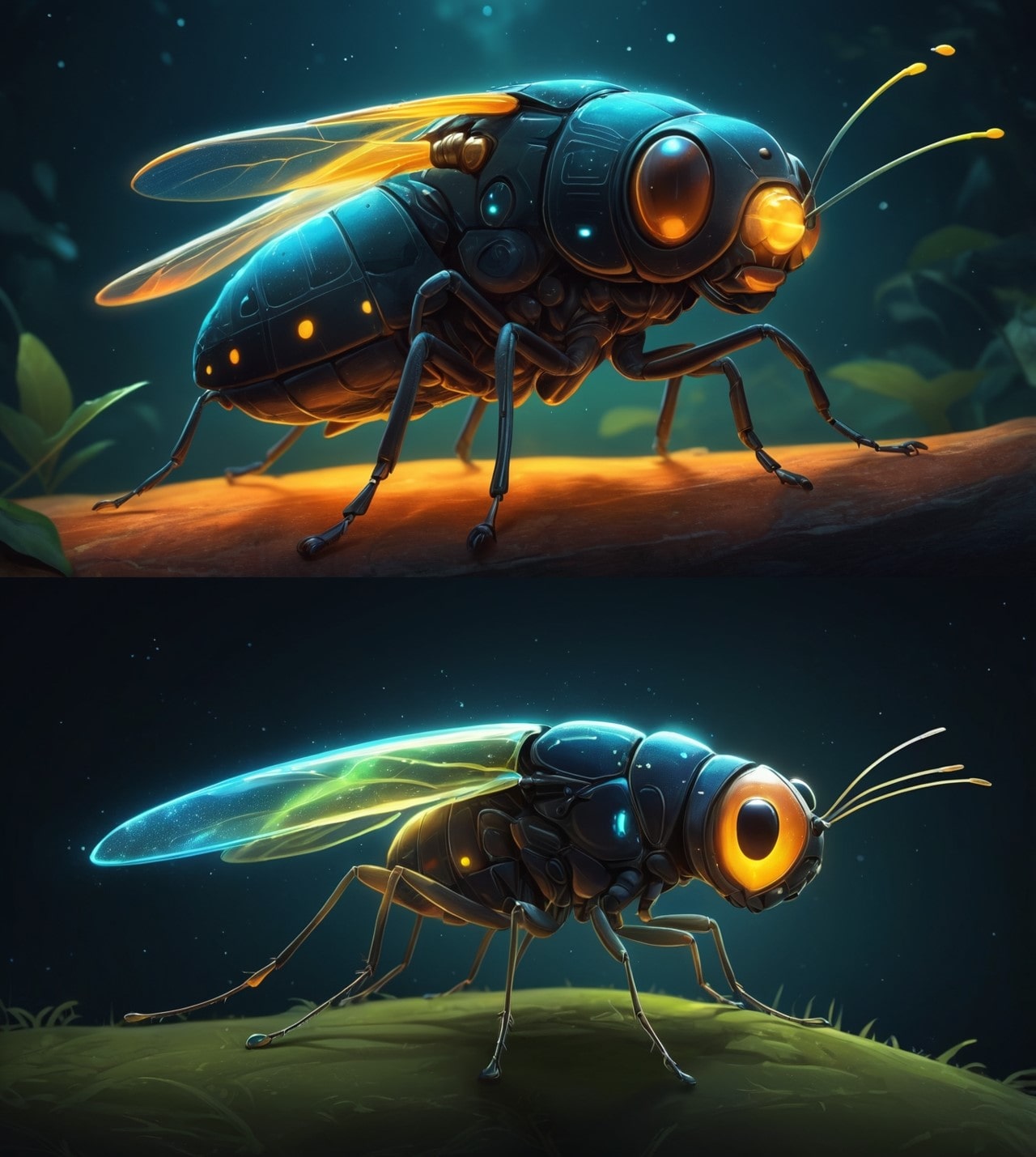
Fireflies (also called lightning bugs) are probably the most familiar bioluminescent animals to people living in temperate regions. On warm summer evenings, male fireflies fly through the air flashing specific patterns with the light organs on their abdomens. Each firefly species has its own unique flash pattern—like a Morse code of love. Females perch on vegetation and watch the males’ displays. When a female sees a male of her species flashing the correct pattern, she flashes back with her own response pattern. The male then flies to her, guided by her flashes.
But here’s a dark twist: Some female fireflies have evolved to be predatory mimics! They watch male fireflies of different species displaying, then mimic the flash response of females from those species. When the fooled male flies down expecting to mate, the predatory female eats him instead! It’s one of nature’s most devious deceptions.
Ostracods (also called sea fireflies) are tiny crustaceans, but males of some species create some of the ocean’s most spectacular bioluminescent displays. The males release clouds of glowing chemicals into the water while swimming in elaborate patterns, creating what looks like underwater fireworks or light graffiti. Females watch these displays and choose mates based on the quality and complexity of their light shows. Different ostracod species create different patterns—some make chains of glowing dots, others create spirals or other shapes.
Flashlight fish have permanent light organs under their eyes containing bioluminescent bacteria. They can control these lights by covering and uncovering them with a special flap of skin, like turning a flashlight on and off. Flashlight fish use their lights to find food, confuse predators, and communicate with other flashlight fish. They often swim in synchronised schools, all flashing together in coordinated patterns.
Defence and Escape Tactics
When you can make your own light, you have many creative ways to defend yourself. Bioluminescent animals have evolved some truly clever defence mechanisms.
Counter-illumination is one of the most sophisticated camouflage techniques in nature. Many fish and squid have light organs on their undersides that they can control precisely. When swimming in the twilight zone of the ocean (where a little sunlight still penetrates), predators looking up from below can see the silhouette of prey against the brighter water above.
But animals using counter-illumination produce light from their bellies that exactly matches the brightness of the light coming from above, essentially erasing their shadow and making themselves invisible! They even adjust the brightness as they swim deeper or shallower to match the changing light levels—like having automatic dimmer switches.
The bioluminescent alarm is a brilliant “burglar alarm” defence. When attacked by a predator, some deep-sea jellyfish don’t try to fight or flee. Instead, they flash extremely bright, rapid pulses of light. This sudden light show attracts the attention of even larger predators in the area. The attacking predator now faces a dilemma: finish eating the jellyfish and risk being eaten by something bigger, or flee to safety. Often, the attacker chooses to escape, and the jellyfish survives thanks to its “burglar alarm” that calls for help from unlikely defenders.
Several clever animals use glowing decoys. Some squid, when threatened, squirt out a cloud of bioluminescent mucus instead of (or in addition to) dark ink. The glowing cloud roughly matches the squid’s size and shape, so the predator attacks the glowing decoy while the real squid swims away in the opposite direction under cover of darkness. It’s like leaving a glowing dummy of yourself for enemies to attack!
Startle displays work on the principle that sudden, unexpected bright light can momentarily confuse or frighten a predator, giving prey a crucial few seconds to escape. Many bioluminescent animals can suddenly flash bright lights when touched or disturbed, potentially startling an attacker just long enough to get away.
Warning Signals
Just like poisonous frogs are often brightly colored to warn predators, “Don’t eat me—I’m toxic!”, some bioluminescent animals use their glow as a warning. Certain species of bioluminescent worms, for example, are poisonous or taste terrible. Their glow serves as an advertisement: “I’m the glowing worm you tried to eat before and regretted!” Predators learn to associate the glow with a bad experience and avoid those animals in the future.
These survival strategies show that bioluminescence is far more than just a pretty light show. It’s a Swiss Army knife of survival tools that has evolved over millions of years to help animals eat, avoid being eaten, find mates, and thrive in challenging environments.
Fact 4: Bioluminescent Animals Aren’t Just in the Ocean—Some Live on Land!
While the ocean is home to the vast majority of bioluminescent animals, some remarkable glowing creatures also live on land. These terrestrial light-makers face different challenges than their ocean cousins and have evolved unique ways to use their glowing abilities.
Fireflies: Summer Night Magic
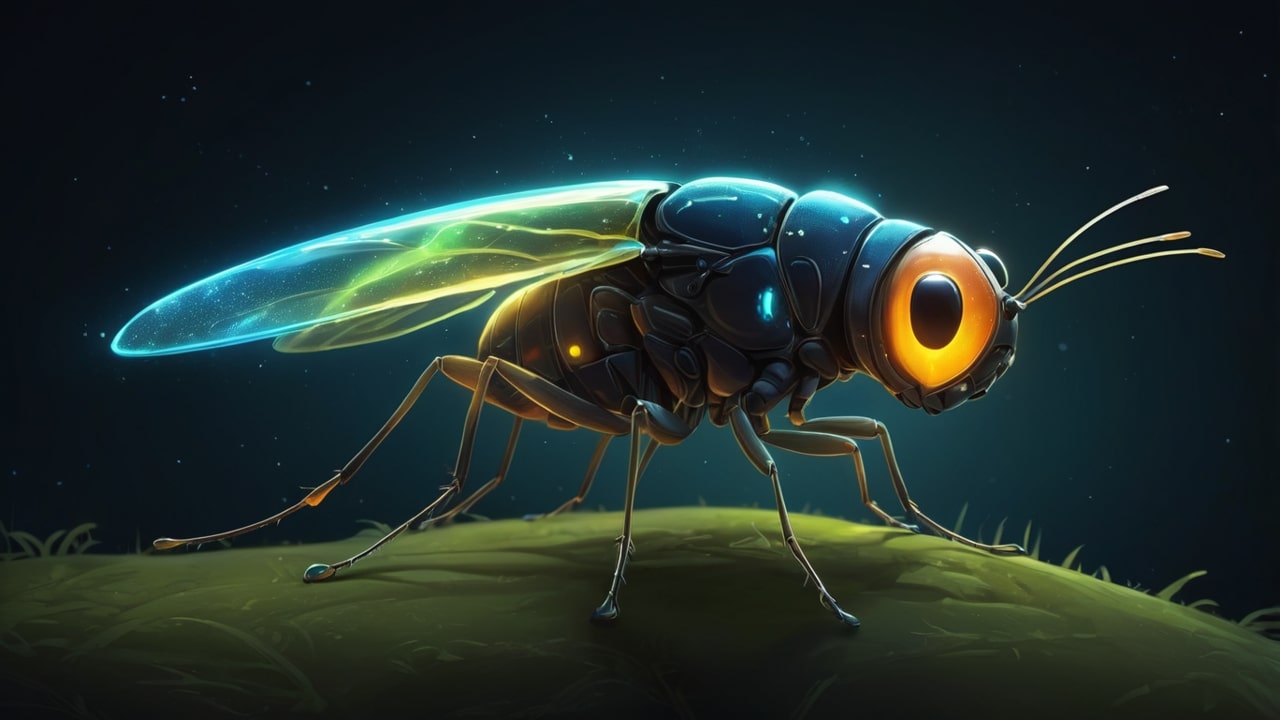
Fireflies (also called lightning bugs) are the most famous and beloved land-dwelling bioluminescent animals. Found on every continent except Antarctica, these beetles light up summer evenings in temperate and tropical regions around the world, creating magical twinkling displays in backyards, fields, and forests.
Despite their name, fireflies aren’t flies at all—they’re beetles! There are over 2,000 firefly species worldwide, each with its own distinct flash pattern. Some flash quickly in short bursts, others produce long, slow glows, and some create complex synchronised displays. These patterns help fireflies recognise potential mates of their own species.
The typical firefly mating ritual involves males flying around flashing their species-specific pattern while females sit on vegetation watching. When a female spots a male of her species flashing the correct pattern, she responds with her own specific flash pattern. The male then follows her flashes to find her.
Firefly larvae, often called glowworms in North America, also glow. The larvae live in the ground or in rotting wood and use their light possibly as a warning signal, since many firefly larvae are distasteful to predators. Even firefly eggs can glow faintly!
Sadly, fireflies are becoming increasingly rare in many areas due to habitat loss, pesticide use, and especially light pollution. Artificial lights from cities, streetlights, and buildings interfere with fireflies’ ability to see each other’s mating signals. Imagine trying to find a specific flashlight signal in the dark while someone is shining spotlights everywhere—that’s what fireflies experience in light-polluted areas. Conservation efforts are underway to protect firefly habitats and reduce light pollution so these magical insects don’t disappear.
Glowworms: Underground Starry Skies
In caves in New Zealand and Australia, a different type of “glowworm” creates one of nature’s most spectacular displays. The Arachnocampa luminosa found in New Zealand caves aren’t worms at all—they’re the larvae of fungus gnats, a type of fly. These larvae live on cave ceilings and produce a blue-green bioluminescent glow from their rear ends.
But the glowworms don’t just glow—they’re also clever predators. Each glowworm hangs dozens of sticky, silk threads from the cave ceiling, like fishing lines. The glow attracts flying insects, which become tangled in the sticky threads. The glowworm then reels in the threads and eats the trapped insect, like pulling in a fishing line!
When thousands of these glowworms cover a cave ceiling, the effect is breathtaking—it looks like a starry night sky indoors. The Waitomo Caves in New Zealand have become a world-famous tourist attraction where visitors can take boat rides through dark caves illuminated only by the natural blue-green glow of thousands of glowworms overhead. It’s like floating through a galaxy of stars!
Australian glowworms are similar but belong to a different species. They create similar displays in caves and forests throughout Australia.
Glowing Click Beetles
In the tropical forests of Central and South America, large click beetles called “cucujos” have two glowing spots on their bodies that produce a yellow-green light. These beetles can glow continuously for hours, and their light is bright enough to read by!
Indigenous peoples in these regions have historically captured these beetles and used them as natural lamps, keeping them in cages to provide light at night, then releasing them in the morning. Some stories say that people would even tie several glowing beetles to their ankles when walking through the forest at night to light their path!
Click beetles get their name from their ability to flip themselves into the air with a loud clicking sound if they fall on their backs. The bioluminescent species use their lights to communicate with potential mates and possibly to warn predators that they’re unpalatable.
Why Fewer Land Animals Glow
If bioluminescence is so useful, why don’t more land animals have it? The answer lies in the differences between ocean and land environments. On land, there’s much more light available than in the deep ocean. During the day, the sun illuminates everything. Even at night, the moon and stars provide some light, and many animals have excellent night vision. With more light available, other senses like hearing and smell become more useful for communication and hunting.
In the ocean, especially the deep ocean, light is extremely rare or nonexistent. Sound travels well through water, but visual signals can be seen from farther away than sounds can be heard in the ocean’s vast spaces. This makes bioluminescence particularly valuable for marine animals.
Additionally, the chemistry of bioluminescence works especially well in water. The luciferin-luciferase reaction requires moisture, which is always available in aquatic environments but must be carefully maintained by land animals.
Conservation Concerns
Unfortunately, many bioluminescent land animals face serious threats. Light pollution from cities and towns is probably the biggest problem. Artificial lights confuse fireflies, making it difficult for them to find mates. Imagine trying to communicate with a flashlight while standing in Times Square—that’s what fireflies experience in light-polluted areas.
Habitat destruction also threatens these animals. Fireflies need specific habitats—many species require wetlands or areas with both water and vegetation. As these habitats are drained, paved over, or developed, firefly populations decline.
Some scientists worry that fireflies could become much rarer or even disappear from many areas without conservation efforts. Organisations worldwide are working to protect firefly habitats, reduce light pollution, and help people understand the importance of these magical glowing insects.
Fact 5: Scientists Are Using Bioluminescence to Help Humans
The glowing abilities of bioluminescent animals are fascinating, but they’re also incredibly useful for human science and medicine! Over the past several decades, scientists have learned to harness bioluminescence for research, medical treatments, and potentially even everyday applications that could change how we live.
Medical Research Breakthroughs
Perhaps the most important application of bioluminescence in science involves something called Green Fluorescent Protein, or GFP. This glowing protein was discovered in crystal jellyfish (Aequorea victoria) that live in the Pacific Ocean. These jellyfish naturally glow green, and scientists wondered exactly how they produced this light.
In the 1960s and beyond, researchers isolated and studied the protein responsible for the jellyfish’s green glow. This work eventually led to one of the most important tools in modern biology. Scientists figured out how to take the gene for GFP and insert it into other organisms—bacteria, cells, plants, even animals. Once inserted, the GFP gene causes those cells to glow green under certain types of light.
Why is this so useful? Because scientists can attach GFP to specific proteins or cells they want to study. For example, if you want to know how a cancer cell spreads through the body, you can make cancer cells glow green using GFP, then track exactly where they go and how they grow. If you want to understand how a specific protein moves inside a cell, you can make that protein glow green and watch it in real time under a microscope.
The discovery and development of GFP was so important that three scientists won the Nobel Prize in Chemistry in 2008 for their work on it. Today, GFP and related fluorescent proteins (scientists have now created versions that glow in many different colours) are used in research laboratories worldwide every single day. This simple glowing protein from a jellyfish has made thousands of medical and scientific discoveries possible!
Detecting Disease and Testing Treatments
Bioluminescence is also used to detect infections and test new medicines. Scientists can make bacteria glow by inserting bioluminescent genes into them. If a patient has an infection, doctors can use special cameras to see the glowing bacteria and determine exactly where the infection is located—even inside the body!
This technique is especially useful for testing new antibiotics and treatments. Scientists can infect laboratory animals with glowing bacteria, then test different treatments to see which ones work best. As the treatment kills the bacteria, the glow fades, providing instant visual feedback on whether the medicine is working.
Bioluminescence has revolutionised cancer research. Researchers can make cancer cells glow, track tumour growth, and test whether experimental treatments are shrinking the tumours. This allows scientists to study cancer in living subjects rather than just in petri dishes, leading to more realistic and useful results.
Environmental Monitoring
Bioluminescent bacteria are being used as “biological sensors” to detect pollution in water and soil. Scientists have created special bacteria that glow normally when healthy but produce less light (or different colored light) when exposed to toxic chemicals. Scientists can quickly determine if dangerous pollutants are present by measuring how brightly these bacteria glow in a water or soil sample.
This is much faster and cheaper than traditional chemical analysis and can detect a wide range of pollutants. Some researchers envision networks of bioluminescent sensors that could continuously monitor water quality in rivers, lakes, and oceans, providing early warning of pollution events.
Future Applications: Glowing Trees?
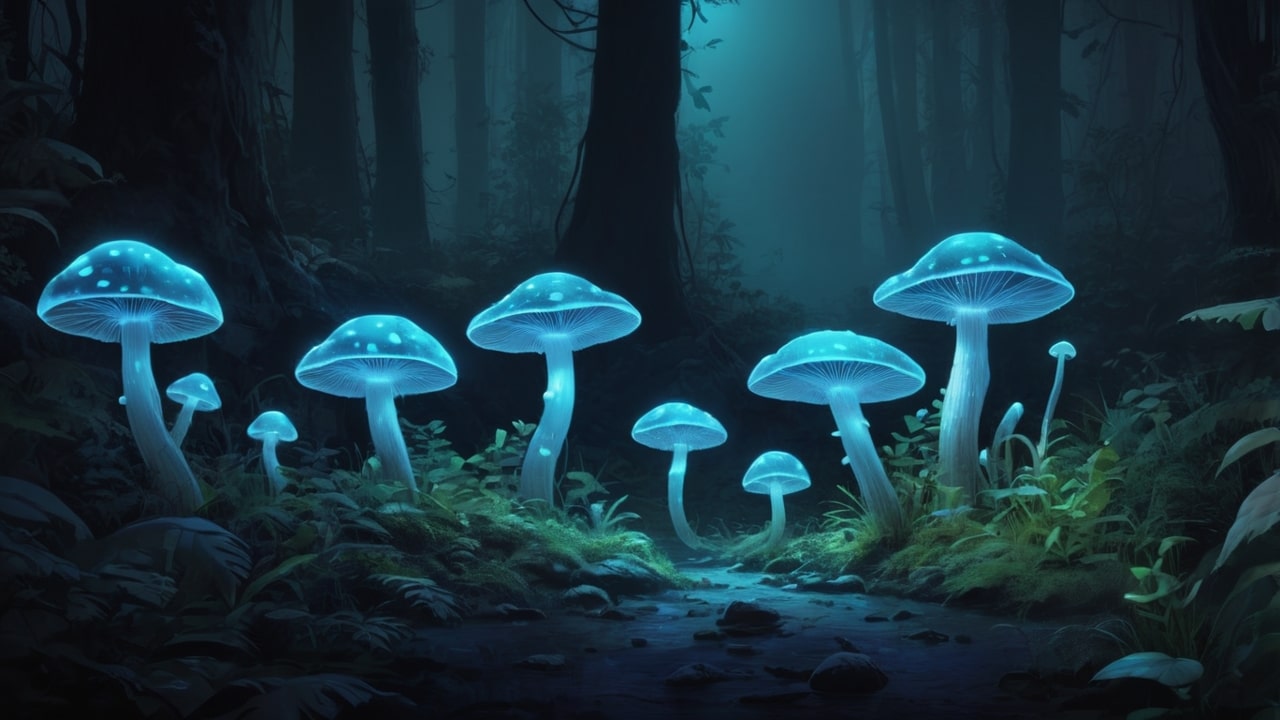
Some of the most exciting potential applications of bioluminescence are still in the experimental stage, but could dramatically change our world. Researchers are working on creating bioluminescent plants—imagine trees that glow at night, providing natural street lighting without electricity!
Scientists have already successfully created plants that glow dimly by inserting bioluminescent genes from bacteria and fungi. While current glowing plants don’t produce enough light to read by, research is ongoing to make them brighter. If successful, we could potentially line streets with glowing trees instead of electric streetlights, saving enormous amounts of electricity and reducing light pollution (since natural bioluminescent light could be designed to be less disruptive to wildlife than artificial lights).
Other future applications being researched include:
Medical sensors that live inside your body: Imagine tiny biosensors that could glow if you’re developing an infection or if your blood sugar is too high, alerting you to health problems before you feel sick.
Glowing Christmas trees: Several companies are working on creating bioluminescent Christmas trees that naturally glow without needing lights.
Decorative glowing plants: Houseplants that provide gentle natural illumination could reduce our need for electric lighting in homes.
Improved lighting technology: Understanding how bioluminescence achieves nearly 100% efficiency helps engineers design more energy-efficient LED lights and other lighting.
Inspiration from Nature
Beyond direct applications, studying bioluminescence teaches us important lessons about chemistry, evolution, and biology. Understanding how different animals independently evolved to create light helps us understand evolutionary processes. Learning how these animals produce cold light with almost perfect efficiency inspires engineers to create better human technologies.
Bioluminescence has also changed how we understand the deep ocean. Before we had submarines and cameras that could visit the ocean depths, we didn’t realise how many creatures produce light. Every deep-sea expedition reveals new bioluminescent species and teaches us more about how life has adapted to the most extreme environments on Earth.
Why Protection Matters
All these scientific and medical applications depend on having bioluminescent animals to study! If we lose species to extinction before we fully understand them, we might lose the secrets they hold. The crystal jellyfish that gave us GFP was just one species among millions in the ocean. How many other glowing creatures contain discoveries that could lead to medical breakthroughs or solve problems we haven’t even imagined yet?
This is one more reason why protecting ocean ecosystems and the habitats of bioluminescent animals is so important. We’re still in the early stages of understanding and using bioluminescence—the most exciting discoveries might still be waiting in the dark depths of the ocean or in the forests where fireflies dance.
Bioluminescent Animals Facts Conclusion
From the chemical reactions that create cold light with almost perfect efficiency to the spectacular glowing displays in the deep ocean’s eternal darkness, from the clever survival strategies animals use with their lights to the magical fireflies twinkling on summer nights, and from cutting-edge medical research to potential glowing trees of the future—bioluminescent animals represent some of nature’s most beautiful and useful innovations.
These glowing creatures remind us that our planet still holds countless wonders, especially in the ocean depths we’ve barely begun to explore. Scientists estimate we’ve explored less than 5% of the ocean floor, and we’ve probably discovered only a fraction of the bioluminescent species that exist. Every deep-sea expedition reveals new glowing creatures that look like they’ve come from science fiction movies—yet they’re completely real and have been living in Earth’s oceans for millions of years.
Bioluminescence shows us that evolution is an amazingly creative force. The fact that animals independently evolved to create light at least 40 different times using different chemical pathways demonstrates that making your own light is such a valuable ability that nature keeps “inventing” it repeatedly. Each solution is elegant, efficient, and ideally suited to that animal’s needs and environment.
We hope you enjoyed learning more things about bioluminescent animals as much as we loved teaching you about them. Now that you know how majestic these animals are, you can move on to learn about other animals and birds like: Nocturnal Animals, Animal Adaptation, and Endangered Animals.
Why not subscribe to our LearningMole Library for as little as £1.99 per month to access over 3400 fun educational videos.
Maths Circus, an innovative platform we've crafted, presents a captivating realm where children learn mathematics through the exciting theme of a circus. The joy of juggling numbers and solving circus...
Foreword A child may be confident using a smartphone to chat on messaging apps or find videos on YouTube. However, they may not understand why certain content appears on their...
Mammals are animals with a backbone that breathe air through lungs, have hair or fur at some stage of life and feed their young on milk. Scientists sort every mammal...
Norse mythology creatures range from Jörmungandr, a serpent long enough to circle the human world, to Ratatoskr, a gossiping squirrel on a giant tree. This guide explains 13 of them...






Leave a Reply